Connect with us

Education

How Edo man sponsored me from Almajiri school to university – Jigawa varsity graduate

Published

on

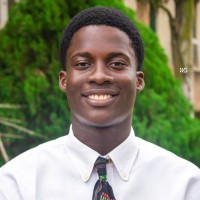
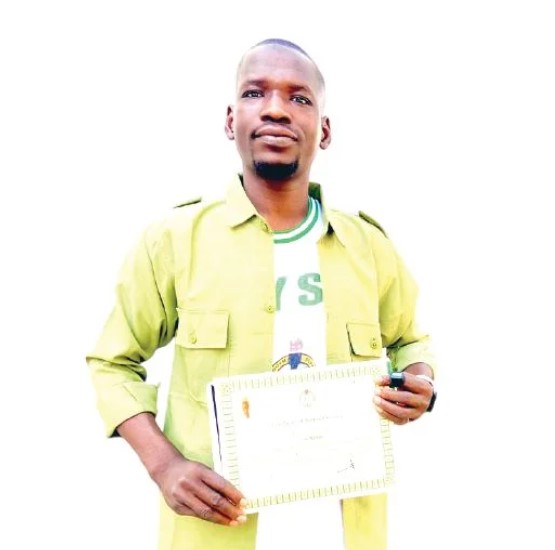
Ahmed Isah, a former Almajiri pupil, who washed clothes and ran errands as a kid to survive before becoming a graduate, tells CHUKWUDI AKASIKE how he journeyed through the tough Almajiri system before becoming a graduate

Where are you from?

I was born in a small village called Gul, Gara Local Government Area of Kano State.

How old are you?

I am 29 years old.

How was growing up as an Almajiri boy?

It was not easy. I lost my father in my very early years. I never knew who he was. I only have my mum, my two sisters, and my elder brother; that is four of us. I happen to be the lastborn in the family. My mother decided to send me to an Almajiri school.

What year did your mum enrol you in an Almajiri school?

That was around 2003/2004. I was handed over to a man, Mallam Alhassan, who is like a brother to me, because we are from the same village. The man took me from the village and brought me here to Dutse, the capital of Jigawa.

Why did your mum decide to send you to an Almajiri school?

I have no father. So, instead of allowing me to roam up and down, she decided to enrol me in an Almajiri school to learn something. She decided not to leave me like that without having any knowledge of anything.

So, what specifically did you learn in the Almajiri school?

I learnt the Quran, and you know how tough the Almajiri system is. You have to take care of yourself by looking for what to eat; you are the one who will be responsible for what to wear.

How old were you at that time?

I was between five and six years old when I was enrolled in the Almajiri school; I was not even up to seven then.

It must have been very tough on you.

It was very tough. My colleagues and I were the youngest during our days in school.

What is the name of the school?

You know, all these Almajiri schools don’t have specific names, but the one I attended is called Tsangaya Almajiri School.

So, how did you run your daily schedule at school?

The teachers there wake us early, between 4 am and 5 am. We, as pupils, study that early in the morning. Then from 7 am to 8 am, you are told to go and look for what to eat in the morning. Then you are expected to come back between 9.30 am and 10 am.

Then you study again before you are dismissed to go and look for what to eat again, this time as lunch. Then you come back in the evening. That is how the system is. You have to come back and study in the evening, except on Fridays and Saturdays when you have a free day. You have a day to wash your clothes; you have a day to go and look for a little money to buy chalk and other things.

See also  OAU students reject new dress code, citing rights violation

How many years did you stay in the Almajiri school?

Well, I stayed there for about… even when I was in JSS 1, 2, 3, and 4, and SS1 to SS2, I was still staying in the Almajiri school. It was when I sat my WAEC and JAMB (UTME) exams that I had to move out of the school because it is far from the university I was attending. So, I stayed there for more than 10 years.

Can you remember the year you left there?

I left in 2017.

Apart from your mother, who enrolled you in an Almajiri school who encouraged you to further your education?

Along the line, while I was in that Almajiri school, as young as I was at that time, I never liked begging for what to eat. So, some of us went to some people’s houses to tell them that we could fetch water for them and do other domestic work.

When we washed clothes belonging to their children, they gave us some clothes, food, or money in exchange so that we could take care of ourselves. In that process, I met a good man who is a very important person in my life.

What is his name?

His name is Danjuma Maiyaki Allah. He is from Edo State. The man was happy that I could do most domestic jobs. So, a woman connected me to him, and I started doing domestic work for him. I used to do anything that he told me to do for him.

The man described me as a very intelligent person who is hardworking and very honest. He used to test my level of honesty, and I passed all the tests.

What other factors propelled you to further your education?

When I was a kid, I used to admire students in their uniforms, especially when they were on their way to school. I saw them as gaining more knowledge than I. So, I wanted to also enjoy that aspect of life and was determined to go to school.

I spoke about it to my Almajiri teacher and my mother. I also told my brother about the need for me to go to school. Then I didn’t have any access to a mobile phone. So, I sent a message across to my parents, brothers, and sisters to ask for their permission to further my education up to primary school. They happily permitted me to do so.

I was nervous when I sent the message across, thinking they would not permit me. But they told me, ‘May God bless you. Go ahead and do it.’ I then came back to the man, Danjuma Maiyaki Allah, to tell him about my people’s approval.

He took me to a primary school; it is a public primary school in Dutse. The man (Mallam Danjuma) took me to the headmaster. He told the headmaster that I was his Almajiri and that I was working for him, and that he wanted the headmaster to register me in the school.

See also  The First Graduating Set of Medical Doctors from University College, Ibadan, 1951

The headmaster said I should be interviewed to know if I could read and write. Though I read and wrote well in the Hausa language, I couldn’t write English. So, I had to learn how to write in English. After the interview, the primary school realised I was bigger than pupils in Primary 1, 2, and 3. They decided to register me in Primary 5.

When I got to Primary 6, I sat my Common Entrance and started JSS1 in the same school because it used to be a primary and junior secondary school altogether. I wrote my junior WAEC exam at the school in 2013.

What is the name of the primary and junior secondary school?

Dr Nuhu Muhammad Sanusi Government Day Junior Secondary School.

Did you pass your junior school exam?

Yes, I did, and my sponsor was impressed. So, instead of taking me to another public school, he decided to register me in a public/private school known as Dutse Capital School. In my primary and junior secondary school, pupils and students did not pay school fees, but we used to buy other things.

However, in Dutse Capital School, we paid little school fees. At the time, my sponsor, Mallam Danjuma, used to pay my school fees. Along the way, he asked me if I had an interest in learning a skill so that at a later stage of my studies, when I needed financial aid, money raised from the skill could help me.

So, I decided to learn tailoring. I started learning tailoring when I was in JSS2. After school hours, I used to go to a tailoring shop to learn the skill. When I got back home, I still did my Almajiri study. That was only in the night and early morning before I left for school. I was able to stay disciplined to attend a modern school, an Almajiri school, and still learn tailoring.

How did you gain entry into the university?

After I passed my WAEC and NECO exams, I then registered for UTME, which I passed. I scored 217.

What did you study?

I studied Criminology and Security Studies. The cut-off mark for the course was 195, and I scored 217. My SSCE result was very good for me to be offered admission in the first batch.

Surprisingly, my sponsor was not tired; he helped me financially from the first year all through. I studied seriously because I was always aware of the background I came from. When I started my Year 1, it was not easy for me, but later, I began to catch up.

When did you graduate?

I graduated in 2024.

What is the name of the university you graduated from?

Federal University Dutse.

What is your current occupation?

After my national youth service, I came back to my tailoring shop. I have not got a job except for my tailoring work. If I see any job opportunity, I will still apply.

See also  How A Classmate’s Question At Harvard Forced Me To Dump Banking For Politics – Abia Governor, Alex Otti

What was life like when you were serving as a corps member?

It was a very interesting experience. I used to admire corps members during my primary and secondary school days. I liked seeing them dressed in khaki. What gave me more joy was the way I succeeded in making it up to the extent of becoming a graduate and serving as a youth corps member. It was a very nice experience.

Where did you serve?

I served in Kaduna State.

Looking back at when you started up to the point of becoming a graduate and serving your fatherland, how do you feel?

It is inexplicable. I shed tears when I was collecting my NYSC certificate. It was a dream come true. It was something I felt would not be possible, but now I have achieved it. I remain very happy today because of these academic achievements.

Are you married or involved in any relationship?

No, I’m not married yet. I know what I have gone through. So, any relationship I know will not be serious, I will not involve myself in it. I will marry later when I get something that will give me a stable income.

How do you feel when you see Almajiri boys who beg on the streets?

I don’t like them begging because I know how it feels; I was in their shoes before. I know what they are going through. I know how it is. So, I don’t blame them because it is not completely their fault. Talking about begging, it is like they don’t have any other choice. But I used to sell pure water during my days as an Almajiri boy.

Have you at any time been moved to tell them to go to school?

In the Almajiri school I attended, I was like an inspiration to them. If you go to that Almajiri school now, you will see young men with Diploma certificates, and many people with secondary school certificates.

Many of them are attending modern schools now. It has now become a culture in that Almajiri school. When the pupils begin to grow, they always find one way or the other to go to school. My story inspired them to see the need to go to school. I serve as an inspiration to them because some of them who have Diplomas are saying they want to go to university.

How do your siblings and mother feel about the fact that you have become a graduate?

They are very happy. On my passing-out, they came to celebrate with me. My mum was even crying because she was not expecting such a joyful thing. It sounds very odd that an Almajiri will become a graduate.

punch.ng

FOLLOW US ON:

FACEBOOK

TWITTER

PINTEREST

TIKTOK

YOUTUBE

LINKEDIN

TUMBLR

INSTAGRAM

Continue Reading
Click to comment

Leave a Reply

Your email address will not be published. Required fields are marked *

Education

FG unveils entrepreneurship certification in 14 varsities

Published

on

The Federal Government has unveiled the Entrepreneurship, Innovation and Business Incubation Certification programme in 14 universities, with plans to expand it to all federal universities by 2027 and all federal tertiary institutions by 2028.

The Minister of Education, Maruf Alausa, disclosed this on Friday in Abuja during the official unveiling of the initiative, describing it as a major shift in Nigeria’s education system toward innovation, entrepreneurship, and job creation.

“Today marks not just the launch of a programme, but the beginning of a new paradigm in Nigeria’s education system, one that shifts our young people from job-seekers to job-creators, from passive learners to active innovators, and from graduates to nation builders,” he said.

He noted that the programme comes at a critical time when the country must harness the potential of its youthful population while addressing the limitations of traditional education models.

Alausa warned that rapid technological changes are disrupting industries and widening the gap between education and employability if proactive measures are not taken.

“The world is changing rapidly. Technology is reshaping industries, and many traditional jobs are disappearing. Even as new opportunities emerge, if we do not prepare our young people adequately, we risk widening the gap between education and employability,” he said.

He explained that the EIBIC programme is designed to embed entrepreneurship across disciplines, citing ongoing efforts at the University of Lagos as a model.

According to the minister, the programme will equip students with practical competencies in innovation, business planning, financial literacy, and venture development, enabling them to build sustainable enterprises even before graduation.

See also  FG scholars abroad stage protest over unpaid allowances

He further linked the initiative to President Bola Tinubu’s economic vision, describing it as part of a broader strategy to build a knowledge-driven and innovation-led economy.

“EIBIC aligns with our national priorities. This initiative aligns perfectly with the vision of His Excellency, President Bola Tinubu, under the Renewed Hope Agenda to build a resilient, knowledge-driven, and innovation-led economy,” Alausa said.

According to the minister, the programme will be implemented in phases, beginning with 14 universities, including the University of Lagos, Ahmadu Bello University, University of Jos, Bayero University Kano, Uthman Danfodio University, University of Benin, University of Port Harcourt, Obafemi Awolowo University, University of Ibadan, University of Maiduguri, Abubakar Tafawa Balewa University, University of Nigeria, Nsukka, Nnamdi Azikiwe University, and University of Abuja.

He added, “Today, EIBIC is being rolled out in 14 universities. By next year, all federal universities will be onboarded, including some federal polytechnics and Colleges of Education. By the end of 2028, all our federal tertiary institutions will be fully onboarded.”

The minister also highlighted the Student Venture Capital Grant introduced by the ministry, revealing strong interest among Nigerian youths.

“On Sunday, we will be choosing 63 people who will benefit from the Student Venture Capital Grant. Guess how many people applied? 36,000 young entrepreneurs applied,” he said.

Alausa directed vice-chancellors of participating institutions to fast-track the approval of the programme within their respective senates.

“I am directing you all on or before the end of April; all your senators must approve this programme. This is a directive that I am not going to take lightly. I will call, and there will be consequences because we are in a hurry to get this programme to our youth,” he warned.

See also  Ekiti schools to resume Monday – Commissioner

Earlier, the Chairman of the EIBIC Planning and Monitoring Committee and Vice-Chancellor of the University of Jos, Prof. Tanko Ishaya, described the initiative as a major step toward aligning education with national economic goals.

“This landmark initiative by the Minister marks a transformative leap in repositioning Nigerian education as a true driver of national economic development,” he said.

Ishaya noted that the programme complements existing funding opportunities for student entrepreneurs.

He added that the initiative would strengthen the link between academic learning and market needs while fostering innovation and enterprise among students.

“By focusing on practical skills acquisition, innovation-driven thinking, and structured incubation, it is not just satisfying individuals. It is building a new generation of job creators, innovators, and industrial leaders,” Ishaya said.

The launch attracted key stakeholders from across the education sector, with expectations that the EIBIC programme will play a critical role in reducing youth unemployment and driving sustainable economic growth in Nigeria.

The EIBIC programme is a mandatory entrepreneurship development initiative designed for students in tertiary institutions. It runs concurrently with academic programmes, starting from the first year through to graduation.

The structure includes early exposure through orientation programmes, continuous entrepreneurship training, and access to incubation, mentorship, and funding opportunities.

Students are guided through a structured pathway from idea development to venture creation, to enable them to build sustainable businesses even before graduation.

Upon completion, participants receive an additional certification in entrepreneurship alongside their academic degrees.

punch.ng

FOLLOW US ON:

FACEBOOK

TWITTER

PINTEREST

TIKTOK

YOUTUBE

LINKEDIN

Continue Reading

Education

UNILAG denied me admission on age grounds; then I ended up studying in Nigeria’s best varsity — David Fetuga, Landmark’s second overall best-graduating student

Published

on

David Fetuga is the best-graduating student of the Department of Accounting, Landmark University, Kwara State, for the 2024-2025 academic session. A chartered accountant (ACA) at age 19, he graduated with a Cumulative Grade Point Average (CGPA) of 4.94 on a scale of 5.0, making him the second-best graduating student of the university. In this interview by KINGSLEY ALUMONA, he speaks about his academic feat, Nigeria’s new tax law, among other issues.

Your near-perfect university performance and results show that you are brilliant. Were you this brilliant in secondary school? What were your results like in secondary school, especially in WAEC and JAMB?

The turning point for me came when I was writing my common entrance examinations. My dad decided that I should attempt the exams when I had just concluded primary 3, and I failed woefully. I remember the principal of the secondary school at that time giving a speech on how I had done terribly. However, my parents decided that I stayed home and tried the exam again after a year. It was during this period that my mother ensured that I prayed and fasted as instructed by my spiritual father, Bishop David Oyedepo, with a focus on kingdom advancement prayers and endeavours. This period was also a period of consistent and intense studying. Then, after a year, I took the entrance exam to Covenant University Secondary School and scored 99.5 per cent.

It was then I learnt that if I sought God’s kingdom first, and also studied to show myself approved, that anything was possible, and I could actually do emerge as a star. I continued in this line and won numerous prizes in secondary school. Fast forward to JAMB, where I scored 311 over 400, which was the highest in my school, and I had all distinctions in my WAEC result.

It is believed that those who study accounting love money so much. Was this your thinking when you decided to study the course?

I have heard the stereotype that accounting students love money, but that was not the determining factor for me. Growing up, I always had debates and discussions with my dad as to which course really mattered and aligned with me, as I was always curious and liked solving problems. It was during these conversations that I began to see the uniqueness of accounting, and I gradually began to develop an affinity to the course. Another determining factor was the fact that I loved and appreciated mathematics and calculations. So, the movement of numbers attached to values intrigued me.

See also  The First Graduating Set of Medical Doctors from University College, Ibadan, 1951

Among all the universities in Nigeria, why Landmark University?

Landmark University was never in my plan, and it seemed to me more of a divine intervention. I had chosen the University of Lagos (UNILAG) as my first choice and had gained admission to study accounting there. However, during the screening process, I was informed that I would not be able to continue as I fell short of the required age by only a few days. Everything seemed bleak during this period, and it was almost certain that I was going to stay a year at home.

However, in events that seemed like a miracle, my mother saw a flier stating that Landmark University was still accepting students and that I could still gain admission. What baffled me most in the entire process was how the resources to attend a private university came seamlessly. God blessed my parents in such a way that it can only be seen as a miracle. And that was how I ended up in one of the best universities in Nigeria.

What did you do differently to graduate with a CGPA of 4.94/5.0? And what did it feel like having such a result?

I believe that I was able to attain such a feat with the help of God and by putting his kingdom first. However, any faith that makes God absolutely responsible is an irresponsible faith. I paid my dues through consistent studying, even throughout my ICAN professional exams and school academics. Another factor was the fact that I understood how I assimilated things. I didn’t do things because everyone did them. I also had the best set of lecturers from the Accounting Department of Landmark University. Lastly, I would say that I had good friends.

It felt very good to have such a result, and it’s a testament that God rewards stewardship and hard work. My parents and siblings, as well as my friends, were all proud of me. I felt very good.

In the course of your programme, which area(s) or aspect(s) of Accounting interested you more and why?

In the course of my study, the areas that interested me the most were the generic areas of taxation and auditing, as well as how financial policies and institutions impact the economy of nations. Another part that really drew my interest was the role of artificial intelligence (AI) in accounting and auditing, and how AI is revolutionising the financial sector.

What is your final-year project about, and what are its major findings and its significance to society?

See also  Joel Mokyr, Philippe Aghion, Peter Howitt win 2025 Nobel Economics Prize

My final year project was on artificial intelligence and audit practice in registered audit firms in Lagos state, Nigeria. The summary and insights from this research show that AI is revolutionising the financial industry and that a modern-day accountant must learn to be conversant with AI and technology to maintain job relevance and uphold their financial duties, as well as provide accurate and reliable information that would allow for sound business decisions and positively impact society at large.

In the course of your undergraduate studies, what would you say were your social, entrepreneurial, and leadership achievements?

The notable achievements in my undergraduate days include contesting and being elected as the president of the accounting association (NUASA LMU chapter).

Other notable events include the fact that, on a personal basis, I love football, and as the president of my association, I was one of the leaders of the team that led my department to win two competitions as we brought the gold trophy home, not once but twice, within my tenure.

This was one of the factors that led to creating a movement and a product that would transform African football, beginning with Nigeria and would standardise and strategically restructure football on this continent as we know it (@baskngr on social media platforms).

Why are most accountants, with their accounting degrees and know-how, not rich? Most even struggle financially,while helping the rich make and protect their money? In this light, what kind of accountant do you want to become, and what kind of impact would you like to make in the financial sector?

At this juncture, I would like to state that being rich is subjective and that some individuals. And, in this case, accountants are satisfied with meeting their basic needs and living a comfortable life. Having said that, a degree in accounting would inform an individual of the technicalities and standards of the financial world, and this alone does not make one rich in a monetary sense. Strategic planning, building structures and the ability to maximise opportunities, as well as problem-solving, all complement each other in becoming rich and not just the technicalities.

I am in the process of becoming an accountant who contributes and adds value wherever I find myself and also puts into perspective my technical background, as well as a strategic outlook to achieve my end goals. I am working towards becoming a key figure in reforming the financial sector of Nigeria to uphold integrity, accountability and forward movement of the economy and the nation.

See also  NECO Accredits Schools In Burkina Faso To Expand Global Reach

In your LinkedIn bio, you stated that, “I am driven by a strong interest in finance, taxation, audit, and strategic business decision-making.” As someone knowledgeable in tax matters, how would you advise Nigerians on the new tax laws initiated by President Bola Tinubu and effective January 2026?

With the tax reforms introduced under President Bola Tinubu, my advice to Nigerians is to prioritise compliance and financial documentation. Whether individuals or small businesses, proper record-keeping is now more critical than ever.

Citizens should seek credible tax education, understand allowable deductions, and avoid informal practices that could attract penalties. Businesses should endeavour to transition toward structured accounting systems and professional guidance. Compliance is no longer optional in a reform-driven economy; it is a strategic necessity.

If you were to solve three national problems facing Nigeria with your accounting expertise, which problems would they be, and how would you go about solving them?

First, public sector financial mismanagement — by strengthening audit systems and enforcing transparent reporting.

Second, small and medium businesses’ mortality rates — by improving financial literacy and cost management advisory.

Third, tax inefficiency — by promoting simplified tax education and digital compliance systems.

Accounting is not just about figures, but also about providing information to make sound decisions and solve problems.

What advice do you have for common Nigerians on how to grow and manage their money and make better financial decisions this year?

Track expenses diligently. Separate consumption (daily expenses) from investment. Build emergency savings before pursuing high-risk ventures. Avoid debt without a clear repayment structure. Prioritise financial knowledge and application, as applied knowledge equals outstanding financial growth. Financial growth begins with disciplined budgeting and informed decision-making.

If you were given a fully funded postgraduate scholarship to study in any university in the world, which course would you study, at which university, and why?

I would pursue a master’s degree in financial economics or business analytics at the University of Oxford. The institution’s global research strength and policy influence would provide exposure to international fiscal systems and advanced financial strategy. My objective would be to gain insights transferable to emerging economies like Nigeria, particularly in governance and sustainable financial reform.

tribuneonlineng.com

FOLLOW US ON:

FACEBOOK

TWITTER

PINTEREST

TIKTOK

YOUTUBE

LINKEDIN

Continue Reading

Education

Out-of-school children rise to 273m globally – UNESCO

Published

on

The number of children and young people out of school worldwide has climbed to 273 million, the UN Educational, Scientific and Cultural Organisation (UNESCO) has said.

UNESCO, in the 2026 Global Education Monitoring Report released on Wednesday, stated that the number of out-of-school children and young people has risen for the seventh consecutive year.

The report finds that one in six school-age children are excluded from education, while only two in three complete secondary school.

Progress has also slowed across most regions since 2015, with conflict and population growth identified as major drivers.

“Progress in keeping children in school has slowed across almost every region,” the report noted, with sub-Saharan Africa particularly affected.

In conflict zones, the situation is even more acute, with millions more children out of school than official figures capture.

Despite these setbacks, UNESCO highlighted significant gains over the past two decades.

Global enrolment has risen sharply, with “more than 25 additional children accessing school every minute” since 2000.

The report also found that some countries have made remarkable progress, reducing out-of-school rates and expanding access to all levels of education.

However, the report cautioned that no single policy can tackle exclusion.

It urged tailored approaches and sustained investment to ensure all children can learn.

(NAN)

punch.ng

FOLLOW US ON:

FACEBOOK

TWITTER

PINTEREST

TIKTOK

YOUTUBE

LINKEDIN

See also  How A Classmate’s Question At Harvard Forced Me To Dump Banking For Politics – Abia Governor, Alex Otti
Continue Reading

Trending