Connect with us

Business

Petrol, diesel vessels arrive Nigeria amid price surge

Published

on

As Nigerians contend with rising petrol prices, vessels carrying 129,000 metric tonnes of Premium Motor Spirit (petrol) and Automotive Gas Oil (diesel) are expected to dock at Lagos Ports between March 14 and 17, 2026, The PUNCH reports.

This came as officials of the Nigerian Midstream and Downstream Petroleum Regulatory Authority explained why some importers were still importing PMS despite the agency’s position that no petrol import licence had been issued this year.

According to the Nigerian Ports Authority’s Shipping Position Daily obtained on Monday, a vessel, Mosunmola, carrying 20,000MT of PMS, arrived at Lagos Ports via the Bulk Oil Plant on Sunday, March 14, 2026. Another vessel, Kobe, with 22,000MT of AGO, docked at Kirikiri Lighter Terminal Phase 2, Tin Can Island Port, on the same day.

On Tuesday, March 17, Bora is scheduled to arrive at Kirikiri Lighter Terminal 3B with 27,000MT of PMS, while Ashabi will bring 30,000MT of AGO to the same terminal.

Additionally, Oluwajuwonlo offloaded 15,000MT of PMS at Calabar Ports through Ecomarine Nigeria Limited on Sunday, March 15. Mosunmola will also deliver 15,000MT of PMS to Calabar Ports via a North West Petroleum Gas Co Limited terminal on March 17.

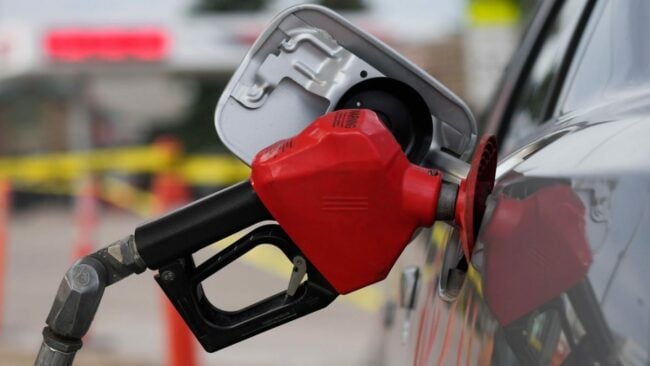
The vessel arrivals coincide with ongoing fuel price hikes nationwide. Nigerians currently face surging petrol costs after Dangote Petroleum Refinery raised its gantry price for PMS to N1,175 per litre, pushing retail prices above N1,200 per litre. The increase has affected transport fares and driven up the cost of goods and services nationwide.

See also  Access Holdings appoints Innocent Ike new GMD/CEO

Economic analysts, labour unions, and private sector leaders have called on the Federal Government to provide relief measures, citing rising crude oil prices driven by escalating tensions between the United States and Iran. Some stakeholders suggested subsidising petrol to mitigate the impact on citizens and businesses, warning that continued price increases could exacerbate inflation.

Petrol prices have reached between N1,200 and N1,300 per litre in several areas, with projections suggesting costs could exceed N1,500 or approach N2,000 per litre if the Middle East crisis persists.

Marketers speak

The Independent Petroleum Marketers Association of Nigeria confirmed that independent marketers are prepared to lift imported products to ensure availability and competition.

IPMAN spokesperson Chinedu Ukadike said, “We, the independent marketers, are always on the receiving side. Wherever the product is coming from, and it is in the tanks of depot owners or NNPC, we will buy it. The most important thing is availability.

“If NMDPRA made a statement categorically that there is no import licence, I don’t know where this one is coming from. But we are ready to receive the products and sell. Maybe that will also breed competition, and this price volatility may have sustainability. So, I think it is also a welcome development.”

Ukadike added that the vessels might be operating under licences issued long ago and that delays at sea—particularly around the Strait of Hormuz—may explain their late arrival.

“It might also be an old importation licence issued since last year. It is acceptable. The imported products would not have any impact on prices unless the price of crude oil declines. The price depends on the volume and cost of the product because there is nothing like a reduction in prices when Brent is still selling for over $100,” he said.

See also  Adeleke reduces work hours for Osun civil servants, see why

NMDPRA explains imports

The Nigerian Midstream and Downstream Petroleum Regulatory Authority has clarified that no import licences were issued in the first quarter of 2026, asserting that shortfalls in February were covered by leftover stocks from January and existing refinery output.

While IPMAN and other stakeholders supported the halt on fuel import licences, major dealers and importers argued that imports were still necessary to meet national demand. February figures show Dangote refinery produced an average of 36 million litres per day, while national consumption was about 56 million litres per day, leaving an apparent gap.

A source within NMDPRA, speaking on condition of anonymity due to the lack of authorisation to speak on the matter, explained that the refinery’s unsold stocks were rolled over due to weather-related export delays in Europe at the end of 2025, closing the supply gap in February.

“The shortfall rolled over from previous stocks. These things are simple. Our fact sheets are published monthly. There were rollover stocks. Dangote didn’t export for a long time towards the end of last year. So, it was those rolled-over stocks that it supplied. Both marketers and Dangote are only jostling for market shares. Has there been a shortage? No!” the source said.

The regulator also refuted online claims that new licences had been issued, noting that licences are granted quarterly. “Those that were issued towards the end of last year were still being used. A licence for importation is not like taking money to the supermarket. It takes time for vessels to arrive. We have not issued any import licence this year,” the official said.

See also  Bank recapitalisation: Local investors provide 72% of N4.6tn

Nigeria has historically relied on imported refined petroleum products due to limited domestic refining capacity. However, the operational Dangote refinery, producing 650,000 barrels per day, has shifted the downstream dynamics. NMDPRA confirmed that domestic refineries supplied 36.5 million litres per day in February 2026, with imports contributing just three million litres, representing roughly 92 per cent of the national daily supply.

Chief Executive of NMDPRA, Saidu Mohammed, warned against returning to heavy import dependence. “We have not issued a single licence for petrol importation this year. Some interests still push for large-scale importation despite our progress in domestic refining,” he said during a meeting with a PUNCH delegation at the agency’s Abuja headquarters.

The recent vessel arrivals, while ensuring availability, largely reflect past import licences and logistical delays, rather than new authorisations from NMDPRA.


Continue Reading
Click to comment

Leave a Reply

Your email address will not be published. Required fields are marked *

Business

Tinubu approves N3.3trn to settle power sector debt

Published

on

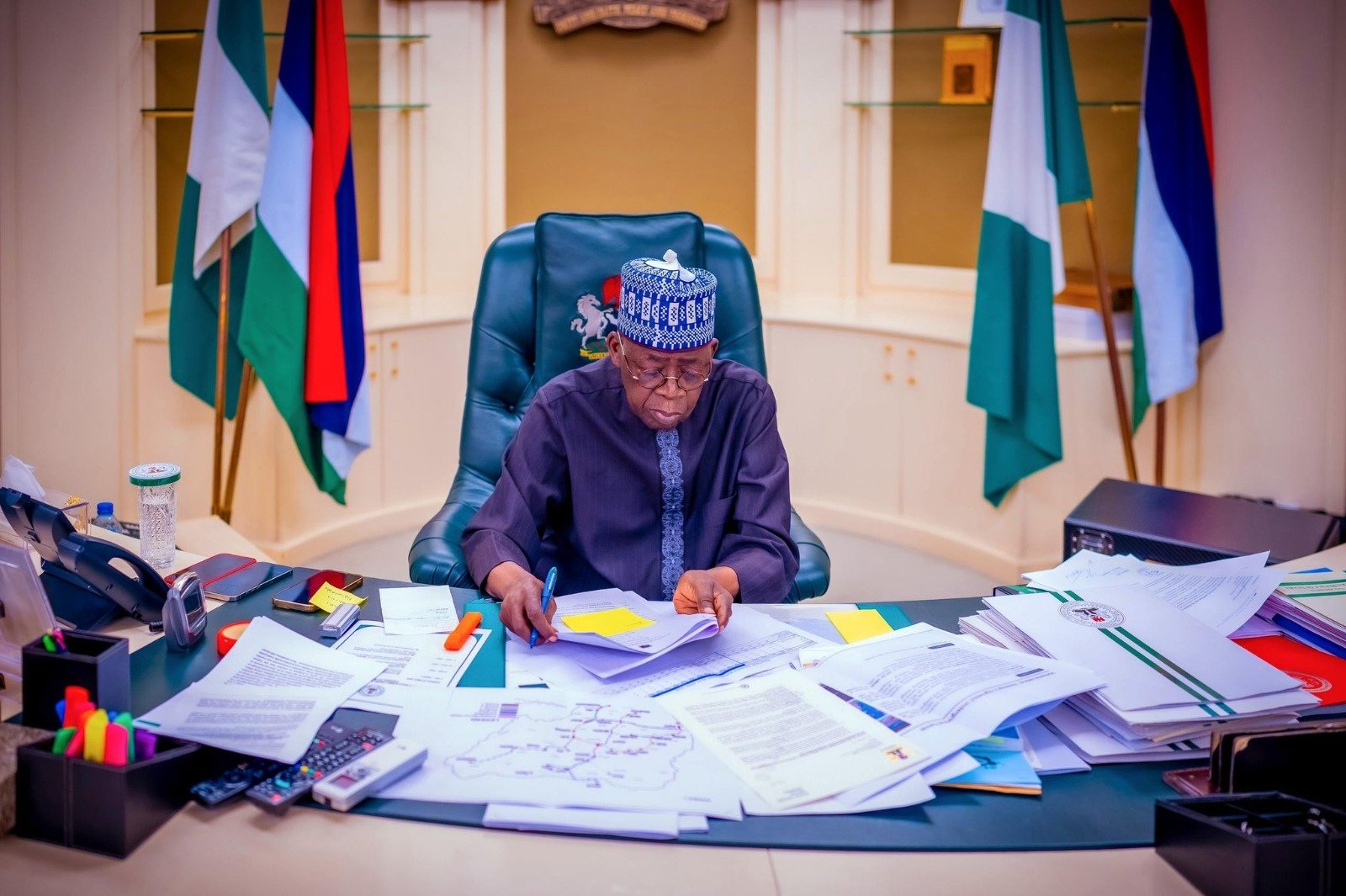
President Bola Tinubu has approved the payment of ₦3.3 trillion, being accumulated debts owed to players in the power sector between February 2015 and March 2025.

Presidential spokesperson, Bayo Onanuga, said the debt repayment plan followed the final review of the legacy debts that have beset the power sector for more than a decade.

The statement noted that implementation has begun, with 15 power plants signing settlement agreements totalling ₦2.3 trillion.

“The Federal Government has already raised ₦501 billion to fund these payments. Out of the amount, N223 billion has been disbursed, with further payments underway.”

The initiative under the Power Sector Financial Reforms Programme is to ensure a fair and transparent resolution and ultimately, stimulate stable electricity generation and distribution.

The statement highlighted the far-reaching gains of the government’s commitment to the debt settlement.

“With the payments reaching the power value chain, generation will be more stable. With power plants supported, electricity reliability will improve. And as the sector stabilises, more investment, more jobs, and better service will follow.”

Shedding more light on this, Olu Arowolo-Verheijen, Special Adviser on Energy to President Tinubu, said,

“This programme is not just about settling legacy debts. It is about restoring confidence across the power sector — ensuring gas suppliers are paid, power plants can keep running, and the system begins to work more reliably.

“It is part of a broader set of reforms already underway — including better metering and service-based tariffs that link what you pay to the quality of electricity you receive.

See also  Nigerian Stock Market Soars with N27Tr Gain

“The government is also prioritising power supply to businesses, industries, and small enterprises — because reliable electricity is critical to creating jobs, supporting livelihoods, and growing the economy.

“The goal is simple: more reliable power for homes, stronger support for businesses, and a system that works better for all Nigerians,” she added.

The statement further disclosed that President Tinubu has commended all stakeholders who supported efforts to resolve the legacy issues in the power sector.

He has also confirmed that the next phase (Series II) will begin this second quarter.

tribune.ng

FOLLOW US ON:

FACEBOOK

TWITTER

PINTEREST

TIKTOK

YOUTUBE

LINKEDIN

Continue Reading

Business

Electricity tariff hike imminent as Gencos step up pressure

Published

on

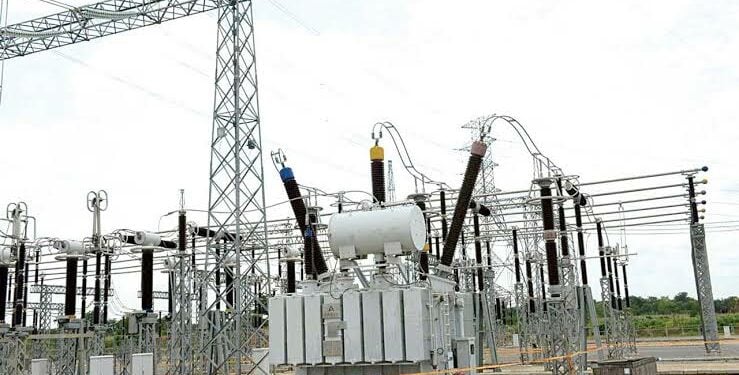
Electricity generation companies have called on the Nigerian Electricity Regulatory Commission to urgently review electricity tariffs following the Federal Government’s recent increase in the domestic base price of gas, warning that delays could worsen liquidity challenges and distortions across the power sector.

The Chief Executive Officer of the Association of Power Generation Companies, Joy Ogaji, said operators were less concerned about the increase in gas prices itself, but more worried about regulatory delays in adjusting tariffs to accommodate the new cost reality.

Ogaji, speaking in an interview with our correspondent on Monday, described gas as a “pass-through cost” that must be captured transparently in tariff computations.

She said, “Gas price, whether it is raised to $10, is not really our problem. Gas is a feedstock and a pass-through cost. So if the regulator in the power sector is comfortable with the increase, it is not a problem for us because whatever we are charged, we pass it down to consumers.

“All we want is for NERC to acknowledge the new base price and input it into tariff calculations. There is now a clear difference between what we used to pay and the new price, and that gap must be recognised.”

Despite the push for tariff adjustment, Ogaji stressed that the core challenge in the sector remained poor payment discipline rather than pricing. “For us, whether the price is high or low is not the issue. What matters is whether payments are made for what is supplied.

Even when the price was low, what percentage of invoices were settled? If you increase the price and payments are still not made, what difference does it make?” she queried.

She further called for the establishment of what she described as “bankable demand” in the electricity market, arguing that the absence of a clear and reliable payment structure continues to deter investment. “We need to define bankable demand in the market. Until we do that, we cannot determine whether investor confidence will improve or whether new investors can come in.

See also  Poor Nigerians, others to get tariff relief with the Electricity Act

“Nigeria has over 200 million people, but how many are actually paying for electricity? And even among those who are paying, do we have transparency to verify those payments? There is no transparency anywhere,” she added.

Ogaji warned that without structural reforms, including stronger political will and enforcement, the sector risks stagnation. “If we are not careful and do not change the dynamics, we will still be discussing the same issues in two years. The President needs to take decisive action, possibly declare a state of emergency in the sector and give clear marching orders on what must be achieved,” she said.

Also speaking, the Executive Director of PowerUp Nigeria, Adetayo Adegbenle, said the increase in gas prices would inevitably translate to higher electricity tariffs and rising subsidy obligations. “Since the price of gas, which is the major fuel for Gencos, has increased, it is expected that electricity tariffs will also increase,” he said.

Adegbenle added that regardless of whether tariffs are immediately adjusted, the financial implications would still manifest in higher invoices from generation companies. “Whether electricity tariffs are reviewed or not, it is bound to affect invoices from Gencos. What we need to understand, however, is what the government’s plan is to absorb the shock of these expected changes.

“Subsidies, or market shortfalls, are expected to increase since invoice values will increase. I have no idea yet, but this is the point. I hope the government will encourage full market deregulation and implement a fully contract-based electricity market. I had planned to make this a national discourse at some point, because we cannot continue to pretend that the electricity market is not optimal,” he explained.

See also  Access Holdings appoints Innocent Ike new GMD/CEO

He, however, questioned the Federal Government’s preparedness to absorb the fiscal impact of the changes. “We cannot continue to pretend that the electricity market is optimal. This situation also raises concerns about the sustainability of plans to raise bonds to offset debts owed to gas suppliers and Gencos. This is also another major argument against the bond being raised to pay off market exposure in terms of debt to gas suppliers and generating companies,” he added.

On his part, the President of the Nigeria Consumer Protection Network, Kunle Olubiyo, criticised the methodology behind the new gas pricing framework, describing it as inconsistent and lacking transparency. “The new base price is a bit confusing. The Nigerian Midstream and Downstream Petroleum Regulatory Authority had, from July last year, approved $1.13 as transport cost. So how do you now arrive at a figure that does not reflect the full pricing model?” he asked.

Olubiyo noted that when previous base prices are combined with transportation costs, the effective gas price should already be above $3 per unit. “It was around $2.15 last year, and when you add the $1.13 transport cost, it should be about $3.63. So whatever figure is being quoted now does not reflect the true cost,” he said.

He added that Nigeria’s power sector currently enjoys one of the lowest gas pricing regimes due to domestic supply obligations, despite global market pressures. “Gas is a commodity, just like petrol. In the international market, buyers are willing to pay up to $12 due to geopolitical tensions, especially in the Middle East. So why would any producer prefer to sell to Gencos locally, where they are often asked to be patriotic and even sell on credit?” he queried.

Olubiyo, however, argued that tariff increases alone would not resolve the sector’s deep-rooted inefficiencies. “Even before privatisation, we warned that tariff increases are not a silver bullet. There are fundamental issues affecting efficiency across the value chain,” he said.

See also  FIRS - 411% revenue rise won’t stop FG borrowing

He pointed to widespread technical and commercial losses, particularly in metering and energy accounting, as major drivers of inflated costs. “There are significant leakages in how electricity is measured and billed. Many meters are obsolete and lack integrity. If we fix these issues and ensure accurate measurement, most of the claims by Gencos could drop by 40 to 50 per cent. What consumers are paying for today includes inefficiency and systemic leakages,” he added.

The Federal Government, through the Nigerian Midstream and Downstream Petroleum Regulatory Authority, last week reviewed the domestic base price of natural gas, a benchmark used in pricing gas supplied to power plants under the Domestic Gas Delivery Obligation framework.

The domestic gas pricing regime was originally designed to ensure an affordable and reliable gas supply to the power sector, with prices historically set below international market rates to support electricity generation. However, persistent payment shortfalls, mounting debts to gas suppliers, and rising global gas prices have triggered calls for a cost-reflective pricing model.

Industry data shows that gas accounts for over 70 per cent of Nigeria’s electricity generation mix, making it the single largest cost component in power production. Under the current structure, any increase in gas prices directly impacts the cost of generation, which is expected to be reflected in electricity tariffs unless subsidised by the government.

The latest price adjustment is aimed at incentivising gas producers to prioritise domestic supply, but warns that without corresponding reforms in tariff setting, payment assurance, and market transparency, the policy may further strain an already fragile electricity market.

punch.ng

FOLLOW US ON:

FACEBOOK

TWITTER

PINTEREST

TIKTOK

YOUTUBE

LINKEDIN

Continue Reading

Business

FG uncovered 45,000 ghost workers via BVN integration – Former Minister of Finance, Kemi Adeosun

Published

on

Former Minister of Finance, Kemi Adeosun, has revealed how the Federal Government used technology to eliminate large-scale payroll fraud, uncovering 45,000 “ghost workers” through the integration of the Bank Verification Number (BVN).

Speaking at the Citadel School of Government Dialogue series in Lagos, Adeosun explained that prior to the reform, the federal payroll was the government’s largest expenditure and was plagued by inefficiencies that earlier biometric efforts failed to resolve.

She noted that previous attempts to sanitise the payroll using biometric systems often stalled due to resistance from paramilitary institutions such as the Police and Army, which were reluctant to adopt centralised processes.

To overcome this, her team leveraged the existing BVN database instead of introducing a new biometric system.

“The payroll was our biggest cost,” Adeosun said. “Previous biometric efforts had stalled because paramilitary groups refused to cooperate. We bypassed this by using BVN data. We ran the federal payroll against the BVN database, and the result was staggering: we found 45,000 ‘ghost workers.’”

Clarifying the nature of the fraud, she explained that the term “ghost worker” often concealed simpler issues tied to weak systems and individual exploitation rather than highly organised networks.

“In many cases, it wasn’t a ‘ghost,’ but one person’s BVN linked to multiple salaries,” she said. “It wasn’t always a cartel. Sometimes it was inefficiency—people who had died or transferred but were still receiving salaries.”

FOLLOW US ON:

FACEBOOK

TWITTER

PINTEREST

TIKTOK

YOUTUBE

LINKEDIN

See also  FG to borrow N800bn via February bonds
Continue Reading

Trending