Connect with us

News

Gbenga Daniel narrates how he went through hell under Amosun

Published

on

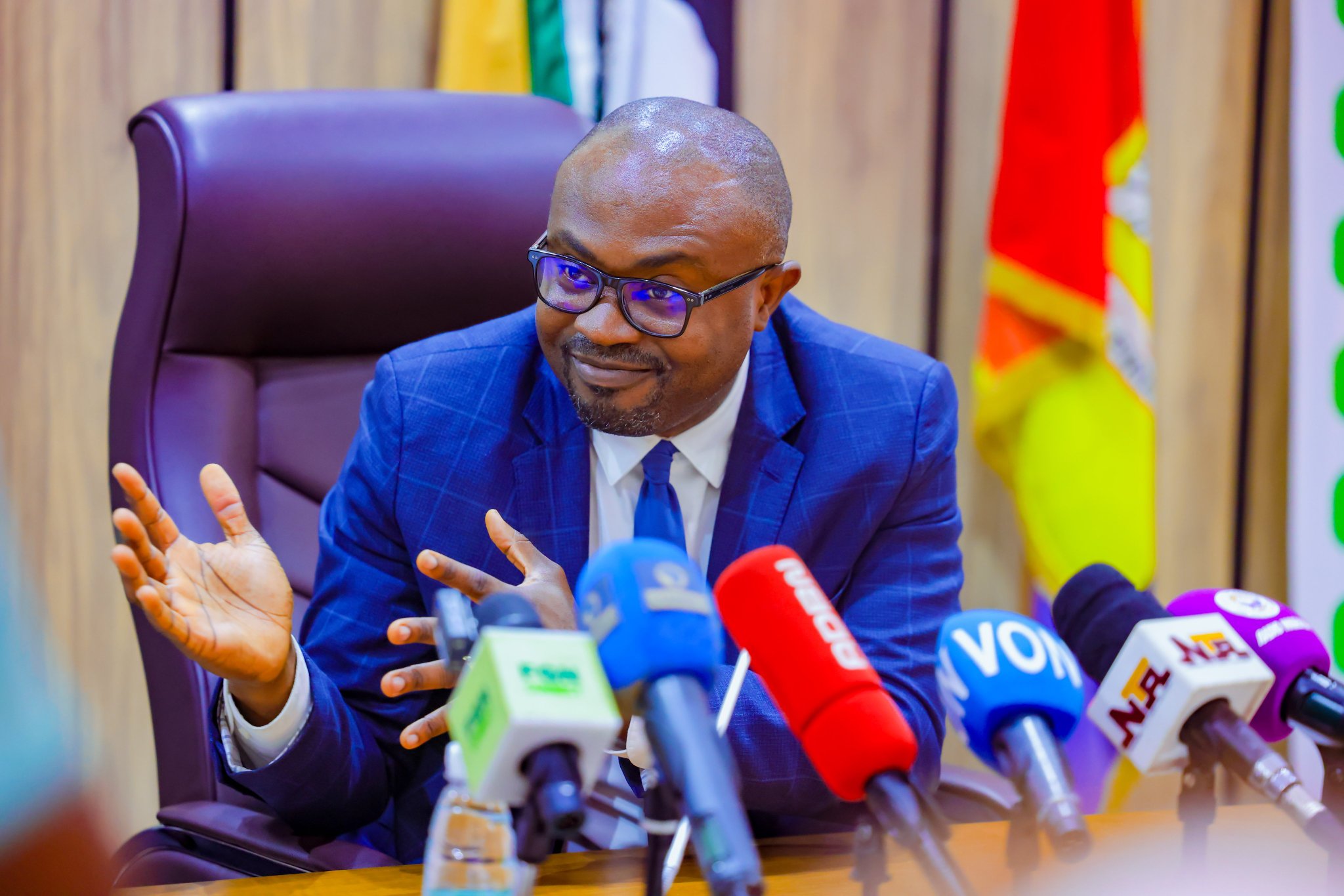
Former governor of Ogun State and senator representing Ogun East, Gbenga Daniel, recounted the political rivalry that once existed between him and his successor in office, Senator Ibikunle Amosun, saying that he went through hell under what he described as his “enfant terrible successor.”

Daniel said that at the centre of the political differences was the fact that Amosun was in a hurry to become governor, adding that there was nothing anyone, including himself, could do to stop his dream.

Daniel said that because he had not been seen to support Amosun’s governorship ambition, the former governor wasted no time moving against him and subjecting him to a witch-hunt when he eventually succeeded him in May 2011.

He, however, said Daniel the duo had mended fences, put past political fights behind them, and are now focused on working for the further development of the state and the country at large.

Daniel disclosed this on Monday in his short remarks during his 70th birthday thanksgiving service held at Abraham’s Tabernacle, Sagamu.

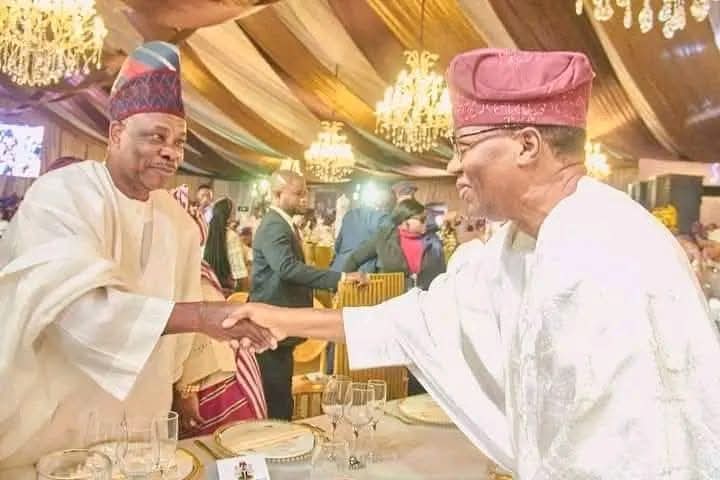
The thanksgiving had in attendance the General Overseer of the Redeemed Christian Church of God, Pastor Enoch Adeboye, former President Olusegun Obasanjo, represented by his wife, Mrs Bola Obasanjo, Governor Dapo Abiodun, represented by the Deputy Governor, Noimot Salako-Oyedele; Osun State Deputy Governor, Kola Adewusi, former Governor Amosun, Olubadan of Ibadan, Oba Rashidi Ladoja, Alake and paramount ruler of Egba land, Oba Adedotun Gbadebo, the Akarigbo and paramount ruler of Remo land, Oba Babatunde Ajayi, Senator Iyabo Obasanjo, 2023 governorship candidate of the Peoples Democratic Party in Ogun State, Oladipupo Adebutu, among others.

See also  INEC pushes back as opposition rejects S’West voter figures

Speaking at the ceremony, Daniel said, “Let me appreciate the former governors who are here, especially the one they call Ajiri, Senator Ibikunle Amosun, an enfant terrible successor  of mine.

“He showed me hell, but we thank God, with the prayers of our clergymen, he has repented.

“Sen Ibikunle, thank you very much. We started the race together, but you were too much in a hurry to  be governor. That was what happened.

“It is people like you that we call Ajagungbade. You fought for the crown, and you got it and became the governor, and there is nothing anyone can do about it. I wish you well, and I thank you sincerely for coming.”

Daniel and Amosun were political allies, and while the senator was serving his first term as the governor of the state from 2003 to 2007, Amosun, elected on the same platform of PDP, was representing Ogun Central at the Senate.

However, Daniel’s eyes on the second term reportedly made the two political allies fall apart in the build-up to the 2007 governorship election.

Amosun pulled away from the PDP and contested against Daniel on the platform of the All Nigeria People’s Party but lost the election to Daniel, who was then seeking his second term.

Amosun eventually succeeded Daniel after clinching his governorship victory in the 2011 election, defeating Gboyega Isiaka of the Peoples Party of Nigeria, who was backed by Daniel.

Amosun, on assumption of office in May 2011, launched a probe of his predecessor’s administration, leading to the Economic and Financial Crimes Commission charging Daniel to court on financial embezzlement to the tune of N7bn.

See also  Residents protest as bandits abduct seven in fresh Kaduna attack

After years of standing trial, the court case was struck out, and Daniel was discharged and acquitted of about 15 charges levelled against him.

Daniel appreciated the large turnout of people for the ceremony, saying that he was happy that the people came out in large numbers to reciprocate his leadership in the state for over 25 years.

He declared that the future of the country is very bright and called on the people to continue to support the purposeful leadership of President Bola Tinubu, who he said remained committed to making the country great once again.

Ministering at the special birthday service, Pastor Adeboye described Daniel as “quite an exceptional politician and original Omoluwabi.”

Adeboye said, having lived in Ogun State since 1983, he could, without fear or favour, disclose that Daniel has carved a niche for himself as he never played politics with the church.

“If you are looking for original Omoluwabi, Gbenga Daniel is one, and people like him are quite few. That is why when he approached me and said that I would be the one to say a few words during his 70th birthday, I said I would alter my busy schedule and be there.

“I respect you, sir; the Redeemed Christian Church of God respect you and wishes you a happy 70th birthday,” Adeboye said.

Taking his message from Psalm 90 vs 12, Adeboye urged the people to be conscious of their sojourn in life, because they are bound to give account of their deeds one day before their Maker.

See also  Why I returned to Nigeria on Ivorian jet — Jonathan

He explained that those who want to end well after their sojourn on earth must fear God, prioritise holiness and accept the Lord Jesus Christ as their personal Lord and Saviour.

In his address, Governor Abiodun hailed Daniel’s invaluable contributions to both governance and national development.

He said, “As governor of Ogun State, Otunba Gbenga Daniel brought energy and purpose to governance, laying foundations that continue to support growth and development across our state.”

The governor added that Daniel had continued to serve with the same passion and sense of responsibility as the senator representing Ogun East, contributing meaningfully to legislation, representation and the advancement of his constituents.

Congratulating the former governor on reaching the 70-year milestone, Abiodun prayed that Daniel would continue to grow stronger as he continues to devote the rest of his life to serving humanity.

punch.ng

FOLLOW US ON:

FACEBOOK

TWITTER

PINTEREST

TIKTOK

YOUTUBE

LINKEDIN

Continue Reading
Click to comment

Leave a Reply

Your email address will not be published. Required fields are marked *

News

Flight scare as aircraft attempts unscheduled route change

Published

on

Passengers onboard a Royal Air Maroc flight (AT 554) from Lagos to Casablanca, Morocco, endured a panic-filled ordeal on Easter Monday after the aircraft attempted an unscheduled diversion to Marrakech, another major city in the country.

The flight departed Murtala Muhammed International Airport, Lagos, at 7:05 a.m., with a scheduled arrival in Casablanca at 11:30 a.m. The journey proceeded normally until the cabin crew announced that the aircraft would make an unscheduled stop in Marrakech to pick up additional passengers, a development that surprised travellers who had expected a direct flight.

Shortly after the announcement, the aircraft began to shake violently as it attempted to adjust course to Marrakech. Passengers were gripped by fear, clutching seats, praying, and screaming the name of Jesus.

The aircraft appeared nearly half empty, which made passengers perceive that it was all about profit for the airline.

Cabin crew later apologised for the huge inconvenience but offered no detailed explanation for the development.

“They want to make more money at the expense of our lives,” one passenger, who requested not to be named in print, due to the nature of the incident, told our correspondent. “My only prayer was for us to land safely. I was watching everything from the window; it was beyond chaotic.”

The Nigerian traveller, who flies nine times a year between Africa’s most populous nation and the United States, said he had never experienced anything like it. The man added that the turbulence felt as though the plane could barely handle the air pressure en route to Marrakech, but the crew eventually managed to revert to the original route to Casablanca.

See also  Fubara cancels N134b secretariat contract awarded by Ibas, orders refund

After landing safely in Casablanca, attempts by our correspondent to speak with the pilot were unsuccessful. A crew member said he would check with his supervisor and returned shortly, explaining that the pilot was attending to operational duties and would join shortly. The pilot, however, did not come forward, and no further clarification was provided.

Aviation regulations from major authorities like the Federal Aviation Administration, UK Civil Aviation Authority, and International Civil Aviation Organisation allow aircraft to divert, meaning to land at an airport other than the planned destination, but only for certain reasons related to safety, weather, technical problems, onboard emergencies, or airport or airspace issues. These are not random business decisions like picking up passengers to fill the aircraft.

According to experts, flight plans are filed in advance and must specify destinations and alternates. Deviating to load extra passengers at a place not in the flight plan would require clearance from every country involved and must still meet operational safety requirements.

A Senior Reporter at TechCabal, Temitayo Jayeola, who was also on the flight, described the experience as life-threatening. “I said my last prayer,” he recounted, recalling the tense moments when the plane jolted and dipped mid-air.

Another passenger shared a harrowing account of the turbulence. “The plane was trying to force itself into the weather,” he said. “Instead of going this direction, it veered another way. I was observing it, and it was dropping; if you force it, it could have ended in a crash. When you are flying, try to watch the map to know exactly where the pilot is going. If the wind had broken the plane, there was no way we would have survived.”

See also  Residents protest as bandits abduct seven in fresh Kaduna attack

There are currently no direct flights from Lagos to Marrakech. Most flights from Lagos to Marrakech require at least one stop.

punch.ng

FOLLOW US ON:

FACEBOOK

TWITTER

PINTEREST

TIKTOK

YOUTUBE

LINKEDIN

Continue Reading

News

Doctors begin strike today, see why

Published

on

The strike declared by the Nigerian Association of Resident Doctors, scheduled to begin today, April 7, 2026, is already threatening to disrupt services across federal and state-owned hospitals nationwide.

Resident doctors in Nigeria have spent a cumulative 51 days on strike since the administration of President Bola Tinubu began, a development that raises fresh concerns over the government’s ability to sustain agreements with health workers.

The figure, which includes two major strikes and a warning action between 2023 and 2025, comes as doctors once again announced plans to down tools starting from today over unpaid allowances and policy reversals.

The PUNCH reports that the immediate trigger for the new strike is the Federal Government’s reported decision to halt the implementation of the revised Professional Allowance Table, a key component of an agreement reached after the 2025 strike.

In its latest statement, NARD described the move as “unfortunate” and accused the government of pushing doctors into another avoidable industrial action.

The association said its National Executive Council resolved to embark on a “total and comprehensive strike” following deliberations over the policy shift.

NARD is demanding an immediate reversal of the decision to stop the allowance table; payment of promotion and salary arrears; settlement of 19 months’ outstanding allowance arrears, and release of the 2026 Medical Residency Training Fund.

At the centre of the dispute is the Professional Allowance Table, which standardises payments such as call duty, shift allowances, and other work-related incentives.

An analysis of strikes by resident doctors since May 2023 shows a pattern of recurring disputes.

See also  FG rolls out plans to lift 50 million Nigerians out of poverty by 2030

In August 2023, the association embarked on a strike totalling 17 days.

The 2023 strike was primarily driven by welfare concerns and the worsening economic conditions facing doctors in Nigeria.

Following the removal of fuel subsidy on May 29, 2023, by the President, the cost of living rose sharply across the country. However, resident doctors said their salaries were not reviewed to reflect the new reality, making it increasingly difficult for them to meet basic needs.

In addition to salary concerns, the doctors complained about poor welfare, including inadequate and sometimes delayed allowances.

They also raised issues around insufficient funding for training and other professional needs, which they said affected both their performance and career progression.

Another major factor was the growing shortage of medical personnel due to the mass migration of Nigerian doctors abroad in search of better opportunities.

This trend significantly increased the workload on those who remained in the country, leading to stress, burnout, and declining morale within the health sector.

The strike, which began on July 26, 2023, was also linked to broader concerns about poor working conditions, including inadequate hospital infrastructure and the government’s failure to fully implement previous agreements reached with the association.

After about 17 days of industrial action, the strike was suspended on August 12, 2023, following negotiations between NARD and the Federal Government.

The doctors embarked on a warning strike, which lasted five days in September 2025. This was followed by a full-blown strike in November 2025. The strike lasted for 29 days.

The roots of the current crisis lie in the 2025 agreement between NARD and the Federal Government, which followed a prolonged strike.

See also  Nigeria 4-1 Gabon: Eagles soar into World Cup playoffs final

That agreement introduced the revised allowance structure aimed at improving doctors’ welfare, including enhanced payments for call duty, shifts, and rural postings.

Implementation was initially scheduled for January 2026 and later shifted to February. However, doctors said the process had been inconsistent and was discontinued.

As of the time of filing this report, the Ministry of Health and Social Welfare has not made an official statement concerning the planned strike by NARD.

Speaking with our correspondent on Monday, the Secretary General of NARD, Dr Shuaibu Ibrahim, noted that the association would consider the suspension of the strike should the government announce a decision to reverse its decision.

“When many people say we should start the strike immediately, we said no, this is a public holiday, let us give time for them to reverse the instruction, and once they give that reverse instruction, whether they communicate to us or they do not communicate to us, we will know.”

Ibrahim also noted that the situation was not only particular to resident doctors alone, but also to other categories of healthcare workers in the sector.

The Senior Special Adviser to the Minister of Health, Chinedu Moghalu, did not respond to inquiries sent to him as of the time of filing this report.

Meanwhile, the Abia State chapter of NARD has said it will align itself with the decision of its national directive to embark on strike from Tuesday.

According to the state president, Dr Godwin Alaede, after its congress in Umuahia on Monday, the branch said, “We are 100 per cent prepared to embark on the indefinite strike by midnight.

See also  21,000 unregistered refugees in Nigeria – UNHCR

Dr Alaede said when doctors are well remunerated, they will work well.

He said the doctors were sensitive to the plight of patients, adding, “We regret any inconveniences it (the strike) will cause to anyone who may be affected.”

He, however, assured that medical consultants and the nurses would fill the gap.

He noted that NARD in the state would hold another congress on Tuesday to review any agreement that may come out of the national level meeting with the Federal Government on Monday.

Continue Reading

News

FG budgets N135bn for 2027 election lawsuits

Published

on

The Federal Government has proposed N135.22bn in the 2026 budget for what it described as “Electoral Adjudication and Post Election Provision,” pointing to a fresh multi-billion-naira commitment to managing disputes and obligations that typically trail Nigeria’s elections.

The provision was contained in the House of Representatives Order Paper for March 31, 2026, which carried the report on the 2026 Appropriation Bill, as seen by The PUNCH on Monday.

The PUNCH observed that the allocation was captured under the Service-Wide Votes, a centrally managed pool of funds used by the Federal Government to finance obligations not tied to a specific ministry, department, or agency.

Service-Wide Votes are widely regarded as the government’s contingency or general-purpose fund within the budget.

It has been described as a central provision used to cover expenditures that cut across multiple agencies, including unforeseen obligations, national commitments, and liabilities that cannot be easily assigned to a single institution.

In some cases, the fund also accommodates items that require further approval or are not fully determined at the time of budget preparation.

Within this framework, the N135.22bn provision for post-election matters indicates that the government expects ongoing fiscal pressure from election-related legal disputes, settlements, and administrative processes.

Further analysis of the appropriation document showed that the provision sits within the broader Consolidated Revenue Fund charges, reinforcing its classification as a centrally managed obligation rather than a direct allocation to any single agency.

The budget schedule showed that total CRF charges stood at N3.70tn, meaning the electoral adjudication and post-election line alone accounted for about 3.65 per cent of that segment of spending.

The allocation came alongside a much larger N1.01tn statutory transfer to the Independent National Electoral Commission in the 2026 fiscal proposal.

The PUNCH observed that INEC is the largest recipient in this category, accounting for 21 per cent of the total statutory transfers of N4.80tn.

Statutory transfers are compulsory allocations backed by law and the Constitution, paid directly to government institutions such as INEC, the National Assembly, and the National Judicial Council.

These funds are released as a first-line charge from the Consolidated Revenue Fund and are not subject to direct executive control.

This means agencies receiving statutory transfers have a degree of financial autonomy and are guaranteed funding to carry out constitutionally mandated functions, particularly those tied to governance, democracy, and institutional oversight.

The PUNCH reported earlier in February that INEC informed the National Assembly it required N873.78bn to conduct the 2027 general elections. The agency also demanded N171bn to fund its operations in the 2026 fiscal year.

The N873.78bn proposed for the 2027 elections represents a significant increase over the N313.4bn released by the Federal Government for the 2023 general election.

The PUNCH further observed that the N135.22bn included in the 2026 appropriation bill is a new line item, which was not stated in the proposed 2026 budget.

Parties question allocation

However, opposition parties and civil society organisations have questioned this new allocation.

The People’s Democratic Party and the African Democratic Congress have raised concerns about the N135.22bn provision for post-election legal matters, questioning the allocation’s transparency and rationale and calling for greater accountability in its use.

The National Publicity Secretaries of the PDP and the ADC, Ini Ememobong and Bolaji Abdullahi, in an exclusive interview with The PUNCH, expressed concern that the provision suggests INEC is expecting legal disputes, implying a lack of preparedness to conduct free, fair, credible, and acceptable elections in 2027.

See also  Okpebholo joins Edo residents to protest power outages

The PDP National Publicity Secretary said the provision raises concerns about transparency in Nigeria’s electoral process. He argued that the allocation suggests INEC is anticipating disputes, adding that greater openness would “drastically reduce” post-election litigation.

Ememobong said, “It means that INEC itself is anticipating that it will not do well and that people will not accept the outcome of the results. Because if INEC becomes very transparent, post-election litigation will be reduced drastically. It is the lack of transparency and the obvious opacity of INEC during elections that result in post-election litigation.

“However, INEC, in every election, is meant to be neutral. So I am wondering what they are funding.”

He questioned the need for extensive legal funding, noting that “most of the lawyers should be in-house,” while alleging that external counsel may be influenced by political interests.

Ememobong warned that weak institutions and poor electoral conduct have historically undermined democracy, urging authorities to “learn from history” and prioritise governance over politics ahead of the 2027 elections.

“My advice is that the APC-led Federal Government, INEC, and everyone involved in the 2027 elections should take a step back to ensure we protect the country and democracy before talking about elections and partisanship,” he said.

On his part, the ADC Publicity Secretary said it is normal for the Independent National Electoral Commission to prepare for post-election litigation, noting that the electoral body is often joined in legal disputes arising from elections.

However, he raised concerns about the size of the N135bn provision, describing it as excessive given expectations of credible polls. Abdullahi questioned the basis for such a large budget for legal services and the number of cases being anticipated.

He argued that if elections are free and transparent, litigation should be minimal, warning that while the principle is valid, the amount raises accountability concerns.

Also reacting, a renowned political economist, Prof Pat Utomi, questioned why the Federal Government should make budgetary provisions for elections, insisting that elections are contested by individual candidates, not the government.

Speaking to The PUNCH, Utomi said, “It is not the Federal Government that goes to elections, it is the individual candidates, so why should the Federal Government have a budget for it? They should not.”

When asked whether such provisions could be meant for the Independent National Electoral Commission, which is often involved in post-election litigation, he maintained that the commission should manage its own budget.

“If the budget is for INEC, then it should be in the INEC budget, not the FG’s budget. Although the budget process in Nigeria is broken and has been a pure mess,” he added.

On his part, human rights lawyer, Femi Falana (SAN), has criticised the proposed expenditure on election-related legal matters, describing it as excessive and unjustifiable.

Falana speaking to The PUNCH on Monday, said, “It is on the very high side. Apart from the fact that INEC has its legal department that services all its offices in the 36 states of the Federation, INEC does not pay more than N3m per brief, even to a senior advocate. This is due to the fact that INEC maintains a neutral position in the majority of pre-election cases.”

See also  Residents protest as bandits abduct seven in fresh Kaduna attack

He noted that in 2023, the Independent National Electoral Commission was involved in a relatively limited number of legal disputes. “In 2023, INEC was joined as a party in less than 3,500 pre-election cases, election petitions, and appeals arising from them,” he said.

The senior advocate further argued that recent legal developments are expected to reduce the volume of such cases.

“With the ouster of the jurisdiction of the courts in the internal affairs of political parties, the number of pre-election cases will be substantially reduced, and if INEC conducts credible elections, there may be few election petitions and appeals,” Falana added.

He maintained that overall spending on election litigation should remain significantly lower than projected. “Altogether, INEC may not spend up to N20 billion on election legal battles,” he said.

Bodies react

The provision, approved by the National Assembly, has also sparked criticism from Civil Society Organisations, which questioned both the intent and implications of allocating such a substantial sum for anticipated electoral litigation.

The Executive Director of #FixPolitics Africa, Anthony Ubani, has raised concerns over the allocation for post-election legal battles, warning that it reflects deeper flaws in Nigeria’s electoral system.

Ubani said, “The N135.22bn allocation for post-election legal battles is a troubling signal about the state of our democracy”.

While he acknowledged that election disputes are part of the post-election period, he stressed that making a budget as high as the proposed sum calls for concern. He argued that the growing reliance on courts to determine electoral outcomes undermines public confidence in the democratic process.

“Yes, electoral disputes are normal, and the judiciary must be funded. But when a country begins to budget this heavily for post-election litigation, it suggests that elections are no longer expected to be trusted; they are expected to be contested.

“A credible electoral system should settle outcomes at the ballot box, not in the courtroom. But in Nigeria, elections are increasingly fought in three stages: primaries, voting day, and then the tribunal. This weakens public confidence and shifts the real battleground away from the people,” he said.

Ubani added that the trend encourages manipulation and reduces accountability among political actors.

“When politicians believe the final outcome will be decided in court, compliance drops, manipulation increases, and the system begins to reward strategy over integrity. Instead of fixing the root causes, weak electoral laws, poor transparency, weak enforcement, and flawed processes, we are budgeting to manage the consequences. That is backward.”

He called for reforms to strengthen electoral credibility, including real-time transmission of results.

“#FixPolitics, as you may know, has been at the vanguard of advocating and championing electoral transparency, the rescission of the flawed Electoral Act 2026, so that a new law can be passed that captures mandatory real-time electronic transmission of results.

“Just including mandatory real-time electronic transmission of results in the electoral law is enough to checkmate 55 per cent or more of the malpractices, opacity, and fraud in the electoral process. This, in turn, will necessarily cut the litigation budget at least by half.

“Nigeria must invest more in electoral integrity than in electoral disputes. The goal should be clear: elections that are credible enough to be accepted, not endlessly litigated. Anything less keeps us trapped in a cycle of distrust, cost, and democratic decline,” the political group emphasised.

See also  11 killed, 50 houses burnt in Nasarawa community clashes

Reacting to the development, the Executive Director of the Centre for Anti-Corruption and Open Leadership, Debo Adeniran, said the allocation could only be justified under specific conditions.

“It could only be appropriate if it is allocated for legal battles by or against INEC. But if it is for legal battles involving the ruling party, that would be unwarranted. That would be abnormal,” he said.

Adeniran noted that budgeting for legal disputes reflects contingency planning but warned against duplication of responsibilities, particularly if the Independent National Electoral Commission already has provisions covering such expenses.

He added that the scale of potential litigation across political parties and jurisdictions could significantly drive up costs. “The research, evidence, and witnesses will also be compiled. All of these things really cost money. So legal fees can be very hefty sometimes, but because it is a plan, whatever is not spent is expected to be returned to the treasury,” Adeniran said.

However, he questioned why the Federal Government should shoulder such a responsibility if INEC already receives substantial funding. “So it would be like double appropriation. If INEC has already received nearly a trillion naira, it ought to have included legal battles in its appropriation,” he said.

He stressed that as an independent body, INEC should manage its legal funding through its own budgetary framework. Adeniran further warned against using public funds to support political parties in election-related litigation.

Also speaking, the Executive Director of the Civil Society Legislative Advocacy Centre, Auwal Rafsanjani, described the allocation as troubling, suggesting it signals an expectation of widespread electoral disputes.

“The idea of this huge amount of money for an anticipated legal tussle on the election shows that there appears to be already a premeditated plan to create conditions for an election dispute,” he said.

Rafsanjani questioned the rationale behind allocating large sums for elections that should ideally be conducted transparently and efficiently. “And why is it that Nigeria is spending so much money to conduct an election, and the election ends up in unsatisfactory conduct?” he asked.

He argued that credible electoral processes would significantly reduce the need for post-election litigation. “Conducting free and fair elections will actually help us to minimise waste and duplication of resources if we are honest and sincere about organising an election,” Rafsanjani stated.

He also raised concerns about fairness, warning that such funds could disproportionately benefit ruling party candidates. “So both INEC and the ruling party must not take advantage and undermine the other opposition political parties in the country if we really want to ensure that we are fair and balanced,” he said.

Rafsanjani concluded by urging authorities to prioritise electoral integrity over preparing for disputes. “I think INEC and the government should ensure that we have an election that is conducted in the most democratic, fair, transparent, and inclusive ways. This is the best way to cure the waste of public taxpayers’ money to pay for electoral disputes,” he said.

Continue Reading

Trending