Connect with us

Politics

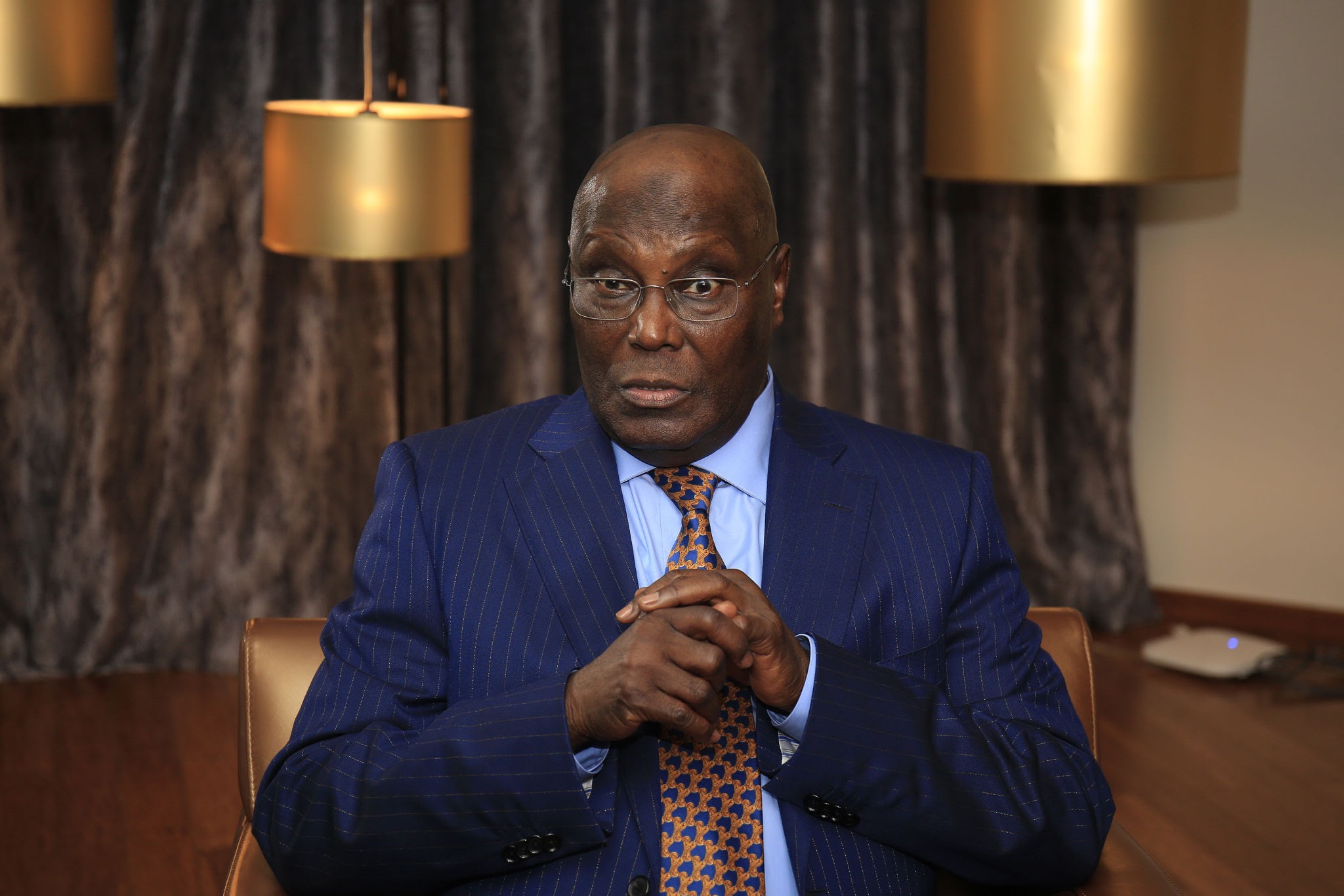
Atiku ’s three-decade quest for Aso Villa, analyzed

Published

on

Long before Atiku Abubakar became a household name across Nigeria, he had been nurturing presidential ambitions that have not lasted for three decades. When the military administration of Ibrahim Babangida initiated the 1993 transition programme, Atiku threw his hat into the ring within the Social Democratic Party (SDP), contesting the presidential primaries against the business mogul, Moshood Kashimawo Olawale Abiola, popularly known as MKO Abiola, and Baba Gana Kingibe. He came third, a distant but telling debut.

That primary loss did not discourage him. Instead, it sharpened his political instincts and expanded his network. When the June 12, 1993 election was annulled and Nigeria descended into political chaos, Atiku retreated to consolidate his business interests and bide his time. The ambition, however, never died.

By 1998, the Adamawa-born politician had won the governorship of the state, only to be persuaded almost immediately to step aside in favour of a bigger prize — becoming vice president under General Olusegun Obasanjo (rtd) on the Peoples Democratic Party (PDP) platform. For eight years, Atiku occupied Nigeria’s second-highest political office, presiding over privatisation, managing the economy, and building one of the most formidable political networks the country had ever seen.

Yet even as Vice President, the tension between his ambitions and those of his principal was palpable. Atiku quietly built his own base, one so formidable that, at a point, he reportedly commanded the loyalty of more state governors than the President himself.

The 2007 fall-out

The relationship between Obasanjo and his Vice was never entirely warm, and eventually collapsed dramatically. The rupture came over Obasanjo’s alleged attempt to secure a third term through constitutional amendment, a bid Atiku helped defeat. The President retaliated by engineering Atiku’s suspension from the PDP and alleged corruption charges that led the Independent National Electoral Commission (INEC) to initially omit his name from the 2007 presidential ballot.

Atiku fought back through the courts with remarkable tenacity. The Supreme Court of Nigeria ultimately upheld his right to contest the election. However, Atiku decided to eye Aso Villa from the Action Congress (AC), and later placed third behind the PDP’s Umaru Yar’Adua and the ANPP’s Muhammadu Buhari, securing roughly seven percent of the vote — a creditable showing for a candidate who had nearly been barred from the race entirely.

After Yar’Adua won, Atiku quietly returned to the PDP. By 2010, and head of the 2011 general elections, he was again declared the Northern Consensus Candidate by a committee of elders, ahead of former military President Ibrahim Babangida and others.

See also  Iyabo Obasanjo declares for Ogun governorship race

2011 and 2015: The internal battles

In the 2011 presidential primary, Atiku faced incumbent President Goodluck Jonathan — who is seeking his first direct shot at the presidency after Yar’Adua’s demise, a contest Atiku lost within the PDP.

Before 2015, Atiku had joined forces for a merger majorly formed by three political parties that metamorphosed into the All Progressives Congress (APC). The former Vice President threw his hat in the ring again for the party’s ticket against 2015. This time, the odds favoured Muhammadu Buhari (now late), who had crossed from the Congress for Progressive Change (CPC) to flag APC flag against the PDP’s incumbent Goodluck Jonathan gunning for a second term.

Each loss reinforced a curious paradox — Atiku was consistently powerful enough to reach the final stages of the race, yet consistently unable to win it.

2019: The race he almost won

The 2019 presidential election represented Atiku’s most credible performance. Returning home to run again on the PDP platform was a calculus he perfected in 2017. This time, after a well-managed party’s primary victory, Atiku secured over 11 million votes, which was 39 per cent of the total votes, against President Buhari’s 15 million. Atiku believed he won the poll Supreme Court, after a long, suspenseful legal battle, upheld Buhari’s victory, but the margin had narrowed considerably. Nigeria’s opposition had finally found its voice, and Atiku was its standard-bearer.

Unlike 2015, when Buhari enjoyed a wider acceptability, many observers believed 2019 was the election that should have been Atiku’s. The economy under ‘Sai Baba’ was struggling, security was deteriorating, and the incumbent was visibly frail. Yet the combination of incumbency advantages, voter suppression allegations, and deep North-South political faultlines conspired, his supporters argued, against a fair outcome.

Atiku in 2023 ‘youth revolution’

The 2023 election introduced a new dynamic that proved fatal to Atiku’s chances. The emergence of Labour Party’s Peter Obi as a powerful third-force candidate shattered the traditional two-party contest. The Obi’s candidacy reawakened sheer civic engagement that saw seeming revolutionary tempest by young Nigerians, mobilised under the #ObiDatti movement, to oust the reigns of the old parties.

Atiku, despite winning the PDP primary, found himself squeezed between Bola Tinubu of the APC, Peter Obi of the LP who was his 2019 vice presidential candidate, and Rabiu Musa Kwankwaso of the New Nigeria People’s party (NNPP). He came second in what became one of Nigeria’s most litigated elections.

See also  NNPP presidential ticket not exclusive to Kwankwaso – National Chairman, Ahmed

The irony was inescapable; the very forces of democratic energy that Atiku had championed — civil society, youth activism, anti-incumbency sentiment — had turned against his own bid, flowing instead toward a fresher face.

2027: Eyes on the goal

In a move that stunned Nigeria’s political establishment, Atiku Abubakar left home — the PDP — again in 2025, to join in the cooking of another APC-coalition in the African Democratic Congress (ADC). More remarkably, he did so alongside his running mate-turned-rival, Peter Obi and PDP’s homeboy, Kwankwaso. The three men, whose competing candidacies in 2023 arguably split the opposition votes and handed victory to the incumbent President Bola Ahmed Tinubu, appeared finally to have taken the lesson for united front to Aso Villa.

Tribune Online reports that opposition political parties in Nigeria, after a recent summit in Ibadan, agreed to present a sole presidential candidate to rival President Tinubu in the 2027 election. Could this be Atiku?

Meanwhile, the alliance is historic. It unites the North-South, Muslim-Christian symbolism that Nigerian politics demands, and brings together most experienced opposition politicians of their generation.

Political scientists and a professor, Bolaji Omitola, had noted the absence of an extensive state-level structure for the ADC, particularly in the South-South and South-East, which undercuts its national ambition. “Without such foundations,” he said, the party “risks being dismissed as another Abuja coalition rather than a mass movement.” Whether it can withstand the centrifugal pressures of ego, ethnic balance, and party dynamics remains the central question of the 2027 election cycle.

Should Atiku secure the ticket to contest in 2027, he will be 80 years old on election day. Critics are already raising the age question with renewed urgency. Nigeria, a country with a median age of just 18 years, has an overwhelmingly young electorate increasingly impatient with recycled political figures. The same youth energy that powered the #EndSARS protests of 2020 and the Obidient movement of 2022 is unlikely to be easily harnessed by an octogenarian candidate.

What drives the man?

Political psychologists and analysts who have studied Atiku’s career point to several interlocking motivations. There is, first, the simple and unashamed personal ambition of a self-made man who rose from poverty in Jada to the highest offices in the land and sees the presidency as the natural culmination of a remarkable life story.

Atiku confirmed in a recent interview with Arise TV that he would not contest again after this: “Certainly, yes. Because I believe that will be my last outing. That is incontrovertible,” he admitted.

See also  Zamfara gov reveals why he defected to APC

Responding to questions about whether his candidacy represents the future or the past, Abubakar argued that leadership requires a balance of both experience and generational renewal.

While Olaniyi Ajibola, Public Policy Analyst, said, “I represent both the past and the future. We have seen various levels of leadership, both young and old. I believe expectations of young leadership have been below what we thought; they require experience and tutelage from the older generation. Sometimes you need to be in power to give that tutelage,” he noted.

“Going by the accounts of individuals that are very close to Alhaji Atiku Abubakar, I can safely conclude that the rationale behind his presidential ambition since over three decades is more spiritual than logical.”

“Obviously, every spiritual phenomenon is mostly physically illogical, so, many Nigerians are not convinced about what drives him since 1992. He has never come up with any brilliant alternative policies to better the lives of Nigerians nor creative ideas for economic growth. He must have been listening to some voices beyond the terrestrial realm.”

“He has run six times. He has lost six times. He is probably going to run again. At what point does determination become something else entirely? You would be a fool to write him off. People have been writing off Atiku Abubakar since 1993. He is still here, still talking, still building alliances.”

The verdict of history

Whatever the outcome of 2027, Atiku Abubakar’s place in the annals of Nigerian political history is already secured not as president, but as the most tenacious presidential aspirant the Fourth Republic has produced. He has outlasted Obasanjo’s hostility, survived INEC’s attempts to exclude him, weathered U.S. Senate corruption investigations, and watched rivals rise and fall while continuing his own march.

The question Nigeria must answer in 2027 is not whether Atiku has earned the right to try once more. By any measure, he has. Nigeria’s political story is full of men who waited too long, who held on past the moment when the country was ready for them. Whether Atiku is one of them, or whether 2027 finally delivers what thirty years of effort could not, that is the question hanging over Nigerian politics heading into the next election cycle — and may be answered with ADC presidential primary.

tribuneonlineng.com

FOLLOW US ON:

FACEBOOK

TWITTER

PINTEREST

TIKTOK

YOUTUBE

LINKEDIN

INSTAGRAM

Continue Reading
Click to comment

Leave a Reply

Your email address will not be published. Required fields are marked *

Politics

Obi, Kwankwaso join NDC, demand litigation-free politics ahead of 2027

Published

on

Former Labour Party presidential candidate Peter Obi and ex-Kano State governor Rabiu Kwankwaso have formally joined the Nigeria Democratic Congress, calling on members to avoid litigation and focus on advancing the nation’s development.

The two opposition heavyweights made the call on Sunday in Abuja during their formal reception into the party, amid ongoing political realignments ahead of the 2027 general elections.

Obi declared his switch to the NDC shortly after announcing his resignation from the African Democratic Congress, which he joined last December.

Addressing party leaders and supporters, the presidential aspirant said their decision to join the NDC was driven by the need for a peaceful political platform devoid of internal crises.

He said, “First of all, sincerely, I join in thanking the leader of our party. And I assure him that we are coming here to be part of the peaceful family that will work hard to build a united, secure, prosperous Nigeria that will work for everybody.

“Kwankwaso is also a leader who has been at the forefront of education, providing primary care and putting people out of poverty because we want to build a country where a child of nobody can be somebody without knowing anybody. That is what we want to do.

“We are using this occasion to plead with the government of today. You know that I contested the election in 2023 in a different party. Rabiu Kwankwaso contested the same election in a different party.”

Continuing, Obi accused the current government of fuelling persistent crises within opposition parties, leading to endless litigation that forced him and others to abandon their former platforms.

He noted their hope for stability was quickly tested by unresolved disputes in every new party.

“The government of today has ensured that they put up crisis upon crisis, which led to several lawsuits in our party that made us abandon those parties and move to another party, thinking that our situation would abate.

“But what we saw was a carry-over of the same problem from where we came from – similar unresolved crisis, litigations and everything. Today, we have left that place to NDC, where the leader has already assured us that they have no litigation. So, we are pleading with them for the sake of democracy. Please, don’t come here. We want to have peace. We don’t want cases.

“We are equally pleading with the judiciary to please end the cases with parties so we can face the job of building a new Nigeria that is possible and face the job of revival, where our country is deteriorating today. So we want to start building. Please, let there be no litigation. Party members, please don’t go to court.

“We want to build a party. Those of us who are lawyers want you to be good practitioners. We don’t want to spend our time in litigation and fighting ourselves. Let’s spend our time dealing with issues affecting the ordinary Nigerian. This ship is about to sail. Please do everything possible to join,” he urged

In his remarks, Kwankwaso said their engagement with the NDC leadership showed strong alignment in ideology and governance priorities, particularly in education, youth empowerment, and national unity.

See also  Iyabo Obasanjo declares for Ogun governorship race

He said, “We came here together with our team to consult His Excellency, the leader of this party, on our ideology, blueprint, and all that we believe in, especially my humble self and His Excellency, Peter Obi. And we realised that we are all on the same page, be it education, empowerment of young men and women, security, and of course, a very peaceful, united Nigeria.

“During the discussion, we realised that the NDC is submitting its register, I think on May 6. Now, at this point, I would like to invite all Nigerians, including our brothers and sisters in diaspora, especially those who are interested in contesting elections in this party, to register as soon as possible.

“So, Your Excellencies, now that we have realised that we only have a couple of days to register, we have decided that all of us will register by the grace of God today. And once again, I want all of us who are here, those who believe in us, and who believe in promoting the peace and the progress of this country, to register with the NDC.”

Kwankwaso also used the occasion to rally his political base, including former members of the New Nigeria People’s Party and the Kwankwasiyya movement, to align with the new platform.

The two men received the NDC membership cards amid cheers from supporters, shortly after a closed-door meeting with the party leaders.

Earlier, former Adamawa State governorship candidate, Aishatu Binani, described the duo as influential figures with strong grassroots appeal.

She said, “Our party has officially received very good politicians and renowned national leaders. Your Excellencies, Mr Peter Obi and Senator Rabiu Kwankwaso are household names in this country, especially amongst the youth and women. We are proud of you.

“Incidentally, youth and women are the bedrocks of our party support. The NDC is a symbol of democratic tenets, fairness, equity and justice. That is the reason why it is different from others.”

Welcoming the new members, the National Leader of the NDC, Senator Seriake Dickson, said the entry of Obi and Kwankwaso reinforced the party’s growing national appeal.

“On behalf of the National Working Committee, teeming members of our party and well-meaning Nigerians, I welcome you both to the party.

‘’We were told you are not coming here with the crowd today. But both of you are personifications of the crowd. As you can see, the crowd has followed you here. This party does not know what is called ‘status quo ante bellum.’

“Let me assure you that the two of you are part of the biggest brands in our political history. We trust and believe you. The Nigerian people know what you are bringing on board. There will be enough time for the campaign when we will also unveil the political process of the party,” he stated.

Dickson added that the NDC represents an ideological movement anchored on integrity, transparency, and inclusive governance, with a strong focus on youth and women’s participation.

The defection followed a closed-door meeting earlier on Sunday at Dickson’s residence in Guzape, Abuja, where both leaders finalised their move into the party.

Obi and Kwankwaso arrived at about 5:18 p.m. to chants of “O-K is okay” from supporters under the Obi-Kwankwaso Movement.

See also  APC, opposition list expectations for next INEC chair ahead of 2027

Political figures present at the meeting include former Kano APC governorship candidate, Nasiru Gawuna; ex-Adamawa governorship candidate, Binani; former Zamfara senator, Kabir Marafa; and Senator Victor Umeh.

The defection comes amid widening opposition realignments and follows Obi’s recent exit from the African Democratic Congress over internal crises and litigations.

Announcing his exit from ADC earlier, the ex-Anambra governor attributed it to deepening internal crises and what he described as a hostile political environment.

In a statement posted on  X on Sunday, he reflected on the “toxic” nature of Nigeria’s political space and the mounting pressures faced by public figures.

The former ADC chieftain clarified that his decision was not driven by personal grievances with key party leaders, including the National Chairman, Senator David Mark, or former Vice President Atiku Abubakar.

He said, “Let me state clearly: my decision to leave the ADC is not because our highly respected Chairman, Senator David Mark, treated me badly, nor because my leader and elder brother, Alhaji Atiku Abubakar, or any other respected leaders did anything personally wrong to me. I will continue to respect them.”

Obi’s exit marks the latest twist in the evolving opposition landscape, which has been characterised by shifting alliances, internal disputes, and renewed efforts to build a formidable coalition capable of challenging the ruling party in 2027.

Continuing, Obi lamented that his decision was necessitated by recurring internal conflicts and external pressures, which he said were beginning to mirror the challenges he previously encountered in the Labour Party.

He pointed to persistent court cases, internal divisions, and an atmosphere of suspicion within the ADC, warning that such distractions were diverting attention from critical national issues.

“The same Nigerian state and its agents that created unnecessary crises and hostility within the Labour Party that forced me to leave now appear to be finding their way into the ADC, with endless court cases, internal battles, suspicion, and division, instead of focusing on deeper national problems and playing politics built more on control and exclusion than on service and nation-building.

“Even within spaces where one labours sincerely, one is sometimes treated like an outsider in one’s own home. You and your team become easy targets for every failure, frustration, or misunderstanding, as though honest contribution has become a favour being tolerated rather than appreciated.

“And when you choose to leave so that those you are leaving can have peace, and you step out into the cold, you are still maligned, and your character is questioned. Despite all your efforts to continue working for a better Nigeria and engaging people with sincerity and goodwill, those who do not wish you well continue to attack your character,” he stated.

The development has heightened speculation over the future of opposition coalitions, with multiple blocs exploring the possibility of merging forces to challenge the ruling All Progressives Congress in the next general election.

Obi’s supporters under the aegis of Obidient Movement Worldwide have, however, reaffirmed their support for their patron, insisting that attempts to weaken his political influence have instead strengthened his grassroots appeal ahead of the 2027 elections.

See also  PDP crisis: Wike camp rejects zoning talks with Makinde, Diri

In a post on X on Sunday, the Interim National Coordinator of the movement, Yunusa Tanko, said Obi’s appeal continues to grow across the country despite what he described as sustained attempts to frustrate his political ambitions.

Tanko said the movement remains firmly committed to Obi’s political future, noting that recent developments point to expanding grassroots mobilisation in his favour.

According to him, new support structures are emerging across different regions, including the “Peter Obi 4 President Movement,” led by Awal Kuka, which he said now has a presence in 19 states in the North.

He stressed that the development reflects sustained public interest in Obi’s political project and dismissed claims that opposition to the former Anambra State governor was weakening his support base.

“We stand with Peter Obi. In all their efforts to stop HE PO from running for the office of President of Nigeria, his popularity keeps increasing,” Tanko said.

He also declared that the movement remains resolute in its message of political reform and national renewal, stating, “Stand with Peter Obi. We are confident in our message of political reform and national renewal. A New Nigeria is Possible.”

Speaking on the development, the Presidency and the ruling All Progressives Congress described Obi as a political nomad.

The Special Adviser to President Bola Tinubu on Information and Strategy, Bayo Onanuga, reacting via his X handle to Obi’s announcement, dismissed the reasons given for leaving the party, characterising them as self-serving.

Onanuga urged Nigerians to ignore what he described as “illogical musings” in Obi’s statement, accusing the former governor of avoiding a contest for the party’s ticket against figures like Atiku Abubakar and former Rivers State governor, Rotimi Amaechi.

He wrote, “We told you so. The political nomad is on the move again. Ignore all those puerile reasons he gave in these illogical musings, a self-serving letter to his mob.”

He further criticised Obi’s political approach, alleging that he avoids difficult contests.

“Peter Obi is a politician made of jelly, an opportunistic fellow. He can’t fight Atiku or Amaechi for the ticket of ADC. He pursues the easy road, which will only lead him to doom, like in 2023.

“He always blames the government without doing a soul-searching of himself. Welcome, Peter, to the 2027 race,” he added.

The APC, on the other hand, accused the former presidential candidate of frequently changing party platforms instead of contributing to long-term party development.

The party’s National Publicity Secretary, Felix Morka, made the remarks in a post on his X (formerly Twitter) handle on Sunday, where he questioned Obi’s pattern of political affiliations ahead of the 2027 general elections.

Morka referenced Obi’s past associations with several political parties, including the All Progressives Grand Alliance, the Peoples Democratic Party, the Labour Party and the ADC, suggesting a recurring trend of movement across platforms.

He argued that political stability requires sustained commitment to party structures, adding that constant movement undermines efforts at internal party consolidation.

According to him, effective political leadership is built through consistent participation and development within a single platform rather than repeated transitions.

punch.ng

FOLLOW US ON:

FACEBOOK

TWITTER

PINTEREST

TIKTOK

YOUTUBE

LINKEDIN

INSTAGRAM

Continue Reading

Politics

Peter Obi resigns from ADC

Published

on

Peter Obi has announced his resignation from the African Democratic Congress ADC.

In a statement released this afternoon May 3, Obi said he is leaving the party because of “endless court cases, internal battles, suspicion, and division”.

Read his statement below

Fellow Nigerians, good morning.

I woke up this morning after my church service with a deeply reflective heart, and despite every constraint, I felt compelled to share these thoughts with you.

Many people do not truly understand the silent pains some of us carry daily—the private struggles, emotional burdens, and quiet battles we face while trying to survive and serve sincerely in difficult circumstances.

We now live in an environment that has become increasingly toxic, where the very system that should protect and create opportunities for decent living often works against the people—a society where intimidation, insecurity, endless scrutiny, and discouragement have become normal.

More painful is when some of those you associate with, believing you would find understanding and solidarity among them, become part of the pressure you face. Some who publicly identify with you privately distance themselves or join in unfair criticism.

We live in a society where humility is mistaken for weakness, respect is seen as a lack of courage, and compassion is treated as foolishness—a system where treating people equally is questioned simply because you refuse to worship status, tribe, class, or power.

Personally, I have never looked down on anyone except to uplift them. I have never used privilege, position, or resources to oppress others, intimidate the weak, or make people feel small. To me, leadership has always been about service, sacrifice, and helping others rise.

See also  Zamfara gov reveals why he defected to APC

Let me state clearly: my decision to leave the ADC is not because our highly respected Chairman, Senator David Mark, treated me badly, nor because my leader and elder brother, Alhaji Atiku Abubakar, or any other respected leaders did anything personally wrong to me. I will continue to respect them.

However, the same Nigerian state and its agents that created unnecessary crises and hostility within the Labour Party that forced me to leave now appear to be finding their way into the ADC, with endless court cases, internal battles, suspicion, and division, instead of focusing on deeper national problems and playing politics built more on control and exclusion than on service and nation-building.

Even within spaces where one labours sincerely, one is sometimes treated like an outsider in one’s own home. You and your team become easy targets for every failure, frustration, or misunderstanding, as though honest contribution has become a favour being tolerated rather than appreciated.

And when you choose to leave so that those you are leaving can have peace, and you step out into the cold, you are still maligned and your character is questioned. Despite all your efforts to continue working for a better Nigeria and engaging people with sincerity and goodwill, those who do not wish you well continue to attack your character and question your intentions.

There are moments I ask God in prayer: Why is doing the right thing often misconstrued as wrongdoing in our country? Why is integrity not valued? Why is the prudent management of resources, especially when invested in critical areas like education and healthcare, wrongly labelled as stinginess? Why are humility and obedience to the rule of law often taken to be weakness rather than discipline?

See also  Rivers LGA Election: APC Wins 20 Chairmanship Seats, PDP Wins 3

Let me assure all that I am not desperate to be President, Vice President, or Senate President. I am desperate to see a society that can console a mother whose child has been kidnapped or killed while going to school or work. I am desperate to see a Nigeria where people will not live in IDP camps but in their homes. I am desperate for a country where Nigerian citizens do not go to bed hungry, not knowing where their next meal will come from.

Yet, despite everything, I remain resolute. I firmly believe that Nigeria can still become a country with competent leadership based on justice, compassion, and equal opportunity for all.

A new Nigeria is POssible. -PO

FOLLOW US ON:

FACEBOOK

TWITTER

PINTEREST

TIKTOK

YOUTUBE

LINKEDIN

INSTAGRAM

Continue Reading

Politics

Adebutu joins Ogun governorship race for third time

Published

on

The 2023 governorship candidate of the Peoples Democratic Party in Ogun State, Oladipupo Adebutu, has declared his intention to contest the state’s governorship election again in 2027.

Adebutu made the declaration in a letter dated April 30, 2026, and addressed to the party leadership in the state.

The letter, which was made available to journalists on Friday by his media aide, Afolabi Orekoya, was directed to the Ogun State Chairman of the PDP, Abayomi Tella, through the party chairman in Odogbolu Local Government Area.

The letter partly read, “As a member of the party from Ward 4, Odogbolu Local Government, I write to notify you and the State Working Committee of my intention to contest for the Office of Ogun State Governor in the 2027 general elections on the platform of the Peoples Democratic Party.

“As a law-abiding citizen and loyal member of the party, I shall continue to abide by the provisions of our party constitution and the outlined processes of the party on this journey that will eventually lead to the victory of our party in the coming general elections.

“Please accept assurances of my willingness to continue to be of good service to the party and the good people of Ogun State.”

The former lawmaker, who represented Remo Federal Constituency, said his decision was driven by a desire to offer leadership and build on his previous experience.

This will be his third attempt at the governorship seat, having contested in 2019 and 2023.

Adebutu also urged party members to remain united ahead of the next election cycle.

See also  NNPP presidential ticket not exclusive to Kwankwaso – National Chairman, Ahmed

He assured stakeholders of his willingness to work with all factions within the party to ensure victory in the 2027 elections.

punch.ng

FOLLOW US ON:

FACEBOOK

TWITTER

PINTEREST

TIKTOK

YOUTUBE

LINKEDIN

INSTAGRAM

Continue Reading

Trending