Connect with us

Crime

Fraudsters rake in N134bn from banks, customers – CBN

Published

on

Banks and their customers lost a combined N134.48bn to fraud between 2020 and 2025 amid a significant expansion in digital payments and financial technology adoption across the country, according to data contained in the Central Bank of Nigeria’s Nigeria Payments System Vision 2028 document.

The document, obtained by The PUNCH from the apex bank’s website, showed that attempted fraud across the banking and payments ecosystem amounted to N187.79bn during the six-year period, while actual losses stood at N134.48bn.

The losses were recorded across multiple payment channels, including over-the-counter transactions, Automated Teller Machines, cheques, e-commerce platforms, Internet banking, mobile banking, Point of Sale terminals, web channels and other electronic payment platforms, highlighting the growing challenge of safeguarding Nigeria’s increasingly digital financial system.

An analysis of the data showed that fraud losses increased steadily from N11.61bn in 2020 to N12.77bn in 2021 and N14.32bn in 2022. The figure rose further to N17.67bn in 2023 before surging dramatically to N52.26bn in 2024, the highest annual loss recorded within the six-year period.

The 2024 figure alone accounted for nearly 39 per cent of the total N134.48bn lost between 2020 and 2025, showing the scale of the fraud challenge faced by banks, payment service providers and customers.

Similarly, attempted fraud climbed from N13.26bn in 2020 to N14.48bn in 2021, N16.41bn in 2022 and N19.72bn in 2023 before jumping to N86.36bn in 2024. However, both attempted fraud and actual losses declined in 2025, falling to N37.57bn and N25.85bn, respectively. The report attributed the sharp rise in fraud losses in 2024 largely to a major internal fraud case involving N30bn.

See also  Zambia-based Nigerian, girlfriend arraigned for manslaughter

According to the document, “Fraud amounts in Internet Banking, Mobile, and POS channels declined, yet overall losses rose by 196 per cent, primarily due to a major internal case involving N30bn. Web fraud incidents also increased by 169 per cent.”

The apex bank noted that the trend demonstrated how a single large-scale fraud incident could significantly distort industry-wide loss figures despite improvements in several digital payment channels.

Before the 2024 spike, the report showed that fraud patterns had evolved across different payment platforms.

In 2021, web-based fraud declined by 43 per cent, but losses still increased because of a 276 per cent rise in Point of Sale fraud incidents. In 2022, fraud losses rose by 12 per cent, driven largely by major fraud incidents affecting corporate accounts, while ATM fraud surged by more than 2,000 per cent despite declines in mobile, POS and web channels.

The report further revealed that fraud losses in 2023 increased by 23 per cent, largely due to an explosion in e-commerce-related fraud cases. “Fraud losses rose by 23 per cent, largely due to a spike in e-Commerce incidents, which escalated by 1,961 per cent. Mobile, POS, and Web channels recorded moderate increases,” the CBN stated.

Despite the persistent fraud threat, the regulator said the industry recorded a notable improvement in 2025 following stricter controls and enhanced collaboration among stakeholders.

The document stated, “In 2025, electronic payment fraud declined by 51 per cent, demonstrating the success of stricter regulations, increased industry cooperation, enhanced prevention strategies, and improved monitoring.”

It added that the Central Bank of Nigeria, working alongside industry stakeholders, had strengthened oversight and introduced collaborative safeguards aimed at reducing vulnerabilities across payment platforms.

See also  PHOTOS: NDLEA Arrests Brazil Returnees, Businesswoman, Seizes Drug Shipments Across Nigeria

The findings come as Nigeria experiences an unprecedented shift towards electronic payments, with instant transfers, mobile banking, fintech applications and digital wallets becoming central to daily commercial activities.

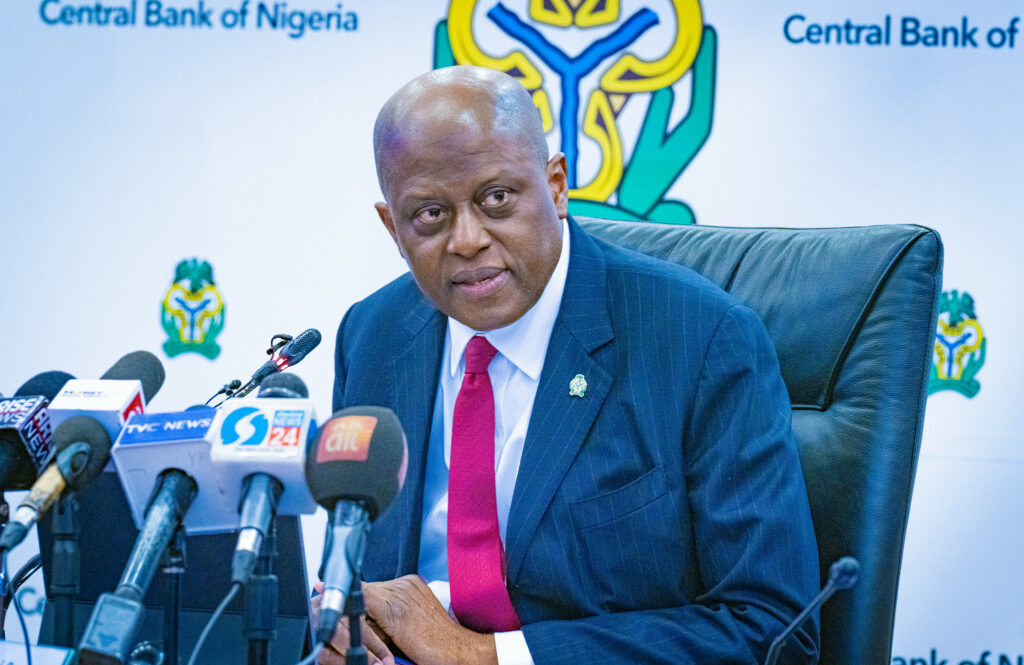
In the foreword to the Payments System Vision 2028 document, CBN Governor Olayemi Cardoso said Nigeria’s payments ecosystem had evolved into one of the most dynamic and innovative in the world over the past decade, driven by real-time payments, digital adoption and fintech-led transformation.

Cardoso said the country had recorded significant growth in electronic payments and digital financial services under the previous Payments System Vision 2025 framework but stressed that the next phase would require stronger resilience and coordination as the system continued to expand.

The CBN acknowledged that while digitalisation has improved financial inclusion and lowered transaction costs, it has also created new risks that require stronger cybersecurity measures, consumer protection mechanisms and fraud-monitoring systems.

Under the new Payments System Vision 2028, the regulator plans to prioritise security, trust, innovation, interoperability, inclusion and collaboration as guiding principles for the next stage of payments system development. The framework also seeks to strengthen regulatory oversight, improve cyber resilience and deploy emerging technologies to combat increasingly sophisticated fraud threats.

punch.ng

FOLLOW US ON:

FACEBOOK

TWITTER

PINTEREST

TIKTOK

YOUTUBE

LINKEDIN

Continue Reading
Click to comment

Leave a Reply

Your email address will not be published. Required fields are marked *

Crime

EFCC probes ‘prophet’ over alleged N70.39m fraud

Published

on

The Economic and Financial Crimes Commission (EFCC) has commenced an investigation into a self-acclaimed prophet, Godwin Sunday Ajuluchukwucheya, popularly known as Prophet Sunday Koboko, over allegations that he defrauded members of his ministry of N70.39m.

The anti-graft agency disclosed this in a statement posted on its official X handle on Wednesday.

According to the EFCC, operatives of its Enugu Zonal Directorate are investigating allegations that the suspect obtained money from church members through various schemes and promises of spiritual interventions and investment opportunities.

One of the petitioners, identified as Okey Uwakwe, alleged that Ajuluchukwucheya collected N6.23m from him for spiritual works aimed at persuading his brother, who had lived abroad since 1997, to return to Nigeria.

The petitioner further alleged that the suspect received N3.25m to perform spiritual works to help his childless sister-in-law conceive after over 15 years without a child.

The EFCC said Uwakwe also claimed that the cleric announced to members of his ministry that he had won N33bn in a lottery and encouraged them to contribute financially with assurances that they would receive dividends from the purported winnings.

According to the commission, the petitioner contributed an additional N3.35m to the scheme and another N500,000 towards a rice-processing business the suspect allegedly claimed was worth N1bn.

The EFCC said the petitioner claimed to have paid a total of N13.33m to the suspect without receiving any benefit.

The commission added that during investigations, several other members of the ministry came forward with similar allegations.

According to the EFCC, some members alleged that the suspect sold items described as “holy ghost thunder”, “miracle stickers” and “spiritual dragons”, promising prosperity and solutions to personal challenges.

See also  PHOTOS: DHQ confirms d3aths of terrorists and soldiers in Borno attack

“One of the members and a victim of the suspect said, ‘He asked me to do what they tagged ‘holy ghost thunder’, believing it was going to solve my problems. I bought it, and after all the payments, nothing happened, and my problems persisted,” the EFCC said.

The EFCC said the total amount allegedly collected from members of the ministry stood at N70.39m.

The commission added that investigations were ongoing and that the suspect would be charged to court upon their conclusion.

punch.ng

FOLLOW US ON:

FACEBOOK

TWITTER

PINTEREST

TIKTOK

YOUTUBE

LINKEDIN

Continue Reading

Crime

Anambra couple held as police probe 10-year-old boy abuse

Published

on

A 30-year-old woman, Chisom Chukwukere, who allegedly brutalised a 10-year-old boy in Awada, Obosi, in Idemili North Local Government Area of Anambra State, has been arrested by the police.

Her husband, Chukwudi, was also arrested over allegations that the couple used burning plastic to inflict severe burns on the child.

The victim, whose video showing extensive injuries across his body recently went viral on social media, had sparked widespread outrage.

Operatives of the Anambra State Police Command arrested the suspects.

At the same time, the woman’s infant child was taken into protective custody by the state Ministry of Women’s Affairs and Social Welfare on Thursday.

During interrogation, Chisom reportedly pleaded with police and ministry officials to release the infant to her, claiming that the child was unwell and could not be left alone.

A video circulating online showed the suspect appealing to the authorities to return the child to her because the infant was sick and required attention.

The development has triggered public outrage, with many questioning how someone so concerned about her own child’s welfare could allegedly inflict such severe injuries on another child.

The infant has since been placed in the care of a family member through the Ministry of Women Affairs and Social Welfare.

Confirming the development, the spokesperson for the Anambra State Police Command, SP Tochukwu Ikenga, said investigations had been intensified and assured that all those found culpable would be brought to justice.

He said, “The police remain steadfast in enforcing laws designed to protect children from abuse, neglect, exploitation, and all forms of violence.

See also  PHOTOS: NDLEA arrests two grandpas for drug trafficking in Abia, Ekiti

“The Commissioner of Police, Ikioye Orutugu, has reassured residents of the command’s unwavering commitment to collaborating with relevant government agencies, child protection organisations, and community stakeholders to promote and safeguard the rights, safety, and welfare of children throughout the state.

“The Anambra State Police Command remains committed to promoting justice, compassion, and the protection of human rights in line with the vision of the Inspector-General of Police.”

Continue Reading

Business

Boko Haram, banditry, clashes driving poverty across North — Report reveals

Published

on

A new report has revealed that violent conflict across the northern part of the country is deepening poverty and weakening the ability of households to recover from economic shocks.

The report, titled “Insecurity, Livelihoods and Welfare in Northern Nigeria,” identified three major forms of insecurity affecting the region: Boko Haram/ISWAP insurgency in the North-East, farmer-herder conflicts in the North-Central, and banditry and kidnapping in the North-West.

The findings were unveiled on Thursday in Abuja during a high-level webinar convened by the Chronic Poverty Advisory Network of the Institute of Development Studies, United Kingdom; the Development Research and Projects Centre; and the Foreign, Commonwealth and Development Office-supported Strengthening Peace and Resilience in Nigeria project.

The Minister of Humanitarian Affairs and Poverty Reduction, Dr Bernard Doro, opened and closed the session, reflecting on the implications of the findings for the ministry’s One Humanitarian–One Poverty Response System policy.

Presenting the report, CPAN Deputy Director, Dr Vidya Diwakar, said the study explored the relationship between insecurity and household welfare using data from the Nigeria Living Standards Survey 2022/23, the Nigeria Demographic and Health Survey 2024, Armed Conflict Location and Event Data from 2010 to 2025, and extensive fieldwork conducted by dRPC.

The report stated that “Households in the North-East affected by Boko Haram and ISWAP attacks recorded between eight and 14 per cent lower expenditure per adult equivalent when violent incidents occurred within two years before the survey.

“Conflict-related debt accumulated since 2009 was also associated with an additional expenditure loss of between eight and 13 per cent.”

See also  Airlines under pressure after jet fuel surges 100%

The study found that “Farmer-herder clashes had the most severe impact on near-poor households in the North-Central zone, resulting in a 14 per cent drop in expenditure at the 60th percentile, the largest single welfare effect recorded in the study.

“In the North-West, banditry and kidnapping were linked to expenditure losses ranging from four to 11 per cent, particularly among moderately poor households.”

Despite the challenges, the report identified livelihood diversification as the most effective strategy for building resilience and escaping chronic poverty.

According to the findings, combining farming, non-farming and enterprise-based income-generating activities emerged as “the single most consistent protective factor across all three conflict types.”

The report, however, noted that “only 13 per cent of household heads in Northern Nigeria were currently pursuing diversified income opportunities.”

The study also found that education strengthens households’ ability to diversify income sources, although the benefits remain weaker among women- and youth-headed households, which account for 28.9 per cent of households in the region.

Reviewing the findings, Team Lead of SPRiNG, Dr Ukoha Ukiwo; Director of the Plateau State Peace Building Agency, Dr Julie Sanda; and the Senior Special Assistant to the President on Chieftaincy Matters, Abba Waziri, highlighted the importance of linking peace-building efforts with livelihood recovery programmes.

The discussants stressed that rebuilding livelihoods and expanding economic opportunities are critical to reducing vulnerability and promoting long-term peace in conflict-affected communities.

Particular emphasis was placed on training traditional rulers and community leaders to play stronger roles in peace-building initiatives.

Speaking at the close of the webinar, Executive Director of dRPC, Dr Judith-Ann Walker, thanked the FCDO for supporting the research and commended the minister for engaging with evidence-based policy recommendations.

See also  PHOTOS: DHQ confirms d3aths of terrorists and soldiers in Borno attack

She also praised the ministry’s commitment to implementing the OHOPRS framework, which is built on what she described as “one system, one register and one pathway.”

The minister pledged continued collaboration between the government and stakeholders and challenged researchers to generate evidence that would improve targeting, sequencing and graduation pathways under the OHOPRS framework, particularly for women and young people who are often excluded from poverty reduction interventions.

punch.ng

FOLLOW US ON:

FACEBOOK

TWITTER

PINTEREST

TIKTOK

YOUTUBE

LINKEDIN

Continue Reading

Trending