Connect with us

News

We created water marshals to enforce safety – Ex NIWA MD

Published

on

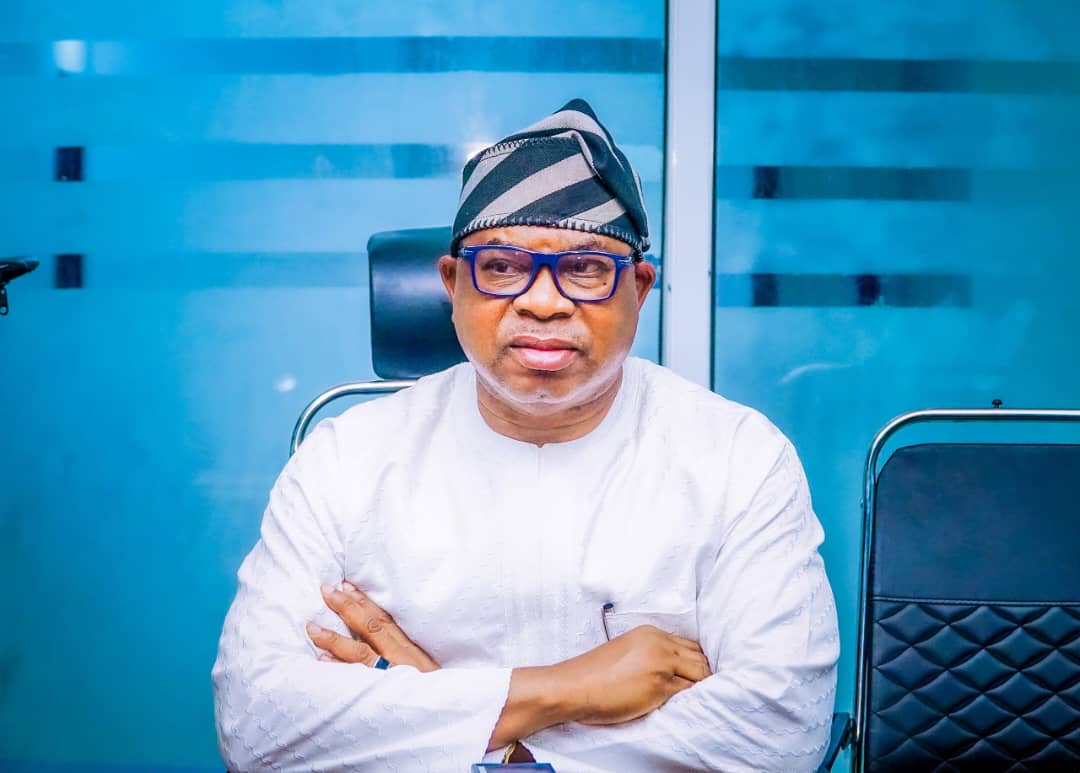
Bola Oyebamiji, the former Managing Director of the National Inland Waterways Authority, is contesting the 2026 Osun State governorship election under the All Progressives Congress. In this interview with ANOZIE EGOLE, he discusses his achievements at NIWA and shares his vision for Osun State if elected

Reflecting on your time as Managing Director of NIWA, which initiatives or reforms stand out as your greatest achievements, and how did they influence Nigeria’s inland waterways?

During my time as Managing Director/CEO of NIWA, I initiated several audacious projects that added substantial value to our operations. My first focus was on the need for an enforceable regulation for inland waters. We discovered that a regulation had been in development for many years without much progress. We worked diligently to fine-tune it, leading to its gazettement and unveiling by the Minister of Marine and Blue Economy, Adegboyega Oyetola.

With the Transportation Code in place, we also established an enforcement arm: the Water Marshals. We realised that without them, the Transportation Code would remain a mere regulation on paper. The marshals were selected from various riverine communities due to their knowledge of local waterways. We began with 80 marshals and increased their number to 350 by the time I left, enabling coverage of numerous loading and offloading points, regular checks, and safety briefings before departures.

We also elevated safety campaigns to an unprecedented level. In addition to regular media campaigns on radio, television, and newspapers, we initiated onsite safety campaigns across 21 operational bases nationwide. Stakeholders were convened at least twice yearly near loading and offloading points to sensitise them on safety and the Transportation Code.

Another innovation was the establishment of Community Stakeholders committees, comprising local chiefs, community leaders, and opinion moulders. These committees acted as first responders in emergencies and as safety advocates, reducing response times to under 30 minutes nationwide. Additionally, a taskforce of NIWA staff and community leaders in selected riverine areas was tasked with enforcing safety, particularly during high tidal periods, significantly reducing boat accidents.

See also  ₦2.2bn fraud: Court fixes December 18 for Ngige’s bail ruling

We also prioritised staff welfare, ensuring timely payment of salaries and allowances, educational grants for children, medical allowances for retirees, and local and international training opportunities. Deserving officers were promoted without delay.

What insights or experiences from leading a federal agency do you think have best equipped you to govern Osun State?

Nigeria is a diverse country, and my prior public sector experience prepared me well for NIWA. Leading an organisation with a wide reach and mandate broadened my expertise in human management. The maritime sector, along with the Federal Ministry of Marine and Blue Economy and its agencies, requires daily interaction with sister agencies, other ministries, the legislature, and the judiciary. The experience was transformative and has prepared me to govern effectively.

What are the core principles that guide your leadership, and how do you intend to apply them in governing the state?

I was shaped in a target-oriented industry: banking, which rewards performance and sanctions inefficiency. This philosophy has guided my professional and personal life for decades. I am committed to a fair reward system, helping everyone reach their potential without bias. My administration will be firmly rooted in fairness and equity. It will be a new dawn for our people.

Given Osun’s vibrant cultural heritage yet underdeveloped industrial sector, which specific industries will you focus on to stimulate the state’s economy and achieve greater fiscal independence?

Osun is historically the cradle of the Yoruba people and home to UNESCO World Heritage sites such as the Osun-Osogbo sacred grove. Every town has unique cultural events that can be leveraged economically. We aim to restore Osun to a prominent position culturally and economically.

See also  FG activates evacuation plan as Middle East crisis worsens

Agriculture and its value chains will receive maximum attention. Osun has fertile land and a youthful population, and the market is growing. We will create the next generation of millionaires from agriculture. Public-private partnerships, particularly in agro-allied and ICT sectors, will be prioritised. MSMEs, especially women and youth-led businesses, will be supported with financing, training, and empowerment.

Given Osun State’s existing public debt burden, what specific financial measures will you implement within your first year in office to achieve fiscal stability while protecting vital public services?

Debt is not inherently bad if it is targeted and wealth-generating. Since the end of the fuel subsidy, states have more funds for programmes. We will invest in income-generating projects and prioritise spending. Revenue collection efficiency will be enhanced, closing gaps where funds are misdirected. These measures will restore financial stability in Osun.

What is your strategy for generating lasting employment opportunities for young people, moving beyond short-term empowerment initiatives?

We will strengthen government service delivery through recruitment and training, ensuring capable hands are in place. Youth empowerment programmes will ease the transition to self-sustainability. Investment in agro-allied, ICT, MSMEs, and technical education will generate thousands of jobs, particularly in construction, tourism, and hospitality.

In light of the pervasive security challenges across the country, what specific and novel strategies will you introduce to bolster local security and ensure the safety of residents in Osun State?

Security should be localised. We will strengthen the involvement of traditional rulers and community development associations, while improving support for conventional security outfits with hardware and logistics. Peace requires justice and fairness, which will underpin our government.

How do you plan to leverage Osun’s agricultural potential by implementing policies that enhance rural infrastructure, expand market access for farmers, and promote the adoption of modern farming techniques?

See also  Is This The Man Many Of You Regard As Intelligent? – Catholic Priest Blasts Bwala Over Al Jazeera Interview

Rural roads and electrification will be prioritised to reduce post-harvest losses and attract investors. We will strengthen cooperatives, provide low-interest credit facilities, and support farm settlements to revive agricultural productivity. Training in modern techniques, high-yield crops, and pest control will be emphasised.

How will your specific expertise in waterways infrastructure be applied to improve Osun State’s internal transport systems, maintain public infrastructure, and manage environmental resources?

Waste management and internal transportation require urgent attention. We will revitalise efficient waste disposal systems, support private operators, expand credit and empowerment for transit operators, and reintroduce mass transit using CNG initiatives. Road maintenance will be proactive, guided by a comprehensive financing model.

What specific, enduring reforms will you introduce to create a stable and high-quality education system in Osun State?

Education will be a top priority. Free and compulsory basic education will continue, technical education will be revitalised, and sacked teachers reinstated. Training and retraining of teachers, prompt rewards for performance, and modern technology integration will improve teaching and learning. Two schools per political ward will be modernised within four years, alongside a free terminal examination policy starting 2027.

How will you ensure your administration remains independent from political pressures and consistently prioritizes the needs of Osun’s citizens above all else?

Fairness, transparency, objectivity, and godliness are key. Prioritising scarce resources equitably will guide decision-making. We will be fair to all citizens across the state.

What specific, transparent systems will you establish to guarantee governmental accountability, foster citizen involvement, and ensure the effective monitoring of public projects?

Town hall meetings will foster citizen interaction with government officials, and government books will be open for public scrutiny. Our administration will be inclusive and participatory.

punch.ng

FOLLOW US ON:

FACEBOOK

TWITTER

PINTEREST

TIKTOK

YOUTUBE

LINKEDIN

TUMBLR

INSTAGRAM

Continue Reading
Click to comment

Leave a Reply

Your email address will not be published. Required fields are marked *

News

Nigeria, Switzerland deepen ties, agree on return of Benin artefacts

Published

on

Nigeria and Switzerland have strengthened bilateral relations with renewed commitments on trade, security, immigration and cultural cooperation, alongside concrete steps toward the return of looted Benin artefacts.

The agreement was reached during a high level meeting in Abuja, where Nigeria’s Minister of Foreign Affairs, Mr Yusuf Tuggar, hosted Switzerland’s Foreign Minister, Ignazio Cassis.

Speaking after the meeting, Tuggar said the renewed partnership reflects a shared commitment to mutual growth and respect.

“Nigeria and Switzerland enjoy long standing relations, and today’s engagement has opened new pathways for cooperation in trade, security, migration and cultural exchange,” he said.

On the planned return of artefacts, Mr Tuggar described it as a significant step toward justice and cultural restoration.

“The return of Benin artefacts taken during the Benin Expedition of 1897 is not just symbolic but a recognition of our history and identity,” he added.

Also speaking, Cassis reaffirmed Switzerland’s commitment to strengthening ties with Nigeria across multiple sectors.

The foreign minister said “We are deepening our collaboration with Nigeria, particularly in economic development, security cooperation and migration management,”

Both countries agreed to boost trade and investment by encouraging private sector partnerships, while enhancing cooperation to tackle transnational crimes and promote safe, orderly migration.

The engagement is expected to further strengthen diplomatic relations between Nigeria and Switzerland, while advancing cultural restitution efforts.

FOLLOW US ON:

FACEBOOK

TWITTER

PINTEREST

TIKTOK

YOUTUBE

LINKEDIN

See also  Trump heads to Asia for Xi talks, eyes Kim
Continue Reading

News

Police IG redeploys AIGs, CPs, See details

Published

on

The Inspector General of Police, Olatunji Disu, has ordered the posting of senior officers to various strategic positions across the Nigeria Police Force as part of efforts to strengthen operational efficiency, enhance leadership capacity and improve service delivery nationwide.

The postings, according to a statement on Tuesday by the  Force spokesman, DCP Anthony Placid, are in line with the police commitment to an effective command structure and strategic deployment of personnel across commands, formations and departments.

Under the new arrangement, he said AIG Ado Emmanuel was posted to Research and Planning, Force Headquarters, Abuja; AIG Joseph Eribo to the Department of Armament; AIG Miller Dantawaye to the Department of Operations; AIG Henry Ifeanyi Uche to the Department of Training and Development; AIG Olanrewaju Peter Ogunlowo to Police Accounts and Budget; while AIG Dahiru Mohammed was deployed to Zone 15, Maiduguri.

“Similarly, AIG Dankombo F. Morris was posted to Zone 4, Makurdi; AIG Bello Shehu to Zone 14, Katsina; AIG Ibrahim Balarabe Maikaba to the Department of Legal Services; AIG Ahmed Musa to Community Policing; AIG Olohundare Moshood Jimoh to Zone 2, Lagos; AIG Simeon U. Akpanudom to FCID Annex, Lagos; and AIG Haruna Olufemi to the Special Protection Unit, Force Headquarters, Abuja,” the statement added.

The IG also redeployed several Commissioners of Police to state commands and other formations.

CP Haruna Yahaya was posted to Jigawa State Command; CP Betty  Otimenyin to Welfare, Force Headquarters; CP Olugbenga Abimbola to Oyo State Command; CP Yemi John Oyeniyi to Delta State Command; CP Olubode Ojajuni to Ogun State Command; CP Michael  Falade to Ekiti State Command; and CP Yakubu Dankaro to Adamawa State Command.

Others include CP Muhammed Ahmed to the Federal Capital Territory Command; CP Olatunji  Fatai to Lagos State Command; CP Morkwap  Dongshal to Taraba State Command; CP Ahmed  Bello to Zamfara State Command; CP Umar Fagge to Katsina State Command; and CP Hayatu Shaffa Hassan to Sokoto State Command.

See also  ₦2.2bn fraud: Court fixes December 18 for Ngige’s bail ruling

In further postings, CP Akan Ezima was named Director, NPF-NCCC, Abuja; CP Abbas Sule to the Special Protection Unit; CP Ajo Geoffrey Ordue to INTERPOL, Abuja; CP Mnwadiogbu Cletus as Deputy Commandant, POLAC; CP Danjuma I. Yahaya to General Investigation, FCID Annex, Kaduna; CP Sheikh M. Danko to FCID Annex, Lagos; and CP Moses Ashu Otta to SWAT, Abuja.

Additional redeployments include CP Abdulrahim A. Shuaibu to Eastern Ports Authority; CP Sarah Ehindero to Administration, FCID Abuja; CP Edwin Ogbegbghagha to Provost, Force Headquarters; CP Preye R. Egbe to INEC, Abuja; CP Adebisi Bola Lateef to Master Printing, Lagos; CP Bolou O. Etete to Community Policing, Research and Planning; and CP Ojugbele E. Adebola to General Investigation, FCID Alagbon, Lagos.

Also affected are CP Fidelis N. Ogarabe, posted to INTERPOL Annex, Lagos; CP Theodore C. Obasi as Deputy Commandant, Police College, Ikeja; CP Eloho E. Okpoziakpo to Special Fraud Unit, Ikoyi; CP Kayode Uthman Magaji to K9, Dei-Dei; CP Markus Ishaku Basiran to Courses, POLAC; CP Mohammed Babakura to Administration, Department of Operations; CP Silas Bamidele Aremu to Safer Highway, Department of Operations; CP Magaji Ismaila to Community Safety and Crime Prevention; and CP Rebecca Uchenna Okereke as Director of Music, Force Headquarters, Abuja.

“Tunji Disu charges the officers to bring their wealth of experience to bear in their respective assignments and to uphold the highest standards of professionalism, discipline, and service in the discharge of their duties,” he said

punch.ng

FOLLOW US ON:

FACEBOOK

TWITTER

PINTEREST

TIKTOK

YOUTUBE

LINKEDIN

Continue Reading

News

Afenifere Diaspora faults APC over security, election concerns

Published

on

The Afenifere Diaspora USA has criticised the All Progressives Congress over what it described as worsening insecurity in the country and alleged attempts to weaken Nigeria’s electoral framework ahead of the 2027 general election.

The group, in a statement made available to The PUNCH, dated March 20, 2026, warned that the continued escalation of violent attacks across parts of the country could lead to deeper national crises if urgent measures were not taken.

The statement, jointly signed by the Chairman, Prof Sikiru Fadairo, and the Secretary, David Adenekan, stressed that national security remained a constitutional obligation of the government, noting that failure to adequately address the situation could threaten the unity of the country.

The group said, “The current escalation of insecurity across the country is a dangerous trend that may plunge the nation into a sectarian war if not properly managed and nipped in the bud.”

It emphasised that the protection of lives and property remained a core responsibility of the government, as clearly stated in Section 14(2)(b) of the 1999 Constitution of the Federal Republic of Nigeria.

The section provides that “The security and welfare of the people shall be the primary purpose of government.”

It further referenced provisions contained in Chapter IV, Sections 33 to 46 of the Constitution, which guarantee fundamental human rights, including the rights to life, dignity, personal liberty, and privacy.

Afenifere Diaspora USA also condemned the activities of armed groups operating in parts of the country, alleging that recent attacks in the North-East had resulted in significant casualties and displacement of residents.

See also  FG activates evacuation plan as Middle East crisis worsens

The group said, “The recent violent attacks by terrorist groups degrade the status of Nigeria as a sovereign nation. It was widely reported that in March 2026, militants linked to the Islamic State West African Province launched coordinated attacks in the North-East, overrunning several military formations in Borno State, including communities such as Delwa, Goniri, Kukawa and Mainok.”

It added, “An intolerably high figure of 65 military officers were reportedly killed in the attacks, while about 300 persons were said to have been kidnapped. Are acts of killing people in thousands and sacking those fleeing from their villages not tantamount to genocide or ethnic cleansing?”

The group also questioned what it described as attempts to influence international narratives regarding the security situation in Nigeria, alleging that public funds were used to engage foreign lobbyists.

It stated, “Is the current administration not always quick to change the narrative that the killings in Nigeria are merely ‘normal’ incidents that occur in any society, including the unjustifiable expenditure of a whopping sum of nine million dollars from taxpayers’ funds to hire lobbyists in Washington DC to promote the position that there is no genocide or ethnic cleansing in Nigeria?”

On electoral matters, the group criticised the reported removal of the requirement for a candidate to possess a secondary school certificate as part of the eligibility criteria in the Electoral Act, describing the move as detrimental to democratic development.

The statement read, “The decision by members of the National Assembly to expunge from our electoral law the requirement to possess a secondary school certificate is seen as a political charade capable of undermining democratic values and lowering leadership standards in the country.”

See also  Is This The Man Many Of You Regard As Intelligent? – Catholic Priest Blasts Bwala Over Al Jazeera Interview

Citing Section 131 of the 1999 Constitution, the group noted that one of the requirements to contest for the office of the President is that a candidate must be educated to at least secondary school certificate level or its equivalent.

“In a digital age driven by information technology, Nigeria must not slide backwards into the abyss of ignorance where leadership competence is compromised. Leadership capacity and skilled knowledge are critical in managing the affairs of a modern state,” the statement added.

The group also called for mandatory electronic transmission of election results, insisting that credible elections remained vital to strengthening democracy and ensuring good governance.

It said, “Every lover of democracy, including the international community, must support a system that guarantees mandatory electronic transmission of election results in real time without optional conditions.

“A free and fair general election in 2027 is sacrosanct and must not be negotiated if Nigeria is to deepen its hard-won democracy and ensure accountable leadership.”

punch.ng

FOLLOW US ON:

FACEBOOK

TWITTER

PINTEREST

TIKTOK

YOUTUBE

LINKEDIN

Continue Reading

Trending