The Office of the Auditor-General for the Federation has uncovered 28 major financial irregularities linked to the Nigerian National Petroleum Company Limited (NNPCL), involving N30.1bn $51.6m, £14.3m, and €5.17m in questionable payments, undocumented expenditures, and breaches of financial regulations. When converted to naira, the total amount is about N61.1bn
The red flags, contained in the Auditor-General’s 2022 Annual Report on Non-Compliance (Volume II), detail transactions carried out during the 2021 financial year across the NNPCL and its subsidiaries. The document was obtained by our correspondent on Sunday.
The report, which has been transmitted to the National Assembly, accuses NNPCL of weak internal controls, unauthorised virements, tax infractions, irregular procurement, abandoned projects, and unsubstantiated settlements.
“These findings highlight systemic weaknesses that continue to expose public funds to avoidable risk. Where documents were not provided, payments were unjustified. Where approvals were absent, expenditure breached the law. Recovery and sanctions must follow,” the Auditor-General’s office said.
The latest audit revelations come against the backdrop of earlier reports by The PUNCH this year, which exposed long-running financial discrepancies involving the Nigerian National Petroleum Company Limited. The Auditor-General’s annual reports for 2017 to 2021 showed that the national oil company was previously indicted for the diversion of N2.68tn and $19.77m within a four-year period.
The breakdown includes N1.33tn flagged in 2017, N681.02bn in 2019, N151.12bn and $19.77m in 2020, and N514bn in 2021, signalling a persistent pattern of unremitted funds, unsupported transfers, and irregular withdrawals that have raised concerns about governance and accountability in the petroleum sector.
Among the most striking revelations in the new report is Issue 2, which concerns the expenditure of £14,322,426.59 at NNPC’s London Office without documentation. Auditors said the corporation failed to provide utilisation details or supporting schedules for the amount.
According to the auditor-general, Financial Regulations (2009) place strict responsibilities on all accounting officers, including ensuring adequate internal controls and proper documentation for public expenditure. Paragraph 112 mandates officers to provide clear rules and procedures to safeguard revenue.
In the same vein, Paragraph 603(1) requires every payment voucher to contain full particulars, dates, quantities, rates, and to be supported with invoices, purchase orders, letters of authority, and other relevant documents to enable verification without recourse to additional files.
However, the Auditor-General reported that these statutory provisions were breached in the operation of the Nigerian National Petroleum Company Limited’s London Office in the 2021 financial year.
According to the audit, a total of £14,322,426.59 was spent by the Foreign Office during the period under review, covering personnel costs, fixed contract expenses, and other operational needs.
A breakdown of the expenditure showed personnel costs amounting to £5,943,124.74, fixed contract and essential expenses totalling £1,436,177.11, while other operational costs stood at £6,943,124.74, bringing the total to £14,322,426.59.
Despite the magnitude of the spending, the audit team noted that it was not provided with supporting documents or given access to verify how the funds were utilised. The report stated that the auditors were unable to ascertain whether the expenditure complied with due process and other requirements of the Financial Regulations.
The Auditor-General warned that the failure to provide documentation points to “weaknesses in the internal control system” of NNPC Ltd, exposing the organisation to the risks of diversion and misappropriation of public funds.
In its response, NNPC management said the London Office operates as a service unit with an approved annual budget and that the £14.32m allocated for 2021 was implemented in line with operational and financial requirements. It stated that the office maintains detailed records of all transactions, including personnel and contract-related expenses, and expressed willingness to provide the documents upon request.
Management, however, argued that the audit query did not specify which transactions or line items were being questioned, making it difficult to provide targeted explanations. It added that the company remains committed to improving internal controls and ensuring compliance across all its units.
But the Auditor-General rejected the explanation, describing it as unsatisfactory. The report insisted that the query remains valid until NNPC provides full accountability for the funds and implements the prescribed corrective actions.
The audit recommended that the Group Chief Executive Officer of NNPC Ltd appear before the Public Accounts Committees of the National Assembly to explain the utilisation of the £14,322,426.59 spent by the London Office in 2021.
It also directed the recovery and remittance of the entire amount to the Treasury. Failing this, the Auditor-General said sanctions for irregular payments and failure to account for public funds, as outlined in paragraphs 3106 and 3115 of the Financial Regulations, should be applied to the responsible officers.
The report read, “Audit observed that the sum of £14,322,426.59 (Fourteen million, three hundred and twenty two thousand, four hundred and twenty six pounds and fifty nine pence) was expended for the London Office during the 2021 financial year.
“Audit was not availed the necessary documents and the opportunity to confirm the utilisation of the funds that were managed by the London Office and to ascertain that the expenditure was made following due process and economy as required by the extant regulations. The above anomalies could be attributed to weaknesses in the internal control system at the NNPC, now NNPC Ltd.”
In a similar vein, auditors flagged €5,165,426.26 paid to a contractor under Issue 12, warning that no evidence of engagement existed to justify the payment.
Dollar-denominated transactions also raised red flags. The audit highlighted $22,842,938.28 in unsubstantiated Direct Sales Direct Payment settlements (Issue 4); $12,444,313.22 for delayed generator procurement at the Mosimi depot (Issue 24); and $1,801,500 paid under an irregular contract extension for a bunkering vessel (Issue 7).
Additional queries include $2,006,293.20 in provisional payments without invoices (Issue 10) and $1,035,132.81 paid to a company without power of attorney (Issue 13). In total, $51,674,020.15 was flagged as irregular.
On the naira side, the auditor general accused NNPCL of authorising payments without approvals or documentation, executing budgets outside approved limits, and failing to remit statutory surpluses.
A major query, Issue 21, involved the non-remittance of N12.721bn into the corporation’s General Reserve Fund, contrary to the corporation’s obligations.
The report also cited: N3.445bn paid by the Chief Financial Officer without the General Managing Director’s approval (Issue 6), N2.379bn irregularly paid as status-car cash options to staff (Issue 5), N1.212bn paid to contractors without interim payment certificates or invoices (Issue 26), N474.46m spent through unauthorised virement (Issue 9), N355.43m in demurrage and brokerage payments on abandoned refinery cargoes (Issue 8), N292.6m for an Accident and Emergency hospital project abandoned after mobilisation (Issue 1)
The report further identified N82.6m in undocumented reimbursables, N152m irregular procurement for the Nigeria Police Force, N145.9m in serial consultancy renewals, and N25m paid as additional consultancy fees without evidence of fresh deliverables.
NNPCL also paid N246.19m for a contract with no proof of execution (Issue 18), while N46.2m in under-deducted withholding tax was left unremitted (Issue 19). A high-risk cross-MDA audit item, Issue 27, includes N6.246bn in payments made without supporting documents, of which NNPCL accounted for the largest share. Another audit issue involves the payment of N1.365bn processed through unauthorised virements. In total, domestic infractions amounted to N30,115,474,850.85.
The audit also spotlighted NNPC’s failure to apply statutory deductions across several transactions. Under Issue 3, auditors identified N247.18m and $529,863.24 in non-deduction of VAT, WHT, and Stamp Duty. Another transaction, Issue 16, involved $8,355.18 paid without statutory tax deductions.
“These breaches affect government revenue and contravene Financial Regulations,” the report noted. “Entities must ensure that all statutory deductions are remitted promptly and accurately.” A significant portion of the 28 queries relates to procurement violations. Auditors flagged NNPCL for Inflated variations amounting to $1.926m in one contract (Issue 14).
Auditors queried an irregular vessel substitution under a time-charter agreement for the movement of petroleum products. The report noted that Article 5.2 of the original 2017 contract stated that once a vessel was inspected and accepted by NNPC, the contractor was required to “deliver the coastal vessel at the Lagos Port” for commencement of operations, while Article 5.3 mandated that any vessel failing to meet contract specifications “shall result in rejection” and immediate replacement at the contractor’s expense.
However, the audit observed that although the two-year charter, effective June 1, 2017, at a daily rate of $19,532, was signed for MT Breeze Stavanger, the contractor notified NNPCL that MT Breeze Stavanger was unavailable and unilaterally replaced it with MT Alizea from January 1, 2018. The substitute vessel was billed at a higher daily charter rate of $21,643.23, creating an inflated variance of $2,111.23 per day, or $770,598.95 for the 12-month period.
“There was no justification provided for the sudden unavailability of MT Breeze Stavanger after only six months,” the audit stated, adding that the 12 months was in violation of clear provisions in the original contract. The contractor was obligated to replace the vessel at its sole expense, not impose higher rates on NNPC.”
Auditors further disclosed that the inadvertent substitution continued for 30 months, significantly increasing costs and breaching agreed terms.
“The total cost incurred as a result of this inadvertent substitution for thirty months, equivalent to two years and six months, with effect from 1st January, 2018, to 31st May, 2020, as indicated in the Extension Agreement executed on 16th December, 2019, is US$1,926,497.38.
“This action amounted to an irregular adjustment of contract conditions and exposed public funds to unnecessary financial risk. The above anomalies could be attributed to weaknesses in the internal control system at the NNPC, now NNPC Ltd.”
Similarly, an “emergency procurement” of custody transfer meters costing $8.238m without justification (Issue 11) was flagged, Payment of $156,000 to a consultant without evidence of engagement (Issue 15), Regular renewal of consultancy contracts instead of fresh bidding (Issue 25), Paying a “legacy debt” to the wrong company (Issue 13) These issues indicate a pattern of circumventing procurement controls,” the report said.
The Auditor-General’s office recommended immediate recovery of all unsupported payments, remittance of withheld statutory surpluses, and sanctions for officers responsible for what it called “widespread violation of extant financial regulations.”
It added, “Where officers fail to provide the required documents, the sums shall be recovered from them directly.” The outcome of the audit comes at a time when the national oil company is positioning itself as a fully commercial entity under the Petroleum Industry Act.
The report underscores how far the company must go to achieve transparency and efficiency. Commenting in an earlier interview, the Centre for Anti-Corruption and Open Leadership described the NNPCL as a hub of institutional corruption, alleging that powerful interests within and outside the government had shielded the organisation from accountability.
CACOL’s Executive Director, Debo Adeniran, lamented that despite the enactment of the Petroleum Industry Act aimed at decentralising and unbundling the NNPCL, the company’s operations remained opaque and rife with allegations of corruption.
According to Adeniran, the NNPCL has always been a source of liquid enrichment for government officials, even before it was converted into a limited liability company.
“The operations of the NNPCL have always been shrouded in secrecy. Even the Petroleum Industry Act has not helped. Despite all the noise about decentralisation and unbundling of the NNPCL, nothing has materialised. It is the strongest cabal in Nigeria. All the powerful elements in government and MDAs work in concert with those managing the NNPCL’s accounts, perhaps due to gratification.
“Even the anti-corruption agencies find it difficult to probe the NNPCL. A couple of attempts were made by the ICPC and EFCC in the past, but they have not been able to uncover anything. There must be something shielding the NNPCL from exposure for its corruption crimes,” Adeniran said.
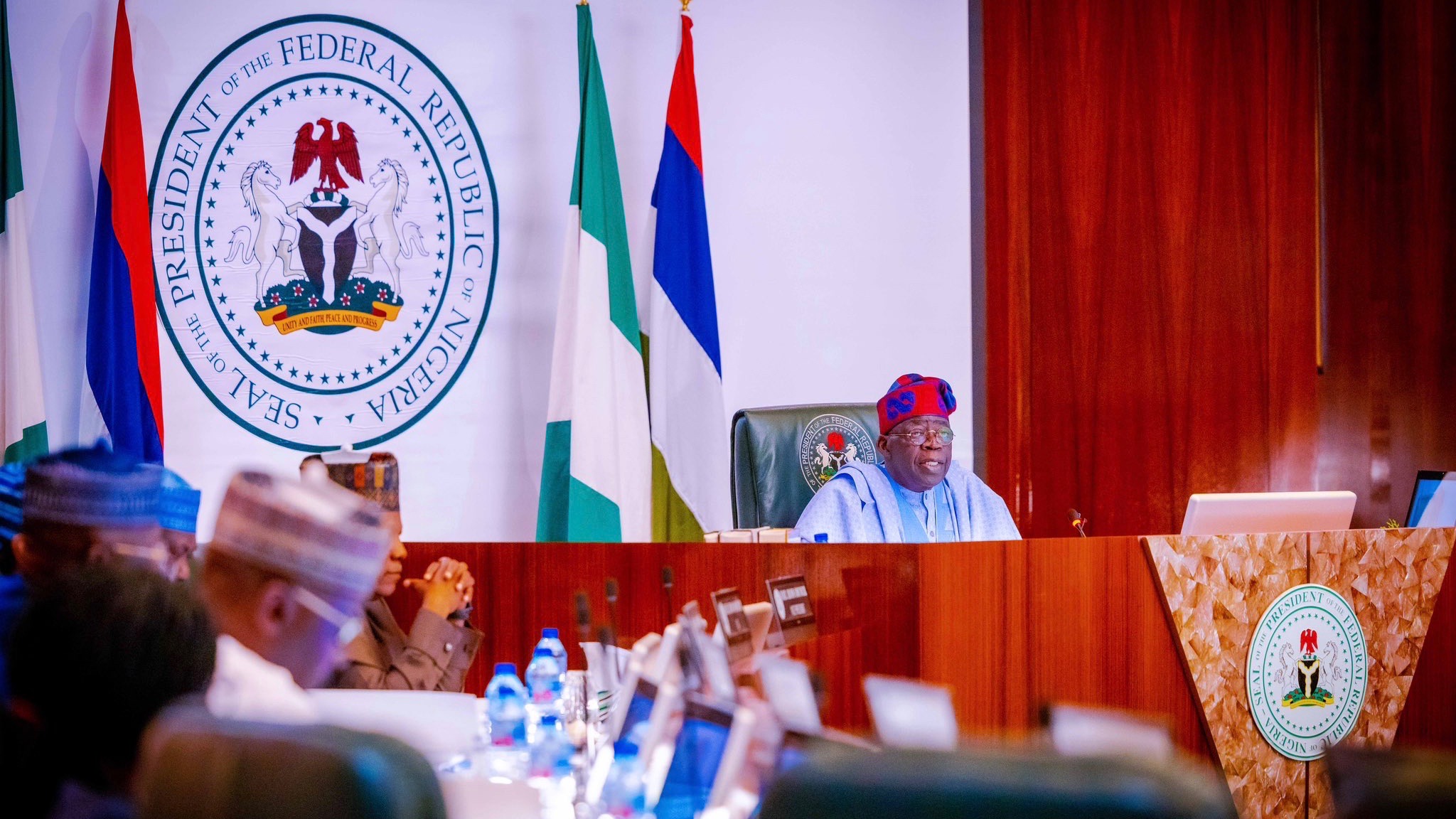
Similarly, the Executive Director of the Civil Society Legislative Advocacy Centre, Musa Rafsanjani, criticised the NNPCL for its lack of accountability and attributed it not only to the corporation but also to President Bola Tinubu, the National Assembly, and security agencies.
Rafsanjani asserted that the president, as the leader of the nation, bore the primary responsibility for ensuring that the NNPCL operated transparently and remained accountable to Nigerians.
He called on the government and other stakeholders to adopt a firmer stance against the alleged cartel operating within the NNPCL, emphasising the need for a stronger commitment to addressing corruption in the oil sector.
The PUNCH reports that the infractions occurred under the tenure of Mele Kyari, who served as GCEO from 2019 until he was removed earlier this year and succeeded by Bayo Ojulari.
punch.ng
FOLLOW US ON: