Residents of Sokoto and Kwara on Friday recounted moments of fear and confusion after missile strikes fired by the United States of America hit areas in the two states, triggering panic in the communities.
Saturday PUNCH, however, confirmed from military sources and residents that the strikes recorded no casualties.
Massive explosion was recorded on Thursday night in Jabo town, Tambuwal Local Government Area of Sokoto State, while two separate explosions rocked Offa, Kwara State, a few hours after the Sokoto strike.
Our correspondents gathered that there was another explosion at Tangaza LGA of Sokoto.
Trump announces strikes
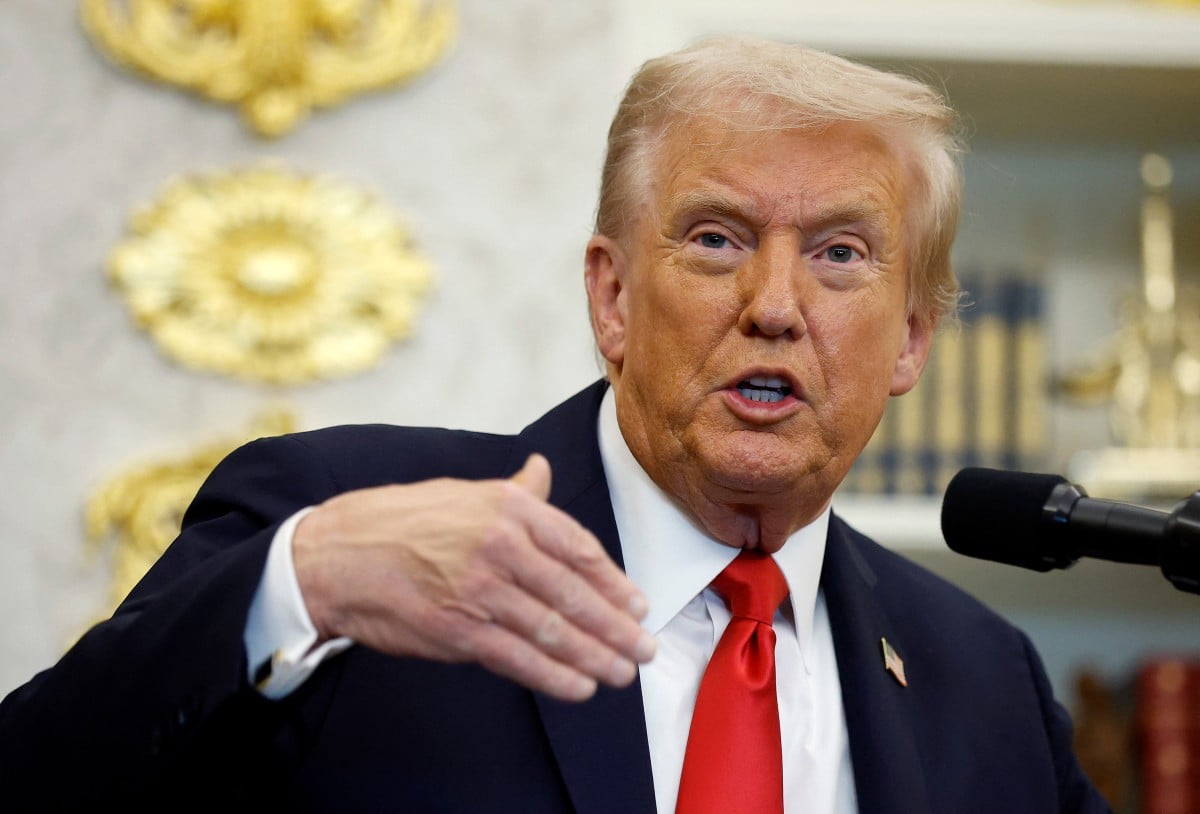
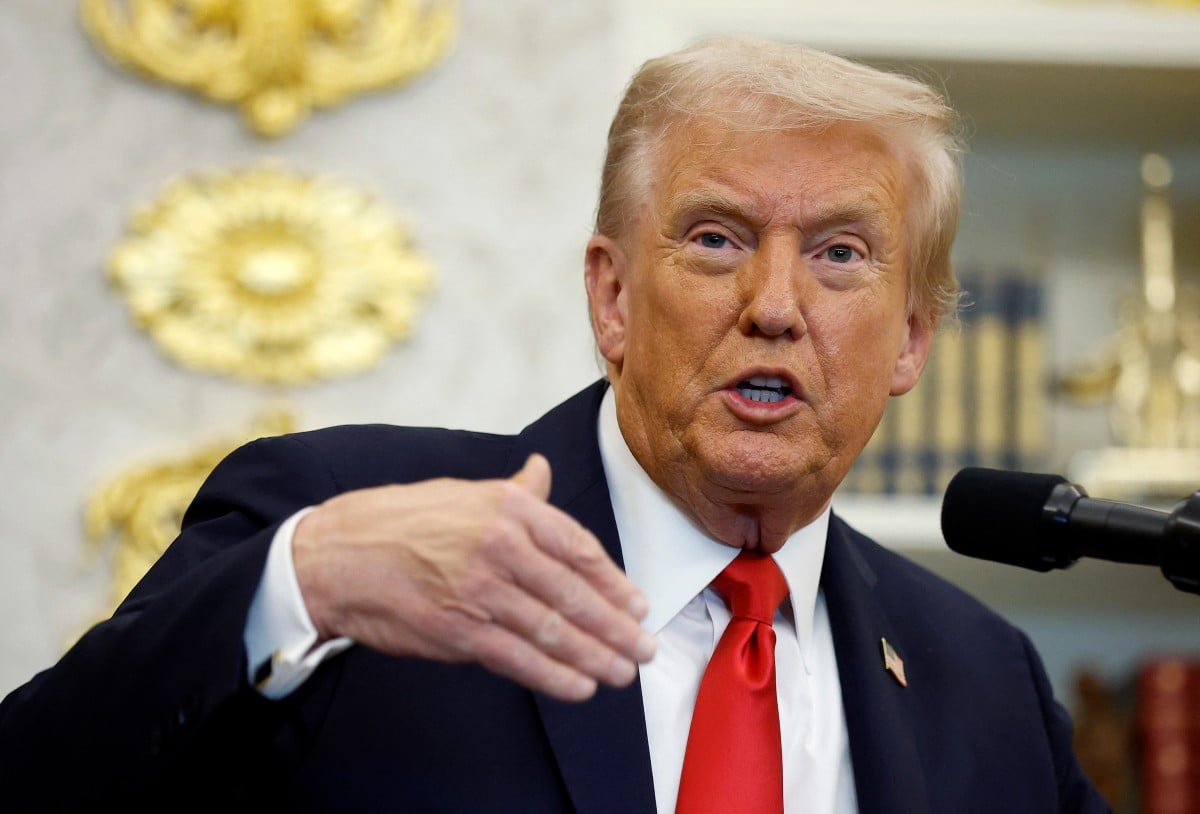
US President Donald Trump announced the strikes in a post on his Truth Social platform on Thursday night.
He disclosed that US forces conducted deadly strikes against Islamic State terrorists in Northwestern Nigeria.
“Tonight, at my direction as Commander in Chief, the United States launched a powerful and deadly strike against ISIS terrorist scum in Northwest Nigeria, who have been targeting and viciously killing, primarily, innocent Christians, at levels not seen for many years, and even centuries! I have previously warned these terrorists that if they did not stop the slaughtering of Christians, there would be hell to pay, and tonight, there was,” he wrote.
Although Trump did not specifically reveal the targeted areas, the US Africa Command, in a post on its X handle, confirmed that the strikes were carried out in Sokoto State.
The strikes came after Trump in October threatened a US military intervention in Nigeria over what he described as the government’s failure to curb violence targeting Christian communities.
Trump, who declared Nigeria a Country of Particular Concern, threatened to go into Nigeria ‘guns a-blazing’.
No casualties
Saturday PUNCH gathered that the US missile attacks might not have involved any casualty.
A senior military official told one of our correspondents on Friday that no terrorist was killed.
The official, who asked not to be named because he was not authorised to speak to the press, said the operation involved shelling believed to have been launched from a naval vessel.
“The US is here; they said they were going after an ISIS target but they fired blank yesterday after their operation. There was no terrorist killed or arrested,” he said.
Another military source familiar with the operation told our correspondent that several strikes were launched, but most of the individuals and groups targeted were missed.
He disclosed that the actual damage inflicted remained mostly unknown.
The source, however, hinted that more strikes were being planned in the coming days.
Also, a security analyst for East and West Africa, Brant Philip, in a post on X, wrote, “This was likely a symbolic start to official US operations in Nigeria, which began on Christmas Day. The operational results of the strikes are not significant, but much is expected soon, not only in the northwest but in the northeast as well. The coming strikes are also expected to be carried out by an American UAV, probably an MQ-9 Reaper drone.”
Also speaking on the matter, another security analyst and Chief Executive Officer of Beacon Consulting, Kabiru Adamu, said he learnt that similar strikes occurred in Offa, Kwara State.
He stated that neither Jabu in Sokoto, nor Offa in Kwara, was known as a base for terrorists.
Adamu, who hails from Tambuwal LGA, where Jabu is located, said residents confirmed that there were no casualties or arrests.
“In the case of Jabu, I spoke with a traditional ruler there. In fact, not a single soul was killed. So, no arrest and no killing,” he added.
He questioned the choice of locations for the strikes, noting that known strongholds of armed groups were not targeted.
Adamu advised that future counter-terrorism operations should rely on improved intelligence, including better human intelligence networks to identify suspects and their movements.
“In intelligence, you use a combination of elements, human as well as technological. The human ones would help pinpoint exact locations. So, before you even use the intelligence, you need to be able to identify the bad actors, “ he added.
Death claims
Meanwhile, the New York Times, while quoting the US Africa Command, claimed that multiple terrorists were killed in the strikes.
AFRICOM, in its initial assessment of the strike concluded that “multiple” ISIS terrorists were killed.
According to the report, the strike involved more than a dozen Tomahawk cruise missiles fired off a Navy ship in the Gulf of Guinea, hitting insurgents in two ISIS camps in Sokoto State.
Also, officials of Tangaza LGA in Sokoto State told Saturday PUNCH that the strikes were carried out on suspected hideouts of the Lakurawa group.
According to the officials, the operation targeted multiple Lakurawa enclaves and took place between 10pm and 12.15am, affecting Warriya and Alkasim villages in Tangaza LGA.
Tangaza, which shares a border with the Niger Republic, has in recent times witnessed repeated attacks attributed to the Lakurawa group, described by security sources as foreign-linked bandits operating across border communities.
The Lakurawa group is believed to be affiliated with the Islamic State Sahel Province, with operational presence across parts of Mali, Niger, Kebbi and Sokoto states.
The group has been blamed for many deadly attacks in the region, prompting sustained counter-terrorism operations by Nigerian security forces.
Tinubu sanctioned strikes – FG
The Federal Government confirmed on Friday ongoing security and intelligence cooperation between Nigeria and the US following the strikes.
The spokesperson for the Ministry of Foreign Affairs, Kimiebi Ebienfa, said Nigerian authorities remained engaged in “structured security cooperation with international partners, including the United States of America,” to address terrorism and violent extremism in the country.
The ministry said the collaboration, which led to precision airstrikes on terrorist targets, involved intelligence sharing, strategic coordination and other forms of support in line with international law, respect for Nigeria’s sovereignty and shared security commitments.
Speaking with CNN, the Minister of Foreign Affairs, Yusuf Tuggar, disclosed that the attacks were sanctioned by President Tinubu, insisting that they were not in violation of Nigeria’s sovereignty or territorial integrity.
He said, “Terrorists are being targeted, this has always been Nigeria’s approach and this also put to rest any doubt with regards to the Tinubu’s administration resolve to fight terrorism.
“This was coordinated with the US, the same way we have been saying that we are ready, willing and able to collaborate and coordinate with any foreign government that is committed to the fight against terrorism. This is not about religion, it is about Nigerians, innocent civilians and the wider region as a whole.
“Even before the strike was carried out, I had a 19 minutes phone call with the US Secretary of State, Marco Rubio, after which I discussed with President Tinubu and I later spoke again to President Tinubu; he gave the go ahead and Marco Rubio called me once more for five minutes discussion and subsequently, the attacks were carried out.
When asked if Nigeria was prepared to allow US ground troops operate in the country, Tuggar said, “These are operational issues that will have to be considered by our military. I’m heading the ministry of foreign affairs and diplomacy and it is something the ministry of defence and some of our security agencies will be in a better position to respond to.”
A top government source confirmed that the US strikes hit Sokoto and Kwara communities.
The source also confirmed that there was no record of casualties yet.
“But in the coming days, records will be taken to know if anyone died in the airstrikes,” the source added.
Sokoto residents recount ‘horrific’ night
Meanwhile, residents of Jabo town and Offa, have recounted the horrifying moments of the explosions.
Eyewitnesses described the sound as loud, sudden, and unfamiliar.
The Sarkin Burmin Jabo and district head of the town, Alhaji Aliyu Garba Jabo, said he was in his palace with his family when the explosion occurred.
“We heard a very loud sound,” he said. “At first, we thought it was a plane crash. People were frightened because it was something we had never experienced before.”
When residents later moved towards the area from which the sound originated, they discovered scattered fragments behind a hospital, extending into nearby farmlands.
The remnants appeared metallic, with aluminum-like pieces visible on the ground.
Security officials later cordoned off parts of the area, while soldiers evacuated some of the rubble.
The anti-bomb squad of the Nigeria Police Force, Sokoto State Command, was subsequently deployed in the scene to begin technical investigations.
“We cannot conclusively say what kind of device it was,” the district head said.
“There are markings and numbers on some of the remnants, and only security agencies can determine where it came from.”
Another resident, Lukman Maikagara, said immediately the blast happened, residents rushed to the scene to confirm the magnitude of the incident.
He said the fire which followed the blast lasted for over one hour, which made people scared.
Despite the explosion, no deaths or injuries were recorded.
Saturday PUNCH also gathered that no houses were destroyed, though some farmlands were affected.
“My family farm is among the affected areas,” a farmer, Jabo, said. “But we give thanks to God that no life was lost.”
Kwara residents count losses
In Offa, eyewitnesses told Saturday PUNCH that the first blast occurred around the Eid praying ground area in Offa, where several residential buildings were damaged.
The second incident was recorded near Solid Worth Hotel, about a five-minute walk from the first location.
Although no deaths were officially recorded, several residents sustained injuries, while property worth millions of naira was destroyed, leaving victims stranded and traumatised.
Residents said they were jolted out of their sleep by a loud explosion that shook buildings and sent debris flying in different directions.
“It was like a war scene,” a resident said.
“People were screaming and running in different directions because nobody knew what was happening.”
Sources said an undetonated explosive object was later discovered at the second location near Solid Worth Hotel, prompting security agencies to immediately cordon off the affected areas and restrict movement.
A resident said he narrowly escaped death after his room collapsed on him.
“Yesterday around 10pm, I was already sleeping when I just heard a loud noise,” Soliu recounted.
“When I opened my eyes, the wall of my room had collapsed and my roof was blown open, but I managed to crawl out under the rubble.”
Soliu said he sustained injuries during the incident.
“I was injured. A block fell on my chest,” he added.
He said he returned to the scene the next morning to salvage his belongings but found an unfamiliar object among the debris.
“Some people said it’s part of a missile that was shot by the US yesterday, but I don’t know,” he said.
Soliu said he lost virtually everything he owned.
“The LGA chairman came last night and told us the government was on top of the situation. I have lost the little things I call properties. Everything was destroyed.
“Only a few clothes I was able to pick. I don’t even have money to take myself to a hospital for treatment. My chest is still hurting me, and I have bruises on my leg too,” he lamented.
A furniture maker whose workshop was destroyed, Alaba Awodele, said he received a distress call shortly after the incident.
“I got a call around a few minutes past 10pm that a bomb had been thrown into my shop,” he said.
“I was surprised. Bomb? How come? When I rushed here, I couldn’t believe what I saw. I never imagined that such a thing could happen in Offa.”
Awodele said the explosion destroyed his machines and furniture meant for delivery.
“Even as I am talking to you, I am confused. This thing destroyed some of my machines. The goods I wanted to deliver to someone moving into a new house to celebrate the New Year have been destroyed.
“I don’t even know what to do now,” he said.
Similarly, Mary Oyagbile, who owns a fashion design shop in the affected building, said the incident wiped out her business.
“I just got calls from my neighbours that they had thrown a bomb into the shop,” she said.
“When I got here, all my machines and my freezer had been destroyed. Only God and the government can help us.”
Another survivor, Quadri Saka, said he escaped with bruises because he was not inside the house when the explosion occurred.
“I told my mum I wanted to go and buy a recharge card. She was hesitant because it was late,” he said.
“However, as I was returning, I just heard a loud noise. An object scratched my ears, and I found myself on the ground covered in dust.”
Saka said he rushed home after regaining consciousness.
“When I noticed that our house had collapsed and my mum was inside, I rushed in. I saw her on the floor, shaken and terrified. I was able to bring her out through the back of the house. We thank God for saving our lives.”
He dismissed speculations that helicopters or aircraft flew over the area before the explosion.
“It just happened suddenly,” he said.
Corroborating her son’s account, a visibly shaken Moromoke Saka said she was asleep when the wall collapsed.
“I just heard a loud noise and part of the roof fell down. The wall also fell just inches from where I was lying,” she said.
“I couldn’t move due to shock. I was just shouting ‘Allahu’ and calling my son’s name. Everywhere was dusty. Few minutes later, my son came and dragged me out. I give thanks to God.”
Saturday PUNCH also visited Solid Worth Hotel, the site of the second incident, where operations had been suspended.
An engineer at the hotel, Surajudeen Adewale, described the incident as terrifying.
“It happened like something from the movies, but we thank God there were no casualties,” he said.
Adewale said a staff member was injured and taken to the hospital but had since been discharged.
“This incident is a collateral damage. It has affected our business; as you can see, we have shut down,” he added.
“Immediately it happened, there was pandemonium because no one knew what was going on.
“I don’t know what to call that object, but security people said it was a missile targeted at a particular location and maybe there was a failure in location,” he said.
However, a security official, who spoke to Saturday PUNCH on condition of anonymity because he was not authorised to speak, claimed that what struck some of the buildings in Offa was not a conventional bomb but a component of an armed missile.
According to the source, the incident occurred hours after a joint US-Nigeria military operation against terrorist targets in Sokoto State.
“You know there was an airstrike by the United States in collaboration with the Nigerian government against terrorists in Sokoto,” the official said.
“The operation involved more than a dozen Tomahawk cruise missiles launched from a US warship from the Gulf of Guinea.
“What was found in Offa was not a bomb but a component of the bomb of the missile launched,” he added.
The claim, though yet to be officially confirmed, heightened fear among residents, many of whom struggled to understand how a missile component could travel over 540 kilometres from Sokoto to Offa.
When contacted, the Police Public Relations Officer of the Kwara State Command, SP Adetoun Ejire-Adeyemi, confirmed the incident but declined to give details, saying investigations were ongoing.
As of the time of filing this report, neither the Nigerian military nor the US government had issued an official statement linking the Offa explosion to the airstrikes in Sokoto.
ADC, Gumi kick against strikes
The African Democratic Congress has described the strikes as a damning indictment of President Tinubu’s leadership and a clear reflection of the administration’s incompetence and failure to effectively address Nigeria’s worsening security challenges.
The ADC, in a statement issued on Friday by its National Publicity Secretary, Bolaji Abdullahi, cautioned that allowing foreign forces to conduct direct military operations within Nigeria was unsustainable and could, over time, undermine the country’s strategic interests.
Also reacting, the former Governor of Sokoto State and Senator representing Sokoto South, Aminu Waziri Tambuwal, urged residents of the state to remain calm.
Tambuwal made the call in a statement posted on his verified X (formerly Twitter) handle, amid growing public concern over the circumstances surrounding the reported military action.
Islamic cleric Sheikh Ahmad Gumi has criticised strikes, describing the attacks as potentially polarising and detrimental to national sovereignty.
In a post on Facebook on Friday, Gumi argued that annihilating terrorists was an Islamic obligation, citing the Prophet Muhammad’s wish to destroy such groups.
He stressed that such action should be undertaken by “clean, holy hands” rather than foreign powers whose past, he claimed, included killing innocent civilians.
Gumi urged the Federal Government to halt military cooperation with the US and instead seek assistance from “neutral countries” such as China, Turkey, and Pakistan.