Connect with us

News

India deports over 2,356 Nigerians in five years

Published

on

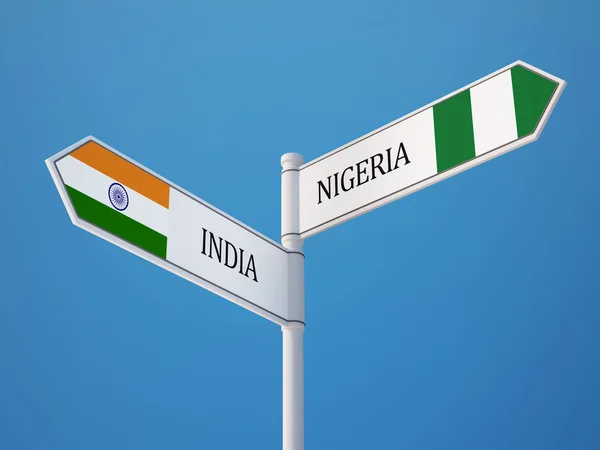
The Government of India deported at least 2,356 Nigerians between 2019 and 2024, with removals quadrupling from 339 in 2021 to 1,470 in the 2023-2024 fiscal year.

This is according to data obtained by The PUNCH from India’s Ministry of Home Affairs.

The figures were drawn from three separate MHA annual reports for which Nigeria-specific data is publicly available.

In the most recent reporting period from April 1, 2023, to March 31, 2024, Nigerians emerged as the most deported nationality from India, accounting for nearly two-thirds of all foreign nationals removed from the South Asian country.

Indian authorities deported over 2,331 persons during the period, with Nigerians representing 63 per cent of all removals carried out by the Foreigners Regional Registration Offices across seven major Indian cities.

They include: Kolkata, Mumbai, New Delhi, Chennai, Amritsar, Bangalore, and Hyderabad.

The figure places Nigeria ahead of neighbouring Bangladesh, which recorded 411 deportations (17.6 per cent), and Uganda, with 78 deportations (3.3 per cent).

Breaking down the annual figures, an average of 122.5 Nigerians were deported monthly from India during the 2023-2024 review period, translating to approximately four deportations per day.

A review of available MHA data shows that the trend of Nigerians topping India’s deportation list is not new but has worsened.

In 2019, India deported 547 Nigerians out of a total of 1,233 foreign nationals removed, 44.3 per cent of all deportations that year.

Bangladesh ranked second with 230, and Afghanistan third with 94.

In 2020, deportations dropped due to the COVID-19 pandemic, with only 258 foreigners deported between April and December.

However, Nigeria did not feature among the top three nationalities for that period.

By 2021, as international travel resumed, 339 Nigerians were deported out of 821 total removals, representing 41.3 per cent. Bangladesh again ranked second with 246, and Afghanistan third with 105.

Deported Nigerians rose from 339 in 2021 to 1,470 in 2023-2024, representing a 333 per cent increase.

See also  Killings, abductions soar after U.S. airstrikes as terrorists kill 183, abduct 366 in 27 days

Also, Nigeria’s share of total deportations rose from 44 per cent in 2019 to 63 per cent in 2023-2024.

The data shows Uganda as the only other sub-Saharan African country among the top three deported nationalities in the latest report.

Recent data put the total number of Nigerians living and working in India at over 60,000, making it the largest West African community in the country.

However, the high deportation numbers have emerged against the backdrop of strengthening diplomatic ties between the two countries.

President Bola Tinubu visited India in September 2023 to attend the G20 Summit in New Delhi as a guest nation, where he met with Indian Prime Minister Narendra Modi to discuss bilateral cooperation in defence, agriculture, trade, and investment.

Just over a year later, in November 2024, Prime Minister Modi made his first visit to Nigeria in 17 years, the first by an Indian prime minister since 2007.

During the two-day visit, Modi was conferred with Nigeria’s second-highest national honour, the Grand Commander of the Order of the Niger, making him only the second foreign dignitary after Queen Elizabeth II to receive the award.

The leaders signed three Memoranda of Understanding on cultural exchange, customs cooperation, and survey cooperation, and discussed expanding the India-Nigeria Strategic Partnership established in 2007.

Also, in November 2024, the National Security Advisers of both countries convened for the India-Nigeria Strategic and Counter-Terrorism Dialogue, where they addressed shared threats from terrorism, organised crime, and illicit activities impacting bilateral relations, including those linked to irregular migration and drug networks involving Nigerian nationals in India.

Indian companies have invested $27bn cumulatively in Nigeria, with 200 companies operating in the country.

Bilateral trade between India and Nigeria stood at $7.89bn in 2023-24, down from $11.8bn in 2022-23, primarily due to reduced crude oil imports from Nigeria.

The GOI says most of the deportations were tied to expired visas and drug trafficking cases.

See also  $600m monthly diaspora remittances proof of reforms – FG

The Ministry of Home Affairs report indicates that deportation typically results from entering the country without valid documentation or remaining after visa expiration, with many Nigerian deportees having originally entered India on student visas that subsequently expired.

Data from India’s Narcotics Control Bureau showed that some deportations were based on drug-related cases.

In its 2024 annual report, unveiled by Union Home Minister Amit Shah at the second National Conference of Anti-Narcotics Task Force heads, the NCB disclosed that 106 Nigerians were arrested in India for drug trafficking offences in 2024, making them the second-highest group of foreign nationals implicated after Nepalese citizens, who topped the list with 203 arrests out of a total of 660 foreign drug arrests that year.

In December 2025, Indian authorities deported 32 Nigerians following a multi-state narcotics raid in Delhi by the EAGLE anti-narcotics unit.

The operation saw 124 EAGLE officers and 100 Delhi Crime Branch personnel raid locations across Delhi, Greater Noida, Gwalior and Visakhapatnam on November 27, 2025, arresting 50 Nigerians allegedly linked to a transnational drug trafficking and money-laundering syndicate.

Of the 50 arrested, 32 were deported within 10 days “on priority,” while seven remain in custody facing prosecution after drugs were recovered from them. The remaining suspects may also be deported pending documentation review.

Weeks earlier, in November 2025, Hyderabad police deported Onyeukwu Victor, who had entered India on a student visa in 2021 but remained after it expired in 2024.

The Hyderabad Narcotics Enforcement Wing alleged he coordinated drug supplies to customers in Hyderabad and Bengaluru, though no drugs were found on him at arrest.

Another Nigerian, Victor Obasi, was deported from Hyderabad in January 2026 for illegal stay and alleged drug trafficking links. Indian authorities described his continued presence as “a potential threat to public safety and national security.”

Hyderabad’s specialised H-NEW narcotics unit disclosed in November 2025 that it had deported 56 foreigners since 2022, including 35 Nigerians.

See also  You are one of the shining stars in my cabinet – Tinubu celebrates Wike on birthday

Twenty were deported for drug trafficking, and 15 for overstaying without valid documents.

In October 2022, the western coastal state of Goa, a popular tourist destination, disclosed that approximately 650 Nigerians had been deported from the state between 2019 and 2022.

In April 2025, India’s Parliament passed the Immigration and Foreigners Act, 2025, which replaced four colonial-era laws: the Foreigners Act of 1946, the Passport (Entry into India) Act of 1920, the Registration of Foreigners Act of 1939, and the Immigration (Carriers’ Liability) Act of 2000.

The new law, which came into force on September 1, 2025, increased the penalty for unauthorised entry or stay to five years’ imprisonment or a fine of up to 500,000 rupees (approximately N4.3m), mandated the establishment of holding centres in every state, and required educational institutions to report foreign student admissions to immigration authorities.

India received 9.84 million foreign visitors between April 2023 and March 2024, with Bangladesh accounting for the highest number at 2.1 million arrivals, followed by the United States (1.7 million) and the United Kingdom (900,000).

Speaking with our correspondent, Research Director, Centre for China Studies, Abuja, Charles Onunaiju, argued that a lack of local opportunities was driving Nigerians abroad.

He said, “We have a challenge. Since Nigeria is becoming inhospitable, especially for young people with no opportunities, there is desperation to go abroad.”

Meanwhile, the Nigerians in Diaspora Commission said it is ready to welcome Nigerians deported from anywhere in the world.

“The Federal Government has set up an inter-agency committee, comprising the Ministry of Foreign Affairs, NiDCOM, Ministry of Humanitarian Affairs and Office of the National Security Adviser, for mass deportations of Nigerians from anywhere,” NiDCOM’s Director of Media and Corporate Affairs, Abdur-Rahman Balogun, said in an interview.

punch.ng

FOLLOW US ON:

FACEBOOK

TWITTER

PINTEREST

TIKTOK

YOUTUBE

LINKEDIN

TUMBLR

INSTAGRAM

Continue Reading
Click to comment

Leave a Reply

Your email address will not be published. Required fields are marked *

News

‘If You’ve Removed Subsidy, Why Still Borrowing?’, Emir Sanusi II Queries Federal Govt’s Fiscal Strategy

Published

on

The 16th Emir of Kano, Muhammadu Sanusi II, has questioned the Federal Government’s continued reliance on borrowing despite the removal of petrol subsidy, warning that poor fiscal discipline could erode the gains of recent reforms.

Speaking in an interview with News Central TV on Friday, the former Governor of the Central Bank of Nigeria (CBN) said while the removal of fuel subsidy and the liberalisation of the exchange rate were necessary, their timing and implementation remained problematic.

“If you’re not paying the subsidy and you’ve got the money, why are we still borrowing and borrowing? What are we borrowing for?

“I have always said the subsidy regime was unsustainable. We cannot continue supporting foreign refineries. We’re an oil-producing country. Keeping refineries open abroad while we’re not doing our own,” Emir Sanusi II said.

He, however, expressed optimism over Nigeria’s shift toward domestic refining, noting that the country has moved from being a major importer of petroleum products to an exporter.

“Today, we have a situation where we have our own domestic refinery. We’re not importing petroleum products. We’re even exporting to Europe, and this is very good for the economy,” he added.

Despite supporting the reforms, Sanusi II raised concerns about sequencing, arguing that policy execution without proper monetary tightening contributed to the naira’s sharp depreciation.

“Artificial exchange rates, especially when you’re printing money, cannot work. There was going to be a devaluation,” he said.

“For me, removing subsidy or liberalising exchange rates, these are good interventions. Were they done at the right time? Those are certain questions.”

See also  You are one of the shining stars in my cabinet – Tinubu celebrates Wike on birthday

He explained that implementing exchange rate liberalisation in a “loose monetary environment” worsened currency instability.

“If you decide to remove subsidy and liberalise exchange rates… before you have tightened money supply, the naira drops to a bottomless pit. That was a timing issue,” he said.

The monarch further challenged the government’s fiscal direction, questioning the rationale behind continued borrowing.

“We’ve removed the subsidy… what we should now see is fiscal consolidation. You cannot remove wastages and continue borrowing,” he said.

His remarks came amid concerns over Nigeria’s rising debt profile. Reports indicated that the Federal Government has increased its 2026 borrowing plan by ₦11.31 trillion, bringing the total to ₦29.20 trillion.

President Bola Tinubu also recently sought Senate’s approval for a fresh $516 million loan to fund the Sokoto–Badagry Superhighway project, further fuelling debate over the country’s fiscal direction.

FOLLOW US ON:

FACEBOOK

TWITTER

PINTEREST

TIKTOK

YOUTUBE

LINKEDIN

INSTAGRAM

Continue Reading

News

FG raises allowances, boosts welfare for civil servants

Published

on

The Federal Government of Nigeria has approved a sweeping increase in peculiar allowances and other welfare benefits for civil servants, in a move aimed at improving take-home pay and boosting morale across the public service.

The announcement was made on Friday by the Head of the Civil Service of the Federation, Didi Walson-Jack, during a press briefing in Abuja, where she outlined key reforms endorsed by the Federal Executive Council.

According to Walson-Jack, the review affects workers under both the Consolidated Public Service Salary Structure (CONPSS) and the Consolidated Research and Allied Institutions Salary Structure (CONRAISS), ensuring a broad-based impact across all cadres.

She said the revised peculiar allowances have been structured to reflect across all grade levels, resulting in a meaningful increase in earnings for both junior and senior officers.

In addition, the government approved an upward review of several key allowances, including duty tour allowance (DTA), estacode, and book allowance. Walson-Jack noted that virtually all allowances listed under the Public Service Rules have now been revised.

A major highlight of the reform is the approval of 100 percent Duty Tour Allowance for civil servants attending approved training programmes, regardless of whether travel is involved.

“Even if you are based in Abuja and attend training within Abuja, you are entitled to full DTA,” she said.

Beyond salary-related adjustments, the government also introduced a new exit benefit scheme for retiring civil servants under the Contributory Pension Scheme. The scheme provides 100 percent of a retiree’s total annual emoluments as an exit package, in addition to their pension, effective January 1, 2026.

See also  You are one of the shining stars in my cabinet – Tinubu celebrates Wike on birthday

Walson-Jack described the move as a step toward ensuring dignity in retirement, stressing that no public servant should leave service without adequate financial support.

The government also confirmed the operationalisation of the Employee Compensation Scheme, designed to provide financial protection for workers who suffer job-related injuries or death.

The reforms come amid growing calls from labour unions for improved welfare, as rising living costs continue to put pressure on workers. Analysts say the combined measures could significantly enhance financial stability for civil servants and improve overall productivity in the public sector.

punch.ng

FOLLOW US ON:

FACEBOOK

TWITTER

PINTEREST

TIKTOK

YOUTUBE

LINKEDIN

INSTAGRAM

Continue Reading

News

Wiretapping: El-Rufai pleads not guilty, faces fresh charges

Published

on

The Federal Government, on Thursday, expanded the criminal case against former Kaduna State Governor, Nasir El-Rufai, introducing fresh allegations bordering on interference with critical national infrastructure and unauthorised access to classified information.

The new counts are contained in a further amended five-count charge filed on April 13, 2026, before the Federal High Court in Abuja, replacing an earlier three-count charge instituted on February 16, 2026.

At his arraignment on Thursday before Justice Joyce Abdulmalik, El-Rufai, however, pleaded not guilty to all counts after the court granted the prosecution’s request to substitute the initial charge.

The Department of State Services, through its counsel, Oluwole Aladedoye (SAN), told the court that the amended charge significantly revised the allegations against the former governor, urging the court to adopt the new processes.

Unlike the earlier charge, which focused mainly on alleged unlawful interception of communications, the fresh counts introduce a broader national security dimension.

In count one of the amended charge, the prosecution accused El-Rufai of “intentionally and unlawfully interfer[ing] with the communication” of the National Security Adviser, Nuhu Ribadu, describing the communication channel as part of Nigeria’s critical national information infrastructure.

The charge states that the alleged act contravenes provisions of the Designation and Protection of Critical National Information Infrastructure Order, 2024, and is punishable under the Cybercrimes (Prohibition, Prevention, etc) Amendment Act, 2024.

In a separate and newly introduced count, the prosecution alleged that El-Rufai, “without authorisation, intentionally secured access to classified information” relating to Ribadu, including details of his arrest and detention order issued on February 12, 2026.

This count marks a shift from the earlier framing of the case, which was limited to claims of intercepted communications, to a more serious allegation involving breach of classified state information.

The amended charge also retains and restructures earlier allegations. Count four accuses the defendant of unlawfully intercepting the NSA’s communications, while count five alleges that he and others still at large used technical systems that compromised public safety and national security, thereby instilling fear among Nigerians.

See also  Umahi reveals the cause for flooding on Lagos-Calabar Coastal Highway

Part of count four reads, “That you, Mallam Nasir El-Rufai, adult, male, intentionally and without authorisation, intercepted the communications of the National Security Adviser, Nuhu Ribadu, as admitted by you on 13th February, 2026, while appearing as a guest on Arise TV Station’s Prime Time Programme in Abuja… and thereby committed an offence contrary to and punishable under Section 12(1) of the Cybercrimes Act.”

Count five further states, “That you… did use technical equipment or systems which compromised public safety, national security and instilling reasonable apprehension of insecurity among Nigerians… and thereby committed an offence contrary to and punishable under Section 131(2) of the Nigerian Communications Act, 2003.”

The February charge had contained only three counts, focusing on alleged admission of unlawful interception, failure to report individuals involved, and actions capable of undermining public safety.

However, the amended charge introduces two additional counts and separates previously combined allegations into distinct offences, effectively broadening the scope of criminal liability.

Defence counsel, Oluwole Iyamu (SAN), confirmed receipt of the amended charge and did not oppose its substitution.

Following this, the court struck out the earlier charge and proceeded with the fresh arraignment.

After the plea was taken, the prosecution applied for an accelerated hearing, seeking three consecutive trial dates.

The defence objected, arguing that El-Rufai’s access to legal counsel could be affected due to his custody under the Independent Corrupt Practices and Other Related Offences Commission.

The defence also drew the court’s attention to a pending bail application filed on February 17, noting that an earlier missing affidavit had been located.

The DSS informed the court that it was not opposing the bail request.

In another application, the prosecution sought to shield the identities of two witnesses, requesting that their names be replaced with pseudonyms in court records, citing security concerns.

See also  King Charles to host President Tinubu, First Lady Oluremi on state visit to UK

The defence opposed the request, insisting that it violated the defendant’s constitutional right to know his accusers and that no concrete threat had been demonstrated.

Further arguments arose over access to proof of evidence, with the defence urging the court to compel disclosure to enable proper preparation for trial.

The prosecution opposed the application, describing it as procedurally misplaced.

The defence also filed a motion seeking to quash the amended charge, while the prosecution asked the court to dismiss it as lacking merit.

After listening to both sides, Justice Abdulmalik adjourned the matter to May 18, 19 and 20, 2026, for hearing.

Bail bid fails

The PUNCH gathered that the Kaduna State High Court refused El-Rufai’s bail application on the grounds that the seriousness of the allegations against him, as well as concerns over possible interference with investigations, outweighed the arguments advanced for his release.

The ruling was delivered on 21 April 2026 by Justice D.H. Khobo of the Kaduna Judicial Division in Charge No: KDH/KAD/ICPC/01/2026, filed by the Federal Republic of Nigeria through the ICPC.

El-Rufai had approached the court via a motion dated 25 March 2026, seeking bail “either on self-recognisance or upon such liberal terms as the court may deem fit.”

His application, brought under Sections 35(4) and 36(5) of the 1999 Constitution (as amended) and provisions of the Kaduna State ACJL 2017, argued that the offences were not capital in nature and, therefore, carried a presumption in favour of bail.

He further contended that he had strong community ties, fixed addresses, and substantial assets, which, according to him, eliminated any risk of flight.

El-Rufai also told the court he voluntarily returned from Egypt on 16 February 2026 to honour an EFCC invitation, and argued that the amended charge was “fundamentally defective” and “unintelligible.”

He also raised health concerns, claiming he required specialist medical attention.

See also  Call to scrap LGs in Nigeria, transfer authority to traditional rulers sparks fresh debate

The ICPC opposed the application through a nine-paragraph counter-affidavit deposed to by Idris Abubakar, insisting that the offences were serious and “economically sabotaging.”

The anti-graft agency argued that the former governor posed a flight risk, adding that there was a likelihood he could interfere with witnesses and ongoing investigations involving other suspects.

It also alleged an incident at the Nnamdi Azikiwe International Airport, Abuja, on 12 February 2026, where El-Rufai allegedly obstructed law enforcement officers.

The ICPC further dismissed his medical claims, stating that no supporting medical report was provided.

In his ruling, Justice Khobo held that the gravity of the nine-count charge, coupled with allegations of interference and obstruction, made bail inappropriate at this stage.

The court stated, “In the instant application, given the gravity of the nine-count charge against the defendant/applicant, the respondent’s credible apprehension regarding the interference with the ongoing investigations linked to other persons still at large… the interest of justice is best served by ensuring the applicant remains available for an accelerated trial.”

The judge also faulted the defence on health grounds, noting, “The applicant in my view has failed to provide sufficient medical evidence to justify the grant of bail on health grounds.”

Consequently, the court held, “Accordingly, the defendant/applicant’s application for bail pending trial fails and is hereby refused.”

Justice Khobo ordered that El-Rufai “shall remain in the custody of the respondent (ICPC) pending the commencement of the trial,” while directing that proceedings be conducted on an accelerated basis.

The court also fixed June 1, 2, 3 and 4, 2026, for day-to-day hearing, following what it described as a consensus between prosecution and defence counsel.

For now, the former governor remains in ICPC custody as the substantive trial awaits commencement.

punch.ng

FOLLOW US ON:

FACEBOOK

TWITTER

PINTEREST

TIKTOK

YOUTUBE

LINKEDIN

INSTAGRAM

Continue Reading

Trending