Connect with us

Politics

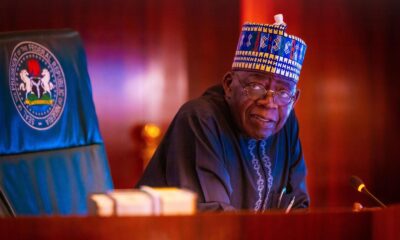
Why Tinubu Lost 2023 Presidential Election In Lagos – Obanikoro

Published

on

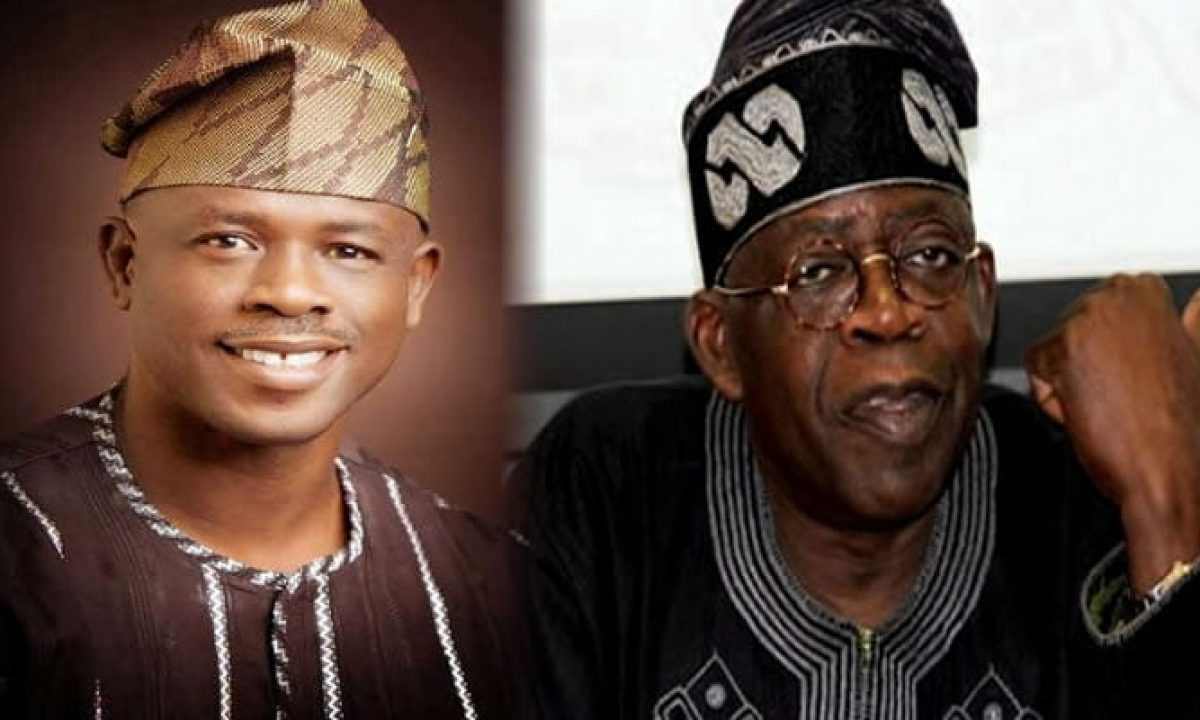
Former Minister of State for Defence, Musiliu Obanikoro, has shared his views on why President Bola Tinubu lost Lagos in the 2023 presidential election.

It was reports that Obanikoro spoke during an interview with Vanguard on Monday, February 23, 2026.

He said several political factors worked against Tinubu during the election period. According to him, although party supporters made strong efforts during the campaign, some issues shaped how voters made their choices.

The former senator pointed to the Muslim-Muslim presidential ticket as one of the reasons behind the outcome.

He explained that it was the first time such a ticket was presented at the national level in Nigeria. He said many Nigerians were used to seeing a balance between Muslims and Christians on presidential tickets. When that pattern changed, it created concerns among some voters.

Obanikoro noted that Lagos has a large Christian population. He described the state as a major base for many Christian organisations in the country.

He said several churches and religious groups have their headquarters in Lagos or in nearby areas. Because of this, he said religion became an important topic during the election in the state. He stated that some voters were worried that having candidates from the same religion at the top level could affect religious balance in leadership.

According to him, Nigerian politics has for many years followed an informal arrangement where both major religions are represented in key positions. When this long-standing pattern was altered, it led to different reactions from parts of the electorate.

See also  2027: Be wary of politicians with unrealistic promises, Makinde warns

“Asiwaju lost Lagos for so many reasons, one it was a Muslim/Muslim ticket. Two, Lagos, whether you like it or not, is the capital of the Christian religious groups in Nigeria. All these religious associations or religious groups are all headquartered in Lagos or outskirts of Lagos, and they have a huge population,” he said.

FOLLOW US ON:

FACEBOOK

TWITTER

PINTEREST

TIKTOK

YOUTUBE

LINKEDIN

TUMBLR

INSTAGRAM

Continue Reading
Click to comment

Leave a Reply

Your email address will not be published. Required fields are marked *

Politics

Poor communication making APC achievements invisible, says party chair

Published

on

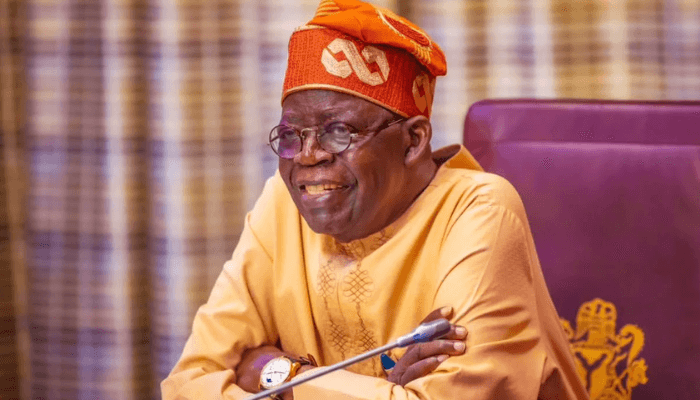
The National Chairman of the All Progressives Congress, Prof. Nentawe Yilwatda, has lamented that poor communication is rendering the party’s achievements invisible despite significant infrastructure projects delivered by the Bola Tinubu administration and state governments.

Yilwatda made the observation on Tuesday at the Progressive Governors’ Forum-Renewed Hope Ambassadors Summit held at the State House Banquet Hall, Abuja.

“Good governance without communication is invisible. I’ve visited many states. I’ve seen beautiful projects, beautiful things being done, but they’re invisible and not communicated,” the APC chairman lamented.

He emphasised that effective communication is critical to translating governance achievements into political capital ahead of the 2027 general elections.

“Communication without structure is noise. Politics without grassroots mobilisation is organised defeat,” Yilwatda said, explaining the rationale for establishing the Renewed Hope Ambassadors structure.

The party chairman listed major infrastructure achievements that have not received adequate publicity, including the Lagos-Calabar Coastal Road, the Badagry-Sokoto Road with over 300 dams for irrigation agriculture, the Red Line rail project, and the Ajaokuta-Kaduna-Kano gas pipeline project.

“Is it the Coastal Road or the Badagry-Sokoto Road with over 300 dams spread across the route for irrigation agriculture to boost food security in the country?

“Or the Red Line, or the AKK project, which is the biggest and most expensive project ever in the country? But have they been heard loud and clear?” he asked.

Yilwatda said Tuesday’s summit is meant to address this communication gap by ensuring that governance achievements translate to public gratitude and ultimately electoral victory.

See also  Ikpeazu denies corruption allegation, affirms PDP membership

“We’re here to ensure that governance translates to gratitude, gratitude by the people for the projects, and gratitude also translates to loyalty. And loyalty translates to our victory in 2027,” he stated.

He added, “When the President speaks, let the governors reimport it. When the governors deliver, let the ambassadors amplify it. When the party decides, let the members defend it.”

The chairman warned against what he called “contradictory narratives, internal sabotage, and freelance communication,” insisting that unity in messaging is strategic power for the party.

“One party means one message, no contradictory narratives, no internal sabotage, and no freelance communication. Unity is not optional. Unity is strategic power as a party,” he emphasised.

Yilwatda dismissed opposition attempts to exploit the administration’s economic reforms for political gain, saying opponents “whisper confusion where we speak in clarity.”

He argued, “The opposition always hopes that our difficult reforms will weaken us.

“They are waiting for temporary discomfort. They refuse to acknowledge the long-term benefits to this country.”

He expressed confidence that Nigerians will reward performance over rhetoric in 2027.

“In 2027, Nigerians will not vote noise. Rather, they will vote for the results they will see on the streets and across the country,” the APC chairman declared.

Yilwatda said the party has chosen “reform over rhetoric, restructuring over recycling of failure, and building the economy and making reforms over cosmetic solutions.”

He described the summit as “a defining gathering that will define our vision, our conviction, and our purpose as a political party.”

The chairman outlined the summit’s dual purpose as strengthening governance communication under the Renewed Hope agenda and laying structural foundations for victory in 2027.

See also  2027: ‘Jonathan’s People Want Peter Obi To Step Down For Ex-President’

“Today begins the future of our party and our country. The future is not something that we await. Rather, it is something that we organise, and today is the starting point,” he stated.

The summit, themed “Taking Renewed Hope to the Grassroots: One Party, One Message, One Mobilisation Framework,” brought together Renewed Hope Ambassadors from the 36 states and the FCT, zonal coordinators, and members of the Federal Executive Council.

Imo State Governor, Hope Uzodimma, who serves as Chairman of the Progressive Governors’ Forum and Director-General of Renewed Hope Ambassadors, delivered the welcome address.

Vice President Kashim Shettima presented the Renewed Hope Compendium, while Tinubu gave the keynote address and officially opened the summit.

According to the programme, the Renewed Hope Ambassadors initiative is a grassroots mobilisation structure designed to communicate the administration’s achievements and build support ahead of the 2027 elections.

Zonal coordinators appointed include Senator Anyim Pius Anyim (South-East), Senator Tanko Al-Makura (North Central), Isa Yuguda (North East), Senator Ifeanyi Okowa (South-South), Senator Adedayo Adeyeye (South-West), and Aminu Masari (North-West).

The management team comprises Senator Uba Sani of Kaduna State as Deputy Director-General, Governor Inuwa Yahaya of Gombe State as Secretary, and James Faleke as Assistant Secretary.

The summit featured technical sessions, panel discussions, and a commitment ceremony aimed at aligning party structures for the 2027 electoral contest.

punch.ng

FOLLOW US ON:

FACEBOOK

TWITTER

PINTEREST

TIKTOK

YOUTUBE

LINKEDIN

TUMBLR

INSTAGRAM

Continue Reading

Politics

Court adjourns ruling in ADC deregistration suit to March 24

Published

on

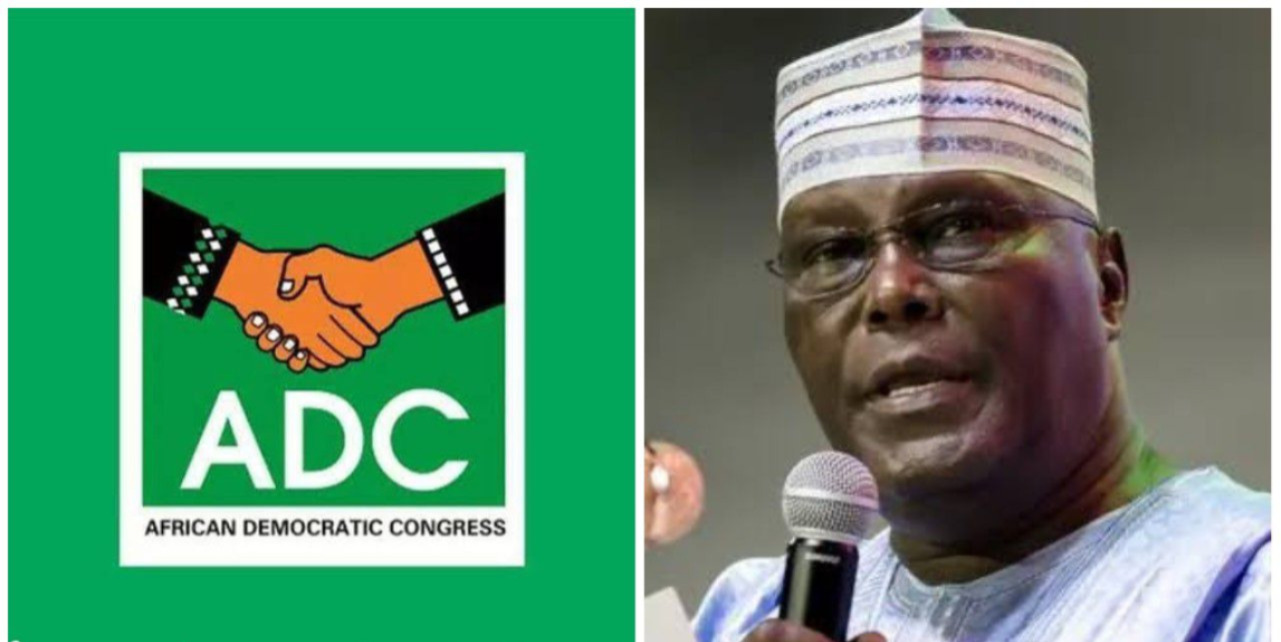
The Federal High Court sitting in Abuja has fixed March 24, 2026, for ruling on a joinder application in the suit seeking the deregistration of the African Democratic Congress, Accord Party, Zenith Labour Party and Action Alliance over alleged non-compliance with constitutional requirements.

The development follows a suit marked FHC/ABJ/CS/2637/25, instituted by the Incorporated Trustees of the National Forum of Former Legislators against the Independent National Electoral Commission, the Attorney-General of the Federation and the affected political parties.

The originating summons initially targeted only the ADC for deregistration, but was later amended to include the other parties, whose continued existence the plaintiffs contend breaches the provisions of the 1999 Constitution (as amended).

At Tuesday’s proceedings before Justice Peter Lifu, counsel announced appearances for the parties, except for Action Alliance, which had two different lawyers from separate law firms claiming to represent it.

The two lawyers — Ibrahim Yakubu and Bello Lukman — maintained that they had valid letters of instruction to appear for the party.

In the exchange that followed, Justice Lifu asked whether both counsel were acting together. They responded negatively, insisting they had separate mandates.

The judge directed them to reconcile their positions, warning that the court would “do the needful” if they failed to resolve the representation issue.

In another application, counsel to the Accord Party, Musibau Adetunbi (SAN), sought leave of court to file a further counter-affidavit in opposition to the amended originating summons joining the party in the suit.

Adetunbi, who brought the motion pursuant to Order 26 Rule 1 and Order 66 Rule 8, argued that the further counter-affidavit was necessary to address salient facts allegedly omitted in the earlier process. He urged the court to grant the application in the interest of justice and to enable it reach a just determination.

See also  LP dissociates self from planned protest at INEC headquarters

However, counsel to the plaintiff, Yakubu Abdullahi Ruba (SAN), opposed the application, arguing that no new facts were introduced in the amended originating summons to warrant a further counter-affidavit.

Ruba described the application as incompetent and unknown to the law, urging the court to refuse the request.

However, some of the counsel, including S.E. Aruwa (SAN), also applied for an extension of time to regularise their processes and filed a motion on notice challenging the jurisdiction of the court to entertain the suit.

While Ruba opposed the application for enlargement of time, one of the counsels told the court that he had just been briefed and sought time to respond.

After listening to arguments, Justice Lifu granted the application for extension of time and deemed the plaintiff’s reply on points of law as properly filed.

The court subsequently adjourned the matter to March 24 for ruling on the joinder application and other pending motions.

Speaking with journalists after the proceedings, Ruba reiterated that the suit seeks a judicial interpretation of constitutional and statutory provisions governing the registration and continued recognition of political parties in Nigeria.

According to court documents, the action was commenced pursuant to Section 225(a) of the 1999 Constitution (as amended), Section 75(4) of the Electoral Act, 2022, and relevant provisions of the Federal High Court (Civil Procedure) Rules, 2019.

The plaintiffs contend that INEC is constitutionally bound to deregister political parties that fail to meet minimum electoral performance thresholds, including securing at least 25 per cent of votes cast in one state in a presidential election, or winning at least one elective seat at any level of government.

See also  APC, opposition list expectations for next INEC chair ahead of 2027

The plaintiffs are seeking declaratory orders compelling INEC to enforce constitutional thresholds, as well as mandatory and perpetual injunctions restraining the commission from recognising or giving effect to the political activities of the affected parties pending compliance.

They further argued that permitting such parties to participate in the 2027 general elections would clog ballot papers, waste public resources and undermine electoral integrity.

Continue Reading

Politics

Bayelsa’s next Deputy Gov: Behind-the-scenes moves, political calculations, intrigues

Published

on

The sudden death of Bayelsa State Deputy Governor, Lawrence Ewhrudjakpo, has triggered an intense political scramble across the state, with power brokers, party leaders and interest. With Governor Diri holding the ace, stakeholders are divided over whether Sagbama LG should retain the position — or whether broader political considerations, including 2027 permutations, will ultimately shape the decision, LINUS EFFIONG reports

Just weeks after surviving a bitter political storm, Bayelsa State Deputy Governor, Lawrence Ewhrudjakpo, was gone.

The 60-year-old politician, who stood his ground when the state’s political landscape shifted beneath his feet, died on Thursday, December 11, 2025, bringing to a sudden end a career defined — in his final months — by loyalty, defiance and quiet resilience.

When Governor Douye Diri defected from the Peoples Democratic Party to the All Progressives Congress on November 3, Ewhrudjakpo refused to follow. While several state officials crossed over with the governor, he chose to remain in the PDP, the party he had long identified with.

That decision set off months of unease within the state’s political establishment. Rumours swirled of a plot to replace him with a more compliant ally. In response, the deputy governor took the extraordinary step of suing the Bayelsa State House of Assembly to forestall any move against him — a suit he later withdrew after Diri’s intervention paved the way for an out-of-court settlement.

Then came the shock.

Ewhrudjakpo slumped in his office in Yenagoa and was rushed to the Federal Medical Centre, where doctors pronounced him dead. The suddenness of it all stunned the state.

Only hours earlier, at exactly 11:48am, he had posted photographs on his Facebook page showing him in a meeting at Government House with UNICEF Country Representative in Nigeria, Wafaa Saeed. There were no outward signs that it would be his final public engagement.

Tributes poured in from across Nigeria, many describing him as a “gentleman” and an unrelenting workaholic. Former President Goodluck Jonathan called him “a devoted steward of Bayelsa, a patriot, and a loyal servant of our state and nation.”

“Throughout his years in public service, he demonstrated an unwavering passion for the welfare of our people and earned the respect and admiration of many across the country,” Jonathan said.

But even as tributes continued, political calculations quietly resumed.

Behind the scenes, lobbying intensified as attention shifted to who would fill the vacant office. His death has now ignited a fresh debate over zoning and equity, with many insisting that fairness demands the next deputy governor emerge from Sagbama Local Government Area, the late Ewhrudjakpo’s home base.

For Bayelsa, the mourning is real. But so too is the power struggle that has already begun.

See also  2027: ‘Jonathan’s People Want Peter Obi To Step Down For Ex-President’

The power play

If the battle for Bayelsa’s deputy governorship has a silent command centre, many believe it lies with Seriake Dickson.

The former governor and now senator is widely regarded as the most formidable force capable of shaping the succession conversation. Yet, in public, he has struck a careful tone — insisting he has not been consulted by Governor Douye Diri and stressing that the choice of a new deputy is solely the governor’s constitutional prerogative.

Few in Yenagoa take that at face value.

Observers of Bayelsa’s intricate political chessboard argue that such restraint is typical Dickson — measured words masking strategic patience. His relationship with Diri has remained outwardly cordial, even warm. He has openly supported the governor’s administration and pointed would-be aspirants away from his doorstep, advising them instead to lobby the man who holds the final pen.

But beneath that public posture, whispers persist.

Many believe Dickson is quietly rooting for his former deputy chief of staff, Hon. Ebizi Rosemary Brown Ndiomu, now representing Sagbama III in the state House of Assembly. Her emergence, should it happen, would not only preserve Sagbama’s hold on the office but also reinforce Dickson’s enduring relevance in Bayelsa’s evolving power matrix.

In Bayelsa politics, influence is rarely declared. It is inferred.

The Goodluck Jonathan factor

Then there is the shadow — calm but unmistakable — of Goodluck Jonathan.

No major political decision in Bayelsa is ever discussed without invoking the former President’s name. His influence in the state remains profound, particularly in his relationship with Diri.

Jonathan’s endorsement was pivotal to Diri’s re-election in 2023. At the time, the governor described that backing as “worth more than billions of naira,” a remark that underscored just how decisive it was. Diri has repeatedly acknowledged Jonathan’s role in shaping his political ascent — from the National Assembly to Creek Haven.

Now, as the deputy governorship hangs in the balance, stakeholders believe Jonathan’s voice — whether spoken publicly or whispered privately — could tilt the scales.

The uncertainty, however, lies in where that influence will fall. Will he align with Dickson’s perceived preference? Or does the former President have a different calculation altogether?

For now, Jonathan remains silent — and in Bayelsa, silence can be more powerful than speech.

Lokpobiri’s calculated presence

Hovering on the edges of the unfolding drama is Heineken Lokpobiri, whose growing visibility has not gone unnoticed.

A seasoned political operator, former Minister of State for Agriculture and Rural Development, two-term senator for Bayelsa West, and now Minister of State for Petroleum, Lokpobiri possesses both federal leverage and deep-rooted local networks.

His long-standing governorship ambition is no secret. Having openly expressed interest in succeeding Diri, his stake in the deputy governorship calculation is clear: whoever emerges could either strengthen or complicate his 2027 pathway.

See also  ADC caught in crossfire as Atiku–Obi rivalry escalates

Political watchers are therefore studying his movements carefully. An endorsement here, a meeting there — each gesture is dissected for meaning.

In a contest shaped by loyalty, zoning, defections and future ambitions, Lokpobiri represents not just a participant, but a strategist with eyes firmly set beyond the immediate vacancy.

And as Bayelsa mourns, the manoeuvring intensifies.

Diri at the centre of the storm

At the eye of the gathering storm is Governor Douye Diri himself.

His measured silence — and the careful, almost clinical way he chooses his words at public events — has only deepened the suspense. In a state where every handshake is analysed and every smile decoded, Diri’s refusal to drop the slightest hint about his preferred successor has left Bayelsans guessing.

Behind closed doors, however, the permutations are thick.

A source close to the governor confided that Diri may be considering his Chief of Staff, Pastor Peter Akpe — not just a trusted aide, but also his maternal cousin. Akpe’s proximity to power, administrative grip and daily access to the governor make him a natural contender. Yet, for some, that closeness raises questions about optics and political messaging at a time when zoning and inclusivity dominate the conversation.

But Akpe is not the only name on the chessboard.

Prince Ebitimi Amgbare, Managing Director and Chief Executive Officer of the Niger Delta Basin Development Authority, is said to be leveraging federal goodwill. Widely perceived to enjoy a cordial relationship with President Bola Tinubu, Amgbare’s growing praise of Diri’s infrastructural strides has not gone unnoticed.

With Diri now firmly aligned with the APC and publicly backing Tinubu’s 2027 re-election bid, some insiders speculate that a subtle nod from Abuja could influence the governor’s calculus. Amgbare’s credentials — foundation member of the old Action Congress of Nigeria, loyal APC stalwart, 2023 presidential campaign council member and former Youth and Sports Commissioner — position him as a bridge between Bayelsa’s old APC structure and the governor’s new political home.

Whether that bridge is one Diri is willing to cross remains the unanswered question.

Casting the net wider

Beyond loyalty and federal connections lies another powerful argument: zoning.

Many political leaders insist that Sagbama, the home base of the late Ewhrudjakpo, should retain the office in the spirit of balance and continuity. To abandon that unwritten arrangement, they warn, could unsettle delicate political understandings in the state.

If Sagbama remains the anchor, one prominent figure is the Speaker of the Bayelsa State House of Assembly, Rt. Hon. Abraham Ingobere. Though representing Brass Constituency III, Ingobere has maintained a close and cooperative relationship with Diri. The governor has repeatedly praised him as “a stabiliser of the polity,” crediting him with fostering a rancour-free executive-legislative partnership since his re-election as Speaker in June 2023.

See also  2027 Presidency: Makinde, others to fight for PDP ticket

Yet, the field remains crowded.

Dr. Peter Akpe’s name resurfaces here too — hardworking, administratively savvy and deeply entrenched within the corridors of Government House. His connections to former Vice President Yemi Osinbajo and First Lady Oluremi Tinubu add another layer to his political capital.

Then there is Dr. Dennis Otiotio, Bayelsa APC chairman from Nembe. A lawyer with a PhD and a history of fierce criticism of Diri — once describing his administration as “a punishment to Bayelsa State” — Otiotio’s political journey took a dramatic turn when he welcomed Diri into the APC fold in November 2025. Whether that reconciliation translates into consideration is another matter entirely.

In a quieter corner of the conversation is Christopher Ewhrudjakpo, elder brother of the late deputy governor and a serving aide to Diri. His possible emergence would carry emotional weight — a gesture of continuity and consolation — but whether sentiment aligns with political pragmatism remains uncertain.

Stakeholders weigh in

As lobbying intensifies, party chieftains are no longer shy about projecting their preferences.

PDP stalwart Christopher Abarowe argues that the governor must balance what he describes as a “political marriage” between the APC and PDP in the state. According to him, certain APC factions have already secured benefits, including commissioner slots tied to the David Lyon and Lokpobiri blocs.

“The foundational APC members — the old guard — should now be considered,” he said, listing figures such as Prince Ebitimi Amgbare and Briya Aganaba as worthy of attention.

On the other side of the divide, APC chieftain John Asawana insists the moral argument outweighs political arithmetic.

“To me, Sagbama should retain the position,” he said. “The state is now APC. What we should be considering is integrity. Whoever the governor appoints must be credible and not someone already compensated with political office.”

And so, the lines are drawn.

Loyalty versus zoning. Federal whispers versus local equilibrium. Sentiment versus strategy.

In the end, only one signature will settle the contest — that of Governor Douye Diri. But until the announcement is made, Bayelsa remains suspended between mourning and manoeuvring, waiting for the next move in a political drama that shows no sign of slowing.

punch.ng

FOLLOW US ON:

FACEBOOK

TWITTER

PINTEREST

TIKTOK

YOUTUBE

LINKEDIN

TUMBLR

INSTAGRAM
Continue Reading

Trending