Connect with us

Education

How Edo man sponsored me from Almajiri school to university – Jigawa varsity graduate

Published

on

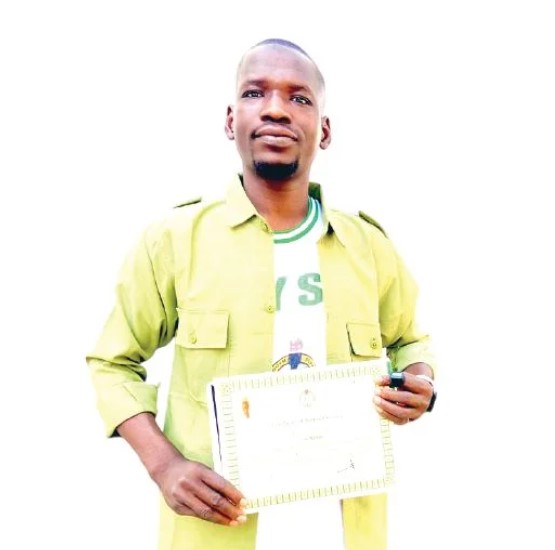
Ahmed Isah, a former Almajiri pupil, who washed clothes and ran errands as a kid to survive before becoming a graduate, tells CHUKWUDI AKASIKE how he journeyed through the tough Almajiri system before becoming a graduate

Where are you from?

I was born in a small village called Gul, Gara Local Government Area of Kano State.

How old are you?

I am 29 years old.

How was growing up as an Almajiri boy?

It was not easy. I lost my father in my very early years. I never knew who he was. I only have my mum, my two sisters, and my elder brother; that is four of us. I happen to be the lastborn in the family. My mother decided to send me to an Almajiri school.

What year did your mum enrol you in an Almajiri school?

That was around 2003/2004. I was handed over to a man, Mallam Alhassan, who is like a brother to me, because we are from the same village. The man took me from the village and brought me here to Dutse, the capital of Jigawa.

Why did your mum decide to send you to an Almajiri school?

I have no father. So, instead of allowing me to roam up and down, she decided to enrol me in an Almajiri school to learn something. She decided not to leave me like that without having any knowledge of anything.

So, what specifically did you learn in the Almajiri school?

I learnt the Quran, and you know how tough the Almajiri system is. You have to take care of yourself by looking for what to eat; you are the one who will be responsible for what to wear.

How old were you at that time?

I was between five and six years old when I was enrolled in the Almajiri school; I was not even up to seven then.

It must have been very tough on you.

It was very tough. My colleagues and I were the youngest during our days in school.

What is the name of the school?

You know, all these Almajiri schools don’t have specific names, but the one I attended is called Tsangaya Almajiri School.

So, how did you run your daily schedule at school?

The teachers there wake us early, between 4 am and 5 am. We, as pupils, study that early in the morning. Then from 7 am to 8 am, you are told to go and look for what to eat in the morning. Then you are expected to come back between 9.30 am and 10 am.

Then you study again before you are dismissed to go and look for what to eat again, this time as lunch. Then you come back in the evening. That is how the system is. You have to come back and study in the evening, except on Fridays and Saturdays when you have a free day. You have a day to wash your clothes; you have a day to go and look for a little money to buy chalk and other things.

See also  2026 budget: Anambra, Enugu, Kano lead in education funding

How many years did you stay in the Almajiri school?

Well, I stayed there for about… even when I was in JSS 1, 2, 3, and 4, and SS1 to SS2, I was still staying in the Almajiri school. It was when I sat my WAEC and JAMB (UTME) exams that I had to move out of the school because it is far from the university I was attending. So, I stayed there for more than 10 years.

Can you remember the year you left there?

I left in 2017.

Apart from your mother, who enrolled you in an Almajiri school who encouraged you to further your education?

Along the line, while I was in that Almajiri school, as young as I was at that time, I never liked begging for what to eat. So, some of us went to some people’s houses to tell them that we could fetch water for them and do other domestic work.

When we washed clothes belonging to their children, they gave us some clothes, food, or money in exchange so that we could take care of ourselves. In that process, I met a good man who is a very important person in my life.

What is his name?

His name is Danjuma Maiyaki Allah. He is from Edo State. The man was happy that I could do most domestic jobs. So, a woman connected me to him, and I started doing domestic work for him. I used to do anything that he told me to do for him.

The man described me as a very intelligent person who is hardworking and very honest. He used to test my level of honesty, and I passed all the tests.

What other factors propelled you to further your education?

When I was a kid, I used to admire students in their uniforms, especially when they were on their way to school. I saw them as gaining more knowledge than I. So, I wanted to also enjoy that aspect of life and was determined to go to school.

I spoke about it to my Almajiri teacher and my mother. I also told my brother about the need for me to go to school. Then I didn’t have any access to a mobile phone. So, I sent a message across to my parents, brothers, and sisters to ask for their permission to further my education up to primary school. They happily permitted me to do so.

I was nervous when I sent the message across, thinking they would not permit me. But they told me, ‘May God bless you. Go ahead and do it.’ I then came back to the man, Danjuma Maiyaki Allah, to tell him about my people’s approval.

He took me to a primary school; it is a public primary school in Dutse. The man (Mallam Danjuma) took me to the headmaster. He told the headmaster that I was his Almajiri and that I was working for him, and that he wanted the headmaster to register me in the school.

See also  Wike’s son bags Master’s degree from King’s College London

The headmaster said I should be interviewed to know if I could read and write. Though I read and wrote well in the Hausa language, I couldn’t write English. So, I had to learn how to write in English. After the interview, the primary school realised I was bigger than pupils in Primary 1, 2, and 3. They decided to register me in Primary 5.

When I got to Primary 6, I sat my Common Entrance and started JSS1 in the same school because it used to be a primary and junior secondary school altogether. I wrote my junior WAEC exam at the school in 2013.

What is the name of the primary and junior secondary school?

Dr Nuhu Muhammad Sanusi Government Day Junior Secondary School.

Did you pass your junior school exam?

Yes, I did, and my sponsor was impressed. So, instead of taking me to another public school, he decided to register me in a public/private school known as Dutse Capital School. In my primary and junior secondary school, pupils and students did not pay school fees, but we used to buy other things.

However, in Dutse Capital School, we paid little school fees. At the time, my sponsor, Mallam Danjuma, used to pay my school fees. Along the way, he asked me if I had an interest in learning a skill so that at a later stage of my studies, when I needed financial aid, money raised from the skill could help me.

So, I decided to learn tailoring. I started learning tailoring when I was in JSS2. After school hours, I used to go to a tailoring shop to learn the skill. When I got back home, I still did my Almajiri study. That was only in the night and early morning before I left for school. I was able to stay disciplined to attend a modern school, an Almajiri school, and still learn tailoring.

How did you gain entry into the university?

After I passed my WAEC and NECO exams, I then registered for UTME, which I passed. I scored 217.

What did you study?

I studied Criminology and Security Studies. The cut-off mark for the course was 195, and I scored 217. My SSCE result was very good for me to be offered admission in the first batch.

Surprisingly, my sponsor was not tired; he helped me financially from the first year all through. I studied seriously because I was always aware of the background I came from. When I started my Year 1, it was not easy for me, but later, I began to catch up.

When did you graduate?

I graduated in 2024.

What is the name of the university you graduated from?

Federal University Dutse.

What is your current occupation?

After my national youth service, I came back to my tailoring shop. I have not got a job except for my tailoring work. If I see any job opportunity, I will still apply.

See also  JAMB releases over 1.8 million UTME results nationwide

What was life like when you were serving as a corps member?

It was a very interesting experience. I used to admire corps members during my primary and secondary school days. I liked seeing them dressed in khaki. What gave me more joy was the way I succeeded in making it up to the extent of becoming a graduate and serving as a youth corps member. It was a very nice experience.

Where did you serve?

I served in Kaduna State.

Looking back at when you started up to the point of becoming a graduate and serving your fatherland, how do you feel?

It is inexplicable. I shed tears when I was collecting my NYSC certificate. It was a dream come true. It was something I felt would not be possible, but now I have achieved it. I remain very happy today because of these academic achievements.

Are you married or involved in any relationship?

No, I’m not married yet. I know what I have gone through. So, any relationship I know will not be serious, I will not involve myself in it. I will marry later when I get something that will give me a stable income.

How do you feel when you see Almajiri boys who beg on the streets?

I don’t like them begging because I know how it feels; I was in their shoes before. I know what they are going through. I know how it is. So, I don’t blame them because it is not completely their fault. Talking about begging, it is like they don’t have any other choice. But I used to sell pure water during my days as an Almajiri boy.

Have you at any time been moved to tell them to go to school?

In the Almajiri school I attended, I was like an inspiration to them. If you go to that Almajiri school now, you will see young men with Diploma certificates, and many people with secondary school certificates.

Many of them are attending modern schools now. It has now become a culture in that Almajiri school. When the pupils begin to grow, they always find one way or the other to go to school. My story inspired them to see the need to go to school. I serve as an inspiration to them because some of them who have Diplomas are saying they want to go to university.

How do your siblings and mother feel about the fact that you have become a graduate?

They are very happy. On my passing-out, they came to celebrate with me. My mum was even crying because she was not expecting such a joyful thing. It sounds very odd that an Almajiri will become a graduate.

punch.ng

FOLLOW US ON:

FACEBOOK

TWITTER

PINTEREST

TIKTOK

YOUTUBE

LINKEDIN

TUMBLR

INSTAGRAM

Continue Reading
Click to comment

Leave a Reply

Your email address will not be published. Required fields are marked *

Education

12 Chibok girls set to graduate from Yola varsity

Published

on

Twelve years after 276 schoolgirls were abducted from Government Girls Secondary School, Chibok, Borno State, by Boko Haram militants, 12 of the survivors are set to graduate from the American University of Nigeria, Yola.

Addressing journalists on Wednesday on the university campus, the President of AUN, Prof Dewayne Frazier, described the graduation of the Chibok survivors as a global success story.

“The graduation of several students who were formerly held captive in the Sambisa Forest symbolises more than academic achievement; it is a global testament to resilience, hope, and the indomitable human spirit.

“Their journey from captivity to a university degree has captured worldwide attention as a victory over adversity,” he said.

Frazier said the milestone validated AUN’s mission as a development-focused institution and demonstrated that it is possible to bridge the gap between trauma and higher education success.

“These graduates now stand as beacons of light for the North-East and the world. Their success sends a powerful message: education is the most proven tool for healing and transformation, capable of reclaiming lives and building a brighter, more secure future for Nigeria,” he added.

He also commended the Federal Ministry of Women Affairs for sponsoring the girls’ education at the university.

A total of 276 girls were abducted on April 14, 2014.

While 57 escaped on the night of the attack, and many others have been released or escaped over the years, more than 80 remain unaccounted for as of recent reports.

The incident also triggered the global #BringBackOurGirls campaign.

punch.ng

FOLLOW US ON:

FACEBOOK

TWITTER

PINTEREST

TIKTOK

YOUTUBE

LINKEDIN

INSTAGRAM

See also  How A Class Of 24 Students Produced 2 Presidents, 4 Governors, 2 Ministers, 4 Emirs, 3 Justices, 4 Ambassadors and Other Influential Leaders
Continue Reading

Education

How I bagged PhD at 27, won UT Dallas’ Outstanding Graduate Student award — Nigeria’s Muneer Yaqub

Published

on

Muneer Yaqub, a Nigerian researcher and PhD graduate of the University of Texas at Dallas, United States, recently earned recognition as the Outstanding Graduate Student (PhD) selected from across six schools at the institution. He specialises in antimicrobial resistance, with research focused on highly drug-resistant, hospital-acquired pathogens at the Dillon Lab. In this interview with ADAM MOSADIOLUWA, he speaks on his academic journey from Usmanu Danfodiyo University, Sokoto (UDUS), to a fully funded doctoral programme in the United States, the challenges of adapting to a new academic and cultural environment, his leadership roles and mentorship initiatives for international students, and the perseverance required to complete a PhD at 27.

CAN you take us through your journey from studying Microbiology at Usmanu Danfodiyo University, Sokoto (UDUS), to becoming a PhD student at the University of Texas at Dallas in the United States? What drove that ambition, and what were the biggest hurdles along the way?

I studied Microbiology at Usmanu Danfodiyo University, Sokoto, and that was really where my interest in infectious diseases started to take shape. At the time, I didn’t have some grand, fully formed plan to do a PhD abroad. I was just curious especially about why some infections don’t respond to treatment the way we expect.

Over time, that curiosity turned into something more intentional. I started looking into opportunities outside Nigeria, partly because I wanted access to better research infrastructure, and partly because I wanted to challenge myself. The biggest hurdles were honestly information and access. It wasn’t always clear what the process looked like or what was required. You’re figuring things out as you go, often without guidance.

There were also structural limitations as an international student funding, eligibility, things like that. But once I understood the system better, it became more about positioning myself properly and staying consistent.

Immediately after your first degree at UDUS, you secured a fully funded fellowship to pursue your PhD in the US. What did that process look like, and how challenging was the transition from Nigeria to life as a doctoral student abroad?

Getting a fully funded PhD wasn’t a straight line. It was a lot of trial and error understanding how applications work, how to present your story, and what programs are actually looking for. Moving to the University of Texas at Dallas was a big shift. Academically, you’re expected to be much more independent. No one is holding your hand—you have to think critically, design experiments, defend your ideas. Outside the lab, it was also an adjustment new environment, new culture, building a support system from scratch. I think the hardest part was learning the “unwritten rules” how to communicate with professors, how to navigate opportunities, and how to advocate for yourself. That takes time.

See also  How A Class Of 24 Students Produced 2 Presidents, 4 Governors, 2 Ministers, 4 Emirs, 3 Justices, 4 Ambassadors and Other Influential Leaders

You were recently named the Outstanding Graduate Student (PhD) at UT Dallas, selected from among nominations across six schools. How challenging was it to finish your PhD at 27, and what does this recognition mean to you personally, and maybe as a Nigerian as well?

It means a lot, honestly. A PhD can be a very quiet journey most of the work happens behind the scenes, and progress is often slow and uncertain. So to have that work recognized at the level of the university is special. Finishing at 27 wasn’t easy. There’s pressure to perform, to produce results, to stay on track, even when things aren’t working. And in research, things often don’t work. As a Nigerian, it also means something more. You’re aware of where you’re coming from, and you know that there are many people back home with the same potential but fewer opportunities. So it feels like representation in a way.

The award recognises academic excellence, service, and perseverance in the face of challenges. Which of these would you say was the most demanding to demonstrate?

Perseverance, easily. Excellence is something you work towards. Service is a choice you make. But perseverance is tested when things are not going well when experiments fail, when results don’t make sense, when opportunities don’t come through. There were stretches where progress felt very slow. Staying consistent during those periods that was the hardest part.

Your research focuses on highly drug-resistant, hospital-acquired pathogens, a subject with serious real-world implications. What drew you to antimicrobial resistance, and what is your work at the Dillon Lab aiming to solve?

I work in the Dillon Lab, and my research focuses on antimicrobial resistance, particularly in Acinetobacter baumannii, which is a major hospital-acquired pathogen. What drew me to this field is how real the problem is. These are infections that are becoming harder to treat, even with our best antibiotics. A big part of my work looks at cases where bacteria appear susceptible in the lab but still survive during treatment. That gap between what we measure and what actually happens in patients is something we’re trying to understand better.

You have presented your research at major conferences, including ASM Microbe and Cold Spring Harbor Laboratory. How important has it been to take your work beyond the lab and into wider scientific conversations?

See also  ATBU alumni oppose Reps’ move to reclassify institution as conventional varsity

Presenting at conferences like those organized by the American Society for Microbiology and Cold Spring Harbor has been very important for me. It pushes you to explain your work clearly, and it exposes you to how others are thinking about similar problems. You get feedback, you refine your ideas, and sometimes you see your work from a completely different angle. It also reminds you that science is not just about your lab it’s a larger conversation.

You served as the first Graduate Student Representative for the Department of Biological Sciences and as the pioneer President of the UTD Global Ambassadors programme for international students. What motivated you to take on these roles alongside a demanding doctoral programme?

I took on those roles because I saw gaps that needed to be addressed. As an international student, I understood how confusing the system can be. Serving as Graduate Student Representative and leading the Global Ambassadors program gave me a chance to help improve that experience for others. It was definitely a balancing act with research, but it also gave me a sense of purpose beyond the lab.

I’m aware you founded Temple of Scholars to help international students secure funded graduate scholarships in the US. Where did that mission come from, and what impact has it had so far?

Temple of Scholars, now ScholarshipHQ, came directly from my own experience. When I was applying, I struggled to find clear, reliable information. There are many talented students, but they don’t always know how to navigate the process. I wanted to create something that makes that journey easier for others. Over time, it’s grown into a platform that has helped a lot of students secure funded opportunities, which has been really rewarding to see.

Greener Pasture: How to Secure a Fully Funded Master’s and PhD Scholarship in the US is a book you authored on securing fully funded scholarships. What do you think is the single most important misconception Nigerian and African students have about the scholarship application process?

That it’s just about grades. Grades matter, but they’re not enough. What really matters is how you present yourself your experiences, your goals, and how well you align with the program. A lot of strong students miss out because they don’t tell their story effectively.

Your writing has appeared in outlets such as The New York Times and Science Magazine, which is rare for a doctoral scientist. How did that aspect of your career develop, and how do you see journalism and research intersecting in your work?

See also  2026 budget: Anambra, Enugu, Kano lead in education funding

Writing started as a way for me to process my experiences and communicate ideas beyond the lab. Publishing in The New York Times and Science came from engaging with topics that sit at the intersection of science and real life. I see writing and research as connected. Research answers questions, but writing helps bring those answers to people in a way they can understand and relate to.

Doctoral research is known to be mentally and emotionally demanding. Were there moments when you genuinely struggled to keep going, and how did you navigate those periods?

Yes, definitely. There were times when experiments failed repeatedly or when I wasn’t sure if I was on the right track. That’s a normal part of research, but it doesn’t feel normal when you’re in it. What helped was stepping back when needed, talking to mentors, and reminding myself that setbacks are part of the process not a sign that you’re not capable.

Who or what has kept you motivated over the years? Is there a person, a memory, or a belief that sustains you when things get difficult?

A mix of things. My background plays a role I’m aware of the opportunities I’ve had and the responsibility that comes with them. But also, I just genuinely enjoy understanding how things work. That curiosity has carried me through a lot.

What do you enjoy doing when you are not studying or writing papers?

I read a lot mostly books that go beyond science into philosophy, history, and storytelling. I also enjoy writing. It’s a different way of thinking and helps me make sense of my experiences.

You have built an impressive profile across research, leadership, writing, and mentorship. Where does Muneer Yaqub see himself after completing PhD?

I see myself continuing in research, but in a way that connects more directly to real-world applications. Whether that’s in academia or industry, I want to work on problems that translate into actual impact.

What would you say to a young Nigerian university student who envisions a future like yours but has no idea where to begin?

Start where you are. You don’t need to have everything figured out, but you need to be intentional. Look for information, build experience, and be consistent. And don’t count yourself out too early. A lot of opportunities feel out of reach until you actually understand how they work.

tribuneonlineng

FOLLOW US ON:

FACEBOOK

TWITTER

PINTEREST

TIKTOK

YOUTUBE

LINKEDIN

INSTAGRAM

Continue Reading

Education

Six female double first-class law graduates share their story of trials and triumphs

Published

on

Six female first class graduates from UNIZIK who also bagged first class honours in law school speak to OGHENOVO EGODO-MICHAEL and ANJOLA DAWODU about their time as undergraduates and how they graduated with flying colours

Integrity, hard work earned me two first class degrees— Alex-Uzoatu Fortunata

Fortunata

Tell us about your background and what inspired you to study law.

I am a double first-class graduate of both the Nigerian Law School and Nnamdi Azikiwe University. I am from Umugama, Umuchu, in Aguata Local Government Area of Anambra State. I had my primary education at Kristobell Junior Academy and my secondary education at Nigerian Navy Secondary School. I am a Christian who believes deeply in the providential hand of God.

I have an unconventional story behind my decision to study law. From primary school, I had always wanted to become a nurse. In fact, my mother had already bought me books on nursing, stages of pregnancy, and other child-care science materials, which I read with great interest. However, one day, my school principal came into our class and called out the names of students who had not paid their school fees. I was shocked to hear the name of one of my classmates. After he left, I asked her what had happened. She told me that a lawyer had taken all her father’s money while trying to recover his seized goods from the Nigeria Customs Service.

In my childish understanding, I thought it seemed admirable to legally take other people’s money. From that moment, whenever anyone asked what I wanted to become, I proudly answered, “a barrister.”

Were there any unconventional study methods or strategies you used that others might not expect?

I believe there is nothing entirely new under the sun, so my methods may not have been unconventional. However, my first “secret” can be summed up in three words: the right information. I made sure I understood each lecturer’s expectations, used the right study materials, and practised with past questions. This required actively making inquiries.

Second, I read ahead of classes, especially since some legal concepts can be difficult at first glance. This gave me a foundation before lectures and helped me connect ideas more easily. Attending classes was also non-negotiable. If there were 500 classes, I attended about 480. The remaining 20 may explain why I was close to a Second Class Lower in my first year. Classes helped me understand both the lecturer’s mindset and the coursework.

I also made extensive use of mnemonics to remember long lists.

Also, I believed strongly in repetition. I would read a topic multiple times, regardless of how many revisions it took. I also went beyond class notes to make my scripts stand out. My exam papers were often written in both red and blue ink, as is common in law exams. Importantly, I never left any question unanswered, even when unsure.

Lastly—and most importantly—there was the God factor. After each examination, I would pray over my scripts, my registration number, and for favour in the marking process.

Did you ever experience self-doubt, and how did you push through it?

Yes, I experienced a great deal of self-doubt. There were times I feared I might fail the Bar finals, even though I had prepared extensively. With the Nigerian Law School system, anything can happen.

Students are graded based on their lowest score, and to earn a First Class, one must have A grades in all five courses—Civil Litigation, Criminal Litigation, Corporate Law, Professional Ethics and Skills, and Property Law. With such a system, my doubts were understandable. I even cried at times because it felt like everything could go wrong.

However, I reminded myself that during my undergraduate studies, I had achieved a perfect 5.0 CGPA three different times. That gave me hope and strengthened my belief that I could succeed again.

What was it like combining school with work, internships or other responsibilities?

I am currently working at Banwo and Ighodalo as an NYSC Associate. While I was in school, I consciously kept my priorities in order. My scale of preference was: academics, competitions, internships, and extracurricular activities.

Now that I have completed my studies, I can devote my full attention to my work as a lawyer.

What habit or mindset contributed the most to your academic achievement?

I shunned all forms of examination malpractice, and this made me study with determination, knowing that failure was the only alternative if I did not prepare adequately. I often sat in the front row, directly in front of the invigilator, as a reflection of my confidence in honest preparation.

The key habits that guided me were diligence, perseverance, integrity, hard work, and trusting God.

I battled imposter syndrome to bag first class — Ajieh Chukwuamaka

What inspired you to study Law?

I completed my primary education at Graceville International School, Asaba, and my secondary education at Queen’s College, Yaba, Lagos. I studied Law at Nnamdi Azikiwe University, Awka, where I graduated with a First Class, and proceeded to the Nigerian Law School, Kano Campus, where I also graduated with a First Class.

I did not initially have a clear inspiration to study Law. Like many outspoken and bold children, I was often told I would make a good lawyer. Also, because I did not enjoy Mathematics and was unwilling to pursue a course I considered less prestigious, I embraced the idea of studying Law.

However, my passion for Law became genuine after I experienced injustice firsthand without the resources to seek legal redress for myself and my family. That experience shaped my perspective and solidified my decision to pursue Law as a meaningful career.

What was the highlight of your experience studying Law?

The highlight of my experience was my final year at Nnamdi Azikiwe University and my time at the Nigerian Law School.

My final year was the most stable academic session I experienced. I took courses I enjoyed and challenged myself with others like Tax Law. It was a turning point, as I finally operated at a pace that allowed me to thrive, leading to my best academic performance.

My law school experience, though intense, was equally transformative. Studying in Kano State exposed me to a new environment, diverse people, and different perspectives. It significantly boosted my confidence, as success required deep understanding and application, not just memorisation.

Excelling among peers from different universities also helped me overcome imposter syndrome. It reassured me that my achievements were earned through competence and hard work.

Were there gaps in the system or challenges with lecturers that tested your resilience?

Yes, there were. The academic calendar at Nnamdi Azikiwe University became extremely fast-paced due to efforts to recover lost time from strikes and the COVID-19 pandemic. At one point, we had four semesters in a year instead of the usual two. That was mentally demanding and made it difficult to determine whether I truly understood the material or was simply studying to pass exams.

See also  FULL LIST: FG approves nine new private varsities

Additionally, many lecturers were practising lawyers, which meant lecture schedules were often unpredictable. While this added practical value to our learning, it was challenging, as classes could be fixed on short notice.

What was it like combining school with work, internships or other responsibilities?

It was manageable because I focused on internships during school breaks, while virtual ones were scheduled conveniently.

However, balancing school with my fashion business was more challenging. I used my skills as a designer to earn income while studying. Despite this, I always prioritised my academics whenever there was a conflict.

What habit or mindset contributed the most to your academic achievement?

One key habit was going beyond surface-level understanding. I made a conscious effort to study concepts in context. For every legal principle, I read the relevant sections of the law in full, including surrounding provisions, to understand their scope and application. I applied the same approach to case law.

I also developed the habit of simplifying and paraphrasing concepts in my own words while preserving their meaning. This ensured I truly understood what I was studying and could express it clearly in exams.

Additionally, I maintained a positive mindset and surrounded myself with like-minded friends. My faith also played a vital role, helping me stay calm, focused, and grounded throughout my academic journey.

I didn’t compete with anyone — Emmanuella Otu

Tell us about your background and what inspired you to study law.

I am a double First Class law graduate of Nnamdi Azikiwe University and the Nigerian Law School, Port Harcourt campus. I am the only daughter, and I was born in Lagos State before my family relocated to the East, where I spent most of my life. I completed my primary education at the National Root Crops Research Institute, Umuahia, Abia State; and my secondary education at Federal Government College, Okigwe, Imo State. I graduated from Nnamdi Azikiwe University in 2024 and completed Law School in 2025.

Interestingly, when I was just two years old, someone told my parents that I looked like I would become a lawyer. They often reminded me of this as I grew up. When it was time to choose between Arts and Science in JSS3, many expected me to choose Science because I performed well academically. However, I took time to reflect, discussed it with my parents, and ultimately decided to study Law.

My dad would often call me a “mathematical lawyer,” expressing his belief that I would excel in any field I chose. Another subtle influence was a prolonged legal case that frequently took my father away from home. As a child, this bothered me, and I thought studying Law would allow me to “handle the case properly.” Looking back now, that reasoning makes me smile, but it played a role in shaping my decision.

How would you describe your experience studying law at the university?

It was a full and dynamic journey with many layers. From my first year, I was deeply involved in a wide range of activities, including faculty and university politics, competitions, clubs, mooting, and writing. I also ran a business alongside my studies.

That made me a very active student. There was always something to do, somewhere to be, or a task to complete. By God’s grace, I was able to navigate it all. It required courage, hard work, compromise, and resilience, but I am grateful that it all paid off.

Somehow, I still graduated with a First Class. Even I cannot fully explain how, but I believe that what seems impossible is often closer to reality than we think.

As a female student, did you ever feel the need to prove yourself more than your male counterparts?

No, I never saw myself as being in competition with anyone. I focused on my own journey and on expressing my unique strengths.

I believe that embracing femininity and recognising the power within it is key to defining our place in the world. In both my university and law school, I did not experience discrimination or limited opportunities based on gender. While subtle biases may exist in some environments, they were not significant in my experience.

That said, I would love to see more women in leadership roles, especially in academic settings, where they have the capacity to lead.

What does graduating with a First Class as a woman mean to you?

It is a reminder that there are no limits to what I can achieve. It is both an encouragement and a reward for years of hard work and sacrifice.

There were moments I could have chosen to relax, but I stayed committed to my goals. Seeing the results now is deeply fulfilling. I am also grateful to serve as a source of inspiration to others, especially young women who look up to me.

A first class represents excellence, but being a woman with a first class, represents legacy; and I am proud to carry that.

Achieving double first class changed how I see myself — Ndukwu Kaosisochukwu

Was there a defining moment when you realised you could graduate with a first class?

The defining moment dates back to my 300 level at the university. I had a revelation from God that I had been given academic dominion. Before then, I had been an average student in secondary school.

When that revelation came, it took time for me to fully believe it and accept that I could achieve a first class, and even emerge as the best in my class. But over time, that conviction grew stronger, and I began to run with the vision God gave me. I eventually graduated from the university with a CGPA of 4.84, emerging as the best in my class, the best female graduating law student, and the student with the highest recorded CGPA in my faculty at the time.

However, law school tested that conviction. I struggled with feelings of inadequacy, fear and constant worry. I cried a lot during that period because I felt immense pressure to prove that my university result was not a fluke. At some point, I even avoided telling people about my first class because I felt I was underperforming and didn’t want to raise expectations.

It wasn’t until after my exams that I regained my confidence. For four months before the release of the law school results, I was already giving thanks to God for a first class. Once again, God fulfilled His promise, and I graduated with a first class.

See also  Bauchi shuts all schools over security concerns

What inspired you to study law?

I grew up in an academic environment. My parents are doctors, and that experience played a significant role in shaping my academic journey.

I was not particularly outstanding academically while growing up. I struggled with Mathematics and needed extra coaching from my mother just to perform at an average level. I also faced some health challenges that affected my performance. Among my siblings, I was the lowest-performing during my early years, and I was comfortable with that.

My turning point came in senior secondary school when I published my first book, ‘If You Looked Inside A Girl’, which emerged as the first runner-up for the ANA/NECO Teen Author Prose Prize. That achievement made me realise I had potential.

Initially, I wanted to study English Literature because of my passion for writing, and I even imagined becoming a professor in that field. However, I was strongly advised to study law instead, as it was seen as a more prestigious and financially rewarding option. I eventually agreed, especially because I realised I could still pursue writing alongside law.

My interest in law deepened through reading legal novels, watching law-themed films, and observing the profession in practice. By the time I started studying law, I found it genuinely interesting. Participating in moot court activities and joining the Intellectual Property Club further strengthened my passion.

What was the highlight of your experience studying law?

One of the biggest highlights of my journey was being named the Best Graduating Student of my faculty in 2025, and also emerging as the Best Graduating Female Student in the university. It felt like a confirmation of everything I had believed and worked towards.

I vividly remember the joy in my home when a lecturer confirmed my final CGPA. My parents and I danced around the house. During my convocation, despite my preference for a quiet celebration, my parents went all out—they put up a large banner in my faculty, printed customised materials, and hosted a big celebration.

Another major highlight was successfully maintaining my first class and replicating that success at law school. Making my parents proud again meant a lot to me.

Did gender expectations shape your experience in any way?

Not significantly. I never approached my journey with the mindset of achieving “as a woman” or trying to prove a point. My drive came from a personal desire to discover my capabilities and meet the high standards I set for myself. My success was not about breaking barriers, but about striving to excel.

How has achieving a double first class shaped your identity and ambition?

Achieving a double first class has given me a strong sense of conviction that with discipline and focus, I can excel in any endeavour. It’s almost hard to remember the version of myself who lacked ambition or didn’t see herself as exceptional.

This achievement has raised my expectations for myself and strengthened my drive to pursue bigger goals. I am passionate about making an impact through my writing and in the academic space, and my results have reinforced my belief that these goals are attainable.

I am determined to reach the full extent of my potential, and I’m excited about the next phase of my life.

I refused to settle for less than excellence — Arumeze Chisom

Tell us about your background and what inspired you to study law.

I am from Akegbe-Ugwu in Nkanu West LGA, Enugu State. My parents are traders. Growing up, people often suggested different career paths for me. Many thought I should become a radio presenter, while others believed I was smart enough to study medicine. They were quite surprised when I chose the arts.

Truthfully, I was not entirely certain about the path I wanted to take. What I did know, however, was that I had a strong interest in protecting the rights of women and children. Academically, I performed well throughout primary and secondary school, consistently ranking among the top students. Despite this, I struggled with confidence and often downplayed my achievements. Whenever I came first, I would convince myself it was because the environment was not competitive enough, and that I had simply been lucky. I was afraid of leaving that environment because I doubted my ability to compete with what I considered “truly intelligent” people.

In 2019, my father insisted that I register for the Unified Tertiary Matriculation Examination. I was 15 at the time and initially resisted because I was unsure of what to study. He not only ensured I registered but also chose law as my preferred course. I made a personal deal with myself that if I gained admission into the Faculty of Law at Nnamdi Azikiwe University, it would mean I had competed with the best and proven I belonged among them. As it turned out, I got in.

Before then, I had no real interest in studying law. So, I would say my father’s desire to have a lawyer in the family—especially as the first person in his lineage to attend a tertiary institution—was a major influence. Of course, I also came to appreciate that law is a noble profession that opens doors across various industries.

Did you employ any unconventional study methods?

Not particularly. I stayed consistent, studied daily, and practised past questions, just as advised. I also taught others when I could, as teaching helped reinforce my understanding. These are fairly common strategies among law students.

However, one thing I took very seriously was rest. Our lecturers emphasised that fatigue and tension were major causes of failure. I made sure my schedule allowed for both study and adequate rest. On days when I couldn’t sleep, I deliberately relaxed by watching movies to ease anxiety.

I also surrounded myself with the right people and engaged in discussions, which helped deepen my understanding. Additionally, I focused on understanding how to present answers effectively, as I realised that knowing the material alone was not enough; presentation mattered just as much.

Did you ever experience self-doubt, and how did you push through it?

Yes, constantly. My doubt was not about passing the Bar exams, but about achieving a first class. From the first day, seeing others answer questions with ease made me feel unprepared.

After a pre-Bar exam where I lost marks due to poor presentation despite knowing the answers, my confidence dropped significantly. I began to dismiss the idea of a first class.

To overcome that, I started preparing for tests during weekends. That experience boosted my confidence and reignited my drive for excellence. Each week, I pushed myself to do better.

See also  PHOTOS: 200-level Niger State varsity d!es after collapsing in her off-campus residence

I also leaned on supportive colleagues and reminded myself that trying and failing was better than not trying at all. On difficult days, I engaged in activities outside my routine to lift my mood.

Above all, I committed my journey to God. I realised that fear limits potential, so I consciously chose to believe that achieving a double first class was possible, and that belief made all the difference.

What was it like combining law school with other responsibilities?

I was fully immersed in my studies during law school. I had a remote job before resuming, but I had to quit because it would have been too demanding to balance both effectively.

There was a particularly difficult period when my father faced a serious health challenge. As the first child, I felt a responsibility to step in, but my family ensured I remained focused on my studies by relieving me of those burdens.

Aside from that, I did not combine law school with other commitments. I dedicated the entire year to it, participating only in the required court and law firm attachments.

What habits or mindset contributed the most to your success?

One key mindset was aiming higher than the minimum. If I needed 70 to secure an A, I prepared as though I needed 100. That way, even if I lost marks, I would still meet my target.

I also surrounded myself with like-minded individuals whose progress motivated me to keep going. Another driving force was my desire to stand out.

Some people argued that a first class does not guarantee success, but my perspective was simple: neither does a lower grade. So, why not aim for the highest possible achievement?

Ultimately, striving for excellence gave me a deep sense of fulfillment and opened doors for me. I reminded myself that others had achieved this before, so it was possible. Despite my doubts, I chose to try, and I succeeded.

I was overwhelmed but didn’t quit — Ukwe Florence

What first inspired you to study law?

My name is Ukwe Florence. I come from a family of eight. My dad is a priest, and my mum is a lecturer with a doctorate in English. I am the fifth of six children, so I grew up in a structured, education-focused environment. Most of my older siblings went into professional fields, which shaped how I viewed career paths early on.

I was born and raised in Imo State, where I completed my primary and secondary education. I was a strong student, particularly in the arts, so I naturally leaned in that direction.

To be honest, there wasn’t a dramatic moment that inspired me to study law. It was more of a natural progression; law seemed like what top arts students pursued at the time. I was also influenced by my sister, who was studying law then and is now a lawyer. That exposure made the path feel more familiar and attainable.

What part of your law school journey stretched you the most?

The most challenging part of my law school journey was balancing academics with responsibilities I couldn’t put on hold. While many people focused solely on law school, that wasn’t my reality.

At the time, I was planning the a girls’ conference, which was quite demanding. I was also mentoring about 30 young women, meeting them every Friday for two hours. In addition, I served as Vice President of the Christian Law Students’ Fellowship of Nigeria. While those roles were manageable, the conference planning and mentorship were intense.

At one point, during court attachment, I broke down in tears in court. We were struggling with funding, plans were falling through, and at the same time, I felt guilty for not reading as much as I should. The pressure from both sides was overwhelming.

On top of that, law school itself demands daily consistency. There were days I was physically unwell but still had to read to keep up. It wasn’t just academic pressure; it was learning to function effectively despite everything else.

Another major challenge was the volume of reading. The workload is intense, as what you cover in a day in law school could easily take weeks in university. Initially, it was overwhelming trying to process and retain so much information. But over time, I adjusted, built discipline, and found my rhythm.

Did you ever experience self-doubt, and how did you overcome it?

Yes, I did. I think everyone experiences that at some point in law school.

One period that stands out was during chamber attachment. I felt I wasn’t reading enough, and it triggered panic. I remember going out with a friend one day, and when I returned, I broke down in tears because I hadn’t read.

That fear led to a cycle of self-doubt. I began forgetting even simple things, and that further shook my confidence.

What helped me was my faith. Prayer grounded me and helped me manage the anxiety. I also watched YouTube videos of first-class graduates sharing their journeys. Hearing their stories made me realise that my struggles were normal.

There was also a moment after a Criminal Litigation exam when I became extremely anxious about my performance. I had to step away, find a quiet space, and release the tension. After that, I prayed, calmed down, and moved on.

After the conference, I intentionally cut off distractions. I stayed off social media to maximise my study time. My mindset was simple: once I finished any responsibility, I went straight back to my books.

What habits or mindset contributed the most to your academic achievement?

One key habit was visualisation. Almost every night before sleeping, I imagined achieving my goal— telling my parents I made a first class, calling my friends, and celebrating the moment. Over time, it felt real, and that kept me motivated daily.

Another strategy was active recall. After learning a case, I repeatedly brought it to mind throughout the day by recalling facts, principles and applications. That helped with retention.

I also prioritised sleep during exams. Initially, it didn’t make sense, but I found that being well-rested improved my clarity and ability to analyse questions effectively.

Consistency was crucial too. I read every day and stayed engaged in class.

Finally, I constantly listened to testimonies of people who had achieved first class. I even downloaded and repeatedly watched a video of one graduate sharing her journey. It reinforced my mindset and kept me focused, especially during high-pressure periods.

Continue Reading

Trending