Connect with us

Lifestyle

My sister died after doctor forgot scissors in her stomach – Sibling tells sad story

Published

on

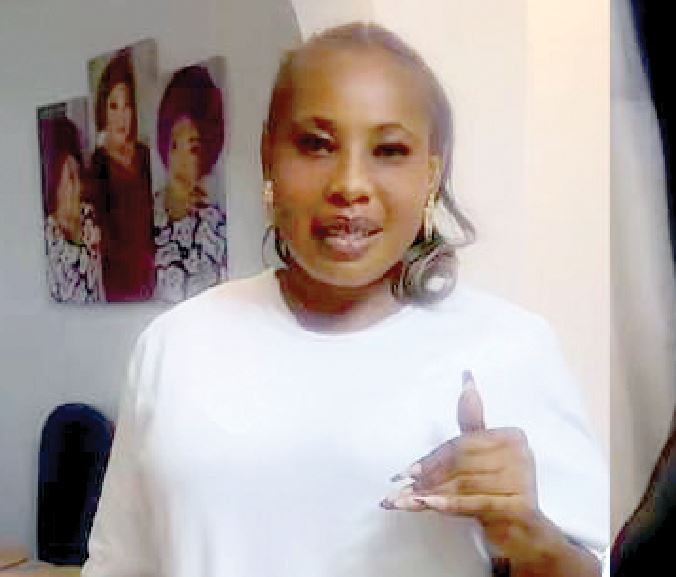
Beady Nnanna, a producer and publisher, tells AYOOLA OLASUPO how her sister, Blessing Okolie, lost her life due to medical negligence by a doctor, who allegedly left a pair of scissors in her stomach during fibroid surgery at a private hospital in Lagos State

Tell us about yourself.

I’m a media personality, the producer of Beadysworld TV and publisher of Beadysworld Blog News. I’m also an influencer and social activist.

What is your relationship with the late Blessing Okolie?

She was my sister.

How old was she?

She was 44 years old.

What led to her initial visit to the hospital?

She had a fibroid, and it was very big, as if she was pregnant. Even when people saw her, they mistook her for being pregnant. That fibroid was really disturbing, and she was married.

But the husband left her because of that fibroid. She couldn’t give birth to a child. So, the last time the mother tried to call the man to know why they were having issues, the man said to her, “You know that your daughter has a problem with fibroids.”

He said it as if having a fibroid had become a crime. For almost two years, the husband did not show any concern, so the situation got her worried, and she really wanted to remove the fibroid to see if she could have a child.

In December 2025, we took her to the Air Force Base Hospital, but she declined. She said she didn’t want to go there and that she wanted to go to a particular hospital at Igoke Estate, around Abule Egba, Lagos State.

I asked her why she wanted to go there because I felt that the hospital was not standard enough, but she said the hospital was good and that someone who had done the surgery there before recommended the place to her.

I objected to her idea because I just couldn’t understand why she would leave a good hospital for a non-standard one.

What happened at the hospital?

On March 27, 2026, she came to my house, and we drove to the hospital. Meanwhile, that was the first time I would visit that medical centre. We saw the doctor standing outside, but I was not happy, and I was not satisfied with what I saw there.

Blessing kept telling me that I should not bother myself and that the doctor was good. After a while, they gave us a ward where we slept till the next morning.

What were you not satisfied with about the hospital in the first instance?

The hospital was not standard. Looking at everything there, it didn’t look standard at all. So, on March 28, very early in the morning, they came to call her that it was time for her to enter the theatre.

Then she went there at exactly 7:22 am, and we were there till 11:49 am. She had the surgery, and it was okay, and they brought her outside the theatre, where there was a bench, and they laid her there.

She was there, and she didn’t even notice anything. I was the one who cleaned her mouth because she was already tired. When I asked the doctor what was wrong, he said she would come up and that I should keep calling her name.

So, if I called Blessing, she would respond by opening her eyes slightly, but she was not talking. We were there for about four to five hours, and they said they wanted to give her tea and milk to drink, but I objected.

I challenged them on how they would give tea and milk to someone who had just had that kind of surgery. The lady called Oloma, whom she said introduced her to the hospital, said they also gave her the same tea when she had her surgery, but I insisted.

I then said that if they needed to give her anything, they should give her Lipton and hot water instead. They said she needed the energy to climb up the staircase because their theatre was downstairs, while the ward was upstairs.

What happened thereafter?

The nurse and the other lady, Oloma, took Blessing out of the theatre and gave her the tea. So, I requested that they let her rest very well. After a while, around 8:30 am, they came back and said they wanted to take her upstairs.

I was surprised that they could allow someone who had just had surgery to walk. Normally, she was in pain because it is a normal thing for somebody who has just gone through surgery to feel pain.

See also  Crusade row rattles CAN, PFN
Nnanna

At what point did you begin to sense that something was seriously wrong after the surgery?

On Sunday, Blessing started talking, and people came to visit her. On Monday, she was still talking, but she was complaining of a particular pain in her abdomen, and by Tuesday, things had changed.

On Wednesday, her stomach started swelling up. I called the doctor and asked what the problem was, but he said there was nothing. I refused to listen to him and insisted that something was wrong because her stomach had swollen.

So, I asked that we do a scan to find out why the stomach was swollen, but the doctor insisted that there was no problem. They gave her an injection and set a drip for her.

Yet, on Wednesday and Thursday, the stomach was still swelling, and I kept clamouring that we should do a scan. But they said there was nothing in her stomach and accused me of trying to teach them their job.

Then they said what if they did the scan and nothing was there? I responded that I just needed to be sure because I was not satisfied with the way her stomach was swelling. I was bothered because of that.

How did you discover that there was a pair of scissors inside her stomach?

I never thought of scissors when she was complaining about that pain in the side of the stomach. I was even thinking that they had harvested one of her organs, so I kept begging for a scan, but they refused.

She had the surgery on Saturday, and almost a week after the surgery, she was still in serious pain. They then brought out a pipe, put it in her nose, and started draining something greenish out of her stomach.

I said, “Doctor, let’s have a scan.” But they kept saying, “What is wrong with this woman? Do you want to teach us our job?” I told them that I just wanted to be sure that nothing was wrong. Blessing’s health worsened to the point that she couldn’t even stand up.

At one point, they said we should stop giving her anything. We even stopped giving her water, and she was there without water or anything. That was for ten days after the surgery.

So, a new doctor came there to see her, and it was the first time I saw him. He asked me questions, and I started explaining to him. That was when I realised that those people did not even have products for patients.

After I explained to the doctor that I had been asking for a scan to be done for over a week, he said they should get the scans done on her. That was how they gave me a letter to go do the scans elsewhere.

When I got to the lab where they asked me to go, I was told that they had not been doing it for over two years. So, the nurse who came with me said we should go back.

I was angry and didn’t know when I said, “Are you mad? Go back to where when I came out of this hospital without a scan?” We then went to Clinix, where we did the scan.

What did the scan detect?

They did the scan and gave it to me. We paid over N90,000 for it. When I read the result, it stated that a metal was inside her stomach below her abdomen.

At that moment, I cried and drove Blessing back to the hospital. One of the people who did the scan asked me to take her back because her condition had already worsened.

How did the doctor react at the hospital when you showed them the result of the scan?

They were ashamed of themselves. I could see the surprise and shame all over them, but I didn’t say anything.

What explanation did they give for the medical error after seeing the result from the scan?

They did not say anything, and I was just looking at them. I could have escalated it to their management, but the owner of the hospital was not around. The only doctor around was the one I gave the result to.

Then they came to her ward and said they needed to wheel her into the theatre again. I asked them why, and they said they needed to open the surgery again. That was someone who had not taken water or food for over five days, and she was already weak.

Then I asked why they didn’t refer us to a big hospital like Lagos University Teaching Hospital, Federal Medical Centre, or Lagos State University Teaching Hospital. But they said no and that she would be fine.

See also  I use comedy to expose what govt hides – Content creator, Gov Amuneke

Then she was wheeled into the theatre for the second time, but I wasn’t even sure she could withstand it because she was already weak.

Was she placed on oxygen?

On April 7, they wheeled her into the theatre again, and the surgery was carried out, and they said they had removed what was in her belly.

Hearing that, I expected that there should be a difference and her health should improve, but on April 8, there was still no difference, and she was still the same. I said again that they should refer us to another big hospital, but they kept saying that she would be fine.

At that point, I was very worried because the green substance was still coming from her belly. The next day, she deteriorated, and they put her on oxygen. I kept telling them to refer us because I saw that they could not handle it, and any time I said that, they would make me feel like I was being troublesome.

I asked one of the doctors, who said she would get better, but her intestines were weak. I shouted because her intestines became weak because of the scissors that were left in her stomach for 10 days.

On Friday, I was already weak, so I decided to go home. When I told Blessing that I was going home to freshen up, she begged me not to leave her, but I promised her that I would return.

So, I went home and got back to the hospital around 11 pm. When I saw her, I knew she was not herself, and I called the hospital staff. But I found out that they didn’t even know what to do.

They were always trying to manage things, so they went to bring oxygen for her again. Immediately she was placed on oxygen, the light went off.

I asked them to turn on the generator, and they said they didn’t have fuel. I became uncomfortable and started shouting because it was a few minutes before 3 am. I thought they were going to leave her till daybreak.

Then I threatened them that I would burn down the hospital if they didn’t take my sister out of there. That was when they gave me a letter around 3 am. I told the doctor to follow us, but he refused, saying he could only follow if it was an emergency.

I asked, “Is this not an emergency? Are you not supposed to give us an ambulance and a doctor or a nurse to hand us over?”

But the doctor said no and that maybe a nurse would go with us. Then they called Mr Abiodun, the owner, who told the nurse not to follow us. The doctor on duty also told the nurse to remove the drip.

I was so angry, so I beat the nurse out of the car. When the doctor came, I confronted him and asked why they wanted to remove the drip at that hour.

After the altercation, they left my car, and I carried my sister with no medical support around Abule Egba and went to LASUTH. When we got there, they said there was no space. I begged them to treat her in my car, but they refused.

Then I started making calls, and someone hinted that we should take her to the O&G Medical Emergency at LASUTH, so they started treating her.

They attended to her, but bureaucracy and protocols affected us. They began treatment a few minutes to 4 am and said she would be admitted to the ICU.

How much did you pay at the hospital?

We paid N1.2m, aside from over N1m spent on drugs and tests. At the first hospital, we also spent a lot.

For injections and tablets, there was one we bought for N27,000, and we bought five or six at a time. They charged N650,000 for the surgery.

That Sunday, we bought drugs of N180,000 each and another of N250,000. But early the next morning, they called us and said her heart had stopped.

They said they tried to revive her, but she passed. I begged them to resuscitate her again, but they couldn’t. That was how my sister died.

Looking back, what do you think could have been done differently to save Blessing?

If they had done a scan the second day after the surgery, they would have detected the object earlier, and she might have survived. But most of her organs were already infected before the scissors were removed.

Has she been buried?

No, she is still in the mortuary.

See also  TWIN TOWNS IN YORUBALAND BUT MANY OF THEM ARE NOT YORUBA, AND NOT CONY CONY LIKE YORUBAS

Did you report the inconsistencies at the first hospital to the police?

Yes, I did.

Have you received any update from the police yet on the case?

No, we have not. They sent us to Zone 2 instead.

What kind of justice do you seek for your sister?

Despite the hospital knowing that my sister had died, they did not even bother to reach out. We personally called them, but till today, the doctor has not shown up.

That hospital needs to be shut down. My sister is dead now, but I don’t want others to experience what she went through. That is why I am clamouring for justice. The government needs to investigate and shut down the hospital.

We await autopsy report on Blessing Okolie’s death — OAR Medical Director

Dr Abiodun Ojifinni, Medical Director of OAR Medical Centre, Abule-Egba, Lagos State, speaks to AYOOLA OLASUPO about the allegation that the death of one of their patients, Blessing Okolie, was caused by complications developed after a pair of scissors was left in her stomach during a myomectomy (surgery for the removal of fibroid)

Is it true that Blessing Okolie had a fibroid removal surgery at your facility?

Blessing Okolie had a myomectomy, which is a surgery for a fibroid in our facility on the 28th of March 2026. She was fine initially but a few days after the surgery there were complications of sepsis, which is a bacterial infection, after the surgery.

We were managing the situation until the family, especially Beady, asked for a referral because she wasn’t satisfied with the progress her sister was making on treatment. At her insistence, we referred her to the Lagos State University of Teaching Hospital, where we later learnt that she passed on after a few days of admission.

We actually commiserated with the family. At this time, I think it was a good time to start addressing the half-truths and the falsehoods that have been circulating on social media.

She claimed that Blessing’s health condition had already worsened before your facility eventually granted her request to be transferred to another hospital. What can you say about that?

Those are the half-truths and falsehoods I’m talking about, and I’m saying that in order not to offend the sensitivity of the people who have lost a loved one, especially in respect for the departed person, we should actually wait.

There is an autopsy request that was made at the Lagos State University Teaching Hospital. The real cause of death will be spelt out in histopathology. That is the most authentic cause of death test that we all should wait for. We enjoined Ms Beady to take things easy and find a way of talking to her.

I know she still hurts by the turn of events at the end of the day. We did not want anything to happen to any of our patients. She might not remember that Blessing was actually a friend, apart from being a patient in my hospital. So, we are eagerly awaiting the results of the autopsy. As you know, when something is awaiting a coroner’s inquest, then we have to wait and hear from the pathologist.

Beady also said that another surgery was performed on Blessing at your facility after the scan detected that a metal was inside her belly. Is it true that the metal was a pair of scissors?

This is why I said that, for the reasons of not exchanging words that will offend the sensitivity of the people who are mourning at this time, we should wait and let the results of the coroner’s inquest be published. Then, we can come back and talk about this.

It is in the interest of everybody because it is not right to have a government agency handling this issue.

It amounts to prejudice to start talking about it this way. But I really appreciate the effort you took to talk to me about it. Please, I am open to any discussion about it when the coroner’s inquest is published.

Are you saying that the state government is currently on the matter?

Yes, the late Blessing departed at LASUTH, and part of their requirements is that once there is a controversy in the cause of death, they will go ahead to do a coroner’s inquest, and that is what everybody is waiting for. We all should talk to Beady to take things easy, and let’s look at the natural cause of death together.

punch.ng

FOLLOW US ON:

FACEBOOK

TWITTER

PINTEREST

TIKTOK

YOUTUBE

LINKEDIN

INSTAGRAM

Continue Reading
Click to comment

Leave a Reply

Your email address will not be published. Required fields are marked *

Lifestyle

53,000 dead, 50m sick yearly from unsafe food — FG

Published

on

The Federal Government on Monday raised fresh concerns over the growing burden of foodborne diseases in Nigeria, revealing that unsafe food causes more than 53,000 deaths and nearly 50 million illnesses annually across the country.

Minister of State for Health and Social Welfare, Dr Iziaq Salako, disclosed this in Abuja during a ministerial press briefing to commemorate the 2026 World Food Safety Day, themed “From Burden to Solutions – Safe Food Everywhere.”

Salako described food safety as a critical national development and health security issue, warning that the true cost of unsafe food extended beyond sickness and death to the loss of human capital, particularly among children.

According to him, Nigeria loses an estimated 4.26 million years of healthy life annually to foodborne diseases through illness, disability and premature death.

“Nigeria records nearly 50 million foodborne illnesses every year, and unsafe food causes more than 53,000 deaths annually in our country.

“Together, these illnesses and deaths result in a staggering 4.26 million years of healthy life lost to illness, disability or early death,” the minister said.

He noted that children under five account for more than 80 per cent of the country’s foodborne disease burden.

“Most of this burden falls heavily on children under five, who account for more than 80 per cent of all foodborne disease burden in Nigeria.

“The true cost of unsafe food in Nigeria is not only measured in sickness and death, but also in the lost cognitive, physical and developmental potential of our children,” Salako added.

The minister’s remarks came on the heels of newly released estimates by the World Health Organisation showing that unsafe food causes about 866 million illnesses and 1.5 million deaths globally each year, with Africa bearing the highest per-capita burden.

According to Salako, diarrhoeal diseases remained the leading cause of foodborne illnesses in Nigeria, with more than 40 million cases linked to pathogens such as Salmonella, Escherichia coli, Campylobacter, Shigella and rotavirus.

“Over 40 million diarrhoeal illnesses in Nigeria are linked to foodborne pathogens. These infections continue to be a major cause of hospitalisation, malnutrition and mortality among our youngest citizens,” he said.

He also warned of increasing exposure to chemical contaminants.

“Chemical hazards are also emerging as a serious concern, with lead exposure responsible for tens of thousands of healthy lives lost through contaminated grains, spices and water sources. These numbers underscore the urgency of strengthening food safety systems across the entire value chain,” he stated.

See also  TWIN TOWNS IN YORUBALAND BUT MANY OF THEM ARE NOT YORUBA, AND NOT CONY CONY LIKE YORUBAS

Despite the challenges, Salako said Nigeria had made notable progress in building a stronger food safety system.

He said the country’s 2023 Joint External Evaluation recorded measurable improvements across all food safety indicators, while Nigeria’s 2025 State Party Annual Report score surpassed the World Health Organisation target for low- and middle-income countries.

“Nigeria is now one of the leading countries in the region in establishing functional systems for detecting, reporting and responding to foodborne disease events,” he said.

The minister, however, stressed that the latest figures should serve as a wake-up call.

“The new WHO estimates are a call to action. We must intensify surveillance for heavy metals and chemical contaminants. We must improve food safety practices in traditional and informal markets where most Nigerians buy their food.

“We must strengthen hygiene, water and sanitation infrastructure and ensure food business operators comply with national standards,” he said.

Salako also linked food safety to the country’s growing burden of non-communicable diseases, including hypertension, stroke, diabetes and obesity.

“Food safety is not only about preventing infections; it is also about ensuring that the food we eat does not contribute to the growing burden of non-communicable diseases,” he said.

He disclosed that Nigeria had developed National Guidelines for Sodium Reduction, while the National Agency for Food and Drug Administration and Control had finalised draft sodium reduction regulations aimed at reducing salt levels in processed foods.

According to him, the country was also implementing industrial trans-fat elimination regulations and strengthening efforts to improve the sugar-sweetened beverage tax and front-of-pack food labelling systems to encourage healthier food choices.

Salako urged food manufacturers, regulators, researchers and consumers to support efforts aimed at ensuring safer and healthier food for Nigerians.

“Food safety is everyone’s business. It saves lives, strengthens our economy and protects our children. These numbers show that food safety is not optional; it is a national health security priority,” he said.

The Director-General of NAFDAC, Prof Mojisola Adeyeye, said strengthening food safety systems remained critical to reducing the country’s burden of foodborne diseases.

Represented at the event by the Director of Food Safety and Applied Nutrition Directorate, Eva Edwards, Adeyeye described food safety as a public health, socioeconomic and development imperative.

See also  Tinubu, Kaduna gov, Saraki mourn Sheikh Dahiru Bauchi

“The theme for the 2026 World Food Safety Day, ‘From Burden to Solutions – Safe Food Everywhere,’ reminds us that food safety is not merely a technical issue; it is a public health, socioeconomic and development imperative. Behind every statistic on foodborne disease is a child, a family, a community or a business affected by preventable illness and loss,” she said.

The NAFDAC boss said the agency remained committed to reducing foodborne diseases through stronger regulation, surveillance and stakeholder engagement.

“At NAFDAC, we remain firmly committed to contributing to reducing the burden of foodborne disease through science-based regulation, effective surveillance, strengthened food control systems and robust stakeholder engagement,” she said.

She added, “Our efforts continue to focus on ensuring that foods manufactured, imported, exported, distributed, advertised, sold and consumed in Nigeria meet acceptable standards of safety and quality.”

Adeyeye stressed that safe food was central to achieving the country’s nutrition and health goals.

“We recognise World Food Safety Day as an added opportunity to situate food safety as a significant issue of public health concern, especially in the light of safe, wholesome food being important for boosting immunity and improving the body’s natural defence in fighting diseases.

“Where food is unsafe, our nutritional goals cannot be achieved,” she said.

The NAFDAC Director-General further noted that addressing food safety challenges would require stronger collaboration among government agencies, industry players, researchers, development partners and consumers.

“The challenge before us is significant, but so too is our collective capacity to address it through evidence-based policies, effective regulation, responsible industry practices and sustained public awareness,” she said.

Adeyeye reaffirmed the agency’s commitment to strengthening food safety systems nationwide.

“At NAFDAC, we remain resolute in our unwavering commitment to playing our role in strengthening the national food safety system, upholding standards and regulations, and promoting best practices within industry and across society to assure a safe food supply,” Adeyeye said.

Meanwhile, the Corporate Accountability and Public Participation Africa called for stronger regulatory measures to address the growing burden of diet-related diseases in Nigeria.

In a statement issued on Monday to commemorate the 2026 World Food Safety Day, CAPPA warned that millions of Nigerians were increasingly exposed to health risks associated with excessive consumption of sugar, salt, unhealthy fats and ultra-processed foods.

The organisation argued that food safety should extend beyond concerns about contamination and foodborne diseases to include protection against products that contribute to non-communicable diseases.

See also  Simbiatu Ajikawo: Started at 16, became one of UK's most acclaimed Hip Hop figures (PHOTOS)

CAPPA Executive Director, Oluwafemi Akinbode, said, “Food safety is not only about preventing food poisoning. It is also about ensuring that the foods and drinks available to Nigerians do not slowly undermine their health and well-being.”

He warned that weak regulatory safeguards and aggressive marketing of unhealthy products were contributing to rising cases of hypertension, diabetes, obesity, stroke, kidney disease and certain cancers.

According to him, diet-related diseases were placing a growing burden on families, the healthcare system and the economy.

“Public health policies must be guided by science and the public interest, not by industries whose profitability depends on unhealthy consumption patterns,” Akinbode stated.

CAPPA welcomed the recent passage by the Senate of a bill seeking to strengthen Nigeria’s Sugar-Sweetened Beverage Tax regime, describing it as a critical intervention in efforts to reduce excessive sugar consumption and curb non-communicable diseases.

The organisation also urged the Federal Government to adopt national sodium reduction targets, implement Front-of-Pack Warning Labelling on packaged foods and beverages, and strengthen restrictions on the marketing of unhealthy foods to children.

“Truly, safe food should not only be free from contamination but should also protect consumers from preventable diseases and support long-term wellbeing,” he added.

World Food Safety Day is observed annually to raise awareness and inspire action to prevent, detect and manage food-related risks. The 2026 edition marks the eighth global observance of the event.

While food safety discussions have traditionally focused on microbial contamination and foodborne disease outbreaks, public health experts are increasingly drawing attention to the role of unhealthy diets in driving non-communicable diseases such as hypertension, diabetes, obesity, cardiovascular diseases and certain cancers.

In Nigeria, authorities have intensified efforts to strengthen food safety governance through the National Food Safety Management Committee, the National Integrated Guidelines for Foodborne Disease Surveillance and Response, sodium reduction initiatives, industrial trans-fat elimination regulations and improved food surveillance systems.

However, health advocates continue to push for stronger nutrition-focused policies, including enhanced sugar-sweetened beverage taxes, front-of-pack warning labels and tighter restrictions on the marketing of unhealthy foods to children.

punch.ng

FOLLOW US ON:

FACEBOOK

TWITTER

PINTEREST

TIKTOK

YOUTUBE

LINKEDIN

INSTAGRAM

Continue Reading

Lifestyle

PHOTOS: William Kumuyi Celebrates His 85th Birthday Today

Published

on

Birthday: William Kumuyi Turns 85 Today!

Happy 85th birthday to Deeper Life Pastor, William Kumuyi.

We thank God for your life of unwavering dedication to Christ, sound biblical teaching, and faithful leadership.

Your impact on countless lives across generations remains a testimony to God’s grace and faithfulness.

May the Lord continue to strengthen you, grant you good health, renewed vigor, and greater fruitfulness in His service.

Wishing you a joyful and blessed birthday celebration.

Happy Birthday, Sir!

FOLLOW US ON:

FACEBOOK

TWITTER

PINTEREST

TIKTOK

YOUTUBE

LINKEDIN

INSTAGRAM

See also  Tinubu, Kaduna gov, Saraki mourn Sheikh Dahiru Bauchi
Continue Reading

Lifestyle

How rescued orphaned elephant highlights Nigeria’s conservation fight

Published

on

As dawn breaks over Okomu National Park in Ovia South-West Local Government Area of Edo State, an exhausted wildlife caretaker prepares milk formula for Agbaibor, a month-old orphaned forest elephant rescued after wandering out of the rainforest alone.

“The baby elephant has to take two litres of this per meal,” said Joshua Aribasoye, one of those responsible for feeding and monitoring the calf around the clock in a makeshift pen at a ranger outpost inside the park in southern Edo.

Forest elephants, smaller and more elusive than their savannah cousins, are endangered and their population has collapsed in recent decades largely because of habitat loss and poaching.

Agbaibor—named after the ranger who helped rescue him—was found near a palm oil plantation bordering the protected forest late last year after being separated from the herd.

Rangers and conservationists tried to reunite the calf with its family by taking it back into the forest, but it soon wandered out again.

Fearing it would die alone or be attacked, park authorities and conservation group African Nature Investors (ANI) launched an emergency effort to nurse the animal, flying in elephant rehabilitation specialists from Zambia and assigning caretakers to raise him.

It has become a costly operation. ANI spends between four and five million naira (about 3,600) a month on his care, including 77 kilograms of milk powder, alongside oats and nutritional supplements.

Conservationists expect the rehabilitation process to take another three to five years. They are building a new enclosure deeper inside the park, within elephant habitat, where the calf will gradually be exposed to the sounds and movements of wild herds before an eventual reintroduction.

See also  Tinubu, Kaduna gov, Saraki mourn Sheikh Dahiru Bauchi

“The calf will be cared for there… until it is integrated into a group,” said ANI project manager Peter Abanyam.

200 remain

The International Union for Conservation of Nature (IUCN) lists forest elephants as critically endangered, with conservationists estimating only around 200 remain in the country.

Roughly 40 are believed to live in and around Okomu—one of Nigeria’s last remaining rainforest ecosystems, covering about 24,000 hectares.

“Okomu is critical for conservation in Nigeria,” said Abanyam.

“In a small ecosystem like this, housing 40 elephants is a huge number, and it needs to be protected at all costs.”

But pressure on the forest is intensifying.

Logging, poaching, farming and expanding human settlements have fragmented large parts of the reserve, shrinking elephant corridors and increasing contact between wildlife and nearby communities.

Godstime Christopher, 26, once helped transport illegally logged timber out of the forest before being recruited as a ranger by ANI.

Today, he works with the organisation’s biomonitoring team, using camera traps to track elephant movements and identify poachers.

“When I became a ranger, I thought I would use that to exploit logging,” he admitted. “But the training changed our mentality.”

‘Preserve what we have’

Conservation groups say engaging local communities is essential if endangered wildlife is to survive in one of Africa’s fastest-growing countries, where economic hardship often drives people deeper into protected forests in search of land, timber or bushmeat.

While the ranger programme appears to have helped drive down poaching in the area, hunting for other species still disturbs the elephants and degrades their habitat, Christopher warned.

See also  Ogun steps in as 60 candidates express interest for Awujale

Back at the rehabilitation centre, Agbaibor splashes in the mud, nudges his handler for attention and drinks from oversized bottles of milk formula.

For Aribasoye, the demanding work has become deeply personal.

“We are supposed to be like a mother to him,” he said.

“Seeing him eating and playing is part of the joy… because I know we are working to preserve what we have left.”

AFP

punch.ng

FOLLOW US ON:

FACEBOOK

TWITTER

PINTEREST

TIKTOK

YOUTUBE

LINKEDIN

INSTAGRAM

Continue Reading

Trending