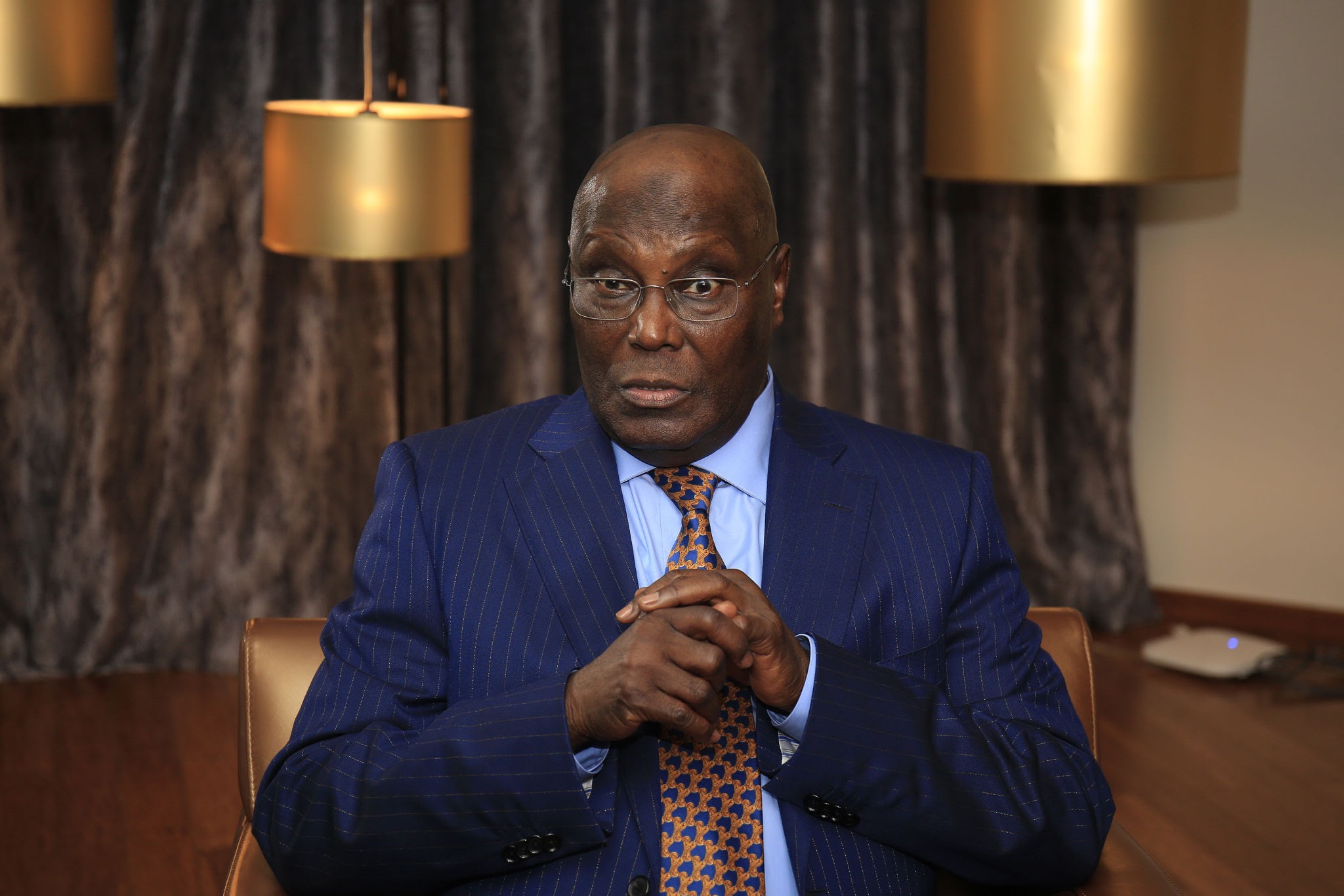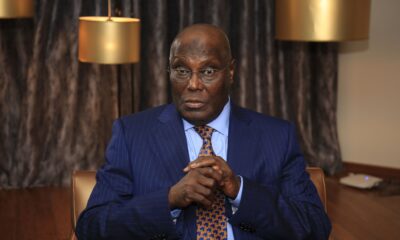
Long before Atiku Abubakar became a household name across Nigeria, he had been nurturing presidential ambitions that have not lasted for three decades. When the military administration of Ibrahim Babangida initiated the 1993 transition programme, Atiku threw his hat into the ring within the Social Democratic Party (SDP), contesting the presidential primaries against the business mogul, Moshood Kashimawo Olawale Abiola, popularly known as MKO Abiola, and Baba Gana Kingibe. He came third, a distant but telling debut.
That primary loss did not discourage him. Instead, it sharpened his political instincts and expanded his network. When the June 12, 1993 election was annulled and Nigeria descended into political chaos, Atiku retreated to consolidate his business interests and bide his time. The ambition, however, never died.
By 1998, the Adamawa-born politician had won the governorship of the state, only to be persuaded almost immediately to step aside in favour of a bigger prize — becoming vice president under General Olusegun Obasanjo (rtd) on the Peoples Democratic Party (PDP) platform. For eight years, Atiku occupied Nigeria’s second-highest political office, presiding over privatisation, managing the economy, and building one of the most formidable political networks the country had ever seen.
Yet even as Vice President, the tension between his ambitions and those of his principal was palpable. Atiku quietly built his own base, one so formidable that, at a point, he reportedly commanded the loyalty of more state governors than the President himself.
The 2007 fall-out
The relationship between Obasanjo and his Vice was never entirely warm, and eventually collapsed dramatically. The rupture came over Obasanjo’s alleged attempt to secure a third term through constitutional amendment, a bid Atiku helped defeat. The President retaliated by engineering Atiku’s suspension from the PDP and alleged corruption charges that led the Independent National Electoral Commission (INEC) to initially omit his name from the 2007 presidential ballot.
Atiku fought back through the courts with remarkable tenacity. The Supreme Court of Nigeria ultimately upheld his right to contest the election. However, Atiku decided to eye Aso Villa from the Action Congress (AC), and later placed third behind the PDP’s Umaru Yar’Adua and the ANPP’s Muhammadu Buhari, securing roughly seven percent of the vote — a creditable showing for a candidate who had nearly been barred from the race entirely.
After Yar’Adua won, Atiku quietly returned to the PDP. By 2010, and head of the 2011 general elections, he was again declared the Northern Consensus Candidate by a committee of elders, ahead of former military President Ibrahim Babangida and others.
2011 and 2015: The internal battles
In the 2011 presidential primary, Atiku faced incumbent President Goodluck Jonathan — who is seeking his first direct shot at the presidency after Yar’Adua’s demise, a contest Atiku lost within the PDP.
Before 2015, Atiku had joined forces for a merger majorly formed by three political parties that metamorphosed into the All Progressives Congress (APC). The former Vice President threw his hat in the ring again for the party’s ticket against 2015. This time, the odds favoured Muhammadu Buhari (now late), who had crossed from the Congress for Progressive Change (CPC) to flag APC flag against the PDP’s incumbent Goodluck Jonathan gunning for a second term.
Each loss reinforced a curious paradox — Atiku was consistently powerful enough to reach the final stages of the race, yet consistently unable to win it.
2019: The race he almost won
The 2019 presidential election represented Atiku’s most credible performance. Returning home to run again on the PDP platform was a calculus he perfected in 2017. This time, after a well-managed party’s primary victory, Atiku secured over 11 million votes, which was 39 per cent of the total votes, against President Buhari’s 15 million. Atiku believed he won the poll Supreme Court, after a long, suspenseful legal battle, upheld Buhari’s victory, but the margin had narrowed considerably. Nigeria’s opposition had finally found its voice, and Atiku was its standard-bearer.
Unlike 2015, when Buhari enjoyed a wider acceptability, many observers believed 2019 was the election that should have been Atiku’s. The economy under ‘Sai Baba’ was struggling, security was deteriorating, and the incumbent was visibly frail. Yet the combination of incumbency advantages, voter suppression allegations, and deep North-South political faultlines conspired, his supporters argued, against a fair outcome.
Atiku in 2023 ‘youth revolution’
The 2023 election introduced a new dynamic that proved fatal to Atiku’s chances. The emergence of Labour Party’s Peter Obi as a powerful third-force candidate shattered the traditional two-party contest. The Obi’s candidacy reawakened sheer civic engagement that saw seeming revolutionary tempest by young Nigerians, mobilised under the #ObiDatti movement, to oust the reigns of the old parties.
Atiku, despite winning the PDP primary, found himself squeezed between Bola Tinubu of the APC, Peter Obi of the LP who was his 2019 vice presidential candidate, and Rabiu Musa Kwankwaso of the New Nigeria People’s party (NNPP). He came second in what became one of Nigeria’s most litigated elections.
The irony was inescapable; the very forces of democratic energy that Atiku had championed — civil society, youth activism, anti-incumbency sentiment — had turned against his own bid, flowing instead toward a fresher face.
2027: Eyes on the goal
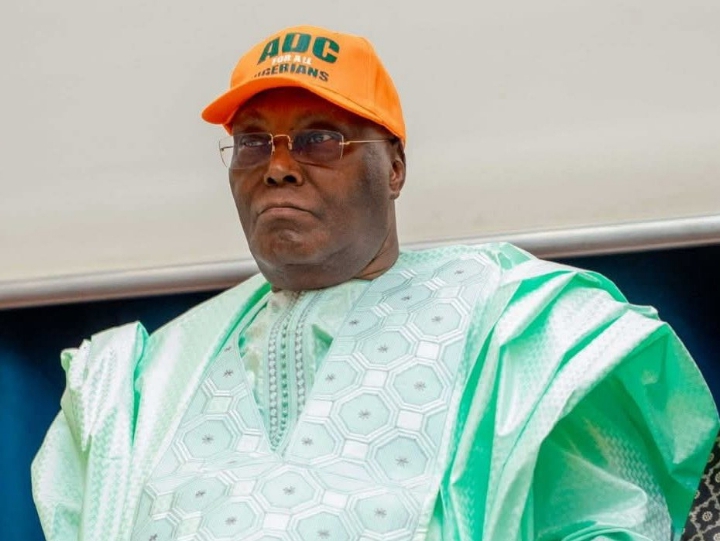
In a move that stunned Nigeria’s political establishment, Atiku Abubakar left home — the PDP — again in 2025, to join in the cooking of another APC-coalition in the African Democratic Congress (ADC). More remarkably, he did so alongside his running mate-turned-rival, Peter Obi and PDP’s homeboy, Kwankwaso. The three men, whose competing candidacies in 2023 arguably split the opposition votes and handed victory to the incumbent President Bola Ahmed Tinubu, appeared finally to have taken the lesson for united front to Aso Villa.
Tribune Online reports that opposition political parties in Nigeria, after a recent summit in Ibadan, agreed to present a sole presidential candidate to rival President Tinubu in the 2027 election. Could this be Atiku?
Meanwhile, the alliance is historic. It unites the North-South, Muslim-Christian symbolism that Nigerian politics demands, and brings together most experienced opposition politicians of their generation.
Political scientists and a professor, Bolaji Omitola, had noted the absence of an extensive state-level structure for the ADC, particularly in the South-South and South-East, which undercuts its national ambition. “Without such foundations,” he said, the party “risks being dismissed as another Abuja coalition rather than a mass movement.” Whether it can withstand the centrifugal pressures of ego, ethnic balance, and party dynamics remains the central question of the 2027 election cycle.
Should Atiku secure the ticket to contest in 2027, he will be 80 years old on election day. Critics are already raising the age question with renewed urgency. Nigeria, a country with a median age of just 18 years, has an overwhelmingly young electorate increasingly impatient with recycled political figures. The same youth energy that powered the #EndSARS protests of 2020 and the Obidient movement of 2022 is unlikely to be easily harnessed by an octogenarian candidate.
What drives the man?
Political psychologists and analysts who have studied Atiku’s career point to several interlocking motivations. There is, first, the simple and unashamed personal ambition of a self-made man who rose from poverty in Jada to the highest offices in the land and sees the presidency as the natural culmination of a remarkable life story.
Atiku confirmed in a recent interview with Arise TV that he would not contest again after this: “Certainly, yes. Because I believe that will be my last outing. That is incontrovertible,” he admitted.
Responding to questions about whether his candidacy represents the future or the past, Abubakar argued that leadership requires a balance of both experience and generational renewal.
While Olaniyi Ajibola, Public Policy Analyst, said, “I represent both the past and the future. We have seen various levels of leadership, both young and old. I believe expectations of young leadership have been below what we thought; they require experience and tutelage from the older generation. Sometimes you need to be in power to give that tutelage,” he noted.
“Going by the accounts of individuals that are very close to Alhaji Atiku Abubakar, I can safely conclude that the rationale behind his presidential ambition since over three decades is more spiritual than logical.”
“Obviously, every spiritual phenomenon is mostly physically illogical, so, many Nigerians are not convinced about what drives him since 1992. He has never come up with any brilliant alternative policies to better the lives of Nigerians nor creative ideas for economic growth. He must have been listening to some voices beyond the terrestrial realm.”
“He has run six times. He has lost six times. He is probably going to run again. At what point does determination become something else entirely? You would be a fool to write him off. People have been writing off Atiku Abubakar since 1993. He is still here, still talking, still building alliances.”
The verdict of history
Whatever the outcome of 2027, Atiku Abubakar’s place in the annals of Nigerian political history is already secured not as president, but as the most tenacious presidential aspirant the Fourth Republic has produced. He has outlasted Obasanjo’s hostility, survived INEC’s attempts to exclude him, weathered U.S. Senate corruption investigations, and watched rivals rise and fall while continuing his own march.
The question Nigeria must answer in 2027 is not whether Atiku has earned the right to try once more. By any measure, he has. Nigeria’s political story is full of men who waited too long, who held on past the moment when the country was ready for them. Whether Atiku is one of them, or whether 2027 finally delivers what thirty years of effort could not, that is the question hanging over Nigerian politics heading into the next election cycle — and may be answered with ADC presidential primary.