Connect with us

News

Eid-ul-Mawlid: FG declares Friday Sept. 5 public holiday

Published

on

The Federal Government has declared Friday, September 5, 2025, a public holiday to mark Eid-ul-Mawlid, the birth of the Holy Prophet Muhammad.

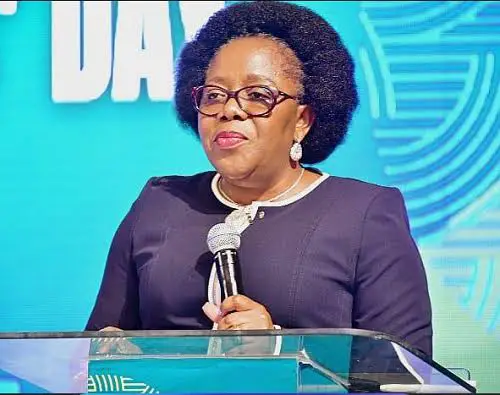
The Permanent Secretary, Ministry of Interior, Dr Magdalene Ajani, announced this in a statement released on Tuesday, September 3.

According to the statement, the Minister of Interior, Dr Olubunmi Tunji-Ojo, who made the declaration on behalf of the Federal Government, extended warm greetings to Muslims in Nigeria and across the world.

He urged the Muslim Ummah to emulate the Prophet’s virtues of peace, love, humility, tolerance and compassion, stressing that these values are crucial to building a united and progressive nation.

The minister also called on Nigerians of all faiths to use the occasion to pray for the peace, security, and stability of the country while supporting government efforts toward national harmony and sustainable development.

FOLLOW US ON:

FACEBOOK

TWITTER

PINTEREST

TIKTOK

YOUTUBE

LINKEDIN

TUMBLR

INSTAGRAM

See also  Nigeria's Consul-General in Cameroon, Ambassador Taofik Obasanjo Coker is de@d
Continue Reading
Click to comment

Leave a Reply

Your email address will not be published. Required fields are marked *

News

FG pushes for N17.89tn new loans to finance 2026 budget

Published

on

The Federal Government plans to borrow N17.89tn in 2026 to fund a widening budget deficit as revenue projections fall sharply below expenditure needs, according to the 2026 budget framework obtained from the Budget Office of the Federation.

Official figures in the 2026 Abridged Budget Call Circular issued by the Federal Ministry of Budget and Economic Planning show that total new borrowing will jump from N10.42tn in 2025 to N17.89tn in 2026. This is an increase of N7.46tn (72 per cent) in fresh loans over one year, amid concerns over rising debt costs.

The borrowing requirement is driven by a larger fiscal deficit and a weaker revenue outlook, even though overall expenditure is projected to fall slightly compared with the current year. The framework puts the 2026 fiscal deficit at N20.12tn, up from N14.10tn approved for 2025.

This represents an increase of N6.02tn, or about 43 per cent year-on-year. Despite this jump in the nominal deficit, the deficit to gross domestic product ratio is projected to decline from 4.17 per cent in 2025 to 3.61 per cent in 2026, reflecting a higher projected GDP base. The deficit ratio is expected to ease further to 3.24 per cent in 2027 and 1.92 per cent in 2028.

Revenue figures explain why the government is resorting to much larger borrowing. The amount available for the federal budget, excluding the retained revenue of government-owned enterprises, is projected to fall from N38.02tn in 2025 to N29.35tn in 2026.

This is a drop of N8.67tn or about 23 per cent between the two years. The government expects revenue to recover modestly to N31.53tn in 2027 and N34.90tn in 2028.

That implies growth of about seven per cent between 2026 and 2027 and about 11 per cent between 2027 and 2028, but the recovery is not strong enough to remove the need for heavy borrowing in the medium term.

The PUNCH further observed that the bulk of the 2026 borrowing will come from domestic creditors. The document shows that of the planned N17.89tn new loans for 2026, N14.31tn will be raised from the domestic market, while N3.58tn will be sourced from external creditors. Domestic borrowing, therefore, accounts for 80 per cent of new loans in 2026, while foreign borrowing contributes 20 per cent.

This strong tilt towards the local market is not new. In 2025, domestic borrowing is put at N8.58tn out of total new loans of N10.42tn, which is about 82 per cent of the borrowing requirement. External borrowing of N1.84tn makes up the remaining 18 per cent.

The same pattern is projected to continue after 2026. In 2027, the Federal Government plans to borrow N21.18tn, comprising N16.94tn in domestic debt and N4.24tn in external loans.

Domestic borrowing thus remains at 80 per cent of the total, with foreign loans at 20 per cent. In 2028, planned borrowing drops to N15.84tn, but the structure remains almost unchanged, with N12.67tn expected from domestic creditors and N3.17tn from external lenders, again roughly 80 and 20 per cent respectively.

When the numbers for the three budget years are added together, the scale of reliance on debt becomes clearer. Between 2026 and 2028, the Federal Government plans to borrow N54.91tn in total. Domestic creditors are expected to provide N43.92tn of this amount, while external creditors will supply N10.98tn.

This means domestic borrowing will account for exactly 80 per cent of new loans over the three-year period, with external debts making up the remaining 20 per cent. Year-on-year analysis of borrowing after 2026 shows a continued heavy dependence on debt, even though the trend turns downward towards the end of the period.

See also  Nigeria's domestic debt service hits N1.7trn Q2 2025

From 2026 to 2027, total new borrowing rises from N17.89tn to N21.18tn, an increase of about N3.29tn or roughly 18 per cent. Between 2027 and 2028, planned borrowing falls from N21.18tn to N15.84tn, a decline of about N5.34tn or roughly 25 per cent.

Debt service costs are also rising. According to the framework, debt service is projected at N13.94tn for 2025 and N15.52tn for 2026, an increase of N1.58tn, or about 11 per cent year-on-year.

The burden of these payments relative to revenue is captured in the debt service to revenue ratio. For 2025, the ratio is put at 34 per cent. In 2026, it is forecast to jump to 45 per cent, meaning nearly one naira out of every two naira of revenue available to the Federal Government will be used to pay interest and principal on existing debt.

The ratio is projected to rise further to 53 per cent in 2027 before easing to 47 per cent in 2028. Total federal expenditure is expected to edge down from N54.99tn in 2025 to N54.46tn in 2026, but the composition of spending continues to tilt towards recurrent items and debt service.

Recurrent non-debt expenditure is projected to rise from N13.59tn in 2025 to N15.27tn in 2026. Within this, personnel costs for ministries and departments will take N8.36tn, while pensions, gratuities, and retirees’ benefits will cost N1.38tn. Other service-wide votes, including key national programmes, will rise from N1.06tn in 2025 to N1.85tn in 2026.

Capital expenditure is set to fall from N26.19tn in 2025 to N22.37tn in 2026. The reduction is linked to a policy decision that ministries and agencies will roll over 70 per cent of their 2025 capital allocations into 2026 rather than seek fresh approvals for the same projects.

Capital spending is projected to recover slightly to N23.28tn in 2027 and then ease to N21.26tn in 2028. Even with this sizeable capital envelope, the combination of recurrent spending and debt service still dominates the budget and squeezes the room for new infrastructure.

Other financing items are relatively small when compared with the borrowing figures. Privatisation proceeds are projected at N312.33bn in 2025 and are expected to fall to N189.16bn in 2026. They are then forecast to rise modestly to N197.23bn in 2027 and jump to N486.54bn in 2028.

Even at that peak level, privatisation receipts would still amount to less than three per cent of total financing. Project-tied loans from multilateral and bilateral partners are also expected to decline from N3.36tn in 2025 to N2.05tn in 2026, then to N1.17tn in 2027, and N556.66bn in 2028.

Speaking earlier in separate interviews with The PUNCH, experts said the deficit, which represents more than one-third of the proposed N54.43tn spending envelope, raises fresh questions about debt sustainability, fiscal discipline, and the government’s ability to manage inflationary and exchange rate pressures in 2026.

The Chief Executive Officer of the Centre for the Promotion of Private Enterprise, Dr Muda Yusuf, said Nigeria must be cautious not to destroy the fragile stability achieved in recent months.

He warned that high deficits and rising debt levels pose a serious threat. Yusuf said he was worried about what he described as the risk of a debt trap, stating that “we need to worry about debt sustainability” because “high levels of deficits and high levels of debt… can choke the fiscal space and lead to a kind of vicious circle of debt.”

See also  President Trump threatens to ‘go in and kill’ Hamas if the group doesn’t stop killing in Gaza

He explained that Nigeria has only recently regained some macroeconomic footing and that any disruption could quickly worsen inflation and exchange rate pressures.

According to him, “we already have a reasonable level of macroeconomic stability” and “once we lose that recovery… it will create even more problems because that is where the problem of inflationary pressure will come and that is where the pressure on the exchange rate will come.”

Yusuf said the government had claimed that revenue performance was improving and urged it to take advantage of the gains to cut the deficit rather than expand it. He argued that Nigeria must “leverage on the improved revenue situation to moderate the level of deficit and the level of debt exposure so that we don’t put at risk the macroeconomic stability that we have achieved.”

He added that the systemic effects of macro instability would be severe and urged the government to handle deficit planning with extreme caution.

Also, the National President of the Nigerian Economic Society, Professor Adeola Adenikinju, warned that borrowing heavily from domestic markets would crowd out the private sector and raise interest rates.

He said, “If you borrow from the public… interest rates will go up” because government borrowing increases demand for credit and banks may prefer to lend to the government rather than to businesses. He said this would slow investment and worsen economic hardship.

Adenikinju also questioned the quality of government spending. He said debt was not necessarily bad if it funded productive projects, but Nigeria’s capital releases often come too late to deliver meaningful development outcomes.

Experts at a national debt dialogue in Abuja on Tuesday warned that Nigeria is accumulating liabilities that future generations will inherit without seeing the development that borrowing is supposed to bring.

“At the end of the day, all of these debts, our children will have to inherit them,” the Programme Manager of the Sustainable Nigeria Programme at Heinrich Böll Stiftung, Mr Ikenna Ofoegbu, told participants.

The National Stakeholder Convening on Debt Sustainability and Climate Finance was hosted by the Centre for Inclusive Social Development with support from Heinrich-Böll-Stiftung.

Ofoegbu said decisions taken today were shaping the future of young Nigerians. “My children will have to contend with whatever that child becomes. And it would be in their interest that that child becomes responsible,” he said.

He said debt figures that appear in the news as abstract numbers have real implications. “As of this morning, when I checked, Nigeria’s debt profile is about N152.4bn. In the US dollar, that’s about $99.66bn,” he said.

He said the question citizens should ask was not only how much was being borrowed, but what was being achieved. “We started asking ourselves, what is the true cost of debt? When we borrow money, what exactly are we paying back?” he asked.

Ofoegbu linked the debt issue to climate disasters. “Those floods affected more than 33 states in Nigeria. Road infrastructures were gone. Farmlands were gone. Food was gone. And the cost of that particular flood was about $9.12bn,” he said. “Climate change has a way of destroying infrastructures. And at the end of the day, who pays? The future generation.”

He also warned about the high cost of borrowing in the economy. According to him, revenue is being swallowed by debt payments. “Our debt servicing is about 60 per cent to 70 per cent. It has come down from about 80 per cent to 90 per cent. So now we’re about 60 per cent to 70 per cent,” he said.

See also  Senate to discuss Trump’s invasion threat with executive

He criticised the lack of transparency. “Unfortunately, we’re not dealing with the kind of leaders that we can trust whatever they say or their intentions. We cannot trust the system. We cannot trust our politicians,” he said. “I don’t know the last time we saw all these reports publicly.”

Ofoegbu added that capital spending was unclear. “Many of us may not know, but there’s no capital budget to begin with. I think the only person that seems to be working in my own eye view is Wike,” he said.

He urged citizens to take responsibility. “Nobody is coming to save Nigeria except us. This is where we belong. This is our home. And we’re going to fix Nigeria by repair or whatever means,” he said.

In his welcome address, the Executive Director of CISD, Mr Folahan Johnson, said the human impact of debt should not be ignored. “The true cost of debts is the out-of-school child, the out-of-school girl,” he said. “The true cost of debts is that a woman who has to do business loses her life because of lack of access to basic maternal health care.”

Johnson said those present represented the group that could influence change. “We are here today because we are the new elite. Everybody in this room is the hope that the vulnerable Nigerian has,” he said. He recalled seeing a boy begging and asked, “What does the future hold for this little boy? Does he even know the consequences of the decisions that are being made today?”

BudgIT’s Acting Country Director, Mr Joseph Amenaghawon, said borrowing was not translating into development. “The result is debt without development. The cycle where the burden grows but the benefits do not,” he said.

He argued that loans were being used for recurrent spending rather than transformative projects. “Borrowing should build infrastructures at rising rates, systems of high use, climate resilient communities, and a diversified and productive economy,” he said.

He warned that young people were being left behind. “A generation borrowed but not invested in,” he told participants. “For every loan that remains unaccounted for, a potential generation of youth is left behind.”

He cited the 1980s Lagos Metro Line as an example of how debt failed to deliver. “My question would then be to myself, did I eventually become part of those who paid that debt by actually being a resident of Lagos State? And my parents also paid taxes,” he said.

Amenaghawon said the issue was deeper than debt alone. “What we face today is not simply a debt problem but a structural development crisis. A crisis of priorities, a crisis of governance, a crisis of vision,” he said.

He said borrowing could be useful if properly managed. “Debt is not in itself a sin. Borrowing can and should be a tool for transformation,” he said. “Borrowing can become a boiling point for future generations while the coming benefits remain elusive.”

He urged strict monitoring of projects. “Each loan must be traceable, each project verifiable, each outcome measurable, and accessible to the community,” he said. He closed by calling for reform. “We can make debt a bridge to Nigeria’s future, not a burden. It is time for transparency, accountability, ambition, and justice,” he said.

punch.ng

FOLLOW US ON:

FACEBOOK

TWITTER

PINTEREST

TIKTOK

YOUTUBE

LINKEDIN

TUMBLR

INSTAGRAM

Continue Reading

News

Sokoto residents jubilate as military foils attack, kills 13 bandits

Published

on

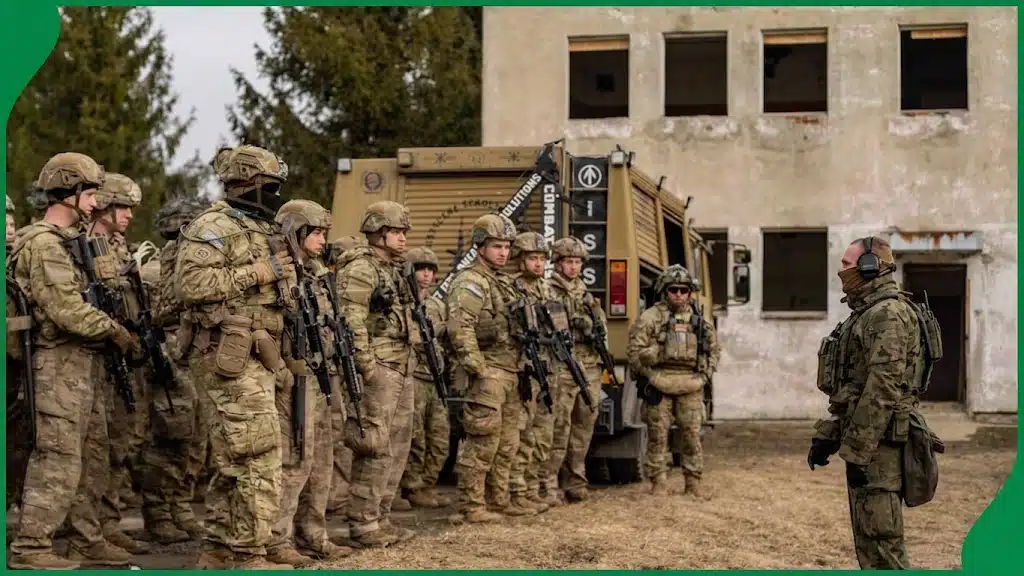
Residents of Sabon Birni Local Government Area of Sokoto State broke into jubilation on Monday after troops of the Nigerian Army foiled an attempted attack on their communities and killed at least 13 suspected bandits in a coordinated operation.

Troops deployed in Kurawa near Kwanan Kimbo engaged the attackers in a fierce gun duel that lasted several hours, forcing the assailants to retreat.

Soldiers later pursued the fleeing bandits to their hideout across a stream, where additional casualties were recorded.

A community source told our correspondent that nine bodies were recovered within the area, while four others were found in the surrounding bush.

Several weapons, including AK-47 rifles and ammunition, were also recovered and taken to the military base in Kurawa.

Military sources confirmed the operation, conducted under Operation Fansan Yamma , describing it as “intense” but noting that the army recorded no casualties.

“It was a determined effort by the troops. The terrorists suffered heavy losses,” one source said.

The operation came just days after troops and local vigilantes repelled another attack on Gatawa community on Friday, heightening public confidence in the renewed security efforts.

Across Kurawa, Tarah, Karawa and nearby villages, residents were seen celebrating the military’s success. They urged the army to sustain the tempo to curb recurrent attacks that have plagued Sabon Birni LGA.

Confirming the development, the member representing Sabon Birni in the Sokoto State House of Assembly, Alhaji Aminu Boza, said at least nine bodies of the attackers had been sighted, with search efforts continuing.

See also  Nigeria's Consul-General in Cameroon, Ambassador Taofik Obasanjo Coker is de@d

The Sokoto State Government also praised the troops for their swift action. In a statement issued by the Special Adviser to the Governor on Security Matters, Col. Ahmed Usman (retd.), the government said the military had averted what could have been a tragic assault on traders travelling from Tarah to the Sabon Birni weekly market.

“The professionalism and courage displayed by our military personnel reaffirm their commitment to protecting lives and property,” Usman said.

He added that Governor Ahmed Aliyu’s administration would continue to support security agencies and called on residents to remain vigilant and share timely intelligence.

“Anyone aiding or abetting criminal activity will face the full weight of the law,” he warned.

Sabon Birni LGA has been one of the hardest-hit areas in Sokoto, suffering repeated attacks in recent months, particularly around Gatawa and neighbouring settlements. Residents say they hope the latest military success marks a turning point in efforts to restore peace to the region.

punch.ng

FOLLOW US ON:

FACEBOOK

TWITTER

PINTEREST

TIKTOK

YOUTUBE

LINKEDIN

TUMBLR

INSTAGRAM

Continue Reading

News

Slain Adamawa women killed by militia, not soldiers – Army

Published

on

The Headquarters 23 Brigade of the Nigerian Army has denied shooting any civilians during the recent communal clash in the Lamurde Local Government Area of Adamawa State, insisting that the two women found dead were killed as a result of militia members’ mishandling their weapons.

The clarification followed reports alleging that soldiers escorting the Brigade Commander of 23 Brigade, Nigerian Army, Yola, shot and killed several women during the clash on Monday.

In a statement posted on its X handle on Tuesday, the Acting Assistant Director, Army Public Relations, Sector 4 Operation Hadin Kai/23 Brigade, Captain Olusegun Abidoye, described the claims as “baseless and misleading,” stressing that “neither the Brigade Commander nor his escorts were at the scene of the communal clash.”

“The commander was participating virtually in the Chief of Army Staff’s weekly operational brief at the time of the alleged incident,” the statement added.

The Brigade explained that combined security forces, including troops of 23 Brigade, the Nigerian Police, NSCDC, and DSS, responded to violent clashes between the Bachama and Chobo tribes, resulting from longstanding land disputes and ethnic tensions.

He noted that troops were deployed to affected communities, including Tingno, Rigange, Tito, Waduku, and Lamurde, to restore calm.

Reiterating its position, the Brigade maintained, “It is necessary to inform the general public that neither the Brigade Commander nor his escorts were at the scene of the communal clash, as the Brigade Commander was participating virtually in the Chief of Army Staff’s weekly operational brief at the time of the purported shooting by his escorts.”

See also  Insecurity: Nigeria free to seek help from outside—OBJ

The statement added that troops received distress reports at about 1:35am on Monday and moved swiftly to restore order.

During the operation, the statement explained that a militia group suspected of supporting one of the warring sides reportedly attacked the troops.

“In response, soldiers neutralised three gunmen, and additional members of the militia were later found neutralised along their withdrawal route, along with a motorcycle,” the Brigade stated.

The army further explained that troops advanced to secure the Lamurde Local Government Secretariat after receiving reports of a possible attack. While some women were said to have initially blocked their passage, armed men allegedly opened fire indiscriminately.

“The Brigade clarified that no civilians were shot by Army personnel, and the two women later brought to the Local Government Lodge were reportedly killed due to the unprofessional handling of weapons by the militias,” the statement added.

The Brigade expressed condolences to the families of the deceased and urged the communities involved to embrace peace to prevent further bloodshed.

It reaffirmed its commitment to performing its constitutional duties in aid of civil authorities and urged the public to disregard what it described as a “malicious report.”

Earlier, The PUNCH reported that the State Governor, Ahmadu Fintiri, had declared a 24-hour curfew in Lamurde Local Government Area on Monday following the bloody crisis between the communities.

Reacting to the incident, the Bwatiye Youth Wing, the umbrella body of the Bachama ethnic group, condemned what it described as unacceptable actions by some army personnel deployed on a peacekeeping mission in the area.

See also  Nigeria's domestic debt service hits N1.7trn Q2 2025

In a statement signed by its General Secretary, Abner Kwakano, the group accused the soldiers of using excessive force.

“It is important to remind the public that the Tsobo (Pire) launched their first coordinated attacks on Waduku and Rigange on July 7, 2025, leading to loss of lives, destruction of homes, and the burning of villages,” the statement read.

“Following this, the Adamawa State Government intervened, and negotiations toward a peaceful resolution were ongoing before this most recent and unprovoked strike.

“Despite these efforts toward peace, soldiers deployed to maintain calm opened fire on unarmed women protesting in Lamurde town, an area not directly involved in the communal crisis.

“This tragic action resulted in the death of no fewer than seven innocent women and left many others seriously injured.”

Kwakano described the conduct of the soldiers as unprofessional and unjustifiable.

“While we acknowledge and respect the Nigerian Army as an institution. The actions of those involved raise legitimate concerns about bias, excessive force, and a departure from peacekeeping standards,” the group added.

Continue Reading

Trending