Connect with us

Lifestyle

Actor Charlie Sheen opens up about sexual encounters with men for the first time

Published

on

Charlie Sheen is opening up about his past by getting candid about past sexual experiences with men.

The actor revealed all in two upcoming new projects — his memoir The Book of Sheen, due Sept. 9, and the Netflix documentary aka Charlie Sheen,  to be released on Sept. 1.

He admitted that after years of having sex with women, he decided to try something new.

He says he’s no longer hiding from his past, but owning it.

"I

“I’m not going to run from my past, or let it own me,” he tells PEOPLE in this week’s cover story.

In the documentary when the interviewer asks Sheen how it feels to be talking publicly for the first time about having sex with men, he says, “Liberating. It’s f***ing liberating… [to] just talk about stuff. It’s like a train didn’t come through the side of the restaurant. A f***ing piano didn’t fall out of the sky. No one ran into the room and shot me.”

Sheen, who also spoke about the subject Friday, September 5, on Good Morning America, says his sexual experiences with men began when he was using crack.

"I

“That’s what started it,” he says. “That’s where it was born, or sparked. And in whatever chunks of time that I was off the pipe, trying to navigate that, trying to come to terms with it — ‘Where did that come from?… Why did that happen? — and then just finally being like, ‘So what?’ So what? Some of it was weird. A lot of it was f***ing fun, and life goes on.”

See also  Lest We Forget: A Historical Reflection on Yoruba-Igbo Tensions

During his drug-fueled exploits, Sheen contracted HIV, which he tried to keep private. However, some of his overnight guests would see his medication, take photos of it and then threaten to expose Sheen if he didn’t pay them. He paid them in the beginning, but then came out with his HIV status in 2015 on the Today show.

“I do know for a fact that I never passed it on,” he says of the virus.

Sheen says with the book and the documentary he just wanted to tell his full truth and own his stories, and he didn’t want to censor anything.

“The stories I can remember anyway,” he jokes. While he says he spent the past eight years making amends to people he’d hurt while he was spiraling with his drug and alcohol addiction, he doesn’t want to play the victim in the book or the doc.

“It takes two to tango,” he says.

These days, Sheen lives a much quieter lifestyle out of the spotlight, and he says he’s been single for years, after going through two very tumultuous divorces, with his exes Denise Richards and Brooke Mueller.

"I

“My romantic life is as uneventful as it possibly could be, and it’s been that way for a long time,” he says.

He adds, “But I am open to love again. Probably not marriage, though!”

Continue Reading
Click to comment

Leave a Reply

Your email address will not be published. Required fields are marked *

Lifestyle

Women Who Love and Listen to Their Pastors More Than Their Husbands Should Be the Pastor’s Second Wife

Published

on

This statement may sound funny, provocative, or even offensive, but it raises an important question about priorities in marriage and religion.

A pastor is a spiritual leader, but he is not supposed to replace a woman’s husband. If a married woman consistently values her pastor’s opinions above her husband’s, obeys her pastor while dismissing her husband, or shows greater loyalty and admiration toward her pastor than toward her spouse, then something may be seriously wrong with the balance in that marriage.

Marriage requires communication, mutual respect, trust, and understanding. A pastor can provide spiritual guidance, but that guidance should not become a reason for a husband and wife to lose respect for each other.

At the same time, husbands should not expect their wives to obey them blindly. Both husband and wife should seek God’s wisdom, communicate openly, and make decisions with love and respect.

So perhaps the real question is not whether such a woman should become the pastor’s “second wife,” but why has the pastor become more important in her marriage than her own husband?

Put God first. Respect your spouse. And never allow a spiritual leader to become a substitute for your marriage partner.

FOLLOW US ON:

FACEBOOK

TWITTER

PINTEREST

TIKTOK

YOUTUBE

LINKEDIN

INSTAGRAM

See also  The 1973 Nigerian “Hides and Skins” Postage Stamp: A Window into Economic Identity
Continue Reading

Lifestyle

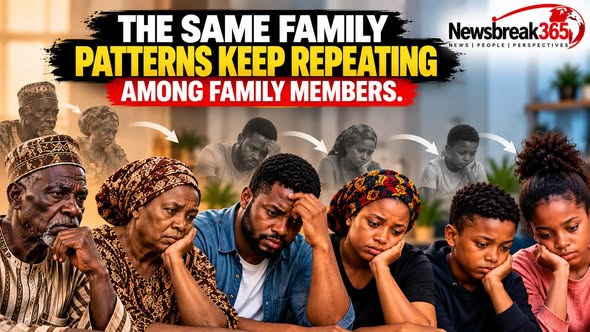
Why is it only in Africa that we hear so much about “generational curses”?

Published

on

This is a question worth asking—not to insult African traditions or dismiss anyone’s beliefs, but to encourage honest reflection.

Across Africa, it is common to hear people explain repeated family problems as a “generational curse.” When poverty, broken relationships, addiction, failure, sickness, family conflict or misfortune appears to repeat from one generation to another, some people immediately conclude that an ancestor, spiritual force or past wrongdoing is responsible.

But is every repeated family problem truly a curse?

If a child grows up in poverty, has limited access to quality education, receives little financial support and then struggles as an adult, is that necessarily a spiritual curse—or could it be the result of circumstances that have been passed from one generation to another?

If children grow up watching violence, substance abuse, unhealthy relationships or constant conflict, they may unknowingly repeat those patterns. That does not necessarily mean they are cursed. Sometimes behaviour is inherited through environment, not through supernatural forces.

And Africa is certainly not the only place where people believe in supernatural explanations for suffering or misfortune. Different societies around the world have their own concepts of inherited wrongdoing, family misfortune, ancestral consequences, fate and spiritual punishment.

So perhaps the more important question is not:

“Who cursed my family?”

But:

“What pattern has been passed down to me, and what can I do to stop passing it to the next generation?”

We should be careful not to use the idea of a curse to discourage people from taking action. A family facing poverty may need education, opportunity and financial planning. A family experiencing repeated conflict may need healthier communication. A person struggling with addiction may need professional support and a strong recovery environment. Communities facing injustice may need better institutions, accountability and opportunity.

See also  Nene Etule: The 1959 Miss Nigeria Who Made History as the Only Non-Nigerian Winner

Faith and spirituality are deeply meaningful to many people, and everyone has the right to hold their beliefs. But faith should not prevent us from examining the practical causes of our problems.

We cannot change the past, but we can change what we pass forward.

Instead of teaching our children that they are victims of an unavoidable family curse, let us also teach them knowledge, discipline, emotional strength, financial responsibility, education, healthy relationships and the courage to break destructive patterns.

Maybe the greatest “curse” is not something mysterious placed upon a family.

Maybe sometimes it is simply a problem that nobody stopped long enough to understand and change.

And the greatest inheritance we can give the next generation is not fear of a curse—but the knowledge and courage to build a better future.

FOLLOW US ON:

FACEBOOK

TWITTER

PINTEREST

TIKTOK

YOUTUBE

LINKEDIN

INSTAGRAM

Continue Reading

Lifestyle

You are very proud to speak big English, but yet you cannot speak your own language?

Published

on

There is nothing wrong with speaking English fluently. In fact, being able to communicate confidently in different languages is a valuable skill. But we should ask ourselves a deeper question: while learning to speak the language of another culture, are we slowly losing the language that connects us to our own roots?

Your mother tongue is more than just words. It carries the stories of your ancestors, the wisdom of your grandparents, the jokes that only your people understand, the traditional greetings, the names, the songs, the history and the identity of your community.

Imagine being able to speak perfect English, but struggling to have a simple conversation with your own grandmother because you do not understand the language she grew up speaking. Imagine your children knowing foreign languages but being unable to understand the language of their own heritage.

That should make us pause.

Speaking English does not make you more intelligent, and speaking your indigenous language does not make you less educated. One is a communication skill; the other can be a connection to your heritage. We should not have to choose between being educated and preserving our identity.

Learn English. Speak it confidently. Learn French, Dutch, Spanish or any other language that opens doors for you.

But don’t let the pursuit of foreign languages close the door to your own.

Teach your children your language. Speak it at home. Ask your parents and grandparents to teach you the words you never learned. If you have forgotten it, it is never too late to start again.

See also  Orphaned Nigerian TikToker ‘Geh Geh’ goes viral, rakes in $30,000 from one live session

Because when a language disappears from a family, something precious disappears with it.

Be proud of your education. Be proud of your ability to speak English. But also be proud of where you come from.

Your language is not something to be ashamed of. It is a part of your story. Preserve it before the next generation only knows it as something their ancestors once spoke.

FOLLOW US ON:

FACEBOOK

TWITTER

PINTEREST

TIKTOK

YOUTUBE

LINKEDIN

INSTAGRAM

Continue Reading

Trending