
Connect with us

News

Ibas defends six-month tenure as opposition demands probe on emergency rule

Published

on

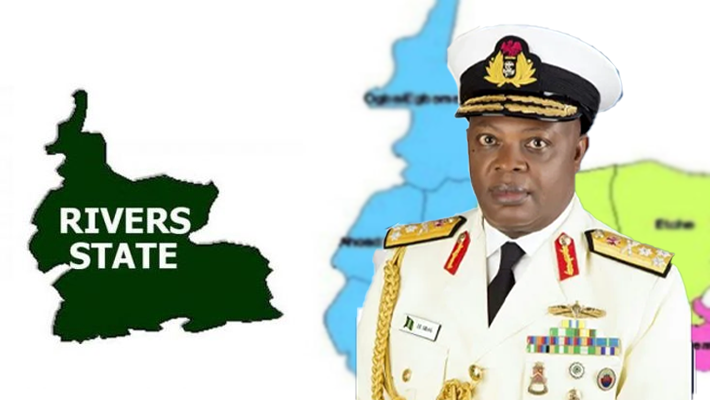
As Rivers State prepares for the return of Governor Siminalayi Fubara on September 18 following the six-month emergency rule in the state, the sole administrator, Vice Admiral Ibok Ete Ibas (retd), has defended his tenure, stating that he fulfilled President Bola Tinubu’s mandate and stabilised the oil-rich state.

However, the opposition parties called for an investigation into Iba’s tenure, particularly his management of the state’s resources during his six-month stay in Brick House.

The Peoples Democratic Party described Ibas’s six-month administration as a waste of time, declaring it unconstitutional, a violation of democratic norms, and demanding an investigation.

Meanwhile, the New Nigeria Peoples Party dismissed the entire six-month rule under Ibas as an exercise in futility, claiming it lacked legitimacy from the outset.

The Labour Party also criticised the emergency rule, alleging it was designed to protect the interests of President Tinubu and the Minister of the Federal Capital Territory, Nyesom Wike, rather than those of the people.

In contrast to the opposition’s stance, the All Progressives Congress praised Ibas for maintaining peace and upholding the rights of citizens during his time as sole administrator.

The party lauded his efforts in ensuring that democratic processes, especially the conduct of local government elections, remained intact, describing his leadership as a stabilising force in a previously tense political environment.

Rivers State had been engulfed in political turmoil for nearly two years, largely due to a power tussle between former Governor Nyesom Wike and his successor, Siminalayi Fubara, which resulted in a prolonged governance deadlock.

In response to the crisis, President Tinubu declared a state of emergency on March 18 and appointed Ibas as the sole administrator to manage the state’s affairs during the period.

Two days later, on March 20, both the House of Representatives and the Senate endorsed the President’s declaration, effectively suspending Fubara and the Rivers State House of Assembly away on forced holidays despite widespread public criticism.

Objecting to what they considered an unconstitutional move, 11 PDP governors filed a case at the Supreme Court, registered as SC/CV/329/2025. However, there has been no public update on the matter since then.

Following the reconciliation between Wike and Fubara, the political climate in Rivers has eased.

The state held its local government elections on August 30, with the ruling All Progressives Congress securing 20 seats and the PDP winning the remaining three.

With a few days to the end of his tenure, the sole administrator commenced the transition process ahead of the President’s reinstatement of the suspended governor by September 18.

Thanksgiving service

Speaking at the Interdenominational Thanksgiving Service in Port Harcourt on Sunday ahead of Fubara’s return to power, the sole administrator urged political stakeholders to lay down their differences, emphasising that the progress and prosperity of Rivers State must take precedence over personal or party interests.

However, notable politicians in Rivers, including Wike and Fubara, were absent at the event. Aside from the Chairman of the Rivers State Council of Traditional Ruler, many monarchs in the state were visibly absent at the thanksgiving.

However, Permanent Secretaries, local government chairmen, heads of boards, agencies, parastatals and service commanders in the state graced the occasion.

Ibas, who had last week said he has ‘successfully achieved’ the mandate given to him by President Bola Tinubu in Rivers State.

Ibas noted that his administration has laid the foundation for reconciliation and called on the people to nurture that effort so it can firmly take root.

He also appealed to all stakeholders, including leaders, elders, politicians, and citizens, to always prioritise the state’s well-being above all else.

Ibas stated, “Six months ago, His Excellency President Bola Ahmed Tinubu, GCFR, Commander-in-Chief of the Armed Forces of Nigeria, declared a state of emergency in River State. At that moment, our beloved state stood at a crossroad, torn by divisions, instability, and broken trust.  By God’s grace and with the support of Mr. President and all of you, we have worked through those difficult days together.

“Today, as a people, we return thanks to God for preserving our lives, granting us peace, and allowing the successful conduct of the local government council elections across the state and thus laying the foundation for the return of democratic governance in Rivers State.”

Quoting some Bible passages, he said thanksgiving was a solemn testimony of God’s faithfulness to the state, saying, “We have survived storms-political, social, economic, and through it all, God has been faithful.”

See also  Shark kills man off Sydney beach

Ibas added, “The seeds of reconciliation have been planted. These seeds need your deliberate nurture to take root. Our collective sacrifices and commitment to peace is what we must all strive to guide at this time.

“My brothers and sisters, this Ecumenical Centre (venue of the event) is itself a symbol of unity, different denominations under one roof, lifting one voice to one God. In the same spirit, Rivers people must rise above bitterness, rivalry and self-interest to pursue the greater good of our state.

“The progress and prosperity of the River State must be placed above personal and or partisan interest. I make a special appeal to our political actors, sheathe your sword. Politics must never be an excuse to destroy the very state we are called to serve.

“The progress and prosperity of the River State must be placed above personal or partisan interest. River State cannot afford another season of division and acrimony. We must forgive one another, reconcile with sincerity, and embrace tolerance. Let us remember that no political victory or personal gain is worth the blood of our brothers and sisters.’

He called on all stakeholders to focus their efforts on fostering and maintaining peace in the state.

Ibas added, “Let us forgive, let us reconcile, and let us heal. For where there is peace, there is progress, and where there is love, there is prosperity. To our youth, you are the strength of Rivers State. Do not allow yourselves to be used as tools for violence. Channel your energy into building, creating, and sustaining peace. Your future, our collective future, depends on it.

“While efforts at peace and reconciliation take hold, all stakeholders, leaders, elders, political actors, and citizens alike should put Rivers State first. Let us guide the peace we have, nurture it with love, and grow it with stability and prosperity for generations yet unborn.”

“Our elders must continue to guide with wisdom. Our faith leaders must sustain prayers for peace. Our young people must commit to learning, working, and creating so that Rivers State will continue to shine as the treasure base of the nation.”

In his sermon, Pastor Organ Barasin highlighted that every individual experiences a moment of intervention, noting that the emergency rule was implemented in the state due to prevailing challenges and instability.

“We must admit that we didn’t do well,” he said, pointing out that before the declaration of emergency rule, the intense political tension in the state could have led to a bloodbath if not for divine intervention.

He stated, “Some people may have been killed. The plan of the enemy was to destabilise Rivers State, but Rivers State belongs to God. The plan of the enemy will not stand.

“We are thanking God for his continued sustenance. There is peace in this land. Rivers State will grow industries.

“The peace we have now must be sustained, and God wants us to forget the past. If you don’t let go of the past, you can’t reach out for the future. Brethren, we must learn to forgive and forget the past so that we can move forward.”

The cleric, who lamented the losses the state has endured due to the emergency rule, called for a change in attitude upon Fubara’s return.

He stated, “As we prepare to hand over to a democratic government, if our attitudes don’t change, nothing will change in this state. Our leaders, service chiefs, judiciary and the legislature all have a role to play. Billions have gone.”


Opposition, APC clash

Reacting, the Deputy National Youth Leader of the PDP, Timothy Osadolor, condemned Ibas’s tenure as unlawful.

In an interview with The PUNCH on Sunday, Osadolor called for a comprehensive investigation into the governance in Rivers State under the sole administrator.

He stated, “Well, like I mentioned at the very beginning, he had no business being there as the sole administrator of Rivers State. Rivers State had an elected governor, so that six months of illegality should be corrected and documented, so that when he is there, he can be thoroughly investigated.

“More so, the numerous resources he expended and presided over belong to the Rivers State people, who did not elect him, who did not decide over their affairs or their resources. Therefore, his handover notes should be well-titled in everything they did because the six months must be probed.

“No matter what, we also believe that Mr. President has no right to truncate or suspend the tenure of an elected public officer that was elected the same way he was elected. For checks and balances, those powers should be vested in the Nigerian National Assembly and not in the office of the President.

See also  Natasha resumes at Senate, calls Akpabio dictator

“More importantly, no elected officer should be made to stay out of the mandate for more than 90 days, if that makes any sense.”

He added that, “His (Ibas) appointment was built on illegality. So he did not achieve anything.”

Also, the National Publicity Secretary of the NNPP, Ladipo Johnson, said Ibas’s tenure lacked legitimacy ab initio.

“The tenure of Rivers’ military administrator is almost like an exercise in futility. This is because his take-off was an aberration of the constitution of the Federal Republic of Nigeria.

“We still maintain that it was an illegality. For one reason or another, they seem to have found some sort of political solution to the problem that was not even half as dangerous as what we had in some parts of Northern Nigeria, which needed a state of emergency to improve the insecurity they are facing.

“When we say a state of emergency, we are not talking about removing an elected government for one appointee. There is nowhere in the Constitution that allows it. We still maintain that. So, the earlier the illegal tenure comes to an end, the sooner we return to constitutional order and to the expression of the will of the people in Rivers State.

“How do you justify the administration of a military administrator? You look at things from a democratic value. It is just an exercise in futility,” Johnson told The PUNCH.

Speaking in a similar tone, the Interim National Publicity Secretary of the Labour Party, Tony Akeni, alleged that Ibas merely served as a placeholder for Tinubu and his political ally, Wike.

“There are two designs by President Tinubu and his favourite South-South sidekick, Wike, in the coup and siege against democracy in River state. The political and the economic designs,” Akeni claimed.

He alleged that the “political design” was to emasculate Fubara and secure Rivers for the ruling APC ahead of 2027, while the “economic design” was to divert state revenues through local councils loyal to Wike.

“To assess Sole Administrator Admiral Ibok-Eke Ibas’s performance during the period, his only achievement is that he did a good job standing in for his adopted new masters, Tinubu and Wike,” Akeni stated.

“In both plots, Tinubu and Wike fully succeeded. The only plot left they don’t know about is that they do not own tomorrow. Yes, they don’t. In 2027, Tinubu and Wike may wake up to find that it is God and Rivers State’s 7.2 million reborn citizens who actually own and will determine their destiny in 2027.

“Not the two clay emperors riding roughshod over their governor, Simi Fubara, and their treasury today.”

However, the APC Director of Publicity, Bala Ibrahim, praised the sole administrator for restoring peace and safeguarding the citizens’ electoral rights.

In an interview with The PUNCH, Ibrahim stated that only the President, who defined the administrator’s terms of reference, is in a position to properly assess Ibas’ performance.

He stated, “Well, you see, as a party, we are not privy to the terms of reference given to the administrator in Rivers. But whether he has achieved or acted according to the provisions or the expectation of the terms of reference is another thing.

“What matters to us as a party is the peaceful coexistence of the people and the freedom given to the people of Rivers State to exercise the franchise of election, as done during the local government election.

“That has been done peacefully, democratically, and in an era that shows that, yes, the people are happy with the dividend of democracy given to them under the national leadership of the APC.

“So, to that extent, we are happy with the conduct of the affairs of the administrator. But whether he has acted according to what he was sent to do is an assessment that can basically be given by the presidency, which gave him that task.”

The APC called on Fubara to embrace democratic principles once his suspension is lifted.

He added, “Well, if his suspension is lifted and he’s asked to resume, I think he must have learned. He would have licked his wounds so well as to leave no room for infection.

See also  MBF president knocks northern governors on killings

“He should not allow anything to happen in a way and manner that would put him off the seat of power. As provided by the mandate given to him by the people, he should be a democrat. He should play democracy by the book and do as expected of him as a politician who was elected to serve the people.”

Groups demand probe

Additionally, the President of the Ijaw Youth Council, Jonathan Lokpobiri, alleged that the six-month emergency rule was marked by widespread corruption.

He added, “If you seek my honest opinion, Rivers State has lost not just the issue of governance, but investors’ confidence in terms of people’s perception about the stability in terms of polity.

“Also, I do believe that Rivers’ resources were plundered, which the man has no business having access to. It became private resources where he didn’t limit his tenure to doing the basics about governance in terms of maintaining the peace and all of that. He has gone into the dimension of an executive governor of Rivers State, where if the President did not make it clear to him, he would have wished to even continue.’’

Also commenting, the Publicity Secretary, Movement for the Survival of Ogoni People,  Oscar Imeabe, argued that the emergency rule impacted negatively on the state.

“The emergency rule has reportedly crippled economic activities in the state by chasing away investors and entrepreneurs. It has been a major setback to the history of Rivers State. The Administrator dissolved state institutions like the Rivers State Independent Electoral Commission, the Rivers State Micro-Finance Agency, boards of many tertiary institutions and agencies that were appointed by a democratically elected governor and proceeded to make illegal appointments which he wants to leave behind,” he stated.

Imeabe, who is also the Coordinator, South-South Youths Initiative,  called for an investigation into Ibas’ tenure.

“MOSOP is hereby calling for an investigation into the financial management of the state by the administrator. And my organisation, South-South Youths Initiative, the coalition of youths bodies, call on the EFCC and ICPC to probe the allegations of financial misappropriation by the state administrator.”

A former Senator, Lee Maeba, who represented Rivers South-East District in the National Assembly, described the situation during Ibas’s tenure as dire.

In an interview with our correspondent, he stated, “Rivers State has lost so much money, and we have to account for it. President Bola Tinubu has to account for our money. We have lost a huge amount of money. Six months of allocation, Internally Generated Revenue, and all other statutory earnings, I mean.

“How can you just suspend a governor and begin to play with all the monies meant for the state? The Administrator is behaving however he likes. An Administrator who was asked to go and restore security, but he went there and became completely in charge of politics.

“So, it’s a terrible thing to do. I don’t believe the President can go this low. It is the lowest level a President can go. He does not have any respect for anybody in Rivers because we elected him President. It’s a terrible thing to talk about.”

Maeba, who called for an investigation into the six months, stated that those who supported the state of emergency would face the consequences.

He stated, “The Constitution does not envisage that you will suspend a governor. There is nowhere in the Constitution that you will suspend a governor. And the terrible National Assembly stood by the President to do all the terrible things he did in Rivers. So, may that which happened in Rivers not happen in another state in Nigeria. I don’t pray it happens to any other state at all.’’

“And what has happened to Rivers is not gone. We will stand up to demand all the money that came to the state and the power of the Administrator to just jump into a state and start spending state money in the name of an emergency that does not exist. The State of Emergency that we hear is to restore security breaches or the breakdown of law and order. Now, in this case, the man just came for politics because there was no case of insecurity. He came and started using state resources without any constitutional powers or law allowing him to do that.”

FOLLOW US ON:

FACEBOOK

TWITTER

PINTEREST

TIKTOK

YOUTUBE

LINKEDIN

TUMBLR

INSTAGRAM

Continue Reading
Click to comment

Leave a Reply

Your email address will not be published. Required fields are marked *

News

Read lessons from US visa ban on Supreme Court justices

Published

on

ONCE again, the Supreme Court of Nigeria is under an uncomfortable spotlight. This time, the trigger is an extraordinary revelation by retiring Justice Uwani Abba-Aji at her recent valedictory session. She lamented that the United States imposed visa restrictions on members of a Supreme Court panel over a controversial judgement.

This is no trivial diplomatic gesture. Visa restrictions against serving justices of a country’s highest court carry grave implications for the reputation of the institution and the credibility of its decisions. US authorities would hardly take such a step without serious grounds for concern. More troubling, the sanctions have apparently endured.

Recounting her experience, Abba-Aji said: “My time on the Supreme Court bench was filled with challenges, some of which have served as additional opportunities to stand firm on the side of justice, regardless of the consequences. One of such challenging judgements was widely misinterpreted and led to a travel ban to the United States of America being imposed on all members of the panel; a ban which still holds till today.”

For Abba-Aji, the judgement was merely “widely misinterpreted.” But that is hardly a sufficient explanation for a decision that has continued to cast a shadow over the country’s highest judicial institution. The public, and apparently the US authorities, are entitled to a different assessment. More importantly, the controversy demands introspection rather than defensiveness.

The Supreme Court and the judiciary should recognise that their proceedings and decisions are subject to increasingly intense domestic and international scrutiny. Judicial authority does not confer immunity from criticism. Neither does the sanctity of the bench excuse decisions that raise troubling questions about fairness, consistency and the integrity of the electoral process.

The controversies surrounding the 2023 senatorial elections involving Godswill Akpabio and Ahmad Lawan are cases in point. Both had contested the All Progressives Congress presidential primaries in 2022 before subsequently seeking senatorial tickets in Akwa Ibom North-West and Yobe North, respectively. The Electoral Act 2022 prohibits a candidate from participating in more than one primary election within the same electoral cycle.

Yet, relying on jurisdictional and procedural grounds, the Supreme Court overturned earlier decisions and cleared the way for both men to secure their respective senatorial tickets. Whatever the technical legal reasoning, the outcome reinforced public suspicion that political heavyweights enjoy judicial accommodation unavailable to ordinary Nigerians.

More troubling was the January 14, 2020, Imo State governorship judgement. A seven-member panel of the Supreme Court, including the present Chief Justice of Nigeria, Kudirat Kekere-Ekun, and Abba-Aji, overturned the election of Emeka Ihedioha of the Peoples Democratic Party and declared Hope Uzodimma of the APC governor. Uzodimma had initially placed fourth in the election.

See also  Natasha resumes at Senate, calls Akpabio dictator

The court arrived at its conclusion after adding 213,295 votes from 388 polling units, based on documents tendered by a police witness but reportedly disowned by the Independent National Electoral Commission. In effect, the Supreme Court’s intervention overturned the decisions of both the election tribunal and the Court of Appeal.

The judgement raised fundamental questions that have never been satisfactorily laid to rest. Should the Supreme Court assume the responsibility of sorting, counting and declaring election results? Is it an electoral umpire? Where discrepancies in results arise, should the court not direct the appropriate electoral authority to establish the authentic figures in accordance with the law?

When Ihedioha subsequently sought a review of the judgement, the application was dismissed. In a dissenting opinion, the late Justice Centus Nweze warned that “this decision of the Supreme Court will continue to haunt our electoral jurisprudence for a long time to come.”

His words have proved difficult to dismiss. Indeed, such controversial judgements have helped institutionalise the cynical belief that elections are merely preliminary battles, with the real contest taking place in court. Politicians have consequently made “go to court” a familiar refrain, undermining confidence in the ballot and weakening the foundations of electoral democracy.

The Orji Kalu case is another troubling example of judicial controversy. On May 8, 2020, the Supreme Court set aside the 12-year prison sentence imposed on the former Abia State governor by a High Court and upheld by the Court of Appeal over a N7.1 billion money-laundering charge.

The Court held that the trial judge, Mohammed Idris, lacked jurisdiction because he had been elevated to the Court of Appeal when the proceedings were concluded. It ordered a retrial.

Before it was voided in Udeogu v. Federal Republic of Nigeria, Section 396(7) of the Administration of Criminal Justice Act 2015 provided that a High Court judge elevated to the Court of Appeal may continue sitting as a High Court judge to conclude part-heard criminal matters. This provision was designed precisely to prevent the kind of disruption that could arise from judicial elevation.

More fundamentally, setting aside a conviction on procedural grounds does not extinguish the underlying allegations of financial wrongdoing. The public was entitled to expect that the substantive case would be resolved without further unnecessary delay.

Beyond controversial judgements, the judiciary’s growing proximity to the political establishment has also become a source of concern. Judges are expected to maintain a degree of restraint and distance from the executive, particularly when politically sensitive cases are before them. Yet, the spectacle of judicial officers fraternising with political power has repeatedly undermined that expectation.

Lawyers, for instance, criticised the then Acting Chief Justice of Nigeria, Tanko Muhammad, and other judicial officers for attending an Iftar dinner hosted by President Muhammadu Buhari at the Presidential Villa while presidential election petitions were still pending. Even if no impropriety was established, the optics were damaging. Justice must not only be done; it must be seen to be done.

The late Justice Kayode Eso, one of Nigeria’s most respected jurists, had sounded the alarm years earlier. Following the disputed 2007 elections, he lamented the emergence of “billionaire judges” and described a legal profession increasingly divided between “those who know the law and those who have contacts”. That indictment remains painfully relevant.

See also  El-Rufai backtracks on Ribadu phone-tapping claim, read details

The era of courageous, intellectually rigorous and landmark judgements associated with Justices Chukwudifu Oputa, Eso and Niki Tobi appears to be receding. Their legacy was not built on proximity to political power but on judicial independence, moral courage and fidelity to the law. The present generation must demonstrate that the judiciary is still capable of producing such men and women.

Unfortunately, the rot is not confined to the Court. It has filtered through the lower judiciary, as reflected in disciplinary actions by the National Judicial Council.

At its 112th meeting, the council suspended three judicial officers — Hannatu Mohammed of the Nasarawa State High Court, Mohammed Sani Salihu of the Jigawa State Sharia Court of Appeal and Sobere Biambo of the Rivers State High Court — for one year without pay over various acts of misconduct. Eight others were cautioned, while warning letters were approved for three judges following investigations into their handling of cases.

These sanctions are necessary, but they also expose the scale of the institutional challenge.

Judicial misconduct cannot be treated as an occasional embarrassment to be managed through discreet disciplinary measures. It is a direct assault on the rule of law and the confidence of citizens in the justice system.

The public perception of judicial integrity has suffered from troubling political disclosures. At a valedictory session in the Senate in June 2023, former senator Adamu Bulkachuwa claimed that he had approached his wife, Justice Zainab Bulkachuwa, a former President of the Court of Appeal, to influence election petition cases involving his political colleagues. Although he subsequently recanted, the damage to public confidence was considerable.

Transparency International’s 2025 Corruption Perceptions Index and concerns raised by the Civil Society Legislative Advocacy Centre further underscore the damage corruption does to public trust in Nigerian institutions, including the judiciary. CISLAC has identified judicial corruption as a major weakness in the country’s anti-corruption campaign, noting that both the CJN and the Nigerian Bar Association have acknowledged its threat to public confidence.

See also  FG to capture N4tn power sector bond in MTEF

The NJC should therefore move beyond occasional disciplinary interventions. It should strengthen its investigative capacity, impose firm and transparent sanctions on erring judicial officers and ensure that accountability extends to the highest courts. No judge should be considered too senior, influential or politically connected to face scrutiny.

If foreign governments are concerned about judicial integrity, Nigerian authorities should not dismiss their actions as interference. The US visa restrictions may be controversial, but they should serve as a wake-up call. Indeed, scrutiny should not stop at the Supreme Court. No level of the judiciary should be beyond examination where credible allegations of misconduct arise.

More fundamental, however, is the need for structural reforms that insulate judicial appointments from political patronage. The appointment of the Chief Justice of Nigeria, the President of the Court of Appeal and chief judges should not remain so vulnerable to the influence of the President and state governors.

An independent, transparent and broadly representative appointments commission should play a decisive role in identifying, screening and recommending judicial candidates on the basis of competence, integrity and professional merit.

There should be meaningful public participation in the appointment process, with appropriate safeguards to protect judicial independence. The objective is not to turn judges into political contestants or subject their decisions to popular approval, but to ensure that those entrusted with dispensing justice command public confidence from the outset.

Ultimately, the judiciary is too important to Nigeria’s democracy to be allowed to decay under the weight of political interference, corruption and questionable judgements.

As the country approaches the 2027 general elections, the Supreme Court and the wider judicial establishment must undertake a serious institutional soul-searching exercise. The credibility of the next elections will depend not only on INEC but also on the integrity of the courts that will adjudicate disputes arising from them.

A judiciary whose integrity is questioned at home and abroad is a liability to the country. It weakens democracy, emboldens impunity, discourages investment and erodes faith in the rule of law.

Investors are unlikely to repose confidence in a country where the impartiality of the courts is in doubt, and commercial disputes can be coloured by political connections.

The lesson from the US visa restrictions should, therefore, be unmistakable: judicial prestige cannot be sustained by constitutional status or the grand trappings of office. It must be earned through impartiality, courage, transparency and fidelity to the law. Nigeria cannot build a credible democracy on a compromised judiciary.

Source: punchng.com

FOLLOW US ON:
FACEBOOK

WHATSAPP CHANNEL

TWITTER

PINTEREST

TIKTOK

YOUTUBE

LINKEDIN

INSTAGRAM

Continue Reading

News

Reps probe alleged N2bn in ex-mining commander’s account, read details

Published

on

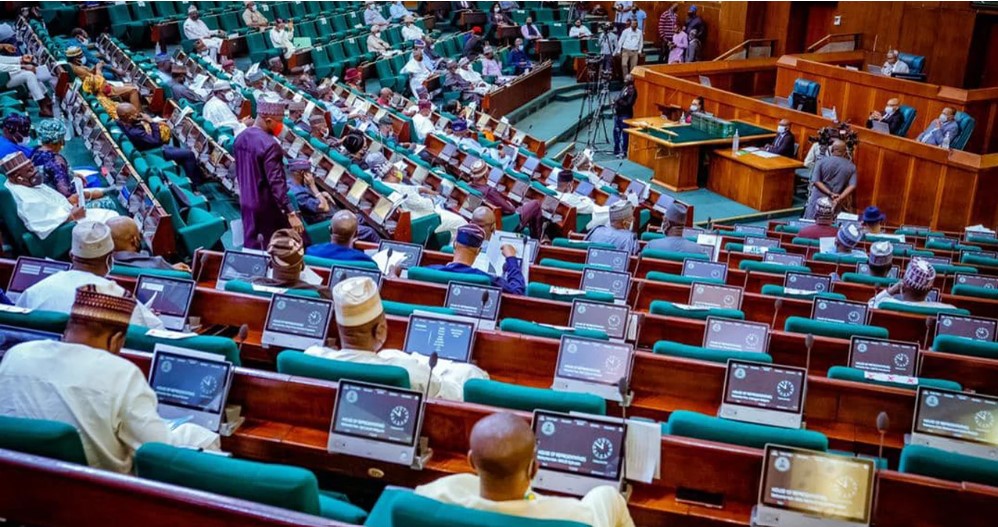
The House Committee on Solid Minerals Development has questioned the legal basis for the operations of the Mining Marshals, insisting that the unit lacked specific legislative backing to operate in its current form.

The committee, chaired by Jonathan Gbefwi, raised the concern during an investigative hearing involving the Nigeria Security and Civil Defence Corps at the National Assembly Complex, Abuja. It is probing allegations of extortion, harassment of licensed mining operators and financial impropriety.

Lawmakers are examining the unit’s funding, procurement of operational vehicles and allegations that more than N2bn was found in the account of a former state commander.

Gbefwi, a Labour Party member from Nasarawa State, said the committee was exercising its constitutional powers under Sections 88 and 89 of the 1999 Constitution, as amended, and Sections 2 to 5 of the Legislative Houses (Powers and Privileges) Act, 2017.

He faulted the NSCDC’s failure to submit requested documents despite the appearance of its Commandant-General, Ahmed Audi.

According to him, “the committee served Audi with a formal statutory demand on October 20, 2026, requiring the Corps to submit a comprehensive response under oath.”

The demand required 10 bound and paginated hard copies, alongside an identical electronic version of relevant documents, by 2 pm on November 3. However, Gbefwi said the documents had not been delivered when proceedings commenced. He stressed that Audi’s appearance did not discharge the Corps’ obligation to provide the records.

He said Audi’s responses under oath would be the NSCDC’s official position. He directed the Corps to preserve operational and financial records, including arrest registers, banking documents, vehicle registers and CCTV footage across the 36 states and the Federal Capital Territory.

Gbefwi warned that destroying, concealing, altering or backdating records, or intimidating officers and witnesses, would attract legal consequences.

“Any alteration, backdating, concealment, removal, or destruction of responsive records, or any intimidation, coaching, or retaliation against any officer or witness, constitutes a grave statutory offence under Section 14 of the Legislative Houses (Powers and Privileges) Act, 2017, and Section 19 of the NSCDC Act,” he said.

See also  FG to capture N4tn power sector bond in MTEF

He also referred to a letter dated July 24, 2026, written by the Commander of the Mining Marshals, Attah Onoja, to the Speaker of the House. The letter reportedly contained allegations against a member of the House and questioned the legislature’s integrity.

Gbefwi said Audi had to clarify whether the Corps endorsed the allegations or the letter reflected Onoja’s personal position. Audi was required either to adopt the allegations with documentary evidence or formally disown the letter under oath.

The NSCDC delegation, led by Audi, defended the establishment and operations of the Mining Marshals, maintaining that the unit had a legal basis. Audi undertook to submit the requested documents. Onoja answered questions about the reported N2bn transaction involving a former state commander.

Established by the Federal Government in 2024 as a special enforcement unit within the NSCDC, the Mining Marshals were tasked with tackling illegal mining, protecting mining sites and enforcing mining regulations. Their operations have raised questions about their statutory powers, funding, and alleged harassment and extortion of licensed operators.

In another development, the House of Representatives has called for urgent repairs to failed box culverts along the East-West Road in Rivers State.

The road resolutions followed a motion by Yenagoa/Opokuma Federal Constituency member Oboku AbonsiOforji on Wednesday.

The House urged the Federal Ministry of Works to direct Rock Result Nigeria Limited to return to site and rehabilitate or reconstruct failed box culverts at Iheke in Ahoada East Local Government Area of Rivers State. It also called for an independent engineering assessment of the damaged structures.

See also  El-Rufai backtracks on Ribadu phone-tapping claim, read details

Moving the motion, Oforji recalled that the House had, on October 3, 2023, adopted a resolution drawing attention to the deplorable condition of the Iheke section, prompting government interventions.

He commended the government for constructing culverts, approving rehabilitation funds and re-awarding the contract to Setraco Nigeria Limited.

However, he expressed concern that the culverts had deteriorated despite the financial commitments. He blamed alleged substandard execution, questioning the materials, engineering specifications, supervision and value for public funds.

Oforji said the road linked Bayelsa, Rivers and Delta states.

He said the damaged culverts could “endanger lives, disrupt the movement of people and goods, and aggravate flooding and erosion in the region if urgent remedial action was not taken.”

The motion highlighted delays in dualising the Ahoada-to-Bayelsa and Patani sections. According to Oforji, the project, “initially scheduled for completion in April 2025, was subsequently extended to November 2025 but remained unfinished as of November 25, 2026.”

The House urged the ministry to ensure Rock Result Nigeria Limited repaired the culverts and Setraco Nigeria Limited completed the dualisation works on the Ahoada-to-Bayelsa and Patani sections.

It mandated its Committee on Works and Legislative Compliance to monitor implementation and report back within four weeks for further legislative action.

Source: punchng.com

FOLLOW US ON:

FACEBOOK

WHATSAPP CHANNEL

TWITTER

PINTEREST

TIKTOK

YOUTUBE

LINKEDIN

INSTAGRAM

Continue Reading

News

Mock polls: INEC orders RECs to plug gaps

Published

on

The Independent National Electoral Commission (INEC) has directed Resident Electoral Commissioners across the 36 states and the Federal Capital Territory to address all identified operational and logistical shortcomings ahead of Saturday’s nationwide mock accreditation and result transmission exercise.

The INEC Chairman, Prof. Joash Amupitan, gave the directive on Wednesday in Abuja at a strategic consultative meeting with RECs, warning that the commission could not afford operational failures as preparations intensified for the 2027 general elections.

Amupitan said the mock exercise scheduled for November 28 would serve as a critical test of the commission’s upgraded Bimodal Voter Accreditation System devices, logistics arrangements and automated result validation safeguards on the INEC Result Viewing Portal.

He directed the RECs to personally supervise preparations in their respective states, monitor the exercise and submit comprehensive technical reports to the commission’s headquarters by November 30.

The INEC chairman said the reports must identify network failures, device anomalies and procedural bottlenecks requiring urgent intervention before the general elections.

“Every single operational bottleneck, communication gap, or logistical friction point identified during our recent off-cycle reviews must be permanently closed before Saturday’s nationwide simulation and well ahead of January 16,” he said.

He warned that the commission had no room for administrative lapses, noting that the 2027 elections would involve more than 100 million registered voters, 57,000 newly procured BVAS devices and over 1.41 million ad hoc personnel.

“Margin for error simply does not exist,” Amupitan declared.

The chairman disclosed that the presidential and National Assembly elections would hold on January 16, 2027, while the governorship and state Houses of Assembly elections were scheduled for February 6.

See also  Nigeria @ 65 - FG cancels Independence Day parade

He said the commission was working with a verified register of more than 100 million voters following three phases of Continuous Voter Registration, which added over 10.77 million registrants, and an audit that removed more than 1.6 million invalid, duplicate or deceased records.

Amupitan also disclosed that the register included 232,658 Persons With Disabilities, whose participation, he said, required accessible polling arrangements and appropriate assistive materials.

He identified six operational priorities requiring immediate attention from the RECs, including the successful conduct of Saturday’s mock exercise, last-mile logistics, BVAS deployment, election security, recruitment and welfare of ad hoc personnel, and the prevention of disinformation and partisan interference.

On logistics, the INEC chairman warned that delays in opening polling units could undermine public confidence and trigger unnecessary tension on election day.

“Delayed openings breed suspicion, anxiety, and avoidable tension,” he said.

He directed the RECs to review transportation arrangements with the National Union of Road Transport Workers, marine operators and aviation partners, while ensuring that Registration Area Centres were physically ready and secured.

He also ordered strict tracking of sensitive and non-sensitive election materials from state warehouses to polling units and their eventual return through collation centres.

On the deployment of BVAS, Amupitan said the commission had reduced the voter threshold per device from 1,250 to 850 to prevent overcrowding, long queues and accreditation delays.

He explained that multiple devices would be deployed to polling units with more than 850 registered voters.

The chairman also said the commission had constructed climate-controlled storage facilities across the states to protect the newly acquired devices from extreme temperatures.

See also  Police revealed why Sowore was arrested in court

On election security, he called for stronger collaboration between the RECs, state commissioners of police, directors of the Department of State Services, the Nigeria Security and Civil Defence Corps and other security agencies.

He said the commission would activate its decentralised Inter-Agency Consultative Committee on Election Security structures down to local government and ward levels, supported by Election Risk Management maps to identify potential flashpoints.

Amupitan further directed the RECs to ensure the early resolution of disputes over political rally venues and timings in line with Section 95(4) of the Electoral Act 2026.

He warned that the commission would not tolerate partisan conduct by its personnel, stressing that institutional neutrality was essential to credible elections.

“Equally vital, enforce uncompromising institutional neutrality across every level of your state workforce.

“Under the Electoral Act 2026—including the deterrence provisions of Sections 96, 97, and 148—the Commission will not shield any staff member or official who compromises neutrality, facilitates malpractice, or breaches statutory rules,” he told the electoral commissioners.

The INEC chairman also stressed the need for adequate training and timely payment of allowances to the more than 1.41 million ad hoc personnel expected to participate in the elections.

He identified National Youth Service Corps members, university vice-chancellors, academics serving as returning and collation officers, and career civil servants among the personnel who would support the electoral process.

Amupitan urged the RECs to maintain regular engagement with political parties, election observers, civil society organisations and the media to prevent information gaps that could fuel misinformation and disinformation.

See also  Fire guts Yinka Ayefele’s Music House in Ibadan, Fresh FM affected

“The Nigerian people are not asking us for excuses or explanations after the fact; they are asking for competence, impartiality, transparency, and courage in the execution of our constitutional mandate,” he said.

He charged the RECs to personally supervise field preparations rather than rely solely on reports from subordinate officers, urging them to communicate operational challenges promptly to the commission’s headquarters.

“As Resident Electoral Commissioners, your leadership sets the ethical and operational tone in your respective states. Stay close to your Electoral Officers, supervise field audits personally rather than relying solely on secondhand assurances, and report realities on the ground with complete candour so Headquarters can support you swiftly,” he said.

Source: punchng.com

FOLLOW US ON:

FACEBOOK

WHATSAPP CHANNEL

TWITTER

PINTEREST

TIKTOK

YOUTUBE

LINKEDIN

INSTAGRAM

Continue Reading

Trending