
Connect with us

News

Nigerians entitled to compulsory health insurance — Falana

Published

on

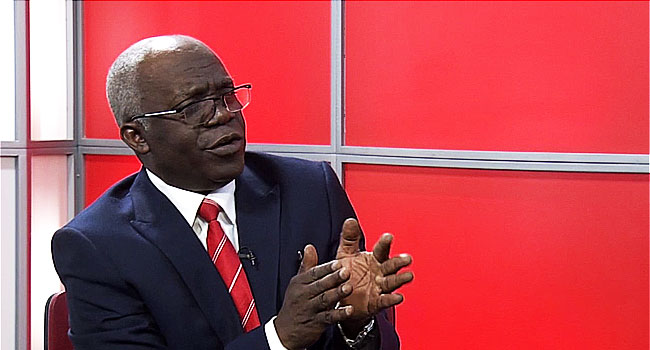
Human rights lawyer, Femi Falana (SAN), has said that every Nigerian is now legally entitled to compulsory health insurance under the National Health Insurance Authority (NHIA) Act of 2022.

In a statement made available to The PUNCH on Friday, Falana explained that the NHIA Act repealed and replaced the National Health Insurance Scheme Act of 2004, which he said had failed to achieve “significant population coverage or integration” of Nigeria’s fragmented health insurance system.

According to him, the 2022 law “represents a major policy and legal shift toward making universal health coverage a legal and operational reality for all Nigerians.”

He noted that the Act mandates the enforcement of a Basic Minimum Package of Care for all citizens, while also establishing the Vulnerable Group Fund to subsidise care for the poor, elderly, children under five, and persons living with physical or mental disabilities.

Falana added that state governments are required to operate their own health insurance schemes or engage third-party administrators until such schemes are established.

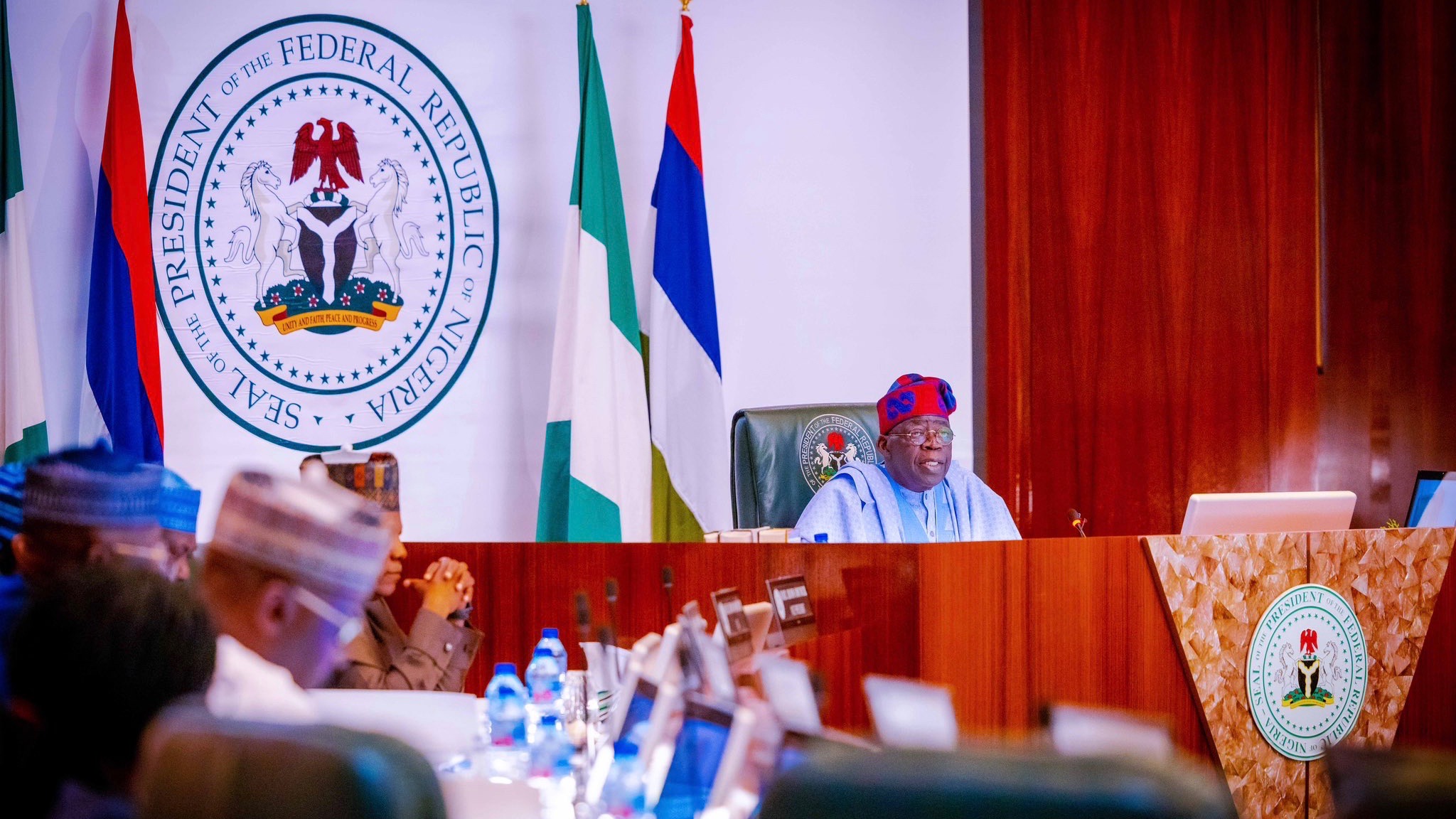
“In accordance with the NHIA, on September 3, 2025, President Bola Tinubu directed all Ministries, Departments, and Agencies (MDAs) to enrol their employees in the National Health Insurance Authority scheme,” he said.

“To ensure compliance across all MDAs, the directive mandates all entities participating in public procurement to present a valid NHIA-issued Health Insurance Certificate,” Falana added.

He explained that the directive also empowers the Secretary to the Government of the Federation to enforce enrolment and monitor compliance, potentially expanding health coverage significantly across public institutions.

See also  Submit commissioner nominees, prepare budget, Rivers Assembly tells Fubara

Falana further said the NHIA Act mandates the governments of the 36 states and the Federal Capital Territory to provide a basic minimum package of care to all residents of Nigeria, in line with the Basic Health Care Provision Fund under the National Health Act 2014.

He noted that “state health schemes will manage the fund and monitor its implementation,” while states without established schemes may use third-party administrators pending the creation of their own.

“The primary aim of the NHIA Act is to ensure that every Nigerian and legal resident has access to affordable, quality, and comprehensive health care services through mandatory health insurance,” he said.

Falana pointed out that the NHIA had now set up “a regulatory and institutional framework for the promotion, administration, supervision, and regulation of all health insurance schemes in Nigeria — whether public or private.”

Citing the Health Care Providers Association of Nigeria, Falana lamented that “over 90 per cent of Nigerians are still not covered by any form of health insurance,” warning that the country remains far from achieving universal health coverage.

He attributed the situation largely to poverty, noting that “millions of citizens have become dimensionally poor.”

Quoting Section 25 of the NHIA Act, Falana said health insurance for vulnerable people “shall be fully funded by the government,” while Section 31 requires employees to contribute on a contributory basis.

He explained that the law defines the “vulnerable group” to include “children under five, pregnant women, the aged, the physically and mentally challenged, and the indigent as may be defined from time to time.”

See also  Protests spread in Tanzania over controversial poll

“Since the majority of citizens have become indigent and vulnerable, the federal, state, and local governments should provide adequate funding for the health insurance of all citizens,” Falana stated.

He said this demand aligns with Section 17(3)(d) of the Nigerian Constitution, which imposes a duty on the government to ensure “adequate medical and health facilities for all persons,” as well as Article 16 of the African Charter on Human and Peoples’ Rights, which guarantees every individual “the highest attainable standard of physical and mental health.”

PUNCH Online on September 25, 2025, reports that President Bola Tinubu’s directive to enforce the National Health Insurance Authority Act (2022) across all ministries, departments, and agencies has been hailed as a significant step forward for Nigeria’s health system.

The order mandates MDAs to enrol their employees in the NHIA scheme and makes possession of a valid Health Insurance Certificate a prerequisite for public procurement, licensing, and other official approvals. It also provides for the creation of a digital verification platform to enhance transparency and prevent forgery.

punch.ng

FOLLOW US ON:

FACEBOOK

TWITTER

PINTEREST

TIKTOK

YOUTUBE

LINKEDIN

TUMBLR

INSTAGRAM

Continue Reading
Click to comment

Leave a Reply

Your email address will not be published. Required fields are marked *

News

Governors vs NNPC: Tension rise over alleged $42bn oil revenue shortfall

Published

on

A renewed clash has emerged between the Nigerian National Petroleum Company Limited and Periscope Consulting, the audit firm hired by the Nigeria Governors’ Forum to examine an alleged under remittance of oil revenue totalling $42.37bn (about N12.91tn) to the Federation Account between 2011 and 2017.

The dispute, revived by fresh submissions from both sides, has forced the Federation Account Allocation Committee to mandate a joint reconciliation session to determine the true state of remittances and resolve the long-running impasse.

This was disclosed in the Federation Account Allocation Committee’s post-mortem review for November 2025, which detailed fresh exchanges between both parties over the alleged unremitted fund. The document was obtained by our correspondent on Tuesday.

Recall that in October, The PUNCH reported an extension of the ongoing probe and reconciliation of payments made by revenue-generating agencies, including the Nigerian National Petroleum Company Limited, to December 2024, following unresolved discrepancies in remittances. It also examined allegations that NNPC Limited failed to remit $42.37bn (about N12.9tn) in oil revenue to the Federation Account during the 2011–2017 period.

The review follows findings by Periscope Consulting, a firm engaged by the Nigeria Governors’ Forum, which had earlier accused the state oil company of withholding crude oil proceeds and other statutory revenues due to the Federation Account during the period.

But in the new document, the FAAC Sub-Committee confirmed that NNPCL had formally rejected the audit findings, insisting that no outstanding revenue is owed to the Federation Account for the period under review. The national oil company maintained that all crude oil proceeds and associated earnings were fully accounted for, disputing Periscope’s claims of significant underpayment.

But Periscope Consulting flatly disagreed with NNPC Limited’s defence, maintaining that its audit uncovered substantial gaps in remittances and that the alleged $42.37bn shortfall remained unresolved.

The report read, “UPDATE ON NNPC’S ALLEGED UNDER REMITTANCES TO FEDERATION ACCOUNT OF $42,373,896,555.00.

“NNPC Limited submitted their response regarding $42,373,896,555.00 under remittance to the Federation Account as contained in the report of Periscope Consulting. Recall that Periscope Consulting was the Consultant engaged by the Governors’ Forum to examine NNPC Limited under remittance to the Federation Account.

“NNPC Limited responded that all revenues due to the Federation have been properly accounted for and no outstanding amounts for the period under review.”

See also  See 175 Beneficiaries of Tinubu’s Pardons (Full List)

This disagreement has pushed both sides into a stalemate, with the consultants accusing the oil company of providing explanations that do not reconcile with the audited data.

The FAAC sub-committee, noting the conflicting positions, directed that NNPCL and Periscope Consulting must meet jointly to harmonise records and “close out” the matter. It added that the reconciliation process remains ongoing.

“Responding, Periscope Consulting disagreed with NNPCL’s position; hence, the Sub-Committee directed that there should be a joint meeting with the two parties to close out on the issue. This assignment is work in progress,” it added.

The controversy marks the latest chapter in a prolonged dispute between state governments and the national oil company over transparency in oil revenue flows. In February 2025, FAAC suspended its monthly meeting due to a dispute between state governments and NNPC Limited over outstanding remittances.

The dispute over an estimated N1.7tn in revenues raised concerns over potential delays in revenue disbursement to states, which rely on FAAC allocations for budgetary commitments.

The Governors’ Forum commissioned Periscope Consulting amid complaints that NNPCL’s remittance practices, including handling of crude sales, domestic allocation, subsidy deductions, and JV cash calls, were opaque and inconsistent with expected inflows.

With oil receipts forming the backbone of FAAC disbursements, any alleged shortfall threatens state and local government finances, already strained by rising inflation and shrinking real revenue.

NNPC Limited, now operating as a limited liability company under the Petroleum Industry Act, has consistently defended its processes, claiming improved accountability and asserting that independent audits often misinterpret commercial and regulatory procedures governing its operations.

The latest face-off underscores deepening mistrust on both sides and places renewed pressure on FAAC to reconcile the books in the interest of fiscal stability.

Commenting on the issue, renowned Professor Emeritus of Petroleum Economics, Wumi Iledare, said the alleged $42.37bn under-remittance recorded between 2011 and 2017 reflects long-standing flaws in Nigeria’s pre–Petroleum Industry Act regime.

According to him, the former Nigerian National Petroleum Corporation operated with overlapping roles that made revenue reconciliation cumbersome and frequently disputed. Iledare described the controversy as a “legacy problem,” stressing that similar discrepancies can be avoided only through disciplined implementation of the PIA, real-time monitoring, and continuous independent audits.

He added that with transparent data and clear fiscal rules, future remittance disputes should not recur. Speaking in an interview, he said, “The alleged $42.37bn under-remittance from 2011–2017 simply reflects the weaknesses of the old pre-PIA system. The former NNPC had overlapping roles that made revenue reconciliation difficult and prone to disputes.

See also  Tinubu approved lifetime salary for retiring senior officers – Interior minister

“The lesson is clear: fully implement the PIA, strengthen real-time monitoring, and enforce continuous independent audits. With transparent data and clear rules, issues like this should not arise again. It is a legacy problem. The future depends on disciplined implementation of the PIA.”

The Post-Mortem Sub-Committee further queried the NNPC Limited over gaps in its reporting on the utilisation of the 30 per cent Frontier Exploration Fund, a statutory deduction introduced to finance oil and gas exploration in frontier basins.

According to the committee’s review, NNPCL submitted utilisation records for the frontier exploration fund covering the period 2008 to 2024, spanning both the pre- and post-Petroleum Industry Act eras.

However, the sub-committee noted that the documents did not provide project-specific details, including a breakdown of expenditure for each basin where exploration activities were carried out. As a result, the committee wrote to NNPCL requesting a proper reconciliation that links each exploration project to the exact amount spent.

The sub-committee said it is still awaiting the company’s updated submission, adding that the reconciliation remains a work in progress. It explained, “The NNPCL had submitted the utilisation of the frontier exploration fund from 2008-2024, covering both the Pre and Post PIA. However, the Sub-Committee observed that there were no specifics on expenditure incurred on the exploration activities carried out in each of the funds.

“The committee had written to NNPCL requesting it to tie each project carried out within the Basins to the amount expended. The Sub-Committee awaits NNPCL’s response. This assignment is still a work in progress.”

The scrutiny follows a government-led probe into the 30 per cent Frontier Exploration Fund, aimed at ensuring transparency and proper utilisation of billions earmarked for oil and gas exploration across Nigeria’s frontier basins.

In a related development, the committee also reviewed outstanding liabilities owed by NNPCL to the Federal Inland Revenue Service and the Nigerian Upstream Petroleum Regulatory Commission for the period June to December 2023. The outstanding payments, totalling N2.03tn, are to be accounted for by the Office of the Accountant-General of the Federation.

The sub-committee confirmed that the amount has been incorporated into the ongoing reconciliation being handled by the Stakeholders Alignment Committee, which is expected to submit its final report to the Federal Ministry of Finance to conclude the matter.

See also  Protests spread in Tanzania over controversial poll

Data from FAAC documents show that the outstanding obligations comprise N1.19tn in NUPRC royalties and N843.28bn in FIRS taxes, accumulated over the seven months. Monthly breakdowns indicate the largest liability was recorded in August 2023, amounting to N470.25bn, followed by payments due in October and November.

The World Bank has accused NNPCL of failing to fully remit oil revenues to the Federation Account, thereby undermining fiscal transparency and macroeconomic stability.

The bank noted that while the company was corporatised in 2021 to operate as a commercial entity, it still retains monopolistic control over crude oil sales and foreign exchange inflows, leading to persistent gaps between reported earnings and actual remittances.

“NNPCL has remained a key source of revenue leakages,” the World Bank stated, urging the government to “strengthen oversight, ensure full disclosure of oil proceeds, and improve transparency in federation revenue management.”

The institution said the state-owned company has only been remitting 50 per cent of revenue gains from the removal of the Premium Motor Spirit subsidy to the Federation Account. It said out of the N1.1tn revenue from crude sales and other income in 2024, the NNPCL only remitted N600bn, leaving a deficit of N500bn unaccounted for.

“Despite the subsidy being fully removed in October 2024, NNPCL started transferring the revenue gains to the Federation only in January 2025. Since then, it has been remitting only 50 per cent of these gains, using the rest to offset past arrears,” the World Bank stated.

Since assuming office, the NNPCL Group Chief Executive Officer, Bayo Ojulari, has consistently pledged to entrench transparency, efficiency, and accountability in the company’s operations. He has repeatedly assured Nigerians and the global investment community that the company’s books would be transparent and that its dealings with the Federation Account would be fully compliant with fiscal rules.

However, despite these assurances, legacy issues from previous years, particularly allegations of under-remittance running into tens of billions of dollars, continue to cloud the company’s transparency drive.

punch.ng

FOLLOW US ON:

FACEBOOK

TWITTER

PINTEREST

TIKTOK

YOUTUBE

LINKEDIN

TUMBLR

INSTAGRAM

Continue Reading

News

Kidnapping children lesser evil than killing soldiers — Sheikh Gumi 

Published

on

Islamic cleric Sheikh Gumi has described the kidnapping of schoolchildren as a “lesser evil” compared to killing soldiers, insisting that Nigeria must negotiate with bandits to prevent greater bloodshed.

Speaking in an interview with the BBC shared on Tuesday, Gumi said that while the abduction of minors is “evil,” it remains less grievous than murder — particularly in situations where kidnapped children are eventually released unharmed.

“Saying that kidnapping children is a lesser evil than killing your soldiers, definitely is lesser. Killing is worse than, but they are all evil. It’s just a lesser evil. Not all evils are of the same power.

He cited previous incidents, including the mass abduction in Kebbi State, arguing that the victims were freed without fatalities.

“So it’s a lesser evil than, like, what happened in Kebbi. They abducted children, and they were released. They didn’t kill them.”

The remarks come as more than 315 people — including 303 students and 12 teachers — were abducted in Niger State.

On 7 December, the Federal Government announced the release of 100 students, while an earlier report confirmed the escape of 50 others just days after the kidnapping.

“It’s an evil, and we pray that they escape”, Gumi responded briefly when asked what he would say to their parents.

Gumi also defended his long-held stance that negotiating with bandits is unavoidable, describing engagement with bandits and other non-state actors as a practical strategy to secure peace and save lives, and noting that “everybody negotiates with bandits.”

See also  Sokoto now has 21 general hospitals, 824 health centres – Govt

“That word [‘we don’t negotiate’], I don’t know where they got it from. It’s not in the Bible. It’s not in the Quran.

“In fact, it’s not even in practice. Everybody’s negotiating with outlaws, non-state actors, everybody. So who got it, and where did they get that knowledge from? We negotiate for peace and our strategic interests. If negotiation will bring stoppage to bloodshed, we will do it.”

The cleric stressed that his past engagements with bandits were not carried out secretly or independently.

“I go there with the authorities. I don’t go there alone. And I go there with the press,” he said.

Gumi revealed that his last direct meetings with bandit groups were in 2021, saying he made marathon efforts to bring various factions together, but the federal government at the time “was not keen” on the initiative.

He said once the groups were officially designated as terrorists, he completely withdrew from any contact.

Turning to the wider security situation, the former army captain argued that Nigeria’s military cannot shoulder the burden alone.

“We need a robust army… but even the military is saying our role in this civil unrest, in this criminality, is 95% kinetic. The rest is the government, the politics, and the locals. The military cannot do everything.”

Gumi also maintained that most bandits are Fulani herdsmen, not urban Fulani, urging a clear distinction between the two. He described their struggle as rooted in survival and cattle rearing:

“They are fighting an existential war… Their life revolves around cattle. In fact, they inherit them. They’ll tell you, ‘This cow I inherited from my grandfather.’ They are mostly Fulani herdsmen, not the Fulani town, because you have to differentiate between the two.”

See also  Court Grants Bail To Sowore, Ejimakor, Nnamdi Kanu’s Brother, Others

Gumi’s remarks underscore the delicate balance between dialogue and enforcement in addressing Nigeria’s persistent insecurity, particularly in the northwest, where kidnappings, bandit raids, and violence continue to disrupt communities.

Continue Reading

News

Remi Tinubu sparks debate after asking Adeleke to stop singing at Ooni’s event

Published

on

Nigeria’s First Lady, Senator Oluremi Tinubu, has come under fire after she intervened while Osun State Governor, Ademola Adeleke, broke into a song during his speech at the 10th coronation anniversary of the Ooni of Ife, Oba Adeyeye Ogunwusi.

In a video that went viral on Monday, Adeleke was seen stepping up to the podium on Sunday to honour the monarch and congratulate the First Lady on her new chieftaincy title, Yeye Asiwaju Gbogbo Ile Oodua.

Instead of delivering his address immediately, the governor, well-known for his lively and musical public style, launched into a brief chant, prompting amusement from sections of the crowd.

The First Lady, who had moments earlier received her traditional title from the Ooni, walked towards the podium, gestured lightly to the governor and whispered to him to proceed with his statement.

This has, however, since drawn mixed reactions from Nigerians online.

Reacting, the Senior Special Assistant to the Governor on the Bureau of Social Services, Akintunde Bello, said Mrs Tinubu should be cautioned.

Also, a chieftain of the African Democratic Congress, Dele Momodu, in a post on his Instagram handle on Monday, condemned the First Lady’s action, describing it as bullying.

Momodu said the president’s wife openly disgraced and embarrassed Adeleke before a global audience.

He said, “Remi Tinubu is not an elected officer of the government and has no role assigned to her in the constitution of the Federal Republic.

“It is totally repugnant to openly disgrace, insult and bully the Chief Executive of Osun State before a global audience, including his wife. She went too far.”

See also  Protests spread in Tanzania over controversial poll

An X user, Hon. Rilwan, tweeting as #rilwan_ola01 wrote, “Remi Tinubu came to Osun to undermine the power of legitimate government in front of various dignitaries. I am really angry right now.”

However, despite the backlashes, some netizens believe that Tinubu’s action is justified.

Dayo Fashola, an aide to the ex-Osun State Governor, Adegboyega Oyetola, on her verified Facebook handle, said the conversation between the duo was lighthearted.

Fashola had explained that what transpired between Oluremi Tinubu and Adeleke was “light‑hearted and isn’t as serious as people are making it seem.”

She wrote, “Even Her Excellency craved the indulgence of all her distinguished guests to skip protocol while delivering her own speech, as many needed to return to their respective destinations in good time. Keeping in mind that helicopter visibility at night is near zero.”

A Facebook user, Oyetunji Ayoade, while defending Tinubu’s action, wrote, “The highest respect the first lady can give to Osun people is to stand up and inform him by herself and she did.”

punch.ng

FOLLOW US ON:

FACEBOOK

TWITTER

PINTEREST

TIKTOK

YOUTUBE

LINKEDIN

TUMBLR

INSTAGRAM

Continue Reading

Trending