
Connect with us

News

Insecurity: Residents raise alarm as 3.7 million face acute hunger in Nigeria’s North East

Published

on

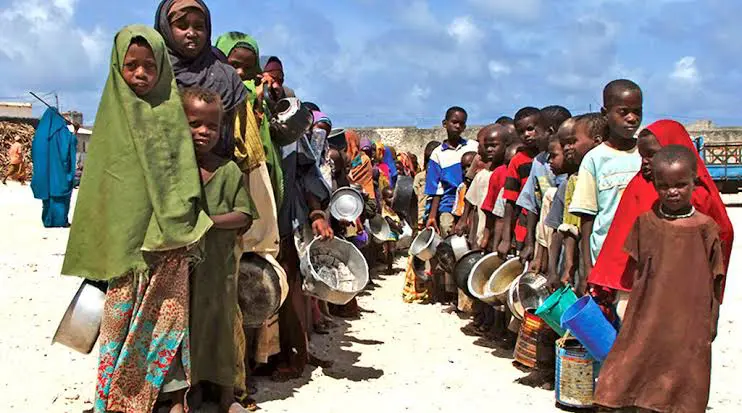
The recent report by the International Committee of the Red Cross, ICRC, that 3.7 million people were at risk of food insecurity in North East Nigeria did not only raise concern among Nigerians, it also made a mess of the Right to Food Act of 2023.

The Right to Food Act, which came into force in March 2023, mandates the government to ensure food security for Nigerians, but the ICRC’s report and other recent reports have shown the government’s abysmal failure to live up to that mandate, as millions of Nigerians face hunger and malnutrition on a daily basis.

The ICRC has raised the alarm over worsening food insecurity in conflict-affected areas of North East Nigeria, where more than 3.7 million people are currently struggling to access enough food.

According to the Food and Agriculture Organisation (FAO), 3.7 million children in the North East are also malnourished and struggling with stunting, wasting, and anaemia.

The FAO report noted that the most affected states include Yobe, Sokoto, Zamfara, and Katsina, where acute malnutrition has reached Phase Four (Emergency Level) in some local government areas. Maiduguri, Jere, Mobbar, Nganzai, and Mashi are among the locations that are facing dire nutrition crises, with 178,000 children and women from conflict-affected communities most at risk.

Meanwhile, UNICEF has called for bold policy actions to end child food poverty, including strengthening food systems to make nutritious foods more accessible and affordable, expanding nutrition services to prevent and treat malnutrition in early childhood, and enhancing social protection programmes, including cash transfers and food aid for vulnerable families.

The Child Nutrition Fund (CNF) is a UNICEF-led initiative designed to prevent, detect, and treat severe child food poverty and malnutrition. It is hoped that malnourished children will find succour through the CNF.

Earlier this year, the World Food Programme (WFP) had predicted that about 11 million people across the six states in the North East and the North West of Nigeria would be facing acute food insecurity. The report premised the prediction on the persistent insecurity, skyrocketing food and fuel prices, climate shocks, and mass displacement, which would leave millions struggling to access food and essential nutrition.

Another report by UNICEF had also highlighted that one in three Nigerian children under five, approximately 11 million, were experiencing severe food poverty, making them 50 percent more likely to suffer from life-threatening wasting. The report identified inadequate nutrition, aggressive marketing of ultra-processed foods, and economic hardships as key factors driving child food poverty.

The ICRC’s latest report was made known in Abuja on Monday, July 21, by its Public Relations Officer, Aliyu Dawobe. He explained that many of those affected were formerly farmers who had provided for their communities but were displaced due to years of conflict.

See also  Inside dilapidated Ogun hospital where patients supply own beds

The statement noted that violence had forced families away from their homes, restricted access to farmland, and disrupted local food production systems.

Head of the ICRC office in Maiduguri, Diana Japaridze, graphically illustrated the growing pressure on households as the lean season began and food stocks dwindled.

“This is the period when families must begin buying food, but many conflict-affected households simply can’t afford it. They’re forced to drastically limit their intake,” she said.

She added that food insecurity was also fuelling rising rates of malnutrition, particularly among children under five, as well as pregnant and breastfeeding women.

“In response, the ICRC is supporting malnutrition stabilisation centres and offering community education programmes to help families care for vulnerable children.

“To tackle the root causes of food insecurity and support long-term resilience, the ICRC has launched an agricultural assistance programme. The initiative supports both rainy and dry season farming and targets thousands of farming households.

“This year alone, more than 21,000 farming households have received seeds adapted to local conditions, along with planting tools to ease labour and improve efficiency,” she said.

She explained that the support included a mix of field crops and vegetables, such as rice, maize, tomato, and okra, all aimed at increasing dietary diversity and nutritional value.

“Farmers are also being trained in sustainable farming practices to ensure continuity beyond ICRC’s intervention.

“At a systemic level, and in collaboration with the National Agricultural Seed Council (NASC), we recently repaired a vital water source to ensure continuous access for the council’s seed testing and greenhouse facilities,” she added.

In spite of these efforts, Japaridze warned that the lean season remained a critical challenge for many farmers who still could not produce enough to feed their families.

However, the ICRC’s report has again brought to the fore how precarious the issue of food insecurity has become, not only in the North East but also all over Nigeria.

Reacting to the report, some community voices had emphasised the urgency on the ground, charging the government to respond swiftly to avert the impending danger.

A community leader in Dikwa, Modu Umar, decried the current level of food shortage in his locality, saying, “Right now, we face severe food shortages. Some families walk long distances daily just to collect and sell firewood to afford food. Farming is the only real solution.”

Also, a 70-year-old farmer from Gajibo, Churi Ibrahim, painted a bleak picture of the ongoing security risks that people are exposed to while searching for food. He said: “Some people trek three hours just to reach their farms. By the time you get there, you’re exhausted, and returning home takes even longer,” he said.

See also  AFRIFF 2025 returns with Herbert Wigwe Awards for Excellence

For Bintu Konto, a mother of five, despite the fear and hardship, local farmers remained determined to brave all odds. “Even when they’re afraid, they still go. If we don’t farm during the rainy season, we’ll have nothing to eat,” she said.

Recall that earlier in the year, a video emerged on social media, where about 40,000 Nigerians, according to the voice in the video, were being received in Niger Republic, where they had run to take refuge, following the biting hardship and hunger afflicting them at the time.

Prior to that incident, Nigerians had taken to the streets in their thousands, in states like Niger, Kano, Oyo, Lagos, and Sokoto, among others, to protest what they called the high cost of essential food items, whose prices suddenly went beyond the reach of ordinary men in the street.

Starting from Niger to Kano, Sokoto, Lagos, Oyo, and Katsina, among other states, the masses sang the same song. They said they could no longer bear the pains of the government’s economic policies, which had made life unbearable and hellish for them. They said most households could no longer afford to buy food in the market, as prices kept rising at an astronomical rate and on a daily basis; a situation they claimed had rendered them less than humans.

With Nigeria ranking among the top 20 countries with the highest burden of severe food poverty, stakeholders stressed that without urgent intervention, the situation could spiral into a full-blown humanitarian disaster.

However, in the Right to Food Act, the Nigerian constitution recognises food as a fundamental human right and obligates the government to make food available, accessible, and affordable to all Nigerians. Regrettably, policy implementation remains weak, and there is no long-term strategy to achieve the law’s objectives.

Executive Director of the Global Initiative for Food Security and Ecosystem Preservation (GIFSEP), Dr Michael Terungwa David, noted that though the Right to Food Act was a constitutional amendment signed into law in March 2023, a law is only as strong as its enforcement, and its enforcement is only as strong as the awareness around it.

“Food is not a privilege; it is a basic human right. Yet, millions of Nigerians still struggle with hunger, malnutrition, and food insecurity. The Right to Food Act is a significant policy that addresses these challenges by ensuring access to nutritious, sufficient, and affordable food for all. It mandates the government to take responsibility for implementing measures that will make food available, accessible, and adequate for every citizen,” he said.

See also  "You’ll see things happen"- Trump threatens Putin on Ukraine war again

However, the Federal Ministry of Health and Social Welfare said it was implementing some nutrition intervention policies in collaboration with relevant stakeholders.

According to the director and head of the nutrition department at the ministry, Mrs Ladidi Bako-Aiyegbusi, intentional investment in comprehensive nutrition services across the country has the potential to save up to $22 million in healthcare treatment costs related to hunger and malnutrition.

She, therefore, urged lawmakers to ensure pro-nutrition budgetary allocation to key ministries and departments responsible for the delivery of nutrition-specific and -sensitive programmes by ensuring timely release of adequate funds, monitoring expenditures, and making sure monies are properly expended. She urged the legislators to schedule a full-fledged annual debate on nutrition status in their federal constituencies.

For Mallam Sabiu Abubakar, an educationist from the North East, the ICRC’s latest report shouldn’t come as a surprise to anybody who is abreast of the security and environmental issues around the North East region of Nigeria.

“Nobody should be surprised about the report. In fact, the number of people faced with acute shortage of food in the zone could be more if proper data is taken. This situation is so dire that the government needs to respond urgently to avert the looming disaster.

“The combined activities of Boko Haram Islamist sect, bandits, and most recently, Lakurawa, which has prevented farmers from doing their farm work as most people are in the Internally Displaced Persons’ homes, has made it practically impossible for the people to engage in farm work. Therefore, you don’t need any soothsayer to tell you that the people will face acute food shortage.

“Added to that is the recent flood that ravaged most parts of Borno State. It also affected agricultural activities so much that one of the resultant effects is the current food shortage.

“So, apart from making food available as a short-term measure to arrest the situation on ground, the government should be sincere in the fight against insurgency in the area. Security of lives and property of the people should be guaranteed. Once that is done, the people are not lazy; they are hardworking farmers who are able, not only to feed themselves but also other Nigerians outside the zone. So, the government should act fast to flush out all kinds of criminal elements, ranging from Boko Haram to Lakurawa, bandits, killer herdsmen, and kidnappers from the zone so that the people can go back to their homes and resume their normal lives,” he stated.

FOLLOW US ON:

FACEBOOK

TWITTER

PINTEREST

TIKTOK

YOUTUBE

LINKEDIN

TUMBLR

INSTAGRAM

Continue Reading
Click to comment

Leave a Reply

Your email address will not be published. Required fields are marked *

News

TikTok restricts late-night live access for Nigerian users

Published

on

TikTok has temporarily restricted access to its LIVE feature for users in Nigeria during late-night hours, issuing an in-app notice to creators as part of what it described as an ongoing safety investigation.

At midnight Nigerian time on Sunday, the platform sent a system notification to users stating,”LIVE⚫ Notices
TikTok LIVE Update in Nigeria
We’re temporarily limiting LIVE late at night in Nigeria as part of our investigation to ensure our platform remains safe and our community stays protected.”

File Copy: The notification gotten by the app users in Nigeria

Checks by PUNCH Online showed that LIVE sessions, which were active earlier in the night, became inaccessible between 11pm and 5am, with affected accounts displaying a “No Access” label.

The restriction also prevented creators from viewing LIVE broadcasts from other countries.

Only creators with at least 1,000 followers, the minimum requirement to host a LIVE session, received the notification.

Several confirmed that all LIVE activities had been halted overnight.

Despite the disruption, creators who earn through LIVE gifting have their balances and previous earnings intact, easing concerns of financial loss.

As of Monday morning, LIVE access had been restored, sparking discussions across social media as users speculated about the cause of the sudden, nationwide restriction.

Night-time hours are typically peak periods for Nigerian streamers who host matches, entertainment segments, trends and other interactive sessions that attract viewers and virtual gifts.

The development comes weeks after TikTok released updated safety statistics for West Africa.

During its West Africa Safety Summit in Dakar, Senegal, the company disclosed that in the second quarter of 2025, it took action against 2,321,813 LIVE sessions and 1,040,356 LIVE creators globally for violating its LIVE Monetisation guidelines.

See also  INEC pushes back as opposition rejects S’West voter figures

In Nigeria alone, 49,512 LIVE sessions were banned within the same period.

TikTok also reported removing 3,780,426 videos in Nigeria between April and June 2025 for breaching Community Guidelines, with 98.7% taken down before being viewed and 91.9% removed within 24 hours.

TikTok Live is an in-app feature letting users broadcast in real-time, fostering direct engagement with viewers through comments and virtual gifts, unlike pre-recorded videos, creating interactive sessions for Q&As, talent showcases, or just chatting.

To go live, you generally need 1,000+ followers (though sometimes less), be at least 16 (18 to earn money), have a clean account, and use the ‘+’ button to select ‘LIVE’, adding a title and effects before starting.

punch.ng

FOLLOW US ON:

FACEBOOK

TWITTER

PINTEREST

TIKTOK

YOUTUBE

LINKEDIN

TUMBLR

INSTAGRAM

Continue Reading

News

Nnamdi Kanu acted like Awolowo by disengaging lawyers — Consultant

Published

on

Aloy Ejimakor, legal consultant to the convicted leader of the Indigenous People of Biafra , Nnamdi Kanu, has likened him to the late Premier of the Old Western Region, Chief Obafemi Awolowo, over his decision to represent himself in court.

In a conversation with our correspondent on Sunday, Ejimakor suggested that Kanu’s refusal to hire lawyers may be delaying the filing of his appeal against his life imprisonment by the Federal High Court in Abuja.

“MNK has not filed his appeal yet because he has refused to hire lawyers. You know he disengaged us as his lawyers, so we now act in the capacity of a consultant. I am a consultant to him,” Ejimakor said. “I don’t know why he does not want a lawyer, but I believe it is because he is a great man. Many great men are like that. They believe you can’t present their case like they can themselves. Even Awolowo refused to hire lawyers in his time. MNK wants to represent himself, and there are about four or five processes he has to follow to file the appeal before the Appellate Court.”

Ejimakor also backed Kanu’s request to be tranferred to Abuja from the Sokoto Correctional Centre.

He said, “The court already said he can’t be in Kuje prison, so that is fine, but he needs to be closer to Abuja, so if the court will grant his motion to be transferred to Suleja prison or Keffi. To me, there is nothing special about any prison in Nigeria. They are all the same, but MNK needs to be close to Abuja.”

See also  Life jail for Nnamdi Kanu: S’East leaders rally for political solution

During his trial, Kanu opted to represent himself after disengaging his legal team, headed by a former Attorney General of the Federation and Minister of Justice, Kanu Agabi (SAN).

On November 20, the court found him guilty on all seven terrorism-related charges brought by the Federal Government and sentenced him to life imprisonment.

Following his sentencing, Kanu was moved to the Sokoto correctional Facility due to concerns for his safety at Kuje, where previous prison breaks had been recorded.

He later filed a motion before Justice James Omotosho of the Federal High Court seeking a transfer from Sokoto to a custodial facility closer to Abuja, such as Suleja or Keffi.

In the motion, personally signed by him, Kanu asked that it be deemed moved in absentia and sought an order compelling the Federal Government or Nigerian Correctional Service to effect the transfer.

Citing eight grounds in the motion marked FHC/ABJ/CR/383/2015, Kanu explained that his detention in Sokoto—over 700 kilometres from Abuja—made it impracticable to prepare his notice of appeal and record of appeal.

He stressed that all persons critical to assisting him, including relatives, associates, and legal consultants, are based in Abuja.

“The applicant’s continued detention in Sokoto renders his constitutional right to appeal impracticable, occasioning exceptional hardship and potentially defeating the said right, in violation of Section 36 of the Constitution of the Federal Republic of Nigeria, 1999 (as amended),” the motion stated.

Kanu argued that transferring him to a facility nearer Abuja would enable him to effectively prosecute his constitutionally guaranteed right of appeal.

Continue Reading

News

U.S. Court Jails Nigerian Fraudster Oluwaseun Adekoya To 20 Years For Impersonation And 2M U.S.Dollars Fraud

Published

on

A U.S. federal court has sentenced Oluwaseun Adekoya, a Nigerian serial fraudster who operated under multiple aliases while running a sprawling nationwide bank-fraud and money-laundering enterprise, to 20 years in prison for masterminding schemes that stole and laundered more than $2 million through a network of impersonators, fake accounts, and coordinated withdrawals across several states.

Adekoya’s arrest and conviction capped years of sophisticated financial crimes that federal investigators say left a trail of victims stretching from New York to multiple U.S. states.

The case broke open after the State Employees Federal Credit Union (SEFCU), headquartered in Albany, New York, detected a pattern of suspicious impersonation transactions across Capital Region branches. SEFCU’s alert triggered a multi-agency federal investigation led by the FBI’s Albany Field Office, which eventually exposed Adekoya as the mastermind of an extensive identity-theft and bank-fraud ring involving at least 13 accomplices.

Investigators said Adekoya consistently reinvented himself with new identities, new roles, and new operational tactics, as he expanded the criminal enterprise. His run ended on December 12, 2023, when FBI agents executed a search warrant at his luxury apartment.

During the raid, Adekoya attempted to remotely wipe the primary cellphone used to coordinate the schemes. Agents nevertheless recovered a trove of incriminating evidence, including:

• Multiple burner phones
• High-end luxury items such as Rolex watches
• A $51,000 Tiffany engagement ring
• Designer handbags
• More than $26,000 sitting in a laundering account

All items have since been forfeited.

Following two superseding indictments that added charges and additional defendants, Adekoya was convicted on multiple fraud and money-laundering counts. He has remained in custody since his arrest.

See also  Life jail for Nnamdi Kanu: S’East leaders rally for political solution

In addition to the 20-year sentence, he will serve five years of supervised release, pay over $2.2 million in restitution, remit a $1,100 special assessment, and faces removal from the United States upon completing his prison term.

Federal prosecutors said the ring relied on coordinated identity theft, impersonation of account holders, and strategic branch-by-branch withdrawals. Accomplices posed as legitimate bank customers, using stolen personal data to siphon funds, which were then laundered through controlled accounts, cash couriers, and luxury purchases.

The ring’s operations were “structured, disciplined, and highly adaptive,” investigators said, changing methods frequently to avoid detection.

Thirteen co-conspirators earlier pleaded guilty to roles ranging from impersonation to cash-movement, account manipulation, and logistical support. Their sentences include:

• David Daniyan, 61 (Brooklyn): 54 months’ imprisonment, one year supervised release, restitution over $2.2m.
• Kani Bassie, 36 (Brooklyn): 11 years’ imprisonment, five years supervised release; restitution pending.
• Davon Hunter, 27 (Richmond): 42 months’ imprisonment, three years supervised release, $469,499.18 restitution.
• Christian Quivers, 20 (Richmond): 42 months’ imprisonment, three years supervised release, $385,650 restitution.
• Jermon Brooks, 20 (Richmond): 36 months’ imprisonment, two years supervised release, $385,650 restitution.
• Akeem Balogun, 56 (Brooklyn): 21 months’ imprisonment, two years supervised release, $262,200 restitution.
• Victor Barriera, 64 (Bronx): Time served, three years supervised release, $203,352 restitution.
• Danielle Cappetti, 46 (Bronx): Time served, three years supervised release, $142,796 restitution.
• Jerjuan Joyner, 50 (Brooklyn): 12 months’ imprisonment, three years supervised release, $135,998 restitution.
• Gaysha Kennedy, 46 (Brooklyn): Time served, two years supervised release, $24,500 restitution.
• Crystal Kurschner, 44 (Brooklyn): Time served, three years supervised release, $220,850 restitution.
• Sherry Ozmore, 56 (Richmond): Time served, three years supervised release, $229,303.18 restitution.
• Lesley Lucchese, 53 (Manhattan): Pleaded guilty and awaits sentencing in 2026.

See also  AFRIFF 2025 returns with Herbert Wigwe Awards for Excellence

U.S. prosecutors say the dismantling of Adekoya’s syndicate underscores the increasing sophistication of fraud networks operating across state lines, and the growing cooperation among federal, state, and local law-enforcement agencies to disrupt them.

Officials noted that the investigation required extensive coordination across jurisdictions and financial institutions, describing it as “a model of inter-agency effectiveness.”

Source: Newsmakerslive

FOLLOW US ON:

FACEBOOK

TWITTER

PINTEREST

TIKTOK

YOUTUBE

LINKEDIN

TUMBLR

INSTAGRAM

Continue Reading

Trending