





Connect with us

News

Why Sowore is being detained – CP

Published

on

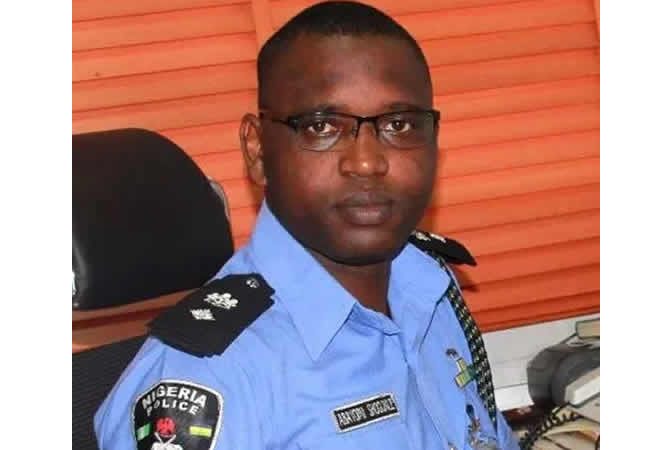
The Commissioner of Police for Special Intervention Squad, CP Abayomi Shogunle, has explained why human rights activist and 2023 presidential candidate of the African Action Congress, Omoyele Sowore, is being detained by the Nigeria Police Force.

Shogunle, while addressing protesters and the press in Abuja, the Federal Capital Territory, on Friday, said Sowore’s arrest and detention were ordered after the activist allegedly refused to make a statement upon police interrogation.

Supporters of Sowore are staging protests in different parts of the country, including Lagos, Abuja, Osun and Oyo states, calling for the release of the pro-democracy campaigner, who earlier honoured an invitation from the Inspector General of Police Monitoring Unit, at the Force Headquarters, in Abuja, on Wednesday, and was subsequently detained.

Sowore recently led a protest to demand better welfare for retired police officers and had also made critical comments concerning a recent promotion exercise in the NPF.

Speaking on Friday, in a video streamed by Sahara Reporters, the CP said there were two petitions against the activist.

“The two petitions against Omoyele Sowore were shown to him right in my presence. One bordered on forgery of a police document, which he published online, and we all know the position of the law. It is your duty to provide a source of how you came about the forged document. The second petition has to do with cyberbullying.

“The two petitions were shown to him in the presence of his lawyers. The issue now is that he refused to make a statement in the presence of his lawyers. It is in the record.

See also  Military rolls out anti-attack measures for Christmas

“And the procedure under the Nigerian law is very clear. When an allegation is made against you, you are called upon, you have a duty to put down your own position,” the CP said.

“The same law that gives him the right to remain silent also gives the police the responsibility of certain duties to do when somebody who has been alleged of an offence decides not to talk, which you’re also aware of. And I believe we’re professionals, and I believe the procedure as laid down by the law is being followed,” he said.

He said Sowore was not forced to make a statement despite his alleged refusal.

“He has the right to remain silent and the police also have the duties and responsibilities under the law to follow certain procedures once a suspect decides to keep mute. We won’t say because you have decided to keep mute, you can go, no.”

When asked by a lawyer why Sowore was being detained beyond the constitutional limit of 24 hours, the CP said, “We are professionals, we are following the provisions of the law. Everything needed to be followed under the law in keeping somebody is being followed.”

The CP offered to take a few protesters to where Sowore was being held to show that he was not being brutalised.

“The law is being followed regarding his apprehension and detention. He came himself, and the moment he refused to make a statement, his arrest was ordered,” Shogunle added.

FOLLOW US ON:

FACEBOOK

TWITTER

PINTEREST

TIKTOK

YOUTUBE

LINKEDIN

TUMBLR

INSTAGRAM

Continue Reading
Click to comment

Leave a Reply

Your email address will not be published. Required fields are marked *

News

FG unveils poverty intelligence hub to target 140 million poor Nigerians

Published

on

The Federal Government on Wednesday launched the National Poverty Intelligence Hub, a data-driven platform designed to strengthen the targeting, monitoring, and evaluation of poverty-reduction programmes, as it seeks to address the plight of an estimated 140 million Nigerians living below the poverty line.

The initiative, unveiled by the Minister of Humanitarian Affairs and Poverty Reduction, Dr. Bernard Doro, is expected to serve as the central intelligence and evidence-gathering hub for the government’s anti-poverty interventions.

Speaking at the opening of a three-day workshop on the operationalisation of the lab in Abuja, Doro said the country could no longer rely on assumptions and fragmented interventions in tackling poverty.

According to him, Nigeria’s poverty challenge requires a new approach anchored on data, evidence and accountability.

“Recent estimates indicate that approximately 140 million Nigerians live below the poverty line. The scale and depth of the challenge is staggering, but it is surmountable,” the minister said.

“What this moment demands is not more of the same. It demands systems, intelligence, evidence-driven leadership and, above all, coordinated and accountable action.”

The workshop was organised by the Ministry of Humanitarian Affairs and Poverty Reduction in partnership with Innovations for Poverty Action.

Doro described the National Poverty Intelligence Lab as the “intelligence backbone” of Nigeria’s poverty reduction architecture, saying it would provide the analytical support needed for policy formulation, programme implementation, resource allocation and performance assessment.

“For many years, our interventions have been driven by assumptions rather than evidence, sometimes by politics rather than data, and by silos rather than systems,” he said.

See also  PHOTOS: Man hospitalised after sustaining injuries from beatings while portraying Jesus Christ during Good Friday procession

“The NPIL changes that. It gives us the analytical infrastructure to ask the right questions, find credible answers and hold ourselves accountable for results.”

The minister explained that the lab would support the implementation of the One Humanitarian One Poverty Response System (OHOPRS), a framework developed by the ministry to harmonise humanitarian assistance, social protection programmes and poverty reduction initiatives under a unified structure.

According to him, the objective is to ensure that government interventions are coordinated and capable of permanently lifting vulnerable households out of poverty.

“Every household we reach through OHOPRS is a household we intend to graduate from vulnerability—not just today but permanently. That is the ambition. And the NPIL is the engine that will tell us whether we are getting there,” he added.

Doro said the establishment of the lab represented more than a technological innovation, describing it as a governance and accountability reform that would improve transparency and effectiveness in poverty reduction efforts.

He also reaffirmed the commitment of President Bola Tinubu’s administration to implementing sustainable measures aimed at improving the living conditions of Nigerians.

Earlier, the Country Representative of Innovations for Poverty Action, Mrs. Fumi Ayeni, said the collaboration with the ministry would help policymakers better understand the needs of poor and vulnerable populations while reducing duplication in intervention programmes.

“Getting people out of poverty starts with everybody. This collaboration will help policymakers build a legacy that can significantly reduce poverty in Nigeria,” she said.

Ayeni noted that the workshop would provide stakeholders with an opportunity to develop strategies for designing and implementing more impactful poverty reduction initiatives.

See also  Turaki-led PDP vows to challenge court judgement

Also speaking, the Senior Technical Adviser to the Minister on Information Systems and Data Analysis, Dr. Abimbola Fasanu, stressed the importance of reliable data in shaping public policy.

“Data is not just a bureaucratic requirement but a strategic national asset. Globally, government policies and programmes are informed by data,” she said.

She explained that the initiative would enable government agencies and development partners to make informed decisions and measure the impact of interventions more effectively.

Fasanu added that the Monitoring, Evaluation, Learning and Data Systems Diagnostic Exercise being undertaken by the ministry would identify institutional strengths, expose gaps and provide a roadmap for building an integrated national evidence system.

Nigeria has continued to grapple with rising poverty despite decades of government intervention programmes. Over the years, successive administrations have introduced initiatives such as the National Poverty Eradication Programme, Conditional Cash Transfer schemes, the National Social Investment Programme, N-Power and various humanitarian support projects aimed at reducing poverty and improving livelihoods.

However, concerns have persisted over poor coordination, inadequate data, weak monitoring systems and the inability to accurately identify beneficiaries, leading to questions about the effectiveness of many interventions.

The launch of the National Poverty Intelligence Lab comes amid increasing pressure on the government to address worsening economic conditions, high inflation, unemployment and the rising cost of living affecting millions of households across the country.

Officials say the new platform is intended to bridge longstanding data gaps and ensure that poverty reduction policies are guided by credible evidence, measurable outcomes and real-time intelligence.

punch.ng

FOLLOW US ON:

FACEBOOK

TWITTER

PINTEREST

TIKTOK

YOUTUBE

LINKEDIN

Continue Reading

News

NADECO rejects Abdulsalami’s claims on Abiola, military rule

Published

on

Prominent leaders of the National Democratic Coalition (NADECO), Col Tony Nyiam (retd.) and Chief Ayo Opadokun, have rejected claims by former Head of State, Gen Abdulsalami Abubakar (retd.), that leaders of the pro-democracy group requested an extension of military rule in 1998.

The duo also challenged Abdulsalami’s assertion that the late winner of the June 12, 1993, presidential election, Chief MKO Abiola, was not poisoned, insisting that his account of the events surrounding Abiola’s death was unconvincing.

Abdulsalami, in his recently launched autobiography, “Call of Duty,” claimed that some NADECO leaders privately appealed to him to prolong the military transition after becoming convinced of his commitment to handing over power in 1999.

According to the former military ruler, the request came about two to three months into his administration.

Abdulsalami said he rejected the request, asking the group to acknowledge it if they were serious publicly.

The former Head of State also dismissed the long-standing position that Abiola was poisoned before his death on July 7, 1998, insisting that an autopsy conducted by pathologists from Nigeria, the United States, Britain and Canada concluded that he died of natural causes linked to pre-existing hypertension and heart disease.

Reacting in separate interviews with The PUNCH on Tuesday, Nyiam and Opadokun described Abdulsalami’s account as inaccurate.

Nyiam, a key member of NADECO abroad, said he was unaware of any recognised leader of the coalition who demanded an extension of military rule, stressing that the group’s struggle was aimed at ending military dictatorship, not prolonging it.

Nyiam said, “I am not sure which NADECO Gen Abdulsalami Abubakar is referring to. To the best of my knowledge, the leader of NADECO was Chief Anthony Enahoro, and while he was briefing all of us, he insisted that Gen Abdulsalami should carry out due process by giving Nigeria a people’s constitution to create an enabling environment for genuine democracy,” he said.

See also  US defence chief asks FG to be decisive on Insecurity

According to him, Enahoro’s position was that the transition should produce a Constitution agreed upon by Nigerians through a national conference rather than the 1999 Constitution, which he said was imposed by the military.

Nyiam recalled that Abdulsalami sent a close associate, Olowu, to meet NADECO leaders in exile, including the current President, Bola Tinubu, who was then based in London.

He said Tinubu invited key NADECO figures from across Europe to the meeting, where the coalition unanimously insisted on a credible democratic transition rather than an extension of military rule.

“When Gen Abdulsalami sent an emissary, Olowu, to meet with us, Tinubu invited all the key NADECO people. I travelled from Edinburgh to London for that meeting.

“The man sought our opinion, and what all of us insisted on was that the handover should be properly done to create a system that would bring in democracy.

“There was nobody, to my knowledge, whether Gen. Alani Akinrinade, Chief Anthony Enahoro or any other person from NADECO abroad, who ever asked him to extend military rule. Who would have done that when what we were all fighting for was to end military rule?” Nyiam asked.

He suggested that Abdulsalami was either misinformed or “being economical with the truth.”

He said, “I think the General was either misinformed or deliberately being economical with the truth. There was nothing like that.

“The issue was very clear. We wanted a process that would first produce a people’s constitution through a national conference. That could have been achieved within a few months.

“No one I know from the NADECO chapters in the United Kingdom, the United States or Canada, all led by Chief Anthony Enahoro, made such a request. I was shocked when I heard him say so,” he added.

See also  Turaki-led PDP vows to challenge court judgement

Nyiam identified Enahoro, Akinrinade and Tinubu as the principal figures of NADECO abroad, noting that Tinubu largely financed the coalition’s activities during the struggle.

He also mentioned former Ekiti State Governor, Dr Kayode Fayemi, and Nobel laureate, Prof Wole Soyinka, who led the National Liberation Council of Nigeria, as key figures who could corroborate his account.

“There was nobody who made such a request to Abdulsalami. I don’t know where that came from,” he said.

Nyiam also faulted Abdulsalami’s account of Abiola’s death.

“I am surprised by his claim that nobody did anything bad to Chief MKO Abiola. From all the evidence we have heard, I doubt his position, with all respect to my senior.

“Chief MKO Abiola was done away with by those who did not want him to govern,” he said.

He challenged the former Head of State to identify those who allegedly betrayed Abiola during the struggle.

“He should name those who betrayed Chief MKO Abiola. Those I know who remained committed to the struggle were Chief Anthony Enahoro, Gen Alani Akinrinade, Bola Tinubu, who spent a lot of his money, Dr Kayode Fayemi, and Prof Wole Soyinka, even though he led NALICON and not NADECO directly. They can all confirm what we are saying.

“It is not true that any worthwhile leader of NADECO requested the General to extend his stay. It is also not true, in my opinion, that his account of Chief MKO Abiola’s death tells the full story,” Nyiam stated.

Also speaking, former NADECO General Secretary, Chief Ayo Opadokun, said Abdulsalami appeared to have misconstrued discussions held between his emissaries and NADECO leaders in exile.

See also  Cuba accuses US of killing 32 nationals in Venezuela operation

“He was not talking about us in Nigeria. He was referring to NADECO abroad because he sent emissaries to meet them.

“What NADECO abroad asked was that Abdulsalami should prepare a programme for stability by ensuring that a people’s constitution was produced before elections were conducted,” Opadokun said.

According to him, the coalition advocated forming a government of national unity headed by Abiola rather than extending military rule.

“They wanted a situation where a valid and acceptable constitution was in place before elections.

“We asked him to form a government of national unity to be headed by Chief MKO Abiola. I documented this in the NADECO story,” he said.

Opadokun added that reports reaching him from former NADECO leaders abroad indicated that Abdulsalami had misunderstood the purpose of the discussions held with his representatives.

“I have received reports from some of our people abroad that he seems to be misconstruing their discussions with the emissary he sent to them as requesting an extension of military rule, which is not true,” he said.

punch.ng

FOLLOW US ON:

FACEBOOK

TWITTER

PINTEREST

TIKTOK

YOUTUBE

LINKEDIN

Continue Reading

News

I don’t see the hunger Nigerians complain about — Tinubu’s aide

Published

on

The Special Adviser to the President on Information and Strategy, Bayo Onanuga, has defended the economic policies of President Bola Tinubu, saying he does not personally see the level of hunger often highlighted in public discourse.

Speaking on Arise Television on Tuesday, Onanuga argued that several government programmes and infrastructure projects are already delivering benefits to citizens across the country.

He cited improvements in road infrastructure as one of the visible outcomes of the administration’s policies, recounting a recent trip from Ibadan to Lagos.

He said, “One day, I was travelling from Ibadan to Lagos, and Google Maps told me that there’s a go-slow in the approach to Lagos, and I decided to take Ijebu-Ode via Shagamu.

“What struck me most was that I just found myself on a paved road, a concrete road. I said, ‘Wow, when was this one built?’”

According to him, residents in the area have reacted positively to the development.

“I found that our people, I mean, our Ijebu people, have stopped complaining. I said, ‘Oh, no wonder they now have a brand new road that’s not just an asphalt road, a concrete road,’” he added.

The presidential spokesman also pointed to the ongoing coastal highway project, which he said has eased movement for many commuters, including himself.

“I live in Ajah. Anytime I go to Lagos, and I ask Google Maps to tell me how soon I will get home, Google Maps will tell me one hour, seven minutes. Before, it was two hours, 30 minutes, and the reason for that is that we now have a coastal road that has shortened my travel time,” he said.

See also  Military rolls out anti-attack measures for Christmas

Questioning criticisms of government performance, he added, “Is that not beneficial? What are people talking about, really?”

Onanuga further highlighted the Federal Government’s student loan initiative and access to low-interest credit facilities for workers as examples of policies aimed at easing financial pressures on Nigerians.

“If you are a parent and you have four children in university, and they’re able to access federal loans, which are interest-free, are they not benefiting?

“If you are a civil servant and you can access the credit card, a very cheap loan at below interest, it is about seven per cent. Now people can access that loan at a single digit. Are they not benefiting as well?” he asked.

He maintained that public conversations about the economy often overlook some of the gains recorded by the administration.

“We have been pigeonholed into certain assumptions, certain conclusions,” he said.

Onanuga also recalled a viral video from the early days of the Tinubu administration, which featured a voice-over suggesting widespread hunger among Nigerians.

“I think the President went to Lagos, he was coming from the Central Mosque, and somebody now did a voice-over saying ‘Ebi n pawa o,’ and that means we are hungry. Since then, people have been saying that,” he said.

While acknowledging that Nigerians face economic difficulties, the presidential aide said his personal interactions with people around him do not reflect the level of hardship frequently portrayed in public discussions.

“I’m a Nigerian. I have people working for me privately. I don’t see the level of hunger people are talking about because I see them, and I keep asking them questions: how are things, how are they adjusting, what are the problems?” he said.

See also  CPC blacklist: 12 Nigerian governors, other officials may face US sanctions

Continue Reading

Trending