
Connect with us

Business

Constituency meeting: Lagos lawmaker empowers residents

Published

on

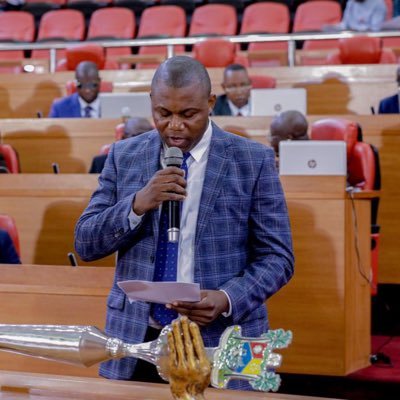
The lawmaker representing Eti Osa Constituency I in the Lagos State House of Assembly, who doubles as the Majority Leader of the House, Noheem Adams, has empowered 250 residents of the area with N100,000 each, totalling N25m.

Adams, whose stakeholders’ meeting is the 7th in the series, stated at the event, which was held on Thursday at Orchid Hotel, Eleganza, with the Theme: “Governance In Action: The Gains Of the Renewed Hope Agenda,” that the residents of the area believed in him to have sent him to the assembly.

“I thank you all for believing in me and for sending me to the Lagos State House of Assembly. Today, I am called ‘Honourable’ because of your belief in me. I thank you for this and I promise not to ever disappoint you

“Today, I will give out N25m cash as empowerment to 250 persons, as each of them will get N100,000. We will also give out 100 Point of Sale machines to 100 of the beneficiaries of the money today to start a business in that line.

“We are not transferring money to anybody; it will be given out in cash today,” he said.

Also speaking, Senator Wasiu Sanni-Eshinlokun, representing Lagos Central at the Senate and former deputy speaker of the Lagos State House of Assembly, revealed that the National Assembly would vote N1bn for the rehabilitation of the Lekki-Epe Expressway and that he would provide books for some students resuming schools in September.

In Lagos, local political leaders have taken empowerment to the grassroots earlier this year.

See also  Nigeria exits global money-laundering watchlist

In February, a member of the Lagos State House of Assembly, representing Ifako-Ijaiye Constituency 01, Adewale Temitope, empowered 500 widows with cash gifts and food items within his constituency.

The initiative, tagged “A Widows’ Valentine Special,” took place at his constituency office in Ifako-Ijaiye.

On Thursday, the Deputy Speaker of the House, Mojisola Meranda, also gave scholarships to some students in tertiary institutions and provided food palliatives to indigent households in the Apapa Constituency 1.

It was reported that the 10th constituency stakeholders meeting was held simultaneously on Thursday in all the 40 constituencies represented at the House, with empowerment being a front-burner.

In his speech delivered across the 40 constituencies in the state, the Speaker of the Lagos State House of Assembly, Mudashiru Obasa, said this year’s theme, “Governance In Action: The Gains of the Renewed Hope Agenda,” was carefully chosen to highlight the tangible benefits of governance.

He said that this was in alignment with the Renewed Hope Initiative of President Bola Tinubu.

“Under the dynamic leadership of President Bola Tinubu, our nation has witnessed an inspiring transformation; a renewal of the national spirit and a reinvention of the Nigerian state.

“Today, I stand before you to celebrate these tangible achievements, to affirm our commitment to good governance and to reaffirm that our Renewed Hope is not merely a slogan, but a call to action and a vision in progress,” he said.

Also speaking at the event, the Chairman of Eti Osa East Local Council Development Area, Samson Agunbiade, said a town meeting was a golden opportunity not only to speak, but to seek cooperation of all, saying that no government could solve the people’s problems alone.

See also  Crude earnings fall by N3.18tn amid output surge

In his speech, the Deputy Chairman of Iru LCDA, Murisiq Ajasa, who represented the Chairman, said the council had done much in a month, including community engagement, and had reactivated ward level discussions.

“We have opened discussions on healthcare services for the residents. We have constructed the road on Ajose Adeogun. We have done an environmental cleanup to tackle flooding.

“Residents have asked for a reduction of noise in the area and we have taken action on this. We will keep partnering with the people and corporate organisations. We have created rapid responses for complaints about security,” he said.

FOLLOW US ON:

FACEBOOK

TWITTER

PINTEREST

TIKTOK

YOUTUBE

LINKEDIN

TUMBLR

INSTAGRAM

Continue Reading
Click to comment

Leave a Reply

Your email address will not be published. Required fields are marked *

Business

Nigeria targets 7% GDP growth, $14bn infrastructure — Edun

Published

on

The Minister of Finance and Coordinating Minister of the Economy, Mr Wale Edun, says Nigeria is targeting a seven per cent annual Gross Domestic Product growth rate.

Edun also said the country requires about $14 billion in annual investment to bridge its infrastructure gap.

He said this on Monday in Lagos at the Islamic Development Bank Day, where he highlighted Nigeria’s deepening partnership with the Islamic Development Bank.

According to him, the seven per cent growth target is critical to reducing poverty and outpacing the country’s population growth rate of about three per cent.

Edun said Nigeria had been repositioning its economy to attract large-scale domestic, diaspora and foreign investments within a stable macroeconomic environment.

“We are moving from stabilisation to growth, from reliance on public financing to private capital mobilisation, and from traditional borrowing to innovative financing instruments,” he said.

He noted that Nigeria faces an estimated $14 billion annual infrastructure financing gap, which the government is addressing through strategic initiatives and partnerships, particularly with the IsDB.

According to him, the Nigeria-IsDB engagement framework for 2026–2028 is anchored on infrastructure development, social investment, innovative finance and regional cooperation.

He listed priority sectors to include energy, transport, agriculture and digital infrastructure to boost productivity and competitiveness.

“In a young country like Nigeria, digital infrastructure is key to empowering our population for innovation, technology and global competitiveness,” he said.

Edun said 2026 has been designated as the year of social development, with plans to integrate up to 10 million Nigerians into productive economic activities.

See also  Trump signs order threatening tariffs on countries trading with Iran

He said this would be achieved through skills development, financing support and job creation initiatives.

The minister added that the government would empower micro, small and medium enterprises to boost production and expand access to markets.

On financing, Edun said Nigeria would deepen the use of Sukuk, expand domestic capital markets and securitise public assets to attract private investment.

He stressed the need to de-risk investments and create an enabling business environment.

Edun said Nigeria was positioning itself as a leader in regional cooperation within the IsDB framework and targeting a $1 trillion economy.

The minister emphasised the need to accelerate project implementation and mobilise capital efficiently to create jobs at scale.

In his presentation, the Director-General of Country Programmes, IsDB, Mr Anasse Aissami, reaffirmed the bank’s commitment to supporting Nigeria’s economic transformation.

Aissami said the bank had expanded interventions across agriculture, energy, transport, health and education.

He added that the IsDB would scale up support to Nigeria over the next five years, exceeding its engagement over the past 25 years.

NAN reports that the IsDB Group Day featured a Memorandum of Understanding signing ceremony, business partnership presentations, a news conference and panel discussions, among other activities.

The event brought together senior government officials, private sector leaders, financial institutions, chambers of commerce, development partners and international stakeholders.

(NAN)

punch.ng

FOLLOW US ON:

FACEBOOK

TWITTER

PINTEREST

TIKTOK

YOUTUBE

LINKEDIN

Continue Reading

Business

US cuts Nigerian crude imports by nearly 50%

Published

on

The United States reduced its purchase of Nigerian crude oil sharply in January 2026, with imports dropping by about 47.16 per cent month-on-month, according to the latest data from the U.S. Census Bureau and the U.S. Bureau of Economic Analysis.

Figures from the U.S. International Trade in Goods and Services report indicate that U.S. crude imports from Nigeria fell to 1.664 million barrels in January 2026, down from 3.149 million barrels recorded in December 2025. This represents a decline of 1.485 million barrels within one month, showing a significant contraction in Nigeria’s share of the U.S. crude market.

In value terms, the drop was equally steep. The customs value of Nigerian crude imports declined from $217.36m in December to $115.99m in January, while the cost, insurance, and freight value fell from $223.10m to $118.95m over the same period. The difference between the two measures reflects additional costs such as shipping and insurance included in CIF values, which are excluded from customs valuation.

This means that in January, the CIF value of Nigerian crude was about $2.96m higher than its customs value, compared to a wider gap of about $5.74m in December. The narrowing gap suggests relatively lower freight or insurance costs, or shorter shipping distances within the period.

The contraction comes amid a broader slowdown in total U.S. crude imports, which declined from 198.29 million barrels in December to 188.21 million barrels in January, representing a drop of about 5.1 per cent. Total import value also fell, with customs value decreasing from $11.41bn to $10.56bn, while CIF value dropped from $12.04bn to $11.15bn.

Within Africa, Nigeria lost ground to some peers. While total African crude exports to the U.S. remained flat at 6.933 million barrels, Angola recorded a sharp increase, rising from 575,000 barrels in December to 2.062 million barrels in January.

See also  Trump signs order threatening tariffs on countries trading with Iran

Ghana also emerged as a new supplier with 738,000 barrels, having recorded no measurable exports in December. By contrast, Libya saw its exports to the U.S. decline from 2.137 million barrels to 1.086 million barrels over the period.

Nigeria’s share of total U.S. crude imports also weakened. The country accounted for roughly 0.88 per cent of total U.S. crude imports in January, down from about 1.59 per cent in December, reflecting the sharp reduction in volumes.

Further analysis of U.S. trade data shows that crude oil remains the dominant component of Nigeria’s exports to the United States. Total U.S. imports from Nigeria stood at $183m in January 2026, compared to $297m in December 2025.

With crude oil imports valued at $115.99m (customs basis) and $118.95m on a CIF basis, crude accounted for approximately 63.4 per cent to 65.0 per cent of total U.S. imports from Nigeria in January. This compares with about 73.2 per cent in December on a customs basis, indicating a relative moderation in crude dominance as overall imports declined.

The PUNCH further observed that the U.S. recorded a goods trade surplus of $419m with Nigeria in January, up from $84m in December. This was driven by a rise in U.S. exports to Nigeria, which increased from $381m to $602m, even as imports from Nigeria declined.

Across Africa, the U.S. posted a trade deficit of $503m in January, reversing a $174m surplus recorded in December. Total U.S. imports from Africa rose from $2.88bn to $3.54bn, while exports to the region edged slightly lower from $3.05bn to $3.04bn.

The PUNCH earlier reported that Nigeria accounted for about 52 per cent of Africa’s crude oil exports to the United States in 2025. According to the previous report, total U.S. crude imports from Africa stood at 89.371 million barrels in 2025, down from 103.631 million barrels in 2024, representing a decline of 14.26 million barrels or 13.8 per cent.

See also  Price Of Cement May Drop As BUA Unveils Plan To Generate Own Electricity

Out of the 89.371 million barrels imported from Africa in 2025, Nigeria supplied 46.618 million barrels, compared to 50.793 million barrels in 2024. This was a drop of 4.175 million barrels or 8.2 per cent year on year.

Despite the lower volume, Nigeria’s share of Africa’s crude exports to the U.S. rose. In 2025, Nigeria’s 46.618 million barrels accounted for 52.2 per cent of Africa’s total shipments, up from 49.0 per cent in 2024, when it exported 50.793 million barrels out of the continent’s 103.631 million barrels.

The PUNCH earlier reported that the Nigerian National Petroleum Company Limited recorded a profit after tax of N385bn in January 2026, even as crude oil and condensate production rose to 1.64 million barrels per day, according to the firm’s latest monthly operational report.

The January 2026 NNPC Monthly Report Summary, released on Monday, showed that the state-owned energy company generated N2.571tn in revenue during the month while remitting N726bn as statutory payments to the Federation.

This means the company recorded a sharp 47 per cent decline in its monthly revenue, which fell from N4.82tn in December 2025 to N2.57tn in January 2026. This contraction occurred despite a marginal increase in the company’s after-tax profit.

It disclosed that Nigeria produced 1.64 million barrels per day, up from 1.55 million barrels per day recorded in December 2025. This represents an increase of 0.09mbpd, or about 5.8 per cent month-on-month.

The PUNCH observed that the decline in crude exports to the U.S. occurred despite higher production. The trade outcomes come against the backdrop of renewed US protectionist rhetoric and tariff-focused trade policies associated with US President Donald Trump, which have influenced sourcing decisions, pricing structures, and trade flows globally.

See also  Tinubu orders FIRS, Customs to review revenue deductions

Last year, Donald Trump signed an executive order raising Nigeria’s tariff rate from 14 per cent to 15 per cent, with Washington implementing its “reciprocal” tariff regime.

The order, issued in late July, took effect on August 7, 2025. Although crude oil has been exempted in several cases, the higher duty applies directly to a wide range of non-oil Nigerian exports, creating uncertainty for American importers and dampening demand ahead of and after the effective date.

With crude oil exports largely exempted from the new tariff regime, non-oil exports appear to have borne the brunt of the disruption.

A renowned economist and Chief Executive Officer of the Centre for the Promotion of Private Enterprise, Dr Muda Yusuf, downplayed the impact of the U.S. tariffs on Nigeria.

“Our trade with the US is not that strategic. When anything goes wrong, it is not as if it can have any fundamental effect on our economy. Our trade exposure to them is very limited,” Yusuf explained.

He noted that Nigerian exports to the US are dominated by crude oil and a handful of other commodities, such as fertilisers, making the country’s trade profile narrow and underdeveloped in non-oil areas. Yusuf added that Nigeria’s tariff exposure is relatively moderate compared with other countries.

However, he identified another challenge beyond tariffs: US visa policy. “The bigger challenge for Nigeria’s trade relationship with the US is Washington’s visa policy. Barriers to travel limit business interactions and investment inflows. That is more critical than tariffs in the long run,” he said.

Since its inception, the Trump administration has steadily rolled out a series of visa restrictions and travel bans targeting Nigeria and several other countries.

punch.ng

FOLLOW US ON:

FACEBOOK

TWITTER

PINTEREST

TIKTOK

YOUTUBE

LINKEDIN

Continue Reading

Business

NNPC eyes $60bn investment, targets 600tcf in new master plan

Published

on

The Nigerian National Petroleum Company Limited (NNPC) has unveiled plans to grow Nigeria’s gas reserves from 210 trillion cubic feet (tcf) to 600 tcf, while attracting approximately $60 billion in investments into the sector.

According to NNPC’s X handle on Friday, the disclosure came from NNPC’s Executive Vice President for Gas, Power & New Energy, Olalekan Ogunleye, during the CERAWeek energy conference by S&P Global in Houston. Speaking on a panel titled “The New Gas Order: Market Depth and the Reshaping of Global Trade”, Ogunleye emphasized Nigeria’s strategic position in the global gas market.

“With the ongoing Strait of Hormuz shipping constraints stemming from geopolitical tensions in the Middle East, Nigeria is uniquely positioned to become a major supplier of LNG and gas-based industries,” Ogunleye said. “Our abundant gas resources, combined with our proximity to key markets, give Nigeria a competitive advantage in the global energy landscape.”

Ogunleye outlined the key deliverables of the NNPC Gas Master Plan, noting, “We aim to move Nigeria’s validated gas reserves from 210.5 tcf to an estimated potential of 600 tcf.”

“Our goal is to increase gas production volumes from 7.4 billion standard cubic feet per day (bscfd) to 12 bscfd by 2030, exceeding the Federal Government’s mandate for 62% growth.”

“We are committed to attracting $60 billion in additional investments into the gas sector through commercial incentives and strategic partnerships,” Ogunleye averred.

He stressed that the Gas Master Plan is grounded in disciplined execution rather than ambition alone. “This plan is neither aspirational nor theoretical.

See also  Net reserves jump 772% to $34.8bn in two years

“Its success depends on applying execution discipline to our annual work plans to ensure we meet—and surpass—our gas development growth targets,” the executive vice president for AGS, power & new energy said.

With these strategic moves, Nigeria is positioning itself to play a more significant role in global LNG supply and the gas-based industrial sector, leveraging both its natural resources and geographic advantage.

punch.ng

FOLLOW US ON:

FACEBOOK

TWITTER

PINTEREST

TIKTOK

YOUTUBE

LINKEDIN

Continue Reading

Trending