






Connect with us

News

Lagos enforce okada ban statewide

Published

on

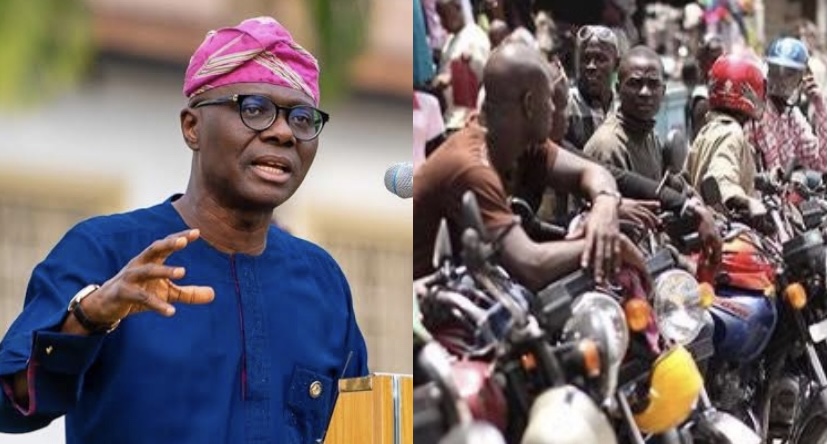
For years, the Lagos State Government has engaged in a running battle with operators of commercial motorcycles known as okada over persistent disregard for road safety rules and route restrictions.

Despite regular raids and seizures of the bikes for route violations, the okada riders remain defiant. This must stop.

In August, the task force team seized 668 bikes and arrested seven suspects during a routine week-long enforcement for compliance operations led by its chairman, Adetayo Akerele.

The operation targeted Ishaga, Balogun Bus Stop on Iju-Ishaga Road, Ijegun Roundabout, Iyana-Iba, Iyana-Ishasi, Igbo-Elerin, and Iyana-School.

The team also raided Volkswagen Bus Stop on the stretch of Lagos-Badagry Expressway, Kola Bus Stop on the Lagos-Abeokuta Expressway, and other restricted routes.

According to Akerele, these areas had been flagged following numerous complaints and distress calls indicating the persistent use of commercial motorcycles by suspected criminals to attack innocent people, tricycle operators, and their passengers, robbing them of valuables, particularly at night.

Apart from robberies, okada riders are notorious for disregarding traffic rules, often riding against traffic even on highways and ignoring traffic lights, sometimes resulting in avoidable accidents.

This underlines the need to enforce a statewide ban on okada to prevent further abuse.

The defiance has spread to operators of tricycles popularly known as Keke Marwa or Keke NAPEP.

This puts the lives of Lagosians at risk and constitutes a serious threat to public safety and order.

The clampdown began in 2006 when the government banned okada operations between 7 pm and 6 am.

See also  Nigeria killings: US officials prepare high-level briefing for Trump

In 2012, Governor Babatunde Fashola introduced the Lagos State Road Traffic Law. It prohibits okadas and tricycles on certain routes and restricts motorcycles with engine capacities below 200cc from major expressways. The law mandates a minimum 200cc engine for motorcycles for mail or courier services.

The state government reiterated the ban in 2015 but was largely unsuccessful. By 2017, the government added major highways and bridges to the list of restricted areas. It established the Lagos State Transport Sector Reform Law 2018, which came into effect in February 2018.

Section 46 (1) of the law stipulates that “no person shall ride, drive or propel a motorcycle or tricycle on a major highway within the state, and any person in contravention of this provision commits an offence liable on conviction to imprisonment for a term of three years with such motorcycle or tricycle forfeited to the State.”

The state government barred these transport operators from six local governments, nine LCDAs, 10 major highways, 40 bridges and flyovers with effect from February 1, 2020. Ride-hailing bikes were also added to the list when they became a nuisance.

Governor Babajide Sanwo-Olu has restated the ban from time to time, with regular enforcement raids by the state’s task force on environmental sanitation and special offences, as well as the Nigeria Police Force.

Though the operations of these bikes and tricycles greatly aid transportation in the bustling metropolis, there is an overarching imperative for their activities to be strictly regulated and extended all over the state. The requirement that riders and their passengers use helmets has been largely ignored.

See also  FULL LIST: US stops Nigerians, others from applying for green card, citizenship

Between 2016 and 2019, Lagos State recorded over 10,000 accidents involving okadas and tricycles, resulting in more than 600 deaths. The National Orthopaedic Hospital, Igbobi, in Lagos, also set up an “okada ward” to handle cases arising from bike crashes.

The state government must provide more buses and other public transportation options to cater to the needs of commuters affected by such a ban and reintegrate the riders into alternatives.

There should be collaboration with the private sector to overhaul the transportation system and implement new data-driven decisions after due consultation with the public and other stakeholders.

Most importantly, the safety of lives and property in Lagos must remain the government’s highest priority.

FOLLOW US ON:

FACEBOOK

TWITTER

PINTEREST

TIKTOK

YOUTUBE

LINKEDIN

TUMBLR

INSTAGRAM

Continue Reading
Click to comment

Leave a Reply

Your email address will not be published. Required fields are marked *

News

Sand depletion threatens construction, food security — LASG

Published

on

The Lagos State Government has raised alarm over the growing sand depletion deposits across the state, warning that unchecked dredging activities could worsen construction costs, damage aquatic ecosystems and threaten food security.

“We need proper data. We need to know how many people are dredging, how much sand is being dredged daily, and what is left within those areas,” the Commissioner for Waterfront Infrastructure Development, Dayo Bush Alebiosu, said during the ministry’s two-year scorecard presentation at the annual ministerial press briefing held at the Bagauda Kaltho Press Centre.

Alebiosu said increasing demand for sand used in reclamation and infrastructure projects, particularly within the Lekki-Ajah corridor, had intensified pressure on available deposits across Lagos.

According to him, developers handling reclamation projects in Lekki and Ajah now source sand from communities as far as Ikorodu, pumping materials across distances of between 10km and 12km because deposits in closer locations are becoming exhausted.

He said the development confirmed fears that sand resources around Ajah were gradually running out, stressing that the state government has become more cautious in issuing dredging licences and permits.

The commissioner warned that the continued depletion of sand reserves could significantly increase the cost of construction and infrastructure delivery in Lagos, thereby placing additional pressure on housing and urban development.

He also linked indiscriminate dredging to threats to food security, especially in fishing communities that depend on healthy aquatic ecosystems for their livelihoods.

“It is putting food security at risk. We are encouraging people to consume more protein, such as fish, but whenever dredging disturbs aquatic life, fishermen are forced to work harder, and naturally, the cost of fish goes up,” he said.

See also  FULL LIST: US stops Nigerians, others from applying for green card, citizenship

According to Alebiosu, aggressive dredging disrupts aquatic microorganisms and marine habitats, forcing fishermen to travel farther and spend more resources before making catches.

The commissioner further disclosed that host communities are increasingly facing infrastructural damage caused by heavy-duty dredging equipment and commercial activities associated with sand excavation.

He cited Ibese as one of the affected communities where roads and public infrastructure have reportedly deteriorated due to dredging operations.

Alebiosu said the Ministry of Waterfront Infrastructure Development remains the agency legally empowered to regulate dredging and sand dealing activities in Lagos State.

He added that the ministry collaborates with relevant agencies, including the Ministry of Environment and Physical Planning, as well as host communities, to tackle illegal dredging through monitoring, enforcement and whistleblowing mechanisms.

The commissioner also urged residents to support enforcement efforts by reporting illegal dredging activities, noting that some operators deliberately conceal their activities to evade detection.

“We cannot continue blaming foreigners alone. We must ask ourselves how they got there in the first place. They definitely have the connivance of some locals,” he said.

The Lagos State Government reaffirmed its commitment to stricter regulation of dredging activities to curb environmental degradation, protect waterfront communities and ensure the sustainable use of natural resources across the state.

A statement released later on Thursday by the Director, Public Affairs of the Ministry of Waterfront Infrastructure Development, Morenikeji Akodu, noted that commissioner warned that the increasing desperation for sand across Lagos was already exposing the dangers of over-exploitation of waterways and coastal resources.

See also  States’ capital spending plunges 58% as 2027 politics intensifies

He also warned that the development pointed to mounting pressure on available sand deposits across the state and underscored the need for stricter regulation and proper monitoring of dredging activities.

Continue Reading

News

Flood alert: Kaduna steps up awareness as rains loom

Published

on

The Kaduna State Government has intensified public awareness and emergency preparedness efforts following forecasts by the Nigerian Meteorological Agency that the state may experience flooding during the 2026 rainy season.

The government said the move followed the release of the 2026 Seasonal Climate Prediction report by NiMet, which identified Kaduna among states likely to witness above-normal rainfall this year.

In a statement issued on Thursday, the Commissioner for Information and Culture, Ahmed Maiyaki, said the government had commenced coordinated sensitisation and disaster response initiatives to minimise the impact of flooding and protect lives and property.

According to the statement, rainfall in Kaduna State is expected to commence between May 19 and June 10, 2026, while cessation is projected between October 5 and October 21, 2026.

The statement further noted that the forecast indicated the possibility of a severe 21-day dry spell between June and August, a development that could worsen flooding and other environmental challenges.

“The Kaduna State Government is taking this forecast seriously. Early preparedness and public cooperation remain critical to reducing the impact of flooding on our communities,” Maiyaki stated.

He disclosed that the Ministry of Information and Culture, in collaboration with the Kaduna State Emergency Management Agency, had launched a statewide sensitisation campaign aimed at educating residents on flood prevention, mitigation and safety measures.

Maiyaki urged residents to clear drainage around their homes and business premises and desist from indiscriminate dumping of refuse into waterways.

He also advised residents in flood-prone communities to adopt preventive measures, including the use of sandbags and other local flood control measures.

See also  Lagos bond subscription hits N310bn

The commissioner appealed to traditional rulers, religious leaders, media organisations and civil society groups to support government efforts by promoting environmental sanitation and disseminating verified information to the public.

“The safety of citizens remains a top priority for the Kaduna State Government. We will continue to work with all relevant agencies and communities to ensure timely information dissemination and effective disaster risk reduction measures throughout the rainy season,” he added.

The statement further disclosed that KADSEMA had commenced vulnerability assessments in flood-prone communities, strengthened emergency response coordination and begun pre-positioning rescue materials and personnel in high-risk areas.

Flooding has remained a recurring challenge in several parts of Kaduna State and across the country during the rainy season.

In recent years, heavy rainfall has led to the destruction of houses, farmlands and public infrastructure in several communities, while hundreds of residents were displaced.

In 2024 and 2025, parts of Kaduna metropolis, Kafanchan, Zaria and some riverine communities witnessed severe flooding following torrential rains and poor drainage systems, prompting repeated warnings from emergency management agencies.

punch.ng

FOLLOW US ON:

FACEBOOK

TWITTER

PINTEREST

TIKTOK

YOUTUBE

LINKEDIN

INSTAGRAM

Continue Reading

News

Akwa Ibom doctors threaten N1bn lawsuit against EFCC over hospital raid

Published

on

The Nigerian Medical Association, Akwa Ibom State chapter, has said it will institute a N1bn legal action against the Economic and Financial Crimes Commission over alleged assault on one of its members, Professor Eyo Ekpe, during a raid at the University of Uyo Teaching Hospital, Akwa Ibom State.

The association on Wednesday said the planned suit followed what it described as physical, emotional, professional and institutional damages suffered during the EFCC operation at the hospital on Tuesday.

It was gathered that EFCC operatives had stormed the UUTH while investigating a fraud case involving a suspect, a move the commission said was to verify a medical report submitted by the suspect.

The EFCC, in its explanation, said its operatives later visited the Chief Medical Director of the hospital “as a last resort to make further enquiries,” but claimed they were met with resistance, adding that the team eventually withdrew without disrupting hospital activities.

However, the NMA said the operation led to the alleged assault of Professor Ekpe, a cardiothoracic surgeon at the hospital.

Addressing a press conference in Uyo, the state NMA Chairman, Professor Aniekan Peter, said the decision to approach the court was part of resolutions reached at an emergency meeting of the association.

He said, “We observed that Prof Eyo Ekpe was apprehended within the premises of UUTH by masked EFCC operatives who physically assaulted him, beat him to the point of bleeding, handcuffed him alongside other doctors and hospital staff who attempted to intervene.

He also alleged that the NMA chairman was affected during the incident, saying, “Professor Peter, Akwa Ibom NMA chairman, was shoved and exposed to teargas when he approached the scene seeking clarification from the operatives.”

See also  FULL LIST: US stops Nigerians, others from applying for green card, citizenship

The association described the hospital environment as “sacred” and said it should not be subjected to violent operations by security agencies.

It added, “We shall institute a legal action against the EFCC with a demand for damages in the sum of N1bn for the physical, emotional, professional and institutional damages caused.”

The communique, read by Assistant Secretary of the association, Dr Unyime Ndoh, and endorsed by Professor Peter and Secretary Dr Ighorodje Edesiri, said the association would not return to work unless its demands were met.

The demands include an apology to the affected doctors and identification and prosecution of those involved in the operation.

The NMA also said there was no prior formal invitation to Professor Ekpe or its leadership before the incident, describing the raid as “barbaric, degrading, inhuman and a gross violation of the sanctity of the hospital environment.”

The association further said it would not provide medical services to EFCC officials or their relatives until its demands are addressed.

punch.ng

FOLLOW US ON:

FACEBOOK

TWITTER

PINTEREST

TIKTOK

YOUTUBE

LINKEDIN

INSTAGRAM

Continue Reading

Trending