Connect with us

Lifestyle

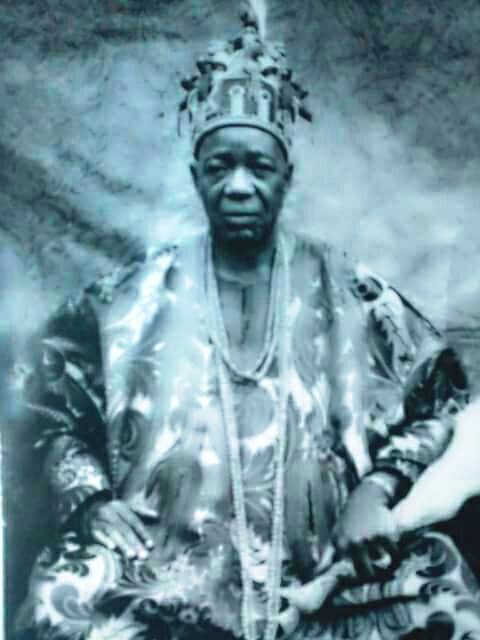
Oba Daniel Anirare Aladesanmi II: The Long-Reigning Ewi of Ado-Ekiti Who Bridged Tradition and Modern Nigeria

Published

on

Oba Daniel Anirare Aladesanmi II (1902 – 7 January 1983) was one of the most respected Yoruba monarchs of the twentieth century. As the 18th Ewi of Ado-Ekiti, he reigned for an extraordinary 46 years (1937–1983)—a period that witnessed Nigeria’s transformation from British colonial rule to independence and through the country’s early decades as a sovereign nation. His life and reign embodied the delicate balance between preserving Yoruba tradition and embracing modern statehood.

Early Life and Ascension

Born in 1902 into the royal family of Ado-Ekiti (present-day Ekiti State, Nigeria), Daniel Anirare Aladesanmi was groomed in the customs and responsibilities of Yoruba royalty.

Following the death of Oba Adeniyi Ajibade Agunsoye, the throne of the Ewi became vacant. After the traditional selection by Ado-Ekiti’s kingmakers, Daniel Anirare Aladesanmi was chosen and installed on 18 June 1937 as the 18th Ewi of Ado-Ekiti. His coronation took place under the oversight of the British colonial administration, making him the paramount traditional ruler of the Ekiti people at a time when colonial authorities still wielded strong influence over local governance.

Statesmanship in Colonial and Post-Colonial Nigeria

From the outset, Oba Aladesanmi II earned a reputation for diplomacy and political acumen. He became a trusted intermediary between Yoruba traditional institutions and the British government, ensuring that Ekiti interests were heard.

His stature was evident in 1959, when he joined other prominent leaders at the Nigerian Constitutional Independence Conference in London, representing Ekiti and Yoruba traditional rulers as the framework for Nigeria’s 1960 independence was negotiated.

See also  PHOTOS: Reactions as one million bibles are to be distributed nationwide in honour of Seyi Tinubu

After independence, he continued to play a pivotal role in Nigeria’s evolving political landscape. He served as Deputy President of the Western House of Chiefs, the legislative chamber that united Yoruba traditional rulers to debate regional policy in the old Western Region. In this role, he worked alongside other eminent Yoruba monarchs—such as the Ooni of Ife and the Alaafin of Oyo—helping to shape political discourse and regional development.

Cultural Leadership and Modernization

While he safeguarded Yoruba customs and rituals, Oba Aladesanmi II also championed modernization in Ado-Ekiti:

Education: He supported the establishment and expansion of schools, notably encouraging the growth of Christ’s School, Ado-Ekiti, which became a leading institution in the region.

Infrastructure: He promoted the development of roads, markets, and modern amenities during the Western Region’s mid-20th-century development programmes.

Palace as a Cultural Hub: Under his leadership, the Ewi’s Palace remained a vibrant centre of Yoruba tradition, while also serving as a forum for dialogue between traditional authority and modern government.

Through these initiatives, he preserved the cultural identity of the Ekiti people while guiding them into the modern Nigerian state.

Honours and Recognition

Oba Aladesanmi II’s leadership was recognised both nationally and internationally:

In 1962, during Queen Elizabeth II’s state visit to Nigeria, he was invested as an Officer of the Order of the British Empire (OBE) for his distinguished service and for fostering constructive relations between the colonial government and Yoruba traditional authorities.

In 1978, the Federal Republic of Nigeria awarded him the national honour of Commander of the Federal Republic (CFR), acknowledging his decades of steady leadership and contribution to nation-building.

See also  Statue of Dora Akunyili: A Monument Honoring Nigeria’s Fearless Reformer

Death and Legacy

Oba Daniel Anirare Aladesanmi II died on 7 January 1983 at the age of 81, after nearly half a century on the throne. His passing was widely mourned across Ekiti and Yorubaland.

He is remembered not only for his longevity but for his rare ability to bridge the worlds of tradition and modern governance. His reign gave Ado-Ekiti continuity and stability through colonial rule, independence, and Nigeria’s early post-colonial and military eras.

Today, the Ewi’s Palace in Ado-Ekiti remains a living symbol of his legacy—testament to the enduring relevance of Yoruba monarchy in the political and cultural life of modern Nigeria.

Sources
Adebayo, A. G. Ekiti People and Their Neighbours: A History of Inter-Group Relations. Ibadan: University Press, 1993.

FOLLOW US ON:

FACEBOOK

TWITTER

PINTEREST

TIKTOK

YOUTUBE

LINKEDIN

TUMBLR

INSTAGRAM

Continue Reading
Click to comment

Leave a Reply

Your email address will not be published. Required fields are marked *

Lifestyle

LACK OF TRUST IN MARRIAGE

Published

on

A marriage can survive difficult times, financial struggles, and disagreements—but when trust disappears, the relationship begins to lose its foundation.

When a husband no longer trusts his wife, or a wife no longer trusts her husband, even innocent actions can become suspicious. A simple phone call becomes a question. Coming home late becomes an accusation. A private conversation becomes a source of fear and jealousy.

Lack of trust creates emotional distance.

It produces constant suspicion, arguments, insecurity, resentment, and sometimes secretive behaviour. Instead of feeling safe with each other, couples begin to feel like enemies living under the same roof.

Trust is not built by controlling your spouse, checking their phone every minute, or constantly demanding explanations. Trust is built through honesty, faithfulness, transparency, consistency, and keeping your word.

If trust has been broken, don’t pretend everything is fine. Talk about it. Admit mistakes. Forgive where possible. Set healthy boundaries. And be willing to rebuild what has been damaged.

Remember: love may bring two people together, but trust helps keep them together.

💔 Don’t allow suspicion to destroy what communication and honesty can repair.

BUILD TRUST. BE FAITHFUL. BE HONEST. PROTECT YOUR MARRIAGE.

“Wherefore putting away lying, speak every man truth with his neighbour.”
— Ephesians 4:25 (KJV)

FOLLOW US ON:

FACEBOOK

TWITTER

PINTEREST

TIKTOK

YOUTUBE

LINKEDIN

INSTAGRAM

See also  FG fine on sponsor forced ‘Who Wants To Be A Millionaire’ off air — Frank Edoho
Continue Reading

Lifestyle

LACK OF OPENNESS IN MARRIAGE

Published

on

A marriage can look beautiful on the outside and still be struggling on the inside when there is no openness between husband and wife.

When couples stop communicating honestly, keep secrets, hide their feelings, or are afraid to discuss important issues, emotional distance begins to grow. What starts as “I don’t want to cause a problem” can eventually become mistrust, resentment, loneliness, and constant misunderstanding.

Openness does not mean telling your spouse everything in a hurtful or careless way. It means creating a safe relationship where both partners can honestly talk about their feelings, concerns, mistakes, finances, expectations, struggles, and dreams without fear of unnecessary humiliation or condemnation.

A strong marriage requires:

• Honest communication — Talk about problems instead of allowing them to grow in silence.
• Trust and transparency — Avoid unnecessary secrecy that can damage confidence in the relationship.
• Active listening — Listen to understand, not simply to respond or attack.
• Emotional vulnerability — Let your spouse know when you are hurting, worried, disappointed, or afraid.
• Respect — Honesty should never become an excuse for insults, threats, or emotional abuse.
• Forgiveness — When mistakes are acknowledged, work together toward healing and restoration.

The Bible says:

“Where no counsel is, the people fall: but in the multitude of counsellors there is safety.” — Proverbs 11:14 (KJV)

And:

“Let every man be swift to hear, slow to speak, slow to wrath.” — James 1:19 (KJV)

Marriage should be a place where two people can feel safe enough to communicate, honest enough to admit their weaknesses, and humble enough to work through their differences.

See also  Dele Olojede: Nigeria’s Pulitzer Prize-Winning Journalist and Advocate for Press Freedom

Don’t allow silence, secrets, and suspicion to build walls between you and your spouse. Talk. Listen. Understand. Forgive. Grow together.

❤️ Openness builds trust. Trust strengthens intimacy. And healthy communication helps build a stronger marriage.

FOLLOW US ON:

FACEBOOK

TWITTER

PINTEREST

TIKTOK

YOUTUBE

LINKEDIN

INSTAGRAM

Continue Reading

Lifestyle

THE EFFECT OF LAYING CURSES ON YOUR CHILDREN

Published

on

Be careful with the words you speak to your children.

A child should not grow up hearing, “You will never succeed,” “You are useless,” “Nothing good will come from you,” or “You will suffer in life.” Words spoken repeatedly by a parent can deeply affect a child’s emotions, confidence, and relationship with the family.

Even when spoken in anger, such words can become negative messages that a child may carry for many years.

SOME EFFECTS OF CONSTANTLY CURSING YOUR CHILDREN:

1. It can destroy their confidence.
Children need encouragement and guidance. Constant insults and negative declarations can make them believe they are not good enough.

2. It can create fear and insecurity.
A child who is constantly threatened or cursed may become afraid of making mistakes, expressing themselves, or trying new things.

3. It can damage the parent-child relationship.
Instead of seeing the parent as a source of love and protection, the child may grow resentful, distant, or bitter.

4. It can affect their emotional well-being.
Repeated humiliation, rejection, and negative words can contribute to sadness, anxiety, low self-worth, and emotional distress.

5. It can influence how they see themselves.
Children often believe what the people closest to them repeatedly tell them. Speak to the potential you want them to develop—not the failure you fear.

6. It can teach them to use hurtful words themselves.
Children learn from what they experience. If they grow up hearing curses and insults, they may eventually speak to others in the same way.

CORRECT YOUR CHILDREN, BUT DON’T DESTROY THEM.

See also  Dele Olojede: Nigeria’s Pulitzer Prize-Winning Journalist and Advocate for Press Freedom

Discipline is necessary, but discipline should teach—not humiliate. Correct their mistakes, set boundaries, explain consequences, and show them how to do better.

The Bible says:

“Death and life are in the power of the tongue: and they that love it shall eat the fruit thereof.”
— Proverbs 18:21 (KJV)

And:

“And, ye fathers, provoke not your children to wrath: but bring them up in the nurture and admonition of the Lord.”
— Ephesians 6:4 (KJV)

Your child may make mistakes today, but that does not mean their future is ruined.

Don’t curse your children. Correct them with wisdom. Pray for them. Encourage them. Bless them. Speak words that build their character, strengthen their confidence, and remind them that they are loved.

YOUR WORDS CAN LEAVE A SCAR OR BUILD A FUTURE.
CHOOSE YOUR WORDS WISELY.

FOLLOW US ON:

FACEBOOK

TWITTER

PINTEREST

TIKTOK

YOUTUBE

LINKEDIN

INSTAGRAM
Continue Reading

Trending