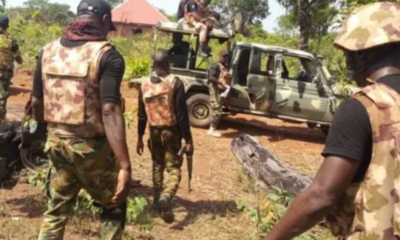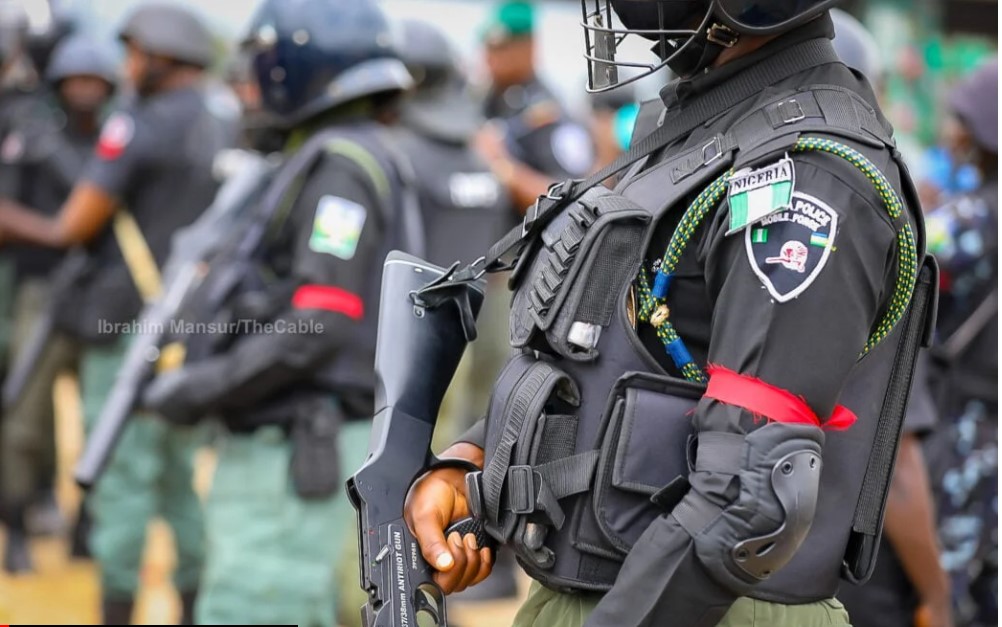
Despite escalating insurgency across the country, no fewer than 500 senior military officers, including Major-Generals, Brigadier-Generals, Rear Admirals, and Air Vice Marshals, have been forced into early retirement following the changes of service chiefs under the Muhammadu Buhari and Bola Tinubu administrations.
The mass retirements, spanning the Army, Navy, and Air Force between 2015 and 2023, stemmed from the long-standing military tradition of disengaging senior officers who are either senior to or of the same course as newly appointed service chiefs.
The move, according to the military, is aimed at maintaining discipline, hierarchy, and operational efficiency within the services.
Data collated from media reports indicate that over 500 top officers have quit the services in the past eight years.
However, military insiders asserted that the affected Generals numbered approximately 900 or more. The PUNCH could not immediately confirm the figure as the military authorities could not be reached to authenticate the claim.
The first wave of retirements occurred shortly after former President Muhammadu Buhari appointed new service chiefs in July 2015. They include Lt.-Gen. Tukur Buratai as Chief of Army Staff, Air Marshal Sadique Abubakar as Chief of Air Staff, and Vice Admiral Ibok-Ete Ibas as Chief of Naval Staff.
Over 100 senior Army officers, mainly Major Generals and Brigadier Generals, were forced to retire, while the Navy lost over 20 senior officers, including Commodores and at least one Rear Admiral.
A second phase was recorded in 2021 after Buhari replaced all the service chiefs and appointed a new set-Air Marshal Isiaka Amao (Air Force), late Lt.-Gen. Ibrahim Attahiru (Army) and Vice Admiral Awwal Gambo (Navy).
That exercise saw about 123 generals exit the Army, while over 50 senior Air Force officers, and another 50 naval officers also left service.
The Army again witnessed another wave in May 2021 following the death of Gen. Attahiru, which led to the appointment of Gen. Farouk Yahaya, who was junior to several serving generals.
His emergence triggered the voluntary retirement of over 20 generals from Courses 35 and 36.
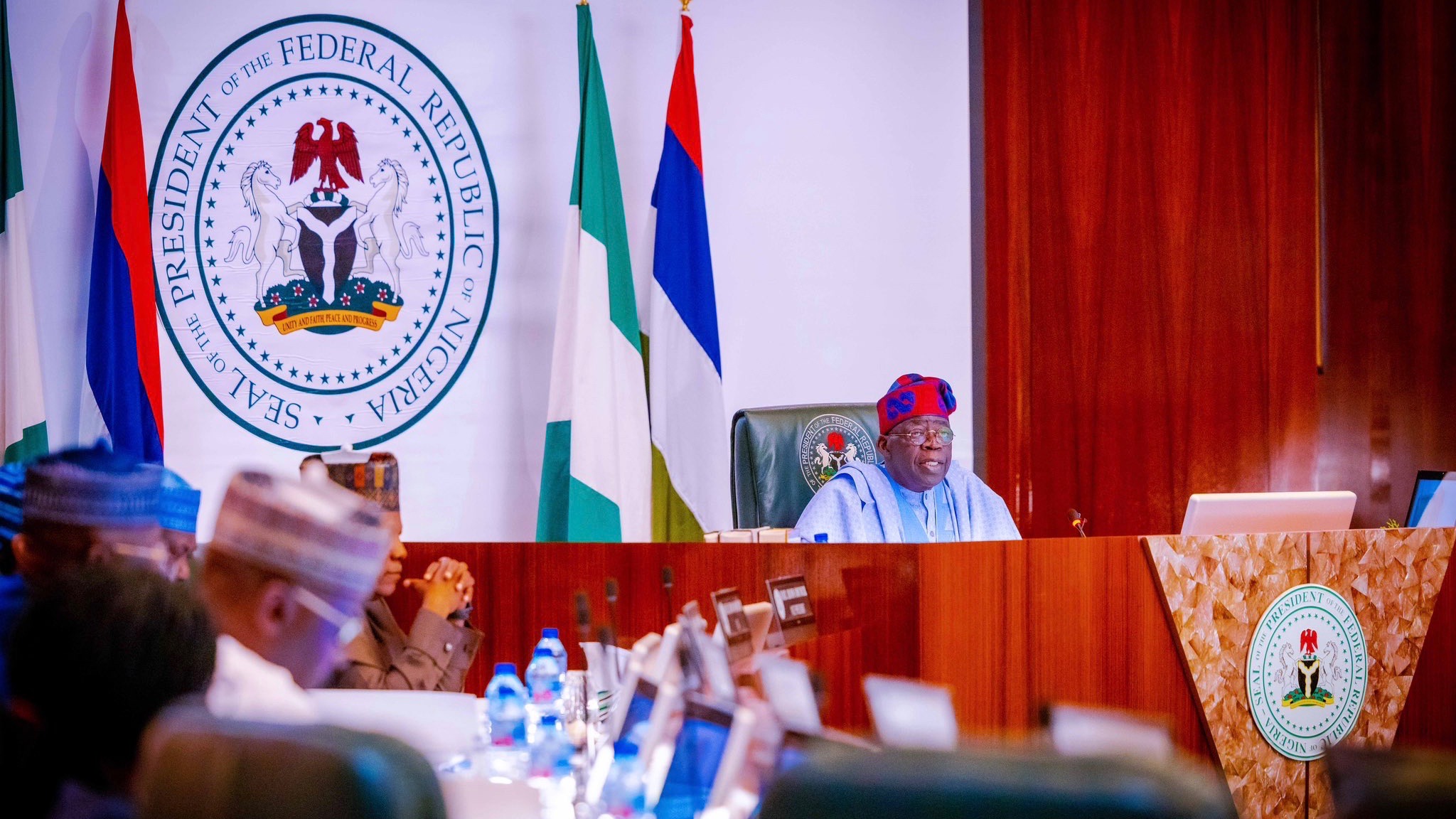
Under President Tinubu, the pattern has continued. Two weeks after he assumed office, the President, on June 19, 2023, appointed new service chiefs, prompting mass retirements across the services.
The appointment of late Lt.-Gen. Taoreed Lagbaja, Air Marshal Hasan Abubakar, and Vice Admiral Emmanuel Ogalla, as the heads of their respective services, led to the untimely retirement of 51 army generals, 49 top Air Force officers and 17 naval officers.
Last Friday, Tinubu executed a shake-up in the military leadership. Gen Olufemi Oluyede replaced Gen Christopher Musa as CDS; Maj-Gen Waidi Shaibu becomes the COAS; Air Vice Marshal Sunday Aneke takes over as CAS, while Rear Admiral Idi Abbas assumes office as CNS. The Chief of Defence Intelligence, Maj-Gen Emmanuel Undiendeye, retains his position.
Under the latest development, about 60 top officers are expected to disengage from service should the military tradition continue.
Reacting to the situation, General Ishola Williams (retd.), faulted the arbitrary sacking of the service chiefs and the forced retirement of other top officers, describing this as a mirror of the military regime.
“Once the government replaces the service chiefs, it means that the set of the former service chiefs will have to retire because they cannot serve under their juniors.
“And this has been happening all the time. And I don’t know why we cannot change this. It is very bad. They are copying the military regime. If you hold a job at that level, somebody should tell you that in three months, you are going to leave. But to just make an announcement and tell the person, ‘you are leaving now, is abnormal,” he said.
Williams suggested a system of appointment where the chief of defence staff would be the principal staff officer to the President, to whom other service chiefs would report, while other commanders would report to the service chiefs.
He argued that this would institute a natural order of succession within the army.
“When you are doing posting, you post the next senior officer. So, the chief of army staff and everybody know that this is supposed to be the next chief of army staff. Or you say, it’s going to be one of the senior commanders, who are also senior officers. But what they are doing now doesn’t speak well of the Armed Forces at all,” he added.
On his part, a retired Gen Aliyu Momoh commended the President’s decision to reshuffle the service chiefs, urging him to do more by removing the “cabals” in the military.
“I must commend the President; he has the right to hire and fire, but you have to go deeper. You will wonder why I’m commending the President. He has done a lot in the economy, fighting insecurity, and all of that. You see, that makes a country a great nation.
“But if you want to survive, if the country must survive, the President should go further to remove the cabals, the cartels that are in the military. It’s not those of them wearing uniforms. The cabals and the cartels controlling these things are not the forces. If you give these boys enough to fight, they will fight.
“So, it’s not just waking up and removing everybody, and thousands of people leave. No. You know that without security, there is no development. So, the President should go further to do more, to pull out all the cabals, whether politicians, ex-generals, and the rest, wherever.
“If he doesn’t do it, give Tinubu eight years, 10 years, he will still be doing the same thing we have been doing for the past, and there will be no solution,” he said.
The ex-general described the situation in the rank and file of the army as confusing, stating that the President could change the narrative and find a solution within five to six months.
“Look, there is confusion everywhere. People wore uniforms, they were doing their best, and now you removed them and you want to re-engage them, for what? Let’s change the narratives. And this solution can be found within six, seven, or eight months, not one year, if the right button is pressed.
“But we are busy politicking, finding out where this new chief comes from, where this one is from. That is what we are doing as a nation. There is no coherence, no coordination. But of course, as I told you, the main problem is that there are cabals. Not only in the economy,” the ex-army officer stated.
Also speaking, Brigadier General Adewinbi (retd.) said the recurring wave of retirements each time new service chiefs are appointed was an established military tradition that could not easily be changed.
“There is nothing we can do about it. You can’t tell the President who to appoint; that is why he is the Commander-in-Chief. Many of us have been victims of this tradition,” he lamented.
Adewinbi suggested that the government should explore ways to continue benefiting from the experience of retired generals.
“What I think could be done is to ensure we utilise some of these generals. We can enlist them in our reserves so that their expertise and experience can still be put to good use.”
Retired Group Captain Sadique Shehu, who once served on the Committee for the Reform of the Armed Forces under Buhari, described the gale of military retirements as “unsustainable” and “structurally flawed.”
Shehu, a former spokesman for the Nigerian Air Force, puts the figure of retired generals under Buhari at over 960 in 2022.
“Over 500 in the last eight years! They are more than that. I was in the Committee for the Reform of the Armed Forces under Buhari and personally tasked to count how many generals we had. As of 2022, the Armed Forces had had about 960 generals for a total strength of 235,000 personnel. That’s too much.
“The United States, with 1.3 million personnel, has about 900 generals. So, imagine — almost the same number of generals for a force that is barely a fifth of their size. If you divide our troops by the number of generals, a general would hardly have five soldiers under him,” he added.
Shehu attributed the bloated number of generals and the frequent mass retirements to poor manpower planning, political interference, and weak legislative oversight.
“It’s not a good practice, but the problem starts with producing too many generals. If we had fewer generals, even if the President skipped one or two courses to appoint a service chief, only a few officers would be affected. But now, when you pick a chief two courses down, you end up with 40, 50, or even 100 officers who must leave.
“You cannot leave the military to run itself. There’s too much political interference. If the Chief of Army Staff says he wants to promote 50 major-generals, the minister brings five from his village, and another minister brings five from his own. Nobody asks where these people will fit in,” he lamented.
He stressed that unless Nigeria drastically reduces the number of generals it produces, the cycle of forced retirements each time a new service chief is appointed would continue.
“The first solution is to tighten the number of generals we are producing. If we do that, even when the President exercises his power to appoint a service chief from a lower course, fewer officers will be affected.”
Shehu also urged the National Assembly to play a stronger oversight role by legislating clear conditions for the appointment and tenure of service chiefs.
“The National Assembly can pass a law defining how a President picks service chiefs — for instance, limiting tenure to two years or restricting choices to the topmost generals. They can modify the process without taking away presidential powers,” he explained.
He noted that many generals currently in service lack defined responsibilities due to rank inflation, describing the trend as “wasteful and counterproductive.”
“Some generals don’t even have real assignments now. Promotions are done without considering the economy or actual needs. That must change if we want professional and efficient armed forces.”
However, Major General Lasisi Abidoye (retd.) said the pyramid structure of the military naturally filtered out many officers through resignation, retirement, or death before reaching the senior cadre.
The retired officer explained that the Nigerian Army’s promotion process and rank structure made it unlikely for such a large number of Generals to be disengaged at once.
“During my time, I was RC 28, and when I got to the rank of Major General, only eight of us from my course made it. So, where will the other Generals suddenly come from?”
He noted that routine retirement remains a healthy and necessary process in the Armed Forces to ensure operational efficiency and career progression.
“That routine retirement is good for the military. When a Service Chief stays too long, all his juniors become stagnated and are forced to retire before him.
“Even the chief himself loses creativity after three years. No Service Chief should stay longer than two to three years; anything beyond that becomes counterproductive, like what we saw under former Lt. Gen. Buratai.”
Also, a former Director at the Defence Intelligence Agency, Major-General PJO Bojie (retd.), described the looming mass retirement of Generals following the appointment of new Service Chiefs as a “routine” exercise in the military.
Bojie said it was standard practice in the military for certain cadres of officers to be retired when new Service Chiefs took over.
However, Bojie insisted that the development was not unusual, saying it was “in line with military tradition.”
“The situation demands it, and it’s normal and routine,” Bojie added, dismissing concerns about the large number of Generals being retired.