Connect with us

Lifestyle

I use comedy to expose what govt hides – Content creator, Gov Amuneke

Published

on

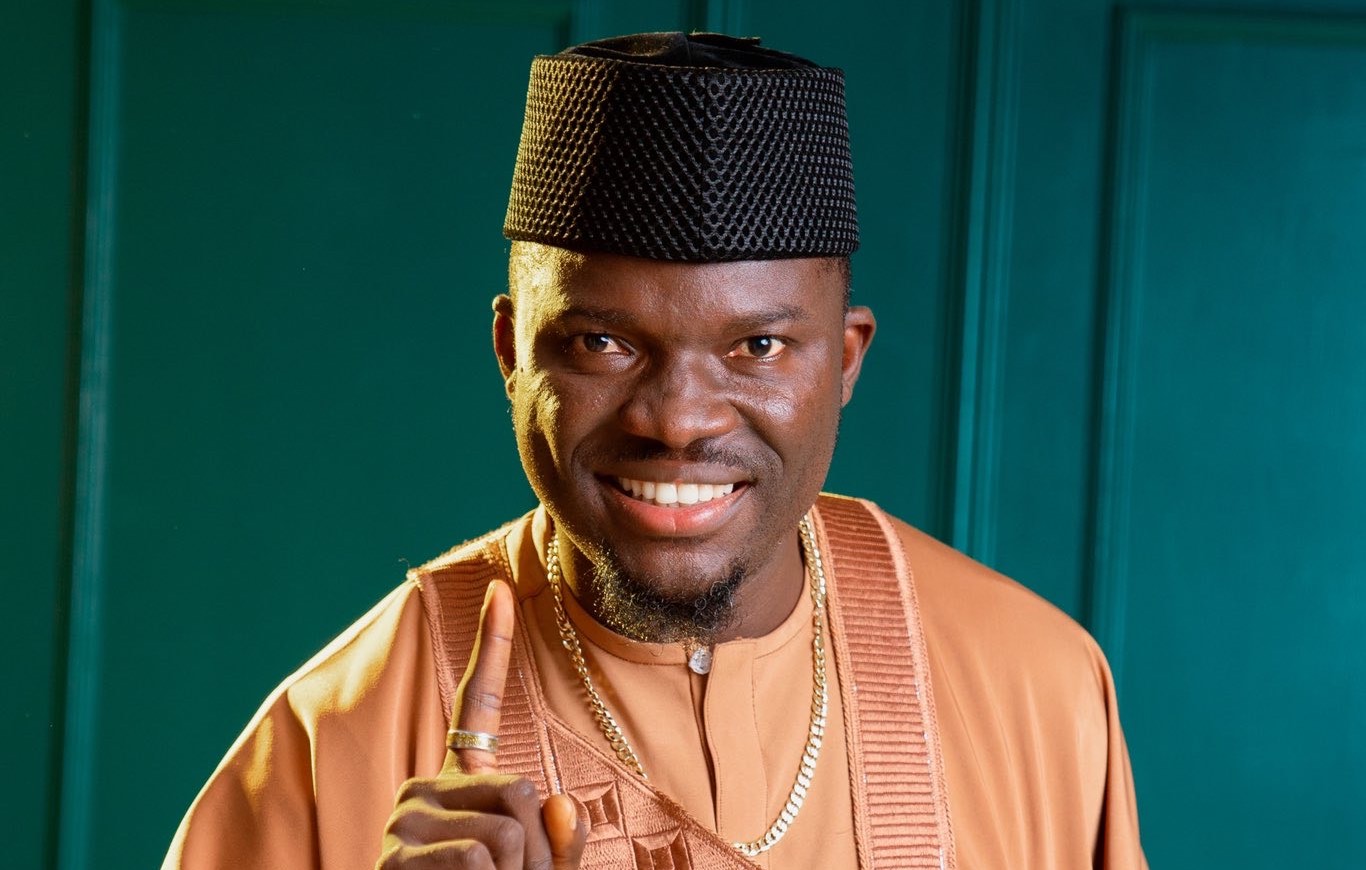
Content creator, Kevin Arua, popularly known for his character as Governor Amuneke, has 433,000 followers on Instagram. He tells Faith Ajayi how he got into content creation

Tell us a bit about your educational background.

I had my primary education at Christ the King Primary School in Ovoko, Enugu State. For secondary school, I started at Ovoko Boys Secondary School and completed it at UNICEF Secondary School. It was meant to be a government-sponsored school, but politics got in the way and it ended up being privately managed. After writing my West Africa Senior Secondary Examination, I gained admission into the Institute of Management and Technology, Enugu, where I obtained a National Diploma in Science Laboratory Technology, and later my Higher National Diploma in Physics Electronics.

What were your early interests before comedy came into the picture, and when did you start using social media?

I have always had a lot of interests. Growing up, I was drawn to science and invention; I genuinely thought I’d become a scientist. But I was also naturally funny and loved performing, drawing and acting. In secondary school, I used to perform at the assembly ground, and later in IMT, I was the Director of Socials. Even though I never saw entertainment as a career at the time, it was always part of me.

By my final year in school, I had started painting and selling artworks on the street to support myself. After graduation, I moved to Ibadan for my National Youth Service Corps scheme, and joined a skill acquisition programme in cinematography and video editing. I was already recording short videos and posting occasionally on WhatsApp, but I wasn’t familiar with Instagram yet.

After the three-week orientation camp, I got a job in Lagos through a friend; it was my first proper media job. I was the cameraman, editor, sometimes even the scriptwriter. The company was owned by a man who believed in a one-man business model, which meant I got to learn practically everything. That experience sharpened my production skills.

During my time there, I created a comedy series called ‘Oga Landlord’, which we posted on the company’s YouTube page. Later, I opened my own comedy page and started uploading my content on both. When the company stopped funding production, I focused on my own projects, shooting during weekends while working a 9–5.

My first major character was Chief Amuneke, created around 2018 or 2019. I was determined to grow my Facebook page before focusing on Instagram, which felt slower at the time. Then one of my videos got reposted by Tunde Ednut, and that was the turning point. I realised this was what I truly wanted to do.

Before that, I was shooting music videos, hoping to become the next Clarence Peters. But after my video went viral, I decided to take content creation seriously and challenged myself to post five videos a week. Things picked up quickly. When the COVID-19 pandemic hit, work paused, and I doubled down on content creation.

See also  Akinwumi Isola: Professor who stood for the Yoruba people, his last words

Eventually, I lost my job, but my online platforms started paying off. By 2021, Facebook monetised my page, and that became my full-time focus.

Can you explain the timeline from when you worked in media to when you started your own productions?

I worked in media for about three years; from 2017 to 2020. But even before leaving, I was already shooting my own videos. Since 2021, I have been running my productions full-time. Many people know me now as Governor Amuneke, but long before that, I was already creating content, earning from Facebook, and living comfortably. So, while Governor Amuneke brought more visibility, I had been in the industry for years before then.

What inspired your type of content?

Honestly, I’d say it was divine. I believe God sees people’s hearts. I am not calling myself an activist, but my passion for change definitely shaped this path.

The turning point came during my wedding in Nsukka, Enugu. Many of my friends couldn’t attend because of insecurity in the area. I was heartbroken seeing the fear people had, and the videos of violence that were circulating. It made me question what I was really doing with my platform. Was it just about making people laugh or could I also use it for awareness?

So, I made a video addressing the governor politely, drawing attention to the killings. Instead of responding to the situation, the government dismissed the reports as propaganda and even started arresting people for posting about it. That made me realise how risky speaking up could be, so I decided to channel my message through comedy instead.

That’s how the Governor Amuneke character was born. I started creating skits where leaders downplayed serious issues—like confusing citizens for “senior citizens” (cows)—to mirror real situations in Nigeria and across Africa. The goal wasn’t just to entertain but to spark conversations about leadership, accountability, and empathy.

It began around June or July of this year. I noticed people were engaging with those videos more deeply than my usual content, so I leaned fully into it. I rebranded from Chief Amuneke to Governor Amuneke, and that’s where we are today; using humour to tell hard truths.

Would it be right to say that your ideas for Governor Amuneke come from personal experience?

Yes, exactly.

What kind of content resonates most with your audience?

Right now, anything political tends to connect deeply with my audience. Whenever my content touches on politics or governance, people engage with it more. They relate because it mirrors real issues that affect their daily lives.

Since you began creating content, what are some challenges you’ve faced, and how have you managed them?

See also  Colonel Victor Adebukunola Banjo: A Controversial Figure in the Nigerian Civil War

Honestly, I cannot say I have had major challenges. If you look at my background, I’ve done almost everything myself — shooting, editing, and producing. I’ve been a one-man squad for so long that now, with a team around me, things come easier. When I need to shoot, I make a call and people show up. So, for now, I wouldn’t say I’m facing any significant challenges.

Collaboration is a big part of content creation. What role does it play in your craft?

Collaboration is very important. It helps you reach new audiences, because every creator has their own fan base. When you collaborate with someone, their fans check out your work too. It helps you gain more followers and strengthens your fan base.

I also prefer collaborating with creators whose content aligns with mine; people who can deliver messages with depth. For instance, when I worked with Eedris Abdulkareem, it was powerful because he’s known for speaking out against bad governance. Having him add his voice gave more weight to the message. So, collaboration not only boosts visibility but also amplifies the purpose behind the content.

Beyond laughter, what message do you want people to take away from your content?

My goal is to open people’s eyes to what’s really happening in government; to act as a kind of watchdog. I want people to see leaders for who they truly are, not who they pretend to be. Through comedy, I highlight issues like fake commissioning, empty promises, corruption, and mismanagement. It’s about awareness; making people laugh but also think.

Have you ever experienced creative burnout or online backlash?

Not really. Of course, there will always be a few negative comments here and there. Sometimes, they come from people being tribalistic or defensive about who the joke points to. Occasionally, you sense that some of the backlash might even come from people connected to those being criticised. But it’s never been anything major or damaging. I focus on the positive feedback and keep creating.

What’s been the most rewarding moment of your career so far?

Money is great, especially when the buzz is high, but the most fulfilling part is seeing the genuine happiness and appreciation from people. When people stop me to say, “You’re doing great; you’re speaking for us,” that’s priceless. Knowing my work brings both laughter and awareness; that’s the real reward.

How has your family reacted to your career choice?

My family is proud of the path I’ve chosen. I approach my work responsibly. I don’t mention names or attack individuals directly, and they appreciate that. They’ve been in full support from day one.

Who has been your biggest cheerleader behind the scenes?

See also  Video - Sunday Igboho Visits Yoruba Traditional Rulers | Powerful Meeting for Unity & Progress

My team and the close people I work with. They motivate me and keep me grounded.

Where do you see your brand in the next five years?

I see it going international; producing powerful films on global platforms like Netflix or whatever the next big thing is. I want to be one of the world’s most recognised satirical creators and producers, using storytelling to spotlight social and political issues.

Do you have plans to transition into other areas of entertainment?

Definitely. My YouTube series will soon be out, featuring movies that go beyond politics to include life lessons and relatable stories. I am not into stand-up comedy, but I enjoy stage performance and plan to produce some live shows as well.

What’s one dream collaboration you’re still hoping to achieve?

It’s hard to find people who create exactly the kind of satirical content I do, but I have a list of actors and filmmakers I’d like to work with in other genres.

Internationally, I’d love to collaborate with Hollywood producers to create original films that reflect the political challenges we face here. I don’t have specific names yet, but when the time comes, I’ll know.

How do you unwind when you’re not creating content?

I love talking to friends and family. Conversations with people who make me happy are my best way to relax and learn. Honestly, my life revolves around content; even when I’m resting, I’m jotting ideas, taking notes, or editing for fun. But I also make time to play games, and just hang out.

How do you stay grounded?

I don’t dwell on being popular. I live my normal life until someone recognises me in public. I haven’t reached that point where I can’t walk freely, so I don’t feel pressured. It’s mostly just love from fans; people offering to pay for stuff or showing appreciation. It’s all positive energy.

How does it feel to have your work recognised through awards?

It’s fulfilling. Awards remind me of how far I’ve come, but also that there’s still more to do. I don’t see them as an endpoint but as motivation to keep working harder and impacting lives through my craft.

If you could give one piece of advice to upcoming creators, what would it be?

Start with what you have and stay original. Don’t wait until everything is perfect. Nobody knows what will trend or resonate; just create. Build relationships, keep your reputation clean, and remain consistent. The space is big enough for everyone, and consistency will always open more doors than promises ever will.

punch.ng

FOLLOW US ON:

FACEBOOK

TWITTER

PINTEREST

TIKTOK

YOUTUBE

LINKEDIN

TUMBLR

INSTAGRAM

Continue Reading
Click to comment

Leave a Reply

Your email address will not be published. Required fields are marked *

Lifestyle

TikToker Jarvis confirms breakup with Peller, urges public support

Published

on

TikTok content creator, Elizabeth Amadou also known as Jarvis, has confirmed that she has ended her relationship with fellow influencer and livestreamer, Hamzat Habeeb, popularly known as Peller, while appealing to the public to stop mocking him following his recent car crash during a livestream.

Jarvis made the disclosure in a live video shared online on Tuesday, amid widespread reactions to Peller’s hospitalisation after the incident on the Lekki-Epe Expressway in Lagos.

Addressing online commentary surrounding the crash and the couple’s relationship, Jarvis said public ridicule was worsening the situation.

“It’s always people will mock me. Because I can see concern about this online. People will mock him, Stop mocking him. Stop shading him,” she said.

She insisted that the incident should not be used to define Peller’s character, stressing that she never portrayed him as a bad person.

Jarvis acknowledged that Peller struggles with emotional control, describing it as the core issue rather than malice.

“Yes, he cannot control his emotions. He cannot control. That’s the problem.

“I can control mine, but he can’t control his. We need to join hands together to help him,” she said.

Confirming that they are no longer together, Jarvis said the breakup was necessary and should not be misconstrued as abandonment.

“Peller is a sweet guy, I do not even want it to even end but it has happened, it has happened.

“The relationship is not the thing now. It’s not saying let’s go back to who we were.

“The solution is let’s put our heads together to work on him.

See also  PHOTOS: HOW NIGERIA WAS SOLD TO THE BRITISH FOR £865,000 IN 1899

“To be better. Not space of we not talking , it is space of this relationship thing. It is over for now,” the influencer said.

She further clarified that the separation was about giving space for healing.

Jarvis also appealed to supporters and social media users to stop what she described as harmful narratives and mockery.

“Stop your shading. How is it helping? It’s not helping.

“Don’t use it against him. Encourage him. Encourage us. Help us. Stop using our pain to mock us,” she said.

Expressing emotional distress, she said the online reactions had deepened the pain surrounding the situation.

Jarvis urged the public to focus on gratitude that no life was lost. She added that her priority was wellbeing for both herself and Peller.

“All you people should be saying is thank God for life. Thank God for Peller. Thank God nothing happened to him.

“I love him, but for now we need to be okay. I’m not okay anymore. I want to be okay.

“He needs to be okay, he needs to be fine,” Jarvis said.

She concluded by noting that breakups do not always stem from hatred but sometimes from a need for clarity and calm.

PUNCH Online had reported that Peller sparked concern on Sunday after crashing his car during a live Instagram broadcast titled “RIP Peller” on the Lekki-Epe Expressway in Lagos.

During the livestream, the influencer was seen driving alone in his newly acquired Mercedes-Benz while visibly distressed and crying during a phone conversation believed to be with Jarvis, amid rumours of a breakup.

See also  Air Commodore Dan Suleiman: The Soldier-Statesman Who Championed Nigeria’s Middle Belt

At several points, he appeared agitated and made alarming statements, including, “I will use this car and have an accident right now,” and later, “I’m scared. I’m scared.”

In another moment during the broadcast, he said, “If you break up with me, people will be mocking me… Thank you, I’m going to kill myself.”

Moments later, the vehicle was seen veering off the road before crashing into a stone barrier.

Subsequent videos circulating online showed Peller being assisted by bystanders before he was taken to a hospital.

punch.ng

FOLLOW US ON:

FACEBOOK

TWITTER

PINTEREST

TIKTOK

YOUTUBE

LINKEDIN

TUMBLR

INSTAGRAM

Continue Reading

Lifestyle

Ogun steps in as 60 candidates express interest for Awujale

Published

on

Facts emerged on Sunday on why the much-anticipated nomination meeting of candidates for the vacant Awujale stool and paramount ruler of Ijebu land was postponed by the Fusengbuwa Ruling House.

The PUNCH also learnt that the number of aspirants seeking to become the next Awujale is not fewer than 60.

Recall that the Fusengbuwa Ruling House, which is next in line to produce the Awujale following the death of the 91-year-old Oba Sikiru Adetona in July 2025, had announced last Thursday that the nomination meeting would be held on Monday.

The announcement was contained in a letter dated December 11, 2025, signed by the family’s spokesman, Abiodun Ogidan.

The meeting was scheduled to take place at Bisrod Hall, GRA, Ijebu-Ode.

The ruling house had outlined strict protocols for the exercise, stressing that only accredited family members would be allowed entry.

It also stated that each aspirant would be represented by two family members, with one nominating the candidate and the other seconding the nomination.

The ruling house further directed that aspirants themselves would not attend the meeting but would be represented by the two accredited family members.

Family members and accredited representatives were also urged to conduct themselves with utmost peace, respect and orderliness befitting the sacred process.

However, in a subsequent statement issued on Friday by the nomination committee, the ruling house announced the postponement of the meeting.

The statement, titled “To All Members of Fusengbuwa Ruling House, Ijebu-Ode,” read: “Due to circumstances beyond the family’s control, the Fusengbuwa Ruling House Awujale Nomination Meeting scheduled for Monday, 15th December 2025, has been postponed. The new date will be announced shortly. We apologise for any inconvenience this may cause.”

See also  Video - Sunday Igboho Visits Yoruba Traditional Rulers | Powerful Meeting for Unity & Progress

Speaking exclusively with The PUNCH on Sunday, the Chairman of the Fusengbuwa Ruling House and former National President of the Institute of Chartered Accountants of Nigeria, Abdulateef Owoyemi, said the meeting was put on hold following an intervention by the state government to prevent procedural errors that could result in litigation.

Owoyemi explained that the postponement was to enable the ruling house to attend a meeting scheduled by the state government on Tuesday to review the process so far and ensure compliance with existing laws.

He dismissed insinuations that the decision was linked to the reported candidature of Fuji musician, Alhaji Wasiu Ayinde (KWAM1), whom the ruling house had previously said was not a member of the Fusengbuwa Ruling House and therefore not eligible to contest.

Owoyemi said, “The postponement of the nomination meeting has nothing to do with any individual, far from that.

“What actually happened is that we received a summons from the state government for a meeting on Tuesday. The meeting is to ensure that everything is done correctly so that the selection process does not become a fertile ground for litigation or generate legal controversy.

“It is a process of comparing notes and ensuring that we cross our Ts and dot our Is. We appreciate this because it will help maintain standards and ensure that the process is flawless. There is nothing to worry about.”

Also speaking with The PUNCH on Sunday, the Vice Chairman of the ruling house, Prof Fassy Yusuf, confirmed that both the ruling house and the kingmakers had been invited to a meeting with the government on Tuesday, necessitating the postponement.

See also  Massive Crowd Welcomes Sunday Igboho to Olowo’s Palace in Ondo State | Traditional Royal Reception

Prof Yusuf added that the number of princes aspiring to succeed the late Awujale was not fewer than 60.

The University of Lagos Professor of Mass Communication said, “There are certain things we have not done, so the government has scheduled a meeting with us for Tuesday. The government will meet with the ruling house, the kingmakers, and the Awujale Interregnum Committee.

“It is to ensure that everything is in order, and it is the outcome of this meeting that will determine when the nomination meeting will be held.

“The postponement has nothing to do with anyone. Anyone saying otherwise is being mischievous and spreading falsehood. So far, about 60 people are in the race to become the next Awujale.”

Efforts to find a successor to the highly revered Oba Adetona, who reigned for 65 years before his death in July, had recently intensified following a directive by the local government giving the ruling house 14 days to submit the names of candidates for the throne.

punch.ng

FOLLOW US ON:

FACEBOOK

TWITTER

PINTEREST

TIKTOK

YOUTUBE

LINKEDIN

TUMBLR

INSTAGRAM

Continue Reading

Lifestyle

Kano summit decries censorship, harassment of content creators

Published

on

In response to the growing cases of censorship, harassment, and regulatory pressure faced by performers and content creators across Nigeria, Unchained Vibes Africa on Wednesday held the 2025 Freedom Vibes Summit in Kano.

The event brought together artists, legal practitioners, cultural activists, and government representatives to advocate for stronger protections for creative expression and to groom a new generation of cultural leaders.

The day-long event, themed “Charting a Course for Artistic Freedom and Regulatory Reform in Nigeria,” featured panel discussions, legal clinics, and the graduation of participants from the Freedom Vibes Academy, a three-month hybrid training programme for emerging artists and cultural activists.

This was contained in a statement signed by Saifullahi Ibrahim, popularly known as Dr Pure, Northern representative of Unchained Vibes Africa.

Speaking at the event, Dr Pure said, “We are at a critical moment where creative voices must be protected. Artists are not just entertainers—they are the conscience of society, and their freedom is non-negotiable.”

He added, “Through the Freedom Vibes Academy, we are equipping the next generation of cultural leaders with the tools, knowledge, and networks to navigate regulatory challenges and advocate for artistic freedom effectively.”

Participants included musicians, filmmakers, digital content creators, lawyers, human rights advocates, and policy experts, who deliberated on the shrinking civic space for creative expression in the country.

A major highlight of the summit was the graduation ceremony of the Freedom Vibes Academy. Graduates showcased projects developed through months of virtual mentorship and in-person engagements in Kano, combining artistic creativity with social advocacy.

See also  Colonel Victor Adebukunola Banjo: A Controversial Figure in the Nigerian Civil War

Executive producers and mentors commended the graduates for integrating art with civic responsibility, urging them to deploy creative tools to drive social change and public engagement.

Kano-based conscious musician Fresh Amir delivered a performance described by organisers as the emotional peak of the summit, reinforcing the role of artists as social commentators and defenders of public conscience.

Panel discussions focused on legal and regulatory challenges confronting creatives, including the enforcement of local regulations restricting performances and digital content.

Speakers called for legal reforms, clearer regulatory frameworks, and closer collaboration between cultural institutions and human rights organisations.

Participants stressed that safeguarding artistic freedom is central to democracy, freedom of expression, and broader civic rights. Sessions also explored media literacy, digital safety for creators, and strategies for building sustainable creative enterprises.

UVA also highlighted the impact of the Freedom Vibes Academy, as mentees presented final projects centred on community engagement, policy advocacy, and digital campaigning.

Judges praised several initiatives for their innovation, scalability, and social relevance.

In a closing statement, UVA thanked partners, sponsors, and media organisations for supporting the summit and urged policymakers to translate the recommendations into actionable reforms that would protect artists and strengthen Nigeria’s cultural economy.

Organisers disclosed that follow-up workshops and legal clinics would be organised to sustain advocacy for policy reforms agreed at the summit.

punch.ng

FOLLOW US ON:

FACEBOOK

TWITTER

PINTEREST

TIKTOK

YOUTUBE

LINKEDIN

TUMBLR

INSTAGRAM

Continue Reading

Trending