Connect with us

Education

2026 CBT rollout on track, says WAEC

Published

on

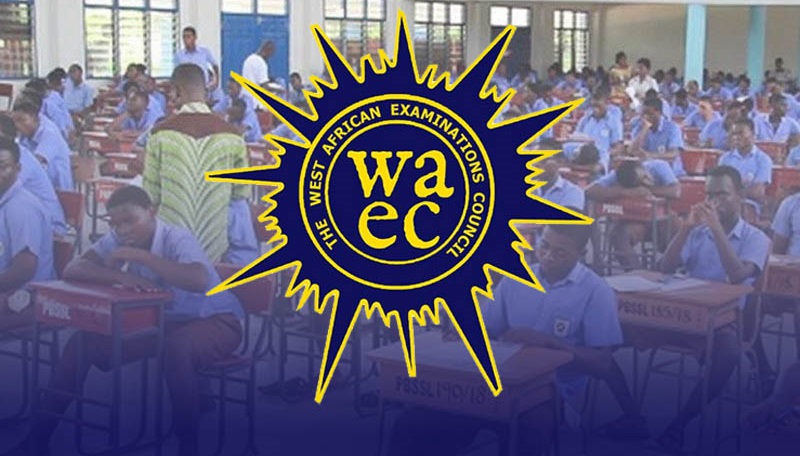
The West African Examinations Council has maintained that its plan to conduct the 2026 West African Senior School Certificate Examination for school candidates through a fully computer-based system remains firmly on track.

WAEC also assured that no candidate would be required to travel more than two kilometres from their location to take the examination.

This was contained in a statement delivered by the Head of the Nigeria National Office of WAEC, Dr Amos Dangut, during a press conference in Umuahia, Abia State, on Friday.

Dangut spoke in response to growing concerns among parents, schools, and education stakeholders regarding the transition to the Computer-Based WASSCE for the May/June diet.

It would be recalled that the House of Representatives, on November 13, asked the Federal Ministry of Education and WAEC to immediately suspend the implementation of the Computer-Based Test policy for the 2026 Senior Secondary School Certificate Examination.

The House also directed the Federal Ministry of Education to collaborate with states to include, in their 2026–2029 budgets, the recruitment of computer teachers, the construction of computer halls with internet facilities, and the provision of standby generators for all secondary schools in the country.

It similarly urged adequate provision of necessary facilities in private schools before the commencement of the policy in 2030.

However, Dangut said the briefing became necessary to speak on the Council’s preparedness to align with the Federal Government’s directive mandating the use of computer-based testing for the 2026 WASSCE.

He recalled the Federal Government’s order requiring all public examination bodies to migrate to digital assessment beginning in 2026. According to him, WAEC immediately initiated a series of measures, including testing digital examination platforms and evaluating the readiness of schools nationwide.

See also  National Assembly shifts WAEC’s CBT adoption to 2030

He explained that WAEC, in line with its mandate and test administration standards, undertook a nationwide assessment of all secondary schools to determine their ICT capacity, geographical suitability, and infrastructure for digital examinations.

The findings, he said, informed a new classification framework grouping schools into three categories to determine how candidates would be assigned centres.

“In line with the Council’s test administration policies, a review of the readiness of all secondary schools across the country, particularly their geographical locations and access to modern Information and Communications Technology facilities, led to the development of a framework classifying schools into three main categories,” he said.

“Based on this framework, the Council conducted a mapping of the schools and modalities for the conduct of CB-WASSCE in line with the mapping of the schools, thereby ensuring that the conduct of the CB-WASSCE will not put any candidate at a disadvantageous position.”

He emphasised that fears of candidates travelling long distances were taken into cognisance, noting that WAEC had completed its mapping strategy to guarantee convenience, equity, and safety.

“Therefore, I stand here today to assure the general public that the Council has developed a robust strategy to ensure that no candidate sitting the CB-WASSCE for School Candidates, 2026, will be disenfranchised.

“Furthermore, we have a firm plan to ensure that no candidate will have to travel for more than two kilometres to sit the examination. This is our commitment to access and equity,” he assured.

On the controversial review of the curriculum, Dangut stressed that curriculum development and approval remained the responsibility of the Federal Government, not WAEC.

See also  FG Bans Igbo, Hausa, Yoruba In Schools, Declares English Sole Medium Of Instruction

He said the Council merely implements what is approved, consistent with legal and administrative frameworks.

“On the recent review of the Basic and Secondary School Curricula, the Council wishes to clarify that this initiative is a directive from the Federal Government.

“The Council operates strictly within the legal framework of its host country, and the Government is solely responsible for the development of curricula and the monitoring of their implementation,” he noted.

He outlined the new subject structure approved for the 2026 WASSCE, saying the five fields are Core, Science, Humanities, Business, and Trade Subjects. Dangut added that although Citizenship and Heritage Studies and Digital Technologies are now listed as compulsory core subjects, they will not be examined until 2028.

“The Government approved Core (Compulsory) subjects are: English Language, General Mathematics, Citizenship and Heritage Studies, Digital Technologies, and one Trade Subject. However, candidates will not be tested in Citizenship and Heritage Studies and Digital Technologies in 2026 and would therefore not be examined until 2028 upon full implementation of the revised and streamlined syllabus,” he said.

With this adjustment, he said candidates for the 2026 and 2027 examinations will sit only three core subjects: English Language, General Mathematics, and one Trade Subject, while selecting five or six electives, bringing their total subject load to eight or nine.

He also disclosed a major change to the Trade Subjects category, revealing that the number had been reduced from 26 to six, while some subjects were renamed but retained their existing curriculum content.

One of the new additions, Horticulture and Crop Production, he said, is derived from Agricultural Science and will have its own syllabus.

See also  NECO Opens Centre In United Kingdom

Addressing concerns about subject registration limits, Dangut reassured schools and parents that WAEC had not placed any restrictions on candidates choosing subjects across fields.

“Specifically, Science students will not be barred from taking Economics as an elective,” he said.

On continuous assessment, he announced that WAEC would extend the timeline for uploading Continuous Assessment Scores to allow schools to adjust to the new curriculum.

He urged schools to conduct the required minimum of three assessments for candidates taking new subjects to meet the CASS requirement.

“Furthermore, WAEC will extend the period for Continuous Assessment Scores upload to ensure they meet the CASS requirement,” he said.

punch.ng

FOLLOW US ON:

FACEBOOK

TWITTER

PINTEREST

TIKTOK

YOUTUBE

LINKEDIN

TUMBLR

INSTAGRAM

Continue Reading
Click to comment

Leave a Reply

Your email address will not be published. Required fields are marked *

Education

Male student defeats female counterparts in Anambra cooking contest

Published

on

A male student, Master Ikechukwu Ifechukwu has emerged winner of a Cooking Competition Anambra State.

The emergence of Ifechukwu, a student of St Charles College, Onitsha, who represented Onitsha zone, came as a shock to many who were at the grand finale of the event held in Awka.

The participants were assessed based on proper hygiene, food taste, dishing and service manner.

They were given the opportunity to choose their recipe and several delicacies, and prepare them from start to finish within a time-lag of one hour, twenty minutes.

Ifechukwu defeated female contestants from schools in Aguata and Nnewi zones, who emerged 2nd and 3rd respectively.

Speaking during the event, the Anambra First Lady, Dr Soludo explained that the competition came as a way to correct an observed anomaly where young people are unable to prepare healthy meals.

Expressing delight at the outcome of the competition, she stressed the need for parents not to seclude any home chore for a particular sex, urging them to provide their children the same training and opportunity to ensure that they develop at an equal pace.

This, she noted, will also help them live independent lives without total dependence on others.

FOLLOW US ON:

FACEBOOK

TWITTER

PINTEREST

TIKTOK

YOUTUBE

LINKEDIN

TUMBLR

INSTAGRAM

See also  NECO Opens Centre In United Kingdom
Continue Reading

Education

Tinubu renames Federal University of Medical Sciences Azare after Late Sheikh Dahiru Bauchi

Published

on

President Bola Ahmed Tinubu has approved the renaming of the Federal University of Medical Science (FUMS), Azare, after the late renowned Islamic scholar, Sheikh Dahiru Usman Bauchi, as part of efforts to preserve and immortalise his legacy.

The President made this known on Saturday during a condolence visit to the family of the late cleric in Bauchi State, describing his death as a “great national loss.”

It was reports that President Bola Ahmed Tinubu arrived in Bauchi on Saturday to condole with the state government and the family of the late renowned Islamic scholar, Sheikh Dahiru Usman Bauchi.

Sheikh Dahiru, the spiritual leader of the Tijjaniyya Brotherhood in Nigeria, died on November 27 at the age of 98.

The President arrived at the Sir Abubakar Tafawa Balewa International Airport at about 4:10 p.m., where he was received with a Guard of Honour by the Nigerian Air Force.

Tinubu was accompanied by the Governor of Yobe State, Mai Mala Buni; the Speaker of the House of Representatives, Tajudeen Abbas; his son, Seyi Tinubu; and other top government officials.

He was received at the airport by the Bauchi State Governor, Senator Bala Mohammed; Plateau State Governor, Caleb Mutfwang; the Coordinating Minister of Health and Social Welfare, Prof. Muhammad Ali Pate; the Minister of Foreign Affairs, Yusuf Tuggar; and Senator Shehu Buba (APC, Bauchi South).

The President is expected to proceed to Lagos after the condolence visit to spend the end-of-year holidays.

Speaking at the late Sheikh Dahiru mosque, Tinubu said the decision to rename the university after the Sheikh Dahiru Bauchi was in recognition of the cleric’s lifelong contributions to education, religious scholarship, humility, and service to humanity.

See also  Nigeria dominates Sub-Saharan Africa in 2026 university rankings with 24 institutions

He prayed for Allah’s mercy upon the soul of the late scholar asking that he be granted Jannatul Firdaus, while also seeking strength for the family, the Bauchi State Government, and the people of the state to bear the loss.

The President urged Nigerians to continue praying for peace and unity in the country, stressing the importance of collective resilience during challenging times.

Bauchi State Governor, Bala Mohammed, who received the presidential delegation, appreciated President Tinubu for honouring the late cleric and Bauchi State through the retention and renaming of the institution.

Responding on behalf of the family, the eldest son of the late cleric, Sheikh Ibrahim Dahiru Usman Bauchi, expressed gratitude to President Tinubu for the visit, prayers, and the decision to immortalise their father through the university.

He also thanked Governor Mohammed for his continued support to the family.

Recall Sheikh Dahiru Bauchi died at the Abubakar Tafawa Balewa University Teaching Hospital (ATBUTH), Bauchi, and was buried on Friday, November 28, in accordance with Islamic rites.

Born in 1927 in Gombe State, Sheikh Dahiru Bauchi devoted his life to the advancement of Islamic education, promotion of peaceful coexistence and fostering of unity across the country.

His teachings, which emphasised moral discipline, tolerance and adherence to Islamic principles, earned him a large following and deep respect within and beyond Nigeria.

He also played a significant role in community development, mentorship of young scholars and the strengthening of religious understanding.

FOLLOW US ON:

FACEBOOK

TWITTER

PINTEREST

TIKTOK

YOUTUBE

LINKEDIN

TUMBLR

INSTAGRAM

Continue Reading

Education

CSOs slam NASS over interference in JAMB, WAEC

Published

on

A coalition of civil society organisations has expressed concern over what it described as legislative interference by members of the National Assembly in the affairs of examination bodies.

The organisations called for constructive, transparent and mutually respectful engagement between committees of the House of Representatives and Nigeria’s examination bodies, while stressing the need to preserve institutional independence within the education sector.

Speaking on behalf of the coalition, the Convener of the Social Transparency and Youth Leadership Advancement Initiative, Okpanachi Jacob, said the CSOs were offering general observations and recommendations aimed at strengthening governance, accountability and public confidence in educational institutions.

According to him, “interactions between lawmakers and examination bodies such as the Joint Admissions and Matriculation Board, the West African Examinations Council, the National Examinations Council and the National Business and Technical Examinations Board should be guided by transparency, due process and mutual respect.”

Jacob said the organisations believe that “maintaining clear institutional boundaries and professional standards is essential to sustaining the credibility of examination processes nationwide.”

He clarified that the CSOs’ position was not based on any established wrongdoing or confirmed incidents, but rather on a broader commitment to promoting best practices in legislative oversight and public administration.

The coalition also underscored the importance of “clear internal procedures within legislative committees, particularly on administrative and operational matters, as part of efforts to enhance efficiency and public trust.”

In addition, the organisations encouraged “greater openness and clarity in governance processes, noting that transparency strengthens democratic institutions and fosters citizen confidence.”

See also  FG Bans Igbo, Hausa, Yoruba In Schools, Declares English Sole Medium Of Instruction

They further urged the leadership of the House of Representatives, under the Speaker, Tajudeen Abbas, to continue supporting ethical standards, internal cohesion and strict adherence to rules governing legislative operations.

The coalition stressed that safeguarding the autonomy and credibility of Nigeria’s examination bodies is in the national interest and called for sustained collaboration among stakeholders in line with constitutional principles and democratic values.

Lawmakers overseeing examination bodies in Nigeria conduct quarterly hearings to review budget allocations, procurement processes and the integrity of national examinations. At a recent hearing, legislators grilled officials over alleged irregularities in test score releases and demanded stricter enforcement of anti-cheating measures to restore public confidence. The committees also mandated independent audits of the bodies’ financial statements.

punch.ng

FOLLOW US ON:

FACEBOOK

TWITTER

PINTEREST

TIKTOK

YOUTUBE

LINKEDIN

TUMBLR

INSTAGRAM

Continue Reading

Trending