Connect with us

News

See real reason ex-defence minister, Badaru resigned

Published

on

Details have emerged on the reason behind the sudden resignation of a former Minister of Defence, Badaru Abubakar, after two years in office.

Badaru resigned his position on Monday, citing health concerns.

In his place, President Bola Tinubu swore in a former Chief of Defence Staff, General Christopher Musa (retd.) as the new Minister of Defence.

Announcing Badaru’s resignation, the Special Adviser on Information and Strategy to the President, Bayo Onanuga, said in a statement that the former minister stepped down on account of “poor health.”

However, findings by Saturday PUNCH showed that the former minister was compelled to resign following a protracted cold war between him and the Minister of State for Defence, Bello Matawalle, a rift that had been carefully kept away from the media for months.

Badaru was appointed on August 21, 2023, months after completing his two term tenure as Jigawa State governor.

His appointment reportedly rested on his administrative credentials and regional influence in the North West, a region grappling with escalating banditry and insurgency.

After being sworn in alongside other ministers, Badaru was said to have prioritised military modernisation, intelligence reforms and counter terrorism operations.

Tinubu also appointed Matawalle on the same day to support Badaru, the senior minister, in executing defence policies.

However, in recent weeks, the two men came under intense public scrutiny following the resurgence of bandit and terror attacks, which prompted Tinubu to declare a nationwide security emergency.

The worsening insecurity snowballed into mass abductions of schoolchildren, with dozens of pupils and students kidnapped across several northern states.

The student kidnappings heightened pressure on the former defence minister, with some analysts calling for his removal on the grounds that he was failing to lead the ministry effectively.

The security crisis also renewed global scrutiny of Nigeria’s security posture, especially from the Trump administration which, in late October, re-designated Nigeria as a Country of Particular Concern over the alleged mass killing of Christians.

Amid mounting public outrage, the defence minister tendered his resignation on December 1.

In separate interviews with Saturday PUNCH, credible military sources within the defence ministry said Badaru’s long-running animosity with Matawalle, rather than health concerns, ultimately forced him out.

See also  FG slammed as medical tourism hits $550m annually

An official of the ministry, who requested anonymity because he was not authorised to speak publicly, said the two ministers maintained a cordial appearance in public but had a “frosty relationship” behind the scenes.

“Matawalle and Badaru had a frosty relationship for most of the period he was minister, although they appeared cool with each other in public. But it is a known fact here that they had something against themselves,” the official said.

According to him, the tension affected some aspects of the ministry’s work, including media coordination.

“This affected some of their work. Even as a journalist, does the media unit look coordinated to you? Was this how it was being run before they came?

“Pairing the two together as ministers is something that ought not to have happened in the first place,” he added.

Another military source said it was believed that Matawale had a strong relationship with the presidency and was becoming domineering within the ministry.

The source noted that some party leaders within the All Progressives Congress considered Matawale as a political asset for the current administration, particularly within the north-western parts of the country.

“Matawale is from Zamfara State, and he has a very strong political presence in the state. The APC leaders see him as an asset for the 2027 election. So, they’re always on his side. He has the political backing and connection.

“But Badaru is weak, politically. The presidency does not actually reckon with him when it comes to power play and politics,” the source explained.

Calls for Matawalle’s resignation

Since Badaru resigned last week, some Nigerians, including activists and political commentators have amplified calls for Matawalle’s removal as Minister of State for Defence over the country’s security crisis.

Matawalle, a former Zamfara State governor, has faced periodic calls to step down, particularly from opponents in his home state.

In September 2024, Zamfara Governor Dauda Lawal publicly urged him to resign over alleged links to bandit groups, allegations Matawalle has repeatedly denied.

At the time, Lawal demanded that the minister cleared his name or resign.

Earlier, a petition by the APC Akida Forum also asked authorities to suspend Matawalle pending investigations into claims of collusion with criminal networks.

See also  FG, World Bank in talks over second-largest $1.25bn loan

In November 2025, the Good Governance and Accountability Monitoring Group asked the President to fire the minister, accusing him of “complicity” and “poor performance” as insecurity persisted.

Despite the clamour, officials within the ministry said Matawalle might retain his office amid shakeups in the security establishment in the past two months.

Also, officials in the Presidency, who confided in our correspondent, said Matawalle was appointed as part of a broader, coordinated response to banditry.

They cited his recent assignment to Kebbi State after the abduction of 24 students from Government Girls Comprehensive Secondary School, Maga, where a joint operation led to the girls’ release.

Meanwhile, Matawalle was notably absent on Friday when Gen. Musa (retd.) formally assumed office at the Ministry of Defence, Abuja.

There was no official explanation for his absence as of press time.

Musa, who was sworn in on Thursday by President Tinubu, arrived at the ministry to a reception dominated by the service chiefs, the permanent secretary and other senior officials.

Musa to review theatre commands

The new defence minister announced that one of his first actions in office would be a comprehensive review of all theatre commands and inter-service operational structures across the country.

Musa spoke on Friday while addressing officials of the Ministry of Defence during his maiden briefing on assumption of office.

The former Chief of Defence Staff said the review was necessary to strengthen jointness among the services, close operational gaps and ensure strategic alignment between policy and field operations.

The minister also stressed that welfare would be treated as a strategic priority, not an administrative task.

He listed prompt payment of allowances, timely issuance of kits, improved accommodation, quality medical care and support for families of fallen heroes as areas that would receive urgent attention.

Musa said, “We must also confront a critical truth: welfare is not administrative; it is strategic. Morale is a force multiplier. Our personnel must receive their kits on time. Their operational allowances must be paid promptly.

“Accommodation, medical care, and support for injured personnel and families of the fallen must be priorities. Those on the frontlines watch how we treat their colleagues. If they feel abandoned, they cannot give their best. Anyone who risks his or her life for Nigeria deserves nothing but utmost respect.”

See also  Tinubu swears in Amupitan as new INEC chairman

Musa said Nigeria could no longer afford disjointed or siloed security operations, emphasising that effective collaboration among the Army, Navy, Air Force and other security agencies was the only path to lasting success.

According to him, the ministry under his leadership would be guided by three pillars—operational effectiveness, unified action and strategic foresight.

“The threats we face are complex, but our spirit is stronger. No individual and no single service can achieve success alone. We must work as one Nigeria,” Musa added.

Musa promised zero tolerance for corruption, indiscipline and inefficiency within the ministry, noting that professionalism and integrity would define his tenure.

“I expect the highest standards of professionalism, integrity, and urgency. We do not have time to waste. We must respect human rights, avoid mistakes where possible, and when they occur, correct them decisively. I will always welcome candid advice and robust debate, but once a decision is made, we must move as one team.”

He also pledged to deepen the use of technology, intelligence and data-driven planning in defence operations while strengthening partnerships with allies and domestic security agencies.

“I am not here to preside. I am here to lead, to work and to deliver,” he declared.

He assured the service chiefs of his full cooperation and urged the civil service structure of the ministry to uphold diligence in translating military objectives into implementable policies.

Musa added that Nigerians were yearning for peace, security and stability, stressing that children must return to school and farmers to their farms.

“The shedding of innocent blood must end. Our children deserve to return to school. Farmers must return to their farms. Many of these issues require both kinetic and non-kinetic solutions—justice, equity, fairness, and good governance. We will pursue a comprehensive, balanced approach. The Nigerian people are looking to us for results—and we must deliver,” he said.

punch.ng

FOLLOW US ON:

FACEBOOK

TWITTER

PINTEREST

TIKTOK

YOUTUBE

LINKEDIN

TUMBLR

INSTAGRAM

Continue Reading
Click to comment

Leave a Reply

Your email address will not be published. Required fields are marked *

News

Labour to engage FG on minimum wage review

Published

on

The Nigeria Labour Congress and the Trade Union Congress said they will restart negotiations with the Federal Government over a new national minimum wage, warning that workers can no longer cope with rising living costs as inflation continues to erode real incomes.

The unions are pushing for what they described as a “genuine living wage” to replace the current framework, which they said no longer reflects Nigeria’s economic realities, particularly sharp increases in food, transport, housing, and healthcare costs.

The position was contained in a joint address delivered at the 114th International Labour Conference in Geneva on Monday, where the unions also rejected any proposal to tax the minimum wage or impose additional fiscal burdens on low-income earners.

Nigeria’s current minimum wage of N70,000 was signed into law on 18 July 2024, in an agreement between organised labour and the federal government. President Bola Tinubu formally announced the wage on 19 July 2024, and it took effect on 29 July 2024.

The agreement originally set a three-year review cycle, shifting from the previous five-year arrangement. However, in January 2025, the Federal Government adjusted the framework, announcing that the minimum wage would now be reviewed every two years, effectively setting 2026 as the next review point.

In light of this, labour leaders said they intend to formally open discussions with the federal government ahead of the July 2026 wage renegotiation deadline, in a bid to prevent the delays that have often hindered previous minimum wage reviews.

“The current Act expires early next year, and we have announced that renegotiation will commence by July 2026 to avoid the painful delays of the past. As soon as we leave here, we shall write again to the government demanding the commencement of the process for renegotiating the national minimum wage,” the unions said.

See also  FG, World Bank in talks over second-largest $1.25bn loan

The labour leaders said workers are already under severe pressure from inflation, currency depreciation, and rising costs across essential services, arguing that official economic indicators do not reflect the daily realities of most households.

They warned that taxing the minimum wage would worsen poverty and deepen economic hardship at a time when many citizens are struggling to meet basic needs.

“We demand nothing less than a genuine living wage that reflects today’s harsh economic realities. We also demand immediate relief measures by governments at all levels until a new minimum wage is signed into law. We reject outright any attempt to tax the minimum wage or impose further burdens on the poor,” the unions said in their communiqué.

The unions stressed that the upcoming negotiations must go beyond nominal wage adjustments and instead focus on protecting real incomes, which they said have been steadily eroded by inflation.

They also urged federal and state governments to introduce short-term relief measures pending the conclusion of negotiations, warning that delays could heighten industrial tensions across the country.

Beyond wage concerns, the labour movement used the Geneva platform to highlight broader economic and social challenges, including insecurity, unemployment, and rising poverty levels.

They said insecurity in several parts of the country has made commuting increasingly dangerous for workers, with killings, abductions, and displacement affecting productivity and livelihoods.

According to the unions, nearly 2,000 people were killed in the first quarter of the year, while millions have been displaced, with entire communities and economic activities disrupted by violence.

See also  Put Me In Charge Of Security And See If I Won’t Crush Fulani Terrorists – Sunday Igboho To FG

They warned that worsening insecurity could force workers to remain at home as a survival response, escalating tensions beyond traditional labour action if not urgently addressed.

The labour leaders also said about 65 per cent of Nigerians, estimated at roughly 150 million people, are currently living in multidimensional poverty, driven by inflation, job losses, and declining purchasing power.

They argued that while macroeconomic reforms are aimed at stabilisation, they have yet to translate into improved living standards for ordinary citizens.

As the 2027 general elections approach, the unions said they are developing a charter of demands to shape their engagement with political actors and inform their support for candidates, noting that  only political actors who commit to improved security, functional public services, wage reforms, and protection of labour rights would receive their backing.

The labour movement also raised concerns over alleged interference in union affairs in some states, accusing certain governments of undermining democratically elected labour leadership structures.

They emphasised that organised labour would resist any attempt to weaken union independence or impose external control on labour organisations.

As the current wage regime approaches its 2026 review window, the unions said their priority remains securing a wage structure that reflects economic realities and protects workers from further erosion of income.

They maintained that the outcome of the upcoming negotiations would determine whether Nigerian workers receive what they termed a “living wage” or continue to endure worsening economic hardship.

punch.ng

FOLLOW US ON:
FACEBOOK

TWITTER

PINTEREST

TIKTOK

YOUTUBE

LINKEDIN

INSTAGRAM

Continue Reading

News

Ribadu, Akpabio advocate tech-driven border control over Insecurity

Published

on

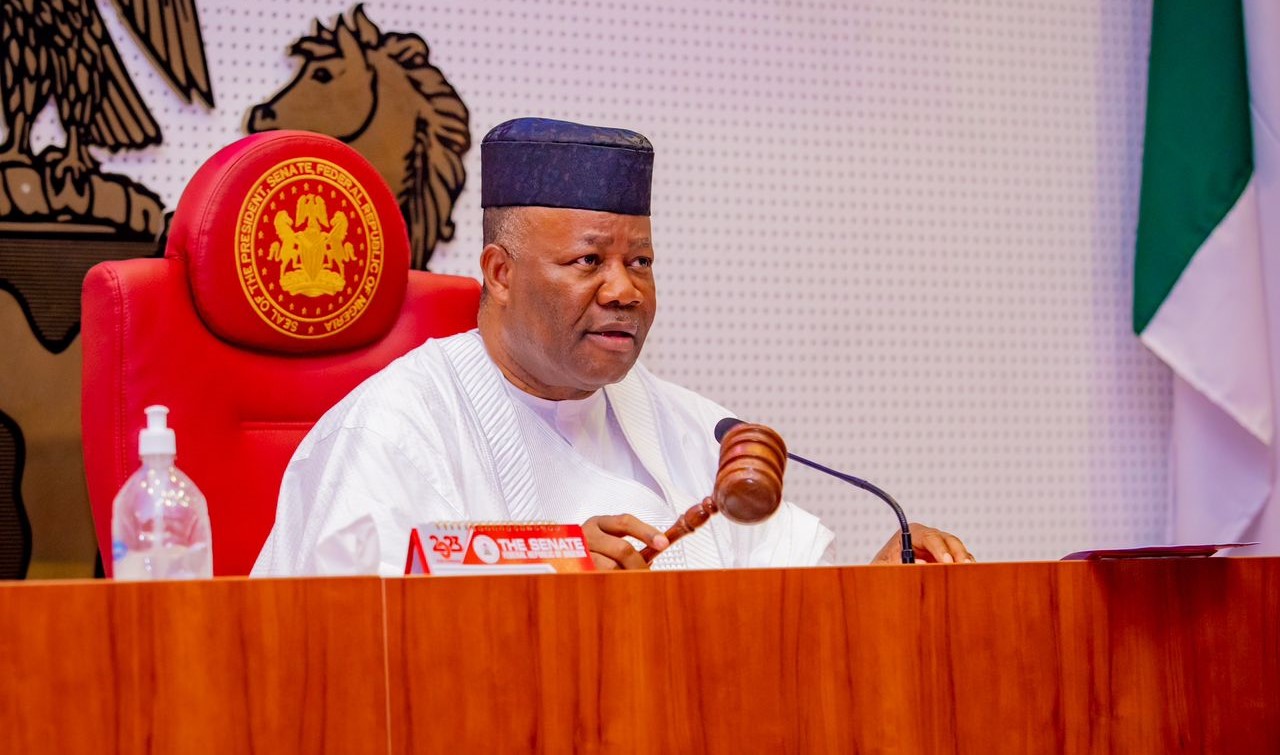
The National Security Adviser, Nuhu Ribadu, and President of the Senate, Godswill Akpabio, on Tuesday called for the deployment of modern technology and stronger regional cooperation to strengthen Nigeria’s border security architecture and address growing security threats across the country.

FILE: Akpabio

They made the call at the opening of the 15th National Security Seminar organised by the Alumni Association of the National Defence College in Abuja.

Represented by the Director of Policy and Strategy at the Office of the National Security Adviser, Yazid Gbemudu, the NSA said Nigeria’s territorial integrity and national stability were closely tied to the effectiveness of its border security framework.

He noted that while Nigeria’s extensive land and maritime borders facilitated trade, regional integration and socio-economic development, they also exposed the country to threats including terrorism, arms trafficking, smuggling, human trafficking, irregular migration and other forms of transnational organised crime.

According to him, weak border governance creates vulnerabilities that can be exploited by criminal and terrorist networks, thereby undermining national security and development efforts.

“A major pillar of Nigeria’s contemporary border security framework is the National Border Management Strategy, which promotes an integrated border management approach.

“The strategy seeks to enhance intelligence collaboration, strengthen border infrastructure, improve surveillance capabilities and modernise border management processes,” he said.

Ribadu said the deployment of Border Management Information Systems and other technological solutions at key entry and exit points had improved data collection, traveller screening and migration monitoring.

“These initiatives demonstrate Nigeria’s commitment to aligning its border management practices with international standards,” he added.

See also  VIDEOS & PHOTOS: FRSC Blames Speeding, Wrongful Overtaking for Anthony Joshua Crash

The NSA stressed the need for the full implementation of an integrated border management system to improve coordination among security, intelligence and law enforcement agencies.

“Effective intelligence sharing, joint operations and harmonised border procedures are essential for addressing contemporary security threats,” he said.

He also advocated increased investment in technology-driven border security solutions.

“Expanding surveillance systems across land, maritime and coastal borders will significantly improve monitoring capabilities and reduce illegal cross-border activities.

“Modern challenges require modern solutions, including biometric identification systems, advanced border monitoring technologies and data-driven security frameworks,” Ribadu stated.

The NSA further emphasised the importance of regional and bilateral cooperation, noting that many of the security challenges confronting Nigeria’s borders were transnational in nature and required coordinated responses among neighbouring countries.

He also called for greater investment in border communities through sustainable development, improved infrastructure and economic opportunities to reduce their vulnerability to criminal exploitation.

“Strengthening Nigeria’s border security architecture is fundamental to ensuring national stability, protecting territorial integrity and promoting socio-economic development,” he said.

Ribadu, however, acknowledged challenges such as porous borders, inadequate infrastructure, limited technological capabilities and gaps in inter-agency coordination, saying they required urgent attention.

“Border security is a shared responsibility that requires the collective efforts of security agencies, government institutions, border communities and international partners,” he added.

Speaking at the event, Akpabio, who was represented by the Chairman of the Senate Committee on Defence, Ahmad Lawan, said Nigeria’s extensive land and maritime boundaries posed significant security challenges.

“As a country with extensive land and maritime boundaries, Nigeria faces significant challenges relating to border control, illegal migration, arms trafficking, smuggling and the infiltration of criminal and extremist elements.

See also  FG, World Bank in talks over second-largest $1.25bn loan

“It is, therefore, imperative that Nigeria prioritises the strengthening of its border security architecture through improved surveillance, enhanced infrastructure, better inter-agency coordination, technological innovation and stronger regional cooperation,” he said.

Akpabio noted that many of the security threats confronting Nigeria had transnational dimensions, making coordinated responses essential.

He stressed that peace and security remained prerequisites for meaningful national development.

“There can be no meaningful development without peace and security. Porous and poorly managed borders can become vulnerabilities that undermine national security efforts and national stability,” he said.

The Senate President also advocated a whole-of-government and whole-of-society approach to addressing insecurity.

According to him, government institutions, security agencies, civil society organisations, the private sector, traditional institutions, the media and academia all have critical roles to play in safeguarding the country.

Earlier, the Acting President of AANDEC, Commodore Amatare Kpou (retd.), described the seminar as a key platform for promoting informed discourse on national security challenges and opportunities.

Kpou said the theme of the seminar, “Strengthening Nigeria’s Border Security Architecture for National Stability,” was timely, given the growing threats of irregular migration, smuggling, trafficking and other cross-border crimes.

He expressed confidence that the deliberations would generate useful recommendations for policymakers and contribute to efforts aimed at building a safer and more secure Nigeria.

Nigeria shares over 4,000 kilometres of land borders with neighbouring countries and an extensive coastline, making border security a critical component of national security.

Authorities have repeatedly identified porous borders as channels for terrorism, arms smuggling, human trafficking and other transnational crimes.

The Federal Government has in recent years intensified efforts to strengthen border management through technology, intelligence sharing and regional cooperation.

See also  FG slammed as medical tourism hits $550m annually

punch.ng

FOLLOW US ON:

FACEBOOK

TWITTER

PINTEREST

TIKTOK

YOUTUBE

LINKEDIN

INSTAGRAM

Continue Reading

News

FG releases barely 5% of N54.93tn three-year roads budget

Published

on

The Federal Government has released about N2.68tn for the construction, rehabilitation and maintenance of roads and bridges across the country between 2023 and April 2026, findings by The PUNCH from the Open Treasury Portal have shown.

The analysis, however, revealed a significant disparity between approved budgets and actual releases, with the government making provisions totalling N54.93tn for road-related projects within the period under review.

The figures highlight both the growing emphasis on infrastructure development and the persistent financing constraints that continue to affect capital project execution in the country.

The development also comes amid the ongoing Renewed Hope Media Tour organised by the Presidential Communications Team, designed to showcase projects being implemented under President Bola Tinubu’s Renewed Hope Agenda.

Data obtained from the Open Treasury Portal on Tuesday showed that road projects attracted a combined budgetary allocation of N2.53tn in 2023, out of which N631.51bn was released, representing an implementation rate of 24.95 per cent.

The Treasury data, however, did not specify the road projects to which the funds were released and did not indicate whether the government’s four legacy highway projects formed part of the expenditure.

A year-by-year breakdown showed that road construction projects received N280.14bn from a budget of N1.09tn during the year, while rehabilitation and repair works attracted N345.93bn from an allocation of N1.42tn. Road and bridge maintenance projects also received N5.44bn out of a total provision of N14.68bn.

In 2024, the Federal Government increased its budgetary commitment to the sector, making provisions amounting to N9.39tn for road-related projects. However, actual releases stood at N784.60bn, representing 8.36 per cent of the approved amount.

See also  Tinubu swears in Amupitan as new INEC chairman

Road construction projects accounted for N383.74bn of the spending from an allocation of N5.05tn, while rehabilitation projects received N384.49bn from a budget of N4.32tn. The government also released N16.37bn for the maintenance of roads and bridges out of a total provision of N18.18bn.

The trend continued in 2025, with the government budgeting N7.22tn for road construction and rehabilitation projects. Treasury records showed that N670.68bn had been released during the period, translating to an implementation rate of 9.29 per cent.

Of the amount released, road construction projects received N269.75bn from an allocation of N3.42tn, while rehabilitation and repair projects attracted N400.94bn from a budget of N3.80tn.

The 2026 figures indicate a sharp rise in budgetary provisions. As of April 2026, the government had earmarked N35.79tn for road construction, rehabilitation and maintenance projects, the highest within the four-year period.

However, only N597.08bn had been released, representing 1.67 per cent of the approved budget. Specifically, road construction projects had a budgetary provision of N23.61tn, with releases amounting to N293.06bn.

Similarly, rehabilitation and repair projects received N300.80bn from a total allocation of N12.03tn. Road and bridge maintenance projects had an allocation of N144.64bn, but only N3.22bn had been released as of the end of April. Treasury records show that N26.54bn was released in April alone, leaving an outstanding budget balance of N23.32tn yet to be funded.

The data indicate that although substantial sums have been earmarked for road projects over the years, actual cash releases remain significantly lower than approved allocations, reflecting the financing constraints that often affect capital project implementation.

See also  FG slammed as medical tourism hits $550m annually

Further analysis showed that road construction consistently attracted the largest allocations. Budgetary provisions rose from N1.09tn in 2023 to N23.61tn in 2026, reflecting the Federal Government’s increasing focus on large-scale highway projects.

Road rehabilitation spending remained substantial throughout the period. Allocations increased from N1.42tn in 2023 to N12.03tn in 2026, suggesting a parallel effort to repair existing infrastructure.

Maintenance received the smallest allocations but recorded the highest execution rate. In 2024, road and bridge maintenance achieved a 90.05 per cent implementation rate, compared to less than 10 per cent for construction and rehabilitation.

Overall, the Federal Government budgeted N54.93tn for road-related projects between 2023 and April 2026 but released N2.68tn during the same period.

The data also showed that while budgetary provisions expanded significantly over the years, the percentage of funds released declined. In 2023, about 25 per cent of the approved budget was released. This fell to 8.36 per cent in 2024 and 9.29 per cent in 2025.

As of April 2026, only 1.67 per cent of the total budgetary provision had been released. The development comes amid the Federal Government’s renewed focus on infrastructure as a catalyst for economic growth.

Several major road projects are currently underway across the country, including the Lagos-Calabar Coastal Highway, the Abuja-Kaduna-Zaria-Kano Road, the Sokoto-Badagry Super Highway and other strategic federal highways aimed at improving connectivity across Nigeria’s six geopolitical zones and stimulating economic activities.

The Minister of Works, David Umahi, recently disclosed that the Federal Ministry of Works would prioritise the completion of major highways and the execution of four presidential legacy projects in its 2026 capital plan.

See also  Over 3.7 million battling food crisis in northeast Nigeria – ICRC

According to the minister, the ministry inherited over 2,000 ongoing projects in 2023, many of which have been rolled over into subsequent budgets due to funding constraints.

Umahi also told lawmakers during the defence of the ministry’s 2026 budget proposal that the Federal Government owed contractors about N2.2tn for certified works executed between 2024 and 2025, underscoring the financing challenges facing the road sector despite rising budgetary allocations.

He added that only a fraction of expected capital releases had been made, forcing the ministry to re-scope and prioritise projects.

The Open Treasury Portal, which tracks government revenues and expenditures, provides a snapshot of how much of the approved budgets for capital projects has translated into actual spending.

Although the latest figures point to an unprecedented expansion in planned spending on road infrastructure, the challenge, analysts say, will be ensuring that budgetary commitments are backed by timely releases to deliver the intended benefits to Nigerians.

punch.ng

FOLLOW US ON:

FACEBOOK

TWITTER

PINTEREST

TIKTOK

YOUTUBE

LINKEDIN

INSTAGRAM

Continue Reading

Trending