News
PHOTOS: Osun hospital detains newborn, over mother’s N700k debt

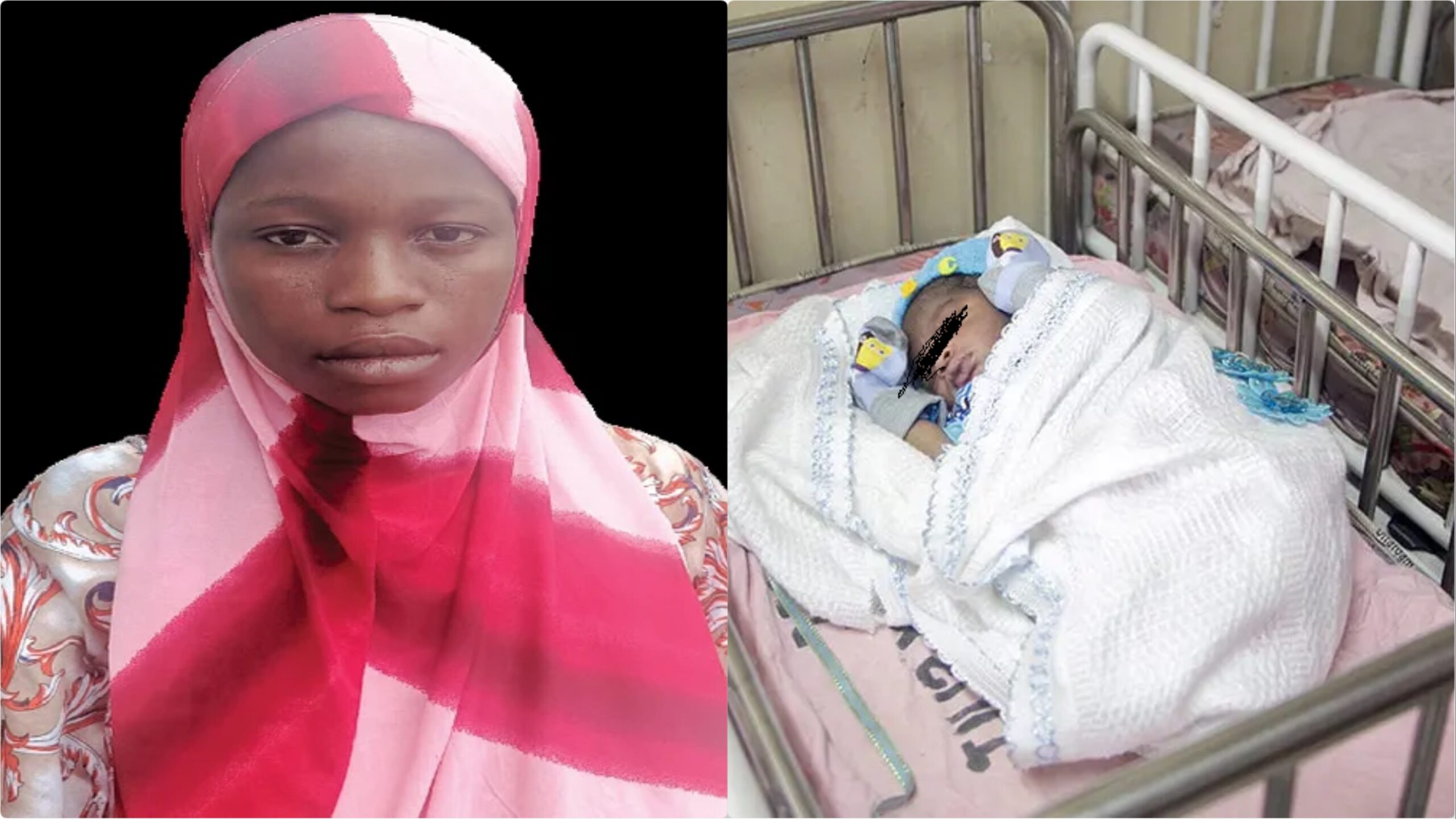
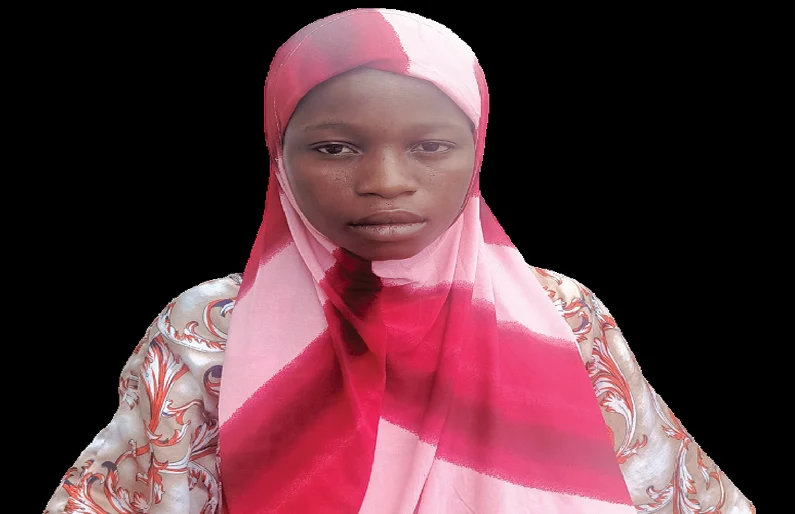
A 21-year-old first-time mother, Iqmat Yinusa, has cried out for help after watching her newborn son grow inside a hospital cot, a tiny space he has never been allowed to leave because of an unpaid medical bill running into hundreds of thousands of naira.
It was reports that for more than three months, the young mother and her baby have remained at Lifeline Paediatric Hospital, Alekuwodo, Osogbo, Osun State, since August, unable to go home after treatment was completed, following the family’s inability to settle the hospital charges.
Yinusa, who hails from Iree, Boripe Local Government Area of Osun State, shared the harrowing experience of her family with The PUNCH.
With hurried steps and visible anxiety, Yinusa approached journalists, and before she could be asked a question, the young woman knelt down in greeting and pleaded for help.
“Ekaasan sir (Good afternoon sir). Please help me. My child and I have been here since August this year, and we’re not allowed to go because we couldn’t pay the hospital bill,” she said, her voice shaking with emotion.
Three Days of Labour, Emergency CS
Yinusa narrated that her ordeal began after she went into labour and spent three days at two different hospitals, hoping for a normal delivery.
She was first admitted to a hospital in Iree before being transferred to another private hospital in Iragbiji, where doctors later advised a Caesarean section due to complications.
“I was shocked when I was told I would undergo a CS. We didn’t expect it, although I had been in labour for three days. I was first admitted in Iree, then transferred to Iragbiji, where I spent two days before the procedure. It was a painful experience,” she recalled.
According to her, the baby became weak before delivery and was rushed out immediately after birth for specialist care at Lifeline Paediatric Hospital in Osogbo.
“My baby was rushed out of the hospital after delivery. I was told he was weak because of the labour stress and needed urgent medical attention. He was taken to Lifeline Hospital in Osogbo,” she said.
She added that being separated from her newborn at birth was traumatic. Yinusa said, “Despite being in pain, I wanted to stay with him. Being separated from my baby at birth was harrowing. I kept praying for a quick recovery and divine intervention so I could be with him.”
Mother Battles Health Complications
Yinusa’s health deteriorated after delivery, delaying her reunion with her child for about a month. She said she was stabilised with two pints of blood and several sachets of intravenous fluids.
By the time she was strong enough to join her baby at the hospital, the family’s finances had already been badly stretched.
“All I wanted was to be near my child,” she said.
At Lifeline Hospital, the baby was placed on oxygen for more than a week. Recalling her first meeting with her son after weeks of separation, Yinusa broke down in tears.
“I burst into tears when I saw where he was placed. It was such an emotional moment for me. I held him tight for the first time after a month. The hospital staff had been taking care of him, feeding him with baby formula. May no mother experience what I am going through,” she prayed.
She said breastfeeding was initially difficult as a first-time mother but improved over time.
“By the time I joined him, he had completed treatment, so my role was mainly cleaning and feeding him,” Yinusa explained.
Restricted Access Due To Unpaid Bills
It was reports that despite being allowed to stay in the hospital, Yinusa said her interaction with her baby was restricted because of the unpaid bill.
She explained that she could feed and clean her child, but was not allowed to hold him for long, for fear of being sent away by hospital staff.
“Till this moment, I haven’t been able to take my son home. I also can’t hold him for too long because of the hospital rules,” she said tearfully.
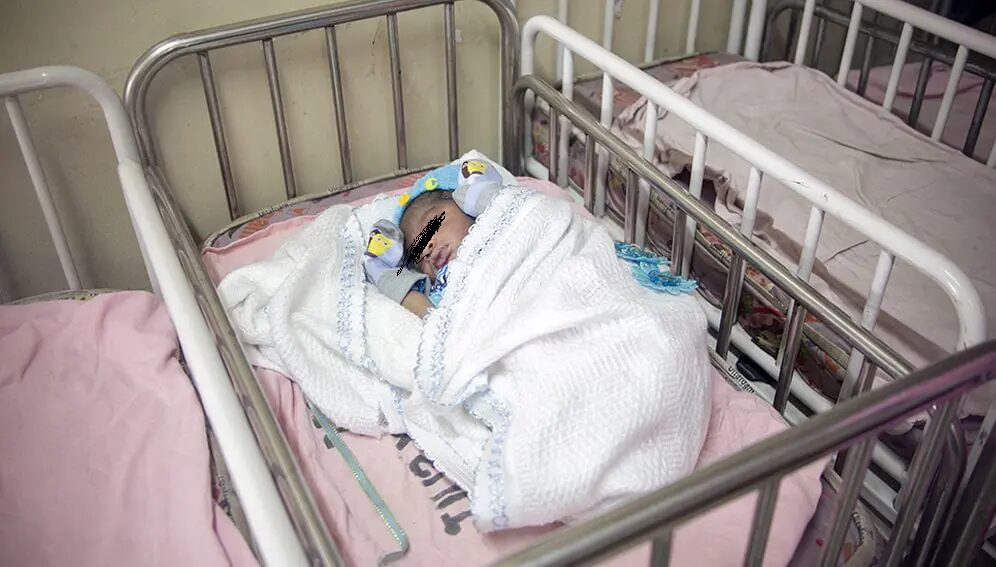
The young mother lamented that her baby, since birth, has never experienced life outside the hospital ward.
“Since birth, my baby has not seen the outside world. He has been confined to a small baby pod. The space is cramped, and rashes have appeared all over his body,” she said.
Explaining why her son had not been discharged, Yinusa said the hospital bill had become overwhelming for the family.
“We are owing the hospital. We couldn’t afford the bill, which is running to about ₦700,000. All the treatment amounted to over ₦800,000, but we made a deposit of ₦150,000 initially,” she explained.
She added that they had remained in the hospital since the first week of September, even after her baby completed treatment.
“I’m not blaming the hospital management; they have tried for us. I am appealing to well-meaning Nigerians to come to our aid,” the mother said.
‘I Am Exhausted’ – Father Speaks
The baby’s father, Sodiq, who spoke with journalists on the phone, said the experience had left him emotionally and financially drained.
The well-known moulder disclosed that he had spent over ₦900,000 on the treatment of his wife and child.
“This situation has drained me emotionally and financially,” he said.
According to him, his son was admitted on August 24 and completed about 15 days of treatment, but was not released due to the unpaid bill.
“My son has been detained for over three months because we couldn’t pay the hospital bill. He has spent nearly three months at the hospital now,” Sodiq.
Sodiq further explained the financial burden the family had borne since August.
“My wife underwent surgery to deliver the baby. She received two pints of blood transfusion. We deposited ₦150,000 before treatment started. The baby was on oxygen for eight days,” he said.
He added, “I spent ₦9,000 every four days on baby food. That’s almost ₦20,000 per week. We ran several tests for my wife and the baby, which cost a lot. I mould and fix well rings, but there is no patronage now. Nobody is willing to give me a loan.”
Appealing for public assistance, he said, “Please help us. Even if we manage to pay the bill now, what will we eat afterwards?”
Findings by reporters revealed that Yinusa’s experience is not isolated, as at least two other mothers were previously detained at the same hospital for over two months due to unpaid medical bills.
They were, however, released a few weeks ago after funds were raised to settle their bills.
FOLLOW US ON:

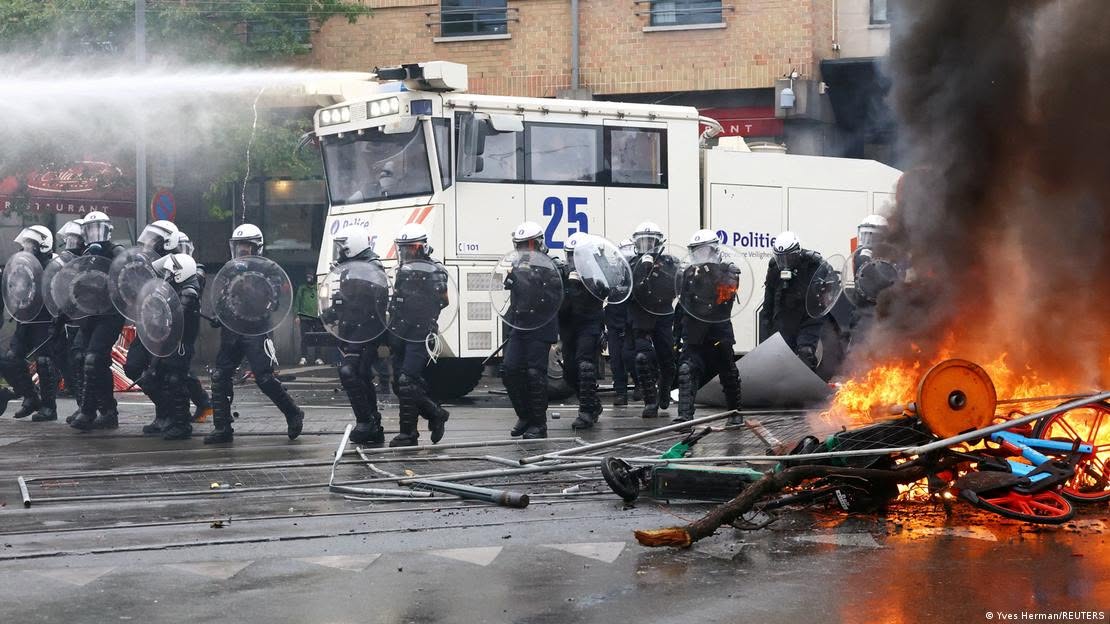
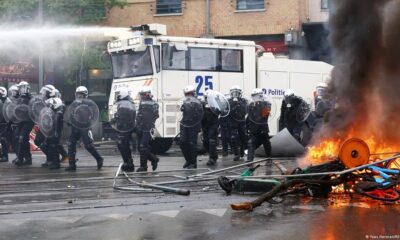
Violent rioters, many of whom were masked, confronted police at the edge of an anti-austerity march in Brussels. Police responded with water cannons and tear gas.
Hundreds of protesters clashed with police in the Belgian capital on Friday during an anti-austerity march organized by trade unions.
Masked protesters dressed in black threw rocks and other projectiles at police in Brussels. Anti-police slogans echoed through the streets, and similar graffiti covered nearby walls.
An AFP reporter witnessed two buses being attacked after the passengers were evacuated. The rioters smashed the windows and ripped out the seats. Meanwhile, youths set fire to trash cans, rental bikes, and scooters.
According to Reuters, firefighters extinguished several fires, including those on buses.
How did police respond to protests in Brussels?
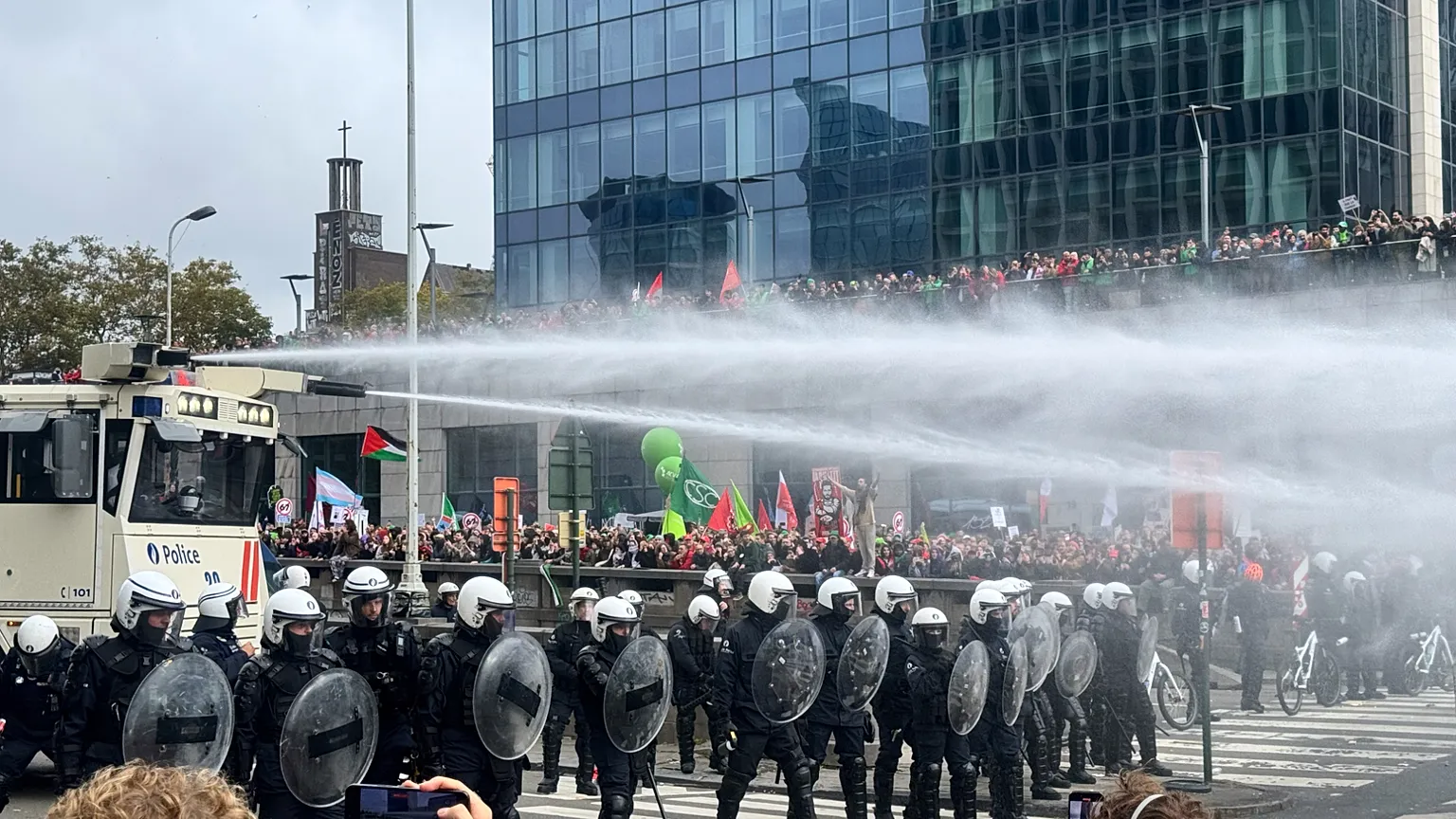
The police said officers used water cannons and tear gas after young people on the outskirts of the protest targeted them with sticks and bottles.
“Several hundred youths gathered along with the demonstrators,” police said in a statement. “The atmosphere gradually became more tense and there were serious disturbances to public order.”
In a preliminary update, the police said they had arrested approximately 20 people, mostly minors.
Police also said the main trade union march had gone ahead peacefully. Before the rally, union head Bert Engelaar called on rioters to stay away from the protest.
“Those individuals have nothing to do with the message with which thousands of others come out on the streets,” Engelaar wrote on Facebook.
What are the government’s goals?
Chaotic scenes of violence occurred during a demonstration in which between 30,000 and 50,000 people participated. It was one of many nationwide union protests against planned austerity measures.
Belgium is burdened by substantial public debt and a persistent budget deficit. Led by Prime Minister Bart De Wever, the center-right government aims to find €10 billion ($11.2 billion) in savings by the end of its term in 2029.
Rather than imposing cuts in areas like health and hiking VAT, trade unions are pushing for the government to increase taxes on the highest earners.
The clashes in Brussels came after a week of tension in Liege, where authorities banned public gatherings after students clashed with police and vandalized shops. Over 200 people were arrested in Liege, and dozens of police officers were injured.
Edited by: Sean Sinico
Credits: DW.COM
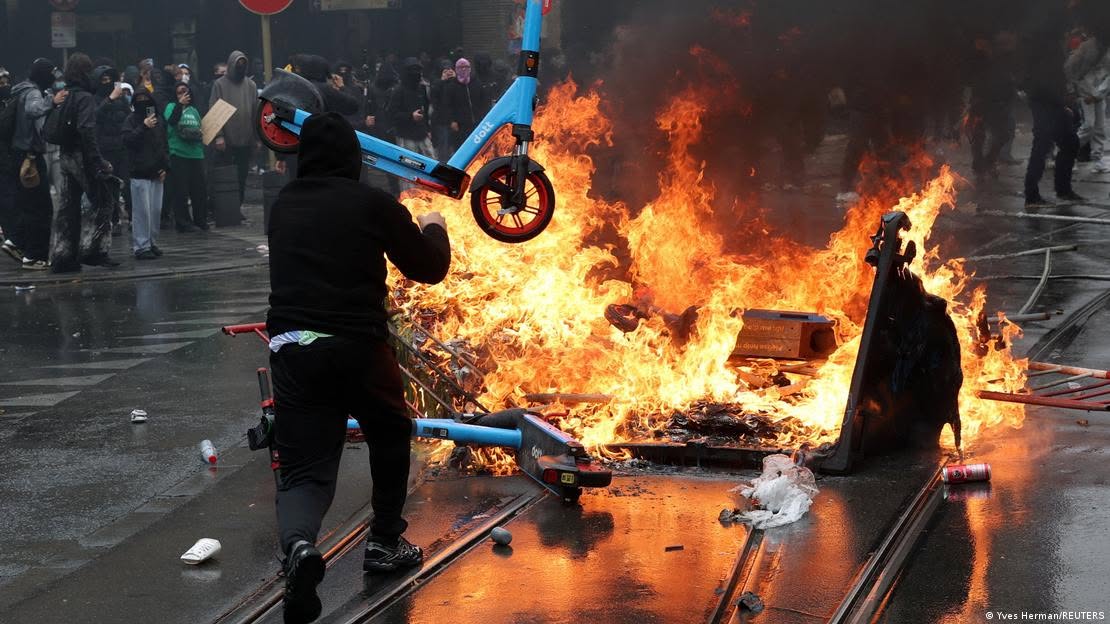
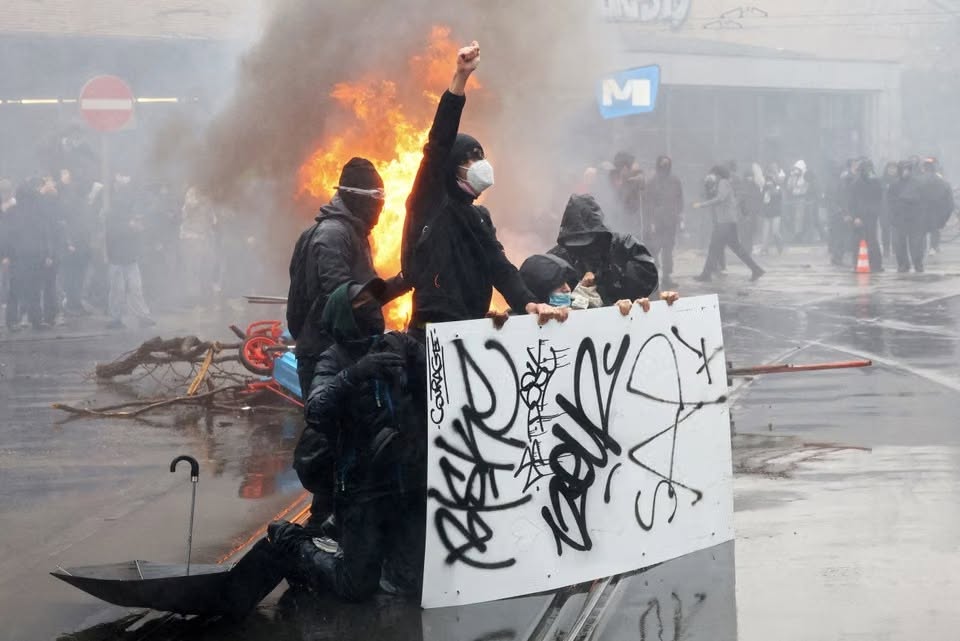
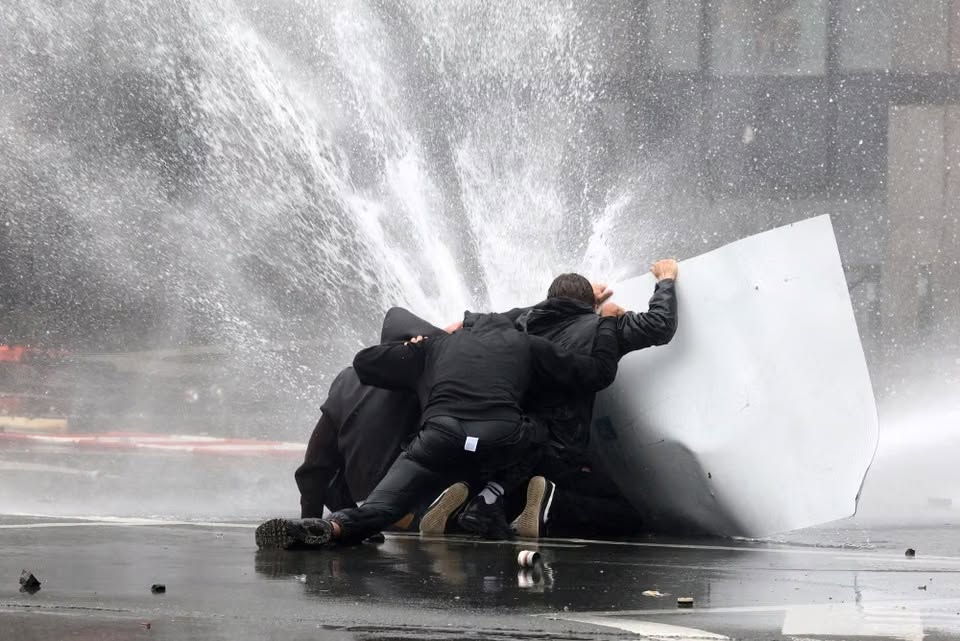
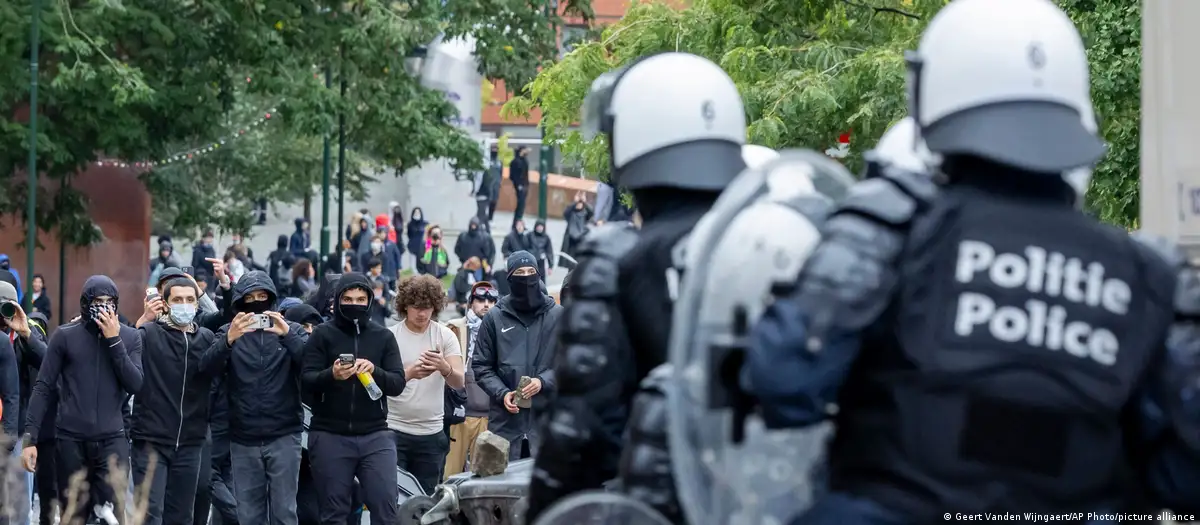
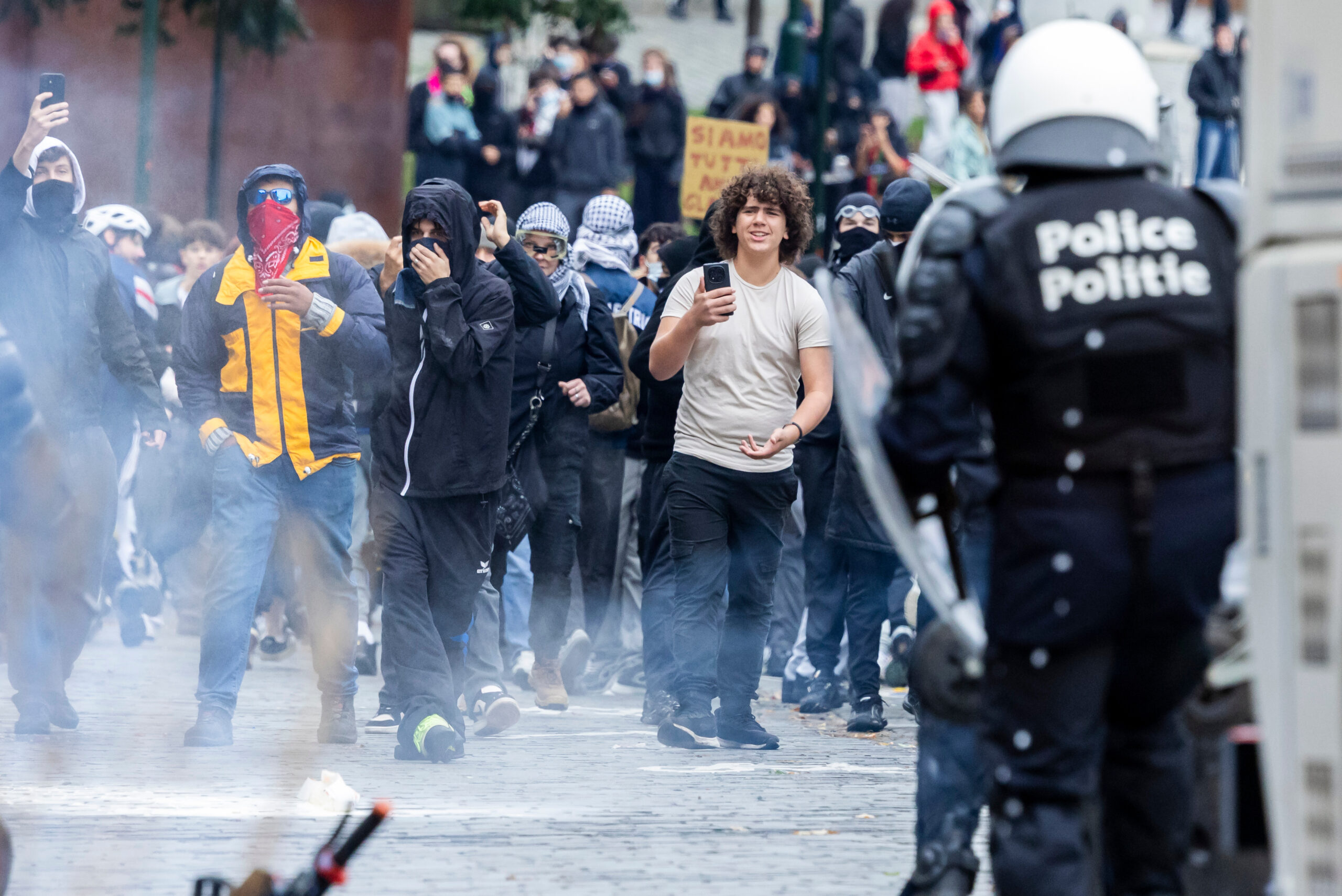
Protesters clash with riot police during a national demonstration against government budget cuts and proposed reforms in Brussels, Belgium, Friday, Oct. 9, 2026. (AP Photo/Geert Vanden Wijngaert)
News
How Could Yorubas Allow This Level Of Slavery? – Fayose Reacts As Army Officers Supervise Bread Sharing



I Have Lost My Freedom To Move – Regina Daniels Cries Out Over Health Challenge

‘We Should Bring Outsiders’ – Sowore Demands Independent Probe On Ondo Military Crash

PHOTOS: Brussels: Rioters clash with police at anti-austerity rally

‘Sleeping Prince’ of Saudi Arabia dies after 20 years in coma

2027: Atiku delays ADC membership card collection amid rumoured Jonathan comeback

How A Class Of 24 Students Produced 2 Presidents, 4 Governors, 2 Ministers, 4 Emirs, 3 Justices, 4 Ambassadors and Other Influential Leaders


-

 News8 hours ago
Man decries absence of emergency workers as car burns on Third Mainland Bridge
-
Lifestyle19 hours ago
“I MADE THIS PERSON WHO THEY ARE TODAY!” — REALLY?
-
Lifestyle20 hours ago
SOME PEOPLE WILL DO ANYTHING — EVEN EVIL — JUST TO MAKE MONEY!
-
News8 hours ago
PHOTOS: Russian bus stop bombing k!lls at least 33 in Ukraine
-
Crime8 hours ago
Three suspects arrested over alleged m8rder of 65-year-old woman accused of witchcraft in Niger State
-
Lifestyle26 minutes ago
I Have Lost My Freedom To Move – Regina Daniels Cries Out Over Health Challenge
-
Crime8 hours ago
Police arrest three suspected kidnappers, rescue 18-year-old victim in Abia
-
News48 minutes ago
PHOTOS: Brussels: Rioters clash with police at anti-austerity rally