The Managing Director/Chief Executive Officer of the Nigerian Independent System Operator, Abdu Bello, has disclosed that Nigeria’s power sector was losing between N5bn and N8bn monthly to transmission inefficiencies, even as he revealed that targeted interventions by the operator have begun to cut losses and improve grid stability.
Bello made this known on Wednesday during the organisation’s first anniversary celebration held at its headquarters in Utako, Abuja, where he presented a detailed scorecard of reforms and operational milestones recorded since its establishment.
Recall that NISO was officially created on April 30, 2024, by the Nigerian Electricity Regulatory Commission following the unbundling of the Transmission Company of Nigeria under the Electricity Act, 2023.
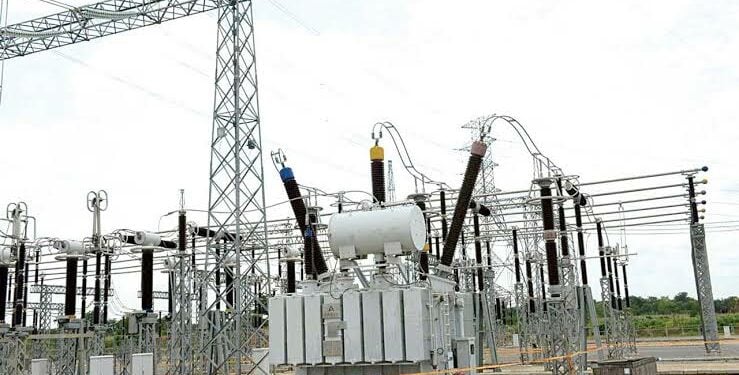
Speaking on one of the most pressing challenges inherited by the operator, Bello said the transmission loss factor at inception was alarmingly high, with severe financial implications for the power sector.
“One of the greatest problems we encountered at the inception of NISO was that we recorded a very high transmission loss factor. At some point, it was close to 10 per cent, costing about N5bn to N8bn monthly,” he said.
He, however, noted that deliberate operational measures have started yielding results.
“We are working on it, and we have reduced it to about 7.05 per cent at the moment. We are also working to reduce it further to about five or six per cent so that we will meet the target of the regulators,” Bello added.
Adopting a broader tone, the NISO boss said the past year had been defined by institution-building, system stabilisation, and market reforms aimed at repositioning Nigeria’s electricity sector.
“Today, we are not just celebrating one year of existence; we are reflecting on one year of deliberate effort, institutional progress, and measurable impact,” he said.
He explained that NISO was established to function as an independent system operator with responsibility for system operations, market administration, planning, and enforcement of grid codes and market rules.
“This mandate is central to Nigeria’s power sector reform. It is about ensuring that our grid is stable, our market is credible, and our planning is coordinated so that electricity can effectively support economic growth,” Bello stated.
On institutional development, he said the organisation had prioritised governance and coordination across the electricity value chain.
“We have established governance and management structures at both board and executive levels, and strengthened coordination from generation through transmission to distribution and eligible customers,” he said.
A major highlight of the address was NISO’s push to digitise grid operations through advanced monitoring systems.
Bello disclosed that the operator is accelerating the deployment of Supervisory Control and Data Acquisition/Energy Management Systems to enable real-time grid visibility.
“On grid visibility, monitoring, and control, a key priority has been improving our ability to see, understand, and manage the national grid in real time. In this regard, we have accelerated the implementation of the SCADA EMS project, working very closely with the Nigerian Electricity Regulatory Commission, NERC, to ensure that the grid monitoring infrastructure SCADA EMS tool, which is a veritable tool for the system operations, is completed and operational.
“It’s a work in progress and we are seeing progress on this. We have also reached advanced stages in the deployment of the telemetry system across the grid at the electricity trading points,” he said.
He added that the organisation was also deploying telemetry systems and Internet-of-Things-based metering infrastructure across generation units, transmission lines, and substations.
“By the time we complete this project, hopefully before the end of the year, we shall have full visibility of the national grid from generation through transmission, substations, and distribution,” he stated.
According to him, the initiative would enable near-real-time electricity market settlements and significantly improve operational efficiency.
“Currently, we operate largely manually, but with telemetry, we can achieve hourly settlements or even real-time market operations,” he added.
Bello also revealed that NISO has intensified efforts to tackle grid instability and recurring system collapses through technical reforms and stricter compliance enforcement.
“Thank God, the regulators, NERC, have already ordered the distribution companies to install IoT meters on their 33 kV and 11 kV feeders, which is an ongoing project. So at the end of this project, we shall have end-to-end visibility of the system from generation through transmission, distribution, and eligible customers.
“Thereby, enabling our system operators and market operators to have visibility on a real-time basis and enhancing effective management of the grid. With that, our efficiency and effectiveness in managing the grid will be tremendously enhanced. These efforts are laying the foundation for full visibility and a data-driven grid and market operations environment.
“At the core of our mandate is ensuring a stable and resilient grid. We are working closely with generation companies and other stakeholders to implement the free-governor mode of operation of generating units to improve frequency response,” he said.
He noted that compliance with this directive has already improved grid frequency stability.
“Substantially, a number of generating units have complied, and we have seen improvements in system frequency and overall grid reliability,” he said, while noting that enforcement actions were ongoing against defaulters.
He further disclosed plans to introduce grid “islanding”, a strategy that segments the national grid to prevent widespread outages.
“We are developing grid islanding to enhance resilience. Disturbances in one segment will not cascade across the entire grid. This will significantly reduce the risk of total system collapse,” he explained.
On market operations, Bello said NISO has taken steps to improve transparency, enforce compliance with market rules, and strengthen coordination among industry players.
“We have enhanced monitoring and enforced compliance with the grid code, market rules, and metering standards. We are also upgrading market systems to enable real-time operations and improved analytics,” he said.
He added that NISO is playing a central role in coordinating emerging state electricity markets following recent sector reforms.
“With states now able to establish their own electricity markets, there must be coordination between state systems and the national wholesale market. That interface is being managed by NISO,” he said.
The NISO boss also linked recent fluctuations in power generation to gas supply challenges, stressing the need for stronger coordination between the power and gas sectors.
“You will have noticed a slight drop in generation capability recently due to gas supply constraints. This coordination between the power sector and gas suppliers is very critical,” he said.
He assured that regulators and stakeholders are working to address the issue and prevent future disruptions.
In a significant development, Bello disclosed that Nigeria has achieved trial synchronisation of its national grid with the West African power system, opening new opportunities for cross-border electricity trade.
“On November 8, 2025, we successfully synchronised the Nigerian grid with the West African power pool, positioning Nigeria for enhanced regional power trade,” he said.
He explained that the integration would allow Nigeria to export excess power and earn foreign exchange.
“This gives us a bidirectional opportunity to either supply power to the region or import when necessary. It also creates the potential to earn hard currency, which can be reinvested to improve domestic capacity. By
These interventions are contributing to improving system discipline and reliability together. On electricity market development and strengthening, we have made deliberate efforts to strengthen market credibility and transparency.
“Over the past year, we have enhanced monitoring and enforced compliance with the market rules, grid code, and metering standards. We have also improved coordination among market participants to support orderly market operations.
“We have initiated upgrades to market management systems to enable real-time operations, efficient settlement, and improved analytics. We have strengthened data transparency to support informed decision-making in the market space,” he added.
NISO was carved out of the Transmission Company of Nigeria as part of sweeping reforms introduced by the Electricity Act, 2023, to liberalise and decentralise Nigeria’s power sector.
The reform seeks to separate system operations from transmission ownership, improve transparency, and create a more competitive electricity market.
“As we enter our second year, our focus is clear—to translate these foundations into measurable
sector-wide impact. Our priorities include: deepening grid visibility and real-time operational control, strengthening system reliability and resilience, enhancing transparency and efficiency in market operations, enhancing data-driven and technology anchored system planning, supporting coordinated development of national and subnational electricity markets, advancing renewable integration and energy transition initiatives, continuing to invest in staff welfare and institutional capacity and ultimately, our success will be measured by three outcomes: a stable grid, a credible market, and strong investor confidence,” the MD concluded.
Despite these reforms, Nigeria’s power sector continues to face structural challenges, including transmission constraints, gas supply shortages, liquidity issues, and weak infrastructure.
NISO’s first-year performance signals a shift towards data-driven grid management and coordinated planning, although sustained investment and policy consistency will be required to deliver long-term stability.
punch.ng
FOLLOW US ON:
FACEBOOK
TWITTER
PINTEREST
TIKTOK
YOUTUBE
LINKEDIN