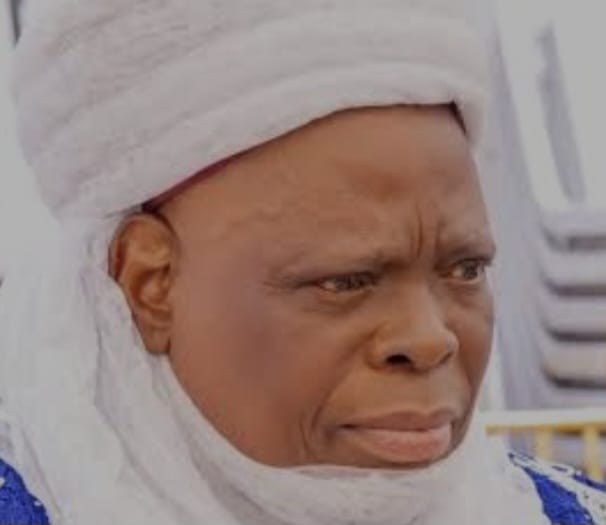
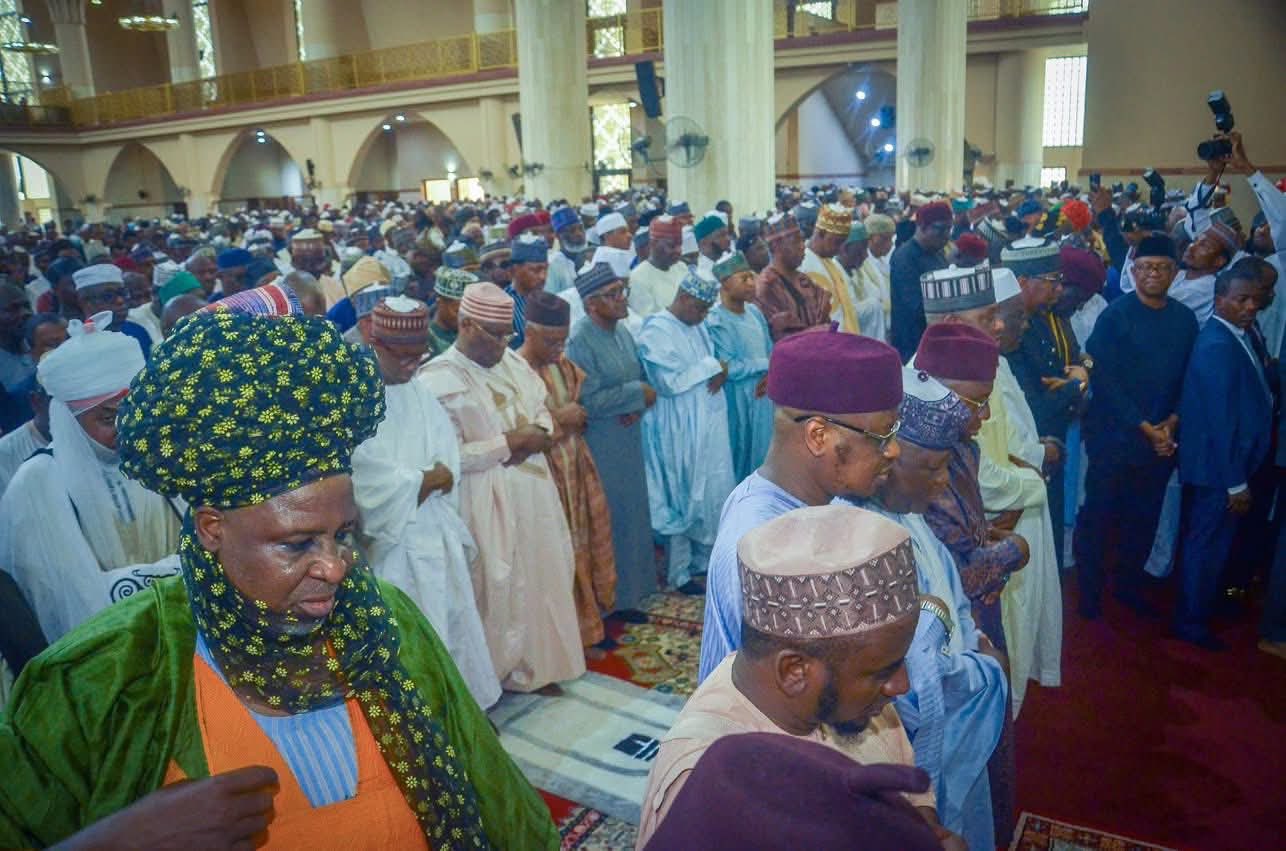
The Emir of Ilorin and Chairman of the Kwara State Traditional Rulers Council, Alhaji Ibrahim Sulu-Gambari CFR, has announced the death of the Chief Imam of Ilorin, Shaykh Muhammad Bashir Imam Solih OON.
In a condolence message issued on Monday by his Press Secretary, Dr Abdulazeez Arowona, the Emir conveyed the news of the cleric’s passing and his acceptance of Allah’s will.
According to multiple reports, the Imam passed away early Monday, aged 75.
He said: “Inna lillahi waina ilaehi roji’un, it is with total submission to the will of Almighty Allah that we receive the news of the demise of the 12th Chief of Ilorin, Shaykh Muhammad Bashir Imam Solih Onida OON.”
Speaking further on the personal qualities and character of the late Chief Imam, the Emir described his attributes and the impact of his death on the Ilorin Emirate.
He said: “He was a cleric with unique features, intelligence, honesty, loyalty, dedication, and tolerance.
“His demise has caused us in Ilorin Emirate great sadness of no particular measure.
“We reflect on his lifetime as a man of great honour and piety.”
The Emir also highlighted the role of the late cleric in fostering unity within the Muslim community and promoting harmony across religious lines.
According to him: “Late Imam Solih was full of wisdom, and he was notable for unifying the entire Muslim clerics as well as promoting inter-religious harmony in the state.”
Providing details of the burial arrangements, the Emir announced the schedule for the janazah prayers.
He said: “The Janazah will hold at the Palace Square of the Emir of Ilorin by 4 pm today, Monday, 19th January 2026.”
The Emir concluded by offering prayers for the deceased, asking Almighty Allah to grant Imam Bashir Imam forgiveness, accept his good deeds, and admit him into Al-janatul firdaos.
Meanwhile, the deceased is the 12th Chief Imam of Ilorin for over forty years since 1983.
In addition to his responsibilities, the late Chief Imam held the position of Chairman of the Kwara State Council of Ulama, Alfas, and Imams.
The Kaduna State Governor, Uba Sani, has approved 50 Christians from the state to embark on holy pilgrimage, ending an 11-year suspension of the programme.
The Christian pilgrimage scheme was halted during the administration of former Governor Nasir El-Rufai, when the Christian Pilgrims Welfare Agency was scrapped—a move that generated controversy within sections of the Christian community.
Reacting to the development on Wednesday in a telephone interview with PUNCH Online, the Chairman of the Kaduna State chapter of the Christian Association of Nigeria, Rev. Ma’aji Bawa, commended the governor for what he described as a bold and inclusive decision.
“We are grateful to Governor Uba Sani for approving 50 Christians to commence pilgrimage after 11 years. This decision has restored hope and strengthened the confidence of Christians in the state,” Bawa said.
He described the approval as a significant first step, expressing optimism that more beneficiaries would be accommodated in subsequent exercises.
“Although the number is 50 for now, we believe it is a foundation to build upon. We trust that the government will gradually increase the number so more faithful can participate,” he said.
The cleric emphasised that pilgrimage was a sacred spiritual obligation and not a recreational venture. “Pilgrimage is not a jamboree. Those going are embarking on a spiritual journey to seek God’s face. They will pray for peace, unity and development in Kaduna State and Nigeria at large,” he stated.
Bawa said the restoration of the pilgrimage scheme was symbolic and spiritually significant, noting that it demonstrated the government’s recognition of the role of faith in society.
“This gesture shows inclusiveness and respect for religious diversity. It strengthens the relationship between the government and the Christian community,” he added.
He, however, urged transparency and fairness in the selection process, stressing that only spiritually committed and responsible individuals should be chosen.
“We expect a credible and transparent process. Those selected must understand the purpose of pilgrimage and represent the state with dignity,” he said.
Bawa called on Christians in Kaduna to remain prayerful, law-abiding and supportive of the government’s policies.
“As believers, we must continue to obey the laws of the land and support initiatives that promote unity and development. We also have a duty to pray for our leaders and the progress of our state,” he said.
He expressed hope that the resumption of the pilgrimage programme would foster greater harmony and spiritual renewal across Kaduna State.
The Christian Association of Nigeria has called for inclusive governance, effective policy implementation and national unity as Christians in Nigeria and across the world observe Ash Wednesday.
CAN, in a press statement, signed by its President, Archbishop Daniel Okoh, on Wednesday in Abuja, explained that the season presents an opportunity for reflection on the state of the nation and the role citizens and leaders must play in shaping Nigeria’s future.
CAN noted that the country is currently facing significant social and economic challenges, including rising living costs, unemployment concerns and persistent security issues affecting communities.
According to the statement, “Nigeria is passing through a challenging period. Many households are struggling with the rising cost of living, uncertain job opportunities, and daily economic pressures.
“In several parts of the country, security concerns continue to affect communities and test the confidence of citizens.”
CAN notes that these realities require practical action, responsible leadership, and a shared commitment to finding lasting solutions.”
The association urged leaders at all levels to move beyond policy formulation and prioritise implementation that directly benefits citizens.
“CAN urges leaders at all levels to move beyond drafting policies and focus on implementing them effectively,” the statement said.
It added that while Nigeria has numerous policies, the challenge lies in ensuring they are carried out fairly, transparently, and in ways that bring real relief to citizens.
The group also stressed the need for inclusiveness in governance, calling on leaders to be mindful of Nigeria’s diversity and to ensure government programmes reach households, young people and communities for whom they are intended.
Addressing citizens, CAN cautioned against division and misinformation, saying Nigerians must reject violence and embrace unity despite differences in faith, ethnicity and culture.
“We also encourage citizens to reject division, violence, and the spread of false information,” CAN said.
Stressing that cooperation among religious communities and responsible civic conduct remain essential for peace and national stability.
The association appealed to young people to focus on innovation and productive engagement, urging them to channel their energy toward nation-building and responsible participation in public life.
“As we mark this Ash Wednesday, may it renew our collective commitment to justice, compassion, and responsible citizenship,” the statement added.
As CAN noted, Nigeria’s progress depends on collective efforts by both leaders and citizens.
Millions of Muslims and Christians around the world are beginning observances of Ramadan and Lent today, marking periods of spiritual reflection, fasting, and devotion in their respective faiths.
For Muslims, Ramadan, the ninth month of the Islamic lunar calendar, is a time of fasting from dawn to sunset, increased prayers, charity, and self-discipline.
Christians observing Lent will also embark on a 40-day period of prayer, penance, and self-denial, leading up to Easter Sunday, with the observance of Ash Wednesday to commence the Lenten season.
Saudi Arabia on Tuesday officially announced the sighting of the crescent moon, marking the beginning of Ramadan 1447.
With the Hilal confirmed, the holy month of Ramadan begins on Wednesday, with Taraweeh prayers held after the Isha prayer on Tuesday night.
A post by @Muslim on X read, “BREAKING: Saudi Arabia announces the first day of fasting for Ramadan to begin on Wednesday, February 18, 2026. Taraweeh will begin tonight on the first evening of the blessed month. It’s recommended to follow the fasting time designated by your local community and country.”
Muslims in Saudi Arabia, Nigeria, Qatar, the United Arab Emirates and some other parts of the world will begin their first day of fasting at dawn on Wednesday, ushering in a month dedicated to prayer, reflection and devotion.
In Japan, however, Ramadan 2026 will begin on Thursday, February 19.
Oman, Singapore and Turkey have also officially announced that Thursday, February 19, will mark the first day of Ramadan 2026.
The Sultan of Sokoto, Alhaji Sa’ad Abubakar, on Tuesday evening, declared Wednesday 18th of February 2026, the first day of the Holy Month of Ramadan.
He said the crescent moon was sighted in almost every part of the country earlier on Tuesday, which is the 29th day of the Month of Shaban and thereby signified Wednesday as the first day of Ramadan 1447.
The Sultan, according to a press statement made available to newsmen in Sokoto on Tuesday and signed by the Chairman of the Advisory Committee on Religious Affairs, Prof Sambo Wali Junaid, called on the entire Muslim communities in the country to start fasting on Wednesday in accordance with the teachings of Islam.
He said the council got information on the moon sighting from many Islamic leaders across the country, which he said signified the start of Ramadan fast on Wednesday.
He called on the Muslims across the country to use the month of Ramadan to continue to pray for the leaders of the country and also to curb the insecurity situations in the country.
The Catholic pontiff, Pope Leo XIV, has, however, urged Christians across the world to abstain from words that offend and hurt others as the Lenten season begins.
In his 2026 Lenten Message released ahead of Ash Wednesday, and sighted on the Vatican website, the Pontiff described refraining from hurtful language as a “very practical and frequently unappreciated form of abstinence.”
He said, “I would like to invite you to a very practical and frequently unappreciated form of abstinence: that of refraining from words that offend and hurt our neighbour.”
As Christians mark the beginning of Lent, a 40-day period of prayer, fasting and almsgiving, Pope Leo XIV said the liturgical season offers an opportunity to place the mystery of God at the centre of life.
He explained that every journey of conversion begins by allowing God’s word to touch the heart, leading to renewed commitment to follow Christ in His passion, death and resurrection.
The Pope stressed the importance of listening, both to God and to others, noting that authentic relationships grow from attentiveness.
Pope Leo XIV
“In the midst of the many voices present in our personal lives and in society, Sacred Scripture helps us to recognise and respond to the cry of those who are anguished and suffering,” he said.
He added that Christians should cultivate inner openness, especially towards the poor, whose struggles challenge individuals, economic systems and even the church.
Highlighting the spiritual value of fasting, the Pontiff said it helps believers rediscover their deep desire for justice and frees them from complacency.
“Precisely because it involves the body, fasting makes it easier to recognise what we ‘hunger’ for and what we deem necessary for our sustenance,” he said.
He noted that fasting helps to properly order one’s appetites and keep alive the thirst for justice.
However, he cautioned that fasting must be done in faith and humility, warning against practices that could lead to pride.
Pope Leo XIV particularly underscored what he described as an under-appreciated form of fasting, that is, disarming one’s language.
“Let us begin by disarming our language, avoiding harsh words and rash judgment, refraining from slander and speaking ill of those who are not present and cannot defend themselves,” he urged.
He called on Christians to cultivate kindness and respect in their families, workplaces, parishes, on social media and in political debates.
According to him, if believers embrace such discipline, words of hatred would “give way to words of hope and peace.”
The Pope also emphasised the communal dimension of Lent, encouraging parishes, families and religious communities to become places of listening and welcome, especially for those who suffer.
He concluded by praying that Christian communities would gain the strength to practise a form of fasting that extends to the use of language, creating greater space for the voices of others.