Connect with us

Education

FG seeks to transform polytechnics for job creation, innovation

Published

on

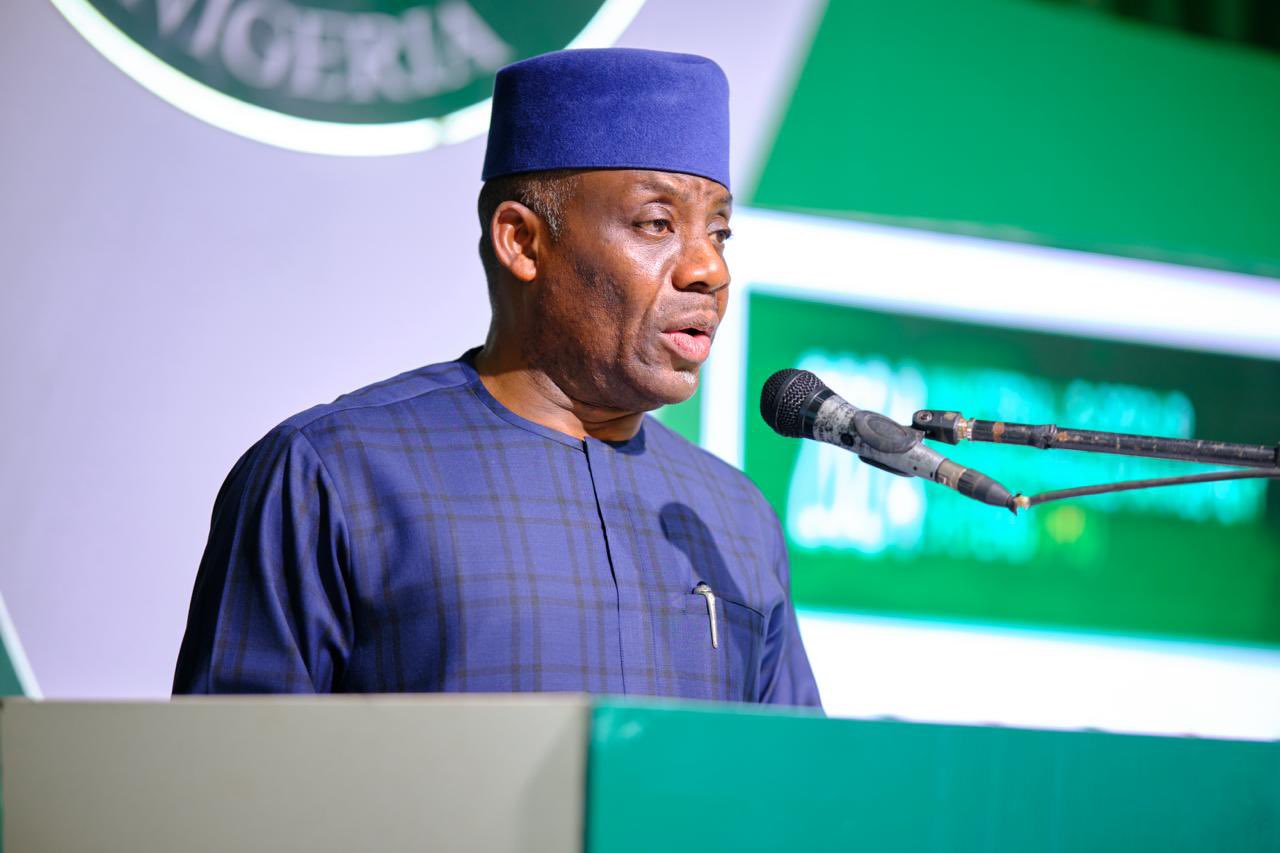
The Minister of Education, Dr Maruf Alausa, has called for a comprehensive transformation of Nigeria’s polytechnic education, emphasising innovation, good governance, and sustainability as key drivers for national development.

His made the call during a retreat organised by the Conference of Heads of Polytechnics, Colleges of Education, and similar institutions for council chairmen, commissioners of education, rectors, registrars, and bursars on Wednesday in Abuja.

Speaking on the theme, ‘Transforming Polytechnic Education in Nigeria: Innovation, Good Governance and Sustainability for National Development’, the minister said, “Polytechnics are not mere institutions; they are the crucibles where innovation meets practicality, where skills forge economic resilience, and where sustainable development becomes a lived reality for our nation.”

The minister highlighted the Federal Ministry of Education’s focus on revitalising Technical and Vocational Education and Training, stressing the need to equip graduates with practical, industry-ready skills.

“We have adopted a policy that ensures our Polytechnic graduates are industry-ready, innovative problem-solvers capable of driving national development,” he stated.

Alausa urged polytechnic leaders to prioritise entrepreneurship and research initiatives.

“Innovation must be the heartbeat of our Polytechnics. I urge you to foster entrepreneurship centres, research hubs, and industry partnerships that turn ideas into prototypes, inventions into enterprises, which will graduate into job creators,” he noted.

He also identified priority sectors including renewable energy, agricultural technology, digital manufacturing, and climate-resilient solutions.

On governance, the minister called for transparency, accountability, and ethical leadership in polytechnics.

“Governing Councils and Management teams must uphold transparency, accountability, and ethical leadership.

“Avoid conflicts of interest, ensure prudent resource management, and prioritise merit in appointments and promotions.

See also  Nupe, Tiv Studies Set For Takeoff In Nigerian Varsities

“The era of impunity in our institutions is over; we demand fiscal discipline, timely audits, and zero tolerance for corruption to build public trust and attract investment,” the minister urged.

He further emphasised sustainable funding models through Internally Generated Revenue and reduced import dependence.

Acknowledging challenges such as funding gaps, outdated facilities, and societal biases favouring university degrees over technical skills, the Minister expressed confidence in government support.

“Under President Bola Tinubu’s Renewed Hope Agenda, we are committed to supporting you with policy reforms, infrastructure upgrades, and partnerships,” he said.

Alausa also announced a special TETFund intervention to upgrade polytechnic engineering schools with state-of-the-art equipment, following similar interventions in medical colleges last year.

He concluded by urging participants to implement these principles upon returning to their institutions.

In his address, the Chairman of COHEADS, Dr Sani Tunga, said the gathering was both timely and necessary given the role of polytechnic education in Nigeria’s development.

Tunga said the theme reflected current realities facing polytechnics and colleges of technology, which he described as critical institutions for producing skilled and entrepreneurial manpower.

“Our Polytechnics and Colleges of Technology stand at the forefront of producing skilled, innovative, and entrepreneurial manpower needed to drive Nigeria’s diversification agenda, reduce unemployment, and achieve the Sustainable Development Goals,” he said, while acknowledging challenges such as inadequate funding, outdated infrastructure, changing industry demands, governance gaps and sustainability concerns.

He also drew attention to recurring conflicts within the system, particularly between governing councils and management, and between management and staff unions.

See also  Male student defeats female counterparts in Anambra cooking contest

“Among these challenges are the recurring conflicts and tensions that sometimes arise between Governing Councils and Management, as well as between Management and staff unions; such as ASUP, SSANIP, NASU and other critical stakeholders,” he stated.

The chairman explained that such disagreements, often linked to policy interpretation, resource allocation and welfare issues, could undermine harmony and delay progress.

He stressed the importance of collective dialogue among council chairmen, commissioners, rectors, registrars and bursars to address these issues constructively.

According to the COHEADS chairman, the retreat was designed to explore innovative approaches to curriculum development, research and industry partnerships, strengthen governance and accountability, improve financial sustainability, and deliberately address the root causes of conflicts among stakeholders.

He linked the success of the polytechnic sector directly to national development, saying, “The transformation we seek is not merely institutional; it is national.

“A vibrant Polytechnic sector will empower our youths, boost local content in industry, foster self-reliance, and contribute meaningfully to Nigeria’s emergence as a technological and economic powerhouse.”

Tunga urged participants to use the retreat as an opportunity to reduce conflicts and build stronger working relationships across the system.

In his opening remarks, the Executive Secretary of the National Board for Technical Education, Professor Idris Bugaje, has called for a renewed commitment to strengthening polytechnic and technical education in Nigeria, describing recent reforms as a turning point for the sector after decades of neglect.

He traced the origins of technical and polytechnic education in Nigeria, noting that it predates university education in the country.

Bugaje stated that, despite its early start and relevance, technical education suffered neglect after independence, particularly following the civil war, as universities received greater priority.

See also  NLC to convene meeting on ASUU strike as ultimatum ends today

He highlighted the disparity in numbers, stating, “We have only 153 technical colleges as against over 15,000 senior secondary schools in Nigeria today. We were really struggling to survive in this very unfriendly system.”

According to him, the situation has begun to change in the last two years, largely due to reforms initiated by the current Minister of Education

He said, “Until the last two years, or even a little bit less than two years, we have started seeing light at the end of the tunnel. NBTE is being reinvented, re-engineered, and re-created in Nigeria, courtesy of the effort of Dr Maruf Alausa.”

The retreat brought together top leaders from Nigeria’s polytechnic and technical education sector to chart a path toward skills-driven national development, reflecting a renewed focus on practical education and institutional excellence.

Nigeria’s polytechnic system has long been positioned as a critical driver of technical manpower development, yet it has struggled with declining relevance amid rising youth unemployment and a widening skills gap.

While polytechnics were originally designed to produce middle- and high-level technical professionals for industry, years of underfunding, outdated curricula, weak industry linkages, and societal preference for university degrees have limited their impact on job creation and innovation.

punch.ng

FOLLOW US ON:

FACEBOOK

TWITTER

PINTEREST

TIKTOK

YOUTUBE

LINKEDIN

TUMBLR

INSTAGRAM

Continue Reading
Click to comment

Leave a Reply

Your email address will not be published. Required fields are marked *

Education

University students must declare status or forfeit UTME registration — JAMB

Published

on

The Joint Admissions and Matriculation Board (JAMB) has clarified that candidates currently enrolled in tertiary institutions can register for the 2026 Unified Tertiary Matriculation Examination and Direct Entry, but must disclose their matriculation status, warning that failure to do so could result in the forfeiture of both admissions.

In a statement on Wednesday, signed by the Board’s Public Communication Adviser, Dr Fabian Benjamin, said some “self-styled education advocates” had misrepresented the Board’s directives, causing confusion among candidates and parents.

“The attention of the Joint Admissions and Matriculation Board has been drawn to a misleading and unfortunate distortion of a portion of the Board’s clear directives to candidates registering for the 2026 UTME/DE, as contained in the 2026 UTME/DE advertisement.

This deliberate misrepresentation is being propagated by some unscrupulous self-styled education advocates for parochial interests,” Benjamin said.

He noted that such individuals routinely surface at the commencement of every registration cycle.

“Many of them do not take the time to read or properly understand the guidelines, yet hastily rush to the public space with false narratives aimed solely at attracting traffic to their social media platforms,” he said.

Benjamin emphasised that it is not an offence for a candidate to register for the UTME/DE while still enrolled in an institution, but failure to disclose such status constitutes an offence.

“For the avoidance of doubt and for record purposes, and in line with its statutory mandate to prevent multiple matriculations, the Board directed that all candidates registering for the 2026 UTME/DE must disclose their matriculation status, where applicable,” he said.

He explained, “It is not an offence for a candidate to register for the UTME/DE while still enrolled in an institution. However, failure to disclose such status constitutes an offence. Disclosure simply means that once a candidate secures admission through the latest registration, the former admission automatically ceases to subsist. The law is explicit that no candidate is permitted to hold two admissions concurrently.”

See also  Ondo approves N350m for student scholarships, bursaries

The adviser also highlighted that recent findings indicate that some matriculated students have been engaged as professional examination takers.

“Mandatory disclosure, therefore, expedites appropriate action whenever such candidates are apprehended,” he said.

Benjamin added that although the Board’s system can detect prior matriculation, candidates who fail to disclose stand the risk of forfeiting both opportunities.

“The Board therefore urges the public to be cautious of these so-called education advocates who are perpetually eager to mislead candidates and parents for selfish gain. Members of the public are advised to carefully read official guidelines and avoid accepting distorted interpretations wholesale,” he added.

As part of its ongoing efforts to maintain examination integrity, JAMB earlier announced that registration for the 2026 UTME officially commenced on January 26.

It ruled that any Computer-Based Test centre whose registration activities cannot be monitored remotely will not be allowed to participate.

According to the Board, the measure, tagged “No Vision, No Registration, No UTME,” is part of efforts to curb registration infractions and restore the integrity of its examination processes.

punch.ng

FOLLOW US ON:

FACEBOOK

TWITTER

PINTEREST

TIKTOK

YOUTUBE

LINKEDIN

TUMBLR

INSTAGRAM

Continue Reading

Education

JAMB bars unmonitored CBT centers from 2026 UTME registration

Published

on

The Joint Admissions and Matriculation Board has ruled that any Computer-Based Test centre whose registration activities cannot be monitored remotely will not be allowed to participate in the 2026 Unified Tertiary Matriculation Examination registration.

The Board announced this in its weekly bulletin published on its website on Monday.

According to JAMB, the measure, tagged “No Vision, No Registration, No UTME,” is part of efforts to curb registration infractions and restore the integrity of its examination processes.

The Registrar of JAMB, Prof. Is-haq Oloyede, made the disclosure at a stakeholders’ meeting with Peace Monitors, Chief Technical Advisers, Chief External Examiners, as well as zonal and state coordinators involved in monitoring CBT centres during the 2026 UTME registration exercise.

Oloyede said all CBT centres participating in the 2026 UTME registration would be monitored live from JAMB National Headquarters, Abuja.

He, however, said any centre that cannot be covered or viewed live from the board headquarters will not be able to register and hold 2026 UTME.

“Any centre whose registration activities cannot be viewed from the JAMB National Headquarters, Abuja, will not be paid, and such registration may be invalidated,” he said.

The registrar also stressed the compulsory use of Microsoft or Digitech live cameras for UTME registration, noting that only the approved devices would be allowed for capturing the second image during registration.

He explained that the measure was introduced to minimise manipulation of candidates’ pictures, which, he said, was detected during the 2025 UTME registration exercise.

Giving specifications for approved equipment, Oloyede said all existing CBT centres must migrate to HIKVision Closed Circuit Television systems, with HIKVision recommended as the Network Video Recorder or Digital Video Recorder.

See also  FG and ASUU clash over 2021 agreement

“The NVRs must have a minimum of 16 channels to cover all areas of the examination centre,” he said.

He added that all CCTV systems must be wired, noting that wireless CCTV systems would not be permitted.

According to him, CCTV cameras must cover the examination area, verification area, holding room, walkways, examination hall, server room, as well as entrance and exit doors.

“Erring centres would be sanctioned, including possible prosecution,” Oloyede warned.

The registrar further stated that JAMB would not bear the cost of reconfiguring CCTV routers for any centre, adding that affected centres must handle such costs before being allowed to operate.

He recalled that centres and individuals previously involved in unwholesome practices had been delisted and were currently being prosecuted, warning that the Board would not hesitate to sanction any centre or individual found culpable of examination malpractice.

PUNCH Online reports that JAMB officially commences registration of candidates for the 2026 UTME on Monday (today).

punch.ng

FOLLOW US ON:

FACEBOOK

TWITTER

PINTEREST

TIKTOK

YOUTUBE

LINKEDIN

TUMBLR

INSTAGRAM

Continue Reading

Education

International Day Of Education 2026: FG Reaffirms Youth-led, Skills-Driven, Future Ready Supports

Published

on

The Federal Government has reaffirmed its commitment to inclusive, equitable, and future-ready education, positioning Nigerian youths as active partners and co-creators in transforming the nation’s learning system to commemorate the 2026 International Day of Education.

In a Sunday statement signed by Boriowo Folasade, the Director of Press, Federal Ministry of Education, the Federal Government acknowledged persistent global and national challenges such as access gaps, learning poverty, skills mismatches, and gender disparities.

According to the statement, the Honourable Minister of Education, Dr Maruf Tunji Alausa, CON, while speaking at the 2026 International Day of Education celebration in Abuja, themed “The Power of Youth in Co-creating Education,” described education as the bedrock of civilisation, peace, and sustainable development.

The Minister noted that ongoing reforms in the education sector are firmly anchored on the Renewed Hope Agenda of President Bola Ahmed Tinubu, GCFR, which places education at the heart of national renewal, economic growth, and social transformation.

Alausa highlighted improved funding for the sector through increased budgetary allocations, innovative non-budgetary financing, and strengthened partnerships with international development partners, providing the resources required to implement bold and systemic reforms.

The Minister further outlined key interventions under the Ministry’s Education Transformation Roadmap, including curriculum rationalisation to emphasise critical thinking, creativity, and industry-relevant skills; accelerated digitalisation through smart learning platforms and national education data systems; strengthened teacher capacity for modern pedagogy and artificial intelligence; expanded technical and vocational education; improved infrastructure; and the introduction of a National Anti-Bullying Policy to guarantee safe, inclusive, and learner-friendly environments.

See also  Male student defeats female counterparts in Anambra cooking contest

He emphasised that with over half of Nigeria’s population under the age of 30, the country’s greatest strength lies in its youth.

Accordingly, the Ministry is transitioning education from traditional top-down models to a participatory system that empowers learners as co-creators through innovation hubs, digital fluency, feedback mechanisms, and skills aligned with the demands of the 21st-century economy.

Highlighting measurable achievements, the Minister cited the rollout of the Nigerian Education Sector Renewed Initiative (NESRI); deployment of TVET learners across accredited centres nationwide; repositioning of TVET as a major driver of employment and entrepreneurship; expanded medical, STEMM, and nursing education enrolment; refocused and expanded scholarship opportunities; student venture capital and staff support funding; strengthened education data transparency; accelerated digital learning; and targeted interventions for out-of-school and Almajiri children.

He further noted progress in access and inclusion, including the integration of thousands of children into formal and non-formal education, expanded girl-child education through the AGILE programme and the LUMINAH 2030 Initiative, enhanced school safety frameworks, and strengthened quality assurance across basic, secondary, and tertiary education.

Reaffirming Nigeria’s commitment to Sustainable Development Goal 4 (SDG 4), Dr. Alausa called on parents, communities, civil society, the media, and the private sector to deepen collaboration with government in establishing innovation hubs, laboratories, and skills centres that will prepare young Nigerians for a rapidly evolving global economy.

“By empowering our youth to co-create education, we are not merely reforming classrooms; we are safeguarding Nigeria’s future, strengthening national unity, and unlocking the full potential of the next generation,” the Minister stated.

See also  University of Maiduguri alumni and students reject renaming institution after Buhari

He concluded by commending Nigerian teachers for their dedication and resilience, urging students to continue shaping education policy through innovation and engagement, and reiterating the administration’s commitment to lifelong learning opportunities for all Nigerians.

FOLLOW US ON:

FACEBOOK

TWITTER

PINTEREST

TIKTOK

YOUTUBE

LINKEDIN

TUMBLR

INSTAGRAM

Continue Reading

Trending