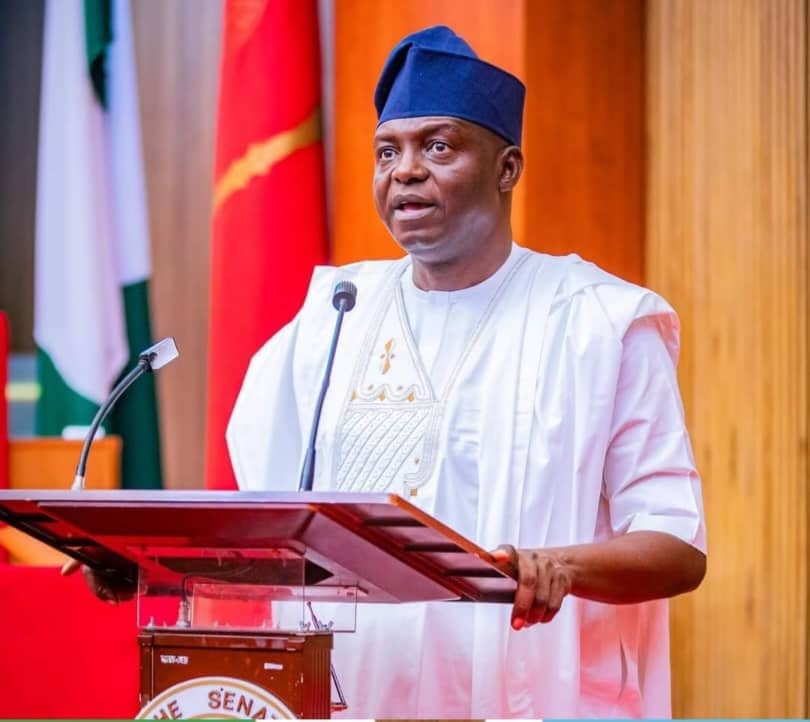
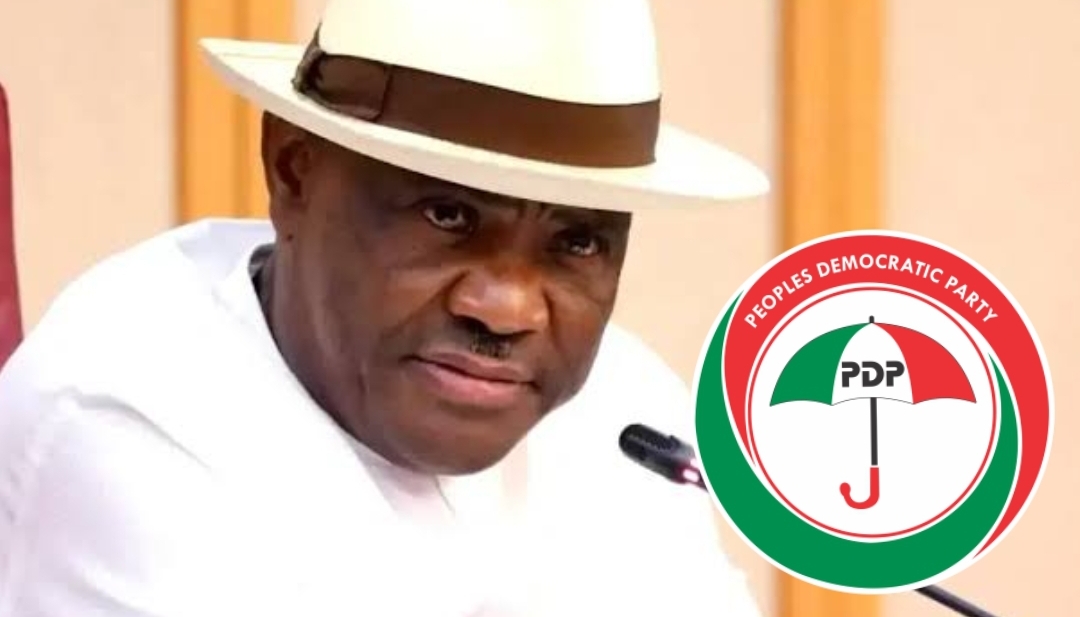
The crisis rocking the opposition Peoples Democratic Party worsened on Tuesday as governors in the party distanced themselves from the consensus selection of a national chairman and secretary by the Nyesom Wike-backed faction, insisting on legal redress and a review of the process.
This is as Senator Samuel Anyanwu and Abdulrahman Mohammed emerged as consensus candidates for National Secretary and National Chairman, respectively, backed by the Minister of the Federal Capital Territory, Nyesom Wike.
Credible senior PDP members aligned with the governors-backed National Working Committee led by Tanimu Turaki (SAN), who spoke on condition of anonymity because they were not authorised to reveal the development, told The PUNCH that they would pursue all available legal avenues to ensure the crisis is resolved in their favour.
Meanwhile, very high-ranking members of the Wike-backed National Caretaker Committee, who requested anonymity because they are not authorised to speak on the matter, revealed in an exclusive interview on Tuesday that all geopolitical zones had agreed on consensus candidates for NWC positions ahead of the March 29–30 National Convention.
The insiders revealed that Senator Samuel Anyanwu and Abdulrahman Mohammed have emerged as consensus candidates for National Secretary and National Chairman, respectively, of the PDP backed by Wike.
After nearly a year of internal crisis, the PDP became divided into two opposing factions.
To worsen the situation, the governors’ camp, backed by Seyi Makinde (Oyo State) and Bala Mohammed (Bauchi State), proceeded with a convention on November 16 in Ibadan, Oyo State, where Tanimu Turaki (SAN) and other officials were elected into the National Working Committee.
In response, the Wike-led faction established a 13-member National Caretaker Working Committee in December, appointing Mohammed as Acting National Chairman and Anyanwu as Acting National Secretary, alongside other members, to oversee the party for 60 days pending a substantive convention.
On February 12, the Court of Appeal heard consolidated suits arising from the leadership crisis and delivered judgment on March 9.
A panel led by Justice Mohammed Danjuma affirmed an earlier ruling of the Federal High Court in Abuja, which held that the processes leading to the Ibadan convention breached the Electoral Act, the Nigerian Constitution, and the PDP Constitution.
Consequently, the court nullified the convention and declared the election of Turaki and other NWC members invalid.
In a related development, a separate Court of Appeal panel led by Justice Biobele Georgewill in Ibadan granted all parties the opportunity to pursue an amicable settlement.
Although both factions had recently shown signs of reconciliation, fresh positions by the governors and lingering disagreements over the convention indicate that the peace efforts may have stalled.
A source within the governors’ camp disclosed that the reconciliation efforts broke down because the Wike-aligned PDP faction was determined to hold the convention.
He stated, “You see, the reconciliation efforts have collapsed. From our side, we indicated readiness for dialogue, but when discussions were held with the other camp, the Wike group insisted that our members must participate in the convention by purchasing forms and contesting.
“As far as we are concerned, that convention process is fundamentally flawed and illegal. As a group, we are determined to examine all legal options and pursue an alternative legal means to resolve the issue.
“We will carefully review the party’s constitution, the Electoral Act, and the Constitution of the Federal Republic of Nigeria, along with all related matters, and take appropriate steps to protect the party and ensure our members have a viable platform to contest.
“You can see that the NWC met today (Tuesday) for about four hours, and it was a productive session. The meeting will continue tomorrow.”
The Publicity Secretary of the Turaki-led National Working Committee, Ini Ememobong, declined to speak on the decision at the NWC meeting held at the Bauchi Governor’s Lodge in Asokoro, Abuja.
He simply stated that the meeting would continue on Wednesday (today), after which the party would address the situation.
However, a source in Wike’s camp revealed that his faction zoned the position of National Chairman to the North- Central and National Secretary to the South, adding that zonal leaders were directed to meet and agree on consensus candidates for all NWC positions.
He also disclosed that he emerged as the consensus candidate for the position of National Organising Secretary from the North-West.
The source continued, “In the North-West, the zonal meeting held this afternoon confirmed that the status quo will be maintained. Sokoto retains the National Organising Secretary position, Katsina takes the National Youth Leader, while Kano takes over as Deputy Treasurer. Jigawa selected the Zonal Vice Chairman. All positions were agreed upon by consensus.
“So far, South-East also retains the National Secretary in Imo State for Senator Anyanwu. Okechukwu Osuoha, who was previously Deputy Legal Adviser, has become Auditor. Chidebere, the former South East National Vice Chairman, is now Deputy Public Secretary.
“In the Southwest, the positions have been allocated as follows: Woman Leader to Oyo, Treasurer to Osun, Deputy Secretary to Ekiti and Zonal Vice Chairman to Lagos. In the North-East, the Deputy-Chairman North goes to Taraba, Publicity Secretary to Bauchi, Deputy Woman Leader to Gombe, and Deputy Financial Secretary to Borno. The Zonal Vice-Chairman was assigned to Adamawa.
“For the South-South, the National Vice-Chairman South goes to Rivers, Financial Secretary to Cross River, Deputy National Organising Secretary to Delta, and Deputy Youth Leader to Akwa Ibom. Then the National Vice Chairman, South-South to Edo.”
A reliable source, who attended the North-Central caucus meeting, disclosed that the zone agreed on the Acting National Chairman, Abdulrahman Mohammed, as their consensus candidate.
The source added that Wike reportedly urged former Benue State Governor Samuel Ortom and former Kogi State Deputy Governor Philip Salawu to step aside in favour of Mohammed.
“The meeting concluded tonight with the North-Central zone agreeing that it should produce the National Chairman. Religion was also a factor, given that the Secretary position was zoned to the South-East; they wanted the National Chairman to be a Muslim, anticipating that the person emerging would otherwise be a Christian.
“Additionally, the party’s National Leader, Minister of the Federal Capital Territory, Nyesom Wike, appealed to former Benue State Governor Samuel Ortom and former Kogi State Deputy Governor to step aside and allow the incumbent Acting National Chairman, Abdulrahman Mohammed, to emerge as the consensus candidate.
“As a result, Abdulrahman Mohammed was announced at the North-Central meeting tonight as the consensus candidate for National Chairman in the forthcoming PDP national convention. The decision also reflected the view that he had effectively performed in the acting role, earning the support of zonal leaders and stakeholders.”
When reached for comment, the Wike-backed PDP Publicity Secretary, Jungudo Mohammed, neither confirmed nor denied the report.
He described consensus as the best option for the party, noting that the National Executive Committee, Board of Trustees, and other party leaders were justified in adopting that approach.
“As far as we are concerned, we believe consensus is the best way to go in an effort to bring out candidates, whether party or primary, whether it is an intraparty working committee, an election or a primary election for the purpose of leading candidates into elective positions.
“Once you have consensus, it means there’s consent of all stakeholders—the aspirants and the stakeholders—as opposed to imposition. And, you know, when you take away the election process, it saves a lot of time, resources, and animosity. So, it is the best way to go. And I think the party is not wrong.
“The leaders of the party are not wrong. And the NEC of the party was not wrong to have advised the various regions to adopt consensus as a means of electing party leaders.”
Relatedly, a former presidential candidate, Gbenga Olawepo-Hashim, has cautioned the PDP leadership backed by the FCT minister against conducting another factional convention.
He warned that such could further fracture the party.
Olawepo-Hashim described the plan as a serious threat to the unity and survival of the PDP, stressing that both camps had earlier agreed to pursue a unity convention before the recent judgment of the Court of Appeal.
According to him, the reconciliation process was derailed by what he termed the activities of a “fifth columnist,” who allegedly sabotaged efforts in pursuit of external interests.
“I urge the Wike faction not to renege on the gentleman’s agreement already made. This is about the survival and integrity of the PDP,” Olawepo-Hashim said.
The PDP chieftain also warned against alleged moves to tamper with the executive committees of state chapters, particularly in Plateau, Nasarawa, Kaduna and Kano States, noting that such an action would violate the party’s constitution.
He maintained that the tenures of state executives are fixed and cannot be arbitrarily altered, cautioning against exporting the national leadership crisis into otherwise stable state structures.
Olawepo-Hashim identified the authentic state chairmen in the affected states as Raymond Dabo (Plateau), Adamu Ninga (Nasarawa), Edward Masha (Kaduna), and Yusuf Kibiya (Kano), insisting that their mandates must be respected.
He warned that imposing parallel structures in states without internal disputes could deepen the crisis and weaken the party’s cohesion ahead of future elections.
The former presidential aspirant further cautioned that key actors in the ongoing dispute risk emerging as political losers if they fail to resolve their differences and adhere strictly to an agreed framework for power-sharing and the harmonisation of the National Working Committees of the rival factions.
Olawepo-Hashim called on all stakeholders to return to the negotiation table and conclude work on a unified leadership structure, stressing that any factional convention would ultimately produce ‘’a lose-lose outcome for the party.’’
He reiterated that unity remains the only viable path for the PDP to regain its strength, credibility and electoral competitiveness.
Reconciliation
A former Deputy Speaker of the House of Representatives and member of the Board of Trustees of the Peoples Democratic Party, Chibudom Nwuche, has called for reconciliation and unity within the party.
He urged all aggrieved party leaders and members to set aside differences and embrace peace for the overall good of the party ahead of the 2027 general elections.
The former deputy speaker stated this after the 107th National Executive Committee meeting of the party, which was held on Monday in Abuja.
He urged stakeholders to return to the PDP and take advantage of the ongoing reconciliation and consolidation ahead of the national convention later this week.
“We held the 107th NEC meeting of our party yesterday (Monday) under the leadership of the FCT Minister, Nyesom Wike, and in attendance were senators, members of the House of Representatives, former governors, ministers, legislators, key stakeholders, and party executives from the National and State levels,” he stated.
Nwuche specifically appealed to governors and other party stalwarts to “bury the hatchet and embrace sincere reconciliation,” emphasising that internal cohesion and unity remained the party’s greatest strengths as it prepares for future political contests.
Nwuche urged the executive committee that emerged from the Ibadan convention, led by Tanimu Turaki (SAN), not to further delay the reconciliation process by further litigating already settled issues.
“Enough of division, enough of court cases. It is time to end further litigations and come together to forge a common front, especially as we look ahead to the 2027 general elections.
“The task before us now requires unity, trust, and a shared commitment to repositioning and strengthening our party. There is a time to fight and a time for peace,” he said.
He also extended his appeal to the BoT, led by Senator Adolphus Wabara, urging its leadership and members to prioritise peace and cohesion within the party.
According to him, the current polarisation among party members was counterproductive and is undermining the PDP’s stability and electoral prospects.
“We must embrace reconciliation as a collective responsibility in the best interests of the People’s Democratic Party and Nigeria as a whole.
“I am imploring all prominent leaders of the PDP to embrace reconciliation and move forward as one indivisible family for the sake of our party and the millions of Nigerians who look to us for leadership,” he said.
The former deputy speaker further noted that the PDP national convention, scheduled for March 29 in Abuja, provides a timely and strategic platform to advance these reconciliation efforts. He urged party leaders and delegates to approach the convention not merely as a routine gathering but as a defining moment to heal divisions, reaffirm unity, and set a collective direction for the future.
According to him, the convention must serve as a rallying point for consensus-building and renewed commitment to the party’s shared vision.
He emphasised that reconciliation within the party must be intentional, comprehensive, and guided by clearly defined areas of engagement.
The statement concluded with a renewed call for all party members to adopt dialogue, reconciliation, and a collective purpose in the interests of the PDP and Nigeria at large.
punch.ng
FOLLOW US ON:
FACEBOOK
TWITTER
PINTEREST
TIKTOK
YOUTUBE
LINKEDIN