Connect with us

Business

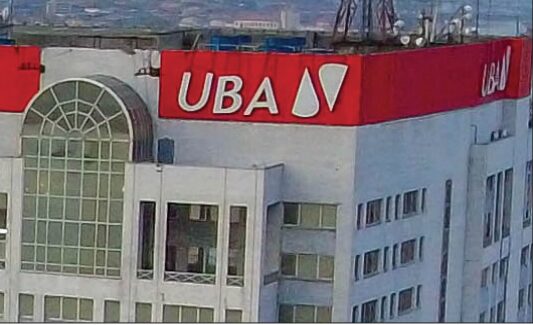
UBA revamps agency, merchant banking services

Published

on

The United Bank for Africa Plc has introduced a new Aggregator Sales Structure for its RedPay POS and Agency Banking Network, aiming to strengthen its relationships with partners and promote greater financial inclusion throughout Nigeria.

The newly launched multi-benefit structure was unveiled at the inaugural UBA Aggregator Engagement Session, held at the bank’s head office in Lagos on Tuesday. The session, themed ‘POS-itive Impact: Connecting Agents, Merchants, and Customers’, served as a collaborative platform to align strategies for scaling the UBAMONI Agency Banking ecosystem and bringing together key industry aggregators, Point-of-Sale partners, and network managers.

UBA’s Executive Director Designate, Digital Banking, Emmanuel Lamptey, who spoke at the event, said, “Today’s session marks a pivotal step in our collective journey to democratise financial access in Nigeria.

By bringing together our valued aggregators and partners, we are strengthening the ecosystem that connects UBA directly to communities and ensuring that reliable financial services are within everyone’s reach.”

Emphasising the need for partnerships, UBA’s Head of Digital Banking, Shamsideen Fashola, who presented the keynote address, outlined the strategic imperative behind the new structure.

“Our aggregators are fundamental to realising our ambition of building Africa’s most impactful digital collections network. This structured framework is designed to be scalable, transparent, and mutually rewarding, empowering our partners with the technology and support needed to drive agent productivity as well as serve underserved communities effectively,” Fashola noted.

The lender said that the platform delivers comprehensive value to agents and aggregators alike, featuring instant settlement, reliable transaction processing, real-time dashboard reporting, and a full suite of services, including dispute and terminal management, analytics, card withdrawals, bill payments, and pay-with-transfer.

See also  FG to disburse ₦6.3bn interest-free loans to 21,000 flood victims

For aggregators specifically, the model provides a structured opportunity to onboard and manage agents within UBA’s network and access attractive incentives and commissions, as well as leverage a dedicated Aggregator Admin Portal for real-time visibility into agent performance and transactions.

Adetunji Iyiola, UBA’s Head of Agency Banking, highlighted the customer-focused nature of the initiative, saying the new structure significantly enhances collaboration between UBA, its merchants, and agents.

“This rollout is about creating superior value for every stakeholder and enabling better service delivery to customers while ensuring our partners have the tools and incentives to thrive. It reinforces our promise to deliver essential banking services exactly where they are needed most,” he said.

With the introduction of the aggregator framework, UBA further cements its leadership in pioneering innovative digital financial solutions that bridge the inclusion gap and drive economic empowerment across the African continent.

Continue Reading
Click to comment

Leave a Reply

Your email address will not be published. Required fields are marked *

Business

CBN introduces overnight rate to deepen money market, read details

Published

on

The Central Bank of Nigeria (CBN) on Friday announced the introduction of the Nigerian Overnight Financing Rate as a new benchmark for the country’s money market, aimed at improving transparency and strengthening monetary policy transmission.

The disclosure was contained in a press statement issued by the CBN’s Acting Director of Corporate Communications, Hakama Sidi-Ali.

According to the statement, the initiative was developed in collaboration with the Financial Markets Dealers Association to deepen the financial system.

“The Central Bank of Nigeria, in collaboration with the Financial Markets Dealers Association, today announced the introduction of the Nigerian Overnight Financing Rate, a standardised benchmark aimed at enhancing transparency, strengthening monetary policy transmission, and deepening Nigeria’s money market,” the statement partly read.

The bank explained that the new rate aligns Nigeria with global standards for short-term interest rate benchmarks and is expected to improve pricing efficiency in the money market.

“NOFR was developed to align Nigeria with global best practices in short-term interest rate benchmarks. It is expected to improve price discovery and transparency while promoting consistent pricing of money market instruments,” it added.

The CBN noted that the benchmark would enhance the effectiveness of monetary policy, support financial innovation, boost investor confidence, and strengthen risk management across the financial system.

It further stated that the introduction of NOFR positions Nigeria alongside global benchmarks such as SOFR in the United States, SONIA in the United Kingdom, €STR in the Eurozone, and TONA in Japan, while also complementing Africa’s JIBAR benchmark in South Africa.

See also  Yuletide: Dangote assures Nigerians of stable fuel supply

The apex bank disclosed that the benchmark was set following a stakeholder engagement held on February 27, 2026, during which market participants adopted the rate, along with regulatory approval.

It added that the rate is now operational, with the CBN serving as the benchmark administrator responsible for governance, transparency, and regular publication.

“Following a stakeholder engagement session held on February 27, 2026, where market participants formally adopted the benchmark and subsequent regulatory approval, NOFR is now in use, with the CBN serving as the benchmark administrator. The Bank will ensure governance, transparency, and regular publication of the rate,” the statement noted.

Additional details contained in a set of Frequently Asked Questions released alongside the press statement showed that the Nigerian Overnight Financing Rate is designed as a risk-free benchmark that reflects the cost of overnight secured funding in the interbank market, based strictly on actual transactions rather than estimates.

The framework clarifies that the rate is not a monetary policy tool and is distinct from key policy indicators such as the Monetary Policy Rate, but instead serves as a reference point for pricing financial instruments and contracts across the system.

The document further indicates that the benchmark is published daily at 10:00 a.m. on the next business day after transactions are recorded, reinforcing transparency and consistency in market pricing.

For financial institutions, only naira-denominated overnight secured transactions in the interbank market that meet defined thresholds are eligible for inclusion, with the rate computed using a volume-weighted trimmed mean methodology to remove extreme values and ensure accuracy.

See also  PHOTOS: Groundnut Pyramids, Kano – Northern Nigeria’s Cash Crop Symbol

It also states that in cases where there is insufficient transaction data, the previous day’s rate is retained and clearly disclosed, a safeguard aimed at maintaining continuity in the benchmark.

The FAQs noted that while the new rate may serve as a reference for certain corporate and structured loans, it does not directly determine borrowing costs, which remain influenced by credit risk, tenor, and contractual terms agreed between lenders and borrowers.

For investors, the rate is expected to play a key role in pricing, valuation, discounting, and risk management of naira-denominated financial instruments, further deepening activity in the domestic money market.

Retail customers, however, will not see direct changes to savings or loan rates, as these continue to be determined by banks based on broader cost and risk considerations, although the improved transparency is expected to strengthen overall confidence in the financial system.

On governance, the document states that any correction to the benchmark would only occur in cases of material error and must be fully disclosed, while the methodology underpinning the rate will be reviewed at least annually by the CBN to ensure it remains robust and aligned with market realities.

punch.ng

FOLLOW US ON:

FACEBOOK

TWITTER

PINTEREST

TIKTOK

YOUTUBE

LINKEDIN

Continue Reading

Business

Olumo Rock revenue jumps from N3m yearly to N40m monthly – Ogun gov

Published

on

Ogun State Governor, Dapo Abiodun, says the Olumo Rock Tourist Centre in Abeokuta was shut down and refurbished to reposition it for improved tourism value and revenue generation.

Abiodun said the iconic site, which he described as one of Nigeria’s top tourist destinations, has since recorded a major increase in earnings following its rehabilitation.

The governor spoke on Thursday, at the commissioning of the 5.5-kilometre Elega–Miliki–Saje–Bode-Olude–Alhaji Sugar Road in Abeokuta, which spans Abeokuta North and Abeokuta South Local Government Areas.

He explained that the site’s revenue performance before the intervention was low, but improved significantly after the refurbishment.

Abiodun said that the site was underperforming before the upgrade, adding that the revenue figures at the time reflected its poor condition before rehabilitation.

“When I shut it down and I did the refurbishment of Olumo, Olumo began to generate about 10 million a week as about 40 million a month compared to 3 million a year.”

He also said the tourist centre has grown in prominence and now ranks among the country’s most visited attractions.

“I restored Olumo Rock that has become probably number one or number two tourist site in Nigeria.

“If you Google tourist sites in Nigeria, Olumo Rock will be the first to appear.

“When I assumed office, Olumo Rock was generating probably about 3–4 million naira annually.

“That 3–4 million naira annually was the revenue generated by Olumo Rock when I became governor.

“When I shut it down and carried out the refurbishment of Olumo Rock, it began to generate about 10 million a week, about 40 million a month, compared to 3 million a year,” he said.

See also  NNPC ran refineries at monumental loss — Ojulari

The development comes months after the state government first reopened the facility following renovation and introduced a temporary free-entry policy to encourage visitation and promote cultural tourism.

According to earlier government statements, the initiative was also aimed at allowing the public to rediscover the historical significance of the site and boost local commerce around the tourist centre before normal access procedures resumed.

The government later announced the end of the free-entry window due to overcrowding and safety concerns, saying the surge of visitors had created risks that required stricter access management.

Subsequently, the state moved to concession the tourist centre to a private operator to ensure improved management and sustained revenue generation.

Olumo Rock, one of Nigeria’s most visited cultural landmarks, has since remained a key focus of the state’s tourism drive.

punch.ng

FOLLOW US ON:

FACEBOOK

TWITTER

PINTEREST

TIKTOK

YOUTUBE

LINKEDIN

Continue Reading

Business

No plan to borrow from IMF’s $50bn fund – FG

Published

on

The Federal Government on Thursday declared that it has no plan to approach the International Monetary Fund to borrow from the estimated $50bn, which the IMF had earlier announced on Wednesday that it plans to use and support struggling economies in Africa.

The Minister of Finance and Coordinating Minister for the Economy, Wale Edun, disclosed this at a press briefing during the ongoing Spring Meetings of the World Bank/IMF in Washington DC, United States.

The PUNCH earlier reported that the Managing Director, IMF, Kristalina Georgieva, had advised countries facing economic pressures to act swiftly in seeking financial support when necessary, warning that delays could worsen economic conditions.

“My advice is that when you need help financially, don’t hesitate to move fast, because the sooner we act, the more we protect the economy,” she said.

Georgieva also revealed that the institution was committed to financially supporting member countries through the current challenges, adding that about $20bn to $50bn was being planned by the IMF for this exercise.

“We anticipate financial demand for IMF support to range between $20bn and $50bn, which represents augmentation of some existing problems and prospective demands from new problems from at least a dozen countries, a number of them in Sub-Saharan Africa,” she said.

But while responding to a question on Thursday, whether the Federal Government would approach the IMF to borrow from the fund, Nigeria’s finance minister, Edun, responded negatively.

“Nigeria has no plan at the moment to approach the IMF for any other such burden,” Edun declared.

See also  New Year: Tax law rollout begins, as economist explains what Nigerians should know

The minister also told the meeting on Thursday that African nations need “extra help” at this moment.

He noted that the Middle East crisis is one that affects African countries and economies disproportionately, stressing that while nations in this region “are not creators in any way of this situation, they stand to command greater pressure than perhaps any other region.”

The minister added, “This is in terms of the threat to macroeconomic stability, growth trajectories, and their ability to create jobs and reduce poverty in their countries.

And I think that is a clear statement, particularly to those identified as the most vulnerable oil-importing countries. They need and deserve extra help at this time.”

Recall that Georgieva earlier observed that many of the countries most affected by the Middle East crisis are located in Sub-Saharan Africa, adding that the IMF was working to identify those in urgent need of assistance. “We are very determined to use this week to identify which of the countries must get our support,” she stated.

She emphasised the importance of strong fiscal and economic policies, urging governments to build buffers during periods of economic stability to better withstand future shocks. According to her, prudent economic management in good times remains critical for resilience during downturns.

The IMF chief also disclosed that during a meeting with central bank governors and finance ministers from Africa held the previous day, officials did not request immediate financial assistance but instead sought policy guidance.

“But, of course, there could be a need for financial support. And my advice is that when you need help financially, don’t hesitate to move fast, because the sooner we act, the more we protect the economy,” she said.

See also  NNPC ran refineries at monumental loss — Ojulari

Georgieva highlighted the broader global implications of the Middle East conflict, noting that it has already inflicted significant economic damage. “We have been watching developments in the Middle East. A war that causes significant pain to people and economies in the region and around the world. The impact on the global economy is already large,” she said.

She explained that supply chain disruptions and damage to infrastructure are driving up prices and slowing global economic growth. According to her, global growth is projected to decline from 3.4 per cent last year to 2.1 per cent in 2026. She warned that if the conflict persists and oil prices remain elevated for a prolonged period, global economic conditions could deteriorate further.

“But if the conflict persists, and oil prices stay high for an extended period, we must brace for tough times ahead,” she added.

On the IMF’s global outlook, Georgieva cautioned that in a worst-case scenario, global growth could fall to two per cent, stressing that the impact would be widespread. She noted that countries that depend on energy imports are particularly vulnerable, many of which are low-income or fragile economies.

“In the most adverse case, growth could fall to two per cent, and the shock is global,” she said, adding that the highest negative impact is being felt by energy-importing nations.

punch.ng

FOLLOW US ON:

FACEBOOK

TWITTER

PINTEREST

TIKTOK

YOUTUBE

LINKEDIN

Continue Reading

Trending