Connect with us

News

State police: IG sets up panel to propose framework

Published

on

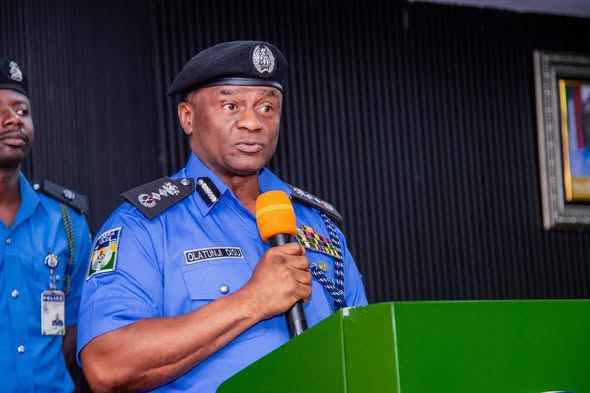
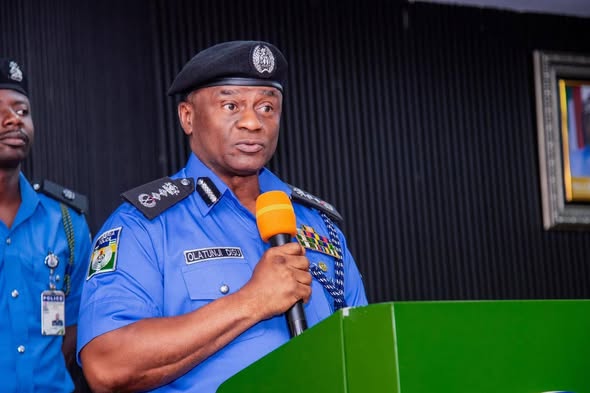
Newly sworn-in Inspector-General of Police, Tunji Disu, on Wednesday inaugurated a committee on the establishment of state police.

As part of ongoing discussions on policing reforms, President Bola Tinubu, had, last Wednesday, during the breaking of fast with senators at the Presidential Villa, Abuja, urged the leadership of the 10th Senate to initiate constitutional amendments to provide for the establishment of state police.

The President said decentralised policing would strengthen security at the grassroots and improve rapid response to threats within states, noting that the current centralised structure required constitutional review to accommodate the proposed reform.

Speaking during the inauguration, Disu said the committee’s task was to examine the concept of state policing as part of efforts to strengthen Nigeria’s internal security architecture and improve community-based policing.

He said the committee would review existing policing models within and outside Nigeria, assess community security needs, propose an operational framework for state police structures, and address issues of recruitment, training, standards, funding, accountability and oversight.

“Among other responsibilities, the committee is expected to review existing policing models within and outside Nigeria, assess community security needs and emerging risks across the country, propose an operational framework for the establishment and coordination of State Police structures, address issues relating to recruitment, training, standards, and resource allocation and develop robust accountability and oversight mechanisms to ensure professionalism and public trust,” he said.

Disu said state police formation could provide localised policing services focused on community safety, conflict prevention, neighbourhood patrols, and early response to emerging threats.

“This collaborative arrangement will encourage specialisation, strengthen professionalism, and ultimately deliver more effective security outcomes for our citizens,” he added.

The steering committee is chaired by Prof. Olu Ogunsakin, Director-General of the National Institute for Police Studies, Abuja, with CP Bode Ojajuni as secretary.

Other members are DCP Okebechi Agora, DCP Suleyman Gulma, ACP Ikechukwu Okafor, CSP Tolulope Ipinmisho and CP Emmanuel Ojukwu (retd.).

Also speaking shortly after his swearing-in as the substantive Inspector-General of Police, Disu disclosed that he had constituted a committee to develop the Nigeria Police Force’s position on the proposed establishment of state police.

He said, “The committee was set up early this morning to look into the issue of State Police from the angle of the Nigeria Police.

See also  Parties clash over El-Rufai’s probe for criminal conspiracy

“We don’t want it to seem as if others are taking decisions, and we, the most important people concerned, did not do anything. We want to ensure that the best thing is done,” the IG stated.

He emphasised that the police was not opposed to state police, describing it as a partnership rather than a threat to the Force.

“State police has come to stay, and the police should be able to do their own part in making it succeed. The police are not afraid. Our jobs are not being taken. It’s just an issue of partnership,” Disu said.

Disu sworn-in

Disu took the oath of office at 2:53pm on Wednesday following the reading of his citation by the State House Director of Information and Public Relations, Mr. Abiodun Oladunjoye.

The ceremony was witnessed by Vice President Kashim Shettima, cabinet members, and other dignitaries.

Also in attendance were the Secretary to the Government of the Federation, Senator George Akume; National Security Adviser, Nuhu Ribadu; Chief of Staff, Femi Gbajabiamila; Minister of Police Affairs, Senator Ibrahim Gaidam; FCT minister, Nyesom Wike; and Head of Service, Mrs. Esther Walson-Jack.

Disu’s confirmation comes barely a week after President Tinubu appointed him acting IGP following the resignation of Kayode Egbetokun on February 23, 2026.

Ex-officers back committee

A retired Assistant Inspector-General of Police, Ali Amodu, described the Inspector-General of Police’s decision to set up a special committee on state policing as “a right step in the right direction.”

Speaking on the development, Amodu said the committee would provide professional input and advise the Presidency on the proposed decentralisation of the Nigeria Police Force.

“The decision or the thought of the IG in setting up a special committee is a right step in the right direction. The committee will actually provide the thinking, and then they will give advice to the Presidency because it is the police that they want to decentralise. It is good that the authority will want to hear from them,” he said.

He noted that he had canvassed the idea of decentralising the police as far back as 1981 after returning from detective training in the United Kingdom.

Amodu said, “As far back as 1981, I was a young superintendent. I came back from the UK and I actually made a suggestion to the police authority then that they should think of decentralising the police force because I saw the pattern in the UK.

See also  Heavy security at Sokoto prison over Nnamdi Kanu’s arrival

“I said we can moderate our own and make adjustments. I was a very young officer, but the old hands were very angry with me to have said this. I remember my commissioner of police then said, ‘Young man, we sent you to the UK for detective training, and you are coming back thinking they should form a modality on how to decentralise the force.’”

Amodu added that the idea was now gaining traction globally. “The thing is coming to light. Light is shining on that area. It’s happening in many parts of the world,” he said.

According to him, policing differs from military operations because it requires close interaction with local communities.

“The police are not like the army or any arm of the Armed Forces. You work with the people, and people want to appreciate their own person. It is at that time they will be comfortable to even pass information which is needed for policing all over the world,” he said.

He also referenced ongoing legislative discussions on constitutional amendments, noting that the current constitution provides for a single police force.

“Just a few days ago, I heard the Senate President say that before the end of the year they will look into how the Constitution and see if it can be amended because the present Constitution says Nigeria has one police force. So, if we want to decentralise, they must amend that section of the constitution. I think they are working on it. Let’s see how it is going to work out,” he added.

On his part, a former Commissioner of Police, Lawrence Alobi, also backed the constitution of the committee, describing it as a professional and proactive move.

“It’s the right thing to have done because the police affair is all about policing, and police can come and handle police issues effectively,” Alobi said.

He stated that the committee should clearly define the structure and supervisory framework for state police formations.

“The committee should advise on the structure and how the state police would be supervised. Maybe they should be under the AIG in zones or the DIGs would have supervisory roles over them,” he said.

See also  VIDEO: ‘Militants killed 7 of my brothers, 150 members, burnt down my church’ – Plateau Pastor alleges

Alobi stressed the need to address jurisdictional issues in advance to avoid operational conflicts.

“If the structure is not determined now proactively and it is established, I don’t know the case, but if a case is committed in a state and the suspect is in another state, and the police from one state go there to get the suspect, how will the police in that state treat them when they come? This is something that needs to be determined. It should already be established and practiced,” he said.

He added, “I think the system is running in the right direction and doing the right thing.”

Middle East crisis

Meanwhile, Disu disclosed that the Nigeria Police Force wass closely monitoring Islamic groups with allegiance to Middle Eastern countries following the escalating US-Israel-Iran conflict, warning that developments in the Middle East could trigger repercussions in Nigeria.

“Everywhere in the world, we are aware that is what we call intelligence policing. Our ears are to the ground. We know we have groups of people, different kinds of Islamic sects in Nigeria. We have those who pay allegiance to this eastern part of the world as well,” Disu stated.

He added, “So we know if anything happens in the eastern part of the world, the repercussion will come to us.

“So, we are putting all necessary actions. You can see policemen on patrol, and most importantly, we are talking to them to ensure that they do not take law and order into their hands.”

The IGP’s statement comes amid heightened tensions in the Middle East following US and Israeli airstrikes on Iranian targets over the weekend and Iran’s retaliatory missile attacks on Israeli and American military installations.

Nigeria is home to significant Islamic groups with ideological and sometimes organisational ties to Middle Eastern countries, particularly Iran and Saudi Arabia.

The Islamic Movement in Nigeria, led by Sheikh Ibrahim El-Zakzaky, is known for its pro-Iranian stance and Shia Islamic orientation, while several Sunni groups maintain connections with Saudi Arabia and other Gulf states.

Continue Reading
Click to comment

Leave a Reply

Your email address will not be published. Required fields are marked *

News

Police IG redeploys AIGs, CPs, See details

Published

on

The Inspector General of Police, Olatunji Disu, has ordered the posting of senior officers to various strategic positions across the Nigeria Police Force as part of efforts to strengthen operational efficiency, enhance leadership capacity and improve service delivery nationwide.

The postings, according to a statement on Tuesday by the  Force spokesman, DCP Anthony Placid, are in line with the police commitment to an effective command structure and strategic deployment of personnel across commands, formations and departments.

Under the new arrangement, he said AIG Ado Emmanuel was posted to Research and Planning, Force Headquarters, Abuja; AIG Joseph Eribo to the Department of Armament; AIG Miller Dantawaye to the Department of Operations; AIG Henry Ifeanyi Uche to the Department of Training and Development; AIG Olanrewaju Peter Ogunlowo to Police Accounts and Budget; while AIG Dahiru Mohammed was deployed to Zone 15, Maiduguri.

“Similarly, AIG Dankombo F. Morris was posted to Zone 4, Makurdi; AIG Bello Shehu to Zone 14, Katsina; AIG Ibrahim Balarabe Maikaba to the Department of Legal Services; AIG Ahmed Musa to Community Policing; AIG Olohundare Moshood Jimoh to Zone 2, Lagos; AIG Simeon U. Akpanudom to FCID Annex, Lagos; and AIG Haruna Olufemi to the Special Protection Unit, Force Headquarters, Abuja,” the statement added.

The IG also redeployed several Commissioners of Police to state commands and other formations.

CP Haruna Yahaya was posted to Jigawa State Command; CP Betty  Otimenyin to Welfare, Force Headquarters; CP Olugbenga Abimbola to Oyo State Command; CP Yemi John Oyeniyi to Delta State Command; CP Olubode Ojajuni to Ogun State Command; CP Michael  Falade to Ekiti State Command; and CP Yakubu Dankaro to Adamawa State Command.

Others include CP Muhammed Ahmed to the Federal Capital Territory Command; CP Olatunji  Fatai to Lagos State Command; CP Morkwap  Dongshal to Taraba State Command; CP Ahmed  Bello to Zamfara State Command; CP Umar Fagge to Katsina State Command; and CP Hayatu Shaffa Hassan to Sokoto State Command.

See also  Inside dilapidated Ogun hospital where patients supply own beds

In further postings, CP Akan Ezima was named Director, NPF-NCCC, Abuja; CP Abbas Sule to the Special Protection Unit; CP Ajo Geoffrey Ordue to INTERPOL, Abuja; CP Mnwadiogbu Cletus as Deputy Commandant, POLAC; CP Danjuma I. Yahaya to General Investigation, FCID Annex, Kaduna; CP Sheikh M. Danko to FCID Annex, Lagos; and CP Moses Ashu Otta to SWAT, Abuja.

Additional redeployments include CP Abdulrahim A. Shuaibu to Eastern Ports Authority; CP Sarah Ehindero to Administration, FCID Abuja; CP Edwin Ogbegbghagha to Provost, Force Headquarters; CP Preye R. Egbe to INEC, Abuja; CP Adebisi Bola Lateef to Master Printing, Lagos; CP Bolou O. Etete to Community Policing, Research and Planning; and CP Ojugbele E. Adebola to General Investigation, FCID Alagbon, Lagos.

Also affected are CP Fidelis N. Ogarabe, posted to INTERPOL Annex, Lagos; CP Theodore C. Obasi as Deputy Commandant, Police College, Ikeja; CP Eloho E. Okpoziakpo to Special Fraud Unit, Ikoyi; CP Kayode Uthman Magaji to K9, Dei-Dei; CP Markus Ishaku Basiran to Courses, POLAC; CP Mohammed Babakura to Administration, Department of Operations; CP Silas Bamidele Aremu to Safer Highway, Department of Operations; CP Magaji Ismaila to Community Safety and Crime Prevention; and CP Rebecca Uchenna Okereke as Director of Music, Force Headquarters, Abuja.

“Tunji Disu charges the officers to bring their wealth of experience to bear in their respective assignments and to uphold the highest standards of professionalism, discipline, and service in the discharge of their duties,” he said

punch.ng

FOLLOW US ON:

FACEBOOK

TWITTER

PINTEREST

TIKTOK

YOUTUBE

LINKEDIN

Continue Reading

News

Afenifere Diaspora faults APC over security, election concerns

Published

on

The Afenifere Diaspora USA has criticised the All Progressives Congress over what it described as worsening insecurity in the country and alleged attempts to weaken Nigeria’s electoral framework ahead of the 2027 general election.

The group, in a statement made available to The PUNCH, dated March 20, 2026, warned that the continued escalation of violent attacks across parts of the country could lead to deeper national crises if urgent measures were not taken.

The statement, jointly signed by the Chairman, Prof Sikiru Fadairo, and the Secretary, David Adenekan, stressed that national security remained a constitutional obligation of the government, noting that failure to adequately address the situation could threaten the unity of the country.

The group said, “The current escalation of insecurity across the country is a dangerous trend that may plunge the nation into a sectarian war if not properly managed and nipped in the bud.”

It emphasised that the protection of lives and property remained a core responsibility of the government, as clearly stated in Section 14(2)(b) of the 1999 Constitution of the Federal Republic of Nigeria.

The section provides that “The security and welfare of the people shall be the primary purpose of government.”

It further referenced provisions contained in Chapter IV, Sections 33 to 46 of the Constitution, which guarantee fundamental human rights, including the rights to life, dignity, personal liberty, and privacy.

Afenifere Diaspora USA also condemned the activities of armed groups operating in parts of the country, alleging that recent attacks in the North-East had resulted in significant casualties and displacement of residents.

See also  Capital projects crumble as states cut spending

The group said, “The recent violent attacks by terrorist groups degrade the status of Nigeria as a sovereign nation. It was widely reported that in March 2026, militants linked to the Islamic State West African Province launched coordinated attacks in the North-East, overrunning several military formations in Borno State, including communities such as Delwa, Goniri, Kukawa and Mainok.”

It added, “An intolerably high figure of 65 military officers were reportedly killed in the attacks, while about 300 persons were said to have been kidnapped. Are acts of killing people in thousands and sacking those fleeing from their villages not tantamount to genocide or ethnic cleansing?”

The group also questioned what it described as attempts to influence international narratives regarding the security situation in Nigeria, alleging that public funds were used to engage foreign lobbyists.

It stated, “Is the current administration not always quick to change the narrative that the killings in Nigeria are merely ‘normal’ incidents that occur in any society, including the unjustifiable expenditure of a whopping sum of nine million dollars from taxpayers’ funds to hire lobbyists in Washington DC to promote the position that there is no genocide or ethnic cleansing in Nigeria?”

On electoral matters, the group criticised the reported removal of the requirement for a candidate to possess a secondary school certificate as part of the eligibility criteria in the Electoral Act, describing the move as detrimental to democratic development.

The statement read, “The decision by members of the National Assembly to expunge from our electoral law the requirement to possess a secondary school certificate is seen as a political charade capable of undermining democratic values and lowering leadership standards in the country.”

See also  Wife after allegedly accusing husband of defiling their children — court finds no evidence

Citing Section 131 of the 1999 Constitution, the group noted that one of the requirements to contest for the office of the President is that a candidate must be educated to at least secondary school certificate level or its equivalent.

“In a digital age driven by information technology, Nigeria must not slide backwards into the abyss of ignorance where leadership competence is compromised. Leadership capacity and skilled knowledge are critical in managing the affairs of a modern state,” the statement added.

The group also called for mandatory electronic transmission of election results, insisting that credible elections remained vital to strengthening democracy and ensuring good governance.

It said, “Every lover of democracy, including the international community, must support a system that guarantees mandatory electronic transmission of election results in real time without optional conditions.

“A free and fair general election in 2027 is sacrosanct and must not be negotiated if Nigeria is to deepen its hard-won democracy and ensure accountable leadership.”

punch.ng

FOLLOW US ON:

FACEBOOK

TWITTER

PINTEREST

TIKTOK

YOUTUBE

LINKEDIN

Continue Reading

News

Share terror intelligence with security agencies, Presidency replies Ndume

Published

on

The Presidency has advised Senator Ali Ndume to channel actionable intelligence on terrorism to security agencies rather than making sweeping allegations on television.

Special Adviser to the President on Information and Strategy, Bayo Onanuga, gave the advice on Tuesday while responding to Ndume’s recent television appearance, where he claimed terrorists have informants within the Nigerian society.

In an interview with Vanguard, which was confirmed to PUNCH Online late Tuesday, Onanuga stated that if the Borno South senator possesses specific intelligence about terrorist operations, informants, or planned attacks, such information should be shared with the military and security agencies for operational action.

“If Senator Ndume has credible intelligence about terrorist informants or their mode of operation beyond what is already known to security agencies, the appropriate step is to share this with the Chief of Defence Staff, the National Security Adviser, or relevant intelligence bodies, not to discuss it on television,” Onanuga stated.

The presidential aide emphasised that actionable intelligence requires confidential handling through proper security channels to enable effective response.

PUNCH Online reports that Ndume had appeared on Channels Television, revealing that terrorists use commercial tricycles (Keke NAPEP) to deliver bombs and rely on informants within communities to plan attacks.

“What they do is hit and run. They gather, share information among themselves, and most dangerously, they get information from some citizens, too. They have informants within society,” the senator had stated.

He also criticised government efforts, saying, “The government, I must say, are not walking the talk. Security agencies and soldiers still do not have the training, equipment, ammunition, and motivation they need.”

See also  Middle East war may force Nigerians to work from home – Dangote

Onanuga, however, defended the Tinubu administration’s security investments, noting that President Bola Tinubu approved additional equipment and operational support during a security meeting held just before the Maiduguri bombings.

“The President has demonstrated commitment by approving the highest budgetary allocation to defence in the 2026 Appropriation Bill, securing military equipment from France and the United Kingdom, and directing security chiefs to relocate to Maiduguri,” Onanuga stated.

He added that public statements about security gaps, while legitimate as political commentary, become counterproductive when they contain specific operational intelligence that should be classified.

The Presidency’s response comes amid ongoing operations by troops of Operation Hadin Kai in Borno State following the March 16 suicide bombings that killed 23 people and injured 108 others in Maiduguri.

President Tinubu had directed security chiefs to relocate to Maiduguri to oversee operations and approved additional equipment to enhance counter-terrorism capabilities.

Vice President Kashim Shettima visited victims at the University of Maiduguri Teaching Hospital on March 18, assuring enhanced support for security forces.

Ndume, who represents Borno South, where much of the insurgency is concentrated, has been vocal about security challenges in the North-East, often calling for more aggressive military action and better equipment for troops.

The senator had also questioned intelligence failures, asking why terrorists who record their atrocities on TikTok cannot be tracked when ordinary citizens’ phones are easily monitored.

punch.ng

FOLLOW US ON:

FACEBOOK

TWITTER

PINTEREST

TIKTOK

YOUTUBE

LINKEDIN

Continue Reading

Trending