Connect with us

Business

FCCPC flags rising circulation of substandard goods

Published

on

The Federal Competition and Consumer Protection Commission (FCCPC) has expressed concern over the increasing prevalence of unsafe and substandard products in Nigerian markets, warning that this trend is eroding consumer trust and undermining the country’s economic integrity.

The Executive Vice Chairman and Chief Executive Officer of the FCCPC, Tunji Bello, raised the alarm on Wednesday in Abuja during the commemoration of World Consumer Rights Day 2026 and the 9th National Consumers Contest Awards.

Speaking on the theme, “Safe Products, Confident Consumers,” Bello said the rising uncertainty around product safety is already affecting market behaviour and consumer confidence.

“We are gathered at a time when product safety has become central to market integrity, consumer confidence, and public welfare. The theme for this year’s celebration, Safe Products, Confident Consumers, captures a simple but important truth: where safety is uncertain, confidence declines.

“And where confidence declines, markets become weaker, less efficient, and less trustworthy. Across several sectors, the Commission continues to encounter products that do not meet basic safety and quality standards. These include improperly labelled goods, products that fall short of essential safety requirements, and, in some cases, conduct that raises concerns about misrepresentation,” he said.

Bello, who was represented by FCCPC’s Director of Surveillance and Investigation, Bola Adeyinka, disclosed that the Commission continues to find a wide range of products failing to meet basic safety and quality standards across multiple sectors.

He noted that these include improperly labelled goods, unsafe products, and instances of misrepresentation by manufacturers and distributors, attributing the problem to weak internal controls, poor compliance culture, and, in some cases, deliberate disregard for regulatory obligations.

Linking product safety directly to economic stability and investor confidence, Bello explained that unsafe markets discourage participation, distort competition, and reduce overall economic efficiency.

See also  PENGASSAN and NUPENG reject govt’s plan to sell assets

“Some of these failures arise from weak internal controls. Others reflect gaps in compliance culture. In certain instances, there are indications of deliberate disregard for legal and regulatory obligations.

“The effect is immediate and serious. Consumers are exposed to avoidable risks, trust in the market is weakened, and law-abiding businesses are placed at a disadvantage. Product safety, therefore, cannot be treated as a secondary matter. It is a core obligation, with clear public interest consequences.

“This approach aligns with the Federal Government’s ongoing economic reform programme, which focuses on strengthening market integrity, improving consumer confidence and promoting a rules-based business environment,” Bello stated.

He emphasised that consumer protection is not just a regulatory responsibility but a vital pillar for sustainable economic growth. “When markets are safe, reliable, and transparent, they support sustainable growth and give investors greater confidence to participate,” he added.

Bello warned that the Commission would enforce compliance rigorously, stressing that product safety is a legal obligation under the Federal Competition and Consumer Protection Act 2018.

He added that any product posing risks must be addressed immediately. “Consumers are entitled to goods that are safe, durable, and fit for purpose. Businesses are under a duty to ensure that the products they place on the market consistently meet these standards.”

“Where a product presents a risk, the law requires prompt corrective action, including withdrawal, recall, and proper notice to consumers. These are not optional expectations. They are statutory duties,” he said.

The FCCPC has expanded market surveillance and strengthened product testing in key sectors. “Where conduct raises concerns about consumer safety, such matters are investigated. Where breaches are established, appropriate enforcement action is taken in line with our mandate,” Bello added.

See also  Trump urges Turkey to stop buying Russian oil as Erdogan chases deal on F-35s

To tackle systemic issues, the Commission is deepening collaboration with other regulators, including the Standards Organisation of Nigeria and the National Agency for Food and Drug Administration and Control.

He explained that these partnerships focus on information sharing, coordinated enforcement, and joint interventions to close regulatory gaps. “Consumer protection is most effective when institutions work in concert. Effective outcomes depend on alignment in standards, consistency in enforcement, and clarity in institutional responsibilities.

“We are pleased to be joined today by the Competition and Consumer Protection Tribunal, the Standards Organisation of Nigeria, the National Agency for Food and Drug Administration and Control, and the Manufacturers Association of Nigeria. Each plays an important role in ensuring that products meet acceptable standards before and after they enter the market. Effective outcomes depend on alignment in standards, consistency in enforcement, and clarity in institutional responsibilities,” Bello said.

Addressing concerns over rising prices, Bello clarified that the FCCPC does not regulate prices but remains committed to tackling unfair practices. “The commission does not control prices. However, fair pricing is an essential part of a well-functioning market. We will continue to act where conduct undermines fairness, transparency, or safety, or otherwise harms consumers in breach of the law.”

He urged manufacturers, importers, and service providers to integrate product safety at every stage of operations.

“Product safety must be built into every stage of your operations, from sourcing and production to distribution and retail. It cannot be treated as an afterthought or as a matter to be addressed only after harm has occurred. Where defects or safety risks are identified, timely corrective action is required. Delay increases exposure, deepens consumer harm, and erodes trust.

See also  Electricity subsidy: FG to deduct N3.6tn from Federation Account

“Failure to act responsibly will attract regulatory response. Compliance is not a favour to the regulator. It is a basic condition for participating in the market. To Nigerian consumers, remain informed, vigilant, and engaged. Ask questions. Examine products before purchase. Pay attention to labelling, quality, and safety information. Report concerns where they arise,” he said.

He also called on consumers to play a more active role in safeguarding the market. “To Nigerian consumers, remain informed, vigilant, and engaged. Ask questions. Examine products before purchase. Pay attention to labelling, quality and safety information,” Bello said.

“Consumer protection is stronger when consumers are informed and active participants in the market.”

Highlighting the role of education, Bello commended participants in the National Consumers Contest, describing them as future advocates of responsible consumption. “Consumer protection is not only about enforcement. It is also about education, awareness, critical thinking, and responsible engagement,” he said.

Nigeria has long struggled with the influx of substandard and counterfeit goods, particularly in food, pharmaceuticals, electronics, and household items. Regulators have repeatedly pointed to porous borders, weak enforcement, and low compliance as key contributors to the problem.

The FCCPC’s renewed efforts signal a tougher regulatory stance, especially as the government seeks to strengthen market institutions under its broader economic reform agenda.

For both consumers and businesses, the commission’s message is clear: restoring trust in Nigeria’s markets requires stricter compliance, stronger enforcement, and more active participation from all stakeholders.

“Safe and reliable markets depend on responsible business conduct, effective regulation, and informed consumer participation. That standard must be upheld consistently,” Bello concluded.

punch.ng

FOLLOW US ON:

FACEBOOK

TWITTER

PINTEREST

TIKTOK

YOUTUBE

LINKEDIN

Continue Reading
Click to comment

Leave a Reply

Your email address will not be published. Required fields are marked *

Business

FG rolls out plans to lift 50 million Nigerians out of poverty by 2030

Published

on

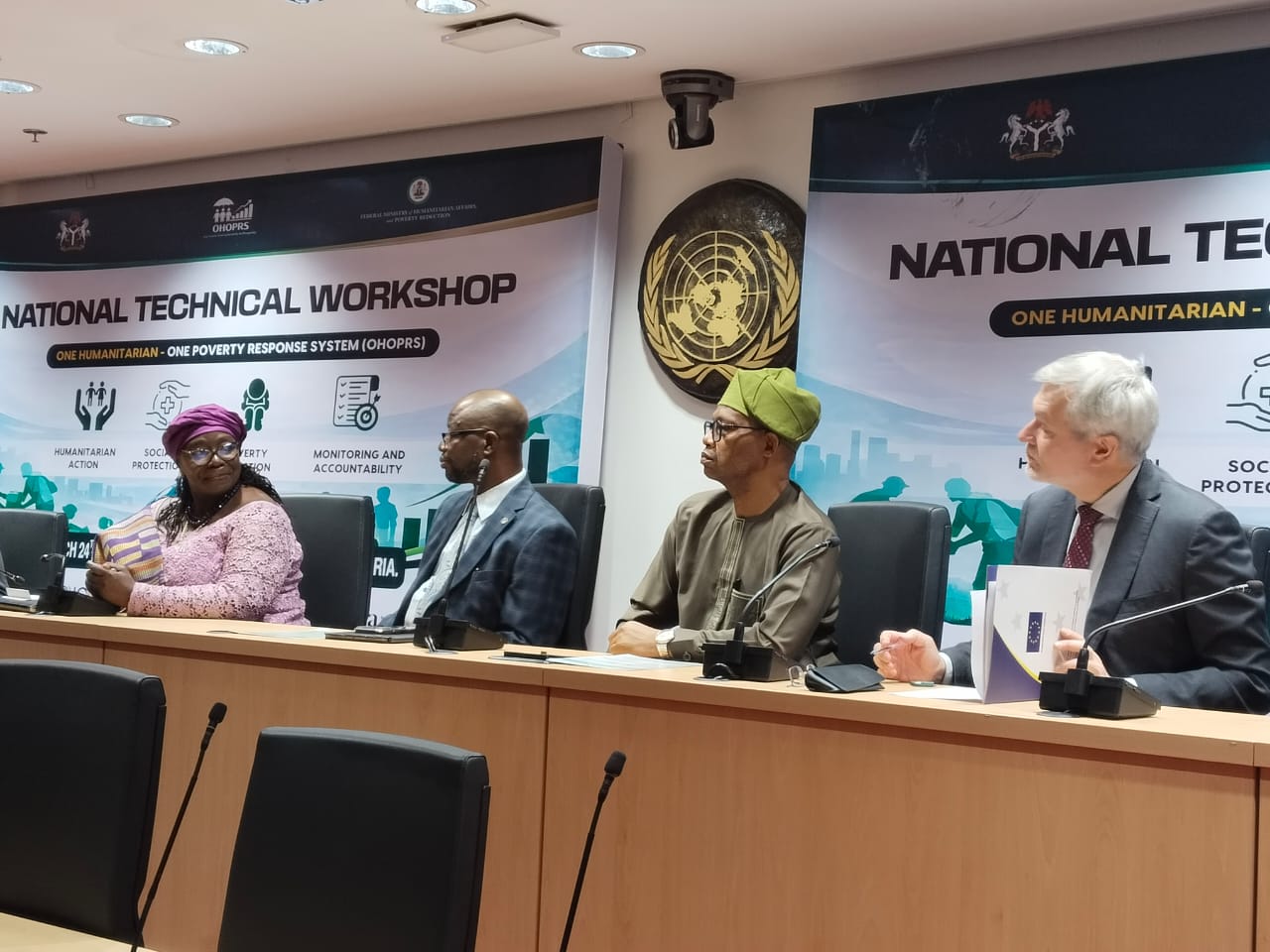
The Federal Government on Tuesday rolled out plans for the implementation of a unified national system tagged: ‘One Humanitarian, One Poverty Response System (OHOPRS)’, aimed at lifting 50 million Nigerians out of poverty over the next five years.

According to the OHOPRS financial architecture for the 2026 – 2030 period presented in Abuja, the present administration is to raise N16 trillion between 2026 and 2030.

To achieve the feat, the Federal Government is to contribute the sum of N1.5 trillion; Development Partners – N800 billion; Private Sector & Impact Finance – N600 billion, while the sum of N300 billion is expected through Climate & Global Funds, totalling N3.2 trillion on annual basis (with contributions from World Bank, European Union, United Nations, Bilateral Donors and Foundations.

Federal Government is also expected to launch the National Humanitarian and Poverty Reduction Trust Fund, through Innovative and Blended Finance, including: Climate Financing (AA, Adaptation); Social Impact Bonds, Private Sector Investment, Islamic Finance (Zakat, Sukuk, Waqf, and Carbon Credit.

In the bid to ensure effective governance and accountability, the Ministry has put in place a strong oversight system namely: National Steering Committee, Government + Partners Oversight; Independent Audit Systems; Results-Based Financing and Real-Time Digital Transparency, respectively.

Speaking during the official flag-off ceremony of OHOPRS, Minister of Humanitarian Affairs and Poverty Reduction, Dr. Bernard Doro explained that One Humanitarian, One Poverty Response System was designed to address multidimensional poverty, with a focus on real-time data, coordinated response, and a people-centred approach.

He said: “We put in a lot of money to curb poverty but the impact is not there. There is a gap that needs to be corrected. Over 63 per cent of Nigerians face multidimensional poverty and there is chronic fragmentation across MDAs, States, and Local Governments.

See also  FULL LIST: Nigeria, 66 other countries hit with Trump tariffs

“It is obvious that Nigeria does not lack interventions; Nigeria lacks systems and that is why the OHOPRS is launched.

“We have been managing poverty, not ending it and it is time for a change. We need a clear national direction, and the President gave a clear instruction.

“President Tinubu’s vision is uncompromising. He wants 50 million Nigerians out of poverty by 2030. He wants us to implement real-time digital accountability.

“He wants us to align every stakeholder to a single national system. The instruction was very clear too. So, the OHOPRS is intended to be a new national backbone designed to integrate humanitarian relief, long-term development and social protection. It is intended to align ministries, departments and agencies, state governments and development partners.”

Dr. Doro, while stating the urgency of the initiative, said: “If we do not unify now, we are choosing to perish.”

Speaking earlier, UN Resident Coordinator in Nigeria/Humanitarian Coordinator, Mr. Mohamed Fall, who was represented by Head of United Nations Development Programme (UNDP), Elsie Attafuah, noted that poverty was no longer a gradual development challenge, but a humanitarian crisis that requires immediate attention.

He said: “With 62 percent of Nigerians living in poverty and 33 million facing acute food insecurity, there is need for a systems change that integrates humanitarian response, social protection, and economic inclusion.

On the newly launched system, he said: “This is not simply an opportunity to spend more, but an opportunity to invest best. It is an opportunity to ensure that resources are targeted with precision, that they address the root causes of poverty and vulnerability, and that they translate into measurable improvement in people’s lives.

See also  FG urged to expand grazing reserves nationwide

“If this effort succeeds, it will not only improve outcomes in the immediate term, it will lay the foundation for a system that can anticipate risk, protect the vulnerable, and create pathways out of poverty that are sustainable over time.”

On his part, Stastitician General for the Federation/CEO of National Bureau of Statistics (NBS), Prince Adeyemi Adeniran who noted that approximately 63% of Nigerians( equivalent of 133 million people), are multi-dimensionally poor, with deprivation-concentrated housing, sanitation, health, education, and security short, according to NBS 2022 report, averred that: “No single institution can address the complexity of poverty and humanitarian needs alone.”

To this end, he underscored the need for robust collaboration between government, Development Partners, Civil Society Organizations and the private sector to establish a system that is transparent, inclusive and responsive.

While pledging the Bureau’s resolve to play a lead role in achieving the set objectives, Prince Adeniran maintained that “high quality data is crucial for precise targeting and for fostering public trust in the system. NBS is also dedicated to enabling system interoperability. This is the second aspect of our role that I see in this project. Any unified humanitarian and poverty response system must facilitate seamless data exchange across ministries, agencies, and programs that are on course. We collaborate closely with the ministry to promote the adoption of national data standards.”

tribuneonlineng.com

FOLLOW US ON:

FACEBOOK

TWITTER

PINTEREST

TIKTOK

YOUTUBE

LINKEDIN

Continue Reading

Business

FG reopens fuel imports, Dangote reels from FX losses due to US-Iran war

Published

on

The Federal Government has lifted its ban on fuel imports, granting six new licences for the importation of Premium Motor Spirit (petrol), following concerns over supply amid geopolitical tensions in the Middle East. The move marks a sharp reversal of Nigeria’s recent policy aimed at reducing dependence on imported fuel.

This comes as the Dangote Petroleum Refinery grapples with mounting foreign exchange losses, highlighting the challenges of the naira-for-crude arrangement. A senior management official of the $20bn Lekki-based firm disclosed that the deal’s inefficiency has eroded potential earnings, even as regulators seek to stabilise domestic fuel supply.

Consequently, oil marketers and domestic crude refiners have called on the Federal Government to boost crude supply to Dangote and other local refineries to shield the country from fuel scarcity, as is being reported in other countries due to the Middle East crisis.

A new report by S&P Global obtained on Wednesday revealed that the Nigerian Midstream and Downstream Petroleum Regulatory Authority granted licences for the importation of about 180,000 metric tonnes of petrol. This comes barely weeks after the regulator insisted that domestic refining capacity was sufficient to meet Nigeria’s fuel demand.

A senior official at the regulator confirmed that the decision was taken to address a sudden supply gap triggered by geopolitical tensions in the Middle East.

The report read, “Nigeria has relaxed its gasoline import restrictions for the first time since October by issuing a round of new licenses to local marketers, according to an official at its downstream regulator.

“The NMDPRA did not issue import licenses for gasoline in February on the strength of the improved domestic supply then. But the Middle East crisis came, and we have had a shortfall. So to bridge the gap, import licenses were issued.”

The spokesperson of the NMDPRA, George Ene-Ita, did not respond to enquiries when contacted to confirm the report, up to the time this report was filed.

Further findings by one of our correspondents revealed that the importing marketers include Bono Energy, Pinnacle, AYM Shafa, Matrix, A.A. Rano, and Nipco, each expected to import about 30,000 metric tonnes of Premium Motor Spirit, equivalent to approximately 40.5 million litres and a total of 243 million litres.

The development signals a shift in the government’s downstream strategy, which had recently leaned towards reducing dependence on imported fuel following increased output from local refineries.

On March 11, the NMDPRA announced a pause in the issuance of petrol import licences, citing improved domestic production. Industry data at the time showed that local refineries supplied about 36.5 million litres of petrol per day in February 2026, compared to just three million litres contributed by imports.

Officials had argued that the country no longer needed fuel imports, raising expectations of a gradual transition to self-sufficiency.

“It’s correct that we’ve not issued import licences this year. It is obvious that local production has met national requirements. So, there’s no need for importation,” a source at the NMDPRA had earlier told The PUNCH.

However, the latest approvals suggest that supply stability remains fragile, especially in the face of global disruptions.

The Chief Executive Officer of Petroleumprice.ng, Jeremiah Olatide, confirmed that the midstream and downstream regulatory authority has started issuing import permits. He said the number of permits issued so far is low, showing that local refining is still dominant. However, he noted that imports are needed to stabilise the market.

According to him, energy insecurity could weaken Nigeria’s economy, so a balance between local supply and imports is necessary.

See also  Cooking gas stabilises around N1,000/kg as supply improves

He said, “Yes, it’s true. NMDPRA has begun issuing import permits; the number of permits issued lately is relatively low, which shows local refining still dominates, but we need to stabilise the market through imports. Energy insecurity could collapse Nigeria’s economy, so Importation is needed for a balance.”

Dangote FX losses

The senior management official of the Dangote Group, who spoke to The PUNCH in confidence due to the sensitive nature of the matter, stated that the Dangote refinery was supposed to supply the same volume of crude it gets under the naira-for-crude deal back to the Nigerian market as refined petroleum products.

However, the official said the company now supplies more than what it gets from the Nigerian National Petroleum Company Limited instead of exporting the same to earn dollars. While commending President Bola Tinubu for approving the naira-for-crude deal, the source maintained that foreign exchange would have been earned if the refinery had focused on exporting its products.

“The naira-for-crude deal was conceived by His Excellency, the President. He wanted us to supply the petroleum products in naira to the extent crude is supplied to us in naira. But we are ending up supplying much more products than the crude we receive, thus losing forex which we would have gained if we had exported the products,” the official stated.

The source stressed that the refinery was not just asking that crude should be sold in naira, but was requesting that the feedstock be made available to the facility in compliance with the Petroleum Industry Act, which enforces the sale of crude to local refineries before export.

“Under the Petroleum Industry Act, export of crude before meeting the local demand is clearly prohibited. So, we are only asking for the supply of crude to meet the primary purpose of the refinery, which is to add value to the raw materials from the country, instead of exporting the raw material. We are not asking anyone to accept the payment in naira,” he stated.

Meanwhile, during a live television programme on Arise News TV on Wednesday, the Chief Executive Officer of the Dangote refinery, David Bird, said the facility was buying Nigerian crude in foreign markets at a premium after it had earlier requested the product locally before being shipped abroad.

According to Bird, the company receives far below its agreed crude oil supply under the Federal Government’s naira-for-crude deal. Bird stated that the refinery currently gets only five cargoes of crude monthly instead of the expected 13 to 15 cargoes.

He said the shortfall has been affecting the refinery’s ability to optimise local crude as it keeps importing feedstock from other countries.

“What we see under that agreement, we should be getting about 13 to 15 cargoes a month. And that’s what we could process to meet the domestic fuel requirements of Nigeria. Currently, we’re only getting five. So, that’s an underperformance against that pre-agreed volume contract,” he said.

According to him, the gap has forced the refinery to source preferred Nigerian crude grades from the international market at a premium while also paying freight costs and other costs that add to the prices of fuel at the gantry and the pumps.

The CEO explained that the naira-for-crude policy was designed to stabilise Nigeria’s foreign exchange market rather than provide financial advantages to the refinery, noting that the company still purchases crude at international benchmark prices. He clarified to Nigerians that buying crude in naira is not a subsidy, as it is being thought by some people.

See also  FG urged to expand grazing reserves nationwide

“The naira-for-crude deal is not there to benefit the Dangote refinery. That is a fundamental misunderstanding. The programme is to provide resilience to foreign exchange. It is the benefit of the country to process domestic crude in the domestic currency,” Bird said.

Despite the supply challenges, Bird said the refinery is currently operating at its full installed capacity of 650,000 barrels per day, supplying both domestic and regional markets.

He, however, noted that global oil market disruptions, particularly tensions in the Middle East, have increased operational costs across the refinery’s value chain, including freight, insurance, and logistics.

Bird added that fuel pricing remains tied to international market forces. He emphasised that the refinery operates without subsidies or discounts on crude inputs. He called for improved crude allocation and long-term strategic planning, including building national reserves, to strengthen supply chain resilience in Nigeria’s oil sector.

Supporting the call for crude supply to domestic refineries, Olatide stressed that adequate crude supply to local refineries is non-negotiable, as it will help reduce fuel prices, stabilise the naira, and support economic growth.

He added that the naira-for-crude policy is not working effectively and should be reviewed. He also suggested considering subsidised crude to protect pump prices from global oil shocks.

“I have advocated severally that adequate crude supply to local refineries is non-negotiable as it will help drive pump prices down, stabilise our naira and grow our economy. The naira-for-crude policy is practically inefficient, and it needs to be reviewed. Also, subsidised crude should be considered as it is the only way oil shocks won’t have a direct effect on our pump prices,” he added.

Domestic crude demand

Oil marketers and refiners on Wednesday called for increased crude supply to domestic refineries as part of urgent measures to address the rising cost of petroleum products, warning that continued price increases were placing pressure on households and businesses.

They said rising fuel prices in Nigeria can be curtailed if the government adopts a holistic value-chain approach and increases crude allocation to domestic refineries.

The spokesperson for the Crude Oil Refinery Owners Association of Nigeria, Eche Idoko, said in a chat with our correspondent that refining alone would not automatically reduce pump prices. Idoko identified three key drivers of petrol prices in the country, namely international crude oil prices, exchange rate pressure, and cost of logistics and distribution.

He added that domestic refining would not sufficiently lower prices if these factors remained unresolved. “So even with local refining, if these factors are not addressed, pump prices will still rise,” he stated.

The CORAN spokesperson, however, stressed that increasing crude supply to local refineries would help reduce costs if properly implemented. “More crude allocation to Dangote and other modular refineries will definitely help, but it must be done properly and strategically,” he said.

He urged the government to strictly enforce the Domestic Crude Supply Obligation. “Strictly enforce the domestic crude supply obligation. Local refineries must get priority access to crude before export. This ensures a steady feedstock supply and reduces dependence on imports,” he said.

Idoko also called for a fair domestic pricing model for crude supplied to local refineries, saying, “Crude sold to Nigerian refineries should not carry full international export costs (like freight and insurance). A fair local pricing template will reduce refining costs and ultimately pump prices,” he said.

He further recommended stabilising the naira-for-crude framework and boosting crude production. “Refineries should be able to buy crude in naira (or with reduced FX exposure). This will limit the impact of exchange rate volatility on fuel prices. More production means more barrels available for both export and local refining without supply tension,” he added.

See also  Reps seek energy reform as Abbas declares petroleum week open

The CORAN spokesman also urged support for modular refineries alongside the Dangote refinery. “While Dangote is critical due to its size, the government must also support modular refineries (Waltersmith, Aradel, Duport, etc.) to create competition and improve supply stability,” he said.

He also highlighted high logistics costs as a major contributor to pump prices, arguing that high transportation, port charges, road issues, and multiple levies all add to pump prices. Fixing these, he urged, will significantly reduce the final cost to consumers.

On whether more crude allocation would help, Idoko said it would make a major difference, but it must be structured properly. “Yes—very significantly. But it must be predictable, fairly priced, and extended to all operational refineries,” he said.

He concluded that strategic allocation and pricing of crude remained key to long-term stability. “Nigeria must not just refine locally but must also price and allocate crude strategically for domestic energy security. That is the real way to sustainably bring down fuel prices,” CORAN recommended.

Meanwhile, in a statement issued on Wednesday by the spokesperson of the Petroleum Products Retail Outlets Owners Association of Nigeria, Joseph Obele, the association urged the Federal Government to implement temporary interventions to cushion the effect of higher fuel prices across the country.

The retailers said the recent steady increase in the pump price of petrol had placed “significant financial pressure on citizens, businesses, and the broader economy”. According to the National President of PETROAN, Billy Gillis-Harry, the ripple effects were already visible nationwide.

He said, “The ripple effects are evident in rising transportation costs, increased prices of goods and services, and a general strain on the cost of living.”

PETROAN noted that while global crude oil price fluctuations influence domestic pricing, urgent steps were required to mitigate hardship. Gillis-Harry warned that without timely intervention, the economic burden could worsen.

“Without timely intervention, the economic burden on households and small businesses may worsen, leading to reduced productivity and heightened economic instability,” he said.

The marketers specifically called for improved crude supply to strengthen local refining, urging the government to enhance the framework of the naira-for-crude policy. They stated that one of the urgent measures required was a “strategic intervention to boost the supply framework of the Naira-for-Crude policy to enhance local refining and stabilise pricing”.

The association also asked the government to direct the NNPC to fully restart operations at the Port Harcourt refinery to “dismantle monopolistic tendencies and improve domestic supply”.

Other recommendations by the association included transportation relief for Nigerians, temporary food subsidies, and accelerated promotion of alternative fuels such as compressed natural gas and liquefied petroleum gas.

PETROAN further called for sustained engagement with stakeholders to ensure energy security, pricing stability, and a resilient supply chain. The statement added that the association remained committed to working with the government and industry players to ensure the availability and efficient distribution of petroleum products nationwide.

“While we acknowledge the ongoing reforms in the sector, we appeal for urgent and decisive action to alleviate current hardships and protect the welfare of Nigerians,” PETROAN said.

Continue Reading

Business

Tax reform to create opportunities, promote fairness – Minister

Published

on

The Federal Government has maintained that Nigeria’s tax reform will ultimately be judged not by how much revenue it generates, but by how fairly it distributes opportunities across society.

The Minister of State for Finance and Chairman of the Presidential Fiscal Policy and Tax Reform Committee, Taiwo Oyedele, said this at the unveiling of a book on policy guide aimed at advancing gender equity and social inclusion in Abuja recently.

The presentation organised by the Policy Innovation Centre brought together policymakers, development partners, private sector leaders, and civil society representatives.

Attendees engaged in high-level discussions on the 2026 tax reforms, addressing how the ongoing tax reforms can expand economic opportunities for women, youth, and persons with disabilities.

punch.ng

FOLLOW US ON:

FACEBOOK

TWITTER

PINTEREST

TIKTOK

YOUTUBE

LINKEDIN

See also  ECOWAS parliament adopts $26 million for 2026 budget
Continue Reading

Trending