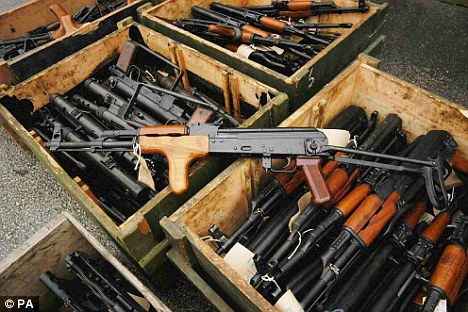
The Federal Government spent no fewer than N74.96bn on arms, ammunition and military equipment between 2023 and 2025, data from GovSpend, a civic tech platform tracking public expenditure, obtained by The PUNCH, has shown.
A breakdown of the figures showed that spending peaked in 2024 at N40.84bn, up from N33.30bn in 2023, before dropping sharply to N819.46m in 2025 based on the entries captured.
This indicates a N7.54bn increase, or about 22.6 per cent, between 2023 and 2024, with 2024 accounting for over half of the total expenditure reviewed.
An analysis of the 2023 data showed that the Ministry of Defence and the armed forces dominated spending during the year.
The ministry alone recorded N9.17bn for ammunition procurement on November 7, 2023 and another N6.89bn on November 21, 2023, for similar purposes.
Additional statutory deductions linked to these contracts amounted to over N102m.
The Nigerian Army also recorded major transactions on June 2, 2023, including N4.41bn for ammunition, N2.88bn for arms and N2.77bn for a surveillance attack aircraft.
The Nigerian Navy spent N1bn in August and N5bn in December on arms and ammunition procurement.
Other security agencies were not left out.
Defence Headquarters recorded N744.19m for military equipment and arms, while the Nigeria Correctional Service spent N144.35m on arms and protective equipment.
The Nigeria Security and Civil Defence Corps also recorded N172.77m on operational equipment, while the National Park Headquarters spent N13.91m, also on arms and ammunition.
Spending surged significantly in 2024, driven largely by bulk procurement by the Ministry of Defence.
On July 26, 2024, alone, the ministry recorded five separate payments totalling N33.22bn for what it described as critical and urgent operational equipment for the Nigerian military.
This single-day spending accounted for over 80 per cent of the total arms-related expenditure recorded in 2024, highlighting a concentration of large-scale defence procurement within a short period.
Further analysis showed that the Ministry of Defence also spent N990.89m on ammunition in April, N941.94m on armoured vehicles and ammunition, and N1.37bn as retention payment for similar contracts in December.
Other agencies also ramped up procurement during the year. The Nigeria Immigration Service recorded multiple payments for rifles, pistols and ammunition to various contractors, including Keygate Ltd, Belrock Ltd and BNTI Arm Limited.
The National Drug Law Enforcement Agency spent N1.94bn in December 2024 on arms, ammunition and anti-riot equipment for counter-narcotics operations, while police formations recorded payments for firearms tracking systems and arms handling training.
The NSCDC and the Nigerian Defence Academy also made purchases relating to arms and ammunition within the year.
In contrast, the 2025 entries captured in the data were significantly lower and limited to the NDLEA.
The agency recorded N245.84m in September as mobilisation for arms procurement and N573.62m in December as final payment, bringing the total for the year to N819.46m.
The spending pattern showed that while multiple security agencies procured arms and equipment over the period, the bulk of the expenditure was driven by the Ministry of Defence, particularly in 2024 when large-scale purchases dominated the records.
However, the figures represent only transactions explicitly classified under arms, ammunition and military equipment in the dataset, suggesting that the actual scale of Federal Government security spending over the period could be significantly higher.
The PUNCH earlier reported that Nigeria and other African countries faced heightened security risks due to limited access to modern weapons, as data showed the continent accounted for a small fraction of global arms imports.
Figures released by Stockholm International Peace Research Institute indicate that Africa contributed just 4.5 per cent of global arms imports in 2024 and 2025, compared to Europe’s dominant 48.2 per cent.
The data, published in March 2026, tracks the volume of international transfers of major weapons systems, including sales, military aid and licensed production, rather than their financial value.
Security analysts warned that the disparity could weaken the capacity of African nations to respond effectively to growing threats, including terrorism, insurgency, and transnational crimes.
The PUNCH also reported that the Federal Government earmarked over N13.12bn for the procurement of arms, ammunition and related equipment for Nigeria’s security agencies in the 2026 appropriation bills.
punch.ng
FOLLOW US ON: