Connect with us

Education

I studied for eight hours daily to score 372 – UTME candidate, Daniella Owoeye

Published

on

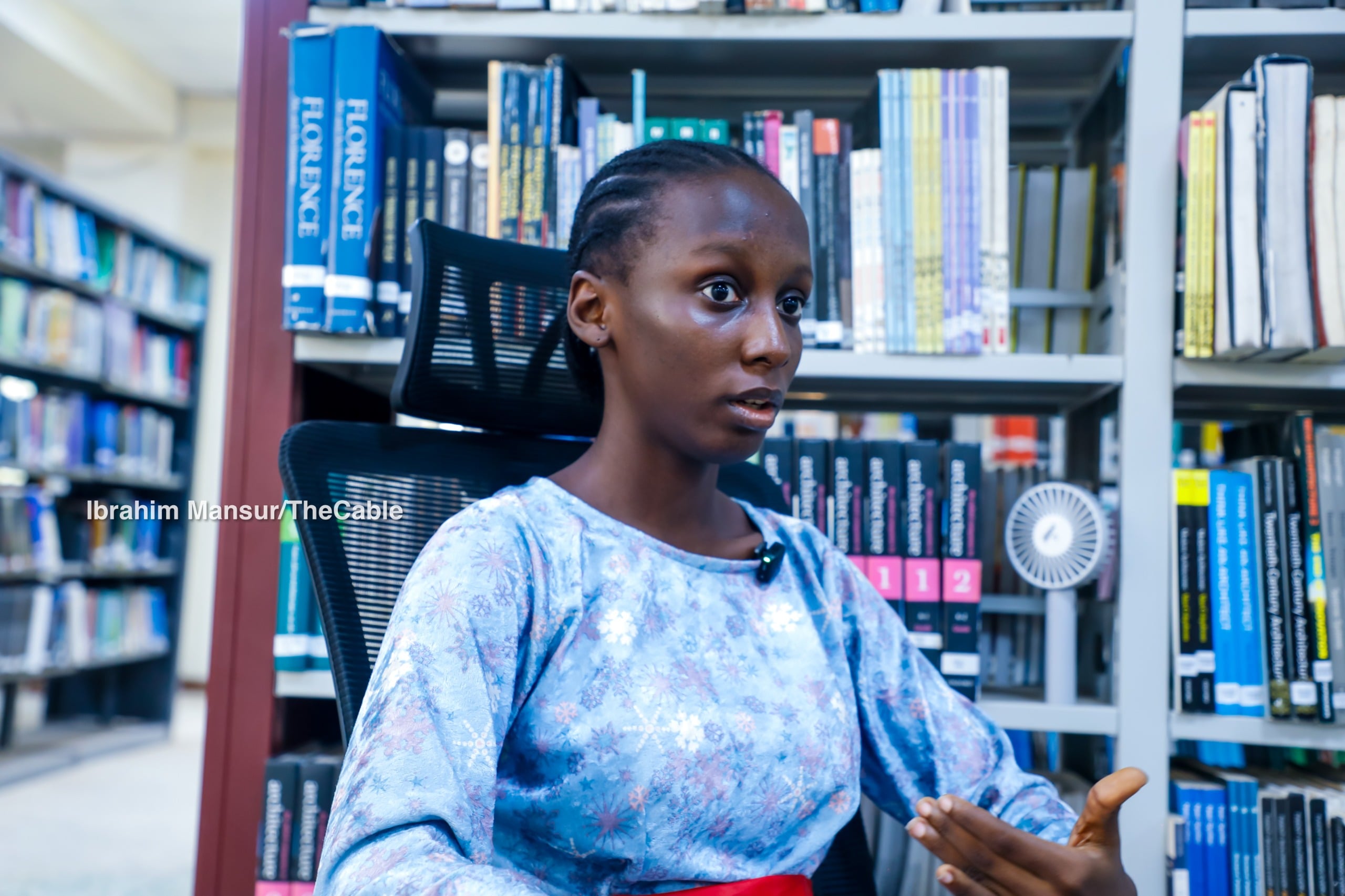
Overall best Unified Tertiary Matriculation Examination candidate with 372 score, Daniella Owoeye, tells GRACE EDEMA how her determination and personal study time contributed to her success

Could you tell us about yourself?

I am 16 years old and an alumna of EFVP Wisdom Spring Model School, Ota.

JAMB announced you on Tuesday as the overall best candidate with a UTME score of 372. How does it feel?

It feels very exciting. It’s a moment to be proud of, and I’m sure my parents and everyone around me are proud of me. When I saw the result, my joy knew no bounds—I didn’t even know how to express myself.

Were you expecting to emerge as the best?

Before I saw my result, I was hopeful of being among the top 10. I prayed, believed in God, and intensified my efforts. I prepared diligently, gave it my best, and trusted God for a great outcome. I’m very grateful for how it turned out.

What did you do differently to achieve 372 in the UTME?

First, I started my preparation as early as possible. I actually began preparing right after I graduated from secondary school. I had written UTME earlier, but due to some technical issues at my centre, my performance was affected. That experience pushed me to prepare even more intensely for the next UTME. Since then, I have been consistent and intentional with my studies.

I started preparing very early and made use of as many resources as I could. I used materials like JAMB Series Remix, past questions, and other topic-by-topic study guides.

I also used CBT apps such as Test Driller, 330, and MySchool. In addition, I joined daily online tutorials, which were very helpful. The tutors provided materials, conducted daily quizzes, and organised tests for us using Quizboots. They also held weekly mock examinations.

I was part of a WhatsApp study group where they shared a large number of questions daily—sometimes up to a hundred per subject, especially in Physics, Chemistry, and Biology. This went on consistently. We started with Chemistry for about two months before moving to other subjects.

I also watched educational videos on YouTube and downloaded relevant PDFs. I used the JAMB syllabus as a guide to structure my preparation. Alongside all of this, I prayed and committed my efforts to God.

I remained consistent, took corrections seriously, and learnt from the experiences of past top scorers by studying their strategies and applying them to my routine. I also explored different reading techniques and used those that worked best for me.

See also  A Glimpse into Early UNN: The 1960s Lecturer’s Residential Building

When did you finish secondary school?

I finished last year.

And you sat UTME last year as well?

Yes, ma’am.

What was your score at your first UTME attempt?

I scored 293, despite the technical issues I experienced at my centre.

What were your scores in each subject this year?

In English, I scored 98; Physics, 94; Chemistry, 98; and Biology, 82.

What was your reading pattern? Was it mainly the online resources and quizzes?

The resources I mentioned were part of it, although I may not remember everything I used. As for my reading pattern, I relied heavily on structured timing. I used my phone to set alarms and create a daily study schedule.

For instance, I would dedicate specific hours—like 9 am to 10 am—to answering past questions, sometimes up to 100 questions on a particular topic or subject. I consistently followed this routine and ensured I maximised my time. Time management was one of the key skills I developed, and it played a major role in my success.

I didn’t quite get your reading routine earlier. You mentioned 9 am to 10 am as an example—did you have any other pattern or routine you followed?

Yes, I only used that as an example. My actual routine was broader. I usually read in the morning from about 7 am to 11:30 am, or sometimes 12 noon, with short breaks in between. In the afternoon, I continued from around 12:30 pm to about 3:30 pm, also taking breaks.

Generally, I studied throughout the day, while still making time for rest and house chores. So, I wouldn’t say I had a fixed pattern—I was consistently reading all day, just with breaks in between.

Between your personal study and the tutorial centre, which contributed more to your success?

I would say my personal study contributed more. It’s one thing to attend a good tutorial, and another for a student to put in personal effort.

I made sure to revise everything I was taught, and I didn’t stop there—I went further to research on my own, using the JAMB syllabus as a guide. I even used past questions to create my own notes. I also studied from PDFs and textbooks, ensuring everything aligned with the syllabus. I combined all of that with what I was taught at the tutorial centre.

You want to study Medicine and Surgery. Why Medicine and Surgery?

I’ve had a passion for it since I was young. I’ve always wanted to become a medical doctor and contribute to society through healthcare. I’m motivated by the desire to treat the sick, relieve pain, and make a difference in people’s lives. That passion has been a major driving force for me.

See also  UK opens applications for 2026 Chevening Scholarships

Why did you choose the University of Lagos?

I chose UNILAG because it is one of the best universities in Nigeria, especially for Medicine and Surgery.

What advice would you give to students who want to score high in future UTMEs, especially those currently in SS3 or those who didn’t perform well this year?

First, I would advise them to work on their mindset. Some students limit themselves by believing they are not capable of achieving high scores. But mindset plays a huge role in success. If you believe something is impossible, you’re less likely to achieve it.

They should remain optimistic and believe that regardless of their background or school, they can succeed with the right effort and resources. I would also encourage them to commit their preparation to God. It is one thing to study hard, and another to encounter questions from what you studied during the exam. Prayer helps guide your efforts.

Consistency and discipline are also very important. They should stay focused, avoid distractions like excessive watching of social media events and games, and be ready to sacrifice short-term pleasures. Even if it’s just for six months, it will pay off in the long run. Most importantly, they should keep pushing, aim high, and never place limits on their potential.

Tell me about your parents and how they contributed to your success.

Before I answer that, ma, may I quickly add something?

Go ahead, please.

I would also like to advise girls specifically that we should strive to achieve excellence and not allow the history of males dominating the list of top UTME scorers to continue.

We should recognise our potential—females are known to be very brilliant—and work harder to prove that. We should aim to be among the top scorers and not leave that space to males alone.

Do you think the girl child is not pushing hard enough, based on your experience in secondary school?

I believe girls are working hard. However, success also involves God’s grace. UTME tests not just how much you study, but how well you can apply what you’ve learnt over time.

So, I wouldn’t say girls are not hardworking, but I would encourage them to intensify their efforts and keep pushing for excellence.

Tell me about your parents and how they contributed to your success.

My parents are Mr Owoeye and Dr Owoeye. My mother recently completed her PhD and works as an academic researcher at Covenant University, while my father is an administrator, also at Covenant University.

See also  St Mary’s Catholic School kidnap: 227 people were abducted - CAN

They were very supportive throughout my UTME preparation. They prayed for me daily and encouraged me consistently. Sometimes, they would even come into my room to pray with me.

They also ensured that I had access to all the materials I needed. Many of the CBT apps I used were paid for by them. They provided data for downloading educational videos, as well as textbooks and past questions.

Beyond that, they created an environment conducive for me to study. I would say their support played a significant role in my success.

Do you have any message for other parents?

Yes. I would advise parents to believe in their children and avoid comparing them with others. Comparison can damage a child’s self-esteem and create feelings of inferiority. Instead, parents should encourage their children daily, support them emotionally and academically, and provide the resources they need.

They should also create an environment conducive to learning and pray for their children. With the right support, children can achieve great things.

Do you have siblings? How many are there in the family, and what position are you in the family?

I’m the third child.

Are you the lastborn?

No. I have one younger sibling.

So, you have two older siblings and a younger one?

Yes, ma.

Do you have a boyfriend, or did you have one while in school?

No. I don’t have a boyfriend, and I’ve never had one.

But some of your classmates did?

Yes, some of them did. However, they weren’t part of my close circle. I was mindful of the kind of friends I kept, and I avoided influences that could distract me from my goals.

Were there any challenges you faced during your school days or while preparing for UTME?

Yes, there were. At the early stage of my preparation, my CBT practice scores were quite low—around 268—which was below my expectations.

However, I didn’t allow that to discourage me or affect my self-esteem. Instead, I stayed determined and kept working hard. Gradually, my scores improved, and I began to achieve better results in my practice tests.

punch.ng

FOLLOW US ON:

FACEBOOK

TWITTER

PINTEREST

TIKTOK

YOUTUBE

LINKEDIN

INSTAGRAM

Continue Reading
Click to comment

Leave a Reply

Your email address will not be published. Required fields are marked *

Education

CBT best way to curb ‘miracle centres’, examination malpractice — WAEC official

Published

on

The West African Examination Council, has called for “strict computer-based testing to curb examination malpractice in some centres,” popularly known as “miracle centres.”

An official with WAEC office in Makurdi, Timothy Manga gave the advice in an interview with the News Agency of Nigeria, on the growing concerns over examination malpractice and its impact on the credibility of public examinations and educational certificates.

NAN on Monday reported that Manga said allegations of the existence of “miracle” examination centres in Benue had become worrisome, though there had not been any official confirmation of the existence of such centres in the state.

In Nigerian education context, PUNCH Online reports that a “miracle centre” is an examination centre where organised examination malpractice is allegedly facilitated, allowing candidates to obtain unauthorised assistance or answers during exams.

He described the development as a threat to the education system, saying schools should be known for quality teaching rather than their ability to facilitate examination malpractice.

“Any system that rewards students for cheating undermines those who have worked hard to prepare for examinations.

“We need an examination system where success is determined by knowledge, preparation, and competence, not by the ability to access assistance during examinations.

” Though WAEC has not gotten any information on any school being a “miracle centre”, we would continue to put our ears to the ground in case we hear of any that we can set an example with,” he said.

Mrs Rebecca Ezekiel, a teacher with NKST Secondary School Makurd, however, said the establishment of independent examination centres could reduce the influence of schools and teachers over examinations such as WAEC and the National Examination Council (NECO).

Ezekiel said the CBT would enable examination bodies to exercise greater control over examination venues, personnel, and security arrangements.

See also  FG, avert looming ASUU strike

“Candidates should be examined under conditions that are independent of the schools where they receive instructions,” she said.

The teacher also recommended the deployment of biometric verification, Closed-Circuit Television (CCTV) cameras, and other technologies to strengthen examination monitoring.

However, Mr Jude Odeh, a school proprietor in Otukpo Local Government Area (LGA), said admitting sudents in final year in secondary schools did not qualify a school to be labelled as a “miracle” examination centre.

Odeh said he had heard allegations about the existence of such centres in the state but was yet to identify any specific school operating as a miracle examination centre.

He said some parents changed their children’s schools for various reasons such as the high cost of examination registration, school fees, and others.

According to him, some schools charge examination fees arbitrarily, and when combined with school fees, the total cost becomes too high for some parents to bear.

Odeh, however, said he knew some schools in Benue that did not admit new students into SS3, insisting that only students promoted from SS2 were registered for external examinations.
(NAN)

Source: punchng.com

FOLLOW US ON:

FACEBOOK

TWITTER

PINTEREST

TIKTOK

YOUTUBE

LINKEDIN

INSTAGRAM

Continue Reading

Education

Lagos law student dies after jumping from four-storey building

Published

on

The Lagos State Police Command has confirmed the death of a 23-year-old student of the Nigerian Law School, Faith Alayande, who reportedly died after allegedly jumping from the rooftop of a four-storey hostel building at the institution’s campus in Victoria Island, Lagos.

PUNCH Metro learnt in a telephone conversation with the command’s Public Relations Officer, Abimbola Adebisi, that the incident was reported to the police after the deceased was found unresponsive in the hostel premises on Friday.

Adebisi noted that the matron of the institution reported the matter and disclosed that another student and a relative reportedly found a suicide note written by the deceased student, prompting them to search for her.

She noted that before they could locate her, she had allegedly jumped from the rooftop of the four-storey hostel building.

She said, “I can confirm the incident. The deceased reportedly wrote a suicide note and, before her hostel mate and a relative could locate her, she jumped from the rooftop of a four-storey building.

“The matron of the hostel reported the incident, prompting police operatives to visit the scene. Her body has been evacuated to a morgue for preservation.”

Also, a security analyst, Zagazola Makama, who shared details about the incident on X, disclosed that the deceased was found dead within the hostel premises on Friday by another student, who alerted the matron of the institution.

According to Makama, the Chief Matron of the Law School was said to have reported the incident at the Victoria Island Police Division at about 6:30am.

Makama noted that, upon receiving the report, the matron proceeded to the scene, where the deceased was found lying on the ground within the hostel premises.

See also  Foundation empowers 400 Kaduna students

Makama wrote, “A 23-year-old student of the Nigerian Law School has died in a suspected suicide incident at the school’s hostel in Victoria Island, Lagos.

“The incident occurred in the early hours of Friday, August 7, 2026, when the deceased, identified as Alayande Faith Ajoke, was found dead within the hostel premises.

“The Chief Matron of the Law School, Mrs Igbokwe Juliana, reported the incident at about 6:30am. Preliminary observations indicated that the deceased may have jumped from the rooftop of the four-storey hostel building.”

Meanwhile, the PPRO concluded that an investigation was ongoing into the incident.

This is not the first reported case of a Nigerian Law School student dying by suicide.

PUNCH Metro reported in December 2025 that a Nigerian Law School student, Ayomiposi Ojajuni, reportedly died by suicide after he was allegedly barred from writing the Bar Final examinations at the Yola campus in Adamawa State.

Ojajuni, a graduate of Olabisi Onabanjo University, was said to have received a series of queries from the school authorities and later discovered that he would not be allowed to sit for the professional examinations.

Source: punchng.com

FOLLOW US ON:

FACEBOOK

TWITTER

PINTEREST

TIKTOK

YOUTUBE

LINKEDIN

INSTAGRAM

Continue Reading

Education

Canada updates Visa processing times for Nigerians as study permit wait rises

Published

on

Nigerians applying to study or travel to Canada are facing longer estimated processing times following the latest temporary residence update released by Immigration, Refugees and Citizenship Canada (IRCC).

The immigration department updated its processing-time estimates on August 5, 2026, with the latest figures showing increases across several temporary residence categories. For Nigerian applicants, the estimated processing time for study permits increased from six weeks to seven weeks between July 28 and August 5.

The wait for Canadian visitor visas also increased, rising from 64 days to 68 days. However, the estimated processing time for Nigerians applying for a work permit remained unchanged at seven weeks. There was also a slight increase in the estimated processing time for super visa applications from Nigeria, which rose from 41 days to 43 days.

With these latest figures, Nigerian applicants should now expect an estimated wait of seven weeks for a work permit, seven weeks for a study permit, 68 days for a visitor visa, and 43 days for a super visa.

The changes in Canada’s latest update were not limited to Nigerian applicants. Work permit processing for applicants from Pakistan recorded one of the biggest increases, jumping from 11 weeks to 25 weeks, a rise of 14 weeks.

Study permit processing for applicants from the Philippines also increased by one week, while super visa processing for applicants from the Philippines rose from 73 days to 100 days. Some applicants, however, saw their estimated waiting periods fall.

The biggest reduction among the featured categories was recorded for super visa applications from Pakistan, which dropped from 196 days to 185 days.

See also  FG, avert looming ASUU strike

IRCC’s processing times are estimates and do not represent a guaranteed date for when an application will be completed. The actual time required to process an application can vary depending on factors such as the complexity of the case, the volume of applications awaiting processing, available resources, and whether immigration officials require additional information or documents.

The Canadian immigration department updates temporary residence processing times weekly, meaning the estimates for Nigerian applicants could change again in the next update, which is expected around August 12, 2026.

FOLLOW US ON:

FACEBOOK

TWITTER

PINTEREST

TIKTOK

YOUTUBE

LINKEDIN

INSTAGRAM

Continue Reading

Trending