Connect with us

News

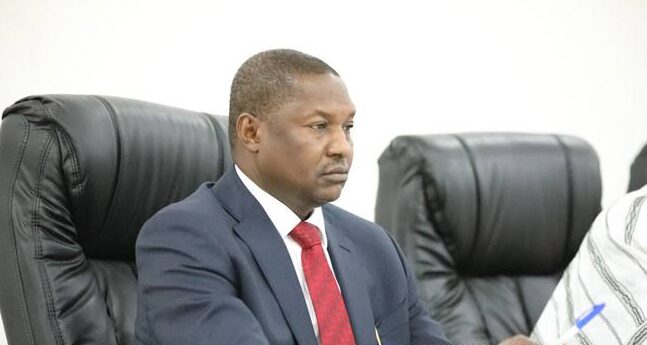
Court orders FG takeover of 48 properties linked to Malami

Published

on

The Federal High Court in Abuja has ordered the final forfeiture of 48 properties linked to a former Attorney General of the Federation and Minister of Justice, Abubakar Malami (SAN), to the Federal Government.

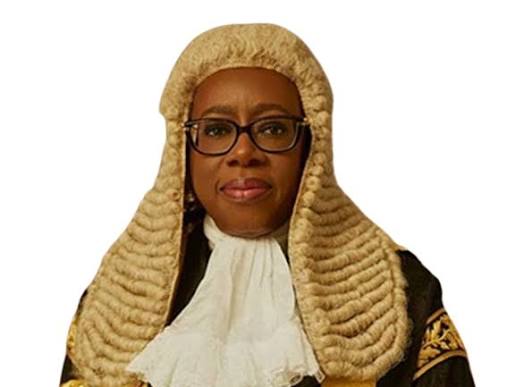
Justice Joyce Abdulmalik, in a judgment delivered in Abuja on Wednesday, held that the Economic and Financial Crimes Commission had established the reasonable suspicion required by law to justify the forfeiture of the assets.

The judge ruled that Malami, his family members and companies linked to the properties failed to dislodge the commission’s allegation that the assets were acquired with proceeds of unlawful activities.

Before delivering the substantive judgment, Justice Abdulmalik dismissed several applications, motions on notice, and applications to show cause filed by the respondents, describing them as “wanting in merit.”

She held that the issue before the court was not the ownership of the properties but the legitimacy of the funds used to acquire them.

“The issue before the court is not who owns the property, but how legitimate the funds used to acquire the properties are,” the judge said.

She added that the respondents had “not dislodged the reasonable suspicion that the property was acquired by unlawful activities.”

Relying on Section 17 of the Advance Fee Fraud and Other Fraud Related Offences Act, Justice Abdulmalik granted the EFCC’s application for final forfeiture.

The court, however, discharged the interim forfeiture order in respect of some of the properties.

The anti-graft agency had, in January, instituted civil forfeiture proceedings seeking the permanent forfeiture of 57 properties valued at N212.8bn, alleging that they were proceeds of unlawful activities linked to the former AGF.

See also  Ex-minister, Audu Ogbeh is dead

On January 16, vacation judge, Justice Emeka Nwite, granted an interim forfeiture order over the properties and directed the EFCC to publish the order in a national newspaper to enable interested persons to appear before the court and show cause why the assets should not be permanently forfeited to the Federal Government.

The properties are located in Abuja, Kano, Kebbi and Kaduna states.

Following the publication, Malami, his wife, Nana Hadiza Malami, his son, Abdulaziz Abubakar Malami, and several companies linked to the assets challenged the interim forfeiture order.

They argued that the properties were lawfully acquired and contended that the EFCC failed to establish any nexus between the assets and alleged unlawful activities.

The respondents further maintained that the commission relied on speculation rather than credible evidence and neither proved that the properties were proceeds of crime nor identified any specific criminal offence from which they were allegedly derived.

After the court resumed from its annual vacation, the case was reassigned to Justice Abdulmalik for hearing and determination.

At the hearing, counsel for the EFCC argued that investigations showed the properties were acquired with proceeds of unlawful activities and held in the names of individuals and companies acting as fronts for Malami.

The commission also submitted that under the law governing civil forfeiture proceedings, it only needed to establish reasonable suspicion and not prove the case beyond a reasonable doubt.

After parties adopted their final written addresses in May, the court reserved judgment.

The judgment, initially fixed for July 6, was deferred twice before Justice Abdulmalik finally delivered the ruling on Wednesday.

See also  China set to launch world's first pregnancy robot using artificial womb

EFCC unveils properties

A statement by the EFCC spokesman, Dele Oyewale, later listed the forfeited properties as Rayhaan University in Kebbi State, including its permanent, temporary and third campuses, the vice chancellor’s residence and Rayhaan Radio located along Sani Abacha Bypass Road, Birnin Kebbi.

Other assets forfeited were Rayhaan Agro Allied Factory with its factory buildings, machinery, mosque, staff quarters and Bustan Building; Azbir Arena comprising Azbir Hotel, printing press, gallery, gardens, clothing outlet, pharmacy and supermarket; Al-Afiya Energy tanker garage; Rayhaan Security House; an uncompleted two-storey plaza in Birnin Kebbi; Amasdul Oil and Gas filling station; Zeennoor Hotel in Kano with 131 rooms; Zeennoor Mosque; and the old Zeennoor Hotel building.

The court also ordered the forfeiture of several high-value properties in Abuja, Kano and Kebbi, including luxury residential buildings, hotels, commercial plazas, warehouses, petroleum stations, farmlands and estates.

The EFCC said that with Wednesday’s ruling, ownership of the 48 properties has been transferred to the Federal Government.

Malami is currently on trial for an alleged N8.7bn fraud alongside his wife and son.

punch.ng

FOLLOW US ON:

FACEBOOK

TWITTER

PINTEREST

TIKTOK

YOUTUBE

LINKEDIN

Continue Reading
Click to comment

Leave a Reply

Your email address will not be published. Required fields are marked *

News

Minor offences causing prison congestion, Tunji-Ojo says

Published

on

The Minister of Interior, Dr Olubunmi Tunji-Ojo, has said that between 30 and 50 per cent of offences committed by inmates in correctional centres across Africa do not warrant incarceration.

He urged correctional authorities to critically assess the true state of congestion in their facilities.

Tunji-Ojo spoke on Wednesday in Abuja at the Regional Conference on the Classification of Prisoners and the Use of Technology in Prisons in Africa, jointly organised by the United Nations Office on Drugs and Crime and the African Correctional Services Association.

He challenged correctional authorities to ask themselves a fundamental question about the true nature of overcrowding in their facilities.

“The question is this. Is your correctional centre rightfully overcrowded? That is the question. You have to look at those particular offences. You will realise that more than 30, 40, 50 per cent are offences that do not warrant incarceration,” he said.

The minister disclosed that 93 per cent of inmates in Nigeria’s correctional centres are state offenders, while only seven per cent are federal offenders, noting that a significant number of the state offenders were held for minor infractions.

“93% of our inmates in Nigeria are state offenders. Only 7% are federal offenders.

And of this 93%, I want to tell you before this President came on board, a lot of them were for minor offences that had no need for incarceration,” he said.

Tunji-Ojo said he had personally directed officials to review the records of inmates held over minor fines shortly after his appointment as minister.

“When I became minister, I called my permanent secretary, I called the Controller General of the Correctional Service, and I said, listen, give me the data, the record of people who are in correctional centres for fines and compensation of less than 500,000 or something. And guess what? Over 4,000 people,” he said.

See also  Motorists stranded as Oyo residents protest road extension

He questioned the economic logic of keeping such offenders behind bars, citing the cost implications for the government.

“I said, what is the sense in this? Because I feed them in a year with more than 10 times the fine. So how is the government benefiting? And we were able to clear that, and in one day, we decongested our correctional centre by five per cent,” he said.

The minister also revealed a sharp decline in recidivism in Nigeria’s correctional centres, from about 13,000 cases annually in 2023 to 1,000 last year, a drop he linked to expanded access to education and vocational training for inmates.

He said the correctional service currently has 62 inmates pursuing postgraduate studies, 261 in undergraduate programmes, 1,125 in formal education, and 9,582 enrolled in vocational and non-formal rehabilitation programmes, supported by 18 National Open University centres domiciled within correctional facilities.

Also speaking at the conference, the Controller General of the Nigerian Correctional Service, Sylvester Ndidi Nwakuche, said Nigeria has continued to modernise its correctional system through reforms anchored on the Nigerian Correctional Service Act, 2019.

He said effective prisoner classification has become a strategic tool for identifying inmates’ risks, protecting vulnerable prisoners, deploying resources efficiently and delivering targeted rehabilitation programmes.

Nwakuche stressed that no single correctional service possesses all the solutions to contemporary security and rehabilitation challenges, describing the conference as an opportunity for collective learning.

“We have a unique opportunity to exchange ideas, share practical experiences and collectively develop solutions that will strengthen correctional systems across Africa,” he said.

See also  Alaafin Crowns Kwara Monarch Oloro Of Oro

punch.ng

FOLLOW US ON:

FACEBOOK

TWITTER

PINTEREST

TIKTOK

YOUTUBE

LINKEDIN

Continue Reading

News

PSC unveils 50,000 successful police constable recruits

Published

on

The Police Service Commission has released the names of successful applicants for the recruitment of 50,000 police constables into the Nigeria Police Force.

The commission said the exercise followed a comprehensive, inclusive, equitable and transparent recruitment exercise conducted in collaboration with major stakeholders, including the Nigeria Police Force, Federal Character Commission, Ministry of Police Affairs, States Career and Counselling Departments and the Police Community Relations Committee.

In a statement on Wednesday by its Head of Protocol and Public Relations, Torty Kalu, the commission directed all candidates who sat the recently concluded written examination to check their recruitment status on the official portal, which will be opened on Thursday.

According to the statement, successful candidates will also receive email and SMS notifications on the email addresses and phone numbers they provided during the initial application.

The PSC said those confirmed successful were expected to report to designated police training institutions on dates and times to be communicated in due course for medical examination and documentation.

It warned that candidates who failed to honour the reporting timeline would be considered to have declined the offer.

The commission also noted that anyone who failed the medical examination conducted by the police medical team upon resumption of training would be declared unfit and required to leave the training.

“The successful candidates are expected to report to their designated Police Training Institutions on dates and times to be communicated in due course for medical examination and documentation.

“Candidates who fail to report within the stipulated time will be considered to have declined the offer.

See also  Insecurity: Northern forum demands service chiefs’ removal

“In addition, those who fail the medical examination that will be conducted by the police medical team on resumption of training will be declared unfit and shall be required to leave the training.

“Candidates are to report with their training call-up slip, NIN slip, BVN slip, original and photocopies of their certificates and other required documents and items as would be listed in the recruitment portal, “the statement said.

The recruitment forms part of the ongoing Federal Government’s efforts to boost police manpower and improve internal security across the country.

punch.ng

FOLLOW US ON:

FACEBOOK

TWITTER

PINTEREST

TIKTOK

YOUTUBE

LINKEDIN

Continue Reading

News

Judge backs NIN verification for NBA elections, seeks electoral reforms

Published

on

A retired judge of the Federal High Court and former Second Vice President of the Nigerian Bar Association (NBA), Justice Taiwo Taiwo, has endorsed the use of the National Identification Number to verify lawyers eligible to vote in NBA elections, saying the measure would enhance transparency and restore confidence in the association’s electoral process.

Justice Taiwo stated this in a statement titled “Let the Truth Be Told! My Take on the Election Crisis That Is Ongoing in the NBA”, where he said he had foreseen the current electoral controversy and publicly warned about it during his valedictory court session in 2022.

The jurist, who retired from the Federal High Court on July 31, 2022, said he was “shocked but honestly not surprised” by the crisis surrounding the NBA elections.

“I am disturbed, to say the least, about the discordant tunes concerning the elections to offices in the NBA,” he said.

According to Taiwo, concerns over the credibility of the NBA’s electoral process have persisted for years, with several aggrieved members challenging election outcomes in court.

“Many outside the inner circle of the ‘powers’ behind the scenes cannot know what goes on. Persons have gone to court on NBA election outcomes in the past. Those who did know why they did,” he stated.

To reinforce his position, Justice Taiwo reproduced excerpts from the valedictory speech he delivered in September 2022, in which he called for comprehensive reforms to the association’s electoral system.

He argued that the emergence of an NBA president should never appear predetermined before the incumbent completes his tenure.

See also  Gen Rabe’s death: Retired Generals seek security reforms, back stronger community defence

“I belong to the NBA by reason of my profession. I want the best for the association, especially for it to evolve in a democratic and transparent way in the election of its officers.

“I am of the firm view that the election of the President of the NBA ought to transcend a situation where the next President is known before a new one is sworn in,” the jurist explained.

Taiwo disclosed that while he was still on the Bench, he was informed that a particular individual would become the next NBA president before the tenure of the then-president, Olumide Akpata, had ended.

“I asked myself how it was possible, knowing fully well that stargazing or clairvoyance are not courses in law,” he recalled.

As part of his recommendations, the retired judge proposed that lawyers should vote electronically from their respective NBA branches on election day, saying such a system would improve transparency while retaining the advantages of electronic voting.

“I want to propose that on election day, all those interested in voting will go to their various branches physically to vote electronically, as is being done by INEC. This will ensure transparency in the electoral process in the NBA,” he said.

Taiwo also expressed support for the ongoing use of the National Identification Number to verify lawyers eligible to participate in the election.

“I, therefore, flowing from this extract, support any move or actions to ensure transparency. This means I support the use of NIN by lawyers desirous of voting in the election,” he stated.

See also  Motorists stranded as Oyo residents protest road extension

He added that the NBA, as the umbrella body of legal practitioners in Nigeria, should be capable of conducting credible elections without relying on external observers.

“We do not need any outsider to monitor the election of an association of legal practitioners,” he said.

Meanwhile, Mrs Boma Alabi (SAN) criticised the practice of adopting candidates through regional forums in the NBA presidential election, describing it as outdated and inconsistent with democratic principles.

The lawyer argued that endorsements by regional groups had become more divisive than beneficial.

“The truth is this practice belongs in the dark ages, not in 2026. Certainly, adoption by regional fora may have had some utility in the past, but in today’s NBA it has become more divisive than unifying,” Alabi asserted.

She contended that such endorsements were often driven by ethnic considerations rather than genuine regional representation.

“Lawyers across the country want to exercise their individual choice, not be told who to support by blocs. Adoption risks alienating members and undermining the democratic spirit of the Association. At this point in our history, open competition, free choice and universal suffrage are far more salutary than regional endorsements,” Alabi argued.

On the selection of the information technology company to conduct the NBA election, the senior lawyer stressed that the process must be transparent to inspire confidence among members.

“The credibility of our elections rests heavily on the IT company chosen to manage the process. If the selection is not transparent, it naturally breeds suspicion,” she stated.

She added that the procurement process, the company’s expertise in secure electronic voting and the absence of conflicts of interest were all essential to ensuring credible elections.

See also  Macron to visit Nigeria — French ambassador

“What we need is not just competence but also trust. The perception of impartiality is as important as technical capacity. Digital activities always leave a footprint that can be easily identified,” Alabi noted.

She advised candidates with reservations about the election process to take advantage of available technological tools to independently monitor the exercise.

The SAN endorsed universal suffrage for the NBA election, noting, “I stand firmly on the side of universal suffrage. The NBA is a diverse body, and every lawyer deserves a voice in choosing its leadership. The delegates system concentrates power in the hands of a few, which is contrary to democratic ideals,” she said.

punch.ng

FOLLOW US ON:

FACEBOOK

TWITTER

PINTEREST

TIKTOK

YOUTUBE

LINKEDIN

Continue Reading

Trending