

Connect with us

Business

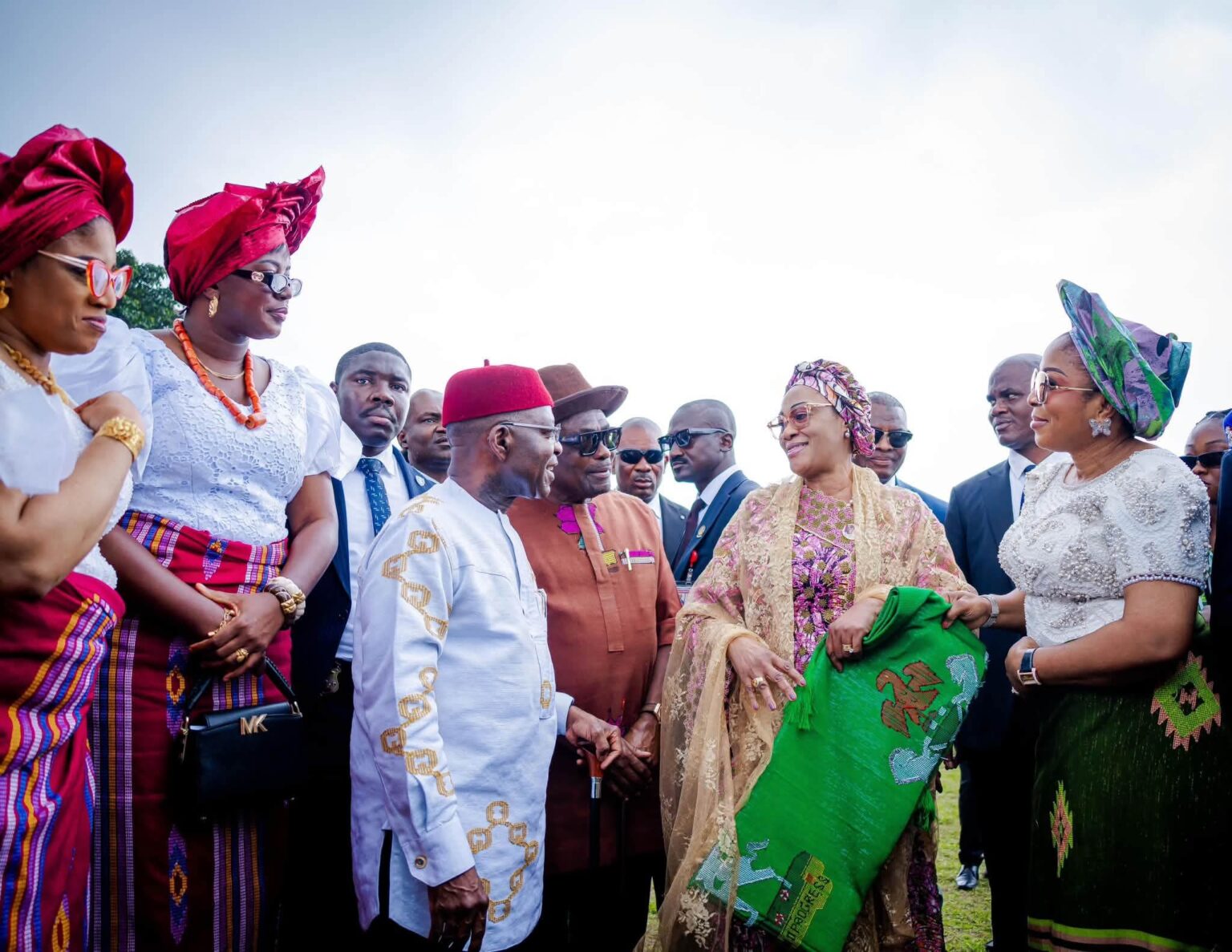
PHOTOS & VIDEO: Remi Tinubu Donates ₦2 Billion To Boost Akwete Fabric Production In Abia

Published

on

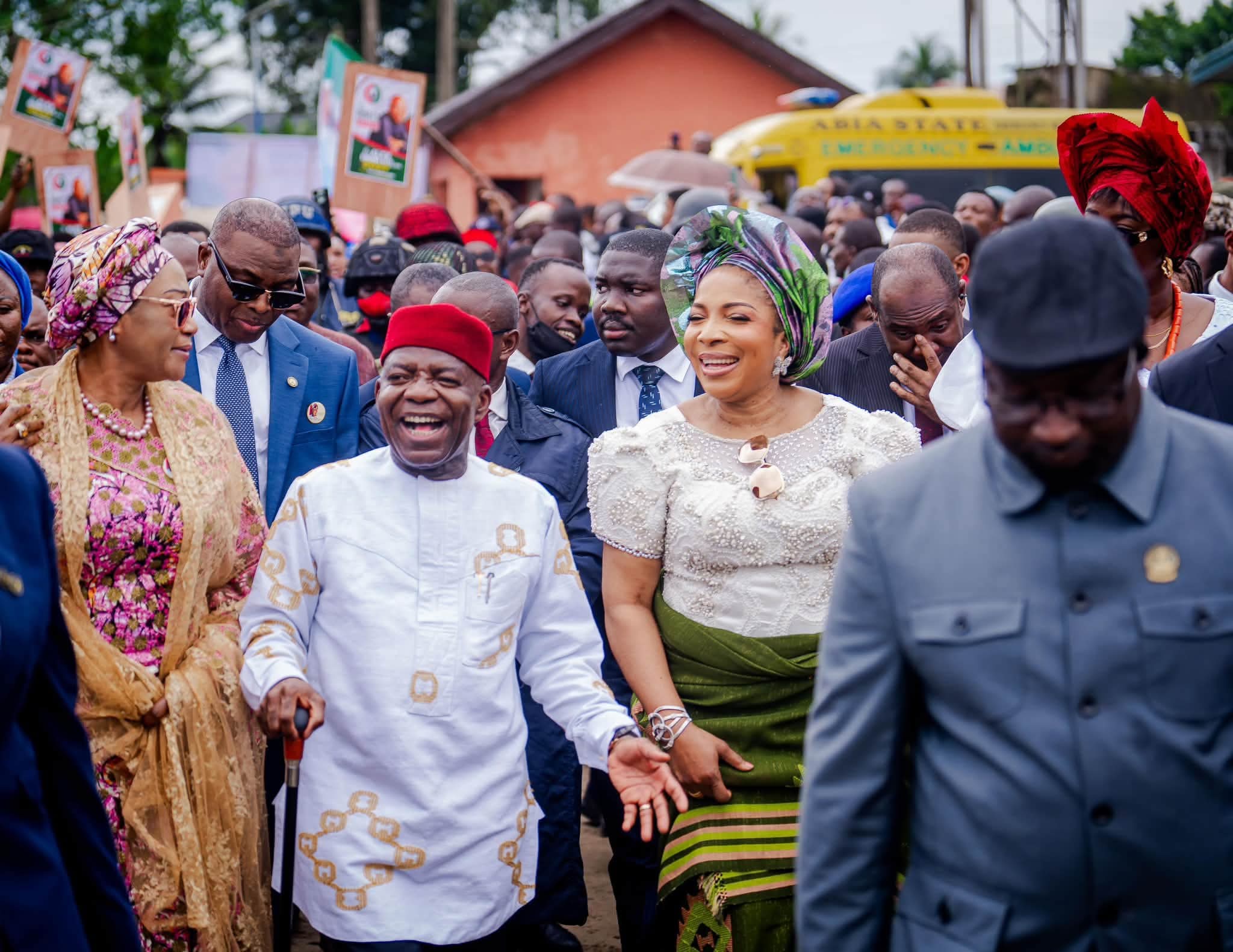
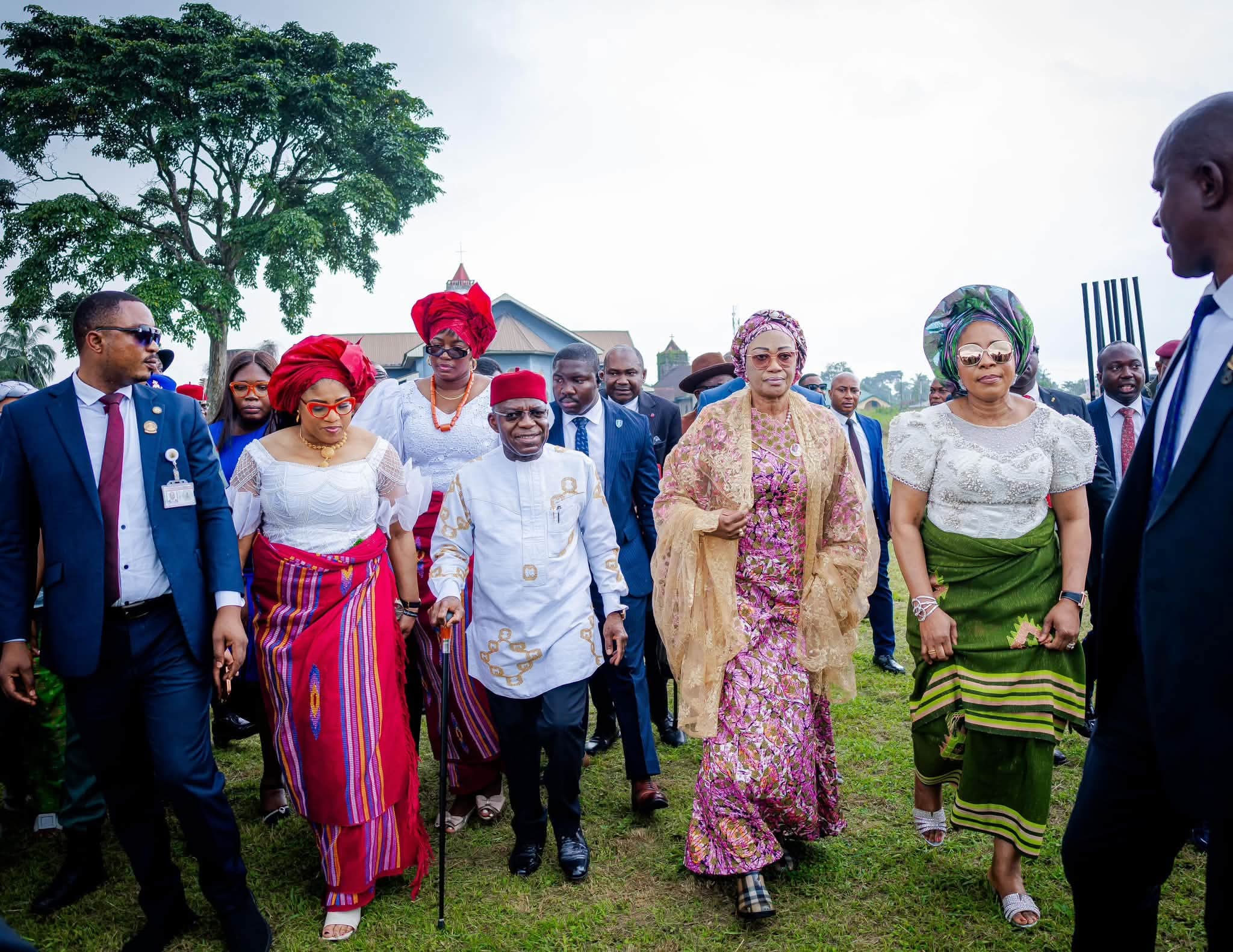
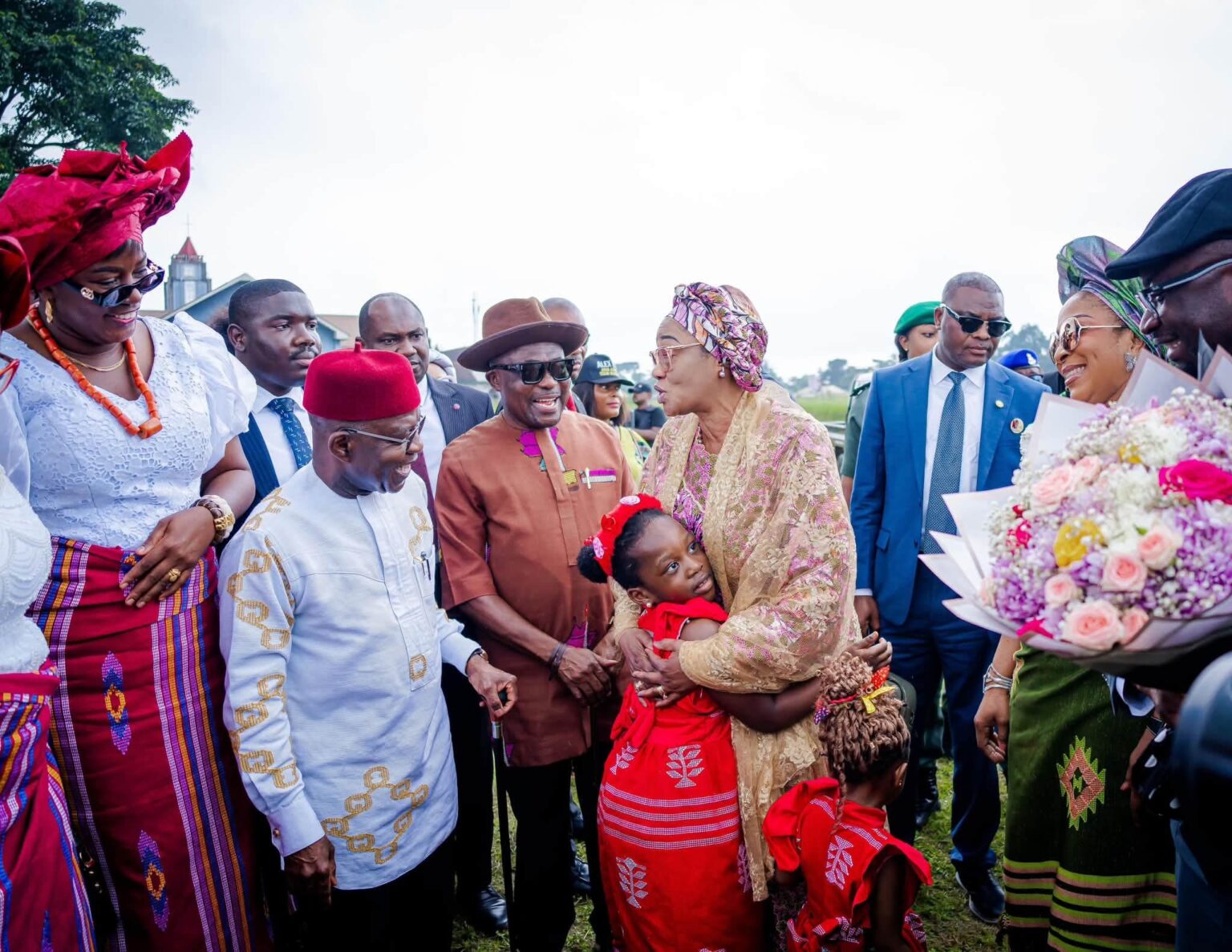
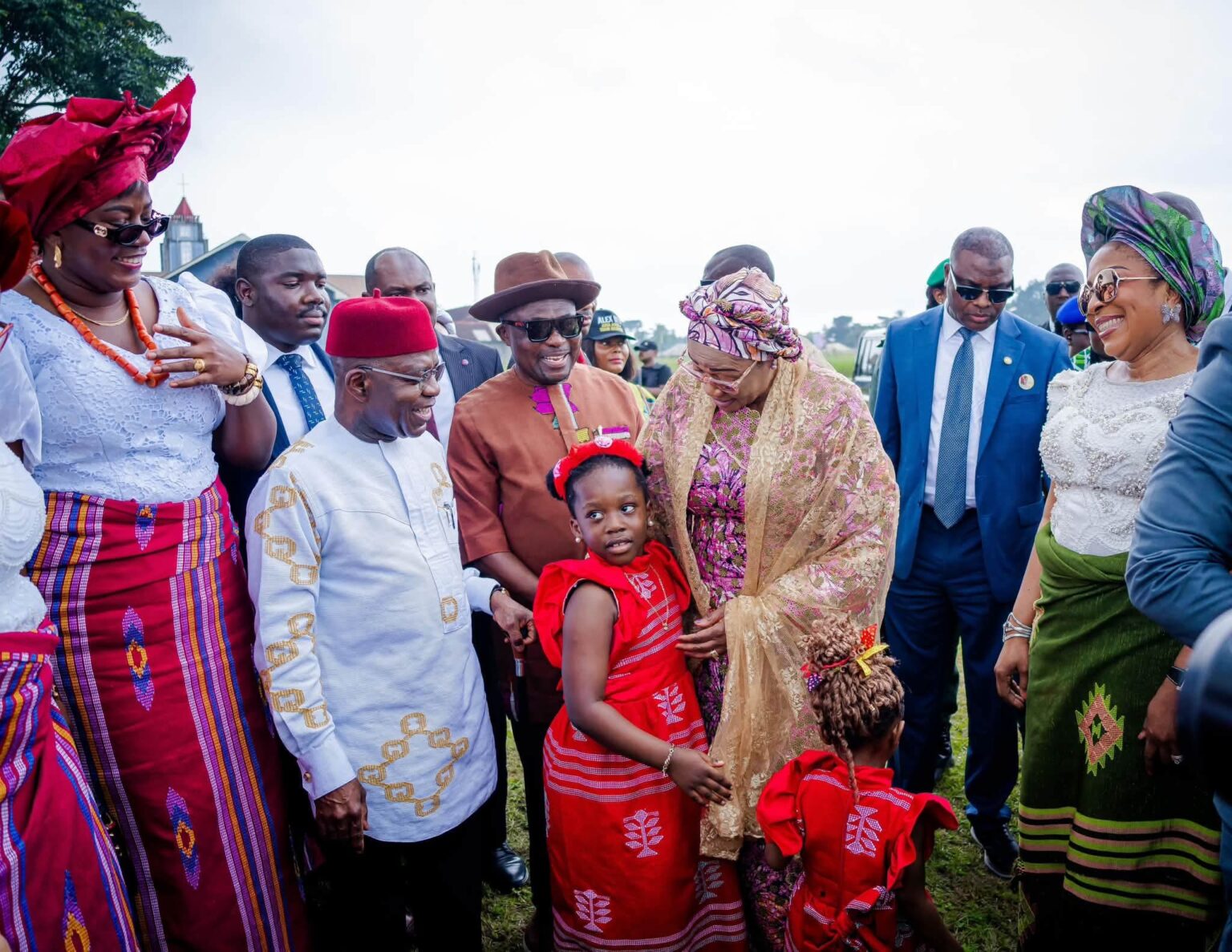
The First Lady of Nigeria, Senator Oluremi Tinubu, has donated N2 billion to the Abia State Government to support the development and promotion of the renowned Akwete fabric, a centuries-old handwoven textile indigenous to the Akwete community in Ukwa East Local Government Area of the state.

Mrs. Tinubu announced the donation on Tuesday during her visit to Aba as part of activities aimed at celebrating and promoting the historic Akwete weaving heritage.

She said the intervention would support the development of the Akwete production centre, create employment opportunities, strengthen local production, and boost the state’s economy.

According to the First Lady, the donation is also intended to preserve the centuries-old weaving tradition and ensure that the unique cultural heritage is sustained for future generations.

Speaking at the event, Mrs. Tinubu described Akwete fabric as a symbol of Nigeria’s rich cultural identity, commending the women of Akwete for preserving the craft through generations.

She noted that the fabric, woven on traditional vertical looms using cotton, raffia, and silk, is renowned for its vibrant colours and distinctive geometric designs.

“I am in awe of all the richness of what the Akwete fabrics stand for. I love traditional outfits because our tradition and culture tell us who we are. The moment we lose that, we won’t remember where we come from,” she said.

She described the weaving tradition as a sacred craft handed down from one generation to another through love, patience, and dedication, urging that it be preserved and passed on to younger generations.

See also  Wage arrears: Labour issues Friday ultimatum to FG

The First Lady also encouraged Nigerian youths to embrace their cultural heritage by proudly wearing African traditional attire.

Addressing the women of Akwete, she said, “I heard your cry. I am here to announce to all Nigerians and the Igbo people that it is time to take Akwete fabric to the national stage. Therefore, all notable sons and daughters of Igbo land should rise up to preserve this culture. On my part, I am donating N2 billion for the project.”

Mrs. Tinubu further pledged that if President Bola Ahmed Tinubu secures a second term in office in the 2027 presidential election, she would wear an Akwete fabric wrapper and “buba” during the presidential inauguration.

Responding, Abia State Governor, Dr. Alex Otti, alongside his wife, Mrs. Priscilla Otti, expressed appreciation to the First Lady for the generous intervention, describing it as a major boost to the state’s efforts to revive and expand the Akwete weaving industry.

Governor Otti said the state government had been engaging the Akwete weaving community since 2023 to reposition the industry as a viable economic enterprise capable of competing in both local and international markets.

He stated that the government was addressing long-standing challenges affecting the industry while introducing technology-driven innovations to improve production, quality, and global competitiveness.

The governor also commended President Bola Tinubu for his economic reforms, particularly the removal of fuel subsidy and the unification of the foreign exchange market, which he said were laying the foundation for long-term economic growth.

Also speaking, the Senator representing Abia South Senatorial District, Senator Enyinnaya Abaribe, praised the women of Akwete for sustaining the historic craft, describing them as the backbone of the community.

See also  Marketers drop petrol prices below Dangote’s cost

He pledged his support towards the construction of a modern weaving centre to further strengthen the industry.

ABN TV reports that the Abia State Council of Traditional Rulers conferred the traditional title of “Ugo Nwanyi Abia” (The Pride of Abia Women) on Senator Oluremi Tinubu in recognition of her generosity, compassion, and contributions to the welfare of Nigerian women.

FOLLOW US ON:

FACEBOOK

TWITTER

PINTEREST

TIKTOK

YOUTUBE

LINKEDIN

INSTAGRAM

Continue Reading
Click to comment

Leave a Reply

Your email address will not be published. Required fields are marked *

Business

PHOTOS & VIDEO: South African Man Laments Businesses Dying After Foreigners Left

Published

on

In the nighttime video, a South African man walks through the streets while filming and speaking to the camera. He shows various spots to illustrate his point.

He says:

“Business is dying in South Africa. Nobody is making money. Africans have left, and now we have our own businesses. It’s very clean, but it’s also very quiet.”

(Here “Africans” refers to foreign African nationals — immigrants and traders from other African countries such as Nigeria, Zimbabwe, Mozambique, and others who operated businesses, shops, and stalls in the area.)

He points the camera toward a food stall with well-grilled chicken and other meats on display, but notes there are no customers around. He then pans to an empty club area, saying it used to be bubbling and packed at this time, but now it’s completely quiet because the people (foreign Africans) who used to make the place busy have gone.

He continues:

“Around this time on a normal Saturday, you couldn’t even get through this street because it would be packed. But look at it now.”

The man adds that it will even be worse in the coming weeks because more foreigners will leave.

Purpose of the video:

The video is a direct on-the-ground complaint about the economic decline in the area. The man is showing the visible emptiness — quiet streets, idle food vendors with grilled chicken but no buyers, and a once-lively club now deserted — to demonstrate how the departure of foreign African nationals (who drove much of the customer traffic and hustle) has hurt local businesses. He warns that the situation will deteriorate further as more foreigners leave.

See also  Malabu Oil & Gas Sues CAC Over Deregistration Of Firm

FOLLOW US ON:

FACEBOOK

TWITTER

PINTEREST

TIKTOK

YOUTUBE

LINKEDIN

INSTAGRAM

Continue Reading

Business

Read how to apply for FG’s loan for laptops, smartphones, others

Published

on

The Federal Government’s newly launched consumer credit scheme for digital devices, the Credit for Laptops, Internet, Connectivity and Knowledge Digital Devices Programme, is now accepting applications from Nigerians seeking affordable, credit-based access to laptops, smartphones and tablets.

The programme, implemented by the Nigerian Consumer Credit Corporation (CREDICORP) in partnership with the Federal Ministry of Communications, Innovation and Digital Economy, was unveiled on Tuesday in Abuja by the Minister, Dr Bosun Tijani, alongside CREDICORP’s Managing Director and Chief Executive Officer, Uzoma Nwagba.

C.L.I.C.K.D. is designed to help Nigerians own digital devices through structured, spread-out payments rather than paying the full cost upfront, starting with locally assembled laptops as CREDICORP prioritises local manufacturing.

How to apply

  1. Visit the website. Go to credicorp.ng/clickd, the official C.L.I.C.K.D. landing page.
  2. Click “I’m Interested.” This takes you to the application form.
  3. Fill in the required details:
  • State of residence — select from all 36 states and the FCT.
  • What best describes you — Employed (Salary Earner), Freelancer/Self-Employed, Business Owner, Student, Job Seeker or NYSC Member.
  • Monthly income (optional) — ranges from below ₦100,000 to above ₦1,000,000.
  • Digital talent programme — applicants indicate whether they are part of one, choosing from 3MTT, Andela Learning Community, Learn2Earn, ALX, HNG Internship, AltSchool Africa, Genesys Tech Hub or “Other.”
  • Device needed — laptop, smartphone, tablet or other.
  • Reason for the device — applicants can select multiple options, including learning and certifications, work/remote work, freelancing, business growth, school, software development, content creation or other.
  • How you heard about C.L.I.C.K.D. — 3MTT, social media, friend or family, school, employer, Google search or other.
  • Confirm and consent. Before submitting, applicants must tick three boxes: confirming the information provided is accurate, agreeing to be contacted regarding the application, and consenting to CREDICORP and its partners using their information to assess eligibility.
    Submit.
See also  CBN warns that naira abuse is driving up printing costs

Who qualifies, for now

The current 1,000-laptop pilot is limited to fellows of the Federal Government’s Three Million Technical Talent (3MTT) Programme, under which C.L.I.C.K.D. was launched as a national pilot.

Nwagba said the rollout began in Abuja, where 77 beneficiaries received devices, with the remaining laptops to be distributed to qualified fellows in other states in phases.

CREDICORP has a track record of this phased approach: its main consumer credit scheme launched in April 2024, targeting only federal civil servants before later widening its reach.

The application form’s coverage extends beyond 3MTT, listing Andela Learning Community, Learn2Earn, ALX Africa, HNG Internship, AltSchool Africa and Genesys Tech Hub as talent-programme options — suggesting these fellows may also be able to apply, even though CREDICORP’s public statements so far have referenced only 3MTT beneficiaries for the current 1,000-laptop batch.

CREDICORP has also yet to disclose the specific interest rates, repayment tenure or down-payment structure for C.L.I.C.K.D. loans.

punch.ng

FOLLOW US ON:
FACEBOOK

TWITTER

PINTEREST

TIKTOK

YOUTUBE

LINKEDIN

Continue Reading

Business

NUPRC awards 37 oil blocks, warns against delays

Published

on

The Nigerian Upstream Petroleum Regulatory Commission (NUPRC) on Tuesday declared 31 companies as winners of 37 oil and gas blocks under the 2025 Licensing Round, despite what the commission described as sustained threats and pressure mounted against members of its evaluation team before the conclusion of the exercise.

The successful conclusion of the commercial bid conference marked the end of an eight-month licensing process, with the winning firms now required to pay their signature bonuses and satisfy other post-award conditions within 90 days or risk forfeiting the assets to reserve bidders.

Speaking after the commercial bid conference in Abuja, the Commission Chief Executive of the NUPRC, Oritsemeyiwa Eyesan, disclosed that officials involved in evaluating the bids faced repeated intimidation throughout the process but refused to compromise the integrity of the exercise.

She said the threats persisted until the eve of the commercial bid opening. Eyesan said, “It has been a journey… If you have been told anything contrary to the fact that this process was going to be credible and transparent, do not believe it.”

Commending members of the evaluation committee, she added, “The evaluators have worked tirelessly since June 12. They have been inundated with calls and with threats, serious threats, but they stood their ground. Up until yesterday, we were still threatened, but we stood our ground to say that the times have changed. Nigeria is really open for business.”

She said President Bola Tinubu had mandated the commission to ensure a credible process and thanked the evaluators and observers from the Nigeria Extractive Industries Transparency Initiative for supporting the exercise.

See also  Dangote refinery raises $2.5bn, may go public August

The commission announced that 31 companies emerged successful after 143 companies submitted about 200 bids for 37 oil and gas blocks out of the 50 assets offered during the licensing round.

The successful companies include SSonic Petroleum Limited, CFP Pipeline and Flowlines, Dutchford E&P Limited, Attabanson Global Company Limited, Rosem Energy Limited, Pivot-GIS Limited, Network E&P, Asharami, LexOil, BVOF, Gupsco Energy Limited, Saratoga, Volante, Concept-Reel Petroleum Services Limited, Clinton Oil Field, Nuway Oaklane Limited, Ramec Italia.

Others are Blueridge E&P, Up Energies Limited, AYM Shafa, Blackrock Holdings Limited, Funtay Integrated Business Limited, Riparian Development and Production Limited, Nikstallis, Stardeep Petroleum, Dakoda & U Limited, Southborne Oil and Gas Limited, Lanaka Petroleum, Highban Resources Limited and Eyre Energy Limited.

The commission explained that the successful companies had emerged only as preferred bidders and would receive Petroleum Prospecting Licences after meeting all statutory conditions under the Petroleum Industry Act.

Eyesan urged the winners to immediately commence the post-award process. She said, “These firms will only be presented final awards after the payment of the appropriate signature bonus and the approval of the Minister of Petroleum Resources in line with the Petroleum Industry Act, 2021.”

She warned that failure to fulfil the post-award conditions within 90 days would invalidate the awards, allowing the commission to invite reserve bidders.

The commission explained that the commercial bid process was designed to eliminate human interference through an automated weighted scoring system. Officials said technical evaluations had been completed before the commercial bids were opened publicly, while no one, including members of the evaluation team, had prior access to the commercial bids.

See also  CBN warns that naira abuse is driving up printing costs

“The weighted score is 40 per cent. All these things are automated. The computer calculates everything. Nobody is using a pen to write any figures. This demonstrates the transparent, efficient and robust process built into this licensing round,” the commission stated.

Meanwhile, the Minister of State for Petroleum Resources (Oil), Senator Heineken Lokpobiri, said the Petroleum Industry Act had ended the discretionary allocation of oil blocks in Nigeria. “The PIA, unfortunately for some people, has prevented discretionary allocation of oil blocks,” he said jokingly.

He stressed that the law guarantees fairness and credibility, assuring investors that no one knows the content of commercial bids before they are officially opened. Lokpobiri also warned successful bidders against treating licences as speculative assets.

“In the past, I have seen people go round conferences across the world carrying licences and looking for partners who never came. Those days must be over. The licences issued today must translate into actual field development and production,” he said.

Also speaking, the Minister of State for Petroleum Resources (Gas), Ekperikpe Ekpo, said the licensing round reflected the Federal Government’s commitment to transparency, competitiveness and credibility.

“The Federal Government remains firmly committed to creating an enabling environment that attracts investment, accelerates exploration and production, and unlocks the full value of Nigeria’s hydrocarbon resources,” Ekpo said.

punch.ng

FOLLOW US ON:

FACEBOOK

TWITTER

PINTEREST

TIKTOK

YOUTUBE

LINKEDIN

Continue Reading

Trending