Connect with us

News

FG pushes states to establish power firms as blackouts persist

Published

on

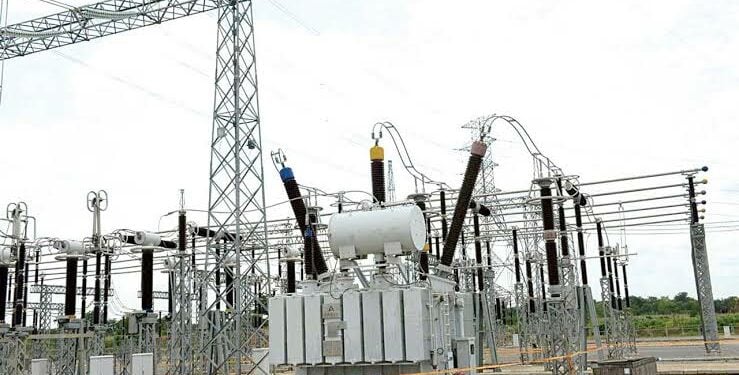
Apparently overwhelmed by the country’s power woes, the Federal Government is pushing this challenge to the 36 states, asking them to take over power generation, transmission, and distribution.

The Federal Government said this was the only solution to the power crisis in the country.

The Minister of Power, Adebayo Adelabu, said this in Lagos on Tuesday at the Nigeria Energy Leadership Summit.

Despite a series of efforts to make power available to Nigerians, the power sector seems to have defied all solutions by successive governments to sanitise the industry.

Speaking at the conference, Adelabu said the Federal Government was aware that power centralisation could never work for Nigeria, and that was why President Bola Tinubu’s administration signed the Electricity Act in 2023.

“On legislation, the enactment of the Electricity Act 2023 remains a major milestone. Sincerely, it is the pathfinder.

It provides a robust governance and regulatory framework for the Nigerian electricity supply industry.

The Act devolves regulatory powers to the states, enables subnational markets, promotes competition, and empowers private participation across the value chain.

“The impact of this legislation includes decentralisation and liberalisation. A country as big as Nigeria, with almost a million square kilometres of landmass, over 200 million people, millions of businesses, thousands of institutions (health and educational institutions), 36 states plus the Federal Capital Territory, and 774 local governments—centralisation cannot work for us.

The responsibility of providing stable electricity can never be left in the hands of the Federal Government.

“At the centre, you cannot, from Abuja, guarantee stable power across the country. So this is one thing that the Act has achieved—decentralisation. That has now allowed all the states or the subnationals to play in all segments of the power sector value chain—generation, transmission, distribution, and even service industries supporting the power sector,” he stated.

Presently, Adelabu said the Federal Government was pursuing a comprehensive agenda to reposition the power sector for sustainability, efficiency, and growth.

“This approach spans critical pillars, which include legislation, policy reforms, infrastructure development, energy transition, asset expansion, local content, and capacity development. each designed to address structural challenges, unlock private capital, and enhance service delivery across the electricity value chain, to achieve functional, reliable, affordable electricity throughout Nigeria to power our households, our businesses, our offices, our institutions, and our industries, thereby improving the economic prosperity of our people,” he noted.

The minister maintained that the private sector must get involved if the nation is serious about having a reliable power sector.

“The investment required can never be made available by the government. There are too many competing sectors—education, health, defence, works, aviation, and so on. They all compete for the limited funds from the Federal Government. So, given the level of investment required in this sector, we need private capital infusion, both local and foreign. The developed nations have done their bit, and they are still supporting us, but it can never be enough if private sector investors are not involved. That’s one advantage of this legislation, and I believe the states and private sector investors are up to the task.

See also  US expands travel restrictions, adds Nigeria to list of countries

“The Act devolves regulatory powers to the states, enables supply chain markets, promotes competition, and empowers private participation across the value chain. This represents a clear shift towards a liberalised and investment-friendly electricity market,” he stressed.

15 states get regulatory autonomy

Since the passage of the Electricity Act, Adelabu said 15 states have received regulatory autonomy and established subnational electricity markets, with one, Enugu, fully operationalised through the Enugu Electricity Regulatory Commission.

“I believe other states will follow suit in operationalising the autonomy granted, with full collaboration of the national regulator. We are working actively with these states to ensure strong alignment between the wholesale market and the retail market.

“In this regard, we believe the active involvement of the state governments, particularly in the off-grid segment, is critical, given the series of roundtable engagements held with governors by the Rural Electrification Agency, as well as ongoing efforts to closely track the distribution companies’ performances within their respective jurisdictions. The Managing Director of REA, Abba Aliyu, has held meetings with almost 20 states regarding the national electrification programme across the country, and this is an opportunity and a platform for the subnationals to leverage and start to activate the autonomy they have been granted,” Adelabu emphasised.

He charged the states to raise the bar.

“The states must raise the bar. I know Lagos State said it is ready to lead the pack. Let that not end on our lips. We must take the necessary steps to achieve this. They say that cows don’t make milk; we milk the cows. You need to take steps to ensure you activate this autonomy. We must take that step to milk the cow and make it up.

“Beyond that, we need to start engaging local and foreign investors at the state level. We have the autonomy. There are lots of investors interested in establishing generation outfits in your states. It could be thermal, small hydro, solar, or a wind farm to generate power in your states. It guarantees the energy security of your state. A lot of our states are bigger than some West African countries, and they’re running as countries. Who says we cannot run our states the way these people run their countries?

“We have the autonomy; we have the platform legally now. So, I believe we need to take the right step and get more involved, especially when it comes to the rural areas, the unserved communities, the underserved communities, and the semi-urban areas. You can start from that, not just providing electricity to households or lighting up households with solar systems and all that. You can do that, but it must include productive use of equipment that can boost the prosperity of your people at the rural level.

See also  No attack on ECWA church in Gombe – Police

“There is a rural economy with huge potential, not just in agriculture alone. There are some small-scale enterprises in the local environment that can be boosted by supplying reliable electricity,” he added.

States told to challenge DisCos, TCN

The minister charged state governors to start challenging power distribution companies and the Transmission Company of Nigeria.

“You need to start challenging the TCN when it comes to grid supply. The transmission company has been broken into two, now the Transmission Service Provider and the Nigerian Independent System Operator. Challenge them: ‘Take light to my state, drop light for me,’ then you take up the decision from there.

“Now you need to get closer to the DisCos. You have to drive the DisCos. You have to track their performance. You have to monitor their performance because the provision of electricity is an electoral promise of every state governor. Challenge DisCos, get closer to them, and monitor their performance. NERC or the Ministry of Power cannot effectively track these DisCos from Abuja. You are closer to them. Challenge them, and they will provide power for your people,” Adelabu said.

States are ready – Enugu commission

Speaking with our correspondent at the conference, the Chairman and Chief Executive Officer of the Enugu Electricity Regulatory Commission, Chijioke Okonkwo, said states are ready to provide a stable power supply to residents.

Okonkwo maintained that the minister was right when he said states had to take over power generation, transmission, and distribution, saying, “That is the way to go.”

He said Enugu took the lead by establishing its regulatory commission.

He invited investors to come and build mini-grids in Enugu, saying the state and its policies are investor-friendly.

The Governor of Lagos State, Babajide Sanwo-Olu, who was represented at the event by the Commissioner for Energy and Mineral Resources, Biodun Ogunleye, also invited investors to the state.

See also  Agbakoba advocates new constitution, fiscal federalism

Sanwo-Olu said the state was ready to collaborate with anyone or organisation willing to invest in the state’s electricity market.

The Governor of Katsina State, Dikko Radda, represented by his deputy, Faruk Lawal-Jobe, also disclosed the state’s readiness to invest in the power sector, collaborate with investors, and light up the state.

Speaking on power commercialisation, Adelabu noted that the government was deepening this to strengthen revenue, liquidity, and investor confidence.

According to him, through tariff policy reforms that enable cost-reflective tariffs for select consumers, supply reliability has improved while reducing energy costs for industries.

Industry revenue, he added, had increased by 70 per cent to N1.7tn in 2024 compared with the previous year, and revenue is expected to exceed N2tn in 2025.

At the Nigeria Energy Conference, Adelabu told stakeholders, investors, financiers, and innovators that Nigeria’s power sector remains open and ready for business more than ever before.

“We recognise that achieving the scale of investment required to transform the sector demands greater private sector participation across the entire value chain, particularly in the transmission segment. A useful reference is South Africa’s ambitious $25bn transmission grid expansion initiative, which seeks private developers to deliver 14,000 kilometres of new power lines and connect over 59 gigawatts of new capacity within the next 14 years. This is remarkable when compared with Nigeria’s Presidential Power Initiative (the Siemens project) valued at $2.3bn,” he said.

The minister regretted that Nigeria currently has over 10GW of stranded generation capacity—energy that could power industries, create jobs, and even support electricity exports to neighbouring countries through the regional power pool.

“We are therefore open to strategic partnerships to mobilise the necessary investments and unlock this potential. Our market fundamentals are improving, our policy environment is clear, and the national leadership is committed to creating the enabling conditions for long-term investment and innovation,” he submitted.

Since the Electricity Act was signed in 2023, 21 states have yet to set up their electricity markets. The 15 that have autonomy have not invested in the value chains as they look up to investors.

Adelabu’s charge might be a wake-up call to states to recognise the enormity of the power they now possess under the current legislation. If the states heed his call and invest in the value chains, experts believe this will disrupt the sector, boost power accessibility, reduce reliance on the national grid.

punch.ng

FOLLOW US ON:

FACEBOOK

TWITTER

PINTEREST

TIKTOK

YOUTUBE

LINKEDIN

TUMBLR

INSTAGRAM

Continue Reading
Click to comment

Leave a Reply

Your email address will not be published. Required fields are marked *

News

Many Displaced As Windstorm Ravages Kebbi Communities

Published

on

A windstorm has destroyed several houses, food storage facilities and property worth millions of naira in Suru Local Government Area of Kebbi State.

The incident, which occurred on Wednesday night, affected many communities, including Sambera, Jeroki, Becinga, Nassarawa, Tunga Soja, Tauken Mage, Tunga Muminu Oro and Ciwan Wanzam.

The storm reportedly blew off roofs, damaged residential buildings and destroyed food storage facilities, leaving many families displaced.

Residents of the affected communities, however, according to The PUNCH, confirmed that no lives were lost in the disaster.

The member representing Suru Constituency in the Kebbi State House of Assembly, Faruku Abubakar Maisudan, visited the affected communities to assess the level of destruction and sympathise with victims.

During the visit, the lawmaker described the incident as unfortunate and urged the victims to remain calm despite the losses recorded.

Addressing residents, Maisudan said, “My heart goes out to you in this difficult moment, and I urge you to accept it as a trial from Almighty Allah.”

The lawmaker said the level of destruction required urgent government attention, especially as many residents had lost their homes and food reserves.

Some of the affected residents said the windstorm came suddenly and caused heavy damage before they could salvage their belongings.

They said many families were now in need of shelter, food and other basic items following the destruction of their homes and stores.

The victims appealed to the state government, emergency agencies and public-spirited individuals to come to their aid.

According to them, the destruction of food storage facilities has worsened their hardship, especially for households that depend on stored grains and other farm produce.

See also  US expands travel restrictions, adds Nigeria to list of countries

SEMA Promises Relief Materials

Officials of the Kebbi State Emergency Management Agency (SEMA) accompanied the lawmaker during the assessment visit.

The agency’s officials assured residents that the state government would respond to the disaster and provide relief materials to cushion the effects on affected families.

A SEMA official said assistance would soon be delivered to the communities after proper assessment of the damage.

The official said the government was aware of the plight of the victims and would take steps to reduce their suffering.

Maisudan assured the victims that he would present their condition before the state House of Assembly and Governor Nasir Idris for urgent intervention.

He said, “I will ensure your condition is presented to the appropriate authorities so that immediate support can reach you without delay.”

The lawmaker added that he would continue to follow up on the matter until affected residents receive the necessary support.

He also urged community leaders to compile details of those affected to enable government agencies to provide assistance to the right beneficiaries.

FOLLOW US ON:

FACEBOOK

TWITTER

PINTEREST

TIKTOK

YOUTUBE

LINKEDIN

INSTAGRAM

Continue Reading

News

Kwara to standardise health counselling across hospitals

Published

on

The Kwara State Government has introduced a new standardised health counselling system aimed at ensuring residents receive uniform and accurate healthcare information across hospitals, communities, and outreach programmes.

The initiative, launched in collaboration with Society for Family Health, centres on the deployment of an Integrated Health Facility Flip Chart for frontline health workers, State Mobilisation Officers, and community volunteers across the state.

The development was announced in a statement issued on Thursday by the Press Secretary of the Kwara State Ministry of Health, Saad Hamdalat, a copy of which was made available to The PUNCH in Ilorin.

The Commissioner for Health, Dr. Amina El-Imam, said the intervention is expected to address inconsistencies in health communication, improve public understanding of healthcare services, and strengthen behavioural change campaigns at the grassroots level.

Represented at the launch by the Director of Public Health, Dr. Fakoyode Oluwatosin, the commissioner stressed that the state was prioritising a unified approach to health education as part of efforts to improve healthcare outcomes.

She said, “Health promotion remains the backbone of effective public health interventions. Without it, we cannot achieve meaningful or sustained impact.”

“This tool will help drive behaviour change and improve how communities engage with health services.”

El-Imam explained that the flip chart would serve as a structured visual guide to help health personnel deliver clear and consistent counselling messages during antenatal clinics, immunisation exercises, community outreaches, and household visits.

According to her, the initiative is expected to strengthen public awareness and service uptake in key areas such as maternal and child health, routine immunisation, skilled birth attendance, malaria prevention, exclusive breastfeeding, hygiene, sanitation, and diarrhoea management.

She added that State Mobilisation Officers in all 16 local government areas would coordinate the deployment of the tool at the community level.

See also  No attack on ECWA church in Gombe – Police

Also speaking, the Reproductive Health Coordinator at the Kwara State Ministry of Health, Dr. Kafayat Kofo, said the flip chart harmonises messaging across reproductive, maternal, newborn, child, and adolescent healthcare services, as well as selected non-communicable diseases.

“This is more than a communication tool. It is a standardised behavioural change resource that ensures communities receive the right information in a clear and relatable way.”

Kofo noted that the initiative would help eliminate conflicting health messages and improve the quality of counselling provided by frontline health workers across the state.

In his remarks, the MIS Adviser for Society for Family Health, Mr. Adetayo Adedotun, said the initiative aligns with broader efforts to strengthen primary healthcare communication systems and improve programme performance.

“This initiative supports the delivery of consistent, high-quality health education and aligns with efforts to improve service uptake and overall programme performance.

“It also provides a unified approach to counselling across facilities and communities,” he said.

The state government expressed optimism that the initiative would improve community engagement, strengthen trust in public healthcare messaging, and enhance overall healthcare delivery across Kwara State.

Continue Reading

News

US, Iran exchange fire despite Trump ceasefire claims

Published

on

US President Donald Trump said the ceasefire with Iran was still in place despite an Iranian attack on three American destroyers in the Strait of Hormuz that fanned fears on Friday that the truce was faltering.

The US military said it carried out strikes on Iranian military targets in response, although Tehran charged that it was Washington that had initiated the exchange of fire.

The latest violence threatens to unravel a fragile truce in effect since April 8 that brought an end to weeks of US-Israeli attacks on the Islamic republic, which has retaliated with strikes across the Middle East and by blocking the strait, a vital route for oil and gas shipments.

The United Arab Emirates said Friday that its air defences were “engaging missile and drone attacks originating from Iran”.

Asked in Washington on Thursday if the Iran ceasefire was still on, Trump said: “Yeah, it is. They trifled with us today. We blew them away. They trifled. I call that a trifle.”

US Central Command (CENTCOM) said in a post on X that Iranian forces launched “multiple missiles, drones, and small boats” at the three US warships, but none were hit, and that it “eliminated inbound threats and targeted Iranian military facilities responsible.”

“CENTCOM does not seek escalation but remains positioned and ready to protect American forces,” it said.

For its part, Iran’s central military command accused the United States of violating the ceasefire by attacking an oil tanker and another ship, saying Tehran’s forces “immediately and in retaliation attacked American military vessels.”

See also  No attack on ECWA church in Gombe – Police

Trump this week fueled hopes of a deal, saying an agreement could be near even as he again threatened to return to bombing if Tehran refused to back down.

He doubled down on that stance after Thursday’s clash, posting on his Truth Social platform: “We’ll knock them out a lot harder, and a lot more violently, in the future, if they don’t get their Deal signed, FAST!” he said.

Iran’s foreign ministry spokesman Esmaeil Baqaei said Tehran would communicate its position to mediator Pakistan “after finalizing its views.”

Pakistani Prime Minister Shehbaz Sharif had struck an optimistic tone prior to the exchanges of fire on Thursday, saying in televised remarks: “I firmly believe that this ceasefire will turn into a long-term ceasefire.”

Lebanon talks

But, inside Iran, civilians were cynical.

“Neither side in these negotiations is really capable of reaching an agreement,” 42-year-old photographer Shervin told AFP reporters in Paris, messaging from Tehran.

“This is another one of Trump’s games; otherwise, why are so many warships and military forces being sent toward Iran?”

Any agreement between the United States and Iran could also help lower tensions in Lebanon, where a separate truce was under renewed strain after an Israeli strike on southern Beirut killed a commander from militant group Hezbollah on Wednesday.

A US State Department official confirmed on Thursday that the new Israel-Lebanon talks would take place on May 14 and 15.

It will be the third meeting in recent months between the two countries, which have technically been at war for decades and have no diplomatic relations.

See also  "Some day, our rainbow children will be seen in full colour" Bisi Alimi says in Independence Day prayer for Nigeria

US Secretary of State Marco Rubio said Tuesday that a peace deal between the two sides was “eminently achievable,” insisting Hezbollah was the sticking point, rather than any issue between the two governments.

Lebanon was drawn into the Middle East war when Hezbollah fired rockets at Israel in retaliation for the killing of Iranian supreme leader Ayatollah Ali Khamenei.

Ships, crew stranded

A ceasefire between the two countries, and including Hezbollah, was extended after the last round of talks in Washington, but Israel has kept up its strikes on the group, which has claimed attacks of its own on Israeli forces occupying parts of Lebanon’s south.

Lebanon’s health ministry reported at least 12 people killed in a series of Israeli airstrikes on Thursday.

Following the start of the war with US-Israeli attacks on February 28, Iran largely shuttered the Strait of Hormuz.

Around 1,500 ships and 20,000 international crew are now trapped in the Gulf region because of the conflict, the secretary-general of the UN’s International Maritime Organization, Arsenio Dominguez, told a Maritime Convention of the Americas meeting in Panama.

Trump had this week briefly launched a naval operation to force open the strait to commercial vessels, only to stand it down within hours, citing progress on negotiations with Iran.

The US president — who has lambasted Europe for not backing his war against Iran—said Thursday he had a “great call” with European Commission chief Ursula von der Leyen, saying they were “completely united that Iran can never have a nuclear weapon.”

AFP

See also  Attempted Coup in Benin Republic as military attacks President Talon’s residence, seizes national TV

Continue Reading

Trending