Connect with us

Lifestyle

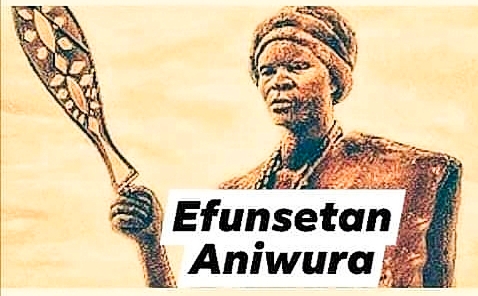
Efunsetan Aniwura: Yoruba’s Most Powerful Woman That Ever Lived (PHOTOS)

Published

on

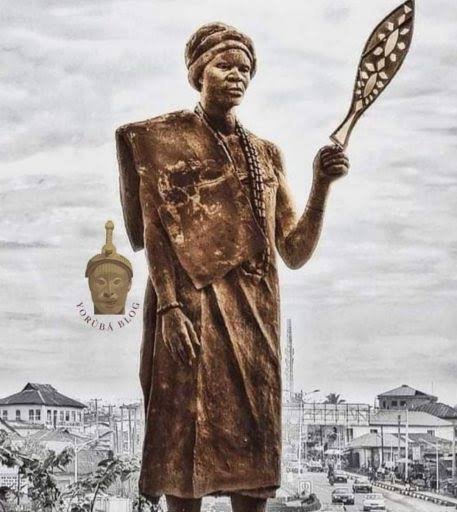
The story of Efunsetan Aniwura is perhaps one of the most motivating thrillers in Yoruba political history. It captivates, in the most astounding manner, the place of women in Yoruba political history. But all along, the story of Efunsetan had been written and foretold by her tormentors and painted grimly by mostly chauvinistic men.

It must be understood the context of Efunsetan’s coming into global fame, at least at this time, the World was defined as the circumference within which local people operated within a phenomenon.

The 1700s up to 1900 were centuries of great wars and arms build-up in the vast Yoruba country of old. It was a period of great revolutions and social upheavals across the Yoruba country. It saw the massive production of weapons and the importation of military hardwares by Yoruba leaders, from as far as Hambourg in Germany.

I visited the Ogedengbe of Ilesa few months ago and was thrilled by the amazing exploits of Ogedengbe, the war General who led the Ekitiparapo war and who by 1860s was importing military weapons from Europe in the prosecution of war.

To show the grandeur of the Yoruba nation, around 1880, it was reported that the then King of England had invited Ogedengbe for a state visit. England marveled at the military tactics of Ogedengbe, his command structure, his Spartan lifestyle, his mysticism and above all, his science of war which he largely derived from the painstaking study of the movement and behavior of animals in moments of ferocious encounters with death or engagement with trembling. It was at this period that a bomb was invented at Okemesi, which turned around the fortunes soldiers of Ekitiparapo war led by Ogedengbe. Contrary to widespread assumptions, the word KIRIJI actually emanated from the sound of the new weapon produced at Okemesi Ekiti. General Ogedengbe, who was in command of about 100,000 soldiers, had declined the request for a state visit to England, saying that he was too busy with state matters. In Ilesa, during my visit, I saw the picture of the then King of England which the later had sent to Ogedengbe as a mark of respect and honour.

See also  PHOTOS: Chief Candido Joao Da Rocha: Nigeria’s First Millionaire and Lagos’s Water Pioneer

Back to the main topic. The story of Efunsetan Aniwura is intriguing. Her date of birth remains uncertain, but she must have been born around 1790s or around that period. Yoruba epic films and folklores portray Efunsetan as a very vicious woman, filled with prejudice, a woman who died in tragic circumstances. But there are hidden thrills and heroic feat that those who wrote his history continue to undermine. There is nothing as perplexing as having the story of a great woman being relayed by men, in a society credited for not giving women any chance in socio-political affairs, especially in the primordial times, where women were seen as objects consigned to the kitchen and on the mat top. It is to the glory of Moremi, that her story definitely ignited passion in subsequent Yoruba women, one of which was Efunsetan Aniwura.

This woman of substance has been consistently portrayed as a villain who ran a Gestapo of sorrow and blood, a blood-sucker who beheaded people’s head at will. No. We must deconstruct the narrative that veiled real stories under the cover of the superiority of men over the distinction of some brave women in our troubled history. Efunsetan was the son of an Egba farmer, Ogunrin, a native of Egba Oke-Ona. She rose to become the Iyalode of Ibadan. She was the first woman to set up a flourishing agrarian economy that employed no fewer than 2000 men and women. Around 1850, worried by the spread of war and combat in the Yoruba country, she introduced infantry military training into the midst of her workers. She was said to have had her own military training in urban and guerrilla warfare after which she requested that the same training be impacted on her slaves, about 2000 of them.

The workers mainly worked in the vast farmland. They produced cash crops, cotton, groundnuts, maize and beef. She was said to be in possession of a vast dairy farm that could feed the entire Yoruba country and beyond. She traded up to Ghana and the Hausa country and even exported her produce to Europe. In her book, A History of the Yoruba ,Prof Banji Akintoye wrote about Efunsetan who she described as a rich “woman trader” that ‘had more than 2000 workers employed on her farms.” This was at a time the industrial revolution was gaining strength in Europe and agriculture had become the most industrious enterprise in Yorubaland, being one of the service points for European products.

See also  No Igbo will have peace until Nnamdi Kanu regains freedom – Obi Cubana tells Tinubu

David Hinderer, a missionary who wanted to erect a Church in Ibadan could not source human labour because all the men and women were engaged in large scale farming. The Generals of the Yoruba Army had also taken to farming to beat famine as a direct consequence of war. Hinderer wrote of his travel to Ibadan in 1853 with a caravan of traders and carriers “consisting of not less than 4000 people.” Prof Akintoye wrote “It is not unlikely that Efunsetan was the richest person in the whole of the Yoruba interior in about the late 1870s.” Efunsetan had her own pains and anguish. She had no child after several years of marriage. Unfortunately, her only daughter died in 1860 during child birth. She also adopted a son, Kumuyilo. Now, having lost her only daughter, she went into recluse and became suspicious of life and living. She even became an atheist, ignoring all the gods wondering why she should lose her only daughter.

She may have been pushed to some form of extremism. She ordered that no one among her 2000 workers must marry or have sex within and non of the girls must conceive. It came that one of the workers broke the law. She ordered that the woman be executed. No doubt that she carried out outrageous order of execution, but this was nothing compared with her heroic contributions to the economy of the Yoruba nation. Due to this act, the Aare ordered that she be brought to justice. This was just the proverbial hawk that was looking for every opportunity to clawlift the chicken.

See also  PHOTOS: Meet The Only 'Presidential' Child Born Inside Aso Rock

It is believed that her persecutors merely waited for her to carry out a dastardly act as an opportunity to seek revenge against her perceived emergence as a strong and influential woman, whose mutual rival was Madam Tinubu of Lagos who was also her friend. It was at a time her own army had become a threat to the fiery army of Latoosa. How could a woman raise such a vast array of armed soldiers? There are two varying accounts of her death. One claimed Aare Latosa led a strong infantry army to lay siege on her house and instead of being overpowered, she committed suicide by drinking the Hemlock.

At this period, her army had been divided and the loyalty fractured due to the execution of some of the 2000 workers for acts inimical to her authority. The other story said Kumuyilo was bribed by Latoosa to poison her but that the attack on her was carried out in the night by two of her slaves who sneaked into her apartment through the ceiling and clubbed her. There were events that indicated that the Ibadan chiefs were unhappy with the way Efunsetan was brought on her knees. Infact, with Latoosa there was a meeting on 8th of July when the Egba leaders came to Ibadan requesting for a Commission of Inquiry on the murder of Efunsetan.

The two slaves were subsequently brought before the Ibadan traditional court on 10th of July 1874. They were impaled right at the Basorun market. Efunsetan has been painted in forbidding pictures through Yoruba history. It is time to deconstruct and give her due honour as a heroine. At death, Efunsetan’s property was declared the property of the Yoruba country. `But there were other reports that she was indeed given a befitting burial with full military honours by Ibadan military rulers, after her enforced death.

Source by:By Akinlolu Damilare a.k.a Da-Vinci, Written By: Akinlolu Da Vinci
FOLLOW US ON:

FACEBOOK

TWITTER

PINTEREST

TIKTOK

YOUTUBE

LINKEDIN

TUMBLR

INSTAGRAM

Continue Reading
Click to comment

Leave a Reply

Your email address will not be published. Required fields are marked *

Lifestyle

Ìwòyè-Kétu: The Yoruba Town That Spans Two Nations and Lives by Ancient Taboos

Published

on

Ìwòyè-Kétu is one of the most remarkable Yoruba communities in West Africa, not only for its deep-rooted traditions but also for its unique geopolitical identity. The ancient town straddles two modern nation-states—Nigeria and the Republic of Benin—yet remains culturally, spiritually, and traditionally unified as one Yoruba settlement.

A Town Without Borders in Spirit

Geographically, Ìwòyè-Kétu is primarily located in Imeko/Afon Local Government Area of Ogun State, Nigeria, while its western section lies across the international boundary in the Republic of Benin. This border, imposed during the colonial partition of Africa, cuts through the town but has failed to divide its people.

Families live on both sides of the boundary, speak the same Yoruba dialect, observe the same customs, and recognise one traditional authority. Daily life reflects this dual reality: residents freely transact using both the Nigerian naira and the West African CFA franc, depending on location and convenience.

Unified Kingship Across Nigeria and Benin

Despite existing in two countries, Ìwòyè-Kétu is governed traditionally by one paramount ruler. The recognised monarch is:

His Royal Majesty Oba (Sir) Isaac Adegbenro Oyero,
the Ooye of Ìwòyè-Kétu, also styled Adekilúrójú – Ada Páàkó II.

His authority is acknowledged by the community on both sides of the border, making Ìwòyè-Kétu a rare example of a binational Yoruba town under a single royal institution.

Origins in Ile-Ife

According to Yoruba oral tradition, Ìwòyè-Kétu was founded by Olúmu (or Olómù), a legendary migrant from Ilé-Ifẹ̀, the spiritual homeland of the Yoruba people. Like many Yoruba settlements, its founding narrative emphasises migration from Ife, reinforcing the town’s ancient roots within the broader Yoruba civilisational story.

See also  ‘99% Of Nigerian Men Cheat’ – Nollywood Actress, Bimbo Akintola

Ìwòyè-Kétu forms part of the historic Kétu region, once a powerful Yoruba kingdom before European colonial boundaries fragmented it between British-ruled Nigeria and French-ruled Dahomey (now Benin).

Sacred Taboos That Still Govern Daily Life

Ìwòyè-Kétu is widely known for its strict traditional prohibitions, which continue to be enforced by custom and belief:

Use of umbrellas is strictly forbidden anywhere within the town.

Rearing pigs is prohibited, and pork is traditionally avoided.

In some oral accounts, digging wells is either forbidden or tightly regulated.

These taboos are believed to be tied to ancestral covenants, spiritual agreements, and the town’s founding myths. Violations are traditionally thought to invite misfortune, reinforcing collective adherence across generations.

Language, Culture, and Continuity

Despite the Nigeria–Benin divide, Ìwòyè-Kétu remains culturally seamless. Yoruba language, customs, festivals, and lineage systems are shared. The town stands at a linguistic crossroads where English and French meet administratively, but Yoruba remains dominant socially and spiritually.

A Living Example of Pre-Colonial African Unity

Ìwòyè-Kétu exemplifies how pre-colonial African societies continue to transcend modern borders. Long before Nigeria or Benin existed, the town functioned as a single cultural entity—and it still does.
In an era where borders often define identity, Ìwòyè-Kétu reminds us that history, tradition, and shared ancestry can be stronger than lines drawn on maps.

Sources

Yoruba oral traditions and local historical accounts of Ìwòyè-Kétu

Ogun State local government and cultural heritage records (Imeko/Afon LGA)

Nigerian media reports and cultural features on Ìwòyè-Kétu’s taboos and binational status

Community welcome signage and local testimonies

Cross-border Yoruba history of the Kétu Kingdom (Nigeria–Benin)

See also  Air Commodore Dan Suleiman: The Soldier-Statesman Who Championed Nigeria’s Middle Belt

FOLLOW US ON:

FACEBOOK

TWITTER

PINTEREST

TIKTOK

YOUTUBE

LINKEDIN

TUMBLR

INSTAGRAM

Continue Reading

Lifestyle

Emotan; The Benin Heroine (PHOTOS)

Published

on

Throughout history, in every culture around the world, extraordinary women have pushed society to think bigger, move forward and create.

Emotan is a glowing example of boundless courage and world-changing ingenuity.

Emotan a market woman, single-handedly raised an army and overthrew the illegal regime of Oba Uwaifiokun who usurped his brother and conspired with his chief to kill King Ewuare.

She protected Oba Ewuare in her hut and showed him kindness when he was trying to reclaim his throne back.

Emotan helped install Oba Ewuare the Great, who was the most outstanding Oba in the ancient Benin Kingdom around 1440AD.

Eventually, when Oba Ewuare regained his throne, Emotan became the King’s favourite citizen.

Moreso, her kindness wasn’t restricted to the Oba alone, history tells us that Emotan converted her hut to a crèche to help nursing mothers who patronized her or came to the market for other things.

At that time, her daycare centre was popular in Benin and it can be said authoritatively that she started the first-day care centre in Benin.

After her death, her body was buried at the Oba market at the exact spot where she sold her goods. A tree was planted on her grave and she is being worshipped as the mother of love and kindness

Source: Benin achive

FOLLOW US ON:

FACEBOOK

TWITTER

PINTEREST

TIKTOK

YOUTUBE

LINKEDIN

TUMBLR

INSTAGRAM

See also  PHOTOS: Meet The Only 'Presidential' Child Born Inside Aso Rock
Continue Reading

Lifestyle

Michael Adekunle Ajasin (1908–1997): Scholar, Educationist, and Statesman of Principle

Published

on

Michael Adekunle Ajasin remains one of the most respected figures in Nigeria’s political and educational history, remembered for his intellectual depth, personal integrity, and unwavering commitment to democratic ideals and public education.

Born on 28 November 1908 in Owo, present-day Ondo State, Ajasin’s early life was shaped by discipline, learning, and service. He attended St. Andrew’s College, Oyo between 1924 and 1927, one of the foremost teacher-training institutions in colonial Nigeria. After qualifying as a teacher, he worked in the profession for several years, laying the foundation for what would become a lifelong dedication to education.

In 1943, Ajasin gained admission to Fourah Bay College, Sierra Leone, then one of the most prestigious higher institutions for Africans in British West Africa. He graduated in June 1946 with a Bachelor of Arts degree in English, Modern History, and Economics. Determined to deepen his professional competence, he proceeded to the Institute of Education, University of London, where he obtained a Postgraduate Diploma in Education in June 1947.

Family Life

Ajasin married Babafunke Tenabe, also a teacher, on 12 January 1939. Their marriage produced four children—two sons and two daughters. One of his daughters, Mrs Olajumoke Anifowoshe, distinguished herself in public service, becoming Attorney-General and Commissioner for Justice in Ondo State, further reflecting the family’s strong tradition of civic engagement.

Educational Leadership

On 12 September 1947, Michael Adekunle Ajasin was appointed Principal of Imade College, Owo. His tenure was marked by visionary leadership and an aggressive staff development programme. Notably, he facilitated opportunities for teachers to pursue further training at University College, Ibadan, at a time when such advancement was rare.

See also  King Jaja of Opobo Memorial: A Monument to Courage and Legacy (PHOTOS)

In December 1962, Ajasin left Imade College to establish Owo High School, where he served as founder, proprietor, and first principal from January 1963 to August 1975. Under his leadership, the school earned a reputation for academic excellence and discipline, reinforcing his belief that education was the most effective instrument for social transformation.

Political Thought and Early Activism

Ajasin was deeply involved in Nigeria’s nationalist and pre-independence politics. In 1951, he authored a policy paper that later became the education blueprint of the Action Group (AG), boldly advocating free education at all levels. This proposal would later be implemented in Western Nigeria under Chief Obafemi Awolowo and remains one of the most impactful social policies in Nigerian history.

He was among the founders of the Action Group, a party whose ideology centred on immediate independence from Britain, universal healthcare, and the eradication of poverty through sound economic planning. During the 1950s, Ajasin served as National Vice President of the Action Group.

Legislative and Local Government Service

Ajasin’s political career expanded steadily. He became an elected ward councillor, then Chairman of Owo District Council, which covered Owo and surrounding communities such as Idashen, Emure-Ile, Ipele, Arimogija, Ute, Elerenla, and Okeluse.

In 1954, he was elected to the Federal House of Representatives in Lagos, serving as a federal legislator until 1966, when military rule interrupted Nigeria’s First Republic. His years in parliament were characterised by advocacy for education, regional development, and constitutional governance.

Return to Politics and Governorship

In 1976, Ajasin became Chairman of Owo Local Government. With the return to civilian rule, he joined the Unity Party of Nigeria (UPN), the ideological successor to the Action Group.

See also  PHOTOS: Meet The Only 'Presidential' Child Born Inside Aso Rock

In 1979, he was elected Governor of Ondo State, with Akin Omoboriowo as his deputy. His administration prioritised education, rural development, and fiscal discipline. However, political tensions emerged when Omoboriowo defected to the National Party of Nigeria (NPN) and contested the 1983 gubernatorial election against him. Although Omoboriowo was initially declared winner, the results were later annulled, and Ajasin was sworn in for a second term.

His tenure was abruptly terminated by the military coup of 31 December 1983, which brought General Muhammadu Buhari to power.

Integrity and Personal Example

Michael Adekunle Ajasin was widely admired for his personal honesty. Reflecting on his years in office, he famously stated:

“I came into office in October 1979 with a set of my own rich native dresses and left office in December 1983 with the same set of dresses; no addition and no subtraction.”

He further noted that he owned no personal cars upon leaving office, having exhausted the two he had before assuming governorship. This statement has since become a benchmark for ethical leadership in Nigeria.

Pro-Democracy Struggle

In the 1990s, Ajasin emerged as a leading elder statesman within the National Democratic Coalition (NADECO), which opposed military dictatorship and demanded the validation of Chief M.K.O. Abiola’s annulled June 12, 1993 presidential mandate.

In 1995, he was arrested by the Abacha military regime, alongside 39 other activists, for participating in what the government termed an illegal political meeting—an episode that underscored his lifelong commitment to democracy and civil liberties.

Educational Legacy

As governor, Ajasin signed into law the establishment of Ondo State University in 1982, located in Ado-Ekiti (now in Ekiti State). In 2000, during the administration of Chief Adebayo Adefarati, a new university in Akungba-Akoko was named Adekunle Ajasin University in his honour. He also played a key role in the establishment of The Polytechnic, Owo.

See also  PHOTOS: Shaykh Uthman dan Fodio (1754 –1817)

Michael Adekunle Ajasin stands as a rare example of a Nigerian leader whose intellectual rigour, moral discipline, and public service aligned seamlessly. His legacy lives on through the institutions he built, the policies he shaped, and the enduring example of integrity he set in public life.

Source:
Ondo State Government Historical Records; Nigerian Political Biographies; Action Group Party Archives; Adekunle Ajasin University Documentation

FOLLOW US ON:

FACEBOOK

TWITTER

PINTEREST

TIKTOK

YOUTUBE

LINKEDIN

TUMBLR

INSTAGRAM

Continue Reading

Trending