Connect with us

Business

15% tariff: Nigerians to pay N1tn extra for petrol yearly

Published

on

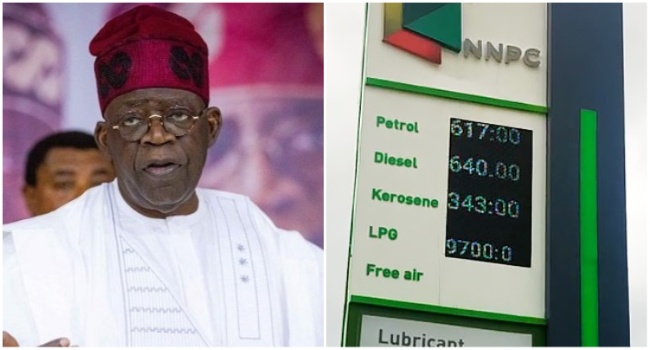
Nigerians will pay an additional amount of about N1tn (N973.6bn) annually on petrol imports following the Federal Government’s planned introduction of a 15 per cent import tariff on Premium Motor Spirit (petrol).

According to a petrol import trend report obtained from the Nigerian Midstream and Downstream Petroleum Regulatory Authority, reviewed by The PUNCH on Tuesday, Nigeria imported an average of 26.75 million litres of petrol daily between January and September 2025.

At a projected import tariff rate of N99.72 per litre, as stated in the presidential approval letter for the 15% tariff, the amount that would be spent as tariff for the 26.75 million litres would be about  N2.67bn daily.

When computed over a full year, this adds up to a staggering N973.64bn, which Nigerians will ultimately bear through higher pump prices once the policy is implemented. This amount, while representing additional revenue for government coffers, will translate to a direct increase in fuel expenses for households, transporters, and businesses nationwide.

President Bola Tinubu’s approval of a 15 per cent import policy on PMS and diesel has stirred widespread concern across the oil and gas sector, with operators warning it could raise petrol prices, worsen inflation, and increase import costs, even as the government insists the policy aims to boost local refining and generate revenue.

The President’s approval was conveyed in a letter signed by his Private Secretary, Damilotun Aderemi, following a proposal submitted by the Executive Chairman of the Federal Inland Revenue Service, Zacch Adedeji.

The proposal sought the application of a 15 per cent duty on the cost, insurance, and freight value of imported petrol and diesel to align import costs with domestic market realities.

Adedeji, in his memo to the President, explained that the measure formed part of ongoing fiscal and energy reforms designed to strengthen the naira-based oil economy, ensure price stability, and accelerate the nation’s transition toward local refining capacity in line with the administration’s Renewed Hope Agenda for energy security and economic sustainability.

He also advised the government to ensure transparency by creating a designated Federal Government revenue account managed by the Nigeria Revenue Service, with verification and clearance oversight by the NMDPRA.

“At current CIF (Cost, Insurance, and Freight) levels, this represents an increment of approximately N99.72 per litre, which nudges imported landed costs towards local cost recovery without choking supply or inflating consumer prices beyond sustainable thresholds.

“The core objective of this initiative is to operationalise crude transactions in local currency, strengthen local refining capacity, and ensure a stable, affordable supply of petroleum products across Nigeria,” Adedeji stated.

The FIRS boss noted that the policy is not revenue-driven but corrective, introduced to align import costs with local production realities and prevent duty-free imports from undercutting domestic refineries that are just beginning to recover.

He argued that the new tariff framework would discourage duty-free fuel imports from undercutting domestic producers and foster a fair and competitive downstream environment. He also warned that the current misalignment between locally refined products and import parity pricing has created instability in the market.

“While domestic refining of petrol has begun to increase and diesel sufficiency has been achieved, price instability persists, partly due to the misalignment between local refiners and marketers,” he wrote. The new policy takes effect after a 30-day transition period expected to end on November 21, 2025.

See also  Business leaders reject proposed beverage tax hike

Dissenting voices

In response to the development, dissenting voices from industry experts and petroleum marketers have continued to grow louder, with many questioning the timing and potential impact of the 15 per cent import tariff.

The Independent Petroleum Marketers Association of Nigeria on Tuesday expressed reservations over the newly approved 15 per cent import tariff on petrol and diesel, describing it as inconsistent with the spirit of market deregulation.

Speaking in an interview with our correspondent, the National Publicity Secretary of IPMAN, Chinedu Ukadike, said independent marketers were not opposed to Tinubu’s directive but faulted the policy’s design, which he argued undermines the principles of a free and competitive market.

“Independent marketers don’t have any problem with the President’s directive, but the only issue is that because of policymakers, the policy doesn’t follow the spirit of deregulation,” Ukadike said.

“Once you liberalise the market and then start to favour a certain section of the industry against others, it means you are putting the cart before the horse. The liberalisation was meant to ensure a free market driven by a willing buyer, willing seller arrangement. The policy should not be an impediment for those who want to import to challenge the local industry.”

He urged the Federal Government to focus on incentivising local refineries rather than imposing tariffs on fuel imports, noting that such measures could distort competition and discourage private participation.

“The government should rather encourage local refineries by giving them crude and reducing taxes for local refiners so that they can lower their prices. The important thing is the price war between refineries and importers. One thing I know is that there is no way domestic products will be cheaper, and marketers will still decide to import. There is no need to put a tariff on importation because they would know importing is not lucrative and would source products locally. So we must do everything to boost our market and solve issues. The government has to allow domestic refiners and importers to compete without government-induced favouritism,” he advised.

According to Ukadike, the natural dynamics of market forces would make imports unattractive once local production becomes cheaper. “There is no need to put a tariff on importation because once domestic products are cheaper, marketers will naturally source locally. The government must allow domestic refiners and importers to compete freely without government-induced restrictions,” he explained.

He warned that any artificial increase in fuel prices would further drive inflation, especially ahead of the Yuletide season when demand for petrol typically rises.

“The most important element of market forces is a price drop. Any addition in pricing will lead to inflation, especially now that Christmas is approaching and more people will be travelling. There must be no shortage of products, and the government must ensure local refining, distribution, and collaboration with stakeholders are in full gear,” Ukadike added.

The Chief Executive Officer of PetroleumPrice.ng, Jeremiah Olatide, described the newly approved 15 per cent import tariff on petrol and diesel as a double-edged policy, one that could boost government revenue but also worsen the economic hardship faced by Nigerians.

See also  OPay secures double honours at Tech Innovation Awards

Reacting to the development, the oil market analyst said the tariff would significantly impact fuel prices and inflation levels, especially as Nigerians continue to adjust to the effects of the fuel subsidy removal.

“Yes, that calculation is accurate,” he told The PUNCH in response to estimates showing Nigerians may pay nearly N1tn extra annually on petrol imports due to the new tariff. Although the figure can go higher because we are still in the current year, depending on landing costs, too.”

According to him, while the policy represents a strategic move to shore up revenue amid fiscal constraints, it comes at a difficult time for most Nigerians. “For me, it is a good thing that revenue will increase. It’s a smart way to generate income for the country, considering our current expenses and the need for multiple revenue streams.

“But the timing is not really good. Nigerians are still struggling to buy petrol at N800 or N900 per litre. Subsidy removal happened two years ago and has already taken a toll on households. Adding extra expenses through a tariff will hit them hard and definitely push up inflation,” he explained.

He also warned that a combination of the 15 per cent import duty and a proposed five per cent surcharge could further burden consumers and distort market stability.

He said, “The timing is not really good. Two years ago, the subsidy was removed. The effect has not reduced, and we are already facing another issue. The government also plans to begin a five per cent surcharge soon. All of these just make them an additional burden on Nigerians. The government has to be strategic in the rollout.

“I know they are trying to protect local refineries, but there are better policies and ways to support them without having to put more burden on Nigerians. The government could have prioritised a naira-for-crude deal instead.”

The energy expert further noted that the tariff would not necessarily halt fuel importation, as some traders might still find ways to bring in products despite the higher cost.

“I am so sure that some importers will still import. They will find ways to import, not minding the challenges. This policy will not ease out importation of products. Some importers will still look for ways to import, and all of that will still be added to the pump price. Nigerians are craving a price drop, but with these multiple taxes coming into play, that hope seems far away,” he lamented.

He urged the government to adopt policies that strengthen local refining and stabilise the upstream oil sector instead. “The right policy should be enhancing the naira for crude deals to all local refineries. All of them should take feedstock in naira. It would help them grow faster.

“The government should look into the upstream sector and make sure a production of three million barrels per day of crude is ensured. There will be stability with this. Patronage will also increase if prices drop. That’s the only way to achieve price stability and increase market confidence,” he said.

See also  Attack scare: Police deploy officers to top Lagos schools

Meanwhile, the Petroleum Products Retail Outlets Owners Association of Nigeria earlier called for the resuscitation of the country’s refineries before December to avert possible fuel scarcity and price hikes during the festive season.

PETROAN President, Billy Gillis-Harry, described the tariff policy as a bold step toward protecting domestic refineries, stabilising the market, and promoting energy security. He, however, warned that if the measure was poorly implemented, it could cripple fuel importation and render many importers jobless, a situation he said would lead to fuel scarcity.

“NNPC must complete its partnership agreements quickly and start production at Nigeria’s refineries before December to avert any form of fuel scarcity or price hike during the Yuletide season,” he said.

Despite the additional costs Nigerians are expected to bear, the policy decision by the government has also attracted commendations from some stakeholders who view it as a bold step toward boosting revenue and encouraging local refining.

CPPE backs govt

The Centre for the Promotion of Private Enterprise threw its weight behind the Federal Government’s newly introduced 15 per cent import duty on refined petroleum products, describing it as a step toward reviving Nigeria’s industrial base and promoting economic self-sufficiency.

The private sector think tank said the measure represents a “strategic protectionist policy” designed to safeguard emerging domestic industries, including local refineries, while stimulating productivity, job creation, and foreign exchange savings.

In a statement signed by the Director and Chief Executive Officer of the Centre for the Promotion of Private Enterprise, Muda Yusuf, the CPPE noted that Nigeria’s excessive dependence on imports over the past decades had weakened its productive capacity, eroded competitiveness, and exposed the economy to external shocks.

It argued that sectors previously protected through calibrated policy interventions, such as cement, flour, and beverages, have recorded remarkable growth and value addition, proving that well-targeted protectionism can strengthen national industries.

The group clarified that its position does not support economic isolationism but a measured approach to industrial protection that helps domestic industries scale up and compete globally.

“Strategic protectionism is not about closing borders or creating monopolies,” CPPE said. “It is about building domestic capacity to engage the global economy from a position of strength.”

The organisation described the 15 per cent import tariff on petrol and diesel as a progressive and corrective policy, adding that it could help level the playing field for domestic refiners such as the Dangote Refinery, NNPCL refineries, and modular plants currently struggling to compete with cheaper imports.

While commending the tariff, CPPE stressed that protection alone would not guarantee industrial success. It urged the government to complement the measure with fiscal incentives, low-cost financing, affordable and reliable energy supply, strategic infrastructure investment, and streamlined regulatory processes.

According to the centre, these support structures are critical to ensuring that protection leads to lower production costs, price stabilisation, and improved consumer welfare in the long run.

punch.ng

FOLLOW US ON:

FACEBOOK

TWITTER

PINTEREST

TIKTOK

YOUTUBE

LINKEDIN

TUMBLR

INSTAGRAM

Continue Reading
Click to comment

Leave a Reply

Your email address will not be published. Required fields are marked *

Business

FG rallies private sector to bridge broadband gap

Published

on

The Federal Government on Wednesday called on private-sector players to partner with it to close Nigeria’s last-mile broadband gap, saying that massive public investment in digital infrastructure must now be matched by device affordability, service innovation, and targeted connectivity for critical institutions.

The Minister of Communications, Innovation and Digital Economy, Dr Bosun Tijani, made the call while speaking with journalists on the sidelines of the Flagship Nigeria: Electrification + Connectivity Convening held in Abuja.

Tijani said Nigeria was currently leading Africa in deep digital infrastructure investments, stressing that improved access to quality internet would become visible over the next year as projects begin to come on stream.

“As a government, we’re very aware of our responsibility and the need to deepen access,” he said. “There is no country in Africa today that is investing in deepening its digital infrastructure as deeply as Nigeria is doing.”

According to him, Nigeria is the only African country investing in a 90,000-kilometre fibre-optic network project led by the World Bank, while also committing resources to two new communications satellites.

He added, “We’re the only country in Africa that is currently doing that, but also investing in two communication satellites. The only country that is also investing in an additional 3,700 towers for rural areas, which means we can now bring online about 20 million Nigerians that are currently unconnected at all.”

The minister recalled that when the present administration assumed office, the telecommunications sector was under strain.

He said the decision to allow a modest tariff increase had restored profitability and unlocked fresh capital inflows.

“When the telecommunication sector was struggling when we came in, we allowed for tariffs to go up a bit, which means they are now profitable. And on their own, we’ve seen that they’ve invested over $1bn into our economy as well,” he stated.

Tijani noted that infrastructure quality directly determines service quality, arguing that years of underinvestment had constrained broadband expansion.

“In the next couple of years or months, you will start to see improved access because the quality of access is dependent on the quality and investment in infrastructure, which, as a country, we’ve not done in many years in digital infrastructure. You’re about to see that change. In about a year, you start to see great changes because these infrastructures will start to come alive,” he said.

See also  See the travails of Nigerian parents struggling to raise children abroad

Beyond infrastructure, the minister emphasised that connectivity without skills would limit impact.

He said the ministry had separated digital skills for technology professionals from basic digital literacy for everyday users.

He referenced the ongoing Three Million Technical Talent programme, which aims to train three million young Nigerians in advanced digital skills.

“This is a project that we started in 2023 that has trained over 150,000 people already. But we’re not stopping there,” he added.

For ordinary Nigerians, including traders and market women, Tijani said the government was preparing to launch a nationwide digital literacy programme delivered via mobile phones and local languages.

He disclosed that the initiative would leverage a government-backed large language model designed to understand and communicate in Nigerian languages.

On questions linking digital infrastructure to electronic transmission of election results, the minister declined to comment directly on electoral matters, insisting that his mandate was infrastructure development.

“Our role as a ministry, I will not speak to the elections, but my role is to deepen digital infrastructure. And we’ve been very clear about the fact that this is what the President has asked us to do,” he said.

He stressed that all ongoing projects had presidential backing and were aligned with the administration’s ambition to grow the economy to $1tn.

Every one of our digital infrastructure projects is a project that the President has approved. The President has a thorough understanding of the role of the digital economy in driving this agenda of the $1tn economy. And without our investment, the President knows that we can’t get there,” Tijani stated.

Speaking on the purpose of the convening, Tijani said that even with expanded fibre and satellite capacity, affordability and institutional connectivity remained major hurdles.

“If the internet is now ubiquitous and affordable, can every Nigerian also afford the right mobile phones, tablets, or laptops that they need to enjoy the internet? It’s not something you enjoy without those things,” he said.

He said bridging the last mile would require collaboration with private-sector players to connect schools, hospitals, security agencies, and other public institutions.

See also  Canada deports 366 Nigerians, 974 await removal

“How do we ensure that when we invest in the infrastructure, it gets into schools, not only universities, but also secondary schools across the country? That’s the last mile work that we need the private sector to do,” he noted.

He added that internet service providers must also design tailored packages for critical sectors.

“How do we ensure that we can support ISPs to make sure they have the right bundles and packages for hospitals, for police stations? These are things that we have to work with the private sector to achieve,” he said.

On the planned satellites, Tijani said Nigeria had been a regional pioneer since it first procured a communications satellite under former President Olusegun Obasanjo, noting that no other West African country currently operates one.

However, he acknowledged that the existing satellite had aged and required replacement.

“Our satellite is now old, and we need to procure new ones. President Bola Tinubu has approved that we should procure new ones. Satellite is one of the ways in which you can connect difficult-to-reach locations and rural areas. Also, the security agencies use our communications satellite deeply as well. So if we don’t have modern ones that can support all these efforts, it weakens our digital economy,” Tijani explained.

Providing timelines, the minister said the deployment of the fibre project was targeted for the second or third quarter of the year, while the new satellite was expected to become operational next year.

“We’re always very clear through our strategic blueprints that a fibre project, for instance, will get to the point where we’re deploying either by Q2 to Q3 this year, which is what we’re still working towards. That project is moving forward. We’ve been able to secure the bulk part of the funding,” he said.

“The satellite in itself, we expect, should come alive. We’ve now been able to select the companies that will provide it. We expect that it should be coming alive sometime next year.”

Also speaking, the Chief Executive Officer of the Partnership for Digital Access in Africa, Ibrahima Guimba-Saidou, said the convening aligns with Africa’s broader ambition to connect one billion people to the internet by 2030.

See also  Terrorist bello Turji’s threat: How families risk lives to enter Niger Republic — Sokoto residents

He commended Nigeria for what he described as a clear policy direction and significant investments in connectivity infrastructure, digital devices and skills development.

However, he warned that electricity remains a fundamental gap in the continent’s push for meaningful digital inclusion.

Guimba-Saidou explained that the organisation’s Mission 300 initiative is designed to expand electricity access in underserved and remote communities, enabling schools, health centres, markets and households to take full advantage of digital services.

“This is about making connectivity relevant to the people who need it the most, not just those in major cities,” he said, urging deeper collaboration between government and private sector players to narrow the digital divide in a faster and more sustainable manner.

In his remarks, the World Bank Country Director for Nigeria, Mathew Verghis, noted that while Nigeria faces some of the most significant electricity access and backbone infrastructure shortfalls globally, it also possesses vast growth prospects anchored on its large and youthful population.

He stressed that digital inclusion rests on three interdependent pillars: reliable electricity, broadband infrastructure and affordable devices.

According to him, progress in one area without the others would limit impact.

He called for better coordination in the planning, construction and financing of power and fibre networks, arguing that integrated investment would lower costs and accelerate universal access.

Verghis added that the World Bank remains prepared to work with federal and state governments, alongside private sector stakeholders, to translate the vision of combined power and broadband expansion into tangible benefits for millions of Nigerians.

The PUNCH earlier in December 2025 reported that the federal government plans to bankroll the construction of 3,700 telecom towers in rural areas, a move aimed at connecting millions of citizens who currently lack reliable mobile and internet services.

Telecom operators often avoid sparsely populated rural areas due to low profit potential, focusing instead on urban centres where investment can be recouped.

The government’s intervention will extend mobile and internet services to over 23 million Nigerians who presently lack access.

punch.ng

FOLLOW US ON:
FACEBOOK

TWITTER

PINTEREST

TIKTOK

YOUTUBE

LINKEDIN

TUMBLR

INSTAGRAM

Continue Reading

Business

No directive to suspend sachet alcohol ban, says NAFDAC

Published

on

The National Agency for Food and Drug Administration and Control has refuted a media report alleging that the Federal Government directed it to suspend enforcement actions on the regulation of sachet alcohol and 200ml PET bottle alcoholic products.

In a statement on Wednesday, the agency described the publication as false and misleading, stressing that it had not received any official communication from the Federal Government ordering a halt to its regulatory activities.

A news report on Wednesday, in a statement issued in Abuja by the Special Adviser on Public Affairs to the Secretary to the Government of the Federation, Terrence Kuanum, claimed that the Federal Government had directed NAFDAC to suspend all enforcement actions relating to the proposed ban on sachet alcohol and 200ml PET bottle alcoholic products.

However, Director-General, Prof. Mojisola Adeyeye, said the agency operated strictly within its statutory mandate and in line with duly communicated Federal Government policies.

“The said publication is false, misleading, and does not reflect any official communication received by the Agency from the Federal Government.

“At no time has the Agency received any formal directive ordering the suspension of its regulatory or enforcement activities in respect of sachet alcohol products,” Adeyeye said.

She reiterated that NAFDAC remains committed to safeguarding public health, ensuring regulatory compliance, and carrying out its responsibilities transparently and in accordance with established laws and due process.

“Any decision affecting national regulatory actions will be communicated through official government channels,” she added.

Adeyeye urged members of the public, industry stakeholders, and the media to disregard the report and rely only on verified information issued through the agency’s official platforms and authorised government communication channels.

See also  SSANU and NASU extend ultimatum on Strike

The agency also cautioned against the dissemination of unverified information capable of causing unnecessary public anxiety, economic uncertainty, or misinterpretation of government policy.

NAFDAC stated that it remains steadfast in its commitment to public health, economic stability, and the national interest.

The regulation of sachet alcohol and small-volume alcoholic beverages has been a subject of national debate in recent years, particularly over concerns about underage access, substance abuse, and public health risks

Continue Reading

Business

States pay N455bn to service foreign loans

Published

on

States paid N455.38bn in foreign debt service in 2025, up from N362.08bn in 2024, according to Federation Accounts Allocation Committee figures released by the National Bureau of Statistics and obtained and analysed by The PUNCH.

The year-on-year comparison indicates that subnational governments’ foreign debt deductions rose by N93.30bn, representing a 25.77 per cent increase in 2025 over the prior year.

In plain terms, states collectively lost a larger share of their FAAC inflows to external loan repayments and related obligations in 2025 than in 2024, tightening the fiscal space available for salaries, capital projects, and routine governance.

The monthly pattern in 2025 also shows step-downs rather than a smooth curve. Total foreign debt service across the 36 states stood at N40.09bn in January, before easing to N39.10bn in February, a month-on-month drop of N994.96m, or 2.48 per cent.

From March through July, the national total held steady at N39.10bn each month, suggesting a stretch of largely fixed, predictable deductions. The next big shift came in August, when total deductions fell again to N36.14bn, down N2.95bn or 7.56 per cent from July.

The lower level then persisted through September, October, November, and December, each at N36.14bn. That step pattern contrasts with 2024, when the totals swung more sharply early in the year before settling into long flat runs.

States’ foreign debt service was N9.88bn in January 2024, then jumped to N24.53bn in February and peaked at N40.41bn in March. The total then dropped to N21.70bn in April and stayed flat at that level through May, June, and July.

A second step-up arrived in August 2024, when deductions rose to N40.09bn, and that figure held through the last five months of the year.

Against that backdrop, 2025 looked like a year of smaller but still significant recalibration, with two key reductions and long stretches of stable deductions.

Foreign debt service in the FAAC context refers to deductions made at source from allocations to meet states’ external loan repayment obligations. It is part of the “first line charge” culture that protects creditors and ensures repayments are prioritised, but it also means states have less discretionary cash to deploy, particularly in months where federation revenue is under pressure.

See also  VIDEO: Stop Buying Rolls-Royce, Use The Money To Build Industries Instead - Dangote Tells Wealthy Nigerians

A closer look at the states with the largest foreign debt service burdens in 2025 shows a strong concentration. The top 10 states alone accounted for about 68.57 per cent of total foreign debt service in the year, showing how external debt repayment exposure is heavily skewed toward a handful of large borrowers.

Lagos topped the table, with N92.80bn deducted in 2025, up from N72.32bn in 2024. That was an increase of N20.49bn or 28.33 per cent, meaning roughly one-fifth of the entire national total for 2025 came from Lagos alone, at 20.38 per cent of all state foreign debt service.

Rivers followed, recording N48.58bn in 2025 against N23.13bn in 2024. The year-on-year jump of N25.45bn represented a steep 110.02 per cent increase, making Rivers one of the most notable movers in the data.

Kaduna ranked third at N47.93bn in 2025, compared with N45.59bn in 2024. Its foreign debt service rose by N2.34bn, a more modest 5.13 per cent increase, but the absolute figure remained high enough to keep Kaduna among the biggest contributors nationally.

In fourth place was Ogun, with deductions totalling N25.20bn in 2025, up from N11.99bn in 2024. That translated into a N13.21bn increase or 110.22 per cent, effectively meaning Ogun’s foreign debt service more than doubled year-on-year.

Cross River ranked fifth with N21.01bn in 2025, up from N17.10bn in 2024. The N3.91bn increase represented 22.86 per cent, keeping Cross River among the higher external repayment states.

Oyo ranked sixth, posting N20.17bn in 2025, up from N17.85bn in 2024. Its foreign debt service rose by N2.32bn, a 12.98 per cent increase. Edo came seventh with N18.70bn in 2025, compared with N16.73bn in 2024. The state recorded a N1.97bn rise, translating to 11.78 per cent.

Bauchi ranked eighth at N16.85bn in 2025, up from N13.75bn in 2024. That is an increase of N3.10bn, representing 22.58 per cent. Kano placed ninth, with N10.63bn in 2025 compared with N8.53bn in 2024. The difference of N2.10bn represented 24.67 per cent growth.

Rounding out the top 10 was Ebonyi, where foreign debt service rose to N10.37bn in 2025 from N6.77bn in 2024. The increase of N3.60bn was 53.09 per cent, placing Ebonyi among the fastest growers in the top bracket.

See also  FG, states, LGs share N1.969trn in December 2025 revenue

Beyond the top 10, the pattern across the remaining states still points to broad-based pressure. Several states posted multi-billion-naira annual totals even outside the leading group, reflecting how external debt servicing has become a routine and material component of FAAC deductions for many governments.

When the figures are viewed through the geopolitical lens, the concentration remains clear. The South-West recorded the highest foreign debt service in 2025 at N162.77bn, accounting for 35.74 per cent of the national total. This zone’s dominance was driven largely by Lagos, alongside sizeable deductions in Ogun, Oyo, Osun, Ondo, and Ekiti.

The South-South ranked second, with N100.37bn, or 22.04 per cent of total foreign debt service, in 2025. The zone’s total was supported by significant deductions in Rivers, Edo, Cross River, Delta, Akwa Ibom, and Bayelsa, showing that the external debt repayment burden is not limited to one or two standout states.

The North-West came third at N81.97bn, representing 18.00 per cent of the national total. Kaduna’s high deductions played a major role, complemented by Kano, Katsina, Kebbi, Jigawa, Sokoto, and Zamfara.

Outside the top three, the North East recorded N42.42bn, or 9.32 per cent, reflecting sizable deductions in states such as Bauchi, Adamawa, Borno, Gombe, Taraba, and Yobe. The South-East posted N40.20bn, about 8.83 per cent, excluding Edo, but the region’s total was anchored by states such as Imo, Enugu, Abia, Anambra, and Ebonyi.

The North Central recorded the lowest among the six zones at N27.65bn or 6.07 per cent, covering Benue, Kogi, Kwara, Nasarawa, Niger, and Plateau.

In a recent statement, the acting Director of Communication and Stakeholders Management at the Nigeria Extractive Industries Transparency Initiative, Mrs Obiageli Onuorah, noted that states face financial strain due to debt repayments, despite record-high disbursements from the Federation Accounts Allocation Committee.

According to the statement, a NEITI report showed that several states with high debt burdens also ranked lower in FAAC allocations, raising concerns about their fiscal sustainability and their ability to fund critical projects.

“The report noted that many states with high debt ratios were in the lower half of the FAAC allocation rankings but ranked higher for debt deductions, raising concerns about their debt-to-revenue ratios and overall fiscal health,” the statement read.

See also  FG faces heat as 100 feared dead in Kwara massacre

Also, economists have warned that without a significant increase in revenue generation, the rising debt service burden could crowd out spending on essential services and infrastructure.

The Director and Chief Economist at Proshare Nigeria LLC, Teslim Shitta-Bey, earlier warned that the rising debt burden on Nigeria’s subnational governments could challenge their fiscal stability in the coming years.

He stressed that most state governments, along with the Federal Government, had failed to manage their balance sheets effectively. Speaking to The PUNCH, Shitta-Bey said, “The challenge here is that most of the governments, including the Federal Government, are unable to manage their balance sheets properly. While borrowing might seem like an easy way to run operations, it is not necessarily the right approach.”

According to Shitta-Bey, borrowing should not be the default solution for governments. “Governments could consider longer-term debt structures that resemble equity, which might actually be more beneficial in the long run,” he explained.

He also called for a comprehensive register of national assets to help states raise capital. He used the example of the National Stadium, which had not been used for major activities for a while.

Shitta-Bey lamented the underuse of state revenue bonds, which were originally designed to generate revenue. “States need to focus on raising revenue bonds instead of general obligation bonds,” he said.

A macroeconomic analyst, Dayo Adenubi, also emphasised the need for states to take more targeted steps toward boosting internally generated revenue as they grapple with rising debt obligations and constrained federal transfers.

According to Adenubi, one key strategy is to raise consumption levels in order to increase Value Added Tax collections. He also stressed the importance of improving tax collection within state corridors, especially by enforcing taxes such as property taxes and transport-related levies, while ensuring that governments deliver on the social contract to maintain citizen trust and compliance.

punch.ng

FOLLOW US ON:

FACEBOOK

TWITTER

PINTEREST

TIKTOK

YOUTUBE

LINKEDIN

TUMBLR

INSTAGRAM

Continue Reading

Trending