Connect with us

News

US eyes religious persecutors’ trial, China backs Tinubu

Published

on

Following its designation of Nigeria as a ‘Country of Particular Concern’, the United States has said it will work with the Federal Government to take decisive actions aimed at arresting perpetrators of religious violence, protecting Christians, and rescuing those held hostage.

The Chair of the United States Commission on International Religious Freedom, Vicky Hartzler — whose recommendation led President Donald Trump to blacklist Nigeria as a violator of religious freedom — disclosed this while welcoming the US leader’s decision.

Hartzler, in a statement, commended Trump for taking steps to address what she described as the persecution of Christians in Nigeria.

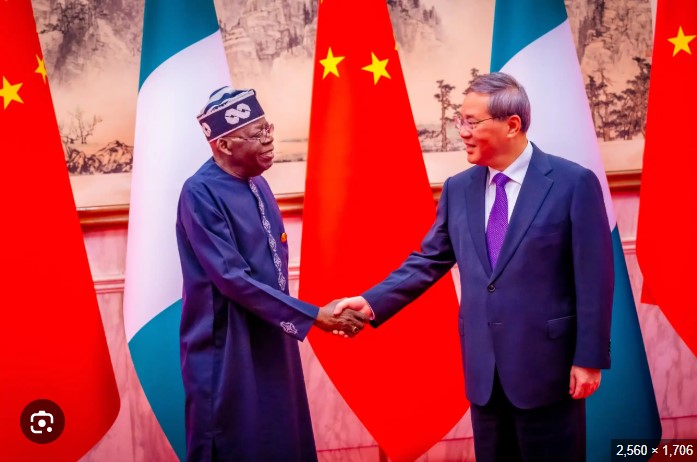
China, however, voiced strong support for Nigeria and criticised what it called foreign interference in the country’s internal affairs.

Trump had announced Nigeria’s designation as a Country of Particular Concern in a post on his Truth Social platform on Friday, alleging that Christianity in Nigeria faces an “existential threat” and claiming that thousands of Christians have been killed by radical Islamists.

He warned that the United States could take decisive measures — including possible military intervention — if the Bola Tinubu administration failed to act.

In its reaction, the Federal Government rejected the US claim, describing it as inconsistent with facts, and reaffirmed Nigeria’s commitment to combating violent extremism, protecting citizens, and promoting religious freedom and inclusiveness.

As part of its response to Nigeria’s alleged violations, the United States Congress is considering a bill that would impose severe sanctions on state governors, public officials, and non-state actors involved in enforcing the Sharia Penal Code.

The bill, sponsored by Republican Senator Ted Cruz, has passed second reading and been referred to the Senate Committee on Foreign Relations for further consideration.

The draft legislation, S. 2747, dated September 9, 2025, is titled ‘Nigeria Religious Freedom Accountability Act of 2025.’ It directs the US Secretary of State to designate Nigeria as a Country of Particular Concern, impose specific sanctions, and take other related measures.

The proposed legislation also targets terrorist groups and individuals implementing or supporting Islamic laws in the country.

Under the draft law, penalties would extend to judges, magistrates, prison officials, and other judicial or law enforcement officers found complicit in terrorism, corruption, or the enforcement of blasphemy laws.

It specifically includes anyone responsible for prosecuting, convicting, imprisoning, or otherwise depriving individuals of their liberty on charges of blasphemy.

Reacting to the executive action, the USCIRF chair, Vicky Hartzler, said, “USCIRF applauds President Trump for speaking out on the religious freedom crisis in Nigeria and making Nigeria a Country of Particular Concern.”

“The US Government can now develop a tough plan with Nigeria to ensure that perpetrators of violence are held to account, people of faith are protected, and those held hostage are rescued,” she added in a statement published on the commission’s website on Monday.

The USCIRF vice chair, Asif Mahmood, also told The PUNCH in an emailed response on Tuesday that the commission would ensure the Trump administration implements a series of executive actions against Nigeria, which it described as a serial violator of religious freedom since 2009.

During Trump’s first administration, the US State Department had placed Nigeria on its Special Watch List in 2019 and designated it as a Country of Particular Concern in 2020, citing recurring violent attacks against religious communities.

“The United States Commission on International Religious Freedom welcomes President Trump’s making Nigeria a Country of Particular Concern,” the statement read. “USCIRF has recommended this designation since 2009 because of the government’s engagement in and tolerance of systematic, ongoing, and egregious religious freedom violations.”

The statement cited several recent incidents, including the killing of at least 200 people — among them internally displaced persons — at a Catholic mission in Benue State in June, and the murder of at least 27 worshippers during an early-morning mosque attack in Katsina State in August.

“These and other violent incidents targeting religious communities are escalating tensions and threatening Nigerians’ ability to freely express their faith,” it added.

Mahmood noted that, in addition to violence by non-state actors, the Nigerian government must also be held accountable for allowing the enforcement of blasphemy laws in 12 states.

“Enforcing these laws and tolerating violence targeting Christians, Muslims, and other communities justify the CPC designation,” he said. “Now the administration can use this opportunity to impose Presidential Actions under the International Religious Freedom Act to incentivise needed change in the country.”

See also  Residents flee from Oyo village after bandit attack

In his email to The PUNCH, Mahmood reiterated that Nigerian authorities had “repeatedly failed to address ongoing violence targeting religious communities.”

“In our 2025 Annual Report, which covered the calendar year 2024, we reported on violence targeting religious communities where Nigerian authorities far too often fail to adequately respond,” he wrote.

He explained that USCIRF uses international human rights standards, including the Universal Declaration of Human Rights, under the International Religious Freedom Act, to determine when to recommend a Country of Particular Concern designation for any government that “engages in or tolerates particularly severe violations of religious freedom.”

“Nigeria has met that standard since 2009,” Mahmood said, noting that 12 state governments continue to enforce strict blasphemy laws used to prosecute Christians, Muslims, and humanists for alleged insults to religion.

He added that the USCIRF, in its annual reports, had repeatedly recommended policy actions the US government and Congress could adopt to improve religious freedom conditions in Nigeria.

“Now that President Trump has named Nigeria a CPC, the International Religious Freedom Act empowers the US government to execute multiple Presidential Actions,” Mahmood said. “We encourage the administration to do so and not to waive these actions.”

On steps Nigeria could take to secure a reprieve, Mahmood explained that ending or significantly reducing “systematic, ongoing, and egregious” violations of religious freedom, as outlined in USCIRF’s Annual Report, was the key condition for removal from its list of Countries of Particular Concern.

“Our recommendation is based on international human rights law, facts on the ground, and our statutory mandate,” he stated. “USCIRF’s monitoring and reporting efforts are ongoing, and our next CPC recommendations will be included in our 2026 Annual Report, which is due to Congress no later than May 1 of each year.”

Beijing backs Tinubu

However, the People’s Republic of China has strongly criticised the US action against Nigeria, describing it as a flagrant interference in the country’s internal affairs.

At a press conference in Beijing on Tuesday, Foreign Ministry spokesperson Mao Ning said China stood firmly with Nigeria in pursuing its own development path and opposed the use of religion or human rights as tools for political pressure.

Her remarks, circulated by the Chinese Embassy in Abuja, read, “As a comprehensive strategic partner of Nigeria, China firmly supports the Nigerian government in leading its people on a development path that aligns with its national realities.

“We oppose any country’s interference in other nations’ internal affairs under the pretext of religion or human rights. We also oppose the wanton threat of sanctions or the use of force.”

Meanwhile, the Minister of Information and National Orientation, Mohammed Idris, said President Bola Tinubu was taking concrete steps to ensure the safety of lives and property across the country.

Speaking with State House correspondents after a meeting with the President at the Presidential Villa, Abuja, on Tuesday, Idris said his discussions with Tinubu included the recent US comments on Nigeria.

He noted that the President had called for calm, assuring Nigerians that his administration remains focused on strengthening national security and promoting unity amid growing international scrutiny.

“It’s a routine meeting that we always have with Mr President,” Idris said. “Of course, the issue of the US also came up, and we discussed that extensively.”

According to him, the President is “calm and taking a holistic view of the situation,” while working to ensure the international community better understands Nigeria’s ongoing efforts to maintain peace and security.

“Only last week, Mr President, in his desire to reinvigorate the country’s security architecture, appointed a new Chief of Defence Staff and other service chiefs. That tells you he’s been working seriously to ensure Nigeria remains safe for all,” Idris added.

He explained that the government was deliberately keeping its diplomatic tone measured while expanding engagement with international partners to clarify Nigeria’s position.

“We are opening channels of communication so that the international community understands what Nigeria has been doing and intends to do to address any domestic or international concerns,” he said.

Responding to calls for broader engagement with religious and community leaders, Idris said Tinubu had adopted a multi-pronged approach.

“Discussions with the leadership of religious groups are ongoing,” he noted. “Mr President has been meeting with them and will continue to do so. They are important stakeholders in the Nigerian project.”

The minister added that Tinubu would sustain regional and continental engagements to counter what he called “false narratives” about Nigeria’s religious climate.

See also  EFCC orders arrest of dismissed officer on Lege Miami’s show

“For us to be characterised as a country that is not tolerant of religion is absolutely false,” Idris declared. “Nigeria is home to Muslims, Christians, and even those of no faith, and our Constitution guarantees freedom of religion. Mr President will uphold that to the letter.”

Idris blamed extremist elements for pushing divisive narratives aimed at portraying the country negatively, urging citizens to resist such propaganda.

“Yes, we have security challenges,” he said, “but there has never been any government decision to favour one religion over another or to inflict violence in the name of faith. This is a time to reflect on our unity and come together — not a time for division, rhetoric, or politics, but a time for nation-building.”

He reaffirmed that President Tinubu is “taking the situation very seriously” and has directed relevant agencies to handle the issues “with all the responsibility and depth they require.”

“At the end of the day, we believe that we will come out of this stronger,” Idris assured.

ECOWAS, EU react

The Economic Community of West African States has dismissed claims that the recent surge in terrorist attacks across the region, including Nigeria, amounts to genocide.

In a statement on Tuesday, the regional body said the attacks indiscriminately target civilians of all faiths and backgrounds, stressing that the violence cannot be classified as genocide against any particular religious group.

ECOWAS urged the United Nations and other international partners to continue supporting member states in their efforts to counter violent extremism.

“As independent reports have confirmed over the years, terrorist-related violence does not discriminate on the basis of gender, religion, ethnicity, or age,” the statement read.

“ECOWAS calls on the United Nations and all partners to support member states in their fight against these groups and to treat as false any claims that these terrorist groups target one community, or that there is genocide of one religious group in the region.

“ECOWAS strongly rejects these false and dangerous claims that seek to deepen insecurity in communities and weaken social cohesion in the region.”

Reaffirming its commitment to regional peace and unity, the bloc reiterated that combating terrorism requires a collective response grounded in facts and solidarity, not in divisive or misleading narratives.

“ECOWAS calls on the whole world to stand by the countries in the region in their fight against terrorism that targets all communities,” the statement concluded.

In a related development, the European Union has reaffirmed its commitment to protecting religious freedom and promoting peaceful coexistence in Nigeria.

The spokesperson for EU Foreign Affairs and Security Policy, Anouar El Anouni, made this known during a press briefing on Monday. His comments were shared with reporters in Abuja on Tuesday by the EU’s press officer, Modestus Chukwulaka.

“When it comes to Nigeria, the EU has taken note of the statements made by the American administration. The EU reaffirms its commitment to freedom of religion and belief, and to the protection of all communities, especially minorities,” El Anouni said.

“We underline our commitment to the peaceful coexistence of the Nigerian population, beyond geographical, ethnic, political, or religious differences.”

While acknowledging the US position, the EU cautioned against attributing Nigeria’s violence solely to religion.

“We recognise the many factors behind the violence in Nigeria. Let us note that religion is only one of these factors — and only in certain instances,” he added.

The EU said it continues to work with Nigerian authorities to strengthen peacebuilding efforts and support victims of violence and displacement.

“The European Union cooperates with the competent Nigerian authorities and implements multifaceted support in Nigeria to prevent violence, consolidate peace, and assist victims of violence and forced displacement,” El Anouni said.

US military base

A former Chief of Army Staff and ex-Minister of Interior, Lt. Gen. Abdulrahman Dambazau (retd.), alleged that the United States might be seeking to establish a military base in Nigeria under the pretext of protecting Christians from persecution.

Dambazau, who spoke in Abuja on Tuesday at an event organised by the Just Friends Club of Nigeria, said recent narratives by some American politicians and religious leaders about “Christian genocide” in Nigeria could be linked to external interests.

“Religious tensions have been amplified by both domestic and foreign actors, sometimes resulting in the mischaracterisation of security incidents as targeting specific faith groups,” he said.

See also  FG seeks young Nigerians to boost primary healthcare

Dambazau questioned the motive, recalling that despite hosting two US military bases for over a decade, Niger Republic still suffers severe insecurity.

“In the more than ten years of US presence in Niger, what did they do to prevent the growth of terrorism? I think the US is looking for an opportunity to establish an alternative base in Nigeria,” he said.

The retired general argued that terrorism in Nigeria affects both Muslims and Christians and is part of a wider regional crisis in the Sahel and Lake Chad Basin.

He said Nigeria’s weak security capacity had worsened the situation, citing the Abuja–Kaduna train attack and Kuje prison break as examples.

“Communities in Zamfara and Katsina have even signed agreements with bandits to avoid attacks. People now rely on criminals for protection,” he added.

Dambazau warned that foreign interests could exploit Nigeria’s internal divisions and urged the government to promote unity and strengthen security institutions.

“We must not allow external actors to manipulate our differences for their own interests,” he said.

Middle Belt leaders

Amid growing concerns over a possible diplomatic face-off, leaders of the Southern and Middle Belt Forum described the development as a “wake-up call” for the Federal Government to urgently tackle insecurity and the persistent killings across the country.

In a communiqué issued after its National Caucus meeting on Saturday, November 1, 2025, in Abuja — and signed by spokesman Luka Binniyat, alongside Oba Oladipo Olaitan (Afenifere), Dr. Bitrus Pogu (Middle Belt Forum), Senator John Azuta-Mbata (Ohanaeze Ndigbo Worldwide), and Ambassador Godknows Igali (PANDEF) — the forum outlined its stance on insecurity, justice, national unity, and the 2027 elections.

“The SMBLF notes with very serious concern the designation by US President Donald Trump of Nigeria as a Country of Particular Concern over alleged persecution against Christians,” the communiqué stated.

“However, we consider this a wake-up call to the Federal Government to pursue, with urgency and responsibility, the halting of ongoing mayhem and killings.”

The forum urged the government to disarm and prosecute armed militias, killer herdsmen, and terrorists, and to restore “occupied lands to their rightful owners” across Benue, Plateau, Southern Kaduna, Taraba, Gombe, Southern Borno, and other affected states.

While welcoming recent changes in the military hierarchy, the group called on President Bola Tinubu to extend reforms to the offices of the National Security Adviser, Minister of Defence, and Minister of State for Defence, to ensure inclusivity and balance in national security management.

The SMBLF also renewed calls for the release of Nnamdi Kanu, leader of the Indigenous People of Biafra, saying it would aid peace and reconciliation in the country.

Meanwhile, a former Governor of Sokoto State, Alhaji Attahiru Bafarawa, urged President Tinubu to avoid confrontation with Washington and instead seek diplomatic engagement.

“I advise President Tinubu to shun confrontation and reach out to the American government to present Nigeria’s side of the story,” Bafarawa said in a statement on Tuesday.

“America and Nigeria are strategic partners in international politics and diplomacy. It will, therefore, be in Nigeria’s best interest to strengthen this long-standing relationship.”

In a related reaction, the Yoruba Ronu Group, a socio-political organisation, in a statement issued in Abuja and signed by its chairman, Diran Iyantan, said Trump’s remarks accusing Nigeria of “killing Christians” were “false and dangerously provocative.”

“Trump’s warlike tone is not diplomacy—it is incitement,” Iyantan warned. “Such reckless language emboldens terrorists, undermines our military gains, and insults our sovereignty. Every U.S. intervention, from Libya to Afghanistan, has left behind ruins and chaos. Nigeria will not be their next experiment.”

The National Civil Society Council of Nigeria also criticised the Federal Government for failing to appoint ambassadors amid the crisis, describing the lapse as “unhealthy and unthinkable.”

In a communiqué signed by Oscar Kalu, chairman of the communiqué drafting committee, the council said, “The government must handle the allegations of Christian genocide with professionalism and diplomacy, confronting the matter with verifiable facts and figures.”

Similarly, a former Kwara State House of Assembly Commission member and APC chieftain, Kehinde Bankole, cautioned Trump against making inflammatory remarks that could distract Nigeria’s leadership.

“Article 2(1), (4), and (7) of the UN Charter affirm every nation’s right to determine its political, social, economic, and cultural systems without external interference,” Bankole said.

Continue Reading
Click to comment

Leave a Reply

Your email address will not be published. Required fields are marked *

News

Reps probe alleged N2bn in ex-mining commander’s account, read details

Published

on

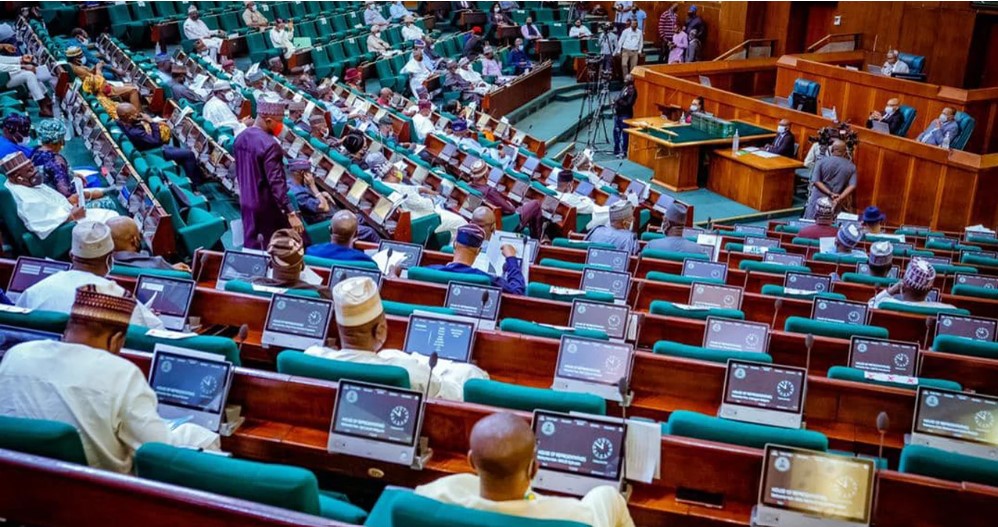
The House Committee on Solid Minerals Development has questioned the legal basis for the operations of the Mining Marshals, insisting that the unit lacked specific legislative backing to operate in its current form.

The committee, chaired by Jonathan Gbefwi, raised the concern during an investigative hearing involving the Nigeria Security and Civil Defence Corps at the National Assembly Complex, Abuja. It is probing allegations of extortion, harassment of licensed mining operators and financial impropriety.

Lawmakers are examining the unit’s funding, procurement of operational vehicles and allegations that more than N2bn was found in the account of a former state commander.

Gbefwi, a Labour Party member from Nasarawa State, said the committee was exercising its constitutional powers under Sections 88 and 89 of the 1999 Constitution, as amended, and Sections 2 to 5 of the Legislative Houses (Powers and Privileges) Act, 2017.

He faulted the NSCDC’s failure to submit requested documents despite the appearance of its Commandant-General, Ahmed Audi.

According to him, “the committee served Audi with a formal statutory demand on October 20, 2026, requiring the Corps to submit a comprehensive response under oath.”

The demand required 10 bound and paginated hard copies, alongside an identical electronic version of relevant documents, by 2 pm on November 3. However, Gbefwi said the documents had not been delivered when proceedings commenced. He stressed that Audi’s appearance did not discharge the Corps’ obligation to provide the records.

He said Audi’s responses under oath would be the NSCDC’s official position. He directed the Corps to preserve operational and financial records, including arrest registers, banking documents, vehicle registers and CCTV footage across the 36 states and the Federal Capital Territory.

Gbefwi warned that destroying, concealing, altering or backdating records, or intimidating officers and witnesses, would attract legal consequences.

“Any alteration, backdating, concealment, removal, or destruction of responsive records, or any intimidation, coaching, or retaliation against any officer or witness, constitutes a grave statutory offence under Section 14 of the Legislative Houses (Powers and Privileges) Act, 2017, and Section 19 of the NSCDC Act,” he said.

See also  Obasanjo reveals reason for Nigerians deadly migration, read details

He also referred to a letter dated July 24, 2026, written by the Commander of the Mining Marshals, Attah Onoja, to the Speaker of the House. The letter reportedly contained allegations against a member of the House and questioned the legislature’s integrity.

Gbefwi said Audi had to clarify whether the Corps endorsed the allegations or the letter reflected Onoja’s personal position. Audi was required either to adopt the allegations with documentary evidence or formally disown the letter under oath.

The NSCDC delegation, led by Audi, defended the establishment and operations of the Mining Marshals, maintaining that the unit had a legal basis. Audi undertook to submit the requested documents. Onoja answered questions about the reported N2bn transaction involving a former state commander.

Established by the Federal Government in 2024 as a special enforcement unit within the NSCDC, the Mining Marshals were tasked with tackling illegal mining, protecting mining sites and enforcing mining regulations. Their operations have raised questions about their statutory powers, funding, and alleged harassment and extortion of licensed operators.

In another development, the House of Representatives has called for urgent repairs to failed box culverts along the East-West Road in Rivers State.

The road resolutions followed a motion by Yenagoa/Opokuma Federal Constituency member Oboku AbonsiOforji on Wednesday.

The House urged the Federal Ministry of Works to direct Rock Result Nigeria Limited to return to site and rehabilitate or reconstruct failed box culverts at Iheke in Ahoada East Local Government Area of Rivers State. It also called for an independent engineering assessment of the damaged structures.

See also  See what shut House of Reps plenary down amid tension

Moving the motion, Oforji recalled that the House had, on October 3, 2023, adopted a resolution drawing attention to the deplorable condition of the Iheke section, prompting government interventions.

He commended the government for constructing culverts, approving rehabilitation funds and re-awarding the contract to Setraco Nigeria Limited.

However, he expressed concern that the culverts had deteriorated despite the financial commitments. He blamed alleged substandard execution, questioning the materials, engineering specifications, supervision and value for public funds.

Oforji said the road linked Bayelsa, Rivers and Delta states.

He said the damaged culverts could “endanger lives, disrupt the movement of people and goods, and aggravate flooding and erosion in the region if urgent remedial action was not taken.”

The motion highlighted delays in dualising the Ahoada-to-Bayelsa and Patani sections. According to Oforji, the project, “initially scheduled for completion in April 2025, was subsequently extended to November 2025 but remained unfinished as of November 25, 2026.”

The House urged the ministry to ensure Rock Result Nigeria Limited repaired the culverts and Setraco Nigeria Limited completed the dualisation works on the Ahoada-to-Bayelsa and Patani sections.

It mandated its Committee on Works and Legislative Compliance to monitor implementation and report back within four weeks for further legislative action.

Source: punchng.com

FOLLOW US ON:

FACEBOOK

WHATSAPP CHANNEL

TWITTER

PINTEREST

TIKTOK

YOUTUBE

LINKEDIN

INSTAGRAM

Continue Reading

News

Mock polls: INEC orders RECs to plug gaps

Published

on

The Independent National Electoral Commission (INEC) has directed Resident Electoral Commissioners across the 36 states and the Federal Capital Territory to address all identified operational and logistical shortcomings ahead of Saturday’s nationwide mock accreditation and result transmission exercise.

The INEC Chairman, Prof. Joash Amupitan, gave the directive on Wednesday in Abuja at a strategic consultative meeting with RECs, warning that the commission could not afford operational failures as preparations intensified for the 2027 general elections.

Amupitan said the mock exercise scheduled for November 28 would serve as a critical test of the commission’s upgraded Bimodal Voter Accreditation System devices, logistics arrangements and automated result validation safeguards on the INEC Result Viewing Portal.

He directed the RECs to personally supervise preparations in their respective states, monitor the exercise and submit comprehensive technical reports to the commission’s headquarters by November 30.

The INEC chairman said the reports must identify network failures, device anomalies and procedural bottlenecks requiring urgent intervention before the general elections.

“Every single operational bottleneck, communication gap, or logistical friction point identified during our recent off-cycle reviews must be permanently closed before Saturday’s nationwide simulation and well ahead of January 16,” he said.
He warned that the commission had no room for administrative lapses, noting that the 2027 elections would involve more than 100 million registered voters, 57,000 newly procured BVAS devices and over 1.41 million ad hoc personnel.

“Margin for error simply does not exist,” Amupitan declared.

The chairman disclosed that the presidential and National Assembly elections would hold on January 16, 2027, while the governorship and state Houses of Assembly elections were scheduled for February 6.

See also  Governors urge peace, unity amid hardship during Nigeria @66 celebrations

He said the commission was working with a verified register of more than 100 million voters following three phases of Continuous Voter Registration, which added over 10.77 million registrants, and an audit that removed more than 1.6 million invalid, duplicate or deceased records.

Amupitan also disclosed that the register included 232,658 Persons With Disabilities, whose participation, he said, required accessible polling arrangements and appropriate assistive materials.

He identified six operational priorities requiring immediate attention from the RECs, including the successful conduct of Saturday’s mock exercise, last-mile logistics, BVAS deployment, election security, recruitment and welfare of ad hoc personnel, and the prevention of disinformation and partisan interference.

On logistics, the INEC chairman warned that delays in opening polling units could undermine public confidence and trigger unnecessary tension on election day.

“Delayed openings breed suspicion, anxiety, and avoidable tension,” he said.

He directed the RECs to review transportation arrangements with the National Union of Road Transport Workers, marine operators and aviation partners, while ensuring that Registration Area Centres were physically ready and secured.

He also ordered strict tracking of sensitive and non-sensitive election materials from state warehouses to polling units and their eventual return through collation centres.

On the deployment of BVAS, Amupitan said the commission had reduced the voter threshold per device from 1,250 to 850 to prevent overcrowding, long queues and accreditation delays.

He explained that multiple devices would be deployed to polling units with more than 850 registered voters.

The chairman also said the commission had constructed climate-controlled storage facilities across the states to protect the newly acquired devices from extreme temperatures.

See also  INEC faces legal heat over ‘missing’ N55.9bn 2019 election funds

On election security, he called for stronger collaboration between the RECs, state commissioners of police, directors of the Department of State Services, the Nigeria Security and Civil Defence Corps and other security agencies.

He said the commission would activate its decentralised Inter-Agency Consultative Committee on Election Security structures down to local government and ward levels, supported by Election Risk Management maps to identify potential flashpoints.

Amupitan further directed the RECs to ensure the early resolution of disputes over political rally venues and timings in line with Section 95(4) of the Electoral Act 2026.

He warned that the commission would not tolerate partisan conduct by its personnel, stressing that institutional neutrality was essential to credible elections.

“Equally vital, enforce uncompromising institutional neutrality across every level of your state workforce.

“Under the Electoral Act 2026—including the deterrence provisions of Sections 96, 97, and 148—the Commission will not shield any staff member or official who compromises neutrality, facilitates malpractice, or breaches statutory rules,” he told the electoral commissioners.

The INEC chairman also stressed the need for adequate training and timely payment of allowances to the more than 1.41 million ad hoc personnel expected to participate in the elections.

He identified National Youth Service Corps members, university vice-chancellors, academics serving as returning and collation officers, and career civil servants among the personnel who would support the electoral process.

Amupitan urged the RECs to maintain regular engagement with political parties, election observers, civil society organisations and the media to prevent information gaps that could fuel misinformation and disinformation.

See also  One dies, three injured in Lagos building collapse

“The Nigerian people are not asking us for excuses or explanations after the fact; they are asking for competence, impartiality, transparency, and courage in the execution of our constitutional mandate,” he said.
He charged the RECs to personally supervise field preparations rather than rely solely on reports from subordinate officers, urging them to communicate operational challenges promptly to the commission’s headquarters.

“As Resident Electoral Commissioners, your leadership sets the ethical and operational tone in your respective states. Stay close to your Electoral Officers, supervise field audits personally rather than relying solely on secondhand assurances, and report realities on the ground with complete candour so Headquarters can support you swiftly,” he said.

Source: punchng.com

FOLLOW US ON:

FACEBOOK

WHATSAPP CHANNEL

TWITTER

PINTEREST

TIKTOK

YOUTUBE

LINKEDIN

INSTAGRAM

Continue Reading

News

El-Rufai backtracks on Ribadu phone-tapping claim, read details

Published

on

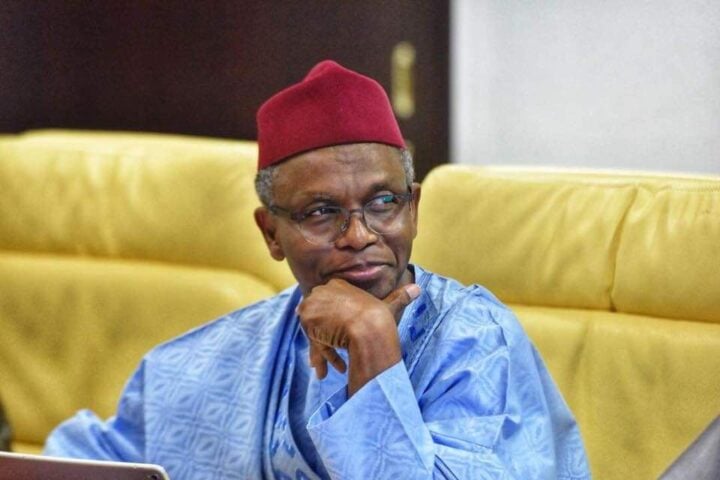
Detained former Kaduna State Governor, Nasir El-Rufai, on Wednesday told the Federal High Court in Abuja that his claim that the telephone of the National Security Adviser, Nuhu Ribadu, was tapped was false, saying he made the statement to scare the government and make its officials uncomfortable.

El-Rufai, who made the admission before the trial judge, Justice Joyce Abdulmalik, described the claim as political rhetoric rather than a factual statement, insisting that neither he nor other opposition figures intercepted Ribadu’s telephone conversations.

The former governor spoke while testifying as the first defence witness in his ongoing prosecution by the Department of State Services over allegations that he intercepted the NSA’s telephone conversations, among other offences.

El-Rufai, who governed Kaduna State between 2015 and 2023, is facing trial over comments he made during an appearance on Arise Television’s Prime Time programme on February 13.

According to court documents, El-Rufai allegedly admitted during the interview that he knew and was associated with an individual who had illegally intercepted the NSA’s telephone communications.

The former Minister of the Federal Capital Territory, who served under former President Olusegun Obasanjo, is accused of breaching national security and public safety through his actions, an offence punishable under Section 12(1) of the Cybercrimes (Prohibition, Prevention, etc.) (Amendment) Act, 2024. He was also charged with failing to report the alleged crime to the relevant security agencies.

During the television interview, El-Rufai had alleged that DSS operatives attempted to abduct him at the Nnamdi Azikiwe International Airport, Abuja, on February 12, 2026, upon his return from Cairo.

He further alleged that the security agency was acting on the instigation of the Independent Corrupt Practices and Other Related Offences Commission, which he claimed had received a directive from Ribadu to detain him.

See also  Presidential aide defends Tinubu’s Falcons rewards, cites BBNaija N150m prize money

The court had, on October 26, ordered the former governor to open his defence to the allegations after dismissing his no-case submission seeking to be discharged and acquitted of the charges.

Justice Abdulmalik held that the application lacked merit and declined to terminate the trial.

At the continuation of proceedings on Wednesday, El-Rufai’s lawyer, Paul Erokoro (SAN), played a recording of the interview his client granted Arise TV on February 13, in which he claimed that someone tapped Ribadu’s phone and relayed his conversations to him and other opposition figures.

After listening to the recording, Erokoro asked his client to clarify what he meant by the statement.

Responding, El-Rufai acknowledged making the claim but said it was not intended to be understood literally.

He explained that his intention was to draw attention to what he described as the government’s surveillance of opposition figures and other prominent Nigerians, including former presidents and senior judges.

El-Rufai said, “What I wanted to say was that the government was monitoring opposition figures and that we knew what they were doing.

“I used the word ‘tap’ as political rhetoric to make them uncomfortable. It was rhetorical, not literal. It was linguistic flourish, just to make the government uncomfortable.”

When reminded by Erokoro that the interviewer had told him that tapping someone’s phone was illegal, the former governor said he intended to expose what he described as the government’s secret monitoring of opposition figures without lawful court orders.

He said, “I was referring to the government violating the law and not someone else doing it.”

Asked who he meant by “we” when he claimed that “we are listening to their conversations…”, El-Rufai said he was referring to himself and other prominent opposition figures.

He, however, denied that they tapped Ribadu’s phone, explaining that he learnt of an alleged plan to abduct and detain him through a mutual friend.
See also  PHOTOS: Customs rescues 3 endangered pangolins in Ogun, warns wildlife traffickers

The former governor declined to disclose the identity of the person, saying he did not want to jeopardise the interest of his source.

He told the court that after returning home from the television interview, the said friend visited him and clarified that he had not tapped the NSA’s phone.

According to El-Rufai, he told the person that he already knew but had deliberately made the claim to make government officials uncomfortable.

Earlier in his testimony, the former governor said he had known Ribadu since 2003, when he, as head of the Bureau of Public Enterprises, assisted him in establishing the Economic and Financial Crimes Commission by providing office accommodation and funding.

He attributed the breakdown in their relationship to the 2011 presidential election, when Ribadu contested for the presidency, and he supported the late former President Muhammadu Buhari, whom he considered a better candidate.

El-Rufai further alleged that the NSA was opposed to him because of his opposition to President Bola Tinubu’s re-election bid.

He denied involvement in telephone interception, insisting that he neither possessed the knowledge nor the equipment required to tap phone conversations.

However, during cross-examination by the prosecuting counsel, Oluwole Aladedoye (SAN), El-Rufai, who said he obtained a law degree from the University of London, maintained that he would not disclose the identities of those he referred to as “we” in the television interview.

He also refused to name the person who allegedly informed him that Ribadu, Kaduna State Governor, Uba Sani, and the ICPC chairman had met and agreed to ensure his arrest.

See also  INEC faces legal heat over ‘missing’ N55.9bn 2019 election funds

The former governor said he learnt of the alleged plan before returning from Cairo on February 12. He explained that he resisted attempts by DSS operatives to arrest him at the airport upon his arrival because they failed to produce a valid arrest warrant.

El-Rufai also maintained that his claims during the Arise TV interview that he had never stolen public funds and knew nothing about the disappearance of activist Dadiyata while he was governor of Kaduna State were factual.

He insisted that all other statements he made during the interview were true, except the claim relating to the tapping of Ribadu’s phone.

The former governor, who said he instituted fundamental rights suits over the alleged search of his residence with a defective warrant, admitted that the cases had been dismissed by both the High Court of the Federal Capital Territory and the Federal High Court.

Towards the end of the cross-examination, Aladedoye informed the court that Erokoro had approached him before the commencement of proceedings to seek his assistance in the defence’s plan to invite Ribadu and the ICPC chairman as witnesses.

The prosecuting counsel said he declined the request, explaining that the matter was beyond his control.

Erokoro, however, said he would file the necessary applications to secure their attendance.

Justice Abdulmalik subsequently adjourned the case until February 15 and 16 for the continuation of El-Rufai’s defence.

Source: punchng.com

FOLLOW US ON:

FACEBOOK

WHATSAPP CHANNEL

TWITTER

PINTEREST

TIKTOK

YOUTUBE

LINKEDIN

INSTAGRAM

Continue Reading

Trending