Connect with us

Business

SAHCO seeks FG incentives as asset base rises

Published

on

Skyway Aviation Handling Company Plc has appealed to the Federal Government to provide policy support and fiscal incentives for the acquisition of aviation Ground Support Equipment.

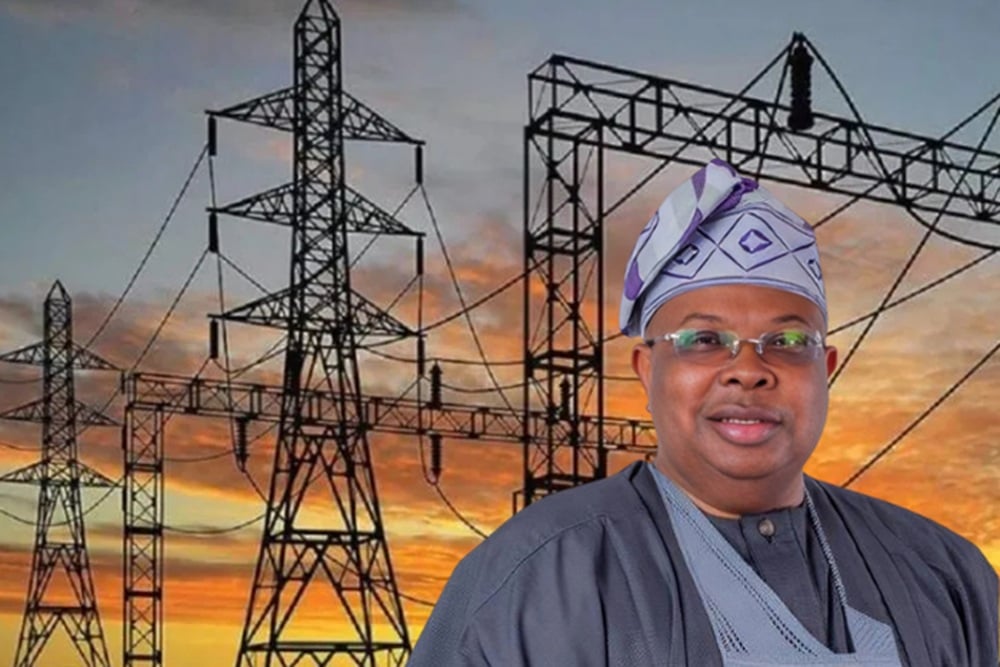
While making the appeal, the company also reported a significant expansion of its asset base to N57.1bn in 2025. Managing Director, Mrs Adenike Aboderin, said this while briefing aviation journalists at the company’s headquarters at the Murtala Muhammed Airport, Lagos, on Monday.

The call for incentives came as Aboderin announced a major financial upswing after it generated N31.7bn in revenue within the first nine months of the year. The N31.7bn figure represents a 58 per cent increase over the N20.1bn posted in the same period of 2024.

The SAHCO boss described the performance as “highly commendable” given the industry’s severe macroeconomic challenges, including inflation, unstable foreign exchange, rising utility charges, and the escalating cost of imported aviation equipment and spare parts.

She said, “You all know what we’re facing in the aviation industry. Overheads are going higher, inflation, foreign exchange, cost of utilities, and most of our equipment, spare parts, most of which are foreign-based. So that has brought a lot of headwinds and impractical outcomes for us.”

Despite the economic pressures, Aboderin said SAHCO continued to deliver value to shareholders, airlines, and stakeholders across more than 22 airport locations nationwide. A breakdown of the results shows that gross profit rose 47 per cent to N18bn from N12bn last year, while profit before tax surged 82 per cent to N10bn compared with N5.5bn in 2024.

See also  Reps seek energy reform as Abbas declares petroleum week open

SAHCO’s total assets also increased from N40bn to N57.1bn, representing 31 per cent growth driven largely by investments in GSE acquisitions, infrastructure upgrades, and technology renewal.

“Through efficiency, discipline, and strategic investments, we have strengthened our financial resilience. Our focus remains operational excellence, digital transformation, and sustainability,” she stated.

Aboderin further highlighted the company’s technology-driven reforms over the past year, noting the introduction of e-billing, an in-house flight operations app, a digital budgeting tool, document management software, and enhanced cybersecurity.

These initiatives, she said, collectively enabled a 27 per cent reduction in year-on-year costs. Emphasising SAHCO’s green transition, Aboderin disclosed ongoing efforts to replace ageing equipment with electric, eco-friendly alternatives.

She said the company now operates the largest number of electric-GSE charging points in Nigerian airports and is installing solar-powered charging stations as part of its sustainability plan through 2028.

On export growth, Aboderin noted improvements in cargo handling infrastructure, including expanded drop-off lanes, upgraded TSA-compliant screening machines, enhanced export processing tunnels, and improved cold chain storage in Lagos and Abuja.

“A new cold room would be installed in Abuja in the first quarter of 2025. SAHCO’s cold chain facilities now support regional transit of temperature-sensitive goods from neighbouring West African countries,” she added.

Among the clients gained in the last nine months are Air Tanzania, Air Algérie, Ethiopian Airlines (Abuja), ValueJet, and United Nigeria Airlines’ regional operations. SAHCO has also commenced services at Bayelsa Airport and Ogun State’s Gateway Agro-Cargo Airport.

Looking ahead, Aboderin said the company expects sustained growth in 2025 as it deepens investments in technology, people, and regional expansion. Beyond ground handling, she said SAHCO is diversifying into e-commerce logistics, helicopter services under its subsidiary SIPA SACOL Aviation, ticketing through SS Travels, and an expanded aviation training academy.

See also  CBN warns that naira abuse is driving up printing costs

She added: “We have delivered strong growth — 82 per cent profit increase, 57 per cent revenue growth and a N13bn rise in assets. If we continue on this path, supported by our partners and our people, the future remains bright.”

punch.ng

FOLLOW US ON:

FACEBOOK

TWITTER

PINTEREST

TIKTOK

YOUTUBE

LINKEDIN

TUMBLR

INSTAGRAM

Continue Reading
Click to comment

Leave a Reply

Your email address will not be published. Required fields are marked *

Business

NNPC serviced $3bn loan with N991bn crude – Report

Published

on

The Nigerian National Petroleum Company Limited has serviced part of its $3bn forward-sale loan from the African Export-Import Bank with crude oil worth N991bn in 2024, according to its 2024 financial statement report. The repayment was tied to Project Gazelle, a forward crude oil supply agreement signed in 2023.

On August 17, 2023, The PUNCH reported that the NNPC announced it had secured a $3.3bn emergency loan to repay crude oil obligations from Afreximbank. It explained that the loan would be used by the oil company to support the Federal Government in stabilising Nigeria’s exchange rate.

“The NNPC Ltd. and AFREXIM bank have jointly signed a commitment letter and Termsheet for an emergency $3bn crude oil repayment loan,” NNPC said in a statement.

“The signing, which took place today at the bank’s headquarters in Cairo, Egypt, will provide some immediate disbursement that will enable the NNPC Ltd. to support the Federal Government in its ongoing fiscal and monetary policy reforms aimed at stabilising the exchange rate market,” it added.

Under the deal, NNPC committed to deliver 90,000 barrels of crude oil per day from Production Sharing Contract assets to back a funding facility. According to the 2023 financial statement, a drawdown of $2.25bn had already been achieved by 31st December 2023, with principal repayment scheduled to begin in June 2024.

The funding carried an interest rate of 3-month LIBOR plus 6.5 per cent, with a 6 per cent margin and 0.5 per cent liquidity premium.

According to the 2024 financial statement, the drawdown on the facility had reached N4.9tn out of a total available N5.1tn, while N991bn worth of crude oil had been lifted in repayment, leaving an outstanding balance of N3.8tn at the end of 2024.

See also  APC’s gov candidate slams Otti’s ‘harsh’ tax hike on Aba traders

The report read, “In December 2023, NNPC Limited entered into a forward sale agreement with Project Gazelle Funding Limited to supply 90,000 bbl. of crude oil per day from Production Sharing Contract Assets for the settlement of a 5-year N2.7tn funding.

“The funding was utilised by the company to finance an advance payment of future taxes and royalty obligations due to the federation on PSC assets managed by the Company on behalf of the Federation.

“As at 31st December 2024, a drawdown of N4.9tn has been achieved from the initial facility of N5.1tn. The interest rate for the facility is 3-month SOFA plus 6.5 per cent while the margin and Liquidity Premium of 0.5 per cent respectively. A total value of Crude Oil worth N991bn has been lifted with a balance of N3.8tn as at 31st December 2024.”

The repayment was made between June and December 2024. However, NNPC did not disclose the identity of the offtakers or exact delivery volumes fulfilled in 2024.

The Project Gazelle arrangement has become one of NNPC’s most significant forward-sale financing vehicles, following a trend of oil-backed loans designed to shore up government revenues, refinance legacy debts, and meet budgetary obligations amid limited fiscal buffers.

The PUNCH earlier reported that the NNPC Ltd is burdened with crude-backed loan obligations estimated at N8.07tn.

The liabilities stretch across multiple forward-sale and project-financing arrangements that are expected to be serviced through substantial crude oil and gas deliveries. The commitments have become a major pillar of NNPCL’s funding structure following years of fiscal pressure, volatile crude production, and declining upstream investment.

See also  15% fuel tariff: PETROAN asks NNPC to reopen refineries before Dec

Several of the facilities were used to refinance older debts, fund refinery rehabilitation, support cash flow, and meet government revenue obligations.

When assessed together, the company’s major crude-for-loan facilities—Eagle Export Funding (21,000 bpd), Project Yield (67,000 bpd), Project Leopard (35,000 bpd), and Project Gazelle (90,000 bpd)—represent a combined commitment of 213,000 barrels per day, in addition to separate gas-delivery obligations under the NLNG arrangement.

The volume equates to a sizeable share of Nigeria’s daily crude output, underscoring the long-term implications of these arrangements for government revenue, export allocation, and operational flexibility.

The PUNCH also reported that Nigeria’s gross profit from crude oil and gas sales plunged by N824.66bn in 2024 despite a rebound in oil production, according to figures from the Budget Implementation Report for the fourth quarter of 2024 released by the Budget Office of the Federation.

Data from the report revealed that gross profit from crude and gas sales fell to N1.08tn during the year, from N1.90tn in 2023, representing a 43.32 per cent decline.

The Chief Executive Officer of AHA Strategies and oil and gas expert, Mr Ademola Adigun, earlier linked Nigeria’s declining oil earnings to opaque crude-for-cash agreements and undisclosed loan repayments that have tied up part of the country’s crude output.

He said some of the government’s oil barrels were already committed to debt settlements and forward-sale contracts, reducing the actual volume that brought fresh revenue into the Federation Account.

Adigun said, “Some of our crude is already tied up in loan agreements. The problem is that Nigeria doesn’t know the full details of these transactions because there’s little transparency around them.”

See also  FIRS, judiciary strengthen collaboration on emerging tax laws

He explained that several crude-backed projects, such as Project Gazelle, were carried out without proper public disclosure or parliamentary scrutiny.

He added that the Nigeria Extractive Industries Transparency Initiative should strengthen its audits to determine how much of the country’s crude is being used for debt repayment or swap transactions.

punch.ng

FOLLOW US ON:

FACEBOOK

TWITTER

PINTEREST

TIKTOK

YOUTUBE

LINKEDIN

TUMBLR

INSTAGRAM

Continue Reading

Business

Yuletide: Dangote assures Nigerians of stable fuel supply

Published

on

Chairman of Dangote Group, Aliko Dangote, on Friday said Nigerians will no longer experience fuel queues during the Christmas and New Year seasons.

Briefing State House correspondents after meeting with President Bola Tinubu at the Aso Rock Villa, Abuja, Dangote said his refinery has formally notified the Nigerian Midstream and Downstream Petroleum Regulatory Authority of its readiness to deliver 50 million litres of Premium Motor Spirit daily, far above national consumption.

He said, “Historically, Nigeria has battled fuel queues since 1972. For the first time, we are eliminating those queues, not through imports but by producing locally.

“Even when we were servicing the refinery, there were no queues. I can assure you that queues are now history.”

Dangote stated that the refinery will soon produce surplus volumes, adding that by February, it will supply 15–20 million litres more than Nigeria needs.

This, he argued, will allow exports to neighbouring countries, reducing the incidence of fuel scarcity across West Africa.

The industrialist also disclosed that domestic manufacturers, especially in the plastics industry, will now enjoy reliable access to locally produced feedstock, ending years of reliance on imports estimated at $400m annually.

Dangote also announced an expansion programme that will raise refinery capacity to 1.4 million barrels per day by 2028, surpassing India’s Reliance refinery, the world’s largest, at 1.25 million barrels per day.

“We have already signed the necessary agreements.

“Construction piling begins before the end of January, and we will deliver on schedule,” he announced.

See also  APC’s gov candidate slams Otti’s ‘harsh’ tax hike on Aba traders

He revealed plans to scale up the company’s urea production to 12 million tonnes annually, positioning Nigeria to overtake Russia and Qatar as the world’s leading producer.

“Our goal is to use our fertilizer company to supply the entire African continent,” Dangote said.

Dangote attributed the recent drop in petrol and diesel prices to increased competition and reduced smuggling.

“Prices are going down because we must compete with imports.

“Luckily, smuggling has dropped significantly, though not completely,” he explained.

He noted that the refinery business is a long-term national investment, saying, “We’re not here to recover $20 billion overnight.

“The legacy I want to leave is that whatever Nigerians need, fuel, fertiliser, power, we will be part of delivering it.”

Dangote further highlighted logistics constraints affecting Nigeria’s solid minerals sector, particularly the congestion of major ports.

“Apapa is full. Tin Can is full. Lekki is mainly for containers.

“You cannot export coal or copper if you have nowhere to ship from,” he noted.

To curb this, he explained that the Group is developing what would become West Africa’s largest deep-sea port at Olokola, expected to be completed in two to two-and-a-half years.

The Kano-born businessman expressed support for the Tinubu administration’s naira-for-crude initiative, describing it as a patriotic move to strengthen the economy, although he acknowledged pushback from international oil companies.

According to him, “It’s a teething problem, but it will be resolved, either through legislation or administrative action.”

On concerns about global competition, Dangote maintained that the refinery will thrive.

He said, “What we want is to make Nigeria the refining hub of Africa. All African countries import fuel. We want what we consume to be produced here.”

See also  Dangote Refinery appoints new CEO David Bird

He also endorsed the government’s Nigeria-first industrial policy and urged wealthy Nigerians to channel resources into productive investment rather than luxury spending.

“If you have money for a private jet, invest in industries and create jobs,” he stated, adding that domestic investors must drive industrialisation to attract foreign capital.

Dangote acknowledged past hurdles, policy instability, smuggling, and factory closures, but expressed optimism that the country is now on a stable path toward sustainable industrial growth.

“Domestic investors must lead the way. Once they do, foreign investors will follow.

“Nobody advertises a good restaurant; when the food is good, word spreads,” he explained.

He described his meeting with President Tinubu as a routine consultation on the economy and business environment, noting that it was “a very fruitful meeting.”

punch.ng

FOLLOW US ON:

FACEBOOK

TWITTER

PINTEREST

TIKTOK

YOUTUBE

LINKEDIN

TUMBLR

INSTAGRAM

Continue Reading

Business

OPay secures double honours at Tech Innovation Awards

Published

on

Nigeria’s premier financial technology company, OPay, has been named Fintech Company of the Year and Best Fintech in Cybersecurity at the ninth Tech Innovation Awards.

In a statement on Thursday, OPay said the award was in recognition of its innovation and security leadership.

The awards ceremony, held on 29 November 2025, in Lagos, convened top organisations and industry leaders who shape the country’s digital landscape.

Speaking after receiving the honours, Chief Compliance Officer at OPay, Chukwudinma Okafor, said, “These awards are a testament to our relentless pursuit of excellence in fintech and our unwavering commitment to user security. Every innovation we introduce, from secure payments to advanced compliance measures, is designed to give millions of Nigerians the confidence to transact safely. This recognition belongs as much to our dedicated team as it does to the users who inspire us to continually raise the bar for excellence in fintech and cybersecurity.”

Highlighting OPay’s proactive approach to security, Chief Commercial Officer Elizabeth Wang said, “We are incredibly proud to receive both Fintech Company of the Year and Best Fintech in Cybersecurity at the 9th Tech Innovation Awards, two recognitions that highlight our dedication to security and user protection. At OPay, we believe that equipping users with the knowledge and advanced tools is essential to building trust and promoting financial inclusion. This was demonstrated through our OPay Security Vote Campaign some months ago, a dynamic social media initiative that educated users on our in-app security features. The campaign has helped millions of Nigerians understand how to protect their accounts and transact safely, reinforcing that security is central to everything we do. Hence, these awards recognise not only our leadership in fintech but also our commitment to keeping every transaction secure and our customers confident in their financial journey.”

See also  We want petroleum products at reasonable prices – DAPPMAN

OPay was established in 2018 as a leading financial institution in Nigeria with the mission to make financial services more inclusive through technology. The company offers a wide range of payment services, including money transfer, bill payment, card service, airtime and data purchase, and merchant payments, among others. Renowned for its fast and reliable network and strong security features that protect customers’ funds, OPay is licensed by the Central Bank of Nigeria and insured by the Nigerian Deposit Insurance Corporation with the same insurance coverage as commercial banks.

Continue Reading

Trending