Connect with us

News

Benin: ECOWAS fears coup surge, Senate okays Nigerian troops deployment

Published

on

The Senate on Tuesday approved President Bola Tinubu’s request to deploy Nigerian troops to the Republic of Benin as part of a rapid regional peace mission aimed at restoring democratic order after an attempted coup in the neighbouring country.

The Senate’s approval comes as the Economic Community of West African States expressed worry over the security and political challenges eroding democracy in the sub-region during the 55th Session of the Mediation and Security Council at the ministerial level in Abuja on Tuesday.

Benin Republic was thrust into turmoil on Sunday after soldiers operating under the Military Committee for Refoundation seized the state-owned television station in Cotonou and announced the removal of President Patrice Talon.

The mutineers, led by Lt. Col. Pascal Tigri, claimed to have deposed the government, raising urgent security alarms across the sub-region.

Loyalist forces, however, regained control after a brief standoff, aided by the rapid mobilisation of Nigerian troops.

The Presidency described the intervention as proof of President Tinubu’s resolve to safeguard constitutional order in West Africa and prevent another democratic collapse within the ECOWAS region.

The Senate granted Tinubu’s request following the consideration of the President’s letter in the Committee of the Whole, after Senate President Godswill Akpabio read the communication during plenary.

In the letter, Tinubu—who also chairs ECOWAS—urged lawmakers to endorse the deployment to “help restore governance” in Benin, where a faction of soldiers had attempted to topple President Patrice Talon.

But the chamber erupted into a rare open disagreement among senior lawmakers shortly after the Senate assented to the request.

Deputy Senate President and First Deputy Speaker of the ECOWAS Parliament, Senator Jibrin Barau, opened the floor with effusive praise for the President’s swift intervention.

He declared, “Democracy is the best form of government. All ECOWAS members are proud of what the president did. Mr President is a true democrat and showed leadership. We will support and stand by him.”

His remarks, however, immediately drew objections from former Bayelsa State governor, Senator Seriake Dickson, who insisted the matter ought to be debated openly.

“I actually felt there is a need for lawmakers to debate this action,” Dickson protested.

Akpabio promptly shut down the suggestion, insisting the Senate had already given its consent.

“We have given the president consent. Every person was in agreement. All the senators are aware and wouldn’t have given consent if otherwise,” he ruled.

He added that the Senate’s position was unanimous, stressing that Tinubu acted in the interest of national and regional security.

“Whatever the president has done, the Senate is in total agreement. That means he is also protecting the borders of the Federal Republic of Nigeria. The president is not going to war.”

See also  See what caused Abuja-Kaduna train derailment

Former Edo State governor, Senator Adams Oshiomhole, backed Akpabio’s position and reinforced the argument that the matter had been concluded.

“Mr President, we unanimously consented to it, including Senator Dickson. It is not up for debate. He has acted well and in good faith. The Senate has endorsed and sealed it. Therefore, it cannot be opened.”

Senate Leader Opeyemi Bamidele also weighed in, providing the legal justification for the Senate’s action.

“The standing order says that in the event of a threat or national security, Mr President can intervene and seek the consent of the Senate within seven days,” he explained.

He thanked senators for acting swiftly. “We believe democracy should not be endangered in Africa.”

Dickson later clarified that he did not oppose the approval but insisted ECOWAS must also address governance deficits that often trigger coups.

“Mr President has done the right thing because democratic institutions are collapsing around us. But it has to be done the right way,” he said.

Dickson added, “We must also warn the leaders of the nations around us to stem the tide and run good governance and popular government in accordance with the constitution they run.”

Senator Jimoh Ibrahim described Nigeria’s intervention as consistent with its long-standing leadership role on the continent.

“Peace is not the opposite of war and war is not the opposite of war… Nigeria is also in line to intervene to save democracy among its close neighbours,” he argued.

He added, “I think this action is quite commendable. President Tinubu is a liberal and democrat.”

Akpabio later expanded the historical context, recalling Nigeria’s roles in Liberia and South Africa.

“Nigeria went into Liberia when it was late. That was why we lost so many soldiers. But we are glad peace was eventually restored. In South Africa, we supported the end of apartheid and brought a lot of South Africans to Nigeria to support our brothers and sisters in Africa.

“But the swiftness of this action is why the Senate gave its consent. I think it is commendable,” he noted.

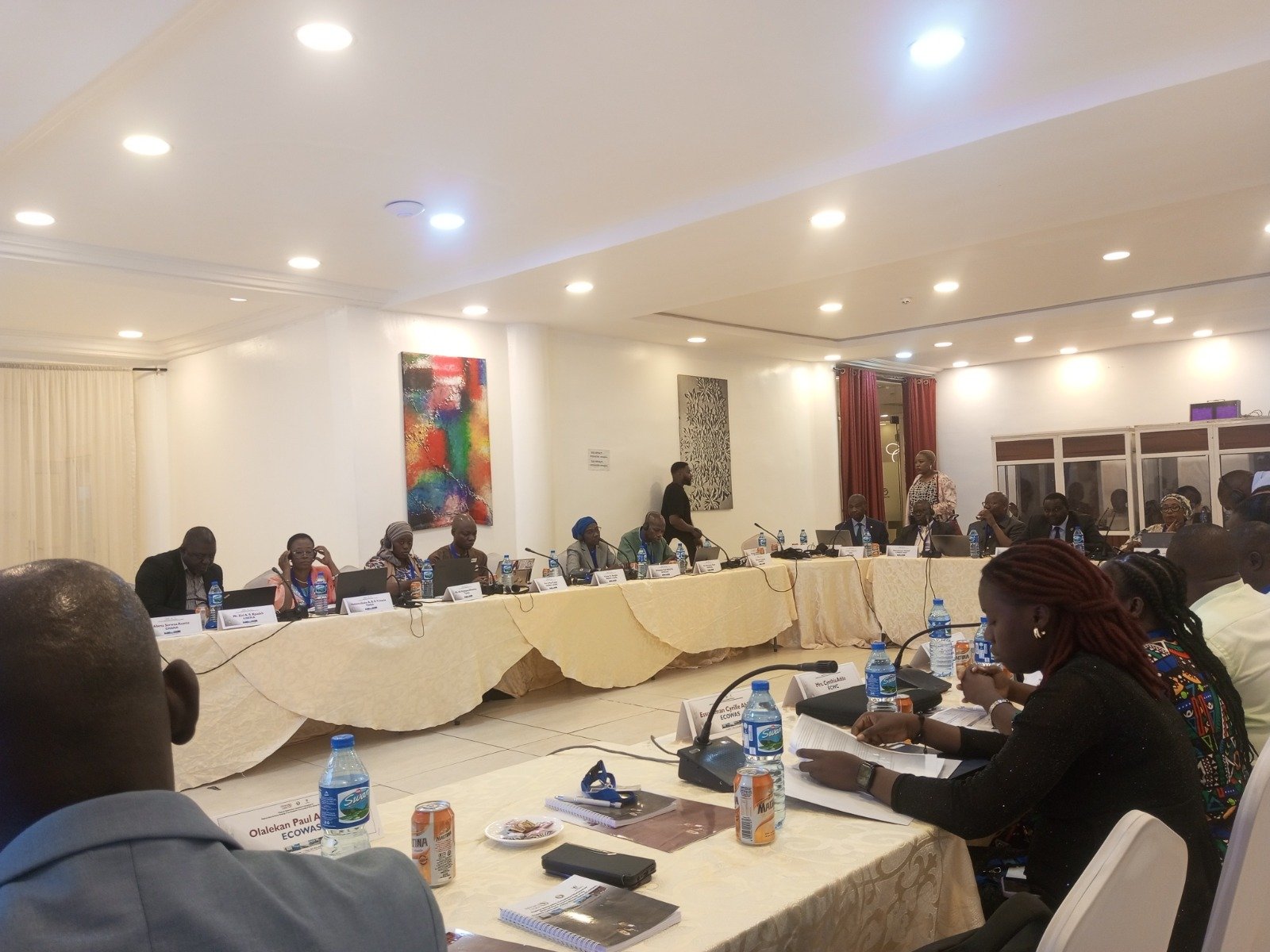
Addressing the 55th Session of the Mediation and Security Council at the Ministerial level in Abuja on Tuesday, the President of the ECOWAS Commission, Dr Omar Touray, warned about escalating political instability and security threats across the region.

Addressing ministers, diplomats and senior officials, Touray painted a picture of West Africa’s political climate, citing recent developments as evidence of a deteriorating environment.

The commission’s president described ECOWAS as facing an average of high risk across its member states.

“Events of the last few weeks have shown the imperative of serious introspection on the future of our democracy and the urgent need to invest in the security of our community.

See also  Edun emerges boxing federation president

“As you would have seen in the memoranda before you, the country-by-country analyses of our member states show different risk levels across our community, from high to medium, with an average of high risk for our community, thereby demanding immediate and concerted action.

“The risk factors are: the persistence of military interventions (Guinea-Bissau and the Republic of Benin just days ago) and non-compliance with transition norms in Guinea, as we face a military leader turning into a civilian leader;

“Growing erosion of electoral inclusivity across multiple states; expanding influence of terrorists and armed groups and criminal networks threatening regional stability; and increasing geopolitical pressures affecting member states’ diplomacy and cohesion,” he explained.

Among the most concerning developments, he emphasised that “Elections have become a major trigger of instability in our community.”

Several ECOWAS states, such as Guinea, Benin, The Gambia and Cape Verde, are headed into elections in the coming months, raising concerns about electoral tensions and constitutional violations.

Touray also cited recent attempted coups and ongoing negotiations with the Alliance of Sahel States, stressing the urgent need for a united regional response to terrorism and cross-border criminal networks.

Declaring the situation unprecedented, Touray warned, “Faced with this situation, Excellencies, it is safe to declare that our community is in a state of emergency.”

He urged that sessions of the Mediation and Security Council be convened more frequently over the next year, insisting that ECOWAS must “pool our resources to confront the threats of terrorism and banditry, which operate without respect for territorial boundaries.”

He outlined key priorities requiring constant ministerial oversight, including managing the crisis in Guinea-Bissau, ensuring peaceful transitions, addressing growing political exclusion and protecting regional unity amid external pressures.

The ECOWAS commission president also highlighted worsening humanitarian conditions across West Africa, referencing recent UNHCR data. He noted that “as of October 2025, approximately 7.6 million individuals are forcibly displaced across the region,” including over 6.5 million internally displaced persons.

Still referring to the data, the largest displaced populations are found in Nigeria, Burkina Faso, Niger and Mali, while countries such as Niger, Mali, Nigeria, Côte d’Ivoire and Togo host the highest numbers of asylum seekers.

Touray stressed, “We must therefore take decisions and actions that will reverse this trend.”

Despite the daunting challenges, Touray pledged ECOWAS’s continued commitment to the region’s citizens.

“Let me assure our community citizens that we will not rest on our oars. We will continue to work harder to promote a peaceful, stable and stronger region for the overall benefit of community citizens,” he noted.

See also  Was government’s hyper reaction to Sowore’s protest necessary?

He called on member states to uphold constitutional norms and maintain unity: “Let us all remain committed to preserving regional unity, advancing peace and upholding the community’s constitutional convergence principles.”

He praised President Bola Tinubu for his prompt military response in the Benin Republic following the failed coup attempt.

Concluding his address, he welcomed new ministerial representatives attending for the first time.

“May I extend a warm welcome to the new Ministers of Defence of Nigeria, Rtd. General Christopher Musa, and Foreign Affairs of Cabo Verde, José Luis Livramento, who are joining today for the first time,” he concluded.

In his remarks, Sierra Leone’s Minister of Foreign Affairs and Chair of the Council of Ministers, Timothy Kabba, urged West African leaders to take decisive action to protect democratic governance in the region amid recent political instability.

Kabba highlighted the fragility of democracy in West Africa, pointing to recent political crises in Guinea-Bissau and Benin.

“The recent coup in Guinea-Bissau and the attempted coup in the Benin Republic are sobering reminders of the fragility of our democratic gains,” Kabba said.

He detailed Sierra Leone’s diplomatic efforts, noting that he and a high-level delegation visited Guinea-Bissau on December 1, 2025, to engage with the military leadership and political stakeholders.

“His Excellency’s engagement helped ease tensions and opened the door for continued dialogue under ECOWAS’s guidance.

“These actions reflect our collective position. ECOWAS cannot and will not accept this development. They undermine everything our community stands for, and they threaten the peace and security of our citizens,” he explained.

The minister stressed the urgent need for practical outcomes from the summit.

“The discussions we have today must move beyond just reaffirming principles. They must generate decisions that offer real hope and strengthen the credibility of our institutions.

“Our people no longer have patience for commitments that remain unpaid. They expect us to confront these challenges with seriousness, unity and purpose,” Kabba said.

The meeting of the Mediation and Security Council precedes the gathering of ECOWAS Heads of State and Government, who are expected to deliberate on the Council’s recommendations amid mounting pressure to restore stability in a deeply troubled region.

West Africa is facing escalating political instability and security challenges, with several ECOWAS member states experiencing coups, attempted coups and fragile political transitions.

Mali, Niger and Burkina Faso remain under military rule, while Guinea-Bissau recently joined this group following a military intervention. On Sunday, an attempted coup in the Benin Republic was foiled, further highlighting the fragility of democratic governance across the region

Continue Reading
Click to comment

Leave a Reply

Your email address will not be published. Required fields are marked *

News

Inside details of arms, ammunition, cars recovered from suspected coup plotters

Published

on

PREMIUM TIMES has obtained exclusive details of arms, ammunition, vehicles and cash recovered from military officers and civilians suspected of plotting to overthrow President Bola Tinubu’s government last year.

An inter-agency probe panel, constituted by the government and led by the Chief of Defence Intelligence, Emmanuel Undiandeye, a lieutenant general, has concluded its investigation into the failed coup attempt. Its findings revealed an elaborate scheme and persons involved in reconnaissance, funding, and propaganda operations.

Our sources confirmed that investigators recovered two gun trucks, anti-aircraft (AA) guns, PKT guns, RPG bombs, AK-47 rifles, ammunition and tactical gear from a lieutenant colonel attached to the army’s 130 Battalion.

In addition to the weapons and ammunition traced to the suspects, investigators seized four Toyota Hilux trucks, one Toyota Prado SUV, two Toyota saloon cars, and 32 Volkswagen Golf vehicles allegedly procured for covert operations.

Investigators found that the vehicles were acquired for movements to gather intelligence and enable discreet access to sensitive locations, including airports and other strategic facilities.

“The cars were used to move operatives around without attracting attention and to conduct reconnaissance activities linked to the plot,” one source said.

The investigation also identified retired Major General Adamu as one of the key figures connected to the network. He remains at large, alongside three other suspects.

Intelligence sources disclosed that one of the fleeing suspects was tracked to a country in Southern America, although his exact location remained undisclosed for security reasons.

Multiple security agencies are now working together to dismantle the remaining cells linked to the plot, with ongoing surveillance and cross-border intelligence coordination.

See also  Libya deports 80 Nigerians held in detention camps

Our sources said authorities are awaiting presidential approval to formally announce a court-martial to try the soldiers involved.

PREMIUM TIMES had reported that 16 military officers were initially arrested for direct participation, but the constitution of a special investigative panel, led by General Undiandeye, later led to additional arrests.

“At least 25 military officers and personnel are expected to face trial in connection with the coup attempt,” one source familiar with the investigation said.

An unspecified number of civilians are currently in custody, being held and investigated by the Economic and Financial Crimes Commission (EFCC) and the State Security Service (SSS) for alleged roles in financing, logistics, and coordination.

Sylva, retired general, accused of bankrolling coup plot’

A former governor, Timipre Sylva, who served as Minister of State for Petroleum Resources under former President Muhammadu Buhari, has been accused of bankrolling the coup plotters and remains at large.

PREMIUM TIMES gathered that Mr Sylva allegedly transferred almost N1 billion in multiple tranches to three separate bank accounts operated by a Bureau De Change operator to fund the conspiracy.

The coup was initially scheduled for 29 May 2023, during the presidential inauguration, when power was handed over from Mr Buhari to Mr Tinubu. However, the plan was suspended due to insufficient funds and inadequate logistical arrangements, sources said.

The conspirators reactivated their plans in 2024 after raising some funds, investigators found.

In an earlier report, sources with direct knowledge of the investigation told PREMIUM TIMES that the plotters marked several top government officials for assassination, including President Tinubu, Vice President Kashim Shettima, Senate President Godswill Akpabio, and Speaker of the House of Representatives, Tajudeen Abbas.

See also  COP30: Presidency, Obi clash over 423-man Nigeria delegation

Further investigation has now revealed that the conspirators also targeted the service chiefs and the Commander of the Guards Brigade for assassination.

“There are other people targeted, but those are the key targets,” one source said.

Some officers were assigned to seize control of the Presidential Villa, Niger Barracks, the Armed Forces of Nigeria (AFN) Complex, and Nnamdi Azikiwe International Airport in Abuja.

The plotters also planned to detain senior military officers, including the service chiefs. “They did not want to kill them,” one source added.

According to multiple sources, the conspirators intended to assassinate the political leaders simultaneously.

“They were waiting for a day when all of them would be in the country,” one official said. “Wherever they were, they would be assassinated.”

The sources said the plotters relied on informants within the Presidential Villa and around the officials slated for elimination.

“They have people inside the Villa who monitor the movements of these officials,” one source said. “The plan was to kill them at the same time and install a military government.”

Coup investigation report transmitted

On Monday, the Defence Headquarters announced that the investigation had been completed and forwarded to “appropriate superior authority in line with extant regulations.”

The military disclosed that the findings identified “several officers with allegations of plotting to overthrow the government,” describing such conduct as “inconsistent with the ethics, values and professional standards required of members of the Armed Forces of Nigeria.”

The suspects were captured in a covert intelligence operation coordinated by the Army Headquarters and the SSS.

See also  Low turnout, tight security as Kwara church holds Sunday service

Credits: PREMIUM TIMES

FOLLOW US ON:

FACEBOOK

TWITTER

PINTEREST

TIKTOK

YOUTUBE

LINKEDIN

TUMBLR

INSTAGRAM

Continue Reading

News

US Justice dept releases documents, images, videos from Epstein files

Published

on

The US Justice Department began releasing millions of new pages on Friday from the Jeffrey Epstein files along with photos and videos, adding fuel to the politically explosive case that has dogged President Donald Trump.

Deputy Attorney General Todd Blanche said the White House played no role in the review of the extensive files related to the convicted sex offender, a former friend of Trump.

“They did not tell this department how to do our review, what to look for, what to redact, what to not redact,” Blanche said at a press conference.

The Justice Department said some of the documents being released contained “untrue and sensationalist claims” about the 79-year-old Trump submitted to the FBI before the 2020 presidential election.

But Blanche — who previously served as Trump’s personal lawyer — dismissed suggestions that embarrassing material about the president had been redacted from the more than three million documents, 180,000 images and 2,000 videos being released on Friday.

“We did not protect President Trump,” he said. “We didn’t protect or not protect anybody.”

Blanche said all images of girls and women were being redacted aside from those of Ghislaine Maxwell, who was convicted of trafficking underage girls for Epstein and is serving a 20-year prison sentence.

However, a statement by survivors of Epstein’s alleged abuse claimed identifying information about them still remained in the files, “while the men who abused us remain hidden and protected.”

The letter signed by 19 individuals, some using aliases or initials, demanded “the full release of the Epstein files” and that Attorney General Pam Bondi directly address the matter when she testifies before Congress next month.

See also  Was government’s hyper reaction to Sowore’s protest necessary?

A wealthy US financier, Epstein died in a New York prison cell in 2019 while awaiting trial for sex trafficking of underage girls. His death was ruled a suicide.

Previous document releases have shed light on Epstein’s ties to top business executives such as Microsoft’s Bill Gates, celebrities such as filmmaker Woody Allen, academics and politicians, including Trump and former president Bill Clinton.

In a draft email among the documents published on Friday, Epstein said Gates had engaged in extramarital affairs, a claim the Gates Foundation denied in a statement to The New York Times.

“These claims — from a proven, disgruntled liar — are absolutely absurd and completely false,” it said.

In other emails, Epstein connected Steve Tisch, 76, producer of the movies “Forrest Gump” and “Risky Business” and the co-owner of the New York Giants football team, with multiple women.

In one exchange with Tisch, Epstein describes a woman as “russian, and rarely tells the full truth, but fun.”

– Conspiracy theories –

Trump’s right-wing base has long been obsessed by the Epstein saga and conspiracy theories that the financier oversaw a sex trafficking ring for the world’s elite.

Only one person — Epstein’s former girlfriend Maxwell — has ever been charged in connection with his crimes, and Blanche appeared to play down expectations that the latest files would lead to further prosecutions.

Trump and Clinton both figure prominently in the records published so far but neither has been accused of wrongdoing.

A Republican-led House panel voted recently to launch contempt of Congress proceedings against Bill and Hillary Clinton over their refusal to testify before its probe into Epstein.

See also  Profile Of Ambassadors Nominated For US, UK, France By President Tinubu

Trump, who used to move in the same social circles as Epstein in Florida and New York, fought for months to prevent release of the vast trove of documents about the disgraced financier.

But a rebellion inside his Republican Party forced him to sign off on a law mandating release of all the documents.

Trump has given varying accounts of why he eventually fell out with Epstein. He has criticized the file dumps, expressing concern that people who “innocently met” Epstein over the years risked having their reputations smeared.

The Epstein Files Transparency Act called for all of the documents held by the Justice Department to be published by December 19.

Blanche said Friday’s release “marks the end of a very comprehensive document identification and review process to ensure transparency to the American people.”

He blamed the delay on the need to painstakingly carry out redactions that protected the identities of Epstein’s more than 1,000 alleged victims.

AFP

punch.ng

FOLLOW US ON:

FACEBOOK

TWITTER

PINTEREST

TIKTOK

YOUTUBE

LINKEDIN

TUMBLR

INSTAGRAM

Continue Reading

News

Venezuelan interim president announces proposal for mass amnesty

Published

on

Venezuela’s acting president announced on Friday a proposal for mass amnesty in the country, in her latest major reform since the US toppling of Nicolas Maduro just weeks ago.

Delcy Rodriguez, in a speech at the Venezuelan Supreme Court attended by top government officials, said she will propose a “general amnesty law covering the entire period of political violence from 1999 to the present.”

Leftist revolutionary Hugo Chavez assumed the presidency in 1999, and was succeeded upon his death in 2013 by Maduro, who oversaw an increasingly authoritarian government and whose two re-elections were widely dismissed as fraudulent.

“This law will serve to heal the wounds left by political confrontation, fueled by violence and extremism. It will allow us to put justice back on track in our country,” Rodriguez said, also announcing a “major national consultation for a new judicial system.”

She also announced plans to close the notorious El Helicoide prison in Caracas, where rights groups say political prisoners were tortured by Maduro’s intelligence services.

The massive facility, originally built as a shopping mall, will be turned into a “sports, cultural and commercial center for police families and neighboring communities,” Rodriguez said.

A mother interviewed by AFP near El Helicoide was overjoyed that her son, imprisoned inside, may soon be released under the law.

“It’s wonderful! I haven’t heard from my son in six months, so, damn it, this is a huge joy, it’s an amnesty, my God, it’s total liberation,” said Betsy Orellana, 63.

– Wary opposition –

Formerly Maduro’s vice president, Rodriguez, 56, has quickly moved in less than four weeks in power to overhaul Venezuelan society in ways sought by the United States, earning high praise from US President Donald Trump.

See also  See what caused Abuja-Kaduna train derailment

Along with her brother, National Assembly President Jorge Rodriguez, she has passed a new law opening up the country’s critical oil sector to private investments — a key demand of Trump.

The move on Thursday was almost immediately followed by a rollback on US sanctions targeting Venezuela’s oil industry.

The government also agreed on January 8, five days after Maduro was seized in a deadly US military operation, to free inmates considered political prisoners by rights groups.

Families — many of whom began camping outside the prisons — and rights groups have criticized the slow pace of the releases, with the Foro Penal NGO counting less than 300 in total released since January 8.

Opposition figures in Venezuela have voiced reserved optimism at the changes taking place, wary that Maduro’s closest allies still remain in power.

Nobel Peace Prize laureate Maria Corina Machado said Friday that Rodriguez’s amnesty proposal came only after she was pushed by Washington.

“This is not a voluntary gesture by the regime, but a response to pressure from the United States government. And I hope that the prisoners will soon be able to be with their families,” she posted on social media.

Opposition lawmaker Tomas Guanipa, whose two brothers are imprisoned, said he hope the amnesty would end “an era of repression.”

“May this be the beginning of a path that leads us to freedom and democracy, definitively and forever,” he told AFP in an interview at his home in Caracas.

– Americans freed –

US authorities on Friday announced that all Americans known to be held prisoner in Venezuela had been released.

See also  You can’t manipulate Nigeria- Group blasts Turkey President Erdogan

The announcement came hours after the release of Peruvian-American political prisoner Arturo Gallino Rullier, whom the Foro Penal group said was on his way to the United States.

For years, Venezuela has routinely arrested foreigners and domestic opposition actors on a range of charges from spying to plotting attacks — charges critics dismiss as fabricated.

In a sign of Trump’s satisfaction with the new Venezuelan authorities, his administration lifted a ban on US flights to the South American country.

And after years of the US embassy being shuttered, Washington is also preparing to re-establish its diplomatic presence in Caracas.

Seasoned diplomat Laura Dogu was recently named US charge d’affaires for Venezuela — the highest level representative below an ambassador.

Dogu is expected to arrive in Caracas on Saturday, diplomatic sources told AFP.

AFP

Continue Reading

Trending