Connect with us

News

Insecurity: Tinubu pledges state police to US, European allies

Published

on

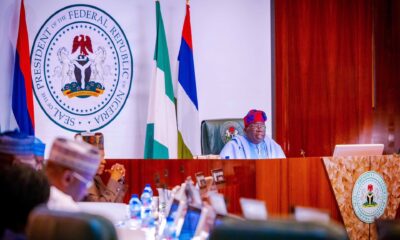
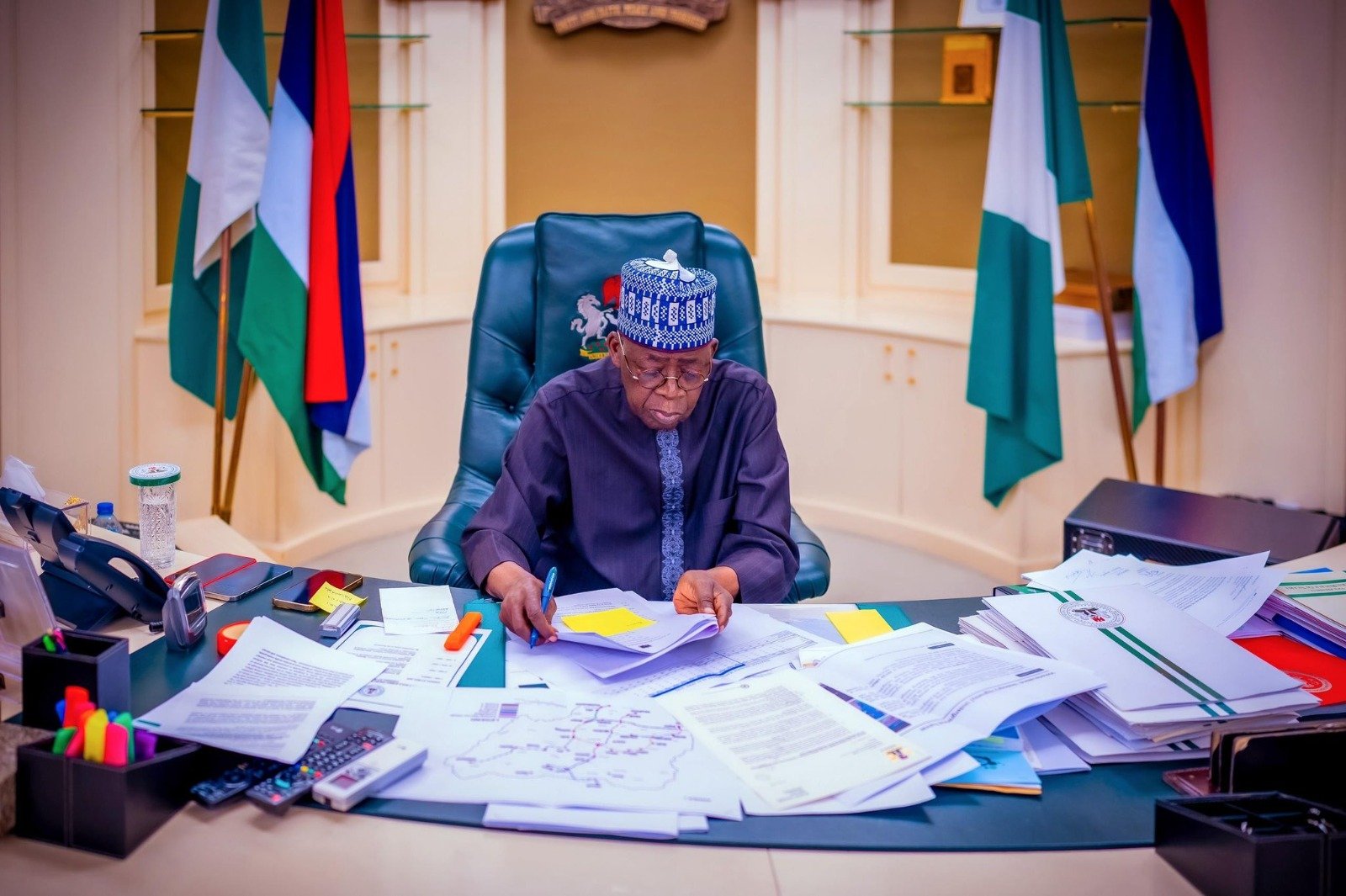
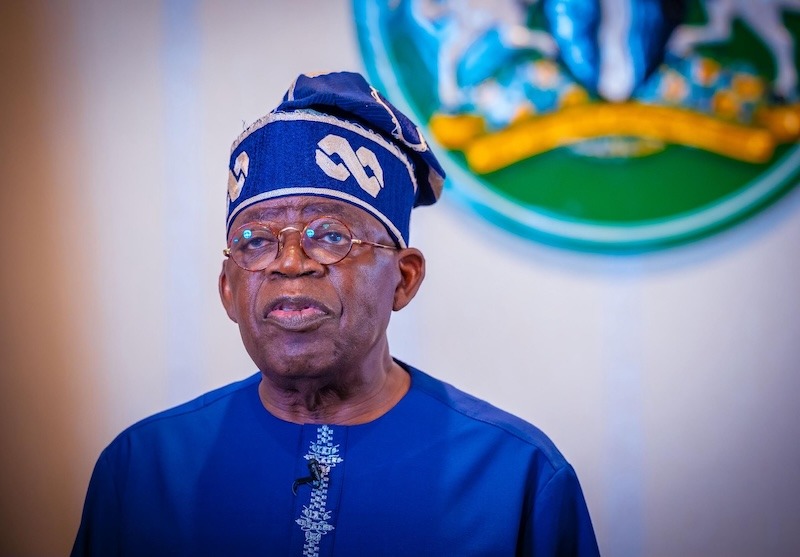
President Bola Tinubu on Thursday renewed his push for the creation of state police, revealing that he had assured the United States and European partners that he would implement state police.

He stressed that state police “must happen” as part of efforts to improve internal security and strengthen governance at the subnational level.

Tinubu spoke at the 14th National Caucus meeting of the APC at the State House Conference Centre, Abuja, where he also insisted that local government autonomy must work in practical terms, urging governors to stop withholding funds meant for council chairpersons.

The President’s comments came amid rising security pressures across the country, renewed calls for decentralised policing, and the push to implement the Supreme Court judgment on local government autonomy and direct allocation to councils.

Tinubu told party leaders that the APC, as the majority party, must show leadership through reconciliation, accommodation, and flexibility at the grassroots level, as he urged governors and other stakeholders to take responsibility for what happens in their states and local governments.

He said he recently held discussions with foreign partners and assured them that Nigeria would move towards state policing, adding that he was confident the APC would deliver the required backing.

“I had a very long discussion with them. US and European partners, and I was bragging to them that we will definitely pass a state police bill to improve security.

“They asked me if I’m confident, and I said, ‘Yes, I have a party to depend on. I have a party that will make it happen,’ and if at this level we fail, God forbid, we will not fail,” Tinubu stated.

The President argued that the responsibility for political reconciliation and internal party cohesion rested with leaders at all levels, stressing that flexibility and tolerance were essential for stability and progress.

He also called attention to the recent Supreme Court judgment on local government autonomy, urging party leaders to support its implementation and use it to strengthen grassroots governance.

According to the President, autonomy would be meaningless if councils were not adequately funded, insisting that allocations meant for local governments must go directly to them.

“Look at the recent Supreme Court judgment, what can we do with it, and how well we can position our country and our party?

“To me, the local government autonomy, it is and must be effective.

“There is no autonomy without a funded mandate; give them their money directly. That’s the truth. That’s compliance of the Supreme Court,” Tinubu insisted.

The President’s remarks on council funding came amid allegations against governors controlling or diverting local government allocations through state joint accounts, a practice long criticised by local government officials and civil society groups as undermining grassroots development.

See also  Remi Tinubu donates ₦110m to families of 22 deceased Kano athletes

The President urged party leaders to take leadership “seriously,” arguing that strong governance at the local level would help stabilise communities.

He also offered condolences to Bayelsa State following the death of the Deputy Governor. He commiserated with the people while calling for prayers for Nigeria.

Tinubu further appealed for greater inclusion of women in party leadership and participation, urging stakeholders to “make provisions” that would bring more women into the fold.

Vice President Kashim Shettima warned party leaders that sustaining the APC’s growing dominance across the country would be tougher than attaining it, as he projected confidence ahead of the 2027 general election.

Shettima listed the party’s strength across geopolitical zones and pointed to what he described as expanding influence in states controlled by new entrants and defectors.

He told party leaders that the APC was now better positioned nationally, but stressed that maintaining success required discipline, cohesion and careful management of internal politics.

“I wish to implore all of us to know that to succeed is much easier than to maintain that success. The whole of the South-South region is in the APC fold—the whole of the North Central. Out of the seven states in the North West, five are in the APC. Out of the six states in the South West, four are in the APC. Out of the six states in the North East, four are in the APC. Certainly, we have become a pan-Nigerian party,” said Shettima.

Shettima also reassured governors who recently aligned with the APC, telling them they had found a home in the ruling party.

He singled out some of the governors by name, including Akwa Ibom’s Umo Eno, Bayelsa’s Douye Diri, Rivers’ Siminalayi Fubara, Delta’s Sheriff Oborevwori and Enugu’s Peter Mbah, saying the party leadership would work with them.

The VP said the party was already looking towards 2027 and said more politicians were eager to join the APC, insisting the ruling party would remain dominant.

Meanwhile, Senate President Godswill Akpabio lamented what he described as “organised and orchestrated insecurity” in Nigeria, saying unnamed enemies were deliberately tormenting the country through terrorism, banditry and insurgency.

Akpabio told President Bola Tinubu and other party leaders that the worsening security situation had left many states grieving, while the party leadership must remain united to confront the challenges.

“We are very sad that people have decided to torment Nigeria with very serious, organised and orchestrated insecurity.

“So as we grow, there will be envy, there will be jealousy, and with jealousy comes hatred, and with hatred comes challenges.

“Mr. President, ours in this caucus today is to assure you that we are not only with you, we are also praying for you, praying for you to overcome the challenges of the day, and also praying for Nigeria,” he said.

See also  FG raises health insurance payout, targets 44m Nigerians by 2030

While commending Tinubu for the release of over 100 children kidnapped recently, the Senate President noted that the caucus aligns with states mourning losses from attacks.

He appealed for the remaining children to be rescued and reunited with their families.

Akpabio said, “We thank the President for the release of over 100 children who were kidnapped very recently, and we pray to God to give him the ability and the enablement to release the remaining children to rejoin their families.

He also disclosed that the Senate had taken “bold decisions” aimed at deterring criminality, including legislative efforts to classify kidnapping alongside terrorism, which he said would make kidnappers liable to the death penalty once Tinubu assents to the bill.

Akpabio further appealed to governors to enforce laws on capital offences such as banditry, arguing that failure to sign execution warrants could embolden convicts who might later escape and return to crime.

He praised the APC’s expanding political reach, saying the party had continued to attract major political figures “steadily” and “without firing a shot,” crediting the National Working Committee under the party chairman, Prof. Nentawe Yilwatda.

He urged party leaders across states to open up opportunities for new entrants, saying the APC must avoid sidelining those joining from other parties.

“Let me appeal to all our leaders that all the political stakeholders coming in from other political parties must be given equal opportunities to thrive. There must not be any discrimination,” he appealed.

For his part, the APC National Chairman, Prof. Nentawe Yilwatda, hailed what he described as a surge in the party’s national acceptance, citing recent high-profile defections, an electronic membership registration drive and plans for a new national secretariat in Abuja.

At the 14th APC National Caucus, his first since emerging as chairman in July, Yilwatda urged stakeholders to rally behind the party’s expansion agenda ahead of planned congresses and the next national convention slated for March 2026.

He told caucus members that the APC leadership was consolidating structures nationwide through a membership drive, while also crediting the President’s leadership with strengthening party cohesion and public confidence.

The APC chairman said the party was growing in strength through what he called Tinubu’s “visionary leadership,” adding that recent political developments, especially defections from opposition parties, reflected the APC’s “pan-Nigerian character.”

He listed a number of governors and political actors he said had recently joined the party, while also claiming that the APC now enjoys an “overwhelming majority” in both chambers of the National Assembly.

See also  U.S. Court Jails Nigerian Fraudster Oluwaseun Adekoya To 20 Years For Impersonation And 2M U.S.Dollars Fraud

Yilwatda said, “Recent political development underscored APC’s pan-Nigerian character, including significant defections that have further expanded our influence, particularly several high-profile individuals and groups who have defected to our party, especially from the opposition parties.

“Notable among them are the governor of Bayelsa State, Governor Diri; the governor of Enugu State, Governor Peter Mbah; the governor of Taraba State, His Excellency, Agbu Kefas; and also the latest one, the governor of Rivers State, Governor Siminalayi Fubara.

“We now have an overwhelming majority in the two houses, both in the Senate and also in the House of Representatives.”

He also announced what he described as an internal organisational milestone: the activation of an electronic membership registration system, which he said would improve transparency, data integrity and internal democracy.

He said training had been conducted at state and zonal levels, and in local governments in “most of the states,” urging stakeholders to support a nationwide rollout and encourage both old and new members to register their supporters. According to him, the registration drive would run through January, with January 30 set as the deadline for members to be registered and ready for congresses.

On party infrastructure, the APC chairman recalled that the last National Executive Committee meeting recommended acquiring land for a befitting national secretariat.

He said the party, “with the help of Mr President, has secured land in Abuja’s Central Business District and an architectural design is underway.”

Yilwatda also drew attention to preparations for local government elections in the Federal Capital Territory, saying the Independent National Electoral Commission had fixed February 21, 2026, for the polls, and that the APC was positioning for victory across the six area councils.

He said the party had activated structures across the FCT and called on leaders to close ranks, mobilise and work collectively for a “resounding victory.”

The APC National Caucus is a high-level strategic meeting of the party’s top leadership.

It typically brings together the President, Vice President, national chairman, members of the National Working Committee, APC governors and other key stakeholders to align on political and organisational issues ahead of broader deliberations at the NEC.

Notably, the six governors elected on the platform of the Peoples Democratic Party who recently defected to the APC were present at the caucus meeting, including Rivers Governor Siminalayi Fubara, Enugu Governor Peter Mbah, Delta Governor Sheriff Oborevwori, Bayelsa Governor Douye Diri, Akwa Ibom Governor Umo Eno and Taraba Governor Agbu Kefas.

The party would reconvene for its National Executive Committee at the State House at 05:00 pm on Friday.

punch.ng

FOLLOW US ON:

FACEBOOK

TWITTER

PINTEREST

TIKTOK

YOUTUBE

LINKEDIN

TUMBLR

INSTAGRAM

Continue Reading
Click to comment

Leave a Reply

Your email address will not be published. Required fields are marked *

News

Senate confirms Fani-Kayode, Omokri, 60 others as ambassadors

Published

on

The Senate on Thursday confirmed the nomination of a former Minister of Aviation, Femi Fani-Kayode, ex-presidential aide, Reno Omokri, and 60 others as ambassadors.

The decision followed the consideration and adoption of a report by the Senate Committee on Foreign Affairs, which screened the ambassadorial nominees put forward by President Bola Tinubu.

The committee, in its report, stated that all the nominees were thoroughly screened and found suitable for appointment based on their qualifications, experience, conduct and knowledge of international diplomacy.

Thursday’s exercise came about 48 hours after the upper chamber confirmed three nominees of President Tinubu as non-career ambassadors.

The earlier confirmed nominees are Lateef Kayode Are (Ogun State), Aminu Dalhatu (Jigawa State) and  Ayodele Oke (Oyo State).

Among those cleared on Thursday were former Minister of Interior, Abdulrahman Dambazau; former Chairman of the Independent National Electoral Commission, Mahmood Yakubu; former Governor of Enugu State, Ifeanyi Ugwuanyi; former Governor of Abia State,  Okezie Ikpeazu, Senator Ita Enang; and Senator Grace Bent, among others.

In all, the list comprises 34 career ambassadors and high commissioners, and 30 non-career ambassadors and high commissioners, bringing the total number of confirmed nominees to 64.

Notable nominees among the 34 career ambassadorial appointees include Sulu-Gambari Ahmed from Kwara State, Segun Ige from Edo State, and Odumah  Ehinosen, also from Edo State.

Presenting the report, the committee’s chairman, Senator Sani Bello (APC, Niger North), said all the nominees were found worthy of their appointments, adding that no petition was received against any of them.

In his remarks, the President of the Senate, Senator Godswill Akpabio, congratulated the appointees and urged them to represent Nigeria positively in their respective countries.

See also  Rivers assembly resumes sitting after six-month suspension

Akpabio also appealed to Senator Ibrahim not to sever ties with the National Assembly, urging him to keep in touch so that the Senate could continue to benefit from his wealth of knowledge and experience.

The confirmation came one week after the Senate dismissed reports that it had received petitions against some of President Tinubu’s ambassadorial nominees, including Fani-Kayode, Omokri and a former INEC chairman.

The Senate had denied claims circulating in political circles and on social media that some nominees were facing opposition ahead of their confirmation.

Speaking in an exclusive interview with The PUNCH during Thursday’s proceedings, the Senate spokesperson, Senator Yemi Adaramodu, said no petition or letter of protest had been submitted to the upper chamber.

When asked specifically about alleged petitions, Adaramodu said he was not aware of any formal complaint.

He said, “I am telling you that we didn’t receive petitions from anybody, organisation or legal entity. Not even from any faceless, outlawed and rogue element. There was no petition against any nominee.”

Adaramodu also dismissed criticisms that nominees were merely asked to “take a bow and go,” a practice often criticised as superficial.

He said the screening sessions since Wednesday involved substantive engagement and questioning of nominees.

punch.ng

FOLLOW US ON:
FACEBOOK

TWITTER

PINTEREST

TIKTOK

YOUTUBE

LINKEDIN

TUMBLR

INSTAGRAM

Continue Reading

News

Reps probe tax law tweaks, PDP demands suspension

Published

on

The House of Representatives on Thursday constituted an ad hoc committee to probe the alleged discrepancies in the tax reforms passed by the parliament and the official gazetted copy currently in circulation across government agencies.

This was as the Peoples Democratic Party demanded that the Federal Government further shift forward by six months the  January 1, 2026 take-off of the new tax law.

The opposition party said the shift became important following an alleged illegal alteration made to the law passed by the  National Assembly.

The PDP added that the six-month shift would allow for “sufficient enlightenment campaigns on the new Act.”

President Bola Tinubu recently signed four major tax reform bills into law, marking what the government has described as the most significant overhaul of Nigeria’s tax system in decades.

The laws include the Nigeria Tax Act, the Nigeria Tax Administration Act, the Nigeria Revenue Service (Establishment) Act and the Joint Revenue Board (Establishment) Act, all operating under a single authority, the Nigeria Revenue Service.

The reforms are designed to simplify tax compliance, expand the tax base, eliminate overlapping taxes and modernise revenue collection across federal, state and local governments.

The laws are scheduled to take effect on January 1, 2026, following a six-month transition period for public education and system alignment.

However, the reforms have continued to attract mixed reactions nationwide.

On Wednesay, a PDP lawmaker from Sokoto State,  Abdussamad Dasuki,  drew the attention of the House of Representatives to alleged discrepancies in the tax reforms passed by the National Assembly and the copy gazetted by the Federal Government.

Dasuki warned that if not addressed, the alterations would render the new tax laws legally vulnerable as they lack legislative approval.

At the resumption of plenary on Thursday, the Speaker, Tajudeen Abbas, underscored the seriousness of the allegations by announcing a seven-man ad hoc committee to investigate the claims and submit a report to the House for further legislative action.

See also  Lawyer - Natasha to resume Senate after London trip

He said, “On the revised tax laws, the House leadership has unanimously agreed that a committee should be set up immediately to look into the matters that were raised and many others. In that respect, I’m happy to announce to you that the following members have been appointed to the committee. They are Mukhtar Betara as Chairman, Idris Wase, James Faleke, Sada Soli, Igariwey Iduma, Fredrick Agbedi and Babajimi Benson.”

At Wednesday’s plenary, Dasuki had called on the House to revisit the gazetted version of the law and compare to what the National Assembly passed.

“I plead that all the documents should be brought before the Committee of the Whole so that we can make the relevant amendments.

“This is a breach of the Constitution and our laws, and this should not be taken by this Honorable House,” he added.

In response to the allegation, the PDP, on Thursday, commended Dasuki “for his fastidiousness and courage in the discharge of his legislative duties.”

It demanded “that the commencement date of the Tax Act be shifted from January 1, 2026, for at least six months to allow sufficient time for the investigation of this anomaly.”

The PDP warned that the disparity must be comprehensively investigated “and not treated with the customary levity this administration has shown towards serious issues of governance.”

“Nigerians are interested in knowing how these insertions and substitutions found their way into the gazetted copy. The leadership of the House of Representatives must not attempt to sweep this matter under the carpet, as it has allegedly done with the now widespread rumour that the country is operating two budgets within a single fiscal year.

“This criminal act of inserting unenacted sections into laws can erode public trust in parliamentary enactments. Nigerians deserve assurance that the laws they obey are those validly passed by their elected representatives, not provisions foreign to lawmakers,” the PDP said.

See also  Doctors to decide on nationwide strike today

The PDP’s call comes a date after the National Opposition Movement, on Wednesdaym demanded the immediate suspension of the tax plan’s implementation, warning that forcing it through would worsen the living conditions of Nigerians.

Addressing a press conference on Wednesday at the Yar’Adua Centre, Abuja, the NOM spokesperson, Chille Igbawua, said Nigerians were already struggling with poverty, unemployment and rising living costs, insisting the new tax regime would be punitive.

The NOM, a coalition of citizens drawn from various opposition parties, said it monitors policies affecting Nigeria’s security, economy and overall prosperity under the Tinubu administration, while advocating national liberation and transformation.

Igbawua described the planned implementation as “shocking” and “punitive,” arguing that Nigerians are already struggling to meet basic needs.

“This new tax plan must not take off now. Its implementation must be suspended immediately. This is not tax reform; it is a weapon fashioned against the economic well-being and social security of suffering Nigerians,” he said.

“You cannot tax hunger. You cannot tax poverty. And you cannot tax people into prosperity. Since coming to office, President Tinubu has shown that his priorities are not with ordinary Nigerians but with a few oligarchs tied to his economic and political interests.”

But the Federal Government, on Thursday, pushed back, alleging that some individuals were attempting to undermine the success of ongoing tax reforms, insisting that the policies are pro-poor and aimed at recalibrating national revenue generation.

The Special Adviser to the President on Economic Affairs, Tope Fasua, made the allegation on Thursday during the inauguration of a Joint Committee of the National Orientation Agency and the Presidential Committee on Fiscal Policy and Tax Reforms in Abuja.

“We must state clearly that this is a pro-poor policy — one designed to recalibrate the revenue of this country in a way that ensures the poorest Nigerians are not harmed, except positively,” Fasua said.

He stressed that the reforms were not intended to increase the tax burden on citizens or small businesses, citing the partial opening of the Brass–Nembe Road as an example of infrastructure development made possible through improved revenue mobilisation.

See also  Renowned Evangelist Uma Ukpai Dies at 80

“Recently, the Brass–Nembe Road was partially opened. That is the kind of progress we can expect when revenue and tax systems work better. We will also continue to draw lessons from how other countries have implemented similar reforms,” Fasua added.

Earlier, the Chairman of the Presidential Committee on Fiscal Policy and Tax Reforms, Taiwo Oyedele, had said during a courtesy visit to the NOA that the reforms were designed to ease, rather than worsen, the burden on Nigerians. He lamented that widespread misinformation had continued to fuel unnecessary fear and anger over the policies.

Implementation of the reforms is scheduled to begin on January 1, 2026. Key provisions include tax exemptions for small businesses, reduced tax burdens for workers and the middle class, lower corporate tax rates, harmonisation of multiple taxes across federal, state and local governments, streamlined compliance processes, and the elimination of nuisance taxes to encourage investment.

Also speaking, the Director-General of the NOA, Lanre Issa-Onilu, represented by the Director of Planning, Research and Statistics, Nura Kobi, said the agency would deploy its 16 communication platforms across the 774 local government areas to address public misconceptions about the new tax laws.

Issa-Onilu said that although the reforms are scheduled to commence on January 1, 2026, it is crucial for Nigerians to clearly understand what the policies mean, why they are necessary, and how they will be implemented.

“Across the world, public policies rarely fail because they are poorly designed; they fail because they are poorly communicated,” he said. “When the message is not understood, the messenger must return.”

punch.ng

FOLLOW US ON:

FACEBOOK

TWITTER

PINTEREST

TIKTOK

YOUTUBE

LINKEDIN

TUMBLR

INSTAGRAM

Continue Reading

News

Christmas: Travellers decry highway extortion by fake council officials

Published

on

Travellers heading to various parts of the country for the Christmas festivities have raised the alarm over rampant extortion by hoodlums masquerading as local government officials on major highways.

Those plying the eastern axis lamented that the hoodlums have taken over key sections of the Lagos–Onitsha Expressway, stopping motorists to demand radio licences or force them to pay arbitrary fines.

Victims said the activities are most pronounced around Ore in Ondo State, Benin City in Edo State, Asaba in Delta State, and the Onitsha Head Bridge in Anambra State. Families travelling home for the festive season told Vanguard that the most disturbing aspect is that the extortion is carried out in full view of security operatives, including police officers stationed at checkpoints along the highway.

One of the victims, a Lagos-based nurse travelling with her family to Imo State in a private Sienna bus, recounted her ordeal at a location described as a “customs checkpoint” in Asaba.

She said about seven roughly dressed young men blocked their vehicle and demanded a radio licence from the driver, who told them he knew nothing about such a requirement.

“They yanked open his door, dragged him out and shouted that if he failed to produce a radio licence, they would impound our vehicle. We had children with us and the sun was scorching. Despite our pleas, they deflated our tyres and forced our vehicle off the road,” she said.

According to her, several other vehicles were similarly forced off the busy highway by the hoodlums, who could not produce any form of identification.

See also  PHOTOS: US arrests nine illegal immigrants from Africa during raid of NYC’s Chinatown

“Some of us approached policemen at the nearest checkpoint to complain, but to our shock, they brushed us aside, saying, ‘We are doing our work and they are doing their work.’ Our pleas, especially those of us with children, fell on deaf ears. Eventually, we were forced to part with money to continue our journey.

“Some paid N45,000, others N35,000 or N20,000, depending on their bargaining power. After payment, they gave us a phone number to call if we were stopped again. We were, in fact, stopped a few kilometres ahead by another group. When we called the number, nobody picked. We had no option but to pay again.

“Any motorist who challenged them had his tyres deflated and vehicle pushed off the highway, leaving passengers stranded for hours,” she added.

Another victim, a Lagos-based businessman, Mazi Ukadike, said both commercial and private vehicles were targeted.

He explained that motorists with fully wound-up windows sometimes managed to escape, while others were not so lucky, as their vehicles were damaged with sticks and cudgels wielded by the hoodlums.

“They force drivers with open windows to stop, drag them out and threaten to impound their vehicles unless they produce radio licences or pay fines. In my case, we were stopped on entering Asaba. Because we were not using the air conditioner, our windows were down.

“They aggressively demanded a radio licence. When we told them we didn’t understand what they meant, they pushed my driver out, took over the steering and drove the car onto a rough road off the highway to negotiate money.“They demanded N45,000. We pleaded and eventually paid N35,000. Like others, they gave us phone numbers to call if stopped again. These were the numbers they gave us: 09137214004 (John) and 08138755192 (Ifeanyi),” he said.

See also  FG raises health insurance payout, targets 44m Nigerians by 2030

A security expert based in Benin City, Mr. Kingsley Osa, told Vanguard that the development was not new.

“They have been doing this for a long time, but the police and other security agencies have failed to checkmate their excesses. It is a creation of corrupt local government chairmen who use it to settle their thugs.

“There was a time the police headquarters in Abuja issued a statement condemning the practice and warning that tough measures would be taken against anyone blocking highways under this guise.

Unfortunately, nothing came of it. They are everywhere on our highways and appear to be above the law,” he said.

When contacted, the Force Public Relations Officer, ACP Benjamin Hundeyin, said he would reach out to police spokespersons in the affected states. However, as at press time, he was yet to respond.

FOLLOW US ON:

FACEBOOK

TWITTER

PINTEREST

TIKTOK

YOUTUBE

LINKEDIN

TUMBLR

INSTAGRAM

Continue Reading

Trending