Connect with us

News

Reps slam poor funding of Auditor-General’s office

Published

on

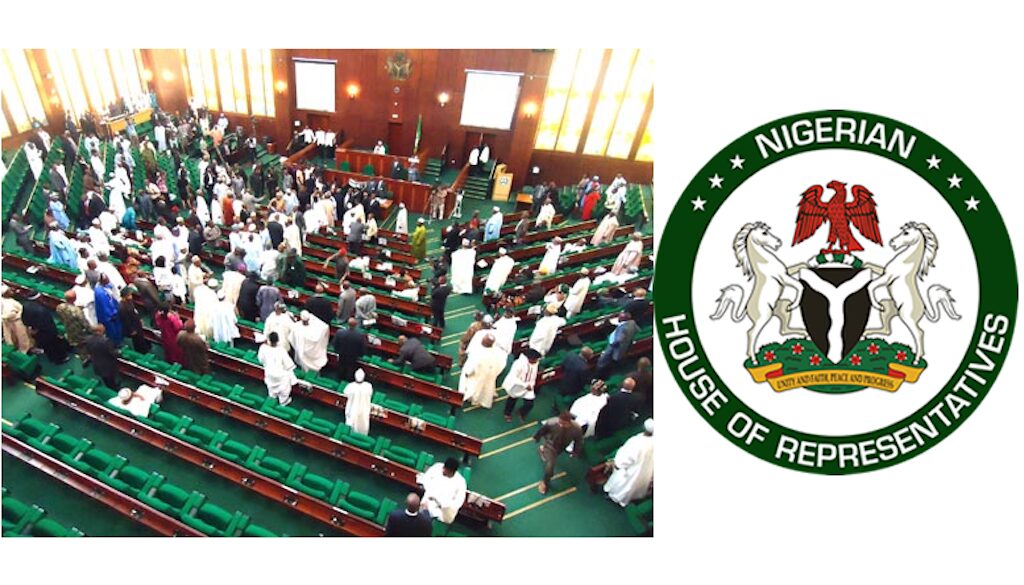
The House of Representatives on Wednesday raised concerns over what it described as chronic underfunding of the Office of the Auditor-General for the Federation, warning that the trend could undermine Nigeria’s anti-corruption architecture and weaken public accountability.

The concern was raised during the 2026 budget defence session of the Office at the National Assembly Complex, Abuja, before the House Public Accounts Committee, chaired by Mr Bamidele Salam.

While reviewing the proposed N15.88bn allocation to the OAuGF for the 2026 fiscal year, the committee noted that the figure represents approximately 0.027 per cent of the N58.47tn Federal Government budget.

Members described the allocation as grossly inadequate when weighed against the constitutional responsibilities of the Office, which is mandated to audit over 1,000 Ministries, Departments and Agencies, as well as government-funded institutions across the country.

Salam said it is unrealistic to expect the Auditor-General’s Office to effectively scrutinise a proposed expenditure of N58.47tn with such minimal funding.

He disclosed that due to budgetary constraints in previous years, the Office was only able to audit five foreign missions out of about 100 Nigerian missions abroad.

The Osun lawmaker further lamented that in the 2025 fiscal year, only four per cent of the capital allocation to the Office was released, a development he said significantly impaired its operational capacity.

A breakdown of the 2026 budget estimate shows that N5.3bn is earmarked for personnel costs, N5.6bn for overheads, and N4.8bn for capital expenditure.

The lawmakers referenced international best practices as guided by the International Organisation of Supreme Audit Institutions, which emphasise that supreme audit institutions must enjoy sufficient, independent, and secure funding to carry out their mandates without interference.

See also  Shiites protest in Lagos over Iran’s invasion, Ayatollah Khamenei’s death

They also underscored the importance of budgetary autonomy, noting that audit institutions are ideally expected to submit their budget proposals directly to the legislature or a designated parliamentary committee to safeguard their independence.

“This is associated with weak institutions, which have contributed to the corruption ravaging our country,” Salam stated.

The House Committee therefore urged the Federal Government and relevant stakeholders to “prioritise adequate appropriation and full release of funds to the Office of the Auditor-General for the Federation to enhance its capacity to perform its constitutional mandate effectively and proactively prevent corruption, waste, and mismanagement of public resources.”

The Office of the Auditor-General for the Federation is constitutionally empowered under Section 85 of the 1999 Constitution (as amended) to audit and report on the public accounts of the Federation and all offices and courts of the Federal Government.

Over the years, however, concerns have persisted over the Office’s limited financial and operational independence. Despite its central role in safeguarding public funds, the OAuGF has repeatedly faced budget cuts, delayed releases, and inadequate capital funding, constraining its ability to conduct timely audits, deploy modern audit technology, and build professional capacity.

Stakeholders in the accountability sector have long argued that weak funding for the nation’s supreme audit institution undermines oversight of government spending, particularly at a time when public expenditure continues to rise sharply.

The proposed N58.47tn 2026 Federal Government budget represents one of the largest in Nigeria’s history, further amplifying concerns about the capacity of the Auditor-General’s Office to effectively track and audit public spending without commensurate financial support.

See also  Senate approves Tinubu’s request to deploy troops in Benin

Analysts say that unless funding and institutional autonomy for the Office are strengthened, efforts to combat corruption and ensure fiscal discipline may remain constrained.

punch.ng

FOLLOW US ON:

FACEBOOK

TWITTER

PINTEREST

TIKTOK

YOUTUBE

LINKEDIN

TUMBLR

INSTAGRAM

Continue Reading
Click to comment

Leave a Reply

Your email address will not be published. Required fields are marked *

News

PHOTOS: Gunmen k!ll three in fresh Jos attack

Published

on

Armed assailants have k!lled three people and injured one in Gyel Nyango Community in Jos South Local Government Area of Plateau State.

The incident occurred on Friday, April 3, 2026.

It was gathered that the gunmen invaded the community, shooting sporadically before escaping into the darkness.

Residents said some locals sustained injuries during the attack which has heightened tension in the area.

Spokesman for the Berom Youth Moulders Association, Rwang Tengwong, confirmed the attack on Saturday, describing it as “one too many” senseless assaults on innocent citizens.

“Just yesterday night, some persons came to Gyel community, which resulted in the d3ath of three persons,” he said.

“This cycle of attacks on our rural communities must stop.”

He called on security agencies to swiftly apprehend the perpetrators and bring them to justice.

He urged residents of rural communities in Jos South, Riyom, and Barkin Ladi Local Government Areas to be vigilant.

The spokesperson for the State Police Command, Alfred Alabo, who confirmed the incident said the attack occurred at about 9:20 pm when the victims were returning from a mining site.

Alabo said the State Command immediately deployed a patrol team led by the Divisional Police Officer of ‘B’ Division Bukuru.

He noted that the injured victim was promptly evacuated to a hospital and is currently receiving treatment.

The PPRO explained that the State Commissioner of Police, Bassey Ewah, expressed deep condolences to the families of the deceased and the Community, describing the incident as a “senseless loss of lives.”

See also  Gombe’s 180-day justice deadline sparks debate over endless pre-trial detentions

He added that the commissioner ordered the immediate enforcement of a statewide ban on night grazing and night mining, as well as the total ban on commercial motorcycles within the Jos-Bukuru metropolis.

Alabo also noted that a ban on commercial tricycles, popularly called Keke-Napep, had been imposed for Sunday, 5th April 2026.

He urged residents to comply with these directives and avoid unnecessary movements, particularly at night.

FOLLOW US ON:

FACEBOOK

TWITTER

PINTEREST

TIKTOK

YOUTUBE

LINKEDIN

Continue Reading

News

Iran hangs two convicted of links with Israel in pre-war protests

Published

on

Iran executed two men on Sunday, convicted of acting on behalf of Israel and the United States during a wave of anti-government protests earlier this year, the judiciary said.

“Mohammad-Amin Biglari and Shahin Vahedparast were hanged after the case was reviewed and the final verdict was confirmed by the Supreme Court,” the judiciary’s Mizan Online website said.

The two men were involved in the anti-government protests that peaked in January, it added.

The demonstrations broke out in late December over rising living costs before spreading nationwide and evolving into anti-government protests that peaked on January 8 and 9.

Iranian authorities said the rallies began peacefully before turning into “foreign-instigated riots” involving killings and vandalism.

Iran has carried out multiple executions in recent days of people linked to the protests or opposition groups, including members of the banned People’s Mujahedin (MEK).

The executions come against the backdrop of Iran’s war with Israel and the United States, which erupted on February 28 with strikes that killed the Islamic Republic’s supreme leader, Ali Khamenei.

On Saturday, Iran executed two members of the MEK after four other convicted members of the group were put to death earlier in the week.

On Thursday, it also executed a man convicted of acting on behalf of Israel and the United States during the protests, following similar executions of three others last month.

Tehran has said more than 3,000 people were killed during the unrest, including members of the security forces and bystanders, attributing the violence to “terrorist acts”.

See also  Gombe’s 180-day justice deadline sparks debate over endless pre-trial detentions

The US-based Human Rights Activists News Agency (HRANA), however, said it had recorded more than 7,000 deaths, the vast majority of them protesters, adding that the toll could be higher.

AFP

punch.ng

FOLLOW US ON:

FACEBOOK

TWITTER

PINTEREST

TIKTOK

YOUTUBE

LINKEDIN

Continue Reading

News

Doctors begin indefinite strike Tuesday – See Why

Published

on

The Nigerian Association of Resident Doctors has declared an indefinite nationwide strike beginning at 12:00 a.m. on Tuesday, April 7, 2026, citing what it described as the Federal Government’s plan to halt the implementation of the revised Professional Allowance Table, a key component of agreements reached after its 2025 industrial action.

The decision, which threatens to disrupt healthcare services across public hospitals in Nigeria, was reached at the end of the association’s virtual extraordinary National Executive Council meeting held on Saturday.

Speaking on the outcome of the meeting, NARD National President, Dr Shuaibu Ibrahim, described the development as “unfortunate,” blaming the Federal Government of Nigeria for pushing doctors towards another industrial action.

“The National Executive Council was informed about the Federal Government’s decision to remove the Professional Allowance Table, a development deemed unfortunate,” he said.

“Following extensive deliberations, the NEC resolved to embark on a total industrial and comprehensive strike beginning at 12:00 am on Tuesday, April 7, 2026.”

The crisis stems from the implementation of a revised Professional Allowance Table negotiated between NARD and the Federal Government following a prolonged strike in 2025. The agreement included improved remuneration packages for resident doctors, covering call duty allowances, shift allowances, rural posting incentives, and non-clinical duty payments.

Although implementation was initially scheduled to commence in January 2026, delays pushed the rollout to February. However, NARD alleged that the government was planning to discontinue the process by April, a move the association said undermined trust and violated prior agreements.

Healthcare analysts note that disputes over allowances and welfare have been a recurring issue in Nigeria’s health sector, contributing to frequent strikes by medical unions, including the Nigerian Medical Association. These disruptions often reduce access to healthcare services, particularly in public hospitals that cater to the majority of Nigerians.

See also  US civil rights leader Rev. Jesse Jackson dies aged 84

Outlining the association’s demands, Ibrahim called for the immediate reversal of the government’s decision and settlement of all outstanding entitlements.

“We demand the reversal of the decision to cease the implementation of the PAT starting in April 2026,” he said.

“There must be immediate payment of promotion arrears and salary arrears in affected centres, as well as the prompt conclusion of the process of paying the 2026 Medical Residency Training Fund.”

“We also insist on the immediate processing and payment of the outstanding 19 months’ arrears of the Professional Allowance.”

He further urged members of the association nationwide to remain united.

“The NARD leadership calls on its members to unite in the fight against this injustice and to pursue it to a logical conclusion,” Ibrahim added.

The planned strike raises concerns about the potential impact on Nigeria’s already strained health system. Resident doctors form the backbone of service delivery in tertiary hospitals, handling a large proportion of patient care.

According to health sector data, Nigeria faces a severe shortage of medical personnel, with doctor-to-patient ratios far below the World Health Organization (WHO) recommended standard of one doctor to 600 patients. Estimates suggest Nigeria’s ratio is closer to one doctor per 5,000 patients, particularly in underserved areas.

An indefinite strike could lead to the shutdown of outpatient services, delays in surgeries, and increased pressure on private healthcare facilities, raising concerns among patients and health advocates.

punch.ng

FOLLOW US ON:

FACEBOOK

TWITTER

PINTEREST

TIKTOK

YOUTUBE

LINKEDIN

Continue Reading

Trending