Connect with us

News

State police: IG sets up panel to propose framework

Published

on

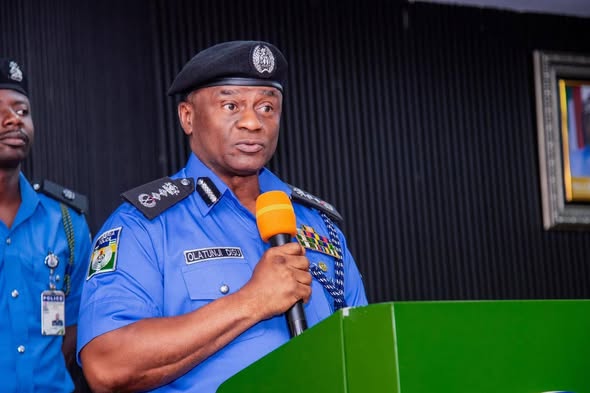
Newly sworn-in Inspector-General of Police, Tunji Disu, on Wednesday inaugurated a committee on the establishment of state police.

As part of ongoing discussions on policing reforms, President Bola Tinubu, had, last Wednesday, during the breaking of fast with senators at the Presidential Villa, Abuja, urged the leadership of the 10th Senate to initiate constitutional amendments to provide for the establishment of state police.

The President said decentralised policing would strengthen security at the grassroots and improve rapid response to threats within states, noting that the current centralised structure required constitutional review to accommodate the proposed reform.

Speaking during the inauguration, Disu said the committee’s task was to examine the concept of state policing as part of efforts to strengthen Nigeria’s internal security architecture and improve community-based policing.

He said the committee would review existing policing models within and outside Nigeria, assess community security needs, propose an operational framework for state police structures, and address issues of recruitment, training, standards, funding, accountability and oversight.

“Among other responsibilities, the committee is expected to review existing policing models within and outside Nigeria, assess community security needs and emerging risks across the country, propose an operational framework for the establishment and coordination of State Police structures, address issues relating to recruitment, training, standards, and resource allocation and develop robust accountability and oversight mechanisms to ensure professionalism and public trust,” he said.

Disu said state police formation could provide localised policing services focused on community safety, conflict prevention, neighbourhood patrols, and early response to emerging threats.

“This collaborative arrangement will encourage specialisation, strengthen professionalism, and ultimately deliver more effective security outcomes for our citizens,” he added.

The steering committee is chaired by Prof. Olu Ogunsakin, Director-General of the National Institute for Police Studies, Abuja, with CP Bode Ojajuni as secretary.

Other members are DCP Okebechi Agora, DCP Suleyman Gulma, ACP Ikechukwu Okafor, CSP Tolulope Ipinmisho and CP Emmanuel Ojukwu (retd.).

Also speaking shortly after his swearing-in as the substantive Inspector-General of Police, Disu disclosed that he had constituted a committee to develop the Nigeria Police Force’s position on the proposed establishment of state police.

He said, “The committee was set up early this morning to look into the issue of State Police from the angle of the Nigeria Police.

See also  Marketers blame depots as petrol nears N1,000/litre

“We don’t want it to seem as if others are taking decisions, and we, the most important people concerned, did not do anything. We want to ensure that the best thing is done,” the IG stated.

He emphasised that the police was not opposed to state police, describing it as a partnership rather than a threat to the Force.

“State police has come to stay, and the police should be able to do their own part in making it succeed. The police are not afraid. Our jobs are not being taken. It’s just an issue of partnership,” Disu said.

Disu sworn-in

Disu took the oath of office at 2:53pm on Wednesday following the reading of his citation by the State House Director of Information and Public Relations, Mr. Abiodun Oladunjoye.

The ceremony was witnessed by Vice President Kashim Shettima, cabinet members, and other dignitaries.

Also in attendance were the Secretary to the Government of the Federation, Senator George Akume; National Security Adviser, Nuhu Ribadu; Chief of Staff, Femi Gbajabiamila; Minister of Police Affairs, Senator Ibrahim Gaidam; FCT minister, Nyesom Wike; and Head of Service, Mrs. Esther Walson-Jack.

Disu’s confirmation comes barely a week after President Tinubu appointed him acting IGP following the resignation of Kayode Egbetokun on February 23, 2026.

Ex-officers back committee

A retired Assistant Inspector-General of Police, Ali Amodu, described the Inspector-General of Police’s decision to set up a special committee on state policing as “a right step in the right direction.”

Speaking on the development, Amodu said the committee would provide professional input and advise the Presidency on the proposed decentralisation of the Nigeria Police Force.

“The decision or the thought of the IG in setting up a special committee is a right step in the right direction. The committee will actually provide the thinking, and then they will give advice to the Presidency because it is the police that they want to decentralise. It is good that the authority will want to hear from them,” he said.

He noted that he had canvassed the idea of decentralising the police as far back as 1981 after returning from detective training in the United Kingdom.

Amodu said, “As far back as 1981, I was a young superintendent. I came back from the UK and I actually made a suggestion to the police authority then that they should think of decentralising the police force because I saw the pattern in the UK.

See also  PHOTOS & VIDEO: Fire razes part of Ogun free trade zone, Igbesa

“I said we can moderate our own and make adjustments. I was a very young officer, but the old hands were very angry with me to have said this. I remember my commissioner of police then said, ‘Young man, we sent you to the UK for detective training, and you are coming back thinking they should form a modality on how to decentralise the force.’”

Amodu added that the idea was now gaining traction globally. “The thing is coming to light. Light is shining on that area. It’s happening in many parts of the world,” he said.

According to him, policing differs from military operations because it requires close interaction with local communities.

“The police are not like the army or any arm of the Armed Forces. You work with the people, and people want to appreciate their own person. It is at that time they will be comfortable to even pass information which is needed for policing all over the world,” he said.

He also referenced ongoing legislative discussions on constitutional amendments, noting that the current constitution provides for a single police force.

“Just a few days ago, I heard the Senate President say that before the end of the year they will look into how the Constitution and see if it can be amended because the present Constitution says Nigeria has one police force. So, if we want to decentralise, they must amend that section of the constitution. I think they are working on it. Let’s see how it is going to work out,” he added.

On his part, a former Commissioner of Police, Lawrence Alobi, also backed the constitution of the committee, describing it as a professional and proactive move.

“It’s the right thing to have done because the police affair is all about policing, and police can come and handle police issues effectively,” Alobi said.

He stated that the committee should clearly define the structure and supervisory framework for state police formations.

“The committee should advise on the structure and how the state police would be supervised. Maybe they should be under the AIG in zones or the DIGs would have supervisory roles over them,” he said.

See also  Outrage over police crackdown on Lagos anti-demolition protesters

Alobi stressed the need to address jurisdictional issues in advance to avoid operational conflicts.

“If the structure is not determined now proactively and it is established, I don’t know the case, but if a case is committed in a state and the suspect is in another state, and the police from one state go there to get the suspect, how will the police in that state treat them when they come? This is something that needs to be determined. It should already be established and practiced,” he said.

He added, “I think the system is running in the right direction and doing the right thing.”

Middle East crisis

Meanwhile, Disu disclosed that the Nigeria Police Force wass closely monitoring Islamic groups with allegiance to Middle Eastern countries following the escalating US-Israel-Iran conflict, warning that developments in the Middle East could trigger repercussions in Nigeria.

“Everywhere in the world, we are aware that is what we call intelligence policing. Our ears are to the ground. We know we have groups of people, different kinds of Islamic sects in Nigeria. We have those who pay allegiance to this eastern part of the world as well,” Disu stated.

He added, “So we know if anything happens in the eastern part of the world, the repercussion will come to us.

“So, we are putting all necessary actions. You can see policemen on patrol, and most importantly, we are talking to them to ensure that they do not take law and order into their hands.”

The IGP’s statement comes amid heightened tensions in the Middle East following US and Israeli airstrikes on Iranian targets over the weekend and Iran’s retaliatory missile attacks on Israeli and American military installations.

Nigeria is home to significant Islamic groups with ideological and sometimes organisational ties to Middle Eastern countries, particularly Iran and Saudi Arabia.

The Islamic Movement in Nigeria, led by Sheikh Ibrahim El-Zakzaky, is known for its pro-Iranian stance and Shia Islamic orientation, while several Sunni groups maintain connections with Saudi Arabia and other Gulf states.

Continue Reading
Click to comment

Leave a Reply

Your email address will not be published. Required fields are marked *

News

Iran warns of ceasefire violation as US plans to escort Hormuz ships

Published

on

Iran warned on Monday that it would consider any US attempt to interfere in the Strait of Hormuz a breach of the Mideast ceasefire, as President Donald Trump said the United States would begin escorting ships through the blocked waterway.

Negotiations between the two countries have been deadlocked since a ceasefire came into effect on April 8, and Iran’s stranglehold on the strategic strait following US-Israeli attacks on Tehran has been a main point of contention.

Trump said on Sunday that the new maritime operation, which he dubbed “Project Freedom,” was a “humanitarian” gesture for crews aboard the many ships swept up in the blockade and which may be running low on food and other crucial supplies.

“We will use our best efforts to get their Ships and Crews safely out of the Strait. In all cases, they said they will not be returning until the area becomes safe for navigation,” Trump said in a Truth Social post, noting operations would begin on Monday.

In response, the head of the Iranian parliament’s national security commission said: “Any American interference in the new maritime regime of the Strait of Hormuz will be considered a violation of the ceasefire.”

By blocking the Strait of Hormuz, Iran has choked off major flows of oil, gas and fertiliser to the world economy, while the United States has imposed a counter-blockade on Iranian ports.

Trump, in his post, said he was “fully aware that my Representatives are having very positive discussions with the Country of Iran, and that these discussions could lead to something very positive for all.”

See also  Insecurity: FG approves 94,000 new enlistments

He made no direct mention of what Tehran described as a 14-point plan “focused on ending the war.”

US Central Command said it would use guided-missile destroyers, over 100 land and sea-based aircraft, multi-domain unmanned platforms and 15,000 service members in the Hormuz effort.

As of April 29, more than 900 commercial vessels were located in the Gulf, according to maritime intelligence firm AXSMarine.

Impossible operation

US news website Axios, citing two sources briefed on the proposal, reported that Iran set “a one-month deadline for negotiations on a deal to reopen the strait,” dissolve the US naval blockade and end the war.

Earlier Sunday, the Revolutionary Guards sought to put the onus back on Trump, saying he must choose between “an impossible operation or a bad deal with the Islamic Republic of Iran.”

Washington’s European allies are concerned that the longer the strait remains closed, the more their economies will suffer, and German Foreign Minister Johann Wadephul demanded that it be reopened.

In a call with his Iranian counterpart Abbas Araghchi, Wadephul stressed that Germany supported a negotiated solution but that “Iran must completely and verifiably renounce nuclear weapons and immediately open the Strait of Hormuz.”

Oil prices are currently about 50 per cent above pre-conflict levels, largely due to the supply snarls in the strait.

Suffocating the regime

The US president, who spent the weekend at his Mar-a-Lago resort in Florida, declined on Sunday to specify what could trigger new American military action.

But in his post, he said that “if in any way, this Humanitarian (ship-guiding) process is interfered with, that interference will, unfortunately, have to be dealt with forcefully.”

See also  Dele Momodu, Fani-Kayode, Omokri in war of words over Tinubu - See details

Treasury Secretary Scott Bessent said the US naval blockade was only part of a broader economic embargo.

“We are suffocating the regime, and they are not able to pay their soldiers. This is a real economic blockade, and it is in all parts of government,” he told Fox News.

In yet more bellicose rhetoric, Mohsen Rezaei, a military adviser to Iran’s Supreme Leader Ayatollah Mojtaba Khamenei, said Iranian forces would sink US ships.

“The US is the only pirate in the world that possesses aircraft carriers. Our ability to confront pirates is no less than our ability to sink warships. Prepare to face a graveyard of your carriers and forces,” he posted on X.

AFP

Continue Reading

News

62 Nigerians held in Uganda denied legal access – Lawyer

Published

on

Fresh concerns have emerged over the detention of 62 Nigerians as Ugandan authorities allegedly denied the detainees access to legal representation, PUNCH Metro has learnt.

The Nigerians, said to be members of a Christian missionary group, Life Mission, were detained by immigration authorities over allegations of illegally operating churches.

The country’s Directorate of Citizenship and Immigration Control disclosed this in a statement posted on its X handle on Wednesday.

It was also learnt that the arrests were carried out during operations conducted on April 27, 2026, in Adjumani and the Bukoto–Ntinda area of Kampala.

However, in an exclusive interview with PUNCH Metro on Thursday, the executive director of the mission group, Michael ChristisKing, said the detainees were Christian missionaries engaged in a long-running cross-cultural outreach focused on humanitarian service.

ChristisKing also disclosed that the organisation followed due process before entering the country, adding that the group secured invitations and approvals from relevant authorities, including the Office of the Prime Minister, the Commissioner for Refugees, and the Born Again Fellowship of Uganda.

PUNCH Metro, however, learnt that efforts to check on their welfare and provide legal representation had been unsuccessful.

A Ugandan lawyer, Israel Mivule, who was contracted by the mission group, told PUNCH Metro on Sunday that he was denied access to the detainees during a visit to the facility on Friday.

He added that he made repeated efforts to speak with at least one detainee but was denied access.

He said, “I arrived at the detention facility in Namawme, a large compound with a high fence and a locked gate. After introducing myself as a lawyer acting on instructions, I was refused access and directed to return to Kampala to obtain permission from senior officials.

See also  Niger Delta militancy made Jonathan’s presidency possible – Ateke Tom

“I pleaded with the officer to allow me at least a one-on-one interaction with any of the detainees to assess their well-being, but he declined, saying granting such access could jeopardise his job.”

The lawyer stressed that the development was a clear breach of Ugandan constitutional provisions.

He further revealed that from his position at the gate, he could see the detainees moving within the facility, but observed that they were cut off from communication.

“As a lawyer, I emphasised that detainees have the right to legal representation and a fair hearing. Under Articles 50 and 51, they have the right to access their lawyers at any time. Denying them that access is a violation of their rights.

“From where I stood, I could see them moving around, but they had no access to communication devices such as mobile phones. Preventing them from communicating with their lawyers or even family members infringes on their fundamental freedoms,” he added.

Mivule said he was forced to leave after spending considerable time at the facility without gaining entry.

He disclosed that efforts were ongoing to secure the release of the detainees, noting that there were grounds to challenge their continued detention.

The lawyer also revealed plans to revisit the Ugandan Ministry of Internal Affairs and possibly escalate the matter to court if diplomatic efforts fail.

Speaking further on efforts made, Mivule said there had been initial collaboration with the Nigerian embassy, including discussions around possible waivers.

“There were discussions about payments and possible waivers requested from Internal Affairs, but if the embassy does not act promptly, we, as legal representatives, will formally write and escalate the matter to the courts to obtain an order for their immediate release,” he added.

See also  Outrage over police crackdown on Lagos anti-demolition protesters

He disclosed that the body assigned to monitor missionary activities in Uganda had expressed surprise at the development.

Mivule said, “One of the leaders responsible for overseeing missionary activities was unaware of their detention and expressed shock when I informed him. He acknowledged that urgent steps should be taken to resolve the matter.”

However, a document sighted by PUNCH Metro on Sunday showed that the National Fellowship of Born Again Pentecostal Churches in Uganda had formally acknowledged the mission’s activities in the country before their arrest.

In a letter dated August 15, 2025, and addressed to the Nigerian High Commission in Kampala, the fellowship confirmed that the mission, identified as Exalting Jesus Life Missions, was “well known” to the body.

The letter, signed by the General Secretary of the fellowship, Bishop Dr Africano Magyezi, stated that the organisation is a non-profit group granted permission to bring volunteer students to Uganda for missionary work, particularly among refugees in camps.

It read, “This is to confirm to you that the above-captioned ministry/mission is well known to us. They are a non-profit organisation that was granted permission to bring volunteer students on a mission to Uganda, ministering to refugees living in the refugee camps.

“They have been working in Uganda since 2023, carrying out those missions, and now they are coming to Uganda with a group of 107 Nigerian missionaries and other Ugandan volunteers. The Fellowship supports its members to upgrade their careers and statuses so as to participate better in community development.”

The fellowship further urged that any assistance rendered to the group in the course of its activities would be appreciated.

See also  Insecurity: FG approves 94,000 new enlistments

When contacted, the spokesperson for the Nigerian Diaspora Commission, Abdur-Rahman Balogun, could not be reached for comments as calls to his telephone line were not answered.

A text message sent to him had also not been replied to as of the time this report was filed.

punch.ng

FOLLOW US ON:

FACEBOOK

TWITTER

PINTEREST

TIKTOK

YOUTUBE

LINKEDIN

INSTAGRAM

Continue Reading

News

Xenophobia: 130 Nigerians sign up for South Africa evacuation

Published

on

At least 130 Nigerians have already registered for voluntary evacuation flights from South Africa as Nigeria moves to safeguard its citizens amid rising tensions linked to anti-foreigner protests in the country.

The Minister of Foreign Affairs, Bianca Odumegwu-Ojukwu, in a situation report via her X handle on Sunday, said the evacuation arrangement is part of broader diplomatic and security measures being coordinated with Nigerian missions in South Africa.

The minister explained that the evacuation plan follows directives from President Bola Tinubu, who ordered heightened monitoring of the situation and stronger protection for Nigerians abroad.

“The President has reiterated that the priority at this time remains the safety of our citizens,” she said, adding that “arrangements are currently underway to collate details of Nigerians in South Africa for voluntary repatriation flights for those seeking assistance to return home.”

Odumegwu-Ojukwu said, “So far, 130 applicants have duly registered for the exercise with our mission,” noting that the number is expected to increase as more citizens seek assistance to return home.

Odumegwu-Ojukwu also confirmed that the ministry had summoned South Africa’s Acting High Commissioner over the unrest, while diplomatic engagements continue with authorities in South Africa.

The development comes amid renewed anti-immigrant demonstrations in cities including Pretoria and Johannesburg, which Nigerian authorities say have heightened concern for the safety of their nationals.

“There is heightened anxiety over the series of anti-foreigner protests, also targeted at Nigerians in select cities in the Republic of South Africa in recent weeks,” the minister said.

See also  Outrage over police crackdown on Lagos anti-demolition protesters

She added that the President had “expressed grave concern on the situation following a briefing, and has called for more effective control of the situation by relevant host security services.”

Odumegwu-Ojukwu noted that while South African authorities, including President Cyril Ramaphosa and senior security officials, had condemned violence, disturbing images circulating online had fuelled international concern.

“The images pervading both mainstream and social media depicting violence, carnage and targeted xenophobic killings of foreign nationals and demonstrations characterised by xenophobic rhetoric, hate speeches and incendiary anti-migrant statements by the arrowheads of such rallies, have generated worldwide condemnation,” she stated.

According to her, protests held between April 27 and 29, 2026, were largely peaceful but still required heavy police deployment in the affected cities.

“The protests spearheaded by a local anti-migration movement, in Pretoria and Johannesburg, between 27 – 29 April 2026, witnessed a largely peaceful procession, under the presence of heavily armed police who occasionally sprayed teargas to deter the protesters from engaging in violent activity.

“There is no recorded killing of any Nigerian or destruction of Nigerian-owned properties during this particular protest,” the minister explained.

However, Odumegwu-Ojukwu confirmed two separate deaths involving Nigerians, both allegedly linked to interactions with security personnel.

“Amamiro Chidiebere Emmanuel died on 25th of April 2026 as a result of injuries sustained from brutal beatings by military personnel of the South African National Defence Force on 20th April 2026 in Port Elizabeth,” she said, referring to the South African National Defence Force.

She further disclosed that “Nnaemeka Matthew Andrew also died following an alleged interaction with members of the Tshwane Metro Police, and his body was discovered at the Pretoria Central Mortuary on 20th April 2026.”

See also  Pope warns of regional spillover from Israel-Iran war

Describing both incidents as unacceptable, Odumegwu-Ojukwu said, “This is utterly condemnable and unacceptable. The Nigerian High Commission is closely following investigations into these unfortunate incidents, and Nigeria demands justice be done in these cases.”

The minister added that another wave of demonstrations is expected between May 4 and 8, 2026, prompting further security and diplomatic coordination between both countries.

She stressed that Nigerian diplomatic missions are working closely with South African authorities to ensure the protection of citizens while evacuation preparations continue.

The minister further stated, “Nigeria is a frontline state which made great sacrifices towards the liberation struggles of South Africa, a fact which needs to be distilled down to the younger generation in South Africa.

“Nigerian lives and businesses in SA must not continue to be put at risk, and we remain committed to working with South Africa to explore ways to put an end to this xenophobic pattern.

“It has become a repetitive wave, most especially before elections in South Africa, and anti-foreigner opposition parties leverage this situation to garner votes.

“Nigeria recently signed a memorandum of understanding with South Africa on early warning to protect citizens of both countries, especially in times such as these.”

punch.ng

FOLLOW US ON:

FACEBOOK

TWITTER

PINTEREST

TIKTOK

YOUTUBE

LINKEDIN

INSTAGRAM

Continue Reading

Trending