Connect with us

Lifestyle

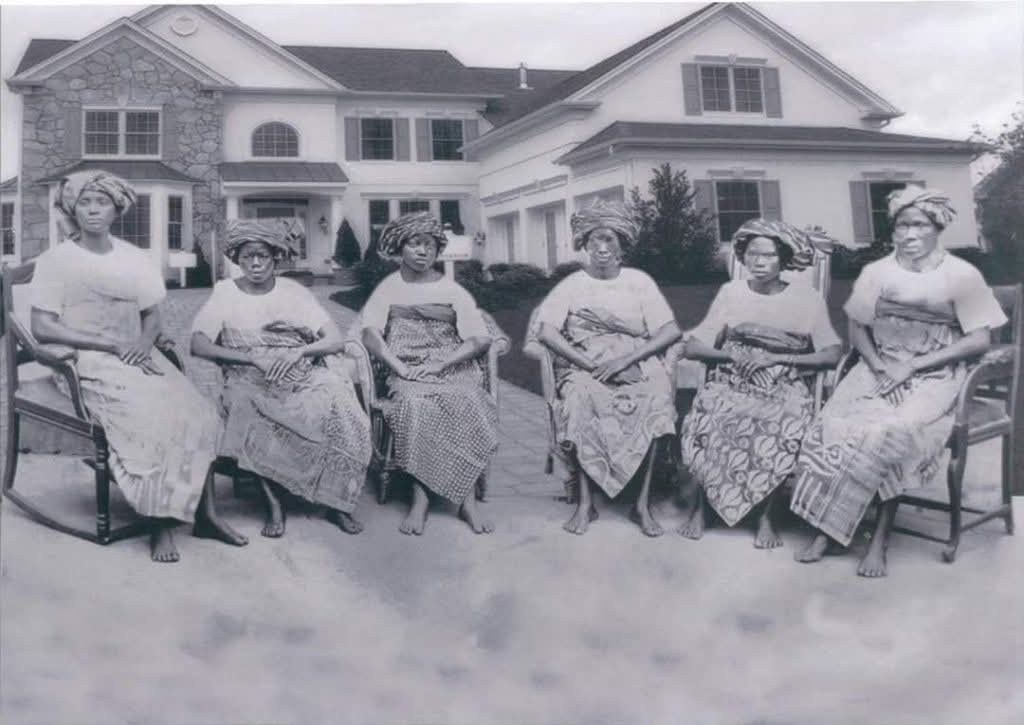
The Majekodunmi Family of Abeokuta: A Legacy of Heritage and Leadership

Published

on

The Majekodunmi family of Abeokuta occupies a distinctive place in the history of the Egba people of southwestern Nigeria. Their story spans nearly two centuries, linking the royal traditions of the old Oyo Empire to the civic and professional life of modern Nigeria.

Royal Origins and Migration to Abeokuta

Family oral tradition traces the Majekodunmi line to the old Oyo Empire. Oyeneye Majekodunmi—said to be the son of a princess of Oyo and granddaughter of Alaafin Majotu—migrated to Abeokuta during the turbulent 1830s, when many Egba groups left the collapsing Oyo kingdom to establish new settlements. Like other early Egba settlers, Oyeneye became part of the Ikereku quarter, helping to shape the emerging city’s social and political life.

The Meaning Behind the Name

The Yoruba surname “Majekodunmi,” loosely translated as “do not let it hurt me,” is itself rooted in an act of mercy. According to family lore, Oyeneye spared the life of a slave after persistent pleas from others. To commemorate this act of compassion, the name Majekodunmi was adopted—an enduring reminder of empathy and forgiveness in family memory.

Prominent Figures Across Generations

Chief Akitoye Majekodunmi (1835–1911): Balogun (warlord) of Ikereku and founder of Akitoye Village, remembered for his role in the defense and early organization of Abeokuta society.

Dr. Moses Adekoyejo Majekodunmi (1916–2012): Eminent gynaecologist, Minister of Health in Nigeria’s First Republic, and Administrator of the Western Region during the 1962 political crisis. He later founded St. Nicholas Hospital in Lagos, today one of the country’s leading private medical institutions.

See also  How I had twins naturally after 40 years’ marriage — 63-Year-Old midwife

Olufemi Majekodunmi (b. 1940): Internationally respected architect and son of Dr. Moses, who has carried the family tradition of public service and professional excellence into the fields of design and urban development.

These figures illustrate the family’s steady involvement in medicine, politics, and civic leadership from the 19th century into the present.

Cultural Values and Civic Impact

The Majekodunmi name has become synonymous with education, discipline, and community service. Their history parallels the wider story of Abeokuta itself—from the Egba people’s survival and self-organization after the fall of Oyo, to the city’s 19th-century encounter with Christian missions and its later role in Nigerian state-building.

The family’s contributions—especially in healthcare and professional practice—have left an enduring imprint on Nigeria’s public life and on the Yoruba cultural landscape.

An Enduring Legacy

Today the Majekodunmi story continues through descendants active in medicine, business, and the arts in Nigeria and abroad. Their lineage stands as a bridge between royal Oyo ancestry and the modern Nigerian nation, demonstrating how heritage and leadership can be passed from generation to generation.

Sources

Majekodunmi Family Heritage website genealogical records and family oral history.

FOLLOW US ON:

FACEBOOK

TWITTER

PINTEREST

TIKTOK

YOUTUBE

LINKEDIN

TUMBLR

INSTAGRAM

Continue Reading
Click to comment

Leave a Reply

Your email address will not be published. Required fields are marked *

Lifestyle

12 POWERFUL BALOGUN IN YORÙBÁ HISTÒRY.

Published

on

In the annals of Yoruba history, few titles carry as much weight and reverence as that of the Balogun.
Below is a list of some of the most formidable Baloguns who shaped Yoruba history.

1. Balogun Oderinlo (Ibadan) Active: c. 1840s

A tactical genius and fearless leader, Oderinlo is best remembered for his role in the Osogbo War, where he led Ibadan forces to a decisive victory over the Fulani warriors of Ilorin, halting their southern advance into Yorubaland.

2. Balogun Ajikobi (Ilorin) Active: 1830s–1840

A controversial but powerful figure, Ajikobi conquered Alaafin Oluewu and the Oba of Ibaruba. However, his reign of conquest ended during the Osogbo War, where he was captured and publicly executed in Oyo.

3. Balogun Ibikunle (Ibadan) Active: 1850s–1860s

Known for his confrontation with the formidable Aare Ona Kakanfo Kurunmi of Ijaiye, Ibikunle emerged victorious, cementing his reputation as a warrior without equal.

4. Balogun Akere (Ibadan) Active: c. 1860s

Fought valiantly in the Ijesha War, but tragically lost his life in battle.

5. Balogun Orowusi (Ibadan) Active: Mid-1800s

The first commander to lead Ibadan to a historic victory over the Ijesha, Orowusi’s victory marked a turning point in regional dominance.

6. Balogun Ogunbona (Abeokuta, Egba) Active: 1851–1864

An exceptional strategist, Ogunbona played a crucial role in repelling the powerful Dahomey army during the Dahomey Wars, securing Egba independence and stability.

7. Balogun Ayikodu (Abeokuta) Active: Mid-1800s

A tenacious warrior who fought in numerous campaigns to protect and strengthen the Egba kingdom, often placing himself in the front lines.

See also  Speaker, govs preach unity, as police strengthen surveillance for Eid-el-Fitr celebration

8. Balogun Osungboekun (Ibadan) Active: 1880s–1893

After the betrayal and death of Aare Latoosa, Osungboekun took control during the Ekiti Parapo (Kiriji) War.

9. Balogun Olasile (Ijaye) Active: c. 1860–1862

A loyal general under Kurunmi, Olasile fought in multiple campaigns and served as one of the backbones of Ijaiye’s military structure.

10. Balogun Singusee (Ile-Ife) Active: c. 1821–1825

Led the ancient city of Ile-Ife during the Old Owu War, eventually leading to the downfall of the Owu kingdom. His campaign reshaped the political landscape of the time.

11. Balogun Ogundipe (Abeokuta) Active: c. 1860s–1870s

A relentless defender of Egba sovereignty, Ogundipe’s name is associated with countless victories and an unshakable will.

12. Balogun Kuku (Ijebu) Active: 1890s–early 1900s

Perhaps one of the most legendary Baloguns, Kuku fought multiple wars and was the first Yoruba commander to resist British colonial forces, making him a symbol of both traditional military valor and anti-colonial defiance.

These Baloguns were not mere warriors; they were protectors, visionaries, and architects of Yoruba survival and identity.

Their legacies continue to echo across Yorubaland—from the city-states of Ibadan and Abeokuta to the sacred grounds of Ile-Ife and Ijebu.
Yoruba saying:

“A kii jẹ ọmọ Balogun ki a má níkarahun”
(One does not descend from a Balogun and lack courage.)

FOLLOW US ON:

FACEBOOK

TWITTER

PINTEREST

TIKTOK

YOUTUBE

LINKEDIN

Continue Reading

Lifestyle

Shigidi: A Yoruba Ritual Figure of Power and Mystery

Published

on

Among the Yoruba people of southwestern Nigeria, the Shigidi (also spelled Ṣigidi) occupies a fascinating space where art, religion, and spiritual power meet. More than an artifact, it is regarded as a living spiritual presence—one that commands respect and continues to intrigue scholars, traditionalists, and cultural historians.

Spiritual Role in Yoruba Religion

In the cosmology of the Yoruba, the Shigidi is both protector and avenger. Traditional worshippers believe it can be invoked to guard individuals or communities, to mete out justice, or to combat malevolent spiritual forces. Scholars such as Wande Abimbola describe Shigidi as a “night warrior”—a spiritual entity that moves in the unseen realm to defend its custodian or punish wrongdoers. This dual role highlights the Yoruba belief in the interconnectedness of the visible and invisible worlds, where ancestral and spiritual beings actively shape human affairs.

Materials and Craftsmanship

While clay is common, authentic Shigidi figures are not limited to a single medium. They may be molded from clay, carved from wood, or even cast in metal, depending on local tradition and the shrine’s requirements (Abimbola 1976; Olupona 2011). Each material carries layered meaning:

Clay signifies earth, fertility, and the cyclical nature of life and death.

Wood embodies vitality and the living essence of nature.

Metal reflects permanence and spiritual resilience.

Adornment with beads, cowries, or iron chains deepens the symbolism. Beads convey spiritual energy and status; chains represent restraint and the binding of spiritual forces.

Ritual Practice and Activation

Shigidi figures are housed in sacred shrines and activated through chants (oríkì), libations, and offerings of palm oil or sacrificial animals. When ritually consecrated by a priest (babaláwo), the figure is believed to embody a spiritual force capable of acting in the physical world. Far from being a mere object, it is considered a living agent that responds to invocations and spiritual contracts.

See also  How I had twins naturally after 40 years’ marriage — 63-Year-Old midwife

Linguistic Insight

In the Yoruba language, “ṣigidi” can also describe something round, solid, and lightweight. This everyday meaning echoes the physical qualities of many Shigidi figures and reveals how Yoruba thought naturally fuses the material and the spiritual.

Historical and Cultural Context

Shigidi has deep precolonial roots, predating the spread of Christianity and Islam in Yorubaland. Despite religious change, it remains a potent emblem of cultural identity and ancestral heritage. Samuel Johnson’s classic History of the Yorubas (1921) and modern ethnographies by Jacob Olupona document how Shigidi persists as a reminder of the Yoruba people’s enduring spiritual imagination.

Today, authentic Shigidi figures are rarely displayed publicly; many remain hidden in family or community shrines. Yet their legacy continues in scholarship, art, and the living traditions of Yoruba religion.

Sources:

Abimbola, Wande. Ifa: An Exposition of Ifa Literary Corpus. Oxford University Press, 1976.

Johnson, Samuel. The History of the Yorubas. CMS Bookshops, 1921.

Olupona, Jacob K. City of 201 Gods: Ilé-Ifè in Time, Space, and the Imagination. University of California Press, 2011.

Cultural Origin: Yorubad people of southwestern Nigeria

The Shigidi endures as both a spiritual force and a cultural artifact—an emblem of Yoruba cosmology where art is alive and the sacred speaks through matter.

FOLLOW US ON:

FACEBOOK

TWITTER

PINTEREST

TIKTOK

YOUTUBE

LINKEDIN

Continue Reading

Lifestyle

Actress Georgina Onuoha calls for Blessing CEO’s arrest over claims she has cancer

Published

on

Actress Georgina Onuoha has called for the arrest of social media influencer, Blessing ‘CEO’ Okoro, over claims she has ‘’cancer”.

In a post shared on Instagram Georgina who appears not to also believe Blessing’s claim of having stage four cancer, wrote;

‘’What Blessing CEO has done is not just disturbing it is deeply troubling and outright unacceptable.

At first, one might think this was just another attention-seeking stunt. But the moment you falsely claimed to have stage 4 breast cancer and began soliciting donations, it crossed into something far more serious fraud.

You told people you were critically ill. You appealed to their empathy. And they responded with compassion and financial support. That is not a joke. That is deception. By every standard, that is a calculated act of financial exploitation. Every single cent collected under that false claim must be refunded.

Then comes the second issue the alleged use of a falsified medical report. A doctor has come forward stating clearly that the report being circulated does not belong to you. Another physician reportedly confirmed the same. That raises serious concerns of forgery and identity misuse. This is not just unethical it is criminal.

You cannot orchestrate something like this and then dismiss it as a “test” to see who loves you. Love is not measured through manipulation, lies, and financial exploitation.

What you have done undermines public trust in a devastating way. The real victims here are not just the donors, but also genuine patients who are battling life threatening illnesses. Because of actions like yours, people will now hesitate to help those truly in need.

See also  10 most developed African countries in 2025

This is why accountability matters.

The @nigeriapoliceforce and @officialefcc the should take this matter seriously and arrest this woman. If these allegations are confirmed, then there must be consequences full restitution and legal accountability.

This is not entertainment. This is not social media drama. This is a breach of trust, a violation of public goodwill, and a serious offense.

What you did Blessing is unconscionable. And it should not be ignored.”

FOLLOW US ON:

FACEBOOK

TWITTER

PINTEREST

TIKTOK

YOUTUBE

LINKEDIN

Continue Reading

Trending