


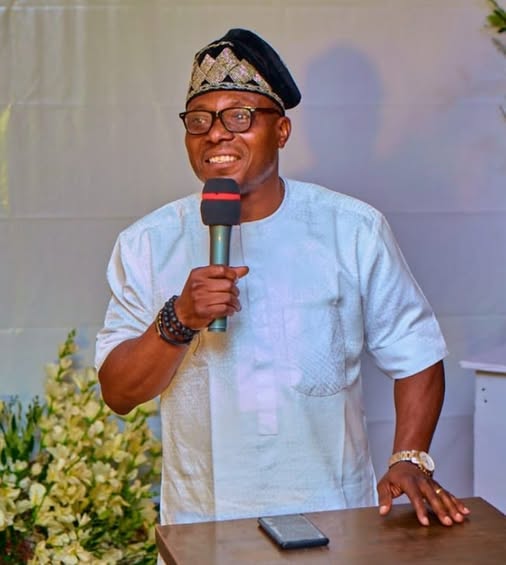
The president of the Nigeria Society of Physiotherapy, Dr. Oyinlola Felix Odusanya, speaking on the 2026 World Physiotherapy Day, talked about rising cardiovascular disease, exercise, medical rehabilitation gaps, and the need for a national medical rehabilitation policy, in this interview with Sade Oguntola.
How significant is the role of physical activity in preventing and managing cardiovascular diseases and stroke?
The theme for this year’s World Physiotherapy Day focuses on physical activity in the prevention, management, and rehabilitation of cardiovascular diseases and stroke. Studies have shown that physical activity helps reduce the risk of cardiovascular diseases, including stroke. Stroke is one of the commonest cardiovascular conditions we see around here, and its impact on our communities is huge.
For a stroke patient, the medical aspect of treatment has to be established first. The person may be on antihypertensive drugs or may have diabetes or high lipid levels. These risk factors may have been present before the stroke occurred.
Once the patient is stabilised, physiotherapy becomes important in restoring the person to useful function and helping them return to the family and community.
Stroke can leave a person unable to move, involving paralysis on one side of the body. Physiotherapists are movement experts, so our focus is to help the person function again—to use the hand, stand, walk, and, as much as possible, return to activities of daily living. If a stroke affects the head of a family, for instance, it can have a major impact on the entire household. We therefore play a major role in restoring people to independent function.
How many Nigerian hospitals currently have cardiac rehabilitation units run by physiotherapists?
At the moment, we do not have specific data to ascertain the number of cardiac rehabilitation centres in Nigeria. Cardiac rehabilitation itself is a broad term involving a multidisciplinary team combining exercise, education, lifestyle modification, risk-factor management, and psychological support. We have tertiary health institutions/teaching hospitals across Nigeria where specialist care is being offered, but only a few have dedicated cardiac rehabilitation programmes. For example, the University College Hospital, Ibadan, recently has a stroke unit dedicated to the multidisciplinary management of acute stroke cases, which is one of the commonest cardiovascular conditions we see till the point of community reintegration, and physiotherapy plays a very vital role in this.
However, there is no available national data to establish the number of cardiac rehabilitation centresacross Nigeria. In the absence of this, I will rather say a few cardiac rehabilitation services are available in Nigeria, but access remains far below what is required for a country with a growing cardiovascular disease burden. Inadequate resources and personnel, transportation costs, and limited expertise are important barriers. These lead to poor functional rehabilitation and make it more difficult for stroke survivors and other patients with cardiovascular diseases to reintegrate into society.
Why is rehabilitation still so limited in Nigeria?
Generally, Nigeria does not yet have what we can call a rehabilitation policy. Because there is no rehabilitation policy, issues relating to rehabilitation, especially medical rehabilitation, are not properly budgeted for or planned for. There are also limited training opportunities. That is a major concern.
The most important thing is for us to have a rehabilitation policy, which the Federal Government is beginning to look at. Once we have such a policy, we can properly plan for rehabilitation, create the institutions required, and address these gaps. There is no doubt that many patients need these services, but because the services are not sufficiently available, many of them are unable to access them.
What engagement is the Nigerian Society of Physiotherapy having with the health authorities to make physiotherapy part of the healthcare package for cardiovascular diseases?
We have engaged with the National Health Insurance Authority. Recently, if you look at one of the documents and the cost structure they brought out, you will see that physiotherapy features strongly in it.
There is also the WHO Rehabilitation 2030 Agenda. The purpose is for governments and health systems around the world to ensure that physiotherapy and other medical rehabilitation professions exist at every level of healthcare. As we speak, they are not available at every level.
Physiotherapy and medical rehabilitation are essential components of universal health coverage. That is why the conversation now includes creating a rehabilitation policy.
When you create a rehabilitation policy, you create the division that caters for it. That is where you create a budget and opportunities for training.
As we begin to have specialised training, we will also have experts required in different areas, including cardiopulmonary physiotherapy, orthopaedics, and paediatrics.
These are some of the conversations taking place with the Ministry of Health. Tentatively, we are hoping that the policy will be taken to the National Council on Health in November, at least for the first passage of the policy and strategic planning.
What is the recommended dose of exercise for preventing cardiovascular disease?
The truth is that exercise is medicine, and we should approach it from that perspective. Unfortunately, in Nigeria, we have not yet developed an exercise lifestyle. It is for everyone, not only people living with cardiovascular disease.
The WHO recommends an average of 150 minutes of moderate-intensity exercise daily. Exercise can be classified into low, moderate, and high intensity, depending on how rigorous it is. For someone with cardiovascular risk, I would advise aerobic exercise. Examples include walking and dancing, which are relatively inexpensive and accessible.
Walking, dancing, and cycling are good forms of aerobic exercise. You can aim for about 150 minutes per week, spread over five days or done on alternate days. However, exercise must be prescribed for each individual because we are not all the same.
Exercise prescription is based on your health status, age, and other factors that determine what the person is fit or able to do. On average, walking is a simple exercise I would recommend for anybody who can tolerate it. Walk to places where you can rather than always take a car or motorcycle.
Resistance exercises are also important. These include strengthening exercises or weightlifting. Weightlifting is not only for men who want to build muscle. It can also be beneficial for people with cardiovascular diseases because the effect is retained over time. Resistance exercises can be performed two to three times per week, including through body-weight exercises such as squats, lunges, and push-ups.
Flexibility exercises are also important because stretching helps maintain muscle length and can help prevent injuries. For elderly people and those with neurological disabilities, balance exercises are particularly important.
Swimming is another good form of exercise because it combines flexibility, aerobic, and resistance exercise. The buoyancy of the water enhances performance.
Dancing is also a very good form of exercise, particularly in Africa, where it forms part of our lifestyle. The important thing is that it should be intentional, structured, and consistent. It is not enough to dance at a party today and then do nothing for the next month. Exercise should be regular and appropriately prescribed.
Is being physically active at work enough?
Not necessarily. Some people believe that because they work rigorously or are physically active at work, they are getting enough exercise. That is not necessarily correct. That may simply be activity associated with daily living. This forms a baseline at which your heart functions. If you want exercise that is targeted towards your health, it has to be intentional, measured, and structured at a targeted heart rate.
There are many misconceptions that exercise is dangerous for people with high blood pressure or heart disease. How do you address this?
Physiotherapists screen, assess, prescribe, and monitor exercise. That is why you cannot simply tell a patient to go and exercise. Before telling anybody to exercise, you first screen them. There are conditions under which we do not want someone to exercise. For example, if someone has unstable angina, that is, severe chest pain that is not being managed, they are not a candidate for exercise until the condition is addressed.
The same applies to severe, uncontrolled hypertension. You should not exercise until the condition is controlled. Even patients who are admitted to the hospital have a level of exercise they may be able to perform, but it has to be monitored.
If you have cardiovascular disease or another condition you are managing, you should see an expert before beginning an exercise programme.
You should not simply walk into a gym and start lifting weights because somebody else is doing it. We are not all the same. The key word is uncontrolled. Exercise can be dangerous for someone with uncontrolled high blood pressure if they exercise without proper assessment and supervision.
What is the Nigerian Society of Physiotherapy doing to promote community-based physical activity programmes?
Community-based physical activity needs to be looked at from two perspectives. First, the private sector and partners who can make services available to communities. The second is a structured and organised community-based arrangement instituted by the government.
Some government secondary and tertiary hospitals, for example, have community physiotherapists who provide services to certain communities. However, these services are not structured or widely available because the government does not yet have a policy specifically addressing community-based physiotherapy or rehabilitation.
NGOs have also been providing community-based rehabilitation in some areas, while independent institutions and teaching hospitals with the capacity have also been doing the same.
But for these services to be available to everybody in the community, government intervention has to be part of the process. There must be government planning and funding, alongside support from partners. For now, these services are not widely available because they are not sufficiently structured and there are limited partners and funding.
However, annually in celebration of our World Physiotherapy Day, every 8th of September, the Nigeria Society of Physiotherapy, through its various state chapters and hospital units, always organises a community outreach programme nationwide. Yet, there is a need for a community-based rehabilitation government policy for adequate coverage.
Where can people get exercise prescribed according to their age and health condition?
For people with clinical conditions, you need to see a physiotherapist to have your exercises prescribed. An apparently healthy person—someone who has not been diagnosed with a health condition—may be able to exercise with an instructor in a gym.
But for people with cardiovascular disease or another condition they are managing, exercise should be prescribed. Having a disease does not mean you cannot move or exercise. It means the exercise needs to be supervised and appropriately prescribed.
Does this also apply to elderly people?
Yes, particularly elderly people with one or more comorbidities. There is a sub-specialisation known as geriatric physiotherapy. Elderly people may have balance issues and musculoskeletal problems such as arthritis limiting exercise performance.
These factors and every other comorbidity have to be considered in prescribing an exercise programme that is suitable and safe. Safety is key.
What about people who do not want to go to gyms, including for religious or other reasons? And what about exercises such as Tai Chi that people see on social media?
COVID-19 opened our eyes to how we can access health care without necessarily visiting a hospital. There are now many applications developed for tele-rehabilitation that provide demonstrations and guidance even for home-based exercises. But before doing any form of exercise, it is important to know your capacity and your health status.
Ideally, at the beginning, you should see a professional who can tell you which application or movements are appropriate for you.
Walking is a basic exercise that is cheap and easy and can be performed at your own pace. It can also be controlled easily. For elderly people, I encourage walking at their pace, noting how far they are able to go and gradually progressing. Those who require more specialised exercise can visit a physiotherapist. Safety is key.
What are the red flags people should watch out for while exercising?
If you experience sudden shortness of breath or sudden pain in your chest, you should stop exercising. If you suddenly feel dizzy, as though the surroundings are turning, you should stop exercising. If you suddenly feel unusually tired or weak, you should also stop. These are important warning signs.
What is the NSP doing to ensure that stroke survivors in rural and remote communities are not left behind?
We have specific programmes for communities, including activities carried out during World Physiotherapy Day. More broadly, we continue to engage government and advocate for these services to be made available at all levels of care. The number of people who need such services is increasing.
One of the major challenges in Nigeria is that the health system was initially built with a strong focus on infectious diseases. As we move towards dealing more with non-communicable diseases, government needs to put the appropriate structures in place.
What exactly should the government put in place?
The first thing is a rehabilitation policy. It is when there is a rehabilitation policy that you can have a rehabilitation division or department that starts planning. You must plan for personnel, institutions, training, and facilities located in areas where members of the community can easily access them. For those who need a referral, there must also be a system that ensures referral centres are not too far away. That is what we need to put in place so that people can access rehabilitation services.
Q: Many Nigerians still think physiotherapy is only for bone fractures or stroke. Is the profession changing that narrative?
A: Physiotherapy is not just about bones. Physiotherapy is about movement. We are movement experts and exercise experts. Our focus is not just fractures. We manage various health and disease conditions without medication; using physical means and exercise is just one such method. We have various specialisaton in physiotherapy: orthopedics or musculoskeletal, neurophysiotherapy and mental health, women’s health, cardiopulmonary, geriatric, pediatrics, sports, oncology and palliative care, and community physiotherapy.
The goal is to restore independence after a disease—to enable people to move, walk, and participate in activities of daily living.
Health is not simply about taking medication. If someone is still unable to move after a disease, treatment is not complete. When disease strikes, there can be disability and weakness. A person may spend a long time in bed during an admission. Part of completing the treatment process is getting that person moving again and helping them participate in the activities they used to do before the illness.
Physiotherapists play a major role in restoring that movement and function. Physiotherapy is therefore not just about bones. It is about ensuring that people remain physically active and are able to contribute to their environment, their children, and their families.
Q: Should exercise be incorporated into health insurance as a way of reducing the burden of cardiovascular disease and healthcare costs?
A: The evidence would have to be properly analysed and presented. It is something that can form part of the discussion around rehabilitation policy because rehabilitation policy also needs to be matched with insurance.
As we look at reducing healthcare spending, some people take antihypertensive medication every day, while others take medication for diabetes every month.
When people are assessed at the onset, exercise may form part of their management in appropriate cases. During that period, their health parameters would need to be monitored regularly. There are situations where exercise may help delay the point at which drug intervention becomes necessary.
Q: Will the Nigeria Society of Physiotherapy advocate for exercise to be incorporated into health insurance?
A: That is part of the advocacy we do every year. We would want to see it pushed. However, there is still the challenge of health insurance coverage. Many people access healthcare out of pocket.
One way to start is to encourage more people to enroll in health insurance. Once coverage increases, more hospitals may be willing to accept health insurance, particularly if financing and capitation improve.
The Nigerian government needs to look at consolidating health insurance in a way that accommodates people of different social statuses, including market women and farmers in rural communities.
Q: Finally, what is your message to Nigerians about movement, heart disease, and stroke?
A: You should not wait until you have a heart attack or a stroke before you start moving. We should move before that happens because the body is designed to move. The heart is a muscle, and it needs to be exercised.
Take the stairs instead of the elevator or lift. Walk to places you can instead of using a car or motorcycle. I also want to appeal to the government to make our roads more accessible for physical activity.
In the process of modernising our roads, we are taking over the walkways. We no longer have sufficient walkways for people to walk on.
The prevalence of motorcycles also makes it difficult for elderly people who normally engage in routine morning exercise. They can be put at risk, and there have been situations where people exercising have been hit by motorcycles.
Urbanisation is therefore eroding some of the opportunities for physical activity. As we urbanise and improve our infrastructure, we should be intentional about making our environment conducive to physical activity so that the people who use these facilities can live longer and enjoy them.
Source: tribuneonlineng.com
FOLLOW US ON: