

Connect with us

Business

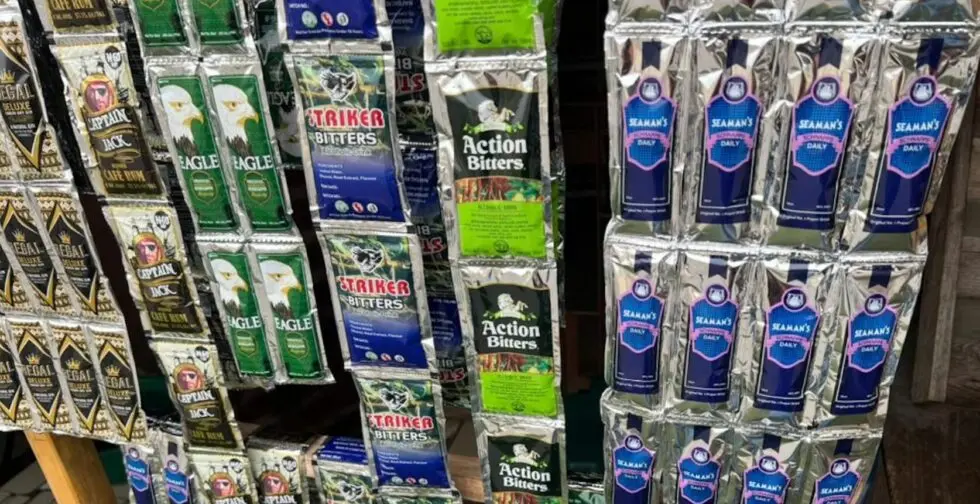
NAFDAC bans sachet and small-bottle alcohol in Nigeria

Published

on

NAFDAC Director General, Professor Mojisola Adeyeye gave the directive during a press briefing in Abuja today November 11.

Speaking at the press conference, Adeyeye said

“The proliferation of high-alcohol-content beverages in sachets and small containers has made such products easily accessible, affordable, and concealable, leading to widespread misuse and addiction among minors and commercial drivers.

This public health menace has been linked to increased incidences of domestic violence, road accidents, school dropouts, and social vices across communities.”

According to her, the directive follows a resolution by the Senate highlighting concerns over cheap alcohol drinks packaged in sachets being easily accessed by minors and contributing to social problems.

Adeyeye noted that the agency had earlier signed a Memorandum of Understanding with industry stakeholders for a phased ban with previous deadlines pushed from 2023 and now December 2025 .

She, however, noted that the Senate’s resolution is absolute and no further extension will be granted and urged retailers and manufacturers to comply with the directive.

Adeyeye reiterated that the ban is not punitive but. protective to safeguard the health and wellbeing of Nigerians.

She also explained that the agency will be collaborating with security agencies to ensure the full enforcement of the ban scheduled to begin in January 2026.

“This ban is not punitive; it is protective. It is aimed at safeguarding the health and future of our children and youth. The decision is rooted in scientific evidence and public health considerations. We cannot continue to sacrifice the well-being of Nigerians for short-term economic gain. The health of a nation is its true wealth,” she said

See also  IMPI projects Nigeria’s GDP to hit 5.5%

See the press statement by NAFDAC’s boss below:

PRESS RELEASE BY DIRECTOR GENERAL, NATIONAL AGENCY FOR FOOD AND DRUG ADMINISTRATION AND CONTROL, PROF MOJISOLA CHRISTIANAH ADEYEYE

NAFDAC REAFFIRMS COMMITMENT TO ENFORCE THE BAN ON ALCOHOL IN SACHETS AND SMALL PLASTIC BOTTLES BY DECEMBER 2025

The National Agency for Food and Drug Administration and Control (NAFDAC) has reaffirmed its unwavering commitment to enforce the total ban on the production and sale of alcoholic beverages in sachets and small-volume PET/glass bottles (below 200ml) by December 2025, in line with the recent directive of the Senate of the Federal Republic of Nigeria.

This decisive action, ordered by the Nigerian Senate and backed by the Federal Ministry of Health and Social Welfare, underscores the Agency’s statutory mandate to safeguard public health and protect vulnerable populations—particularly children, adolescents, and young adults—from the harmful use of alcohol.

The proliferation of high-alcohol-content beverages in sachets and small containers has made such products easily accessible, affordable, and concealable, leading to widespread misuse and addiction among minors and commercial drivers.

This public health menace has been linked to increased incidences of domestic violence, road accidents, school dropouts, and social vices across communities.

In December 2018, NAFDAC, the Federal Ministry of Health, and the Federal Competition and Consumer Protection Commission (FCCPC) signed a five-year Memorandum of Understanding (MoU) with the Association of Food, Beverage and Tobacco Employers (AFBTE) and the Distillers and Blenders Association of Nigeria (DIBAN) to phase out sachet and small-volume alcohol packaging by January 31, 2024. The moratorium was later extended to December 2025 to allow industry operators to exhaust old stock and reconfigure production lines.

See also  Reps seek energy reform as Abbas declares petroleum week open

NAFDAC emphasizes that the current Senate resolution aligns with the spirit and letter of that agreement and with Nigeria’s commitment to the World Health Organization’s Global Strategy to Reduce the Harmful Use of Alcohol (WHA63.13, 2010), to which Nigeria is a signatory.

According to Prof. Mojisola Christianah Adeyeye, Director-General, NAFDAC:

“This ban is not punitive; it is protective. It is aimed at safeguarding the health and future of our children and youth. The decision is rooted in scientific evidence and public health considerations. We cannot continue to sacrifice the well-being of Nigerians for short-term economic gain. The health of a nation is its true wealth.”

NAFDAC reiterates that only two categories of alcoholic beverages are affected by this regulation—spirit drinks packaged in sachets and small-volume PET/glass bottles below 200ml. The Agency calls on all stakeholders, including manufacturers, distributors, and retailers, to comply fully with the phase-out deadline, as no further extension will be entertained beyond December 2025.

The Agency will continue to work collaboratively with the Federal Ministry of Health and Social Welfare, the Federal Competition and Consumer Protection Commission (FCCPC), and the National Orientation Agency (NOA) to implement nationwide sensitization campaigns on the health and social dangers associated with alcohol misuse.

NAFDAC remains resolute in its mission to ensure that only safe, wholesome, and properly regulated products are available to Nigerians.

Signed:

Prof Mojisola Christianah Adeyeye, FAS

Director-General

National Agency for Food and Drug Administration and Control (NAFDAC)

Abuja, Nigeria

FOLLOW US ON:

FACEBOOK

TWITTER

PINTEREST

TIKTOK

YOUTUBE

LINKEDIN

TUMBLR

INSTAGRAM

Continue Reading
Click to comment

Leave a Reply

Your email address will not be published. Required fields are marked *

Business

Oshiomhole seeks ban on MTN, DSTV, read why

Published

on

The senator representing Edo North, Adams Oshiomhole, on Tuesday called for the revocation of licences of South African companies operating in Nigeria, including MTN and MultiChoice, owners of DSTV, following renewed xenophobic attacks against Nigerians in South Africa.

The call came as the National Assembly condemned the latest wave of attacks, urging the Federal Government to take immediate diplomatic and protective measures to safeguard Nigerian citizens abroad.

Speaking during plenary, Oshiomhole said Nigeria must respond firmly, invoking the principle of reciprocity in international relations.

He said, “I don’t want this Senate to be shedding tears, to sympathise with those who have died. We didn’t come here to share tears.

“If you hit me, I’ll hit you. I think it is appropriate in diplomacy. It’s an economic struggle.”

The former Edo State governor proposed that Nigeria should nationalise MTN and withdraw its operating licence, arguing that the company repatriates significant revenue while Nigerians face hostility in South Africa.

“This Senate should adopt a position that MTN, a South African company that is cutting away millions of dollars from Nigeria every day, should have Nigeria nationalise it and withdraw its licence,” he said.

According to him, such action would not only serve as a deterrent but also create opportunities for indigenous firms, amid what he described as economic and social targeting of Nigerians abroad.

He extended the call to MultiChoice, urging the Federal Government to revoke DSTV’s licence over alleged exploitative practices.

“I call on the Federal Government to revoke DSTV, which is also a South African company that is cutting away millions of dollars,” he said.

See also  First Abu Dhabi Bank to open Nigerian office in sub-Saharan push

Oshiomhole linked the recurring tensions to domestic political dynamics in South Africa, noting that anti-immigrant rhetoric had become a feature of its politics and was shaping public attitudes toward foreign nationals, including Nigerians.

“When we hit back, the president of South Africa will go on his knees to recognise that Nigerians cannot be intimidated,” he said.

The senator made the remarks while contributing to a motion sponsored by Osita Izunaso, which was read on the floor by Aniekan Bassey under Senate rules on matters of urgent public importance.

Titled “A call for urgent national diplomatic and humanitarian action to defend the dignity, safety and honour of Nigerian citizens,” the motion highlighted growing concerns over the safety of Nigerians in South Africa.

Also speaking, Senator Victor Umeh described the situation as alarming, warning that Nigerians were living in fear.

“It is worrisome. They are hiding for their lives. They can’t move freely. This is a situation where people are paying good with evil,” he said, referencing Nigeria’s historical support for the anti-apartheid struggle.

Umeh called on the African Union to intervene and impose sanctions, warning that Nigeria could no longer tolerate attacks on its citizens.

“The AU, of which South Africa is a member, should rise now and impose necessary sanctions,” he said, adding that “we cannot allow this to continue.”

Oshiomhole, however, doubled down on calls for economic retaliation, arguing that Nigeria must move beyond rhetoric.

“I don’t want this Senate to be shedding tears to sympathise with those who have died. We didn’t come here to shed tears. I am not going to shed tears. If you hit me, I hit you. I think it is appropriate in diplomacy. It is an economic struggle,” Oshiomhole said.

See also  The president and his power sector burdens explicitly explained

He further argued that Nigerians should take advantage of opportunities in the local economy, currently dominated by foreign firms.

Senator Abdul Ningi warned South Africans over recent attacks on Nigerians, threatening that the country would take the fight to their territory.

“If a crime has been committed under the South African law, they have the right to bring any such person to justice, but to kill our people as if we are helpless, we will not allow that.

“If these things continue, we have alternatives, we have options, and therefore, these words should be sent across South Africa. We know where South Africans are, not only in Nigeria but all over Africa, and we can take this fight to their territory,” he said.

Speaking, the Senate President, Godswill Akpabio, decried the attack, adding that the National Assembly would send a joint team to meet with the South-African parliament on the matter.

“This is just not acceptable, this is barbaric, this is cruel, this is unheard of, this is strange behaviour, and we’re not seeing action from the government of South Africa. These are aspects that annoy me,” Akpabio said.

The development underscores mounting pressure on the Federal Government to adopt a tougher stance, as recurring xenophobic violence in South Africa continues to strain diplomatic relations and provoke calls for both economic countermeasures and stronger protections for Nigerians abroad.

Continue Reading

Business

Naira gains, trades 1,365/$ at official FX market

Published

on

…NFEM rate — N1,365.2474/$

…Naira strengthens by at least N9

…Black market (Buying and selling rates) — N1,390 — N1,400

The Nigerian naira strengthened against the United States (US) dollar, trading at N1,365.2474 at the Central Bank of Nigeria (CBN) official foreign exchange window on Monday, 4th May, 2026.

According to the data shared on the official platform of the Central Bank of Nigeria (CBN), the naira traded at the Nigerian Foreign Exchange Market (NFEM) rate of N1,365.2474 per dollar and closed at N1,367.5000 per dollar.

Tribune Online reports that the Nigerian currency traded at an NFEM rate of N1,374.9431 on 30th April 2026, which was the previous trading date. Comparing this with the trading rate on Monday, the naira strengthened by at least N9.

At the parallel market, the naira-to-dollar buying rate decreased by N3, while the selling rate increased by N2, compared with the previous trading rate on 30th April, 2026.

According to Aboki FX, the Naira-to-dollar exchange rate at the black market on Monday, 4th May, 2026, was N1,390 for the buying rate and N1,400 per dollar for the selling rate.

See also  See how Dangote refinery and marketers fuel deal crashed
Continue Reading

Business

Experts promote rabbit value chain investment

Published

on

Experts in animal production have identified rabbit farming as a viable avenue for economic growth, job creation, and improved nutrition in Nigeria.

The experts made this known during a public lecture held at the Bauchi State College of Agriculture on Friday as part of activities marking Rabbit Appetite Day.

Speaking at the event, a registered animal scientist and lecturer at the Federal Polytechnic Damaturu, Sani Muazu, said there was a need to promote both the consumption and commercial production of rabbits across the country.

He described rabbit production as a largely untapped but promising sector capable of contributing significantly to Nigeria’s economy.

“Rabbit farming in Nigeria is still underdeveloped, with only about three to five per cent of the population engaged in the enterprise, mostly at small-scale family levels where farmers keep an average of two to seven breeding females. Despite this, the sector offers vast opportunities for expansion and commercialisation,” he said.

Muazu noted that rabbits are highly productive animals, with a gestation period of about 30 days and the capacity to produce up to 20 or more offspring annually.

He added that their low feeding and housing requirements make them suitable for students, smallholder farmers, and urban residents seeking alternative sources of income.

According to him, rabbit production extends beyond farming to other economic activities such as breeding, feed supply, veterinary services, processing, and marketing.

He also highlighted the nutritional value of rabbit meat, describing it as rich in protein, low in fat, and suitable for addressing protein deficiency in the country.

See also  FG to invest N12bn in digital research projects — Minister

On environmental sustainability, Muazu said rabbits require less land and water and emit fewer greenhouse gases compared to larger livestock, making them suitable for climate-smart agriculture, particularly in semi-arid regions.

However, he identified low public awareness and high mortality rates among young rabbits as major challenges hindering the sector’s growth.

He urged students and youths to take advantage of opportunities in rabbit farming by starting small-scale ventures that could grow into profitable agribusinesses, while calling on government and private sector players to invest in the development of the rabbit value chain.

In his remarks, the Provost of the Bauchi State College of Agriculture, Dr Ahmed Isah, described the event as timely and impactful, noting that it would encourage students to embrace self-employment through agriculture.

“Such initiatives are critical in addressing unemployment. Graduates can become employers of labour through ventures like rabbit farming,” he said.

He also encouraged members of the public to engage in rabbit production, describing it as a profitable and easy-to-start enterprise with the potential to improve livelihoods and boost the nation’s economy.

punch.ng

FOLLOW US ON:

FACEBOOK

TWITTER

PINTEREST

TIKTOK

YOUTUBE

LINKEDIN

INSTAGRAM

Continue Reading

Trending